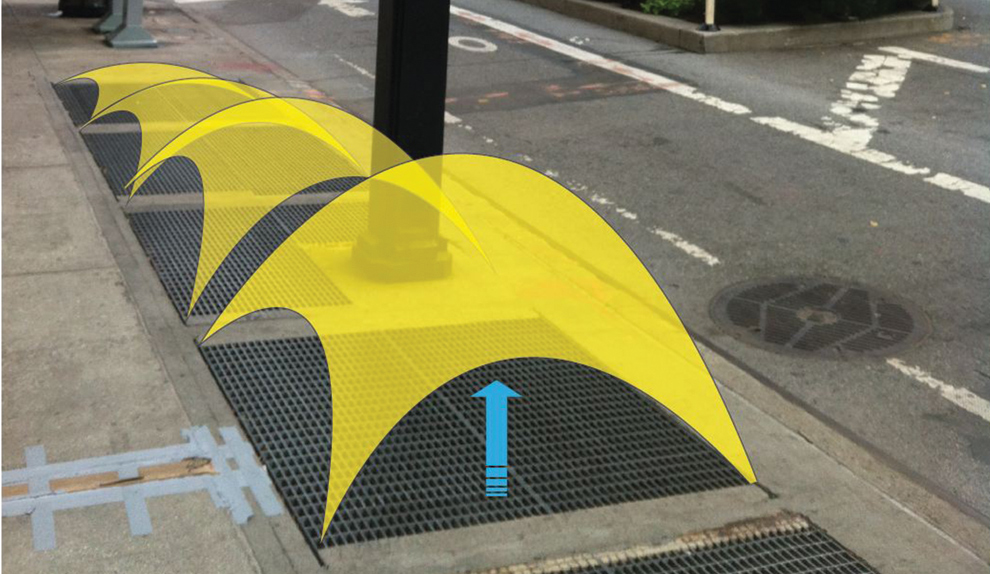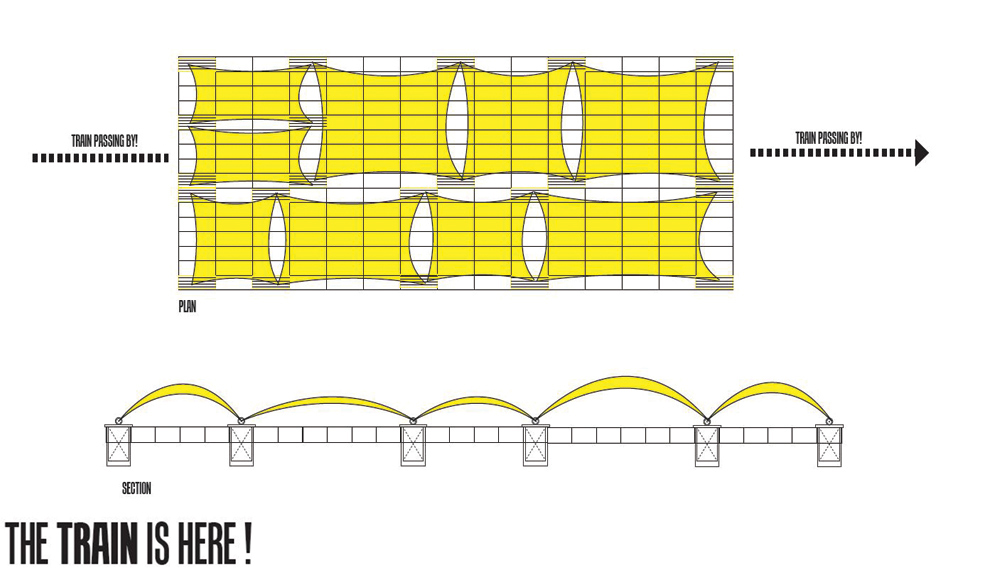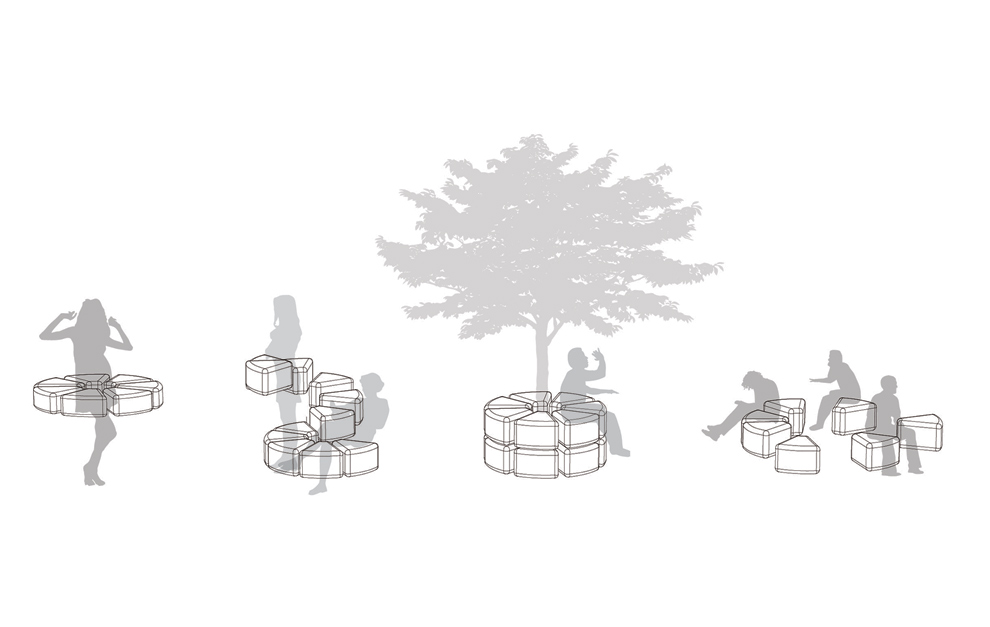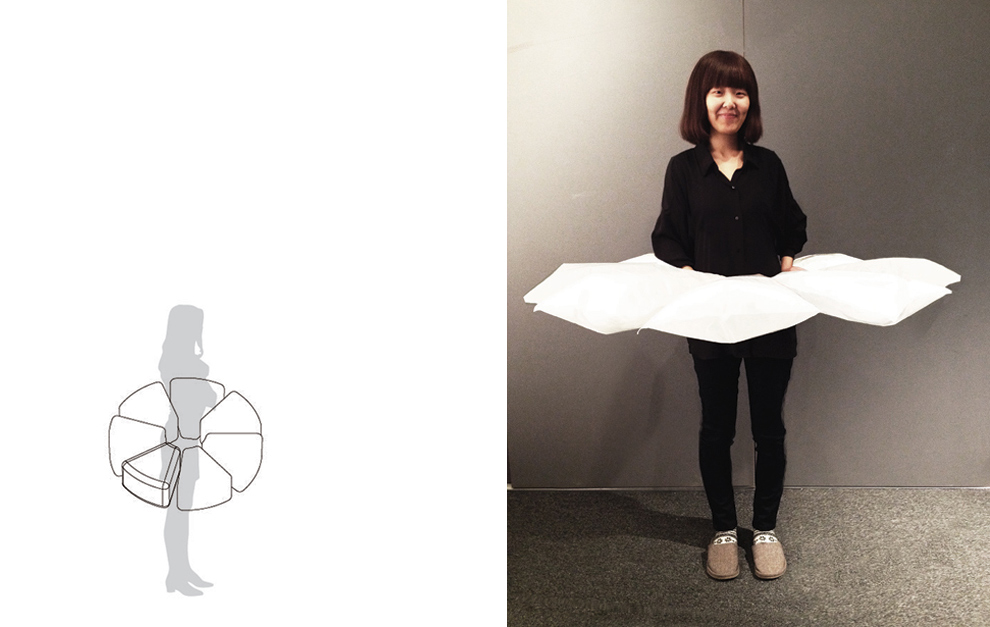
JOHN LOCKE, ARCHITECT

  • Featured Work
  • Design Blog           
  • Photography
  • Graphic Design
  • Dept of Urban Betterment

About

Hello. I live in New York and work at The Living. I hold a graduate degree from Columbia University's GSAPP and an undergraduate architecture degree from the University of Texas at Austin. I have more than seven years of professional experience at noted architecture firms, including New York-based Rogers Marvel Architects and SOM. I also tackle freelance graphic and photography work with my partner in crime, the multi-talented Jackie Caradonio at Lion in Oil. In addition, I teach a course, Hacking the Urban Experience, at Columbia. View my CV here: CV(html). Thanks and have a nice day.

Contact

john.h.locke{at}gmail.com
310.735.3333

Architecture Portfolios

Portfolio 2002-2007 (issuu)
Portfolio 2008-2009 (issuu)

HOME / BLOG

research

2018062 Tags: 3DPrinting, museum, photography, research | No Comments »

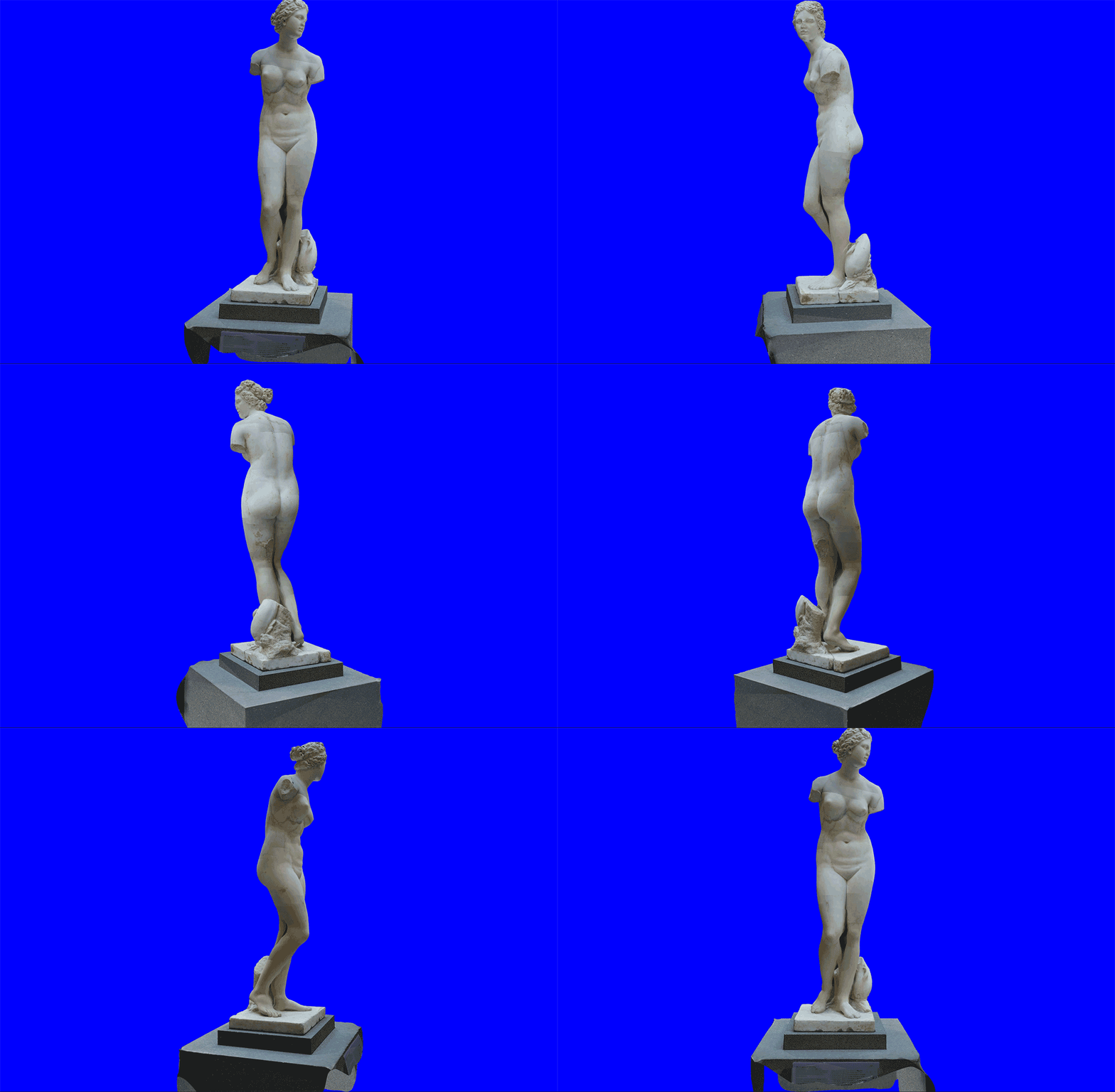
APHRODITE IN MARBLE

Saturday morning, creating a digital copy of the Aphrodite in Marble from the Met. A form that has perpetually adapted – originally cast in bronze 2000 years ago, later destroyed, reproduced (two times, different artists) in marble, limbs were lost, limbs were added, parts recreated, etc.


2017114 Tags: architecture, fabrication, gsapp, linknyc, new york, research, teaching | 2 Comments »

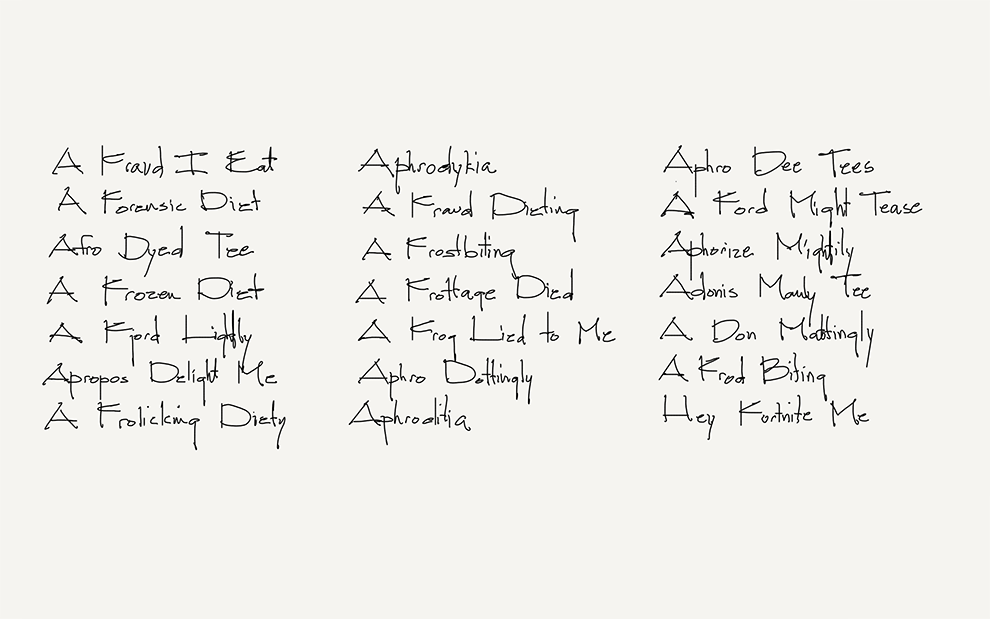
Hacking the Urban Experience – LINK NYC

A story in four parts:


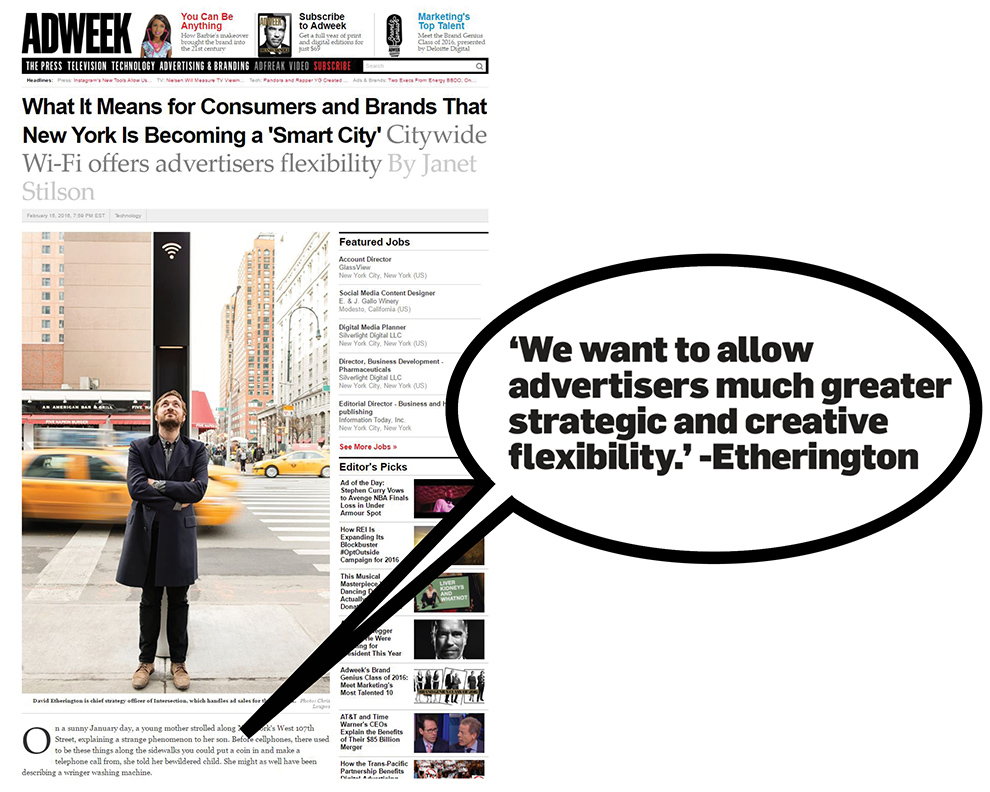
What It Means for Consumers and Brands That New York Is Becoming a ‘Smart City’


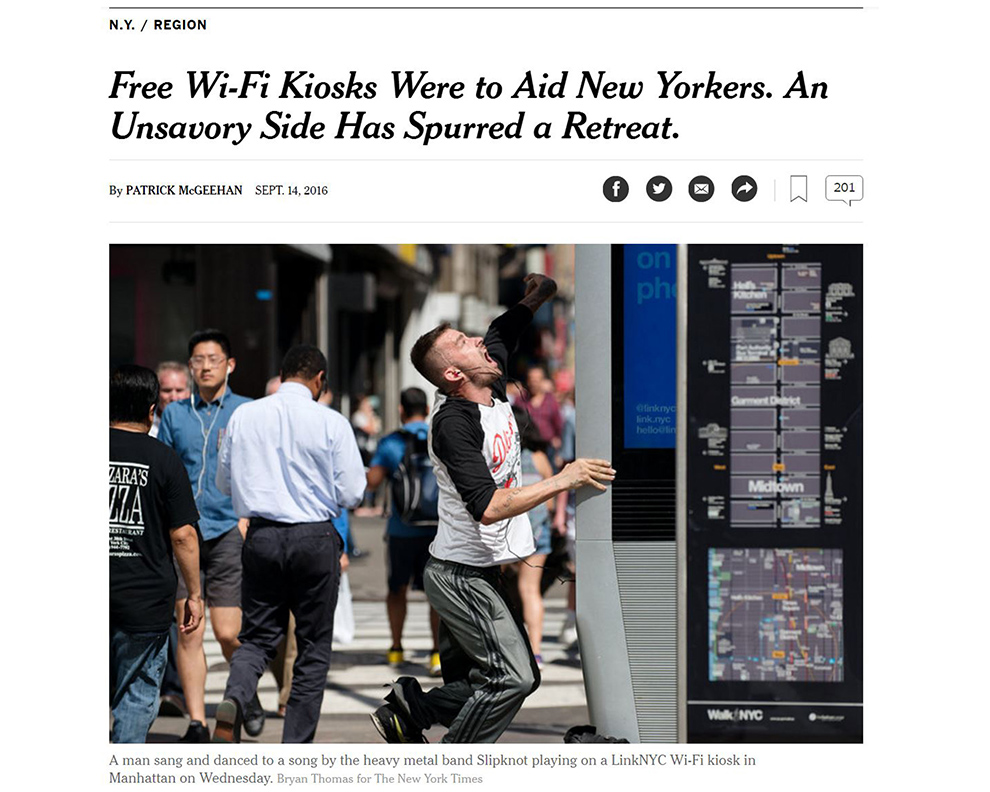
Free Wi-Fi Kiosks Were to Aid New Yorkers. An Unsavory Side Has Spurred a Retreat.


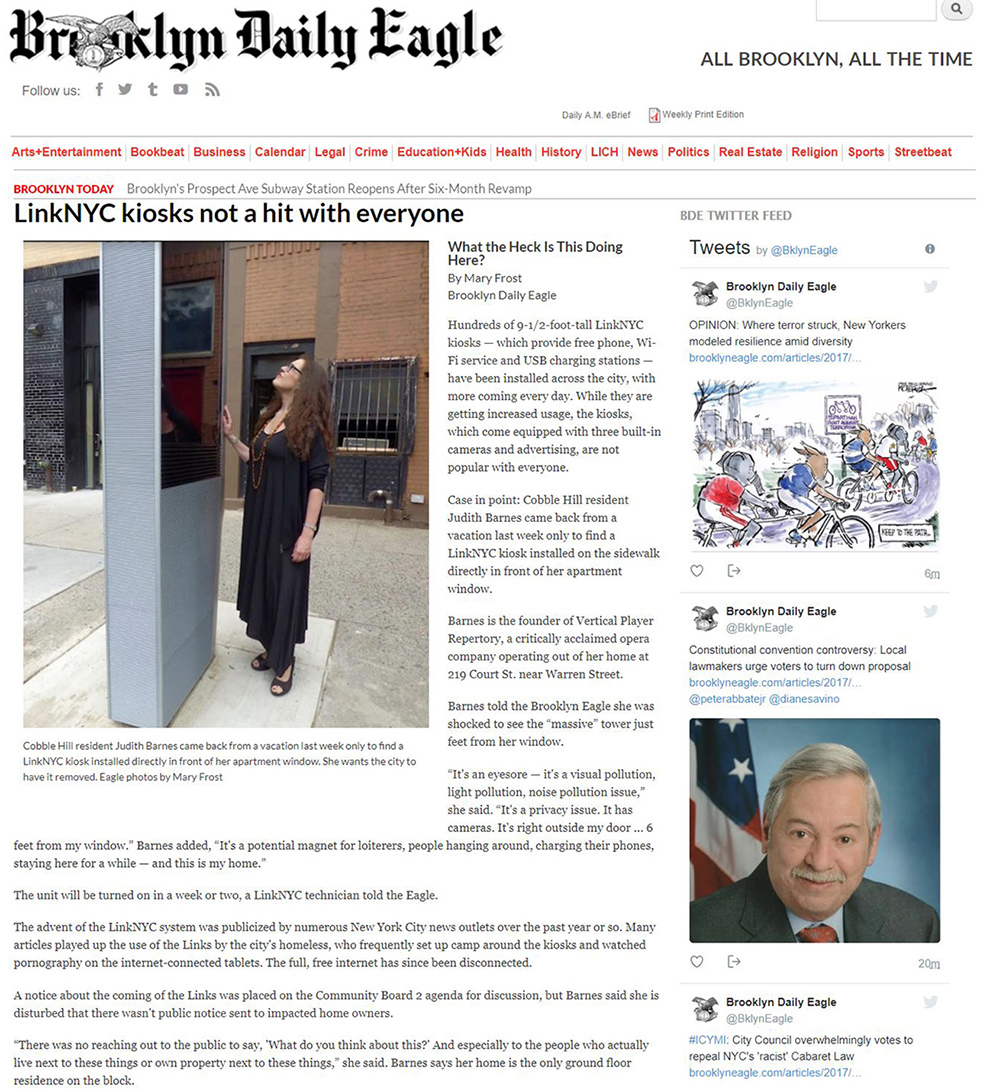
LinkNYC kiosks not a hit with everyone


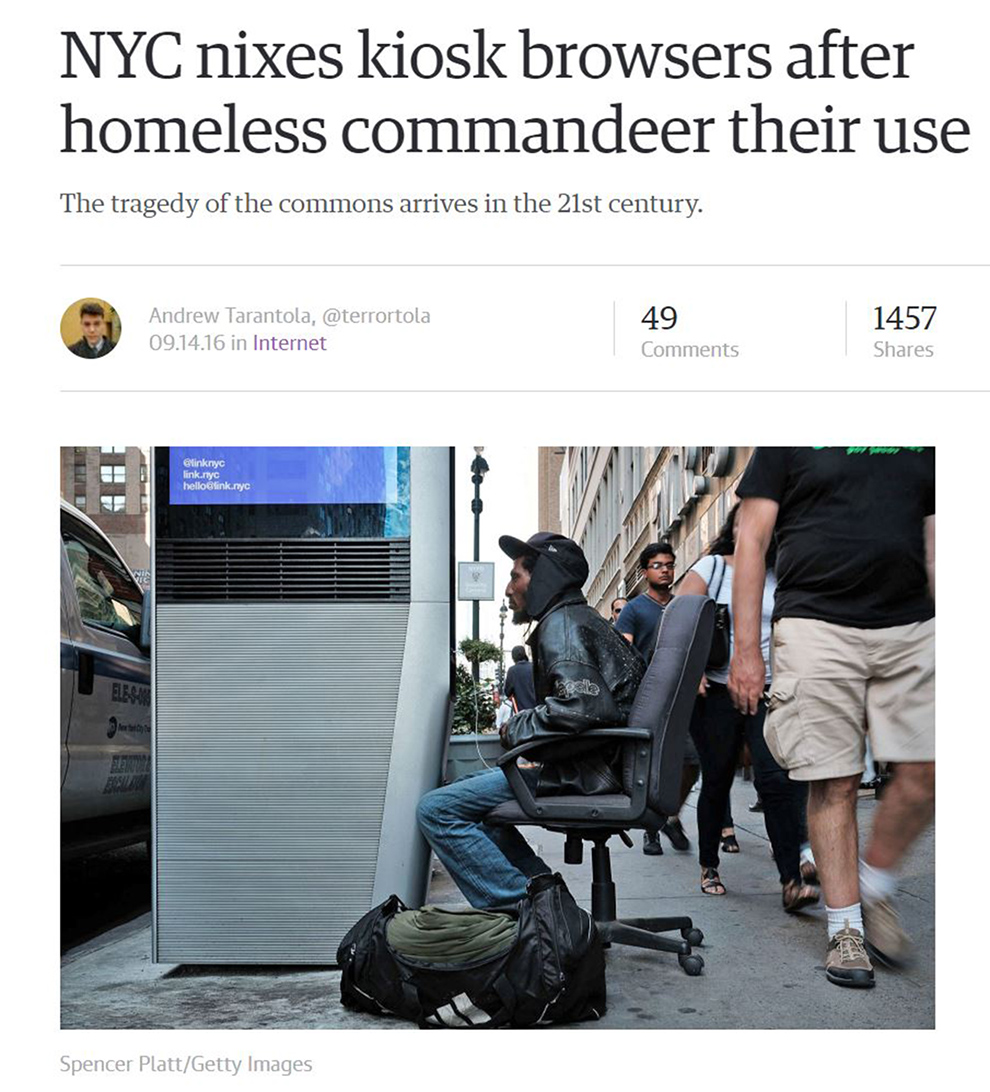
NYC nixes kiosk browsers after homeless commandeer their use


With little fanfare or prior warning, they began bolting the LinkNYC kiosks to the sidewalks in early 2016. Greeted with little more than a New York shrug, these were blatant pedestrian-scale digital billboards. An upgrade from the static posters on bus stops and phone booths. The trade-off for tolerating these new advertising intrusions was the promise of new “world-class” free wifi (of which an email address was initially required) and an internet-enabled, built-in tablet. Instantly, certainly apocryphal stories of rampant homeless porn-watching quickly spread, though a quick look through the offending media images showed that the concern seemed more to do with less desirable folks congregating and watching youtube videos or making voip calls instead of “moving along”. It should also be noted that these kiosks are not evenly distributed throughout the city, but rather more heavily located uptown – either through the result of human decision-making or a black box ROI algorithm is unclear. Seven months after the initial roll-out, access to internet for all passersby was either completely shut off or severely curtailed, though the digital signs remained.


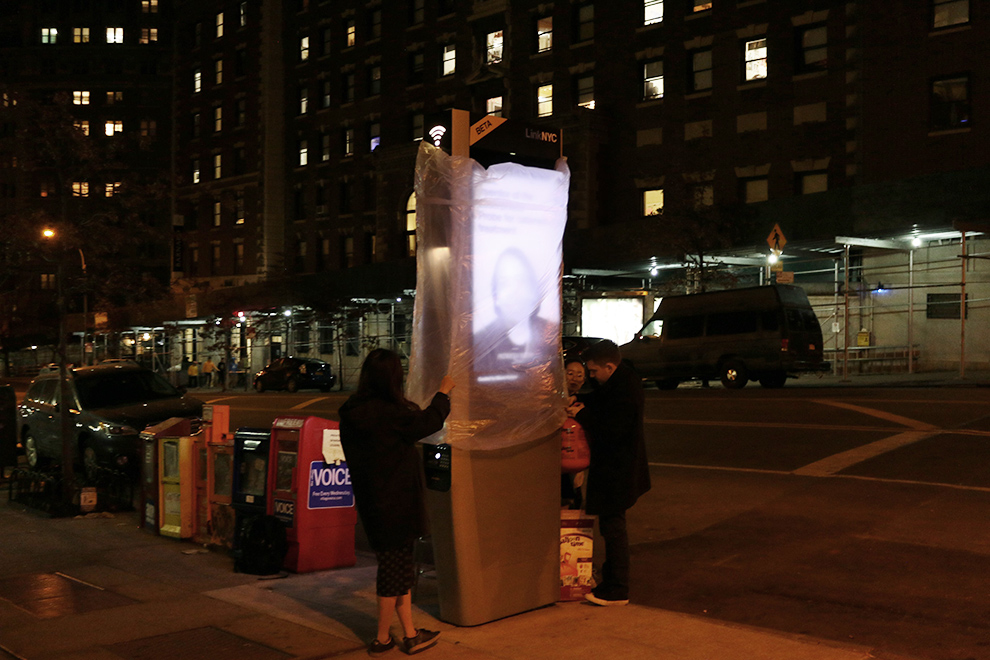
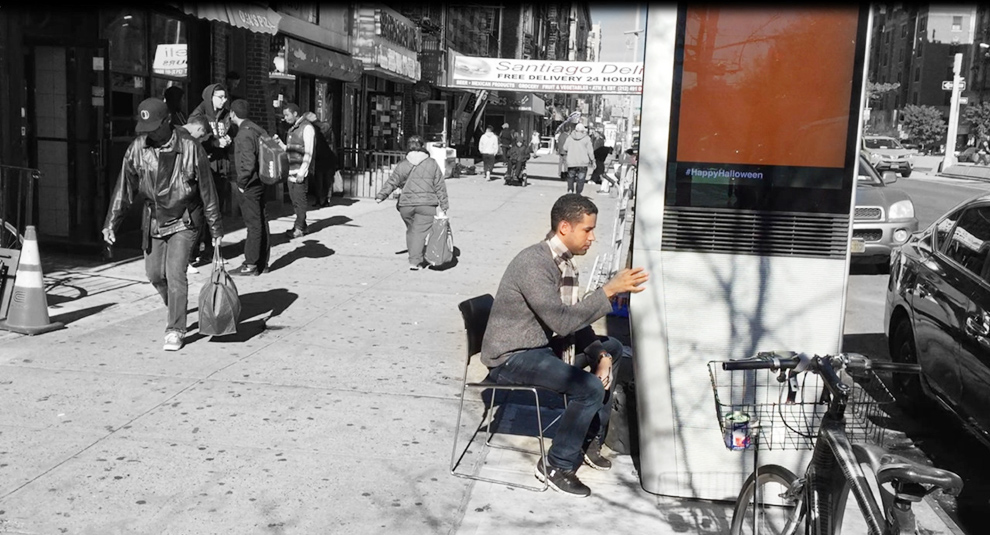
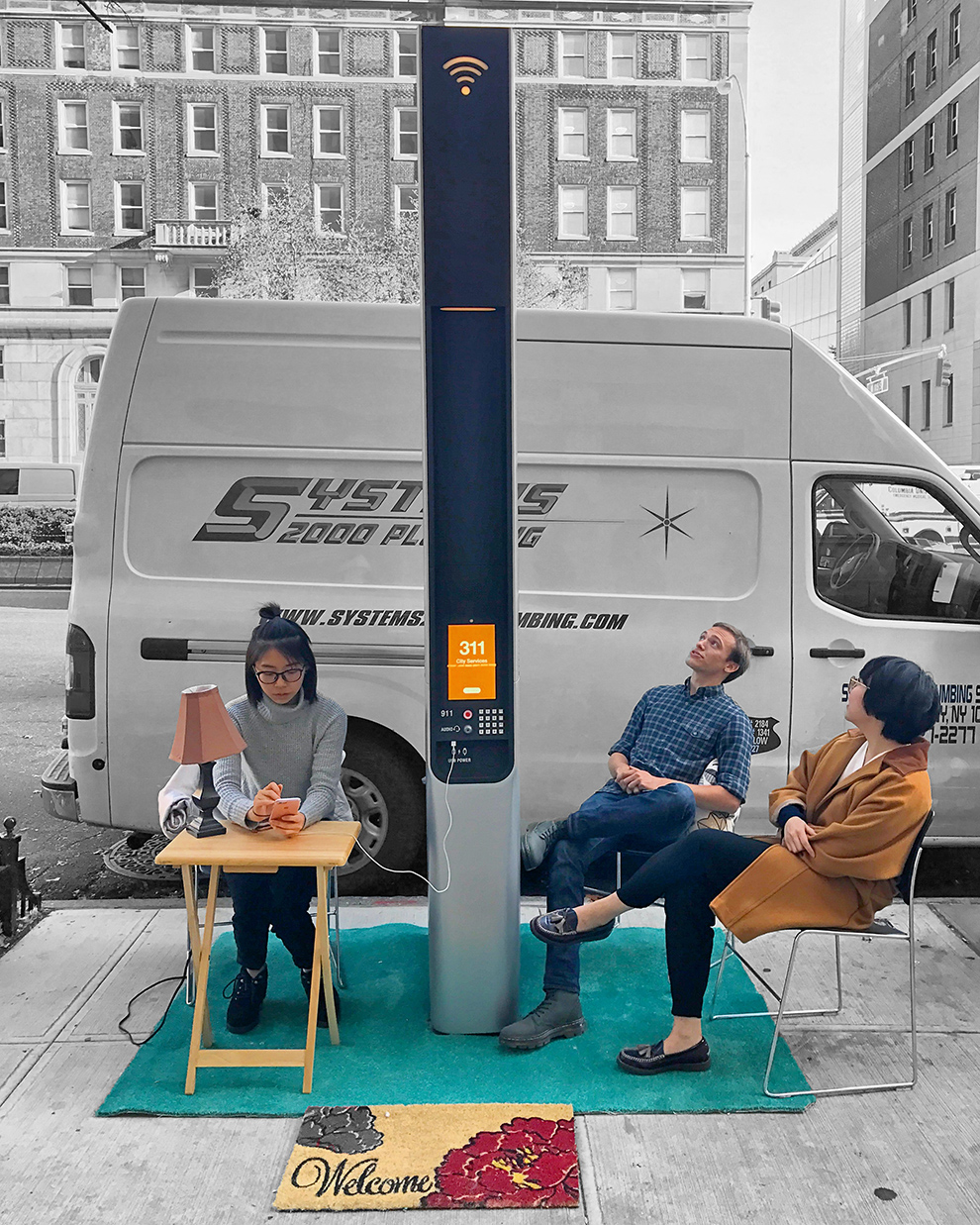
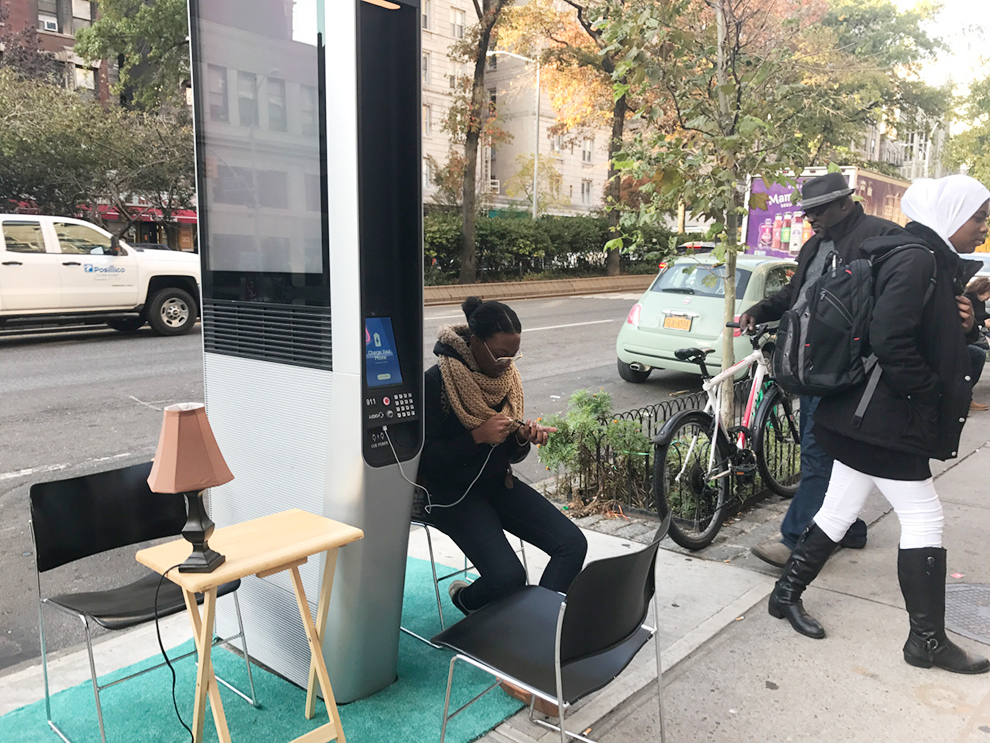
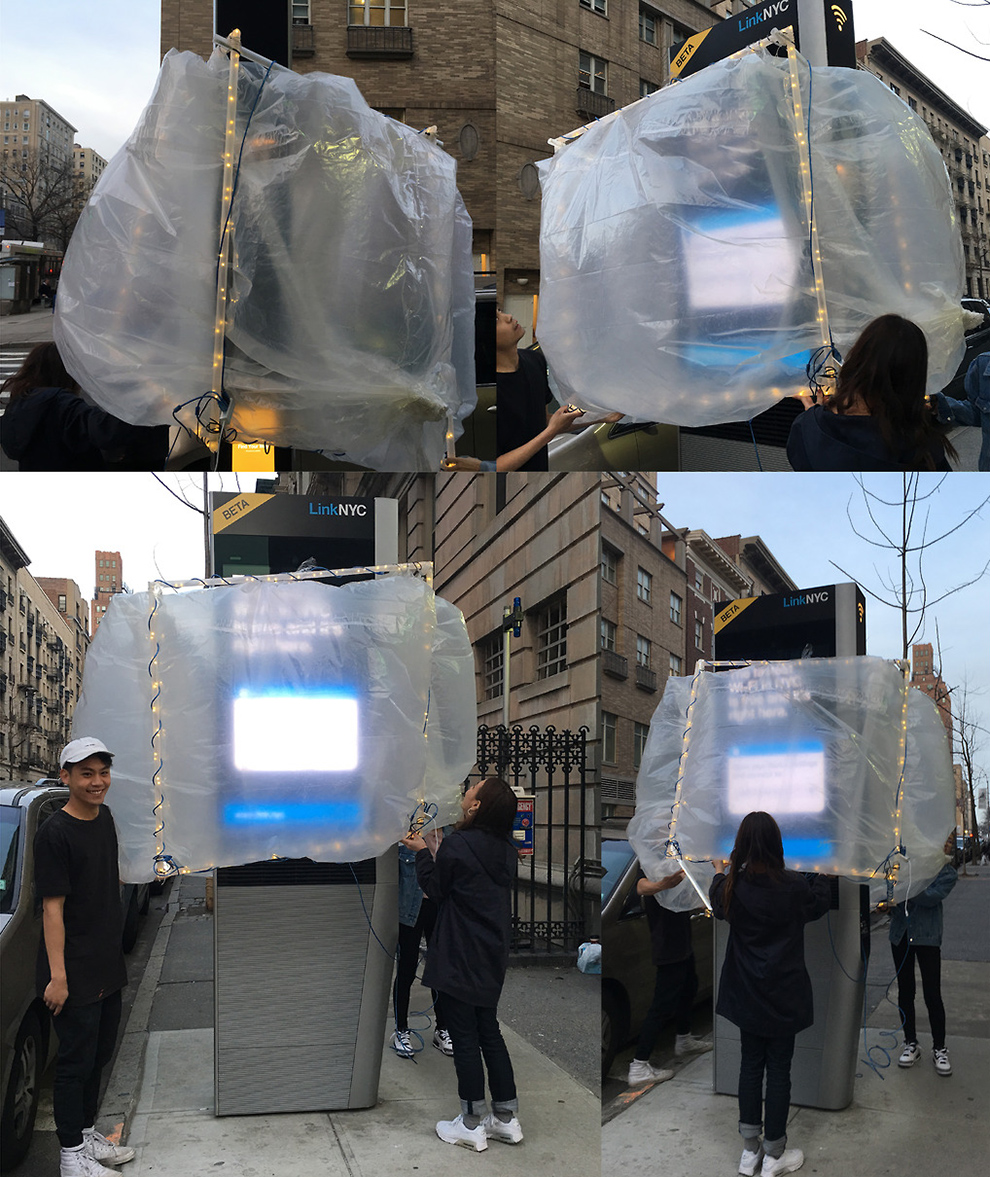
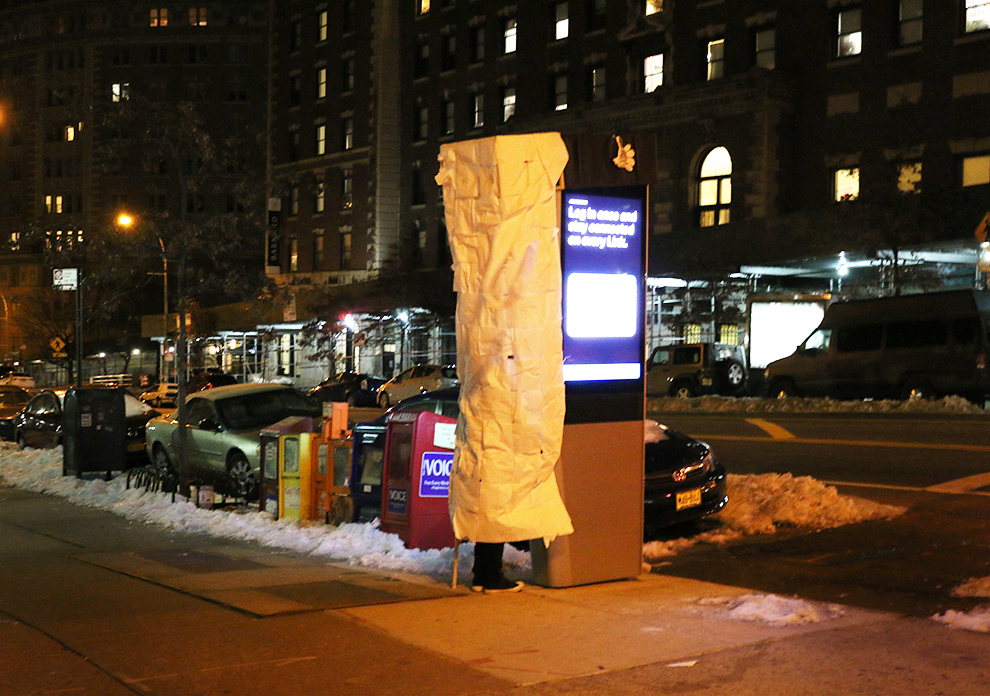
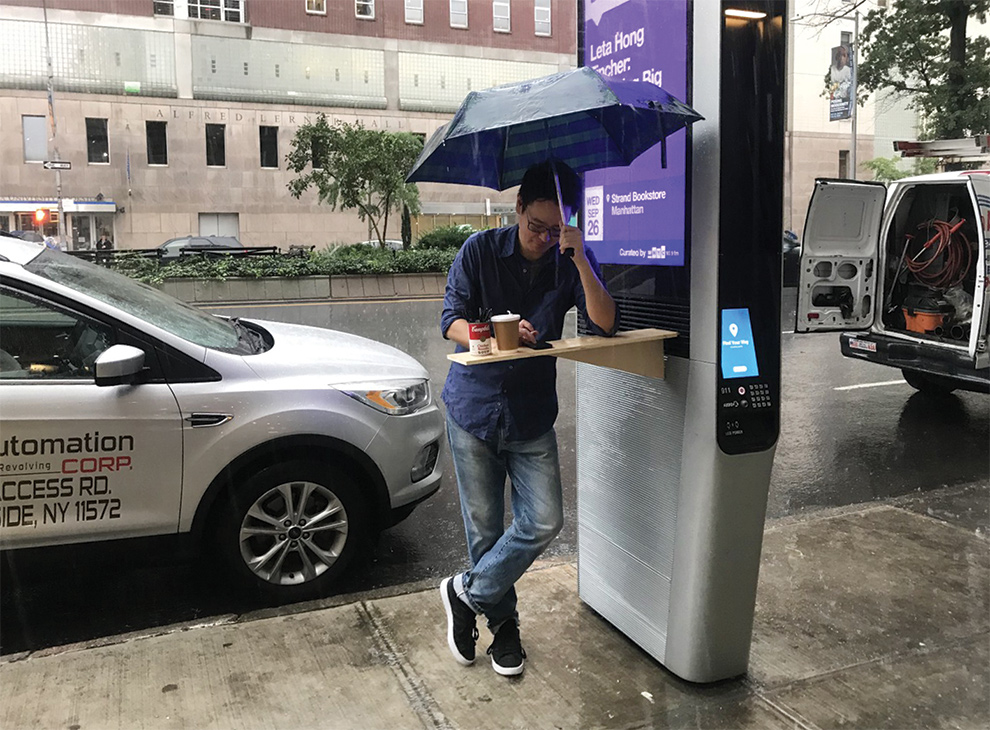
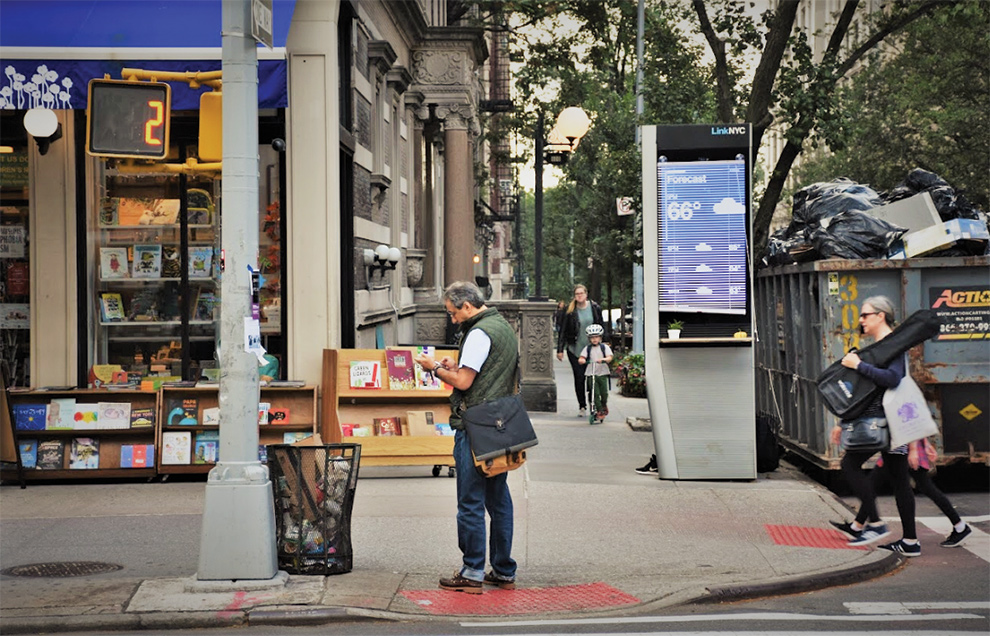
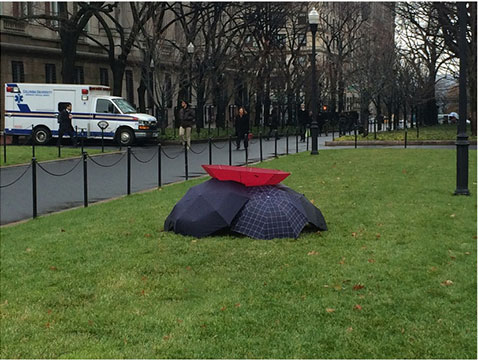
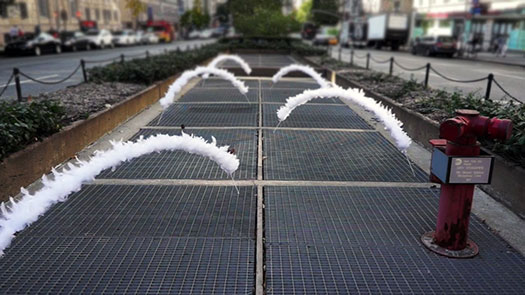
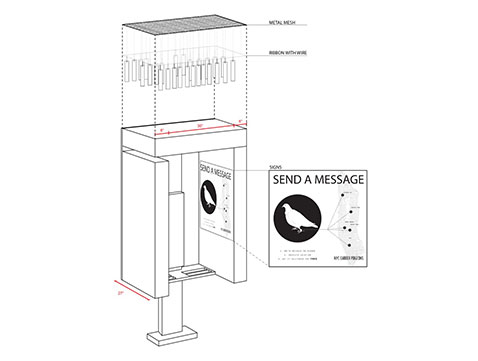
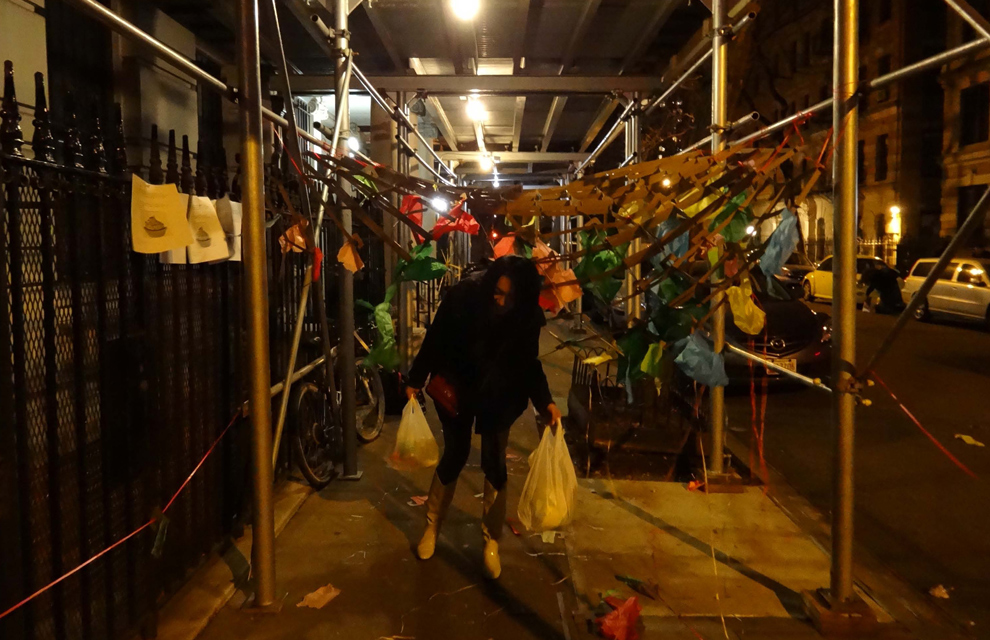
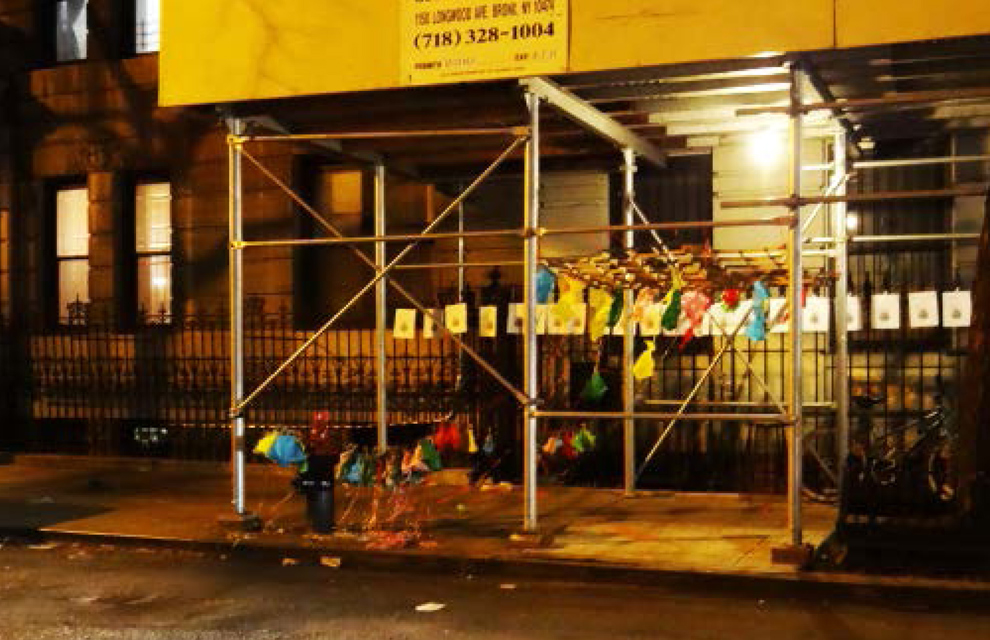
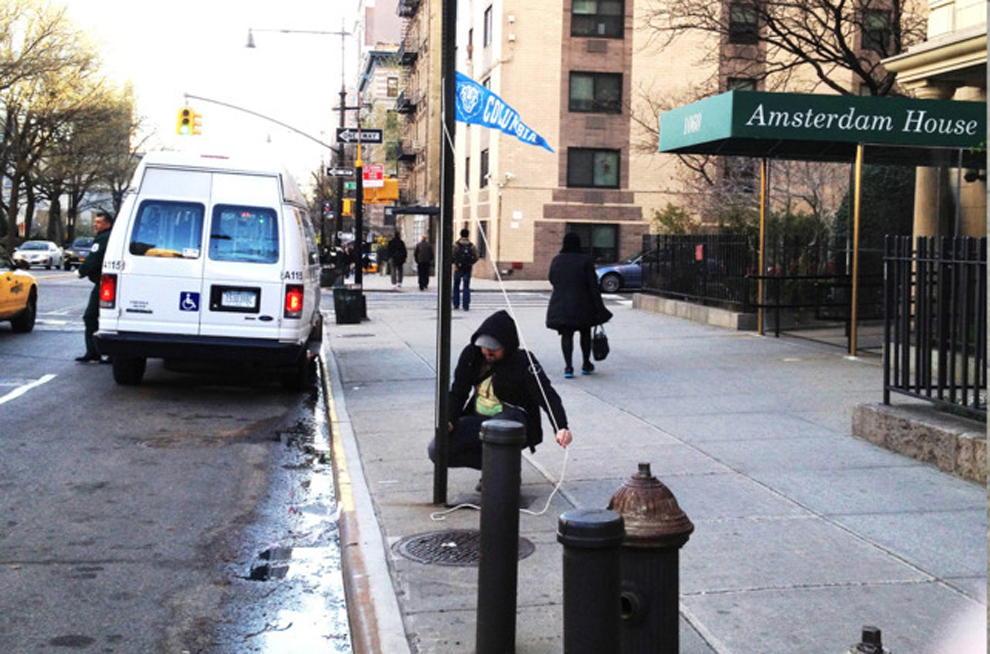
Our course at Columbia, Hacking the Urban Experience, is invested in architectural street interventions at a neighborhood scale. As it appears that the design and implementation of these is driven by public-private advertising concerns (LinkNYC’s parent company is Alphabet’s Google), rather than architects or city planners, the first assignment of the course looked at ways to both acknowledge that these things now exist on NYC streets and to non-invasively study ways that they can be adapted. In the same manner that steetlight poles can act as support posts for help wanted or missing person signs, how can the Link NYC kiosks adapt and provide actual value to the street?


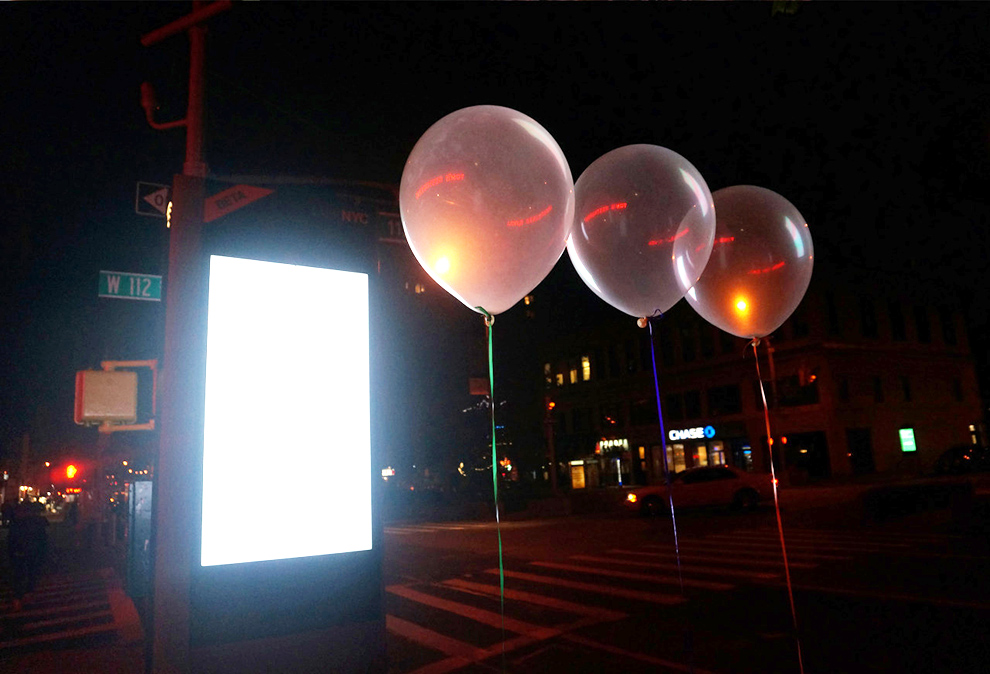
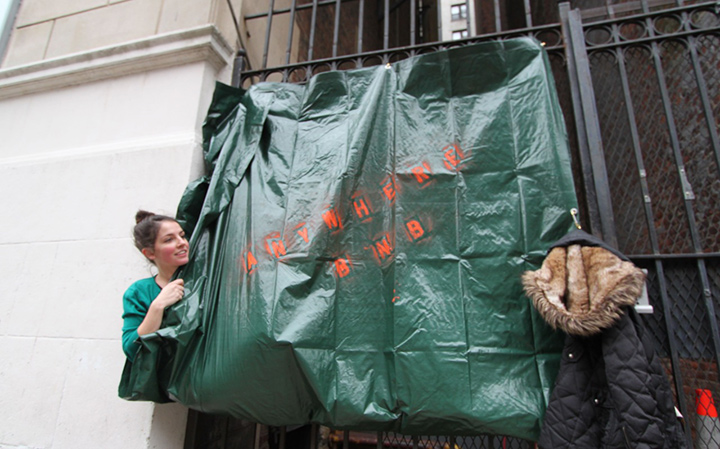
Below are samples of prototypes that were constructed in one week, with the expressed goal of adapting and testing how simple acts and gestures can impact our relation to these structures and public space around us. These kiosks inadvertently provide a number of opportunities – the bright screen can illuminate objects, the usb ports are charged and can power a desk fan, and the invisible wifi signals can define an actual physical space. These interventions became the foundation of a framework to discuss who is public space for, and who can stop and enjoy listening to a song by Slipknot on the sidewalk without a resulting pearl-clutching article by the Times.


2016062 Tags: architecture, fabrication, inflatable, newyork, research, urban | No Comments »

Jamaica Flux Inflato

INFLATO-DUMPSTER-JCAL-01

INFLATO-DUMPSTER-JCAL-02

INFLATO-DUMPSTER-JCAL-05

INFLATO-DUMPSTER-JCAL-03

INFLATO-DUMPSTER-JCAL-04

INFLATO-DUMPSTER-JCAL-06

web-inflato-02

web-inflato


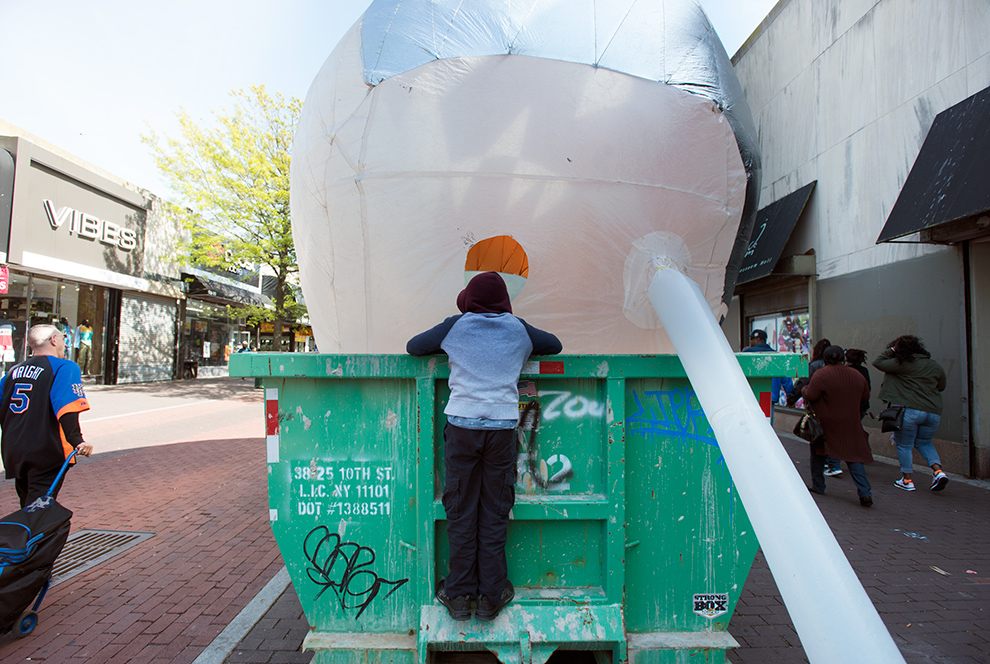
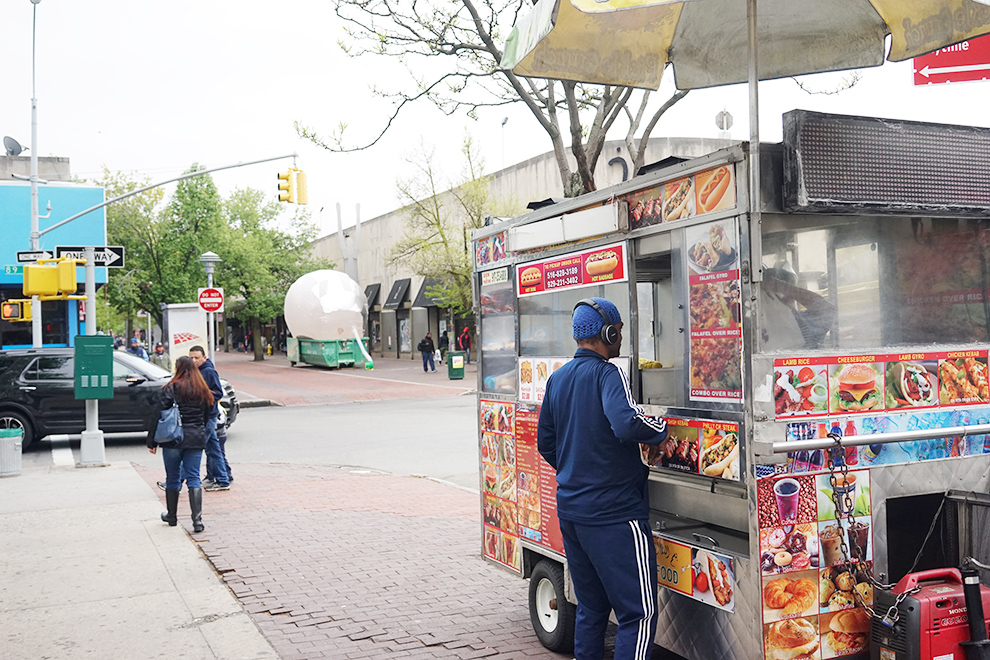
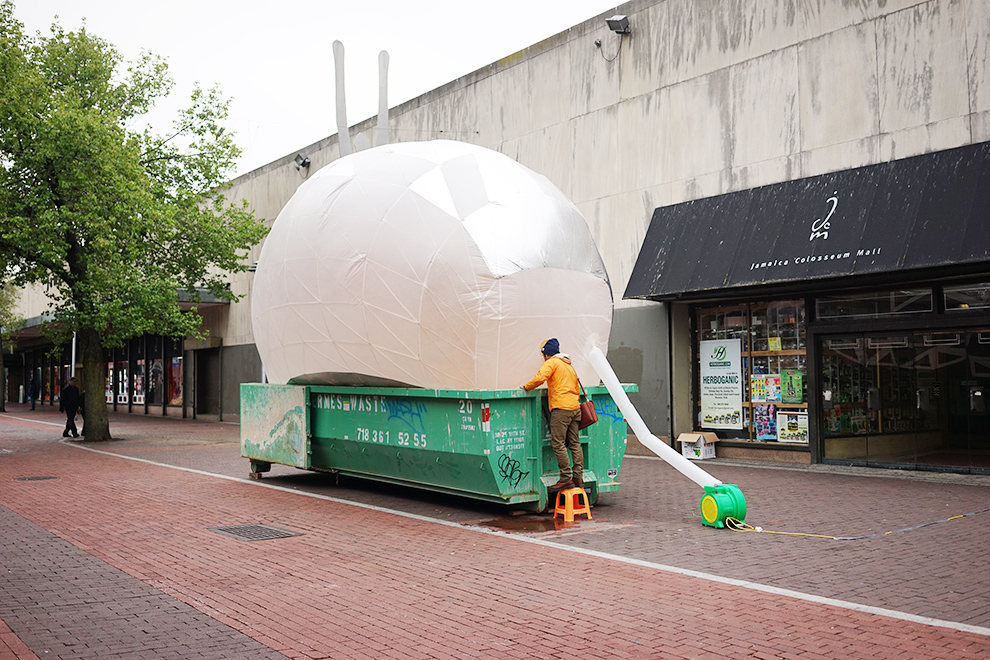
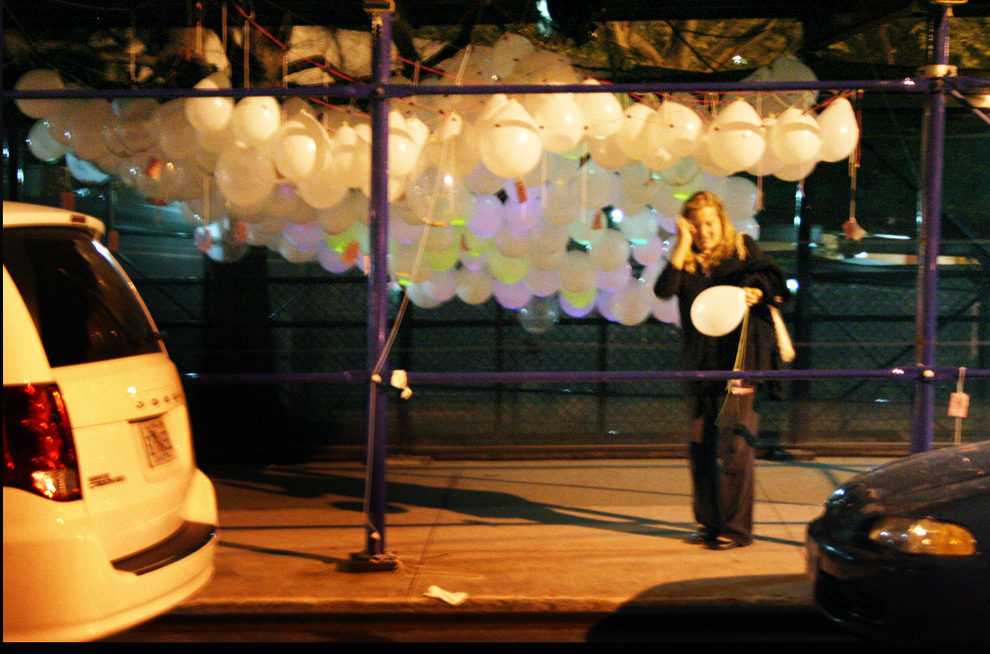
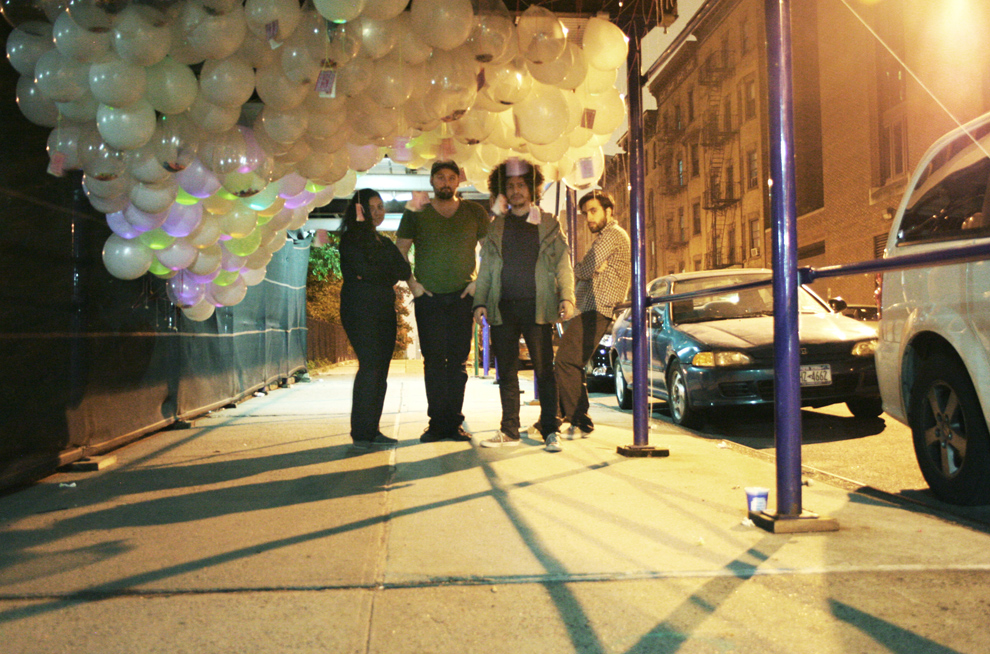
Images from the three-day event in Queens, sponsored by the great team at the Jamaica Center for Arts & Learning and with Joaquin Reyes.


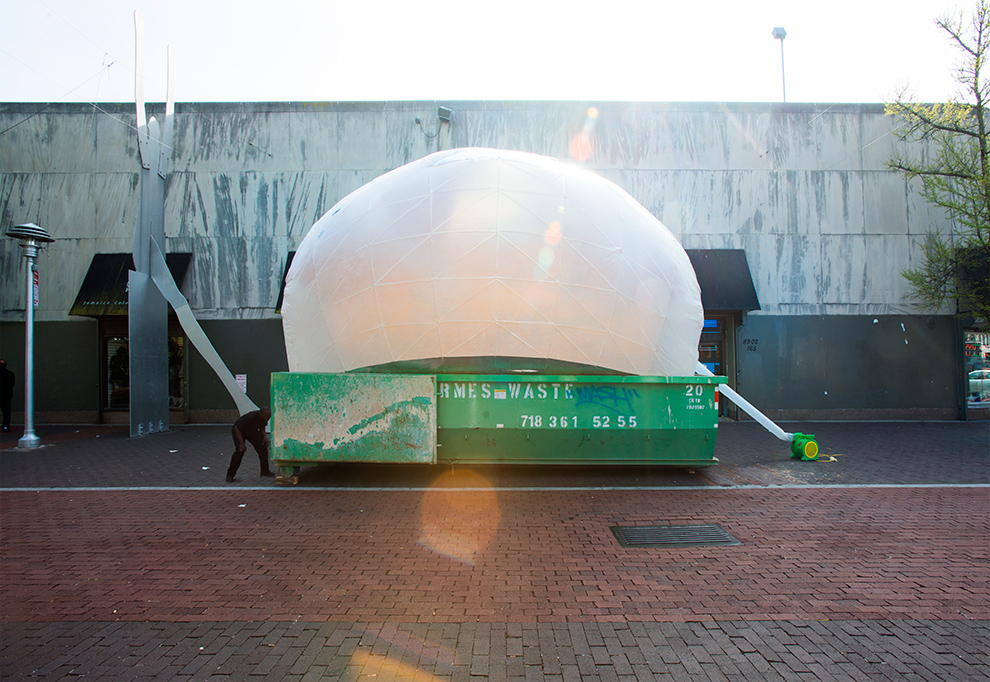
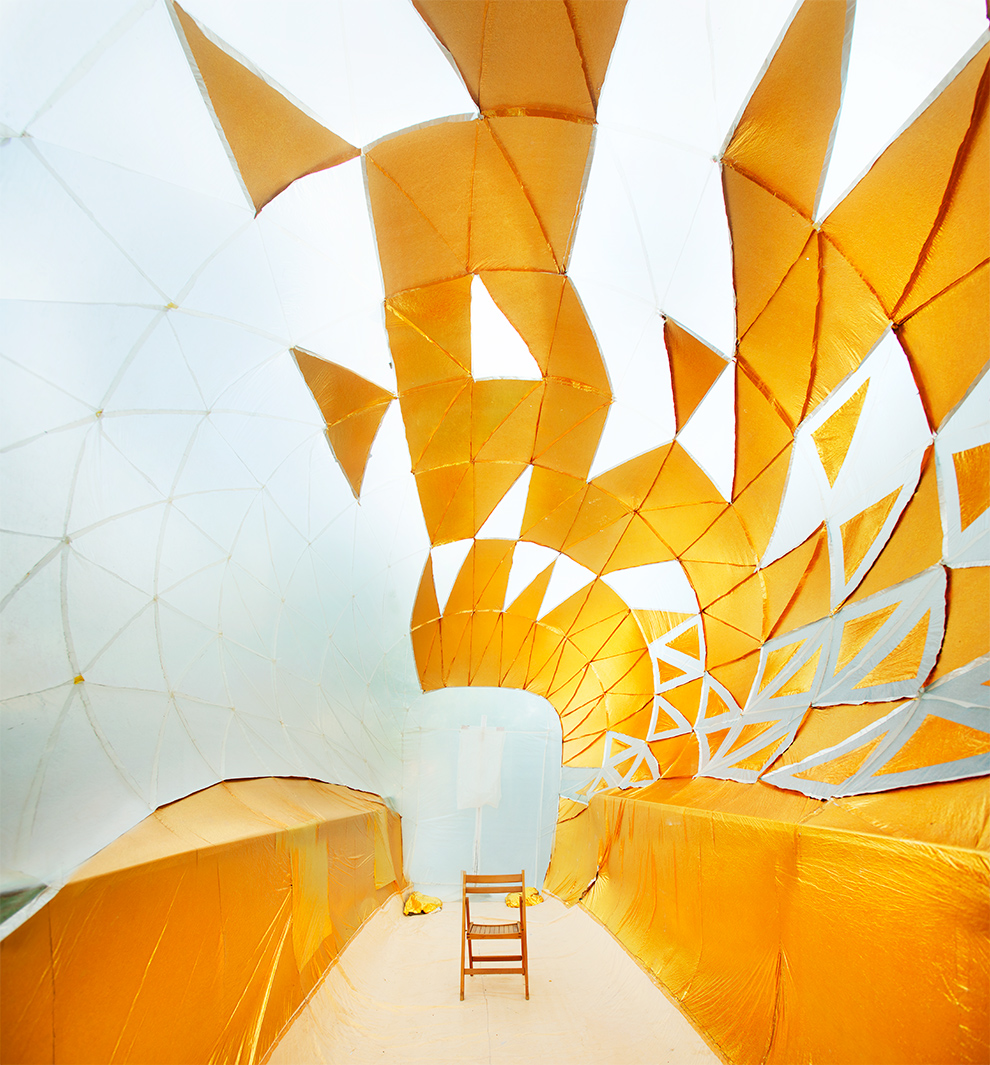
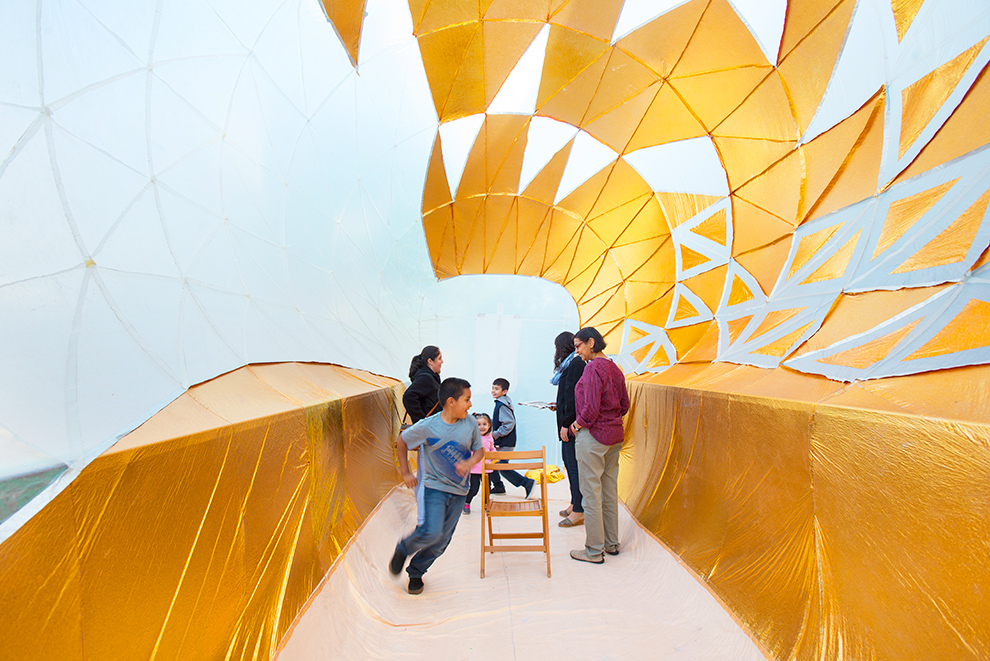
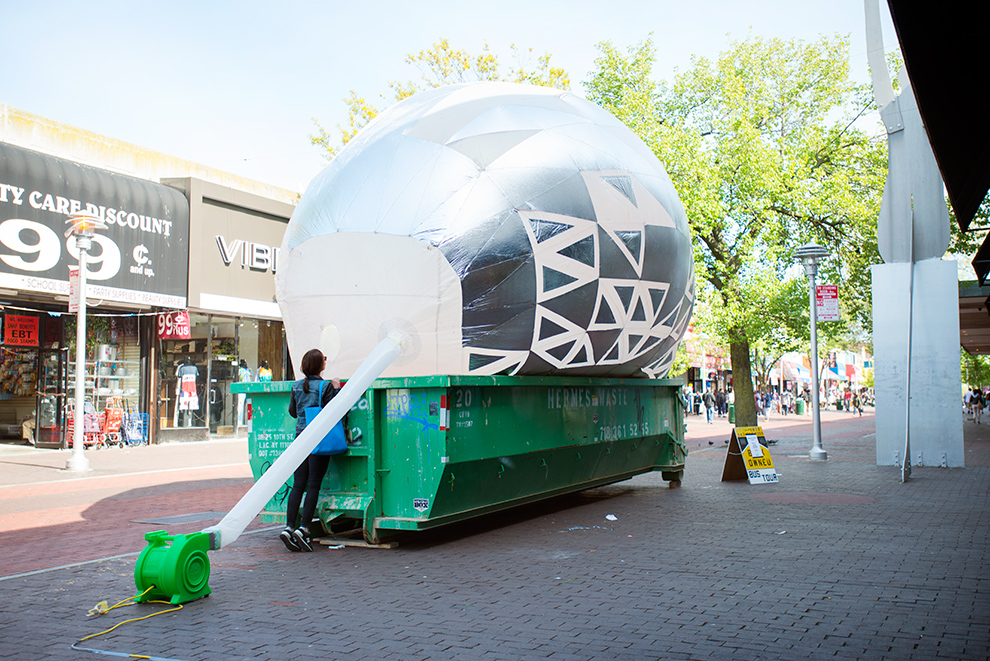
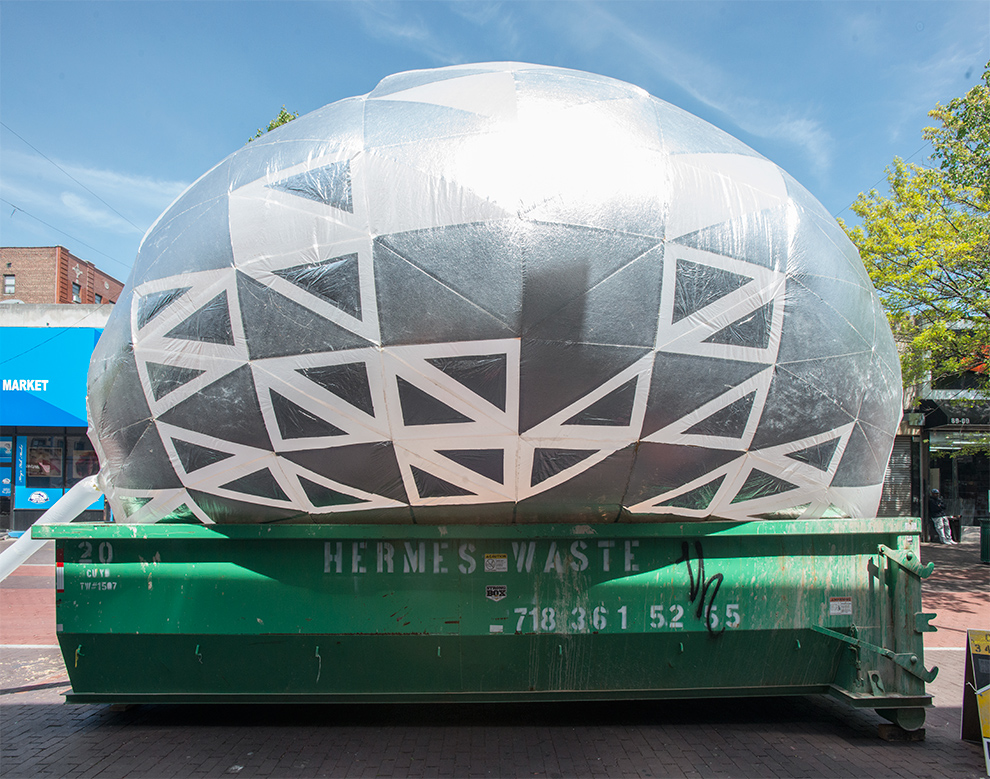
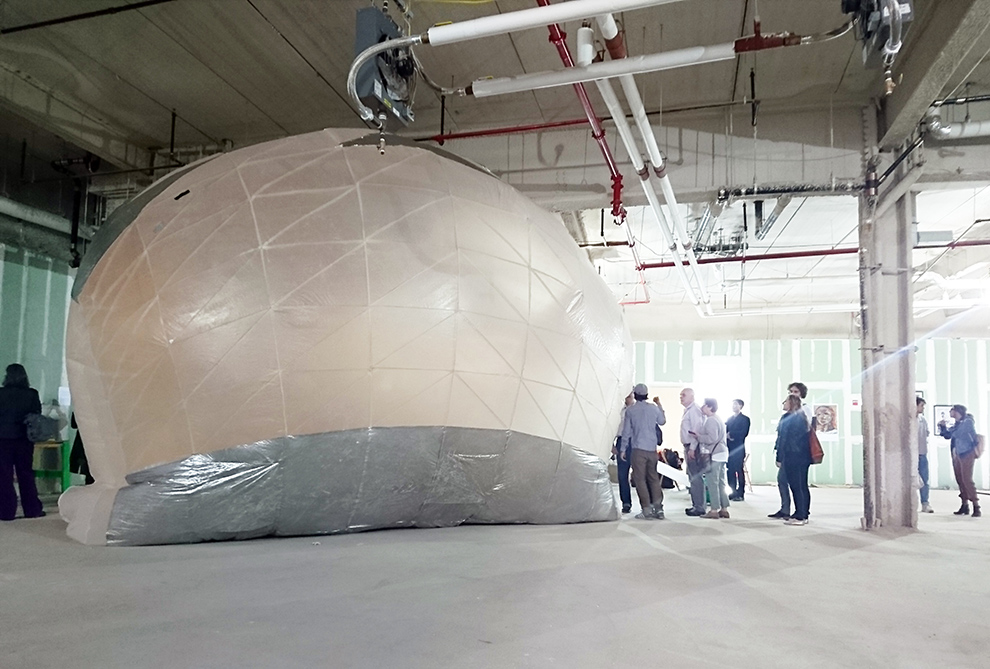
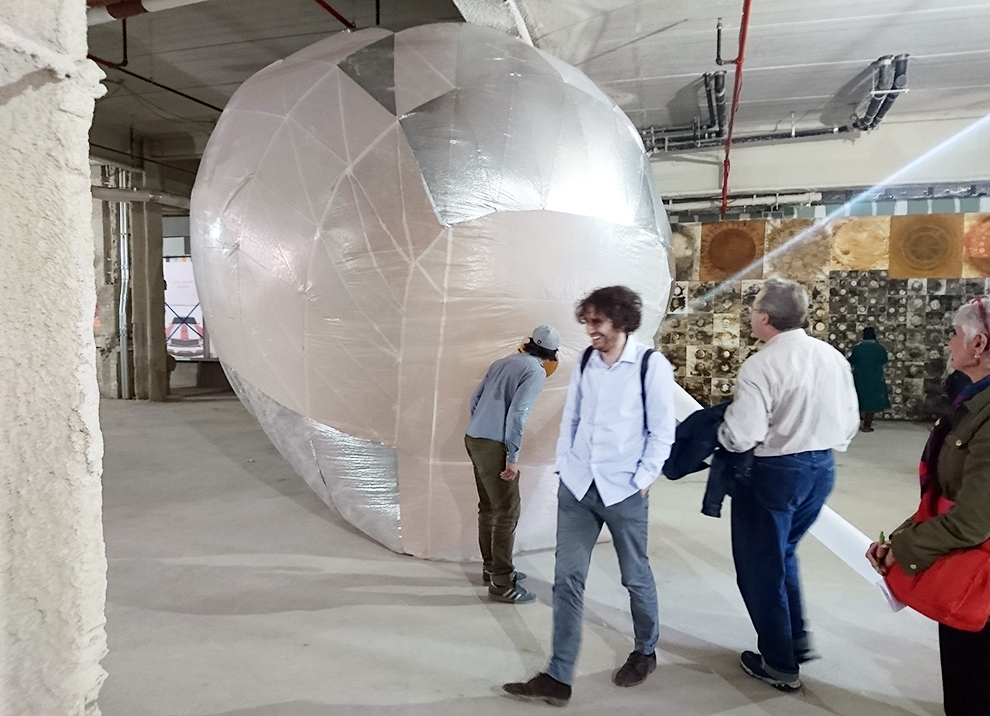
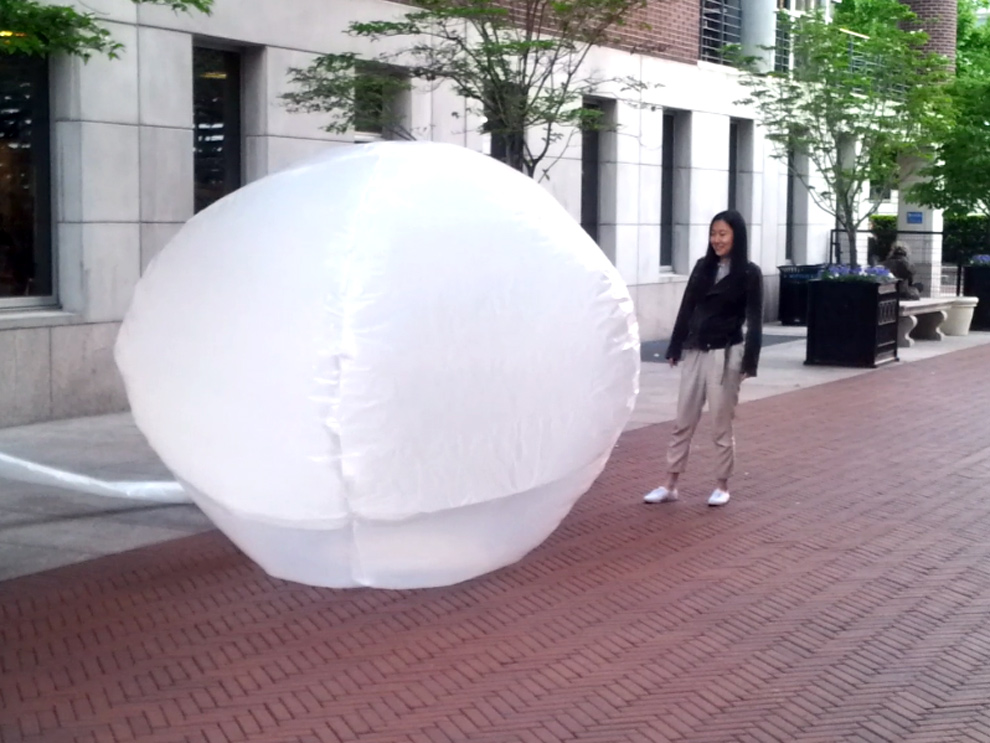
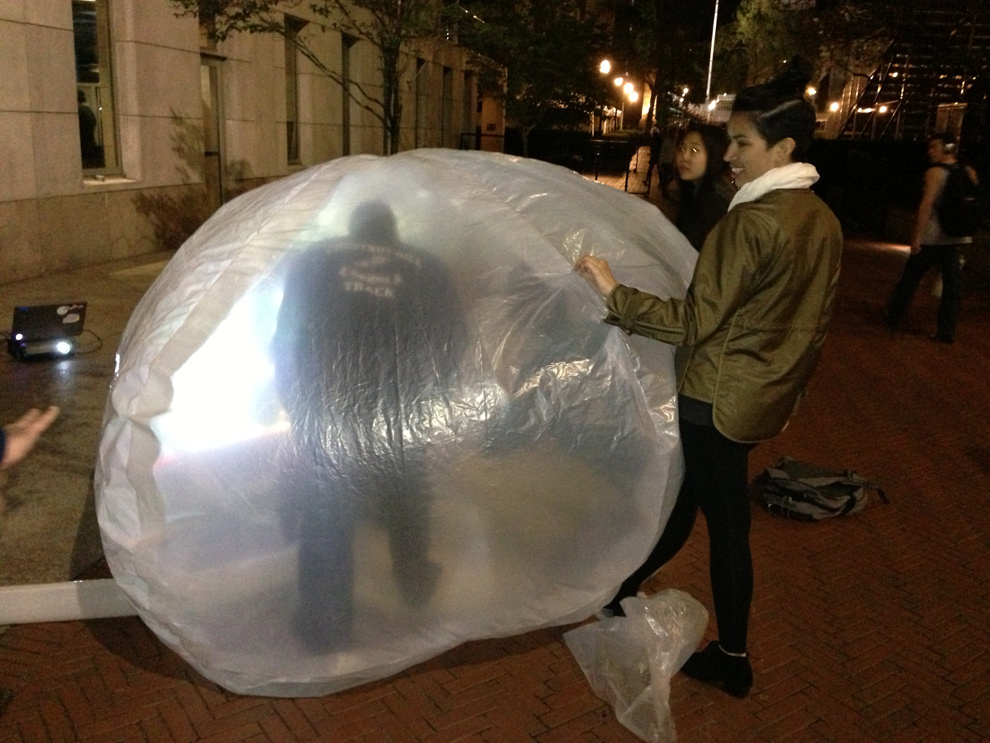
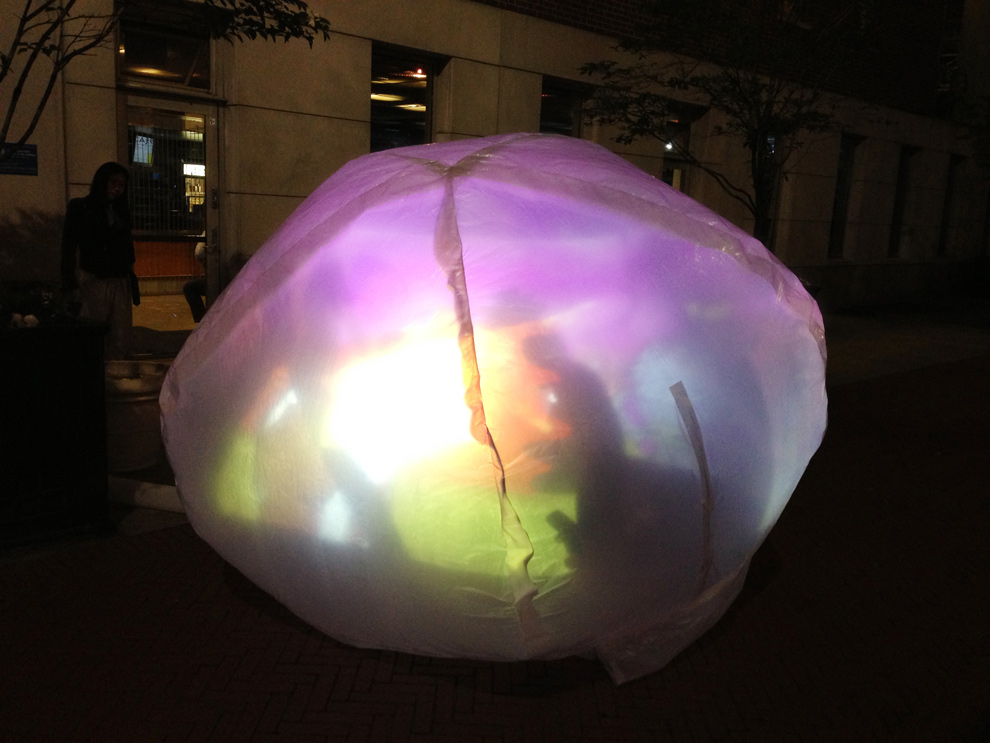
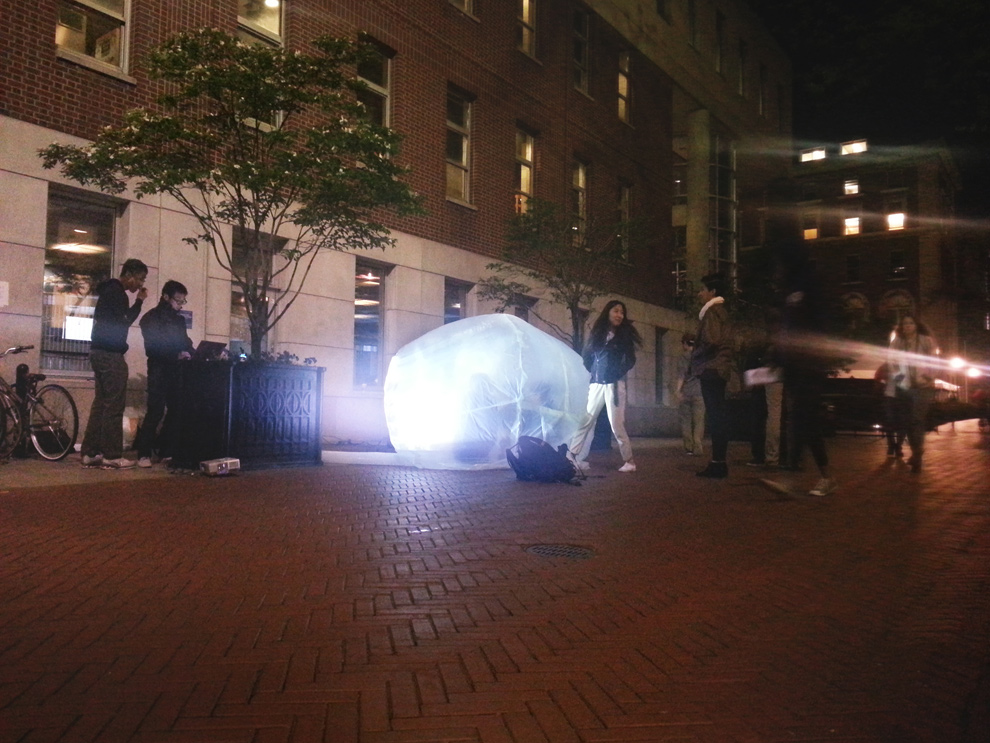
The Inflato Dumpster is a radical new conception of what constitutes public space in New York City. This site-specific work creates an open, engaging street-level structure that acts as a mobile learning laboratory through creative programming events that reflects the diversity of its location. The project takes advantage of digital design and new lightweight fabrication techniques to create a framework for small group discussion and engagement.


The project includes 165 square feet of enclosed space with maximum dimensions at 17’ height by 12’-6” wide and 24’ long. The main element is an inflatable membrane containing 2000 cubic feet of volume, weighing less than 20 lbs. Made from a combination of lightweight inflatable materials and a modular city dumpster, the Inflato presents a subdued silver, semi-reflective surface from the outside, while the interior creates a gold, brightly gilded interior.

 
2016053 Tags: architecture, fabrication, inflatable, newyork, research, urban | No Comments »

Jamaica Flux 2016

inflato-jcal-01

inflato-jcal-02

inflato-jcal-03

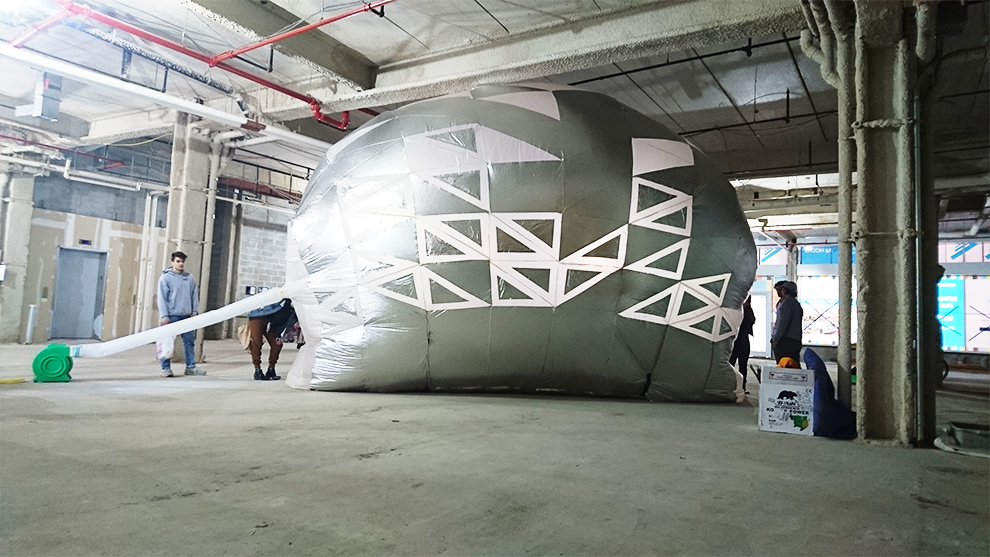
A few quick shots of the Inflato Dumpster project installed in the Jamaica Center for Arts & Learning gallery in Queens as part of the 2016 Jamaica Flux show.


The Flux 2016 exhibition invited 19 artists to study the effects of art in public spaces and provokes conversations regarding art’s role in community, participation, commerce, and urban renewal.


This was a preview exhibition of the Inflato project before its full activation (complete with pre-fab metal base) on the 165th Street Pedestrian Mall.


20151022 Tags: architecture, DUB, fabrication, inflatable, newyork, research, urban | No Comments »

Inflato Dumpster Returns

elev

2015-09-27-14.54

int

int2


The Inflato Dumpster was back as part of the 6th Annual Bloomingdale Family Days located in my neighborhood, steps from my apartment in fact. Many thanks to the Columbus-Amsterdam BID and Budget Dumpster for the generous support. It was a great turnout and a really successful event.


Please see this link for more about this ongoing project.

 
20141231 Tags: architecture, fabrication, new york, research, school, teaching, urban | No Comments »

HACKING THE URBAN EXPERIENCE – STUDENT WORK FALL 2014

web-01web-02

web-03web-04

web-05web-06

web-07web-08


A small selection of the amazing work the group produced in class this semester. Click on the images above for more information.

20130616 Tags: grasshopper, parametric, research | No Comments »

Extrude Mesh Faces


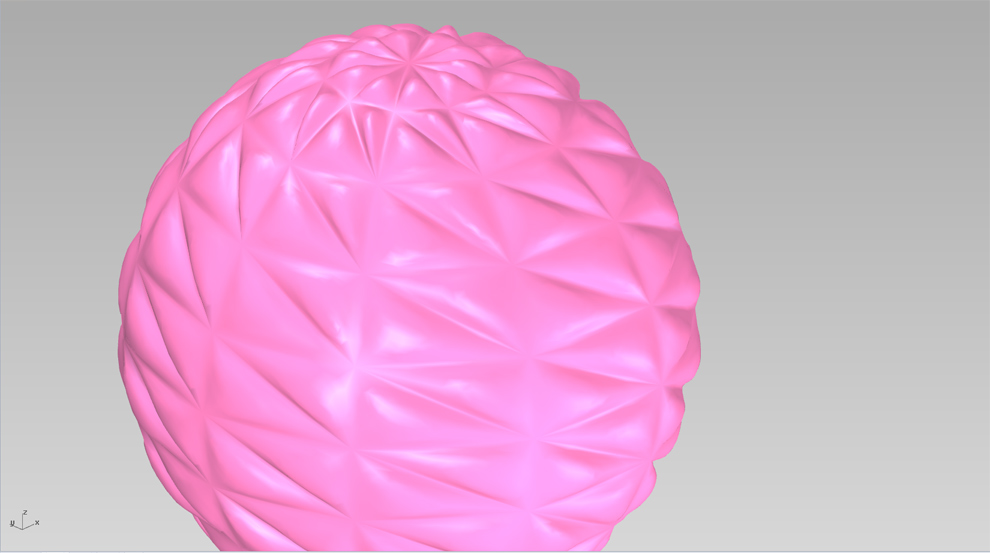
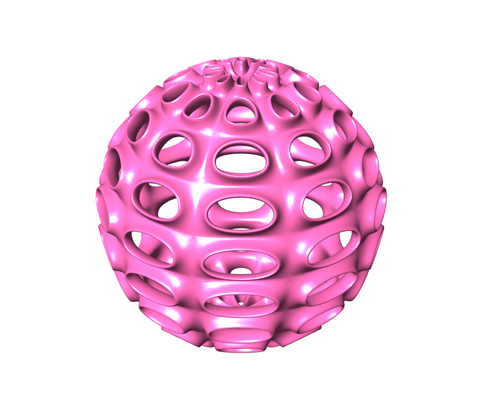
In conjunction with a form-finding exercise in Kangaroo, I was searching for a way to render a single, closed mesh as if it were an inflatable form made of individual, stretchy panels – think soccer ball. Since I was already starting with a mesh, I needed something that could extrude and manipulate individual mesh faces normal to the face centroid with a certain degree of flexibility. I couldn’t find much online, so I put together a super basic, simple grasshopper file. Aside from some of the typical drawbacks with using meshes in Rhino (which have actually become a lot more workable in Rhino 5), I think it’s reasonably clean.
Download here: http://gracefulspoon.com/downloads/EXTRUDE_MESH_FACE-NORMAL_FINAL.gh

20130520 Tags: fabrication, gsapp, interaction, new york, research, teaching, urban | No Comments »

HACKING THE URBAN EXPERIENCE III – STUDENT WORK


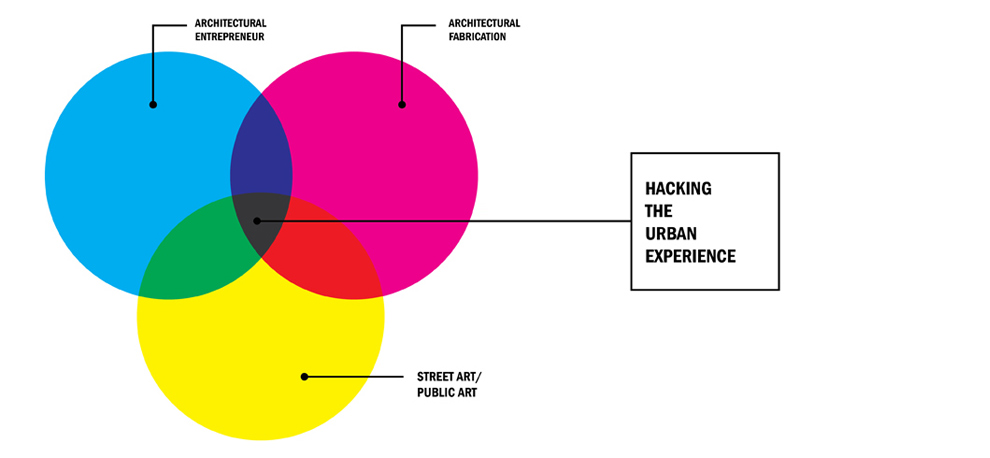
While my natural tendency can lead toward convolution, in the interest of concision here is my attempt to sum up the course objectives in one sentence: “to self-initiate and identify a problem statement relating to the urban environment, and then manifest a possible solution through a public, physical object, while confronting the myriad issues associated with that decision.” Problems addressed included the notion that strangers occupying proximate space are too disconnected – how can you encourage interaction? As well as the problem of physical space inducing a heightened sense of agitation during a stressful time (finals on a college campus) – how can a space be created that produces an alternately playful, soothing affect for passersby? So with that, here’s a sampling of self-initiated work from the third iteration of HTUE.


See previous work and extensive course descriptions here:
Hacking the Urban Environment II – Student Work
Hacking the Urban Environment I – Student Work


All images and work by students Amir Afifi, Hanxiao Yang, Marielle Simone Vargas, Wilbur Lee and Will Chen


Assignment 01 – PARASITES


Assignment 02 – LIGHT PROJECTION


Assignment 03 – FINAL

2013014 Tags: architecture, fabrication, interaction, new york, research, teaching, urban | No Comments »

HACKING THE URBAN EXPERIENCE II – STUDENT WORK

I spent a second semester with a great group of young architects, urban designers and planners teaching a course at Columbia. The class was titled “Hacking the Urban Experience” and was about a number of things I’m interested in, specifically how to fabricate, repurpose and interact with urban space. It was a very good short semester and I was super proud of all of the student’s work. I thought the ideas went deeper and successfully built off the earlier semester. All lectures and process work are archived on the class tumblr: http://hackingtheurbanexperience.tumblr.com. Classes typically took the form of lectures on precedents and concepts, a discussion of student work and tutorials on materials or software techniques as required. Topics during the semester included overviews of unsolicited architectural proposals, building-scale light projections, inflatable materials, urban siting opportunities and community/crowd sourced funding.


Course Description
The course goals haven’t changed dramatically since the last semester, the course still seeks to assert the relevance of the fabrication tools at our disposal as potentialities for social and environmental relevance. Through the re-appropriation and re-imagining of existing urban conditions, the student will design and fabricate a working prototype that embraces the messy reality of our city and promotes community involvement. The student will begin by identifying a quality of the urban condition that includes the latent capability for improvement and work toward fabricating an adaptive, responsive and environmentally viable solution. Specific emphasis will be placed on testing and exploring through hands on research the possibilities of detailing and fabricating connections using unorthodox materials. At the conclusion of the course the student will produce a full scale urban intervention and observe and document their relevant successes or failures.


Workshops were conducted to introduce the students to the possibilities inherent in new material technologies, through production and detailing techniques, and the proper use of fabrication techniques. Material workshops encouraged students to explore with everything from dynamic, variable surfaces using latex and silicone to parametric agglomerations using quotidian materials.


The first investigation was the creation of the connection detail. It was encouraged that this be a parametric joint that breaches the gap between the existing streetscape and the student’s intervention. Flexibility, safety, durability, adaptability will all be tested while exploring different possibilities for a potential synthesis with existing urban forms, examples of which can include: will the student’s intervention clamp on to a lamppost, hang from a phone booth, project from an existing building or rest in a parking lot?


By attempting to capture a broader audience for architectural interventions, a number of questions presented themselves and the student was challenged to anticipate possible eventualities – how will it be used? Can its use be changed? Is it durable? Is it waterproof? Can it safely stand up? Fabrication was considered less from a formal quality, and more from a use, durability, improvisation and public participation viewpoint.


Ultimately the student should have come out of the course with a healthy respect for two core concepts: Firstly, an increased skill in the use and applicability of the fabrication machines we have at our disposal for solving design issues using unorthodox materials in unconventional settings; and two, that there is an opportunity for architects to regain lost relevance by inserting themselves through unsolicited proposals into the public consciousness as steward’s of urban well being.


Assignment 01 – PARASITES
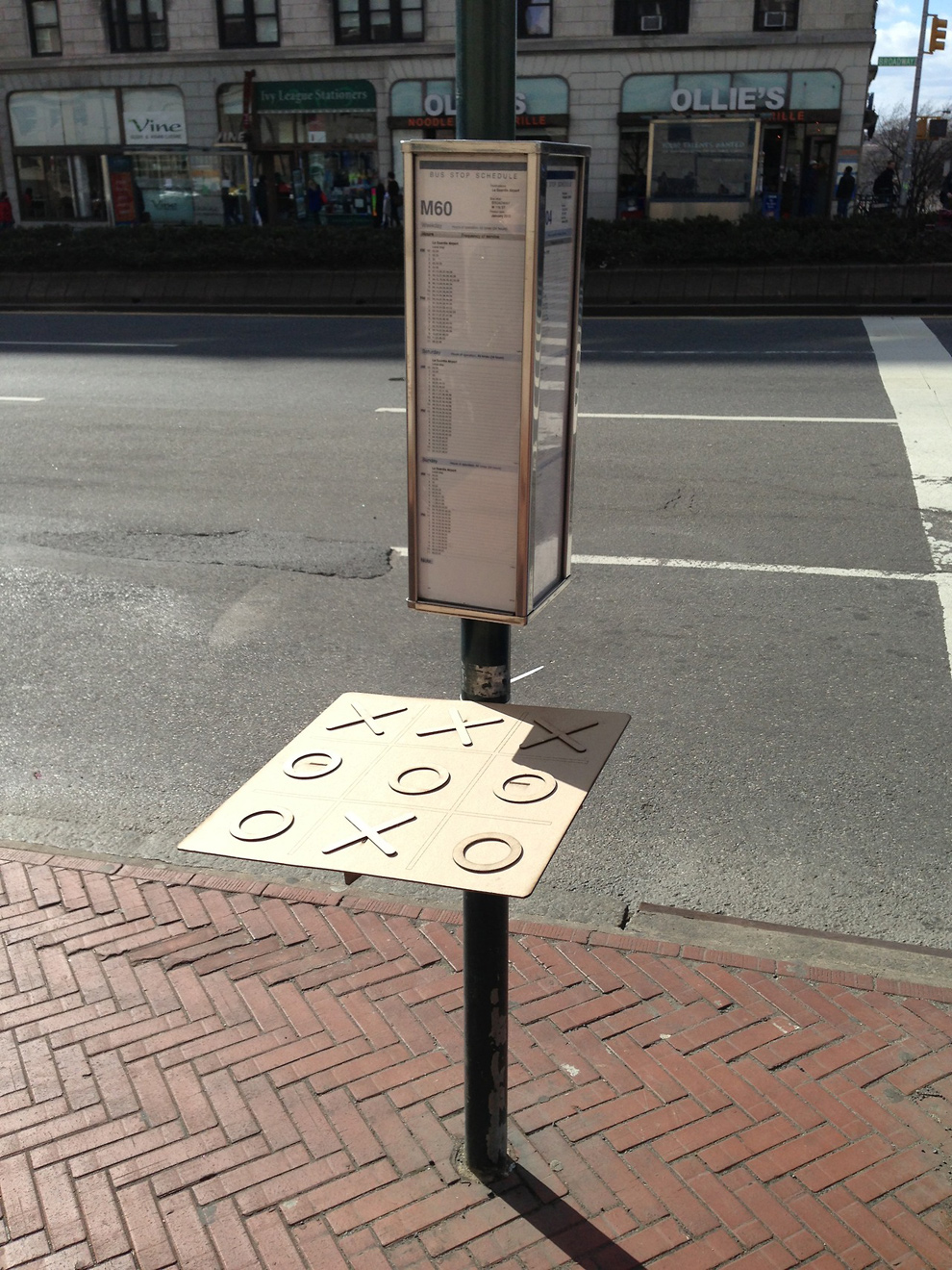
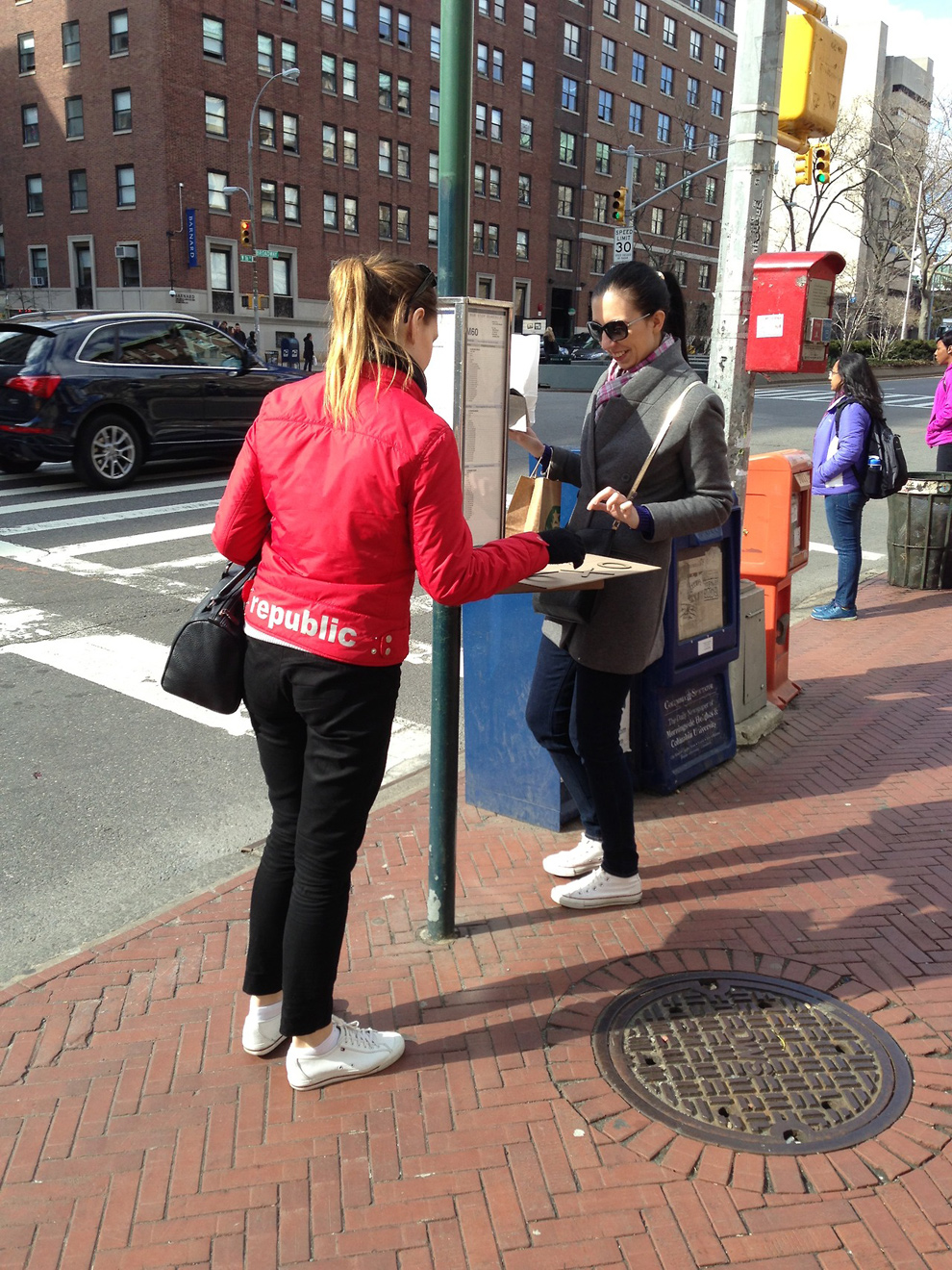
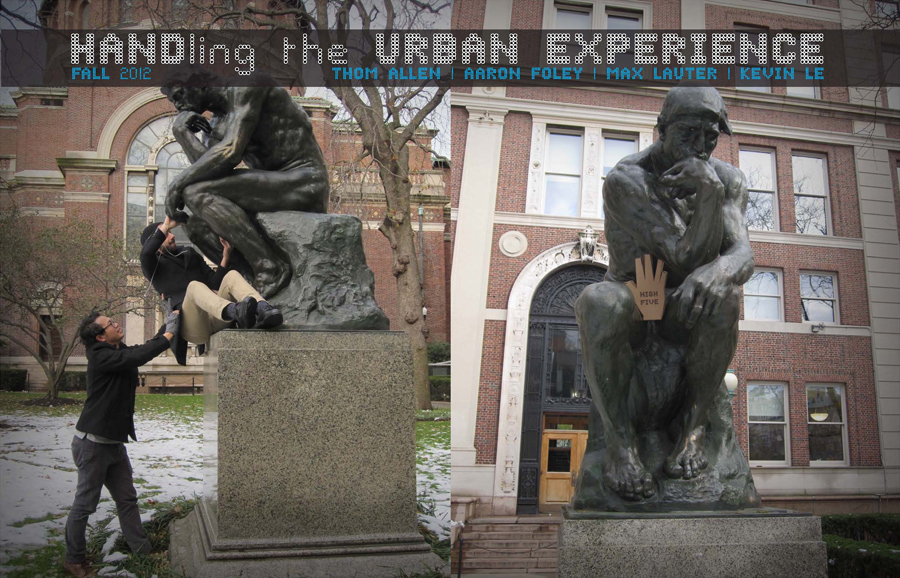
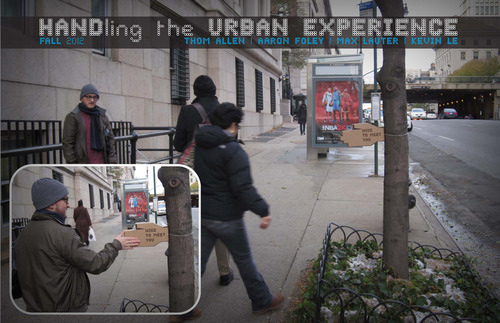
Part of the Atlas of Urban Connections project (TBD), the first assignment involved designing and fabricating a joint to connect something, anything, to a vertical street extrusion (such as a tree, street sign, light pole, etc…). The members of the Public Works Department in NYC are masters of improvisation, you can see it walking down any street here, and there is a lot to learn from their successful and not-so successful techniques for attaching to existing sidewalk infrastructure. This assignment was prepared to introduce the student to the capacity to breaching the gap between the pedestrian and existing streetscape objects, with the goal to test flexibility, safety, durability, adaptablility while exploring different possibilities for potential synthesis with existing urban forms.


Tom, Aaron, Max, Kevin


ChunChun, Yuri, Shuang, Rubing, Renwick


Assignment 02 – INFLATABLES
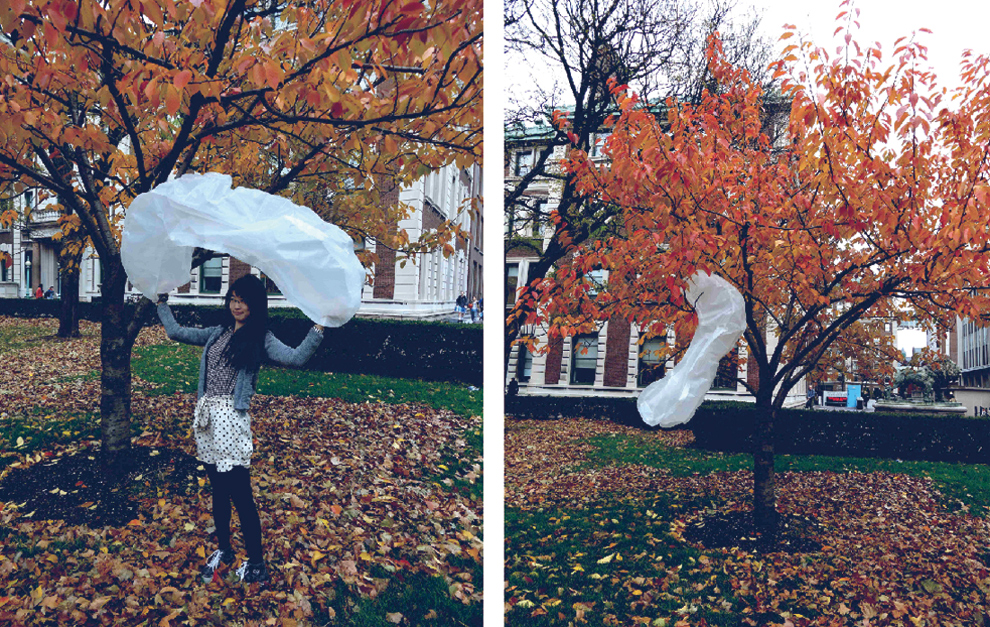
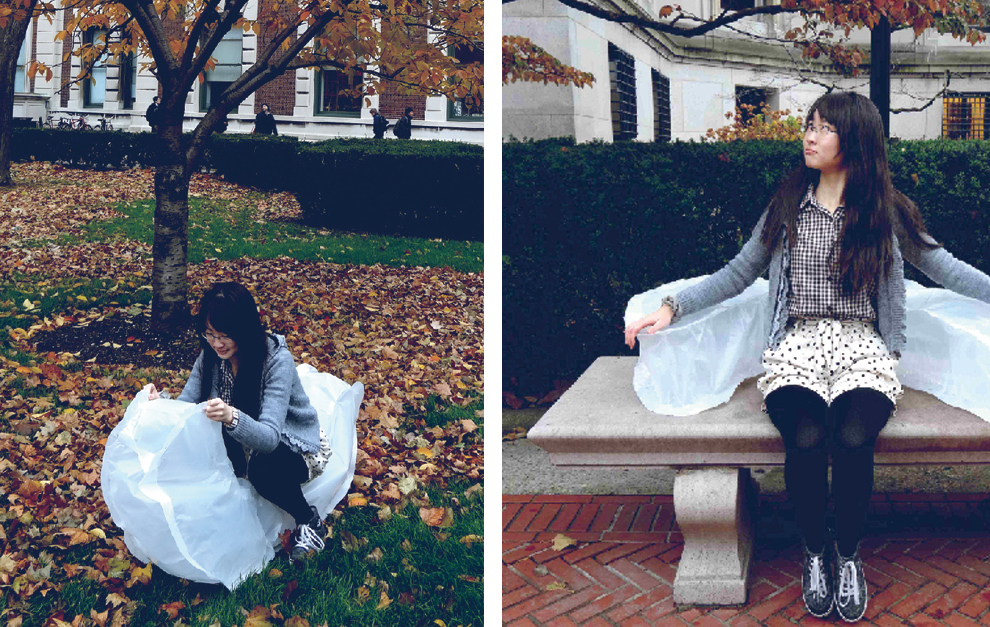
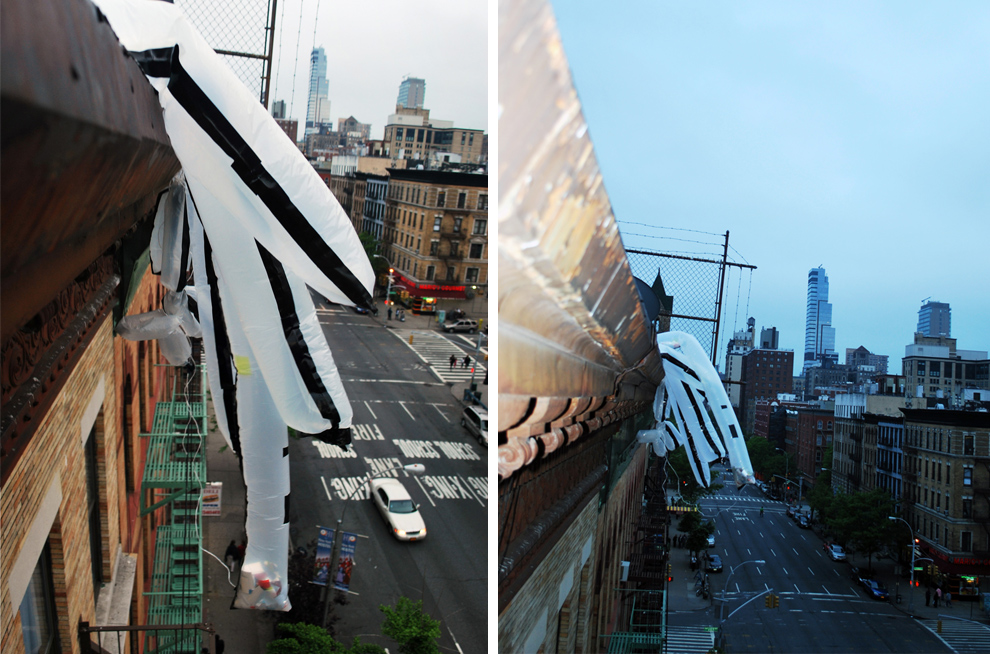
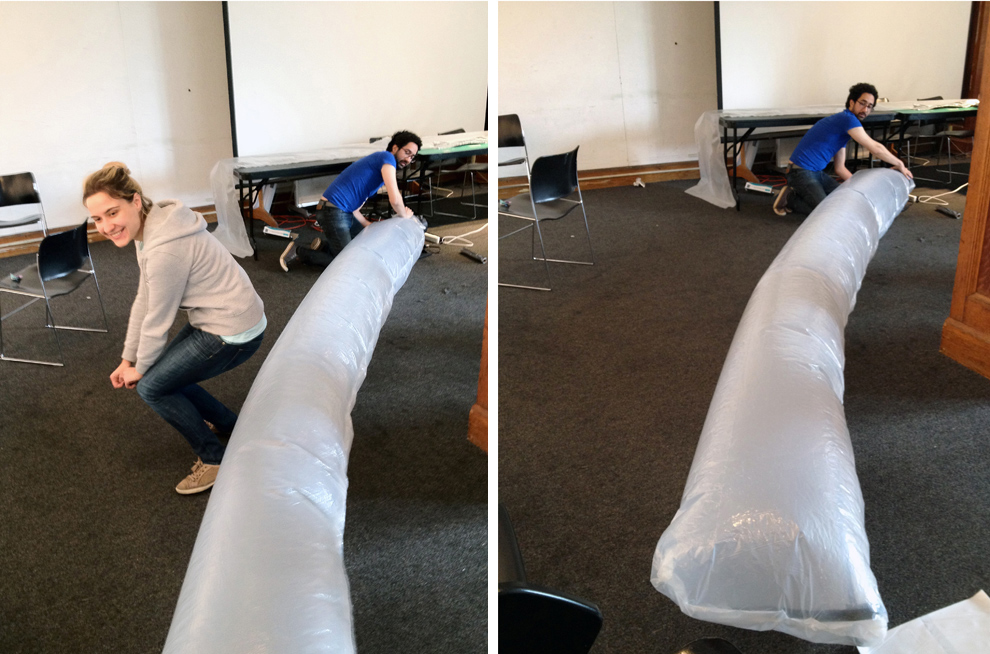
Hurricane Sandy played hell with our first few weeks, and necessitated that the initial assignments were bundled together. However, we still had a chance to look at inflatables and the material qualities inherent in cheap polyethylene of different mil thickness. Using an iron, tape and plastic, quick inflatable bladders were constructed and tested. The students were tasked with creating an inflatable, mobile “seating” system that was either self-supporting or used a site’s natural currents to inflate.


ChunChun, Yuri, Shuang, Rubing, Renwick


Ni, Mengna, Darian, Juan, Ying


Assignment 03 – LIGHT PROJECTION
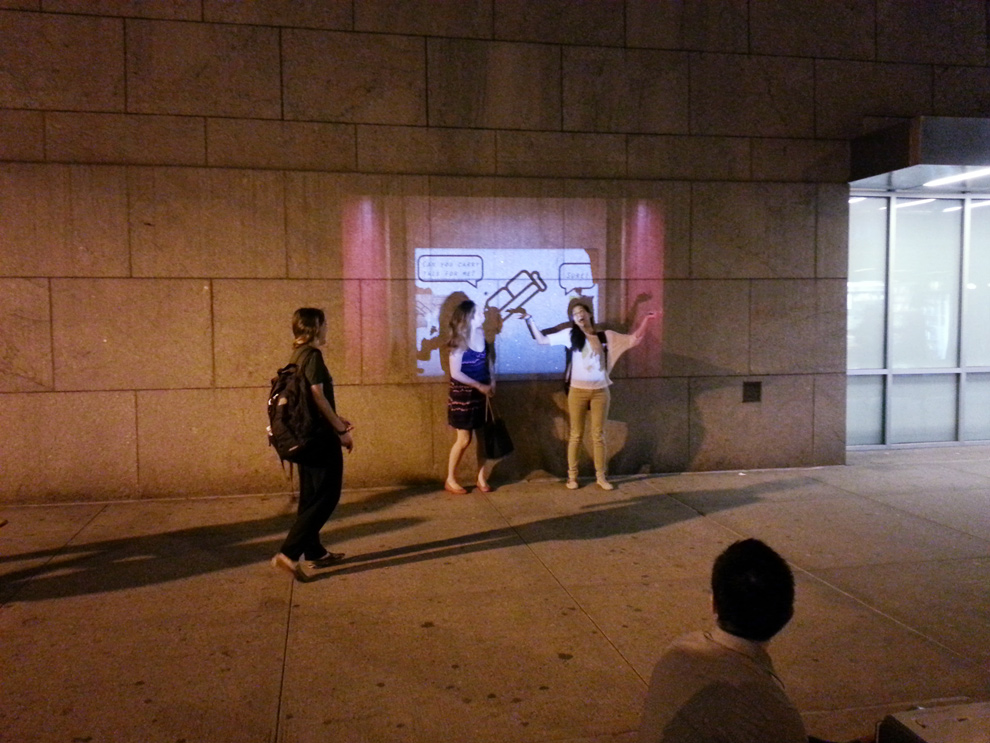
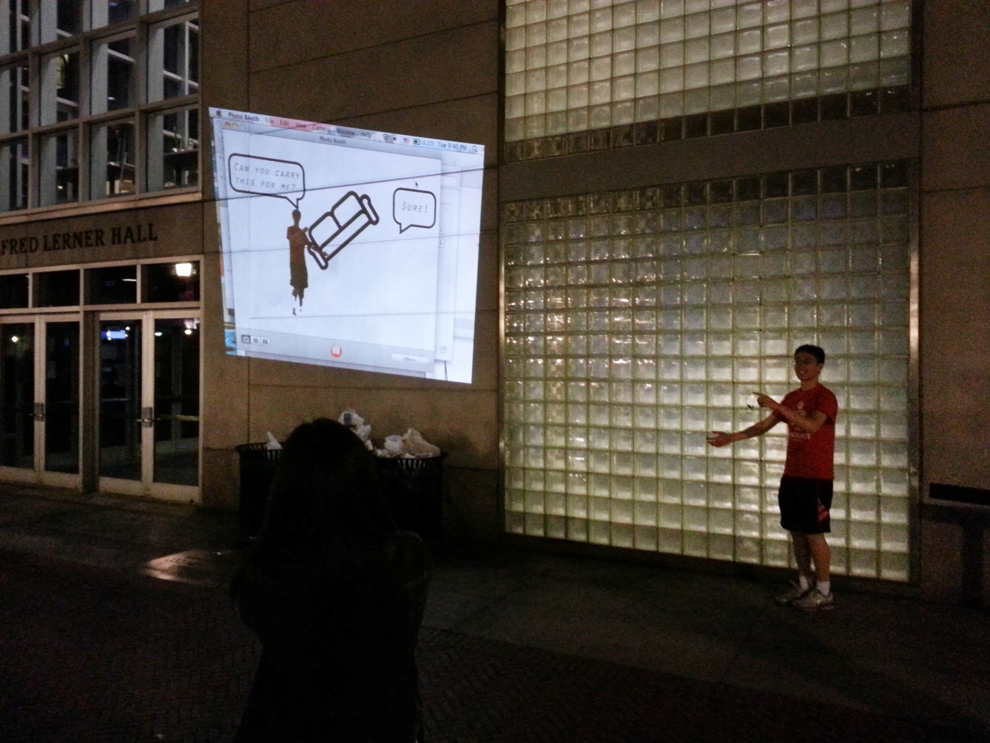
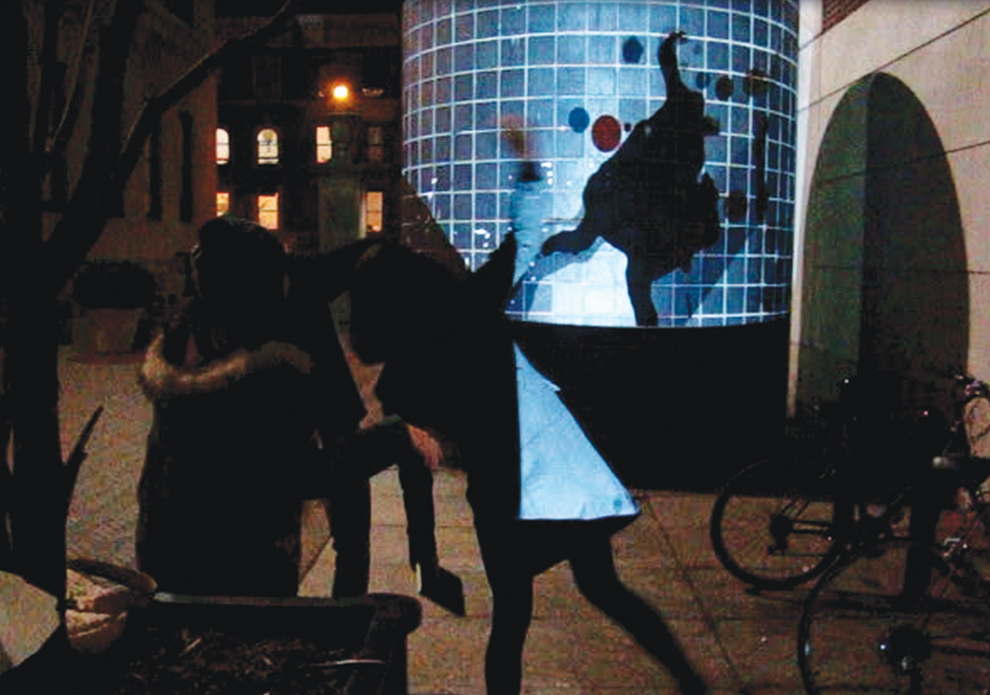
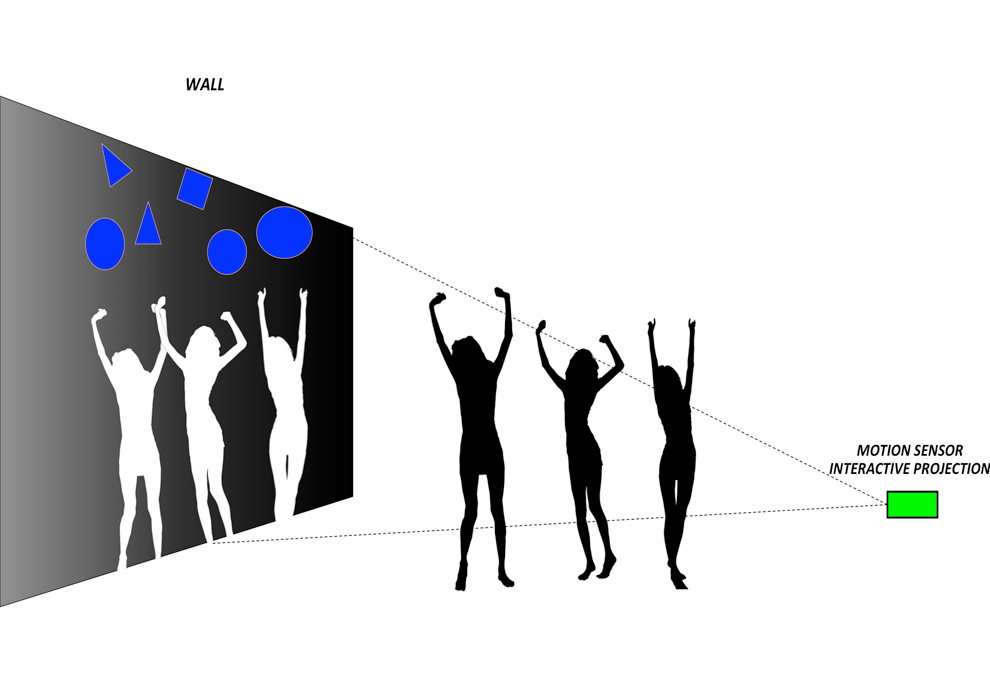
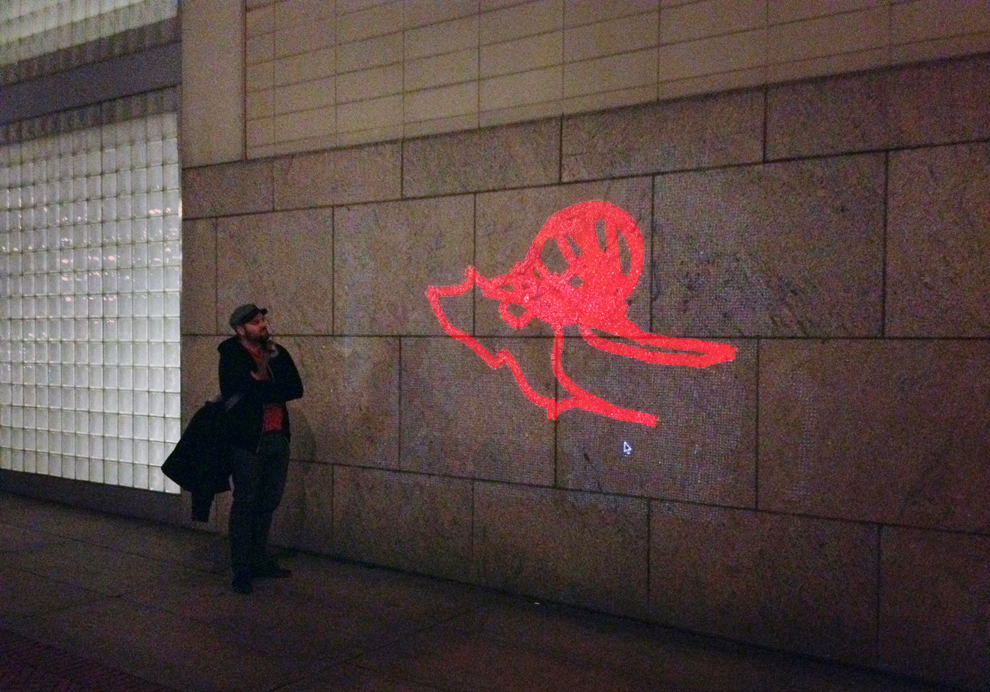
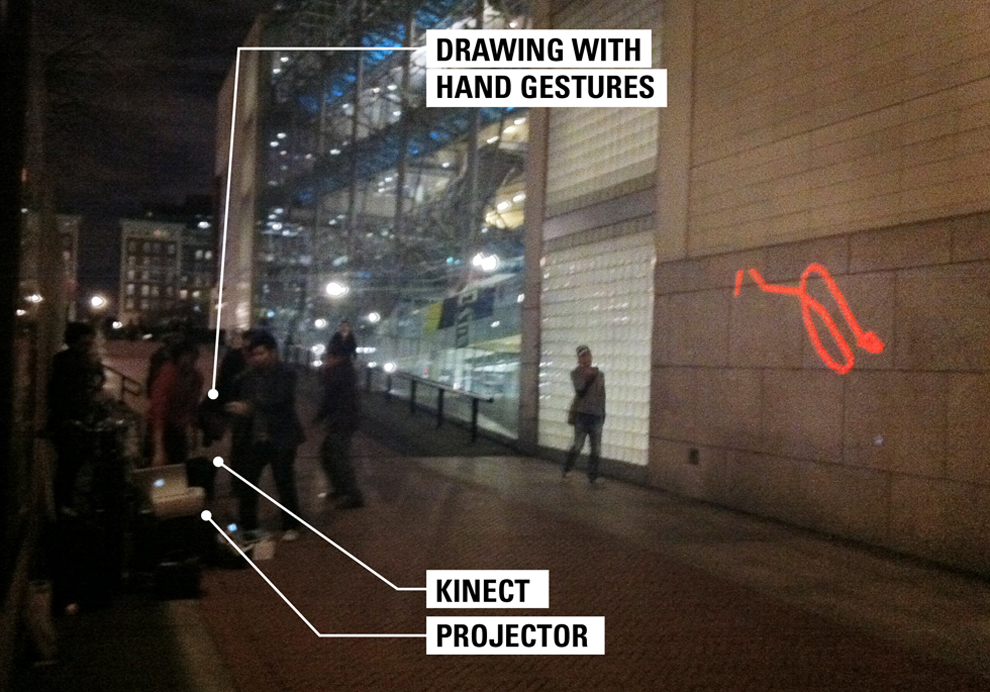
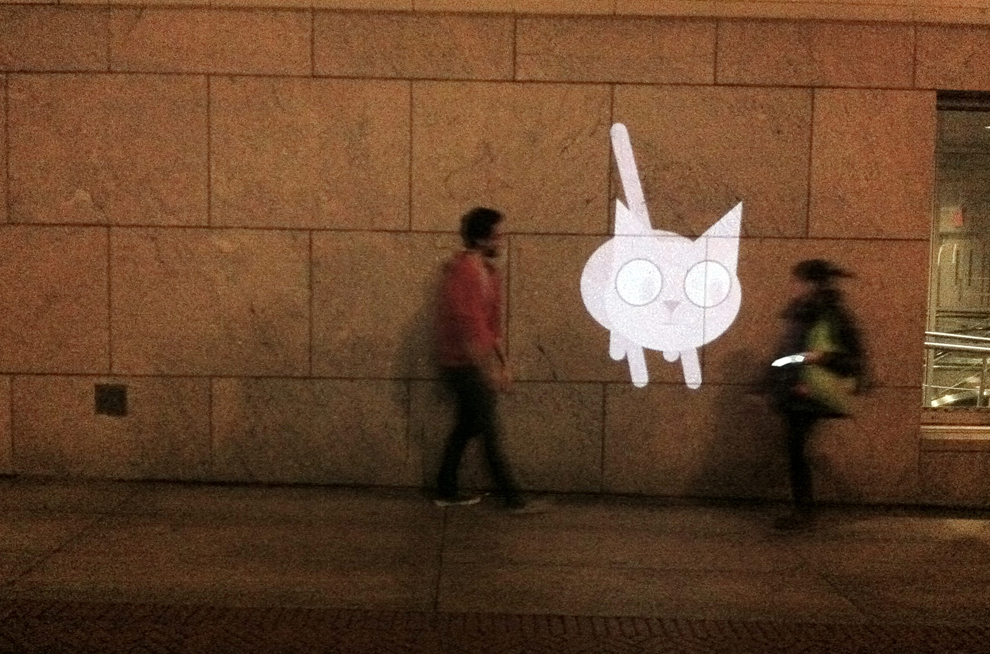
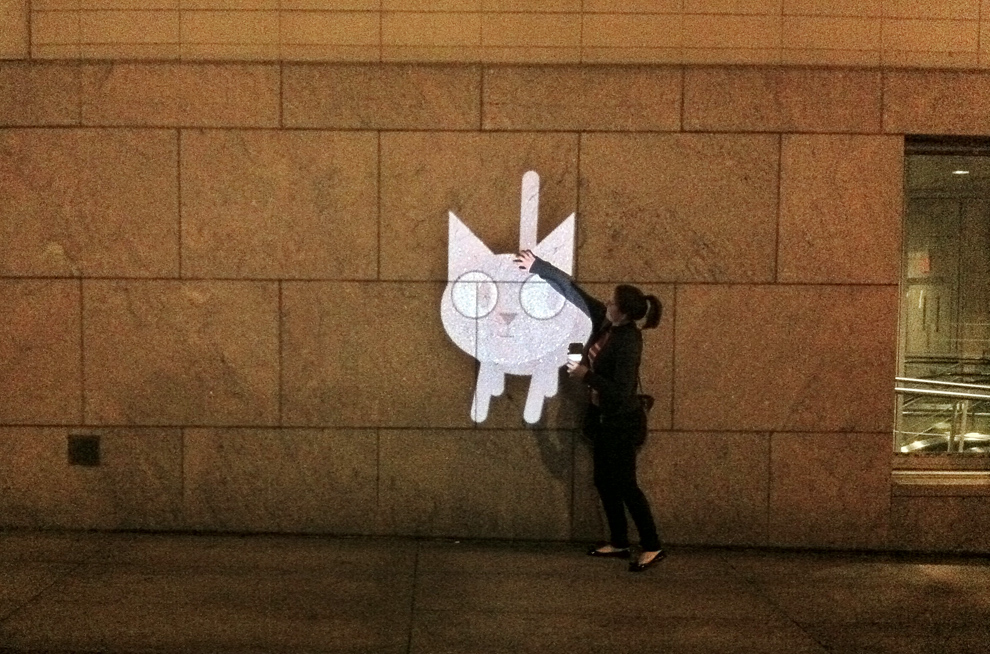
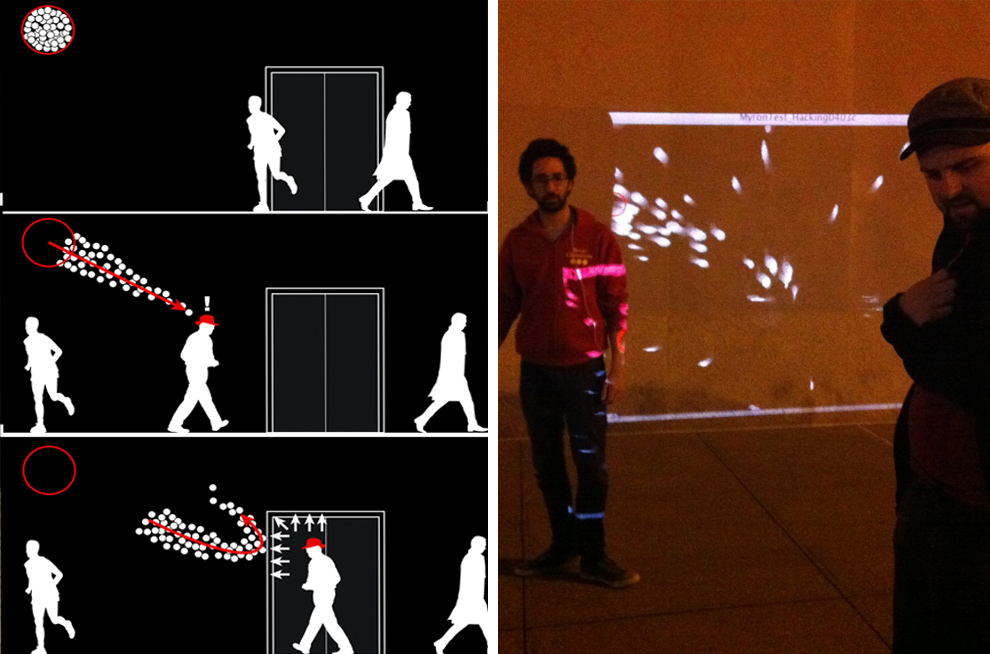
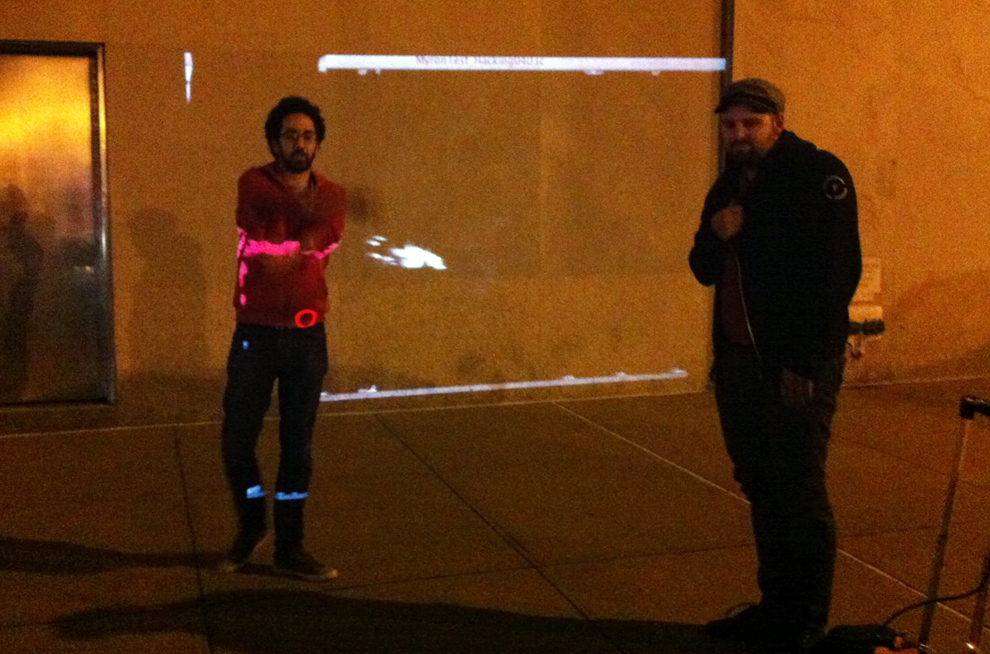
Using Graffiti Research Lab’s projection bombing tutorial at Instructables, the class set up a mobile power station using a 75V marine battery, and set off around the neighborhood near Columbia to experiment and throw up some interactive light projections.
The last year has seen some truly inspiring displays of the potential light can have as an interventionist tool, and the class studied this problem using three main strategies: 1) messaging independent of site, i.e. you only need a blank wall, 2) site dependent projections, like those following the curving, horizontal bands on the Guggenheim, and 3) flexible projections that can adapt and interact to a number of different sites, taking advantage of the unique characteristics of each. Care was given to create projects that both actively and passively engage those passing by the site. Each group’s projects was able to successfully confront one of these strategies.


Ni, Mengna, Darian, Juan, Ying


ChunChun, Yuri, Shuang, Rubing, Renwick


Tom, Aaron, Max, Kevin


Kaz, Greg, Ella


Assignment 04 (FINAL)
Building off the previous assignments, the final assignment sought to synthesize the work and concepts of the class into a larger installation that could still be completed in our very tight time frame, but started to explore the core ideas of the course, in effect becoming a proof-of-concept, working model. By attempting to capture a broader audience for architectural interventions, a number of questions presented themselves and the students were challenged to anticipate a range of possible eventualities – how will it be used? Can its use be changed? Is it durable? Is it waterproof? Can it safely stand up? Fabrication was considered less from a formal quality, and more from a use, durability, improvisation and public participation viewpoint.
Ultimately, A successful project would accomplish three things: 1) display ingenuity in fabrication technique and material 2) re-imagine or re-design a specific urban site/condition to take advantage of its hitherto hidden potential, and 3) have a performative component, in that the intervention has a temporal quality that while engaged promotes public interaction.


ChunChun, Yuri, Shuang, Rubing, Renwick


Kaz, Ella, Greg


Tom, Aaron, Max, Kevin


Ni, Mengna, Darian, Juan, Ying

20120516 Tags: architecture, fabrication, interaction, new york, research, teaching, urban | No Comments »

HACKING THE URBAN EXPERIENCE – STUDENT WORK

I had the pleasure to teach a course this semester with a great group of young architects and urban designers, titled “Hacking the Urban Experience” at Columbia. I couldn’t be more proud of all the hard work and the high level of engagement with which the students approached the class. All lectures and process work are archived on the class tumblr: http://hackingtheurbanexperience.tumblr.com. Classes typically took the form of lectures on precedents and concepts, a discussion of student work and tutorials on materials or software techniques. Topics during the semester included overviews of unsolicited architectural proposals, building-scale light projections, inflatable materials, urban siting opportunities and community/crowd sourced funding.


The course sought to assert the relevance of the fabrication skills at our disposal as potentialities for social and environmental relevance. Through the re-appropriation and re-imagining of existing urban conditions, the students designed and fabricated working prototypes that embraced the messy reality of our city and promoted community involvement. The students began by identifying a quality of the urban condition that included the latent capability for improvement and worked toward fabricating an adaptive, responsive and environmentally viable solution. Specific emphasis was placed on testing and exploring through hands on research the possibilities of detailing and fabricating connections using unorthodox materials. At the conclusion of the course the students produced a full scale urban intervention and observed and documented their relevant successes or failures.


Material workshops were held to encourage the students to explore constructions from inflatables to parametric agglomerations using quotidian materials. Ultimately, the goal was for the students to come out of the course with a healthy respect for two core concepts: firstly, an increased skill in the use and applicability of the fabrication skills we have developed for solving design issues using unorthodox materials in unconventional settings; and secondly, that there is an opportunity for architects to regain lost relevance by inserting themselves through unsolicited proposals into the public consciousness as steward’s of urban well being.


Students:
Jared Dignanci, Farzin Lofti-Jam, Ehsaan Mesghali, Katerina Petrou, Paul Tran, Wassim Shaaban, Maryam Zamani


Assignment 01
Part of the Atlas of Urban Connections project (TBD), the first assignment involved designing and fabricating a joint to connect something, anything, to a vertical street extrusion (such as a tree, street sign, light pole, etc…). The members of the Public Works Department in NYC are masters of improvisation, you can see it walking down any street here, and there is a lot to learn from their successful and not-so successful techniques for attaching to existing sidewalk infrastructure. This assignment was prepared to introduce the student to the capacity to breaching the gap between the pedestrian and existing streetscape objects, with the goal to test flexibility, safety, durability, adaptablility while exploring different possibilities for potential synthesis with existing urban forms.
Wassim, Katerina, Paul


Jared, Farzin, Ehsaan, Maryam


Assignment 02
Using Graffiti Research Lab’s projection bombing tutorial at Instructables, the class set up a mobile power station using a 75V marine battery, and set off around the neighborhood near Columbia to experiment and throw up some interactive light projections.
The last year has seen some truly inspiring displays of the potential light can have as an interventionist tool, and the class studied this problem using three main strategies: 1) messaging independent of site, i.e. you only need a blank wall, 2) site dependent projections, like those following the curving, horizontal bands on the Guggenheim, and 3) flexible projections that can adapt and interact to a number of different sites, taking advantage of the unique characteristics of each. Care was given to create projects that both actively and passively engage those passing by the site.
Wassim, Katerina, Paul


Ehsaan, Maryam


Jared, Farzin


Assignment 03 (FINAL)
Building off the first two assignments, the final assignment sought to synthesize the work and concepts of the class into a larger installation that could still be completed in our very tight time frame, but started to explore the core ideas of the course, in effect becoming a proof-of-concept, working model. By attempting to capture a broader audience for architectural interventions, a number of questions presented themselves and the students were challenged to anticipate a range of possible eventualities – how will it be used? Can its use be changed? Is it durable? Is it waterproof? Can it safely stand up? Fabrication was considered less from a formal quality, and more from a use, durability, improvisation and public participation viewpoint.
Ultimately, A successful project would accomplish three things: 1) display ingenuity in fabrication technique and material 2) re-imagine or re-design a specific urban site/condition to take advantage of its hitherto hidden potential, and 3) have a performative component, in that the intervention has a temporal quality that while engaged promotes public interaction.
Wassim, Katerina, Paul


Maryam, Jared, Farzin, Ehsaan

2012024 Tags: research, scripting, twiiter | No Comments »

void in the center


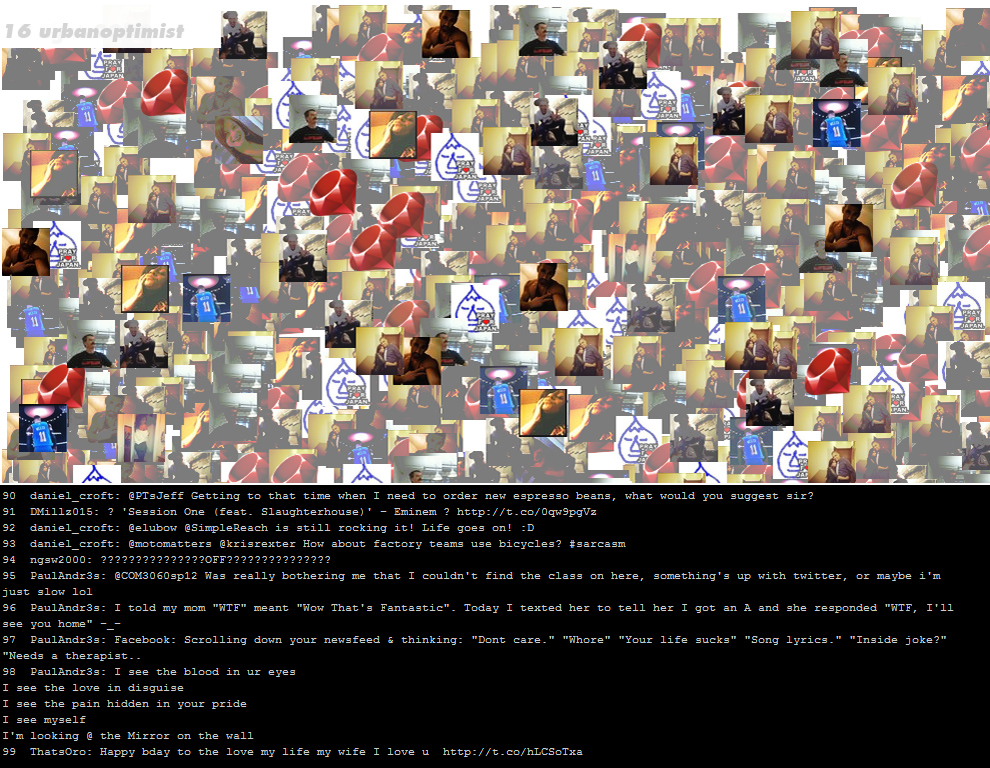
I’m pulling the last 100 tweets from within a half mile radius of latitude 40.800808 x longitude -73.965154 (otherwise known as the desk in my bedroom where I’m typing this now). And right off the bat I can see that the tweeting frequency of some of my neighbors is impressive, out of 100 tweets there were only 42 different users, all of whose profile images are displayed above based on the frequency of their messaging. Voyeurism is something built into New York’s dna, the simultaneous repulsion and attraction of surveillance that was so effectively conveyed in Rear Window. Sometimes when riding the train, on the rare occasions when you’re sans earphones, you can’t help overhearing fragments and context-less snippets of random stranger’s conversation. Most of the time they’re pretty banal, on the order of sports predictions and office gossip, about nothing interesting but still interesting. And that’s what makes the hidden, invisible conversations going on in this five block vicinity so fascinating to me in a way I can’t really describe. 100 random tweets hold no mysteries, but the 100 tweets of the people around me do. A secret knowledge that gives added meaning to the ruby aficionado I see walking down the street or the Mavs fan at the bar, all faces that are part of a huge story that can never end. I’ve started following ThatsOro.


Click more for the code. Based on great examples here and here.


more »

2011065 Tags: evolution, grasshopper, parametric, research | 1 Comment »

bucky was right

design-space_galapagos
grasshopper galapagos
galapagos_results


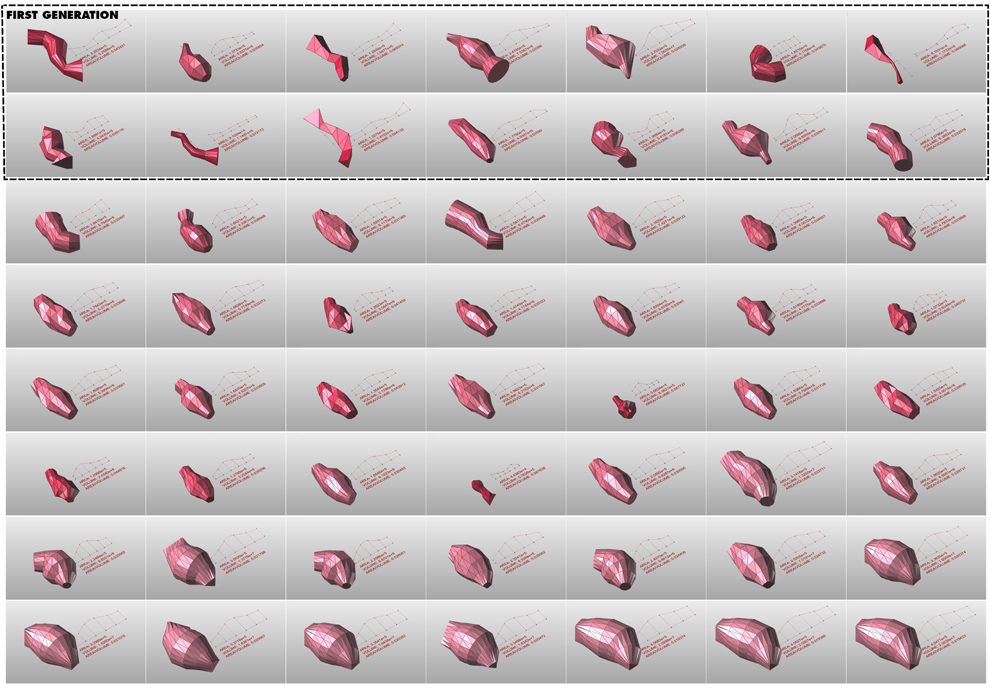
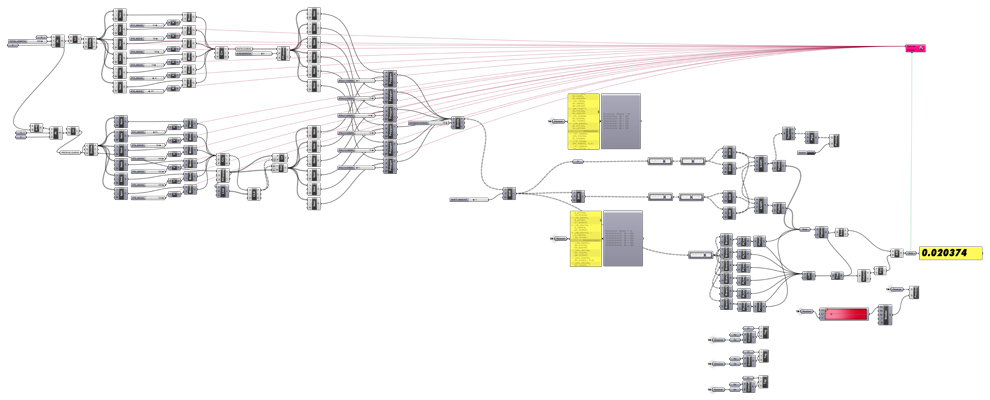
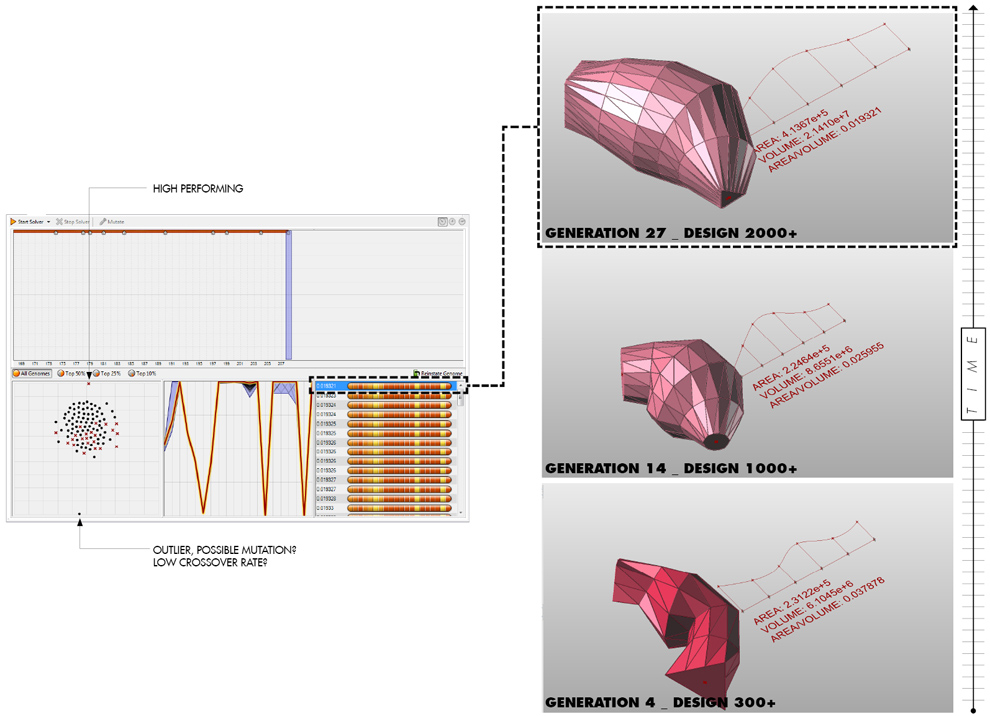
I’ve used genetic algorithms for form finding with a previous project, and that time I was using a tenuous connection between catia, modeFrontier and Robot. So I was excited to see grasshopper begin to natively implement an evolutionary solver with Galapagos. As an initial experiment I started with a classic, something simple – I wanted to find a tessellated form that would enclose the maximum volume using the smallest surface area. I’d like to think that this would produce something unexpected, but it’s pretty much the definition of a sphere. I set up the parametric model to wiggle all over the place with various triangulated densities and differing number sided polygons at each joining segment. My hypothesis was that the form would tend toward symmetry and evolve into the aforementioned spherical shape. I believed that the polygons would tend toward the most sides possible to more closely approximate a circle, later generations evolving away from a triangle toward an icosagon. (Just like on Flatland!)


A couple of observations: Galapagos pretty quickly found the overall shape – smaller radii at the extremes and bulging in the middle – the beginning of a sphere. However, while it tended toward bilateral symmetry, it kept a kink in the first segment that prevented the shape from being perfectly symmetrical. I think the solver got stuck in a local minimum as opposed to a global minimum. Perhaps with a higher mutation level or letting it run for a longer amount it could have jumped out of this. On further checks I found that it was correct, after 30 generations and over 2500 iterations, the surviving croissant-like shape of the optimal designs did have a better SF:V ratio than a perfectly symmetrical design. Perhaps it had something to do with the setup of the parametric model or the way the facets resolve themselves at the extremities?


But in general my hypothesis was proven correct. Which leads to the initial problem with Galapagos. There are a lot of opportunities with this type of experiment and people more clever than me will surely do them, but when you can only solve for one objective it becomes difficult to create truly complex solutions. For instance, with my surface area/volume problem there is only one true pareto solution. Eventually Galapagos will find it, or with enough time and a calculator I could calculate this myself. There is one single, optimal solution, it’s just hidden somewhere amongst a number of parametric sliders. Unless you start getting into multiple, competing objectives, then the pareto point becomes a curve and there are multiple valid solutions, each one involving certain trade offs and a criteria for selection. Say you wanted to find a form with the minimum srf area:volume ratio, but also that form had to have the fewest structural members, or provide the most shade on June 21st, or spatially provide the most potential revenue stream for a project stakeholder. That’s when it gets really interesting and opens the possibility for a design space that includes high performing, unexpected results. It’s a great start, and I can’t wait to see Galapagos evolve.


Download the grasshopper definition for version 0.8.0004 here: http://gracefulspoon.com/downloads/Grasshopper_GALAPAGOS_TEST.rar

20100430 Tags: gsapp, kinne, photography, research, writing | No Comments »

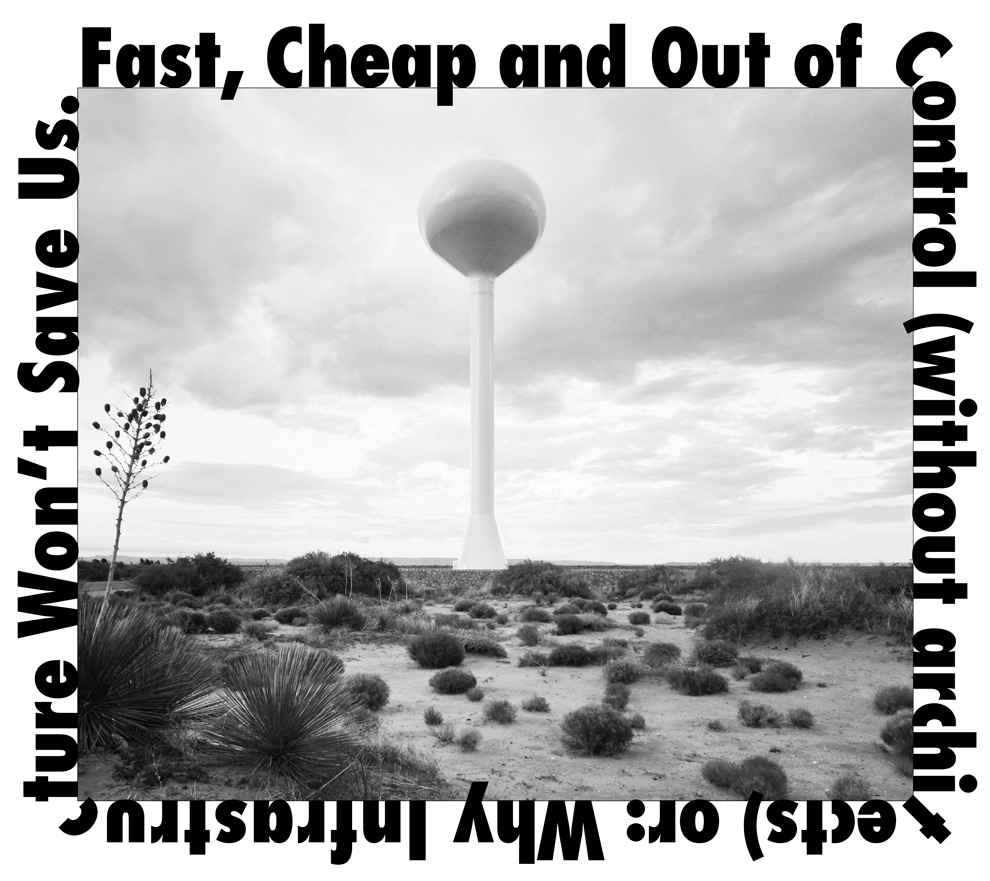
fast, cheap and out of control (without architects), or: why infrastructure won’t save us

titlepage1


view google map


My final submission for the Kinne Research Fellowship at Columbia. Keep in mind this is the first part through the American Southwest and Northern Mexico from late last summer (!), the second session in Mexico City is still looming on the horizon.


Fast, Cheap and Out of Control is research through observation: structures, installations, natural landforms, urban growth and manipulated landscapes constructed in the blank slate of the Southwest Desert. A place where time stretches from Planck’s constant – used to record the chain reactions that produce an atomic detonation – to Robert Smithson brushing up against the infinite on the Great Salt Flats, all of which is tested and implemented under the powerful spell of the Western landscape – a strange entity mixed in with notions of nation and empire, bravery and myth, history and fiction.


The result of a six-week exploration in the form of a road trip lies before you in an ambling, somewhat desultory first-hand narration of a nomadic journey across the desert’s offensively vast spaces. Situated between the region’s fragmented vignettes of activity, I attempt to resolve the disparate nature of the desert’s strange, isolated events into a coherent narrative.


See the edited book above, or browse some of the original posts/chapters below:

Donald Judd and the myth of Marfa
Peace through deterrence in the underground titan missile silo
Improvisation at Arcosanti
The hyper fictional landscape of Tijuana
Ballard and the Spiral Jetty
The border wall that no one wanted
De Maria’s Lightning Field and Tourism
Water rights and development in the El Paso Colonias

20090914 Tags: infrastructure, kinne, mexico, photography, research, writing | No Comments »

bienvenido al futuro

tj02
tijuana01

There is Tijuana and there is a New Tijuana. Tijuana is easy. You don’t have to look very hard to find it. As soon as you walk over the border you’re in the thick of it, a dust-encrusted Candyland where you can buy a churro, pharmaceuticals, a miniature guitar, sit on a droopy-faced donkey painted to look like a zebra, all while being serenaded by a group of hungry looking mariachis-for-hire in loud pants. (Literally—there are bells clipped to their outer seams.) You’re on the Mexican side of the border, but here in Tijuana that palpable feeling of barely concealed, easily dischargeable, violent tension that was so strong in Juarez is missing.


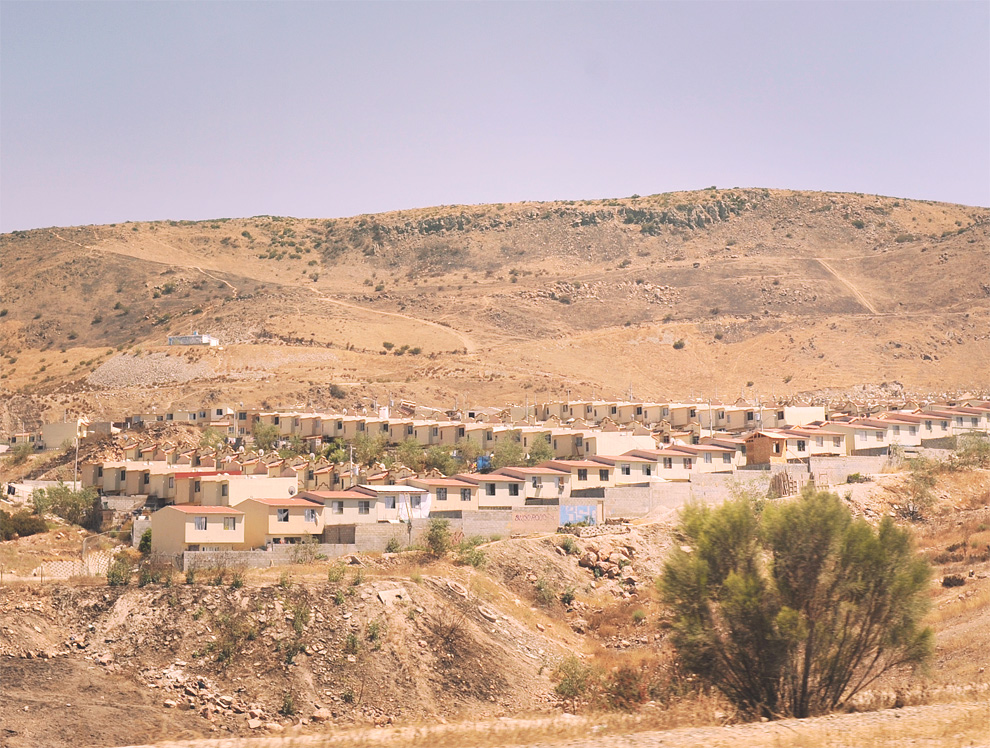
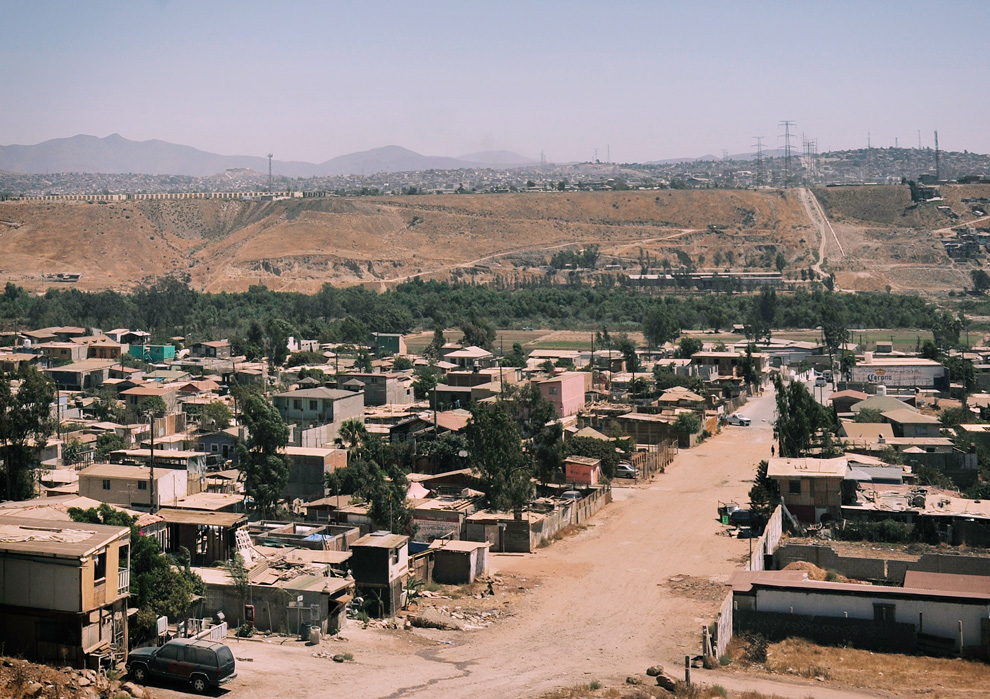
Lest you be lulled into complacency, New Tijuana, on the other hand, is a different story. It’s everywhere to the east, in the pale masses of washed-out shantytowns and factory housing. It is more difficult than Tijuana – you have to go looking for it. It is where there are estimated to be over one million people living, comprising almost half the total population of Tijuana in a parallel zone primarily occupied by factory workers, migrants, and laborers. In Tijuana 95 percent of the city’s homes have a solid floor; in New Tijuana that number is closer to 25 percent. New Tijuana is where nearly 80 percent of people lack running water and an operational sewage system, but where simultaneously the unemployment rate is less than 1 percent (Mexico’s average national unemployment rate at the same time was 7.4 percent). The percentage of the population that works in New Tijuana is 10-15 percent higher than the rest of the city and it has been supposed that there are in fact more jobs than available workers. 35 perecent of New Tijuana’s workforce is employed in the maquiladora sector. The lack of an adequate workforce provides opportunities for immigrants from all over South America, who, in turn, comprise more than a third of New Tijuana’s population. Those people need housing. New Tijuana expands by five acres each day. New Tijuana is the future.


The growth of the Tijuanas in the last 25 years is unprecedented. It has been frenzied, loose, and extremely informal. No cohesive formal plan exists. It’s a new model of improvisational urbanization that requires neither long-term thought nor infrastructural support, but rather quick thinking, cleverness, and adaptability. Shit moves fast here. Speedy Gonzales isn’t some kind of crude cultural stereotype; he’s something to aspire to. City infrastructure can only try to keep up with the manic pace of construction. By loosening the bonds of city infrastructure, potential newly liberated schemes for urbanization arise. And moving in lockstep with the creation of the new is the decay of the old. Smithson’s Spiral Jetty introduced the concept of entropy into the constructed ecology of the West, and the settlements of New Tijuana provide another example of the productive, transformative value of reappropriation and entropy. The surplus piles of tires become walls and fences, discarded vinyl advertisements become weatherproof roofing, palettes, cinderblock and plywood are mixed at will. Like the Spiral Jetty rising out of the Salt Lake anew, New TJ is constantly reassembling itself into some new amalgamation with the remains of the old. Tijuana warrants a retroactive manifesto to parse and make sense of what has happened here in the last 25 years, a manifesto that will formulate a constructed argument regarding alternative future potentials for other built environment based on uncovered models that exist here in the border region. The argument would start with the speed of the informal settlements.


They build 20,000 houses a year in New Tijuana, constructed from whatever mix of available building materials and cast-off detritus that can be recycled and reconfigured into something that vaguely resembles inhabitable space. Here, the only demand is that it have a roof (and even that seems somewhat negotiable), and without regard for anything so outmoded as building codes or permits, they build wherever and everywhere they want, armed with only the most provisional of land ownership titles. In Tijuana squatting is considered an inalienable right. Architecture can’t compete with that. No way—it’s too slow, too dependent on ego and sponsorship. Tijuana is fast, self-determinate, and horizontal. This is why so many architecture schools love to use Tijuana as a site, every frustrated architecture student sees themselves in each resident of Tijuana, a place where the people daily recreate and then transcend the abstraction of the studio and provide a setting where it really is possible to dream something up and build it, with your own hands, devoid of those slow, un-fun things like budgets and engineering seals of approval that architects struggle with every day, but seem so oppressively foreign to a student in a studio environment. In Tijuana you don’t have to worry about any of that, it’s design/build without any formalist pretensions.


But don’t get me wrong, I’m not trying to romanticize what are, in essence, dangerously unsanitary habitats lacking in many cases even basic, minimum quality-of-life essentials like light, clean water, sewage systems, and electricity. But that kid standing there in the dark, next to an open sewage canal, lighting a candle is wearing a Kobe Bryant Lakers jersey and blasting the Black Eyed Peas on a Panasonic boom box that was probably manufactured less than a mile away. You can’t help thinking about all the other boom boxes that were exported North, and all the people who then bought those same boom boxes, and the relief and comfort all those people felt at seeing the same everyday low prices they’ve grown accustomed to, and would probably angrily demand be provided back to them if somehow the torrential flood of cheap goods were suddenly cut off.


Anybody can see that manufacturing a crate of boom boxes for $15 makes more sense than shelling out $90 for a unionized, benefits-hogging American worker to do the same. I mean, I don’t begrudge the idealists and their inescapable feelings of First World Guilt. The twin cities of the border have always engaged in an exploitive economic embrace, one twin is bigger, the other is richer. But when confronted with the overwhelming realization that this situation is so inevitable, so completely entrenched and self-perpetuating, just bemoaning the North’s entitled status seems too passive and pretty boring. Anger is one way to go, and that typically arises from the sight of the slums, the Lakers jerseys, the Ford trucks, and the maquiladora housing all impossibly coexisting, and the urgent thought that can’t be resisted—that somehow, this is all our fault. And you have to deal with that in some way. Or, you can try to idealize the situation, in a getting-back-to-the-basics, “authentic” kind of way.


The North American communes of the late 1960’s tried this, but they were only self-consciously adopting some of the principles of informal developments and, not surprisingly, they quickly and inevitably collapsed. While the California communes, including Morningstar Ranch and the Whiz-Bang Quick City, were superficially similar, they lacked something like the desperation of New Tijuana. (I hesitate to use the word desperation, but I think what you see in New Tijuana is akin to something along those lines.) New Tijuana is less a home and more of a way station to compose a strategy for escape, which is a pretty desperate concept in and of itself. The other way to confront it is to approach it from a position of self-congratulatory benevolence. And when Architecture with a capital “A” does try to get involved, well, that way lies the madness of modernism. The oppressively bureaucratic, welfare-state housing policy approaches from the mid-20th century have unquestionably failed, sometimes explosively (or more excitingly: implosively, seePruitt-Ingoe).


Tijuana is bigger than all that, and I guess that’s what I find so fascinating about it, the tangled up mix of impossible ecologies that make a city like this seem on one hand so inevitable and yet strangely great and new, not in spite of, but because of the conflicts and paradoxes. Whatever your opinion on globalization and the exploitation of capital, the necessity of an interventionist or weak urban policy, the vagaries of national security, whether you’re pro one side or the other, you should spend a little time in Tijuana. You’ll come back convinced of the necessity for both, all at once, unable to formulate why this simultaneity of opinions is thoroughly inexorable.
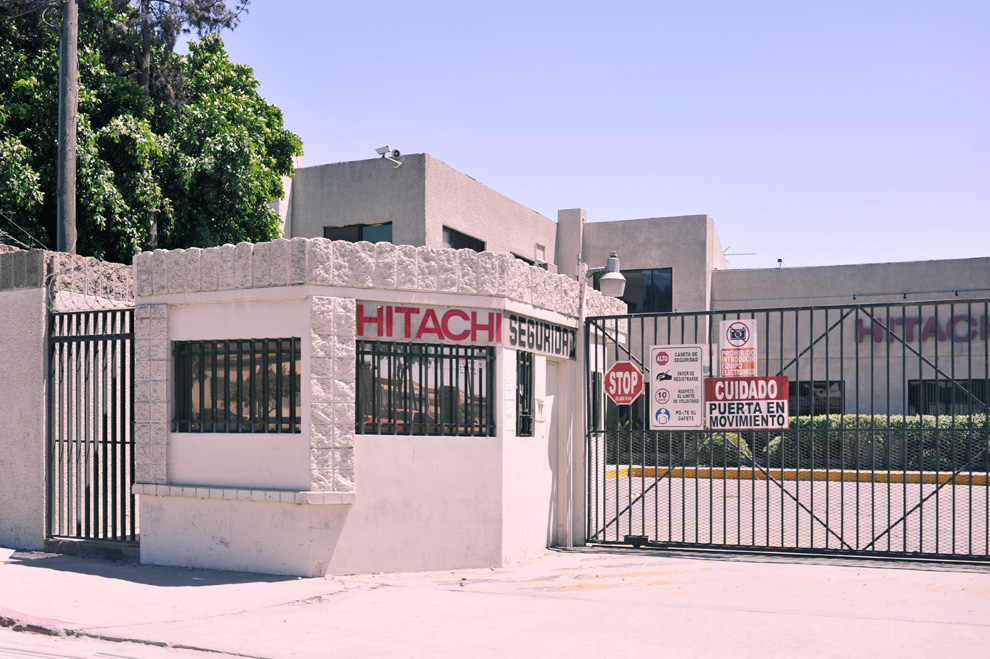
 

tj03


But it is. So where does that leave architects? As an architect, I’m naturally disinclined to argue for my own field’s redundancy, but it’s hard to deny that the traditional top-down, architectural design process lacks the frenzied urgency that Tijuana demands. They’re building 1,600 houses per month because there’s a vacuum there where people need housing, and they have the ingenuity to fill it. But what’s being built now is really only serving the narrowest of stakeholders’ interests, whether that is a gated subdivision for upper-middle class families, migrants’ informal slums, or the maquiladora industry’s need for rows of factory housing. You have everything that runs the gamut from the rigidly planned to the totally out of control, and somewhere in there architecture can stake out a position, somewhere in that sweet spot between the formal and the informal, where architecture can interweave all the threads of rich and poor, old and new, individual and community. But anytime architects try to force their way through that hierarchy of competing interests, the initial vision becomes muddled beyond recognizability. For instance, I’ve seen amazing designs languish in the development hell of the “design review” process where every stakeholder from the mayor to the donors to the various owners each have to tweak something to their liking, which by themselves aren’t that big of a deal, but taken in aggregate begin to compromise whatever measure of integrity the architect believed existed in the first place. Trying to maintain any sort of unified creative vision in the face of that kind of opposition is ridiculous. And that’s in a normal situation.


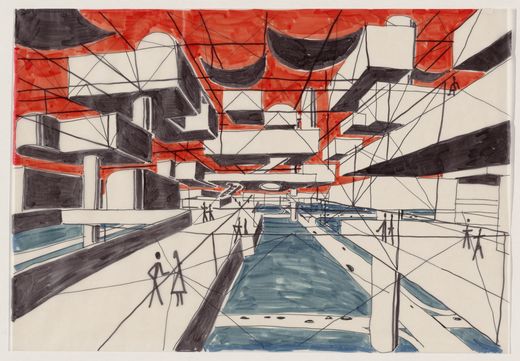
There’s nothing normal about Tijuana, however, but if style is cyclical then you can’t help but notice that the answers the radical urbanists were playing around with in the late 1950s and ’60s were certainly prophetic in anticipating the urgent necessity for new solutions to housing the masses of displaced people and migrants caused by the second World War. And here, as in Tijuana, the solutions were cheap to manufacture, simple to transport, and infinitely variable.


But where it got really interesting was when these guys – especially the Israeli Yona Freidman – started thinking that the architect really wasn’t as important as modernists thought. Form became something that was undefined and primarily subservient to the needs of the inhabitants. In other words, a functioning city is not made up of the material buildings, but rather the infrastructural utility networks and systems of streets and walkways. The architect’s first responsibility is to ensure that these systems are in place, and this should precede all other formal proposals. The network of systems in play in Tijuana vastly exceeds the grasp of a singular architect. How could any one architect plan and design for an inhabitant whose needs are constantly in flux—especially in Tijuana where changes can be drastic, fast, and dirty, and thus impossible for an architect to foresee?


The answer lay in the realignment of the artist-spectator relationship. The user — the inhabitant — would become the creator of his or her own built object and the architect would provide the infrastructural support for the user to plug in to. Process becomes the paramount driver of creation, while the final result remains an amorphous ideal. In this way, Friedman sought to codify the unpredictable nature of human behavior. And in his holistic world view, the erratic nature of each user’s individual actions is allowed to disintegrate the false nature of central planning. However, a major contradiction is found within Friedman’s Mobile Architecture. Friedman, the architect, still designs the framework — the system — into which the user is granted a somewhat specious level of freedom.


Elemental Do-Tank actually built something along these lines in Chile with amazing results. In an evolution of Friedman’s “frame” and “infill” architecture, they took the minimum necessary program for a livable house and transformed that into the frame. The spaces between the homes are left as an open infrastructure for the people to infill with any program they may want. The infill accommodates everything from car repair shops to beauty salons, interwoven with another program.


But as great as these projects are, they are still something to be applied to Tijuana, not to be withdrawn and applied elsewhere. That’s where things get more difficult and have to remain open-ended. That the future is fast and cheap is unavoidable; that speed and ingenuity will supplant history and the starchitect; that the amorphous and accidental will trump the defined and planned has to all be taken as a given. In the end, we have to stop worrying and learn to love the best of Tijuana-ization while overcoming the worst. In a world where the existing urban environment is a prisoner of sorts to its own aging infrastructure, Tijuana’s notions of quickly composing and re-composing urban space in response to future events seems increasingly relevant. And the radical reimagining of the role of the architect, something rooted in modesty and a sincere desire for change in keeping with the possibilities afforded by technological advancements and popular participation, has to continue to provide new possibilities for a profession that suffers from a dearth of bold ideas.
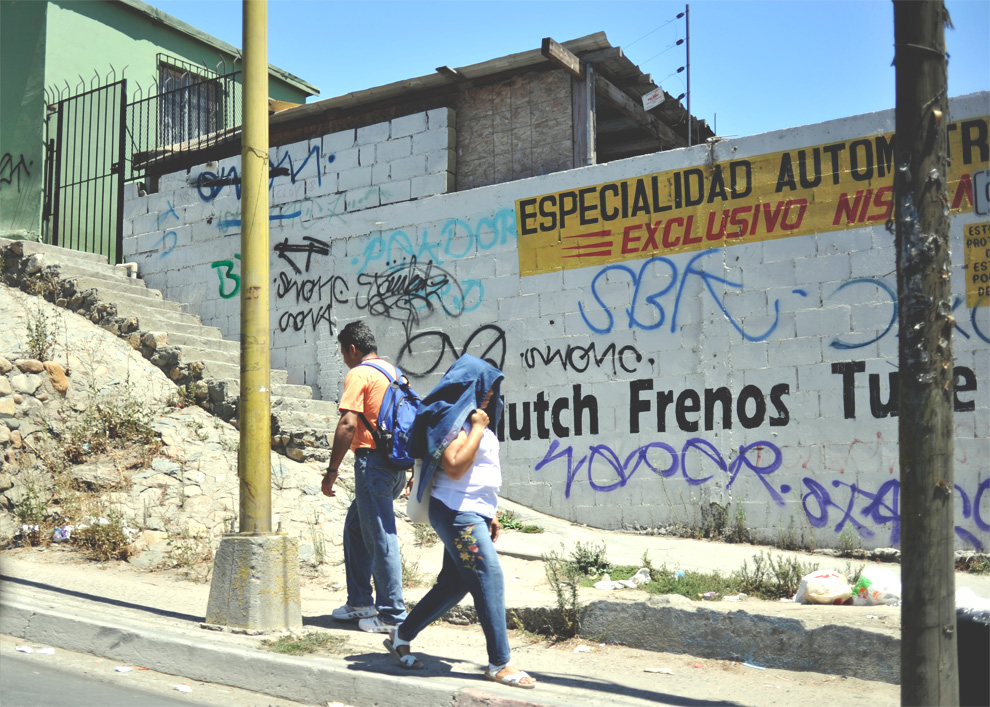
 

tj04
tj05

20090819 Tags: infrastructure, kinne, mexico, photography, research, texas, writing | No Comments »

something there is that doesn’t love a wall

wall01
_dsc77221
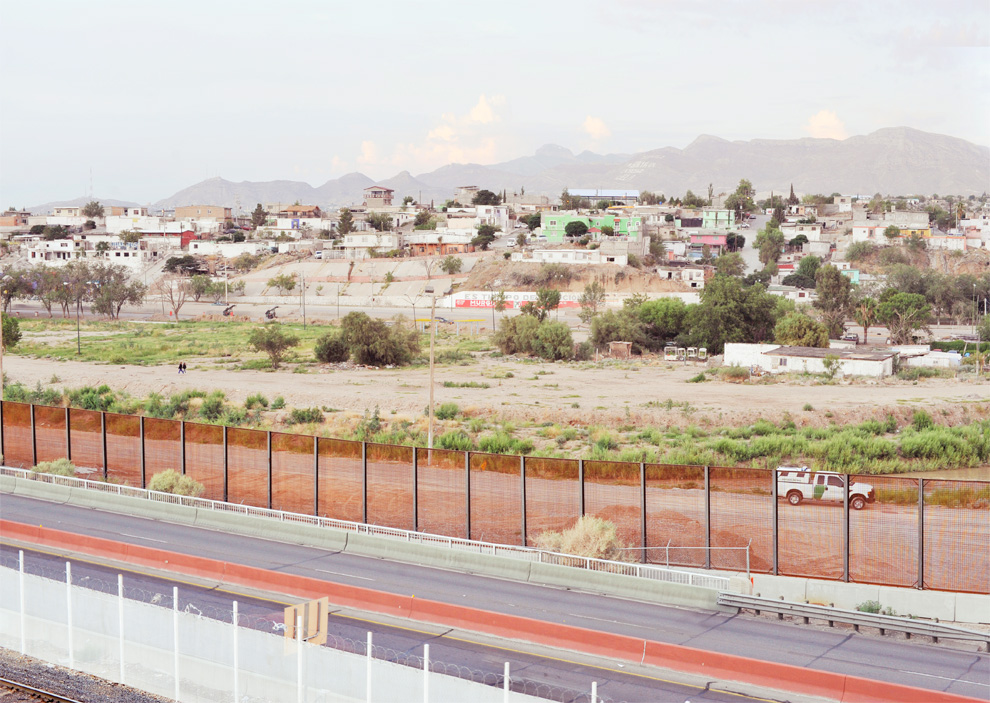
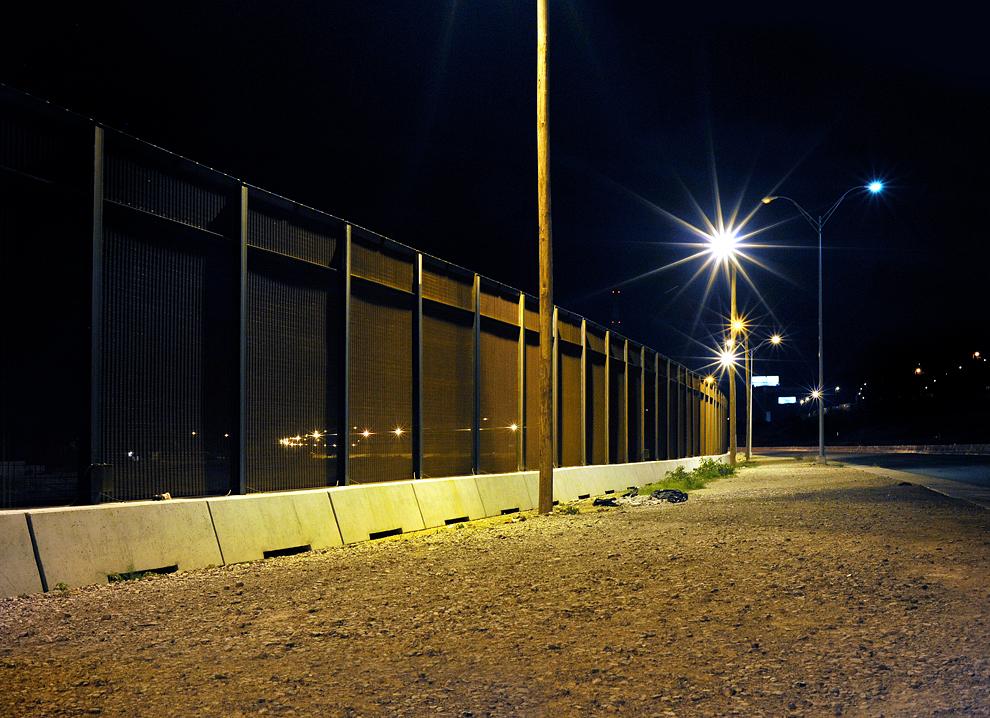
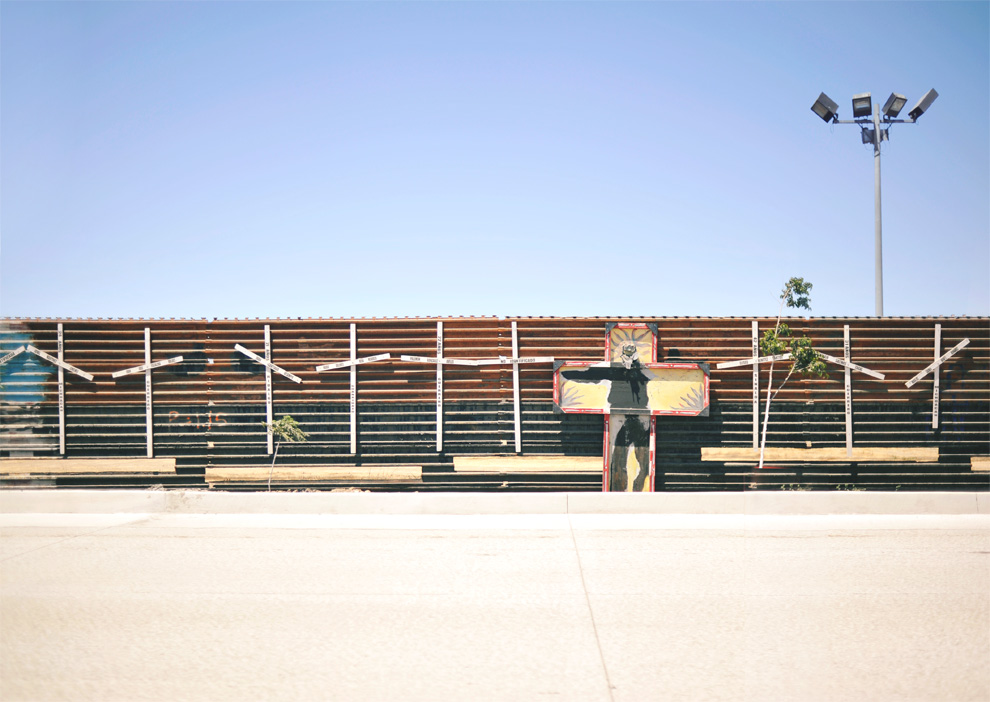
It’s eighteen feet tall. The vertical steel pylons are set closer together than the width of a truck to resist the force of direct a hit, thereby avoiding the possibility of any punctures or vents. The pylons are infilled with an anodized metal mesh, a mesh that flaunts heartbreakingly clear views through to the other side, which, however, is at the same time dense enough to prevent all but the smallest of fingers and toes from finding purchase. A man wielding bolt cutters was shot here by a Border Patrol agent eighteen months ago. (boilerplate response: “the Mexican government opposes the use of lethal weapons in situations that do not represent a proportionate risk.”) The concrete base is over three feet wide to withstand a potential rocket attack and extends six feet into the underground bedrock layer to deter any would-be tunneling. It cuts through the desert for 690 miles, heedless and ignorant of laws designed to protect and uphold environmental protection, endangered species reserves, migratory bird paths, antiquities, Native American graves and religious freedoms, among thirty others. To the U.S. Government it is not a wall, it is “tactical infrastructure.” And no one wanted it here.
 

Two neighbors are meeting at the terminus of their properties and inspecting a damaged rock wall that divides their lots in Robert Frost’s “Mending Wall.” The narrator is playful, almost goading and pushing the neighbor into articulating the necessity of rebuilding the wall. These are the last five lines of the poem:


He moves in darkness as it seems to me~
Not of woods only and the shade of trees.
He will not go behind his father’s saying,
And he likes having thought of it so well
He says again, “Good fences make good neighbors.”


That second guy, the one moving in darkness, the recalcitrant and plodding neighbor, a blind slave to the cliches of the father, that guy is Michael Chertoff. As reported in the Washington Post of August 2007, El Paso Mayor John Cook stated: “Most people in Washington really don’t understand life on the border …They don’t understand our philosophy here that the border joins us together, it doesn’t separate us.”


The context of Cook’s statement was a lawsuit filed by the City of El Paso, El Paso County, the El Paso County Water Improvement District No. 1, and the Ysleta del Sur Pueblo, among others, against the Department of Homeland Security. In 2005, Congress tasked DHS with the “the expeditious construction of barriers” to construct the border wall and granted Chertoff power to void any federal law that would prevent that expeditious construction. Thirty-six laws protecting environmental quality, historical resources and native American sites were waived. El Paso believed the waivers were detrimental to the health of the region and found them unconstitutional. In September 2008 a Federal District Judge granted the DHS’s motion to dismiss the lawsuit. El Paso lost, and the fence was quickly rushed to completion before a January 31, 2009 deadline. With the damage already done, in June of 2009 the US Supreme Court denied the city and county’s appeal. The court upheld that Congress had legitimately granted Chertoff the power to dismiss any law that could potentially deny his given mandate.


Except in matters of national security, Mexico City and Washington, D.C., are remote and disengaged from the workings of the border. Today it is largely up to the local governments and organizations along the border region to resolve persistent local urban problems in the area, such as zoning and water rights. The border region has frequently been defined as a “third space,” with competing government agencies, and NGO’s occupying this new territory. However, the lawsuit showed that no matter how far removed, the Federal Government can still trump local concerns.


Even in an administration bursting with hubris, when defending the border wall Chertoff stands out as a fount with a number of choice quotes. Among them being, in defending security at the border from El Paso concerns: Chertoff claimed the city “had no idea how difficult it is here at the border.” And considering the detrimental repercussions a steel border would have for economic and cultural future of the conjoined twin cities of El Paso and Juarez, Chertoff stated that in response to DHS actions that, “We don’t want to destroy the border in order to save it.” (Even hearing a government official obliquely reference Bến Tre logic in a domestic setting is both ridiculous and pretty frightening.)
But in the end, Chertoff is no different than the neighbor in Frost’s poem, unable to comprehend the inane necessity, but nevertheless pushing forward with all expeditious concerns, all the while ignoring the difficulty of justifying its existence does not preclude actual construction. As an essential infrastructural component, the wall was rushed to completion and now stands as a thin monument to fear and paranoia.


Succintly summed up, and quoted in BreitBart, the border fence “is a political initiative meant to satisfy conservatives in Congress who have played to fears about all immigrants being terrorists, criminals, and living off the dole,” El Paso County Attorney Jose Rodriguez, the point man in one of the lawsuits, fumed.


Immigration had become a national security priority. Tijuana and Ciudad Juárez grow at an annual rate of 6.3% and 5.3%, respectively. Most of this growth is attributed to immigration from within Latin America. It is estimated that over 33% of the cities’ populations originated from outside the state of Chihuahua. Of those that emigrate from Tijuana and Juárez, 95% go north, to the United States. This has created a nomadic class of people, with aspirations for a better life elsewhere. The Mexican side of the fence is less a home, and more of a strategy for escape, which in turn creates an American side ‘under siege,’ – the U.S. builds increasingly higher walls and more gated communities.


A quick note about the second photograph: say what you will about Border Patrol Agents, they’re nothing if not efficient. Less than two minutes after pulling off the road, and about 30 seconds after taking a picture I was boxed in by two white trucks. A cursory glance showed that I was not a Mexican, and a more thorough glance showed that there were in fact no Mexicans stowing away in the trunk.


This would be one of many inadvertent interactions with the Border Patrol. They’re ubiquitous, most notably in the compulsory check points scattered all along the highways of the southwest. Typically they’re pretty casual, and I can’t help but think that there’s always some half-concealed disappointment at my glaringly non-immigrant, Caucasian-ness. And it’s important not to confuse the Border Patrol with their stern-eyed, grim faced cousins – the Custom Agent. Those guys don’t joke around. But the Border Patrol is different. Even odds are they haven’t been on the job that long – the number of active agents has doubled since 2001. What makes them even more interesting, and endemic of all border complexities, is that they’re typically Hispanic. Which means that statistically they themselves are less than two generations removed from being Mexicans living in Mexico. This is something I’d like to ask this guy about. I’d also like to ask whether they ever experience a sense of futility in what has to be a frustratingly obvious system that expends such vast sums of man hours, time and money just to briefly detain illegals in over-crowded processing centers, then deport them back across the border as part of a never-ending cycle of catch and release. And while they’re certainly fraught with complex issues of identity, nationalism and duty, issues that I can’t begin to understand, those are all of the things I wanted to ask about. But standing under the border wall floodlights along a dark, lonely road, I couldn’t muster the courage.

« Older Entries

COPYRIGHT © 2011 \ JOHN LOCKE \ ALL RIGHTS RESERVED (RSS)

TOP OF PAGE

last update: 201102:1627