airport studio
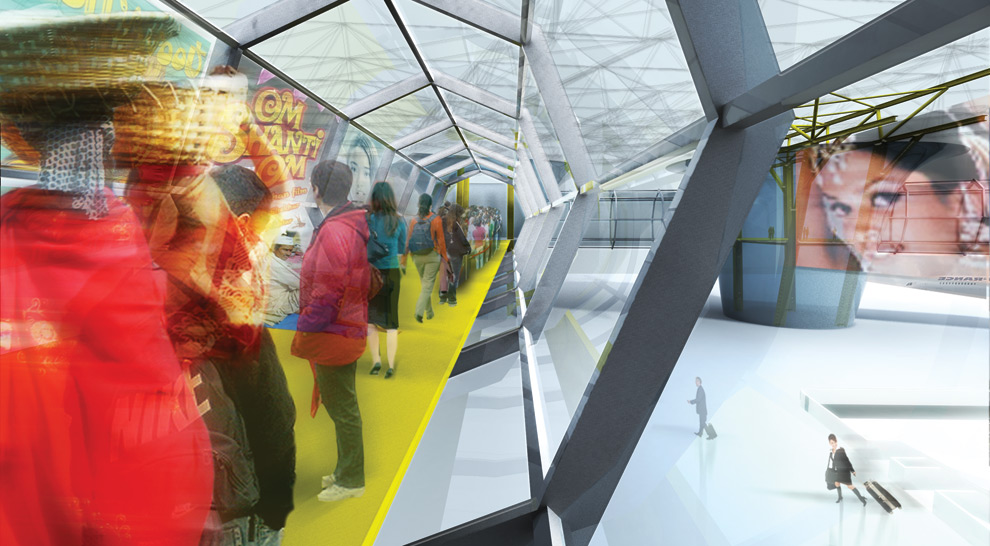
Quick Project Desciption: Airports typically attempt to be all things to all people, resulting in general inefficiency and awkward relationships between program spaces. By seeking new opportunities via trade-offs, for instance a tourist class passenger waiting longer but flying for free, or a business class passenger’s ticket price rises while he waits less in a more luxurious setting, a new circulation map and airport space is created that addresses these disparate groups needs. Optimal relationships between airlines, airport, and users are handled through parametric models and genetic algorithms.
What is the metric for a good design? Or rather, now that parametric modelling allows us to easily create thousands of variations of a given design, how do we chose the “correct” one?
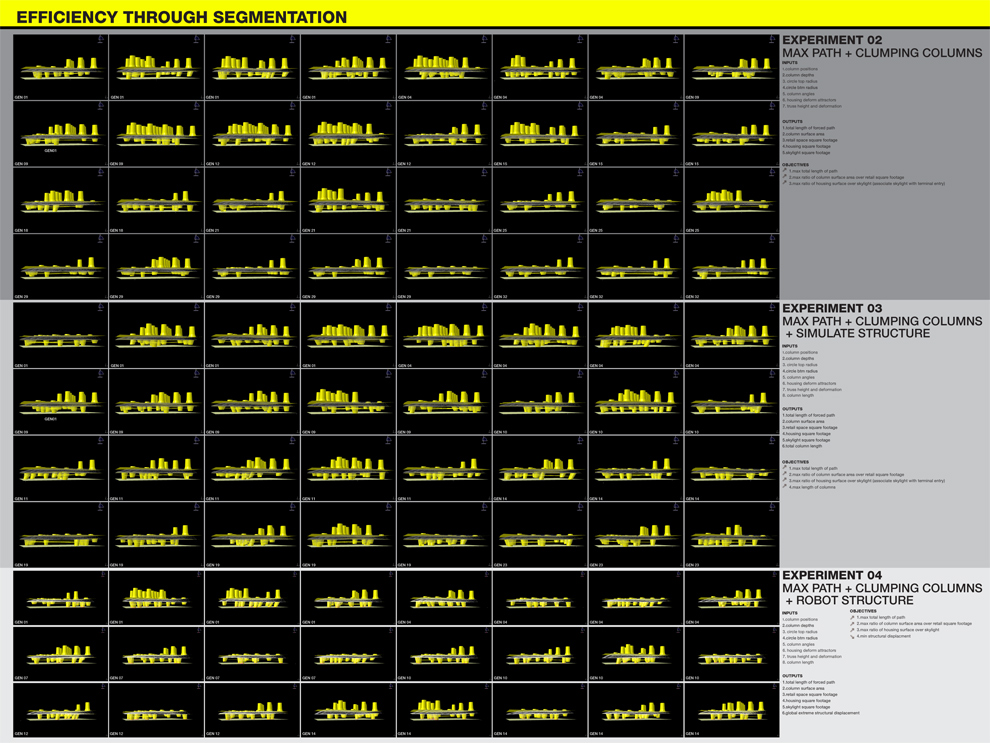
First, Creating a parametric model in catia, whose inputs are optimized through the engineering program modeFrontier with additional structural finite element analysis coming from autodesk’s newly aquired robot. The challenge became how to convert your design position, parti, whatever, into a quantifiable metric that the software can optimize for. For instance, to optimize for material efficiency, you could let the software optimize a shape for maximize volume with minimal surface area. After 3000 designs you’d have a sphere, but things can get very complex fast when you begin optimizing for competing objectives. See our complete studio blog here. Project description…
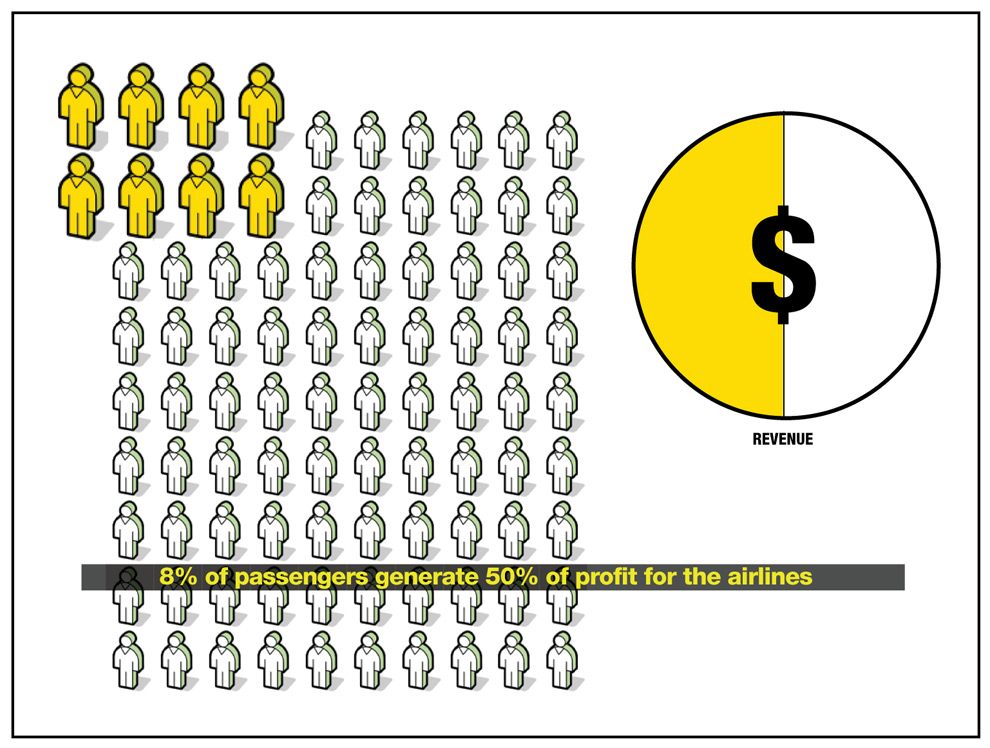
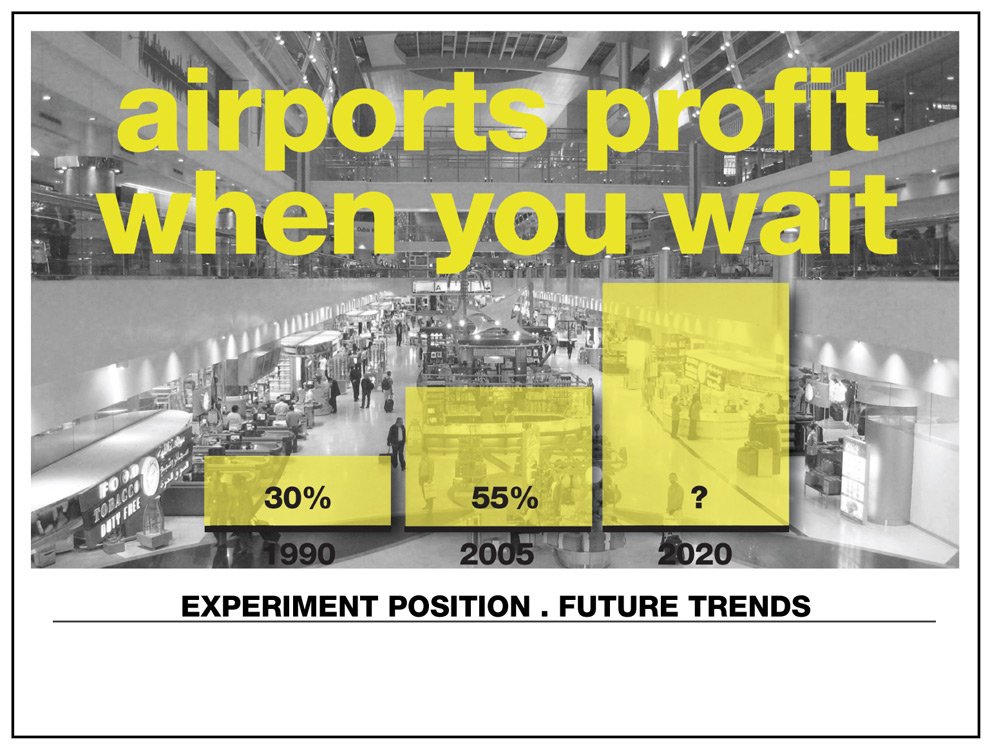
I was drawn to the metrics of passenger economy and profit. Airports typically attempt to be all things to all people, resulting in general inefficiency and awkward relationships between program spaces and passengers, especially business and tourist class. By seeking new opportunities via tradeoffs, for instance a tourist class passenger waiting longer but flying for free, or a business class passenger’s ticket price rises while creating multiple, separate dedicated entry points that allow shorter waits, a new optimized circulation map presents itself.
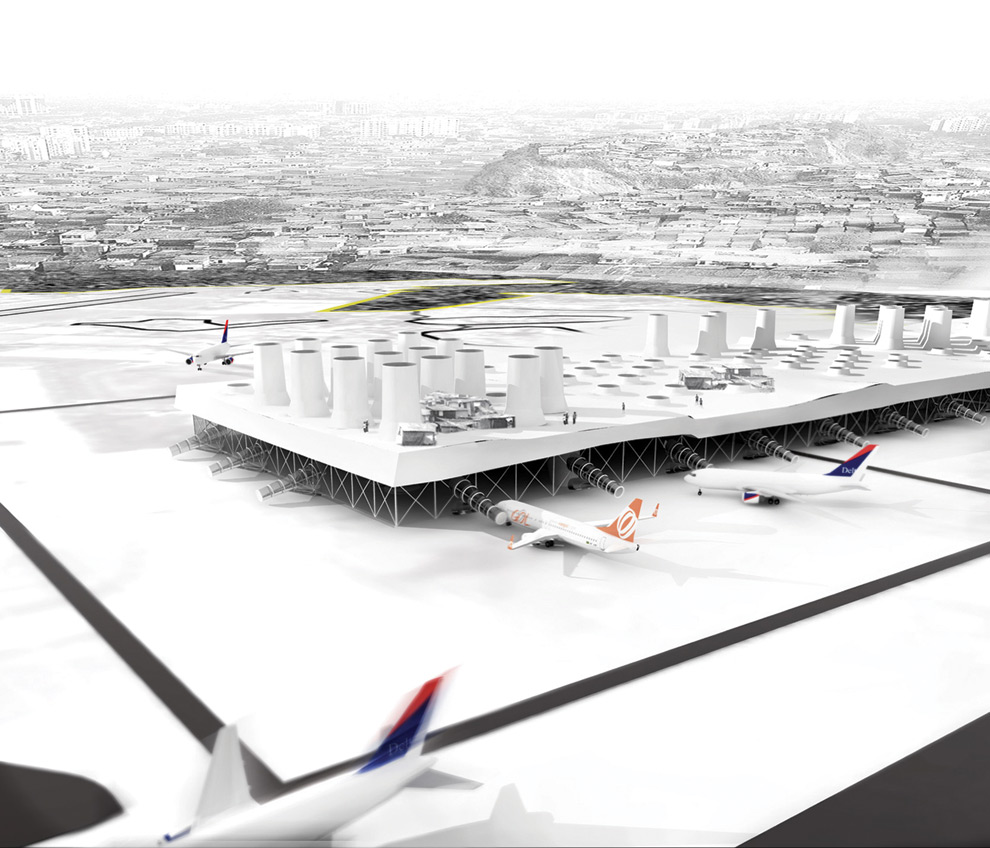
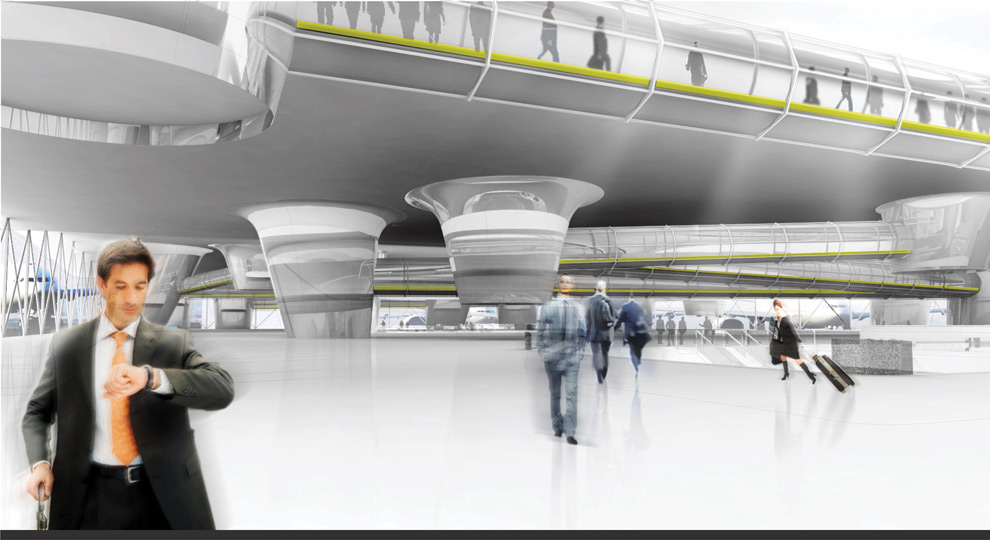
Each hanging element is a program + structural column connected by a circulation tube. Within the circulation tube tourist class passengers have the opportunity to fly for free, passing through each commercial program space. One objective is to maximize the length of the tube – thereby allowing more passengers to fly for free maximizing the airports ancillary profits. Another objective is to create an unobstructed space for business class passengers requiring few of the program spaces to touch the ground but rather hang, allowing business class passengers to freely pass through below. The more columns that touch the ground, the more structurally stabe the ceiling space frame becomes, allowing more housing towers above. The program mediates between these competing objectives finding high-performing, unexpected solutions and it becomes the role of the user to rank and chose designs based on desired criteria. Most housing = most columns = fewer business class travellers, etc…
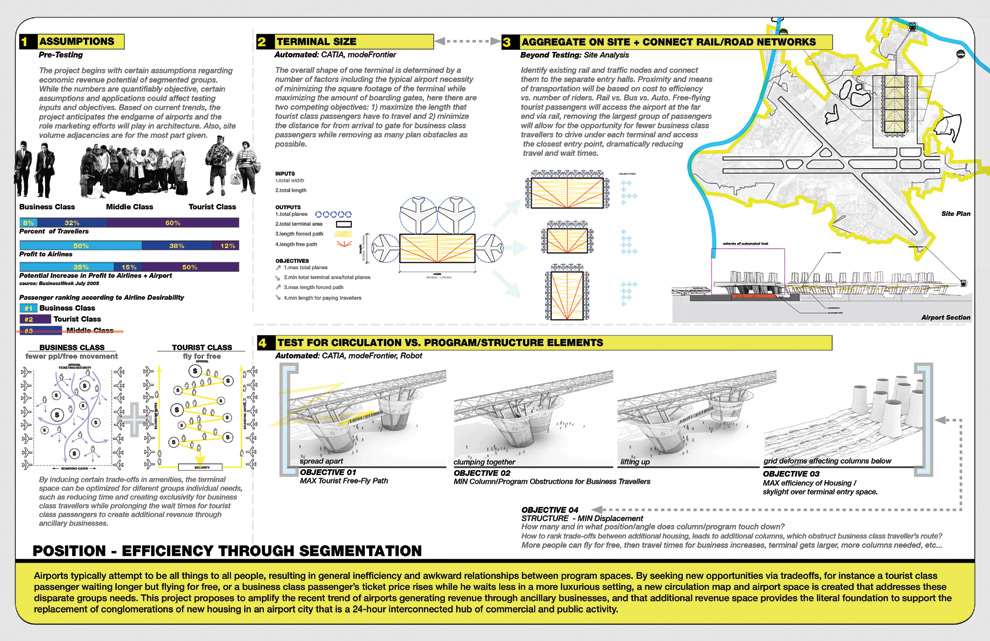
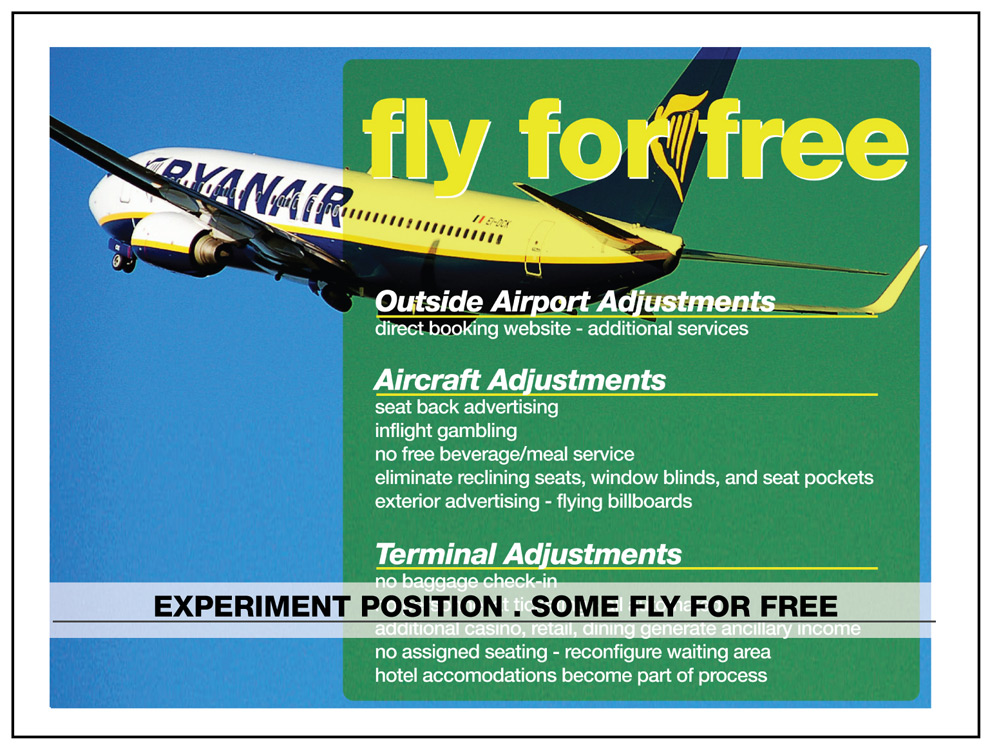
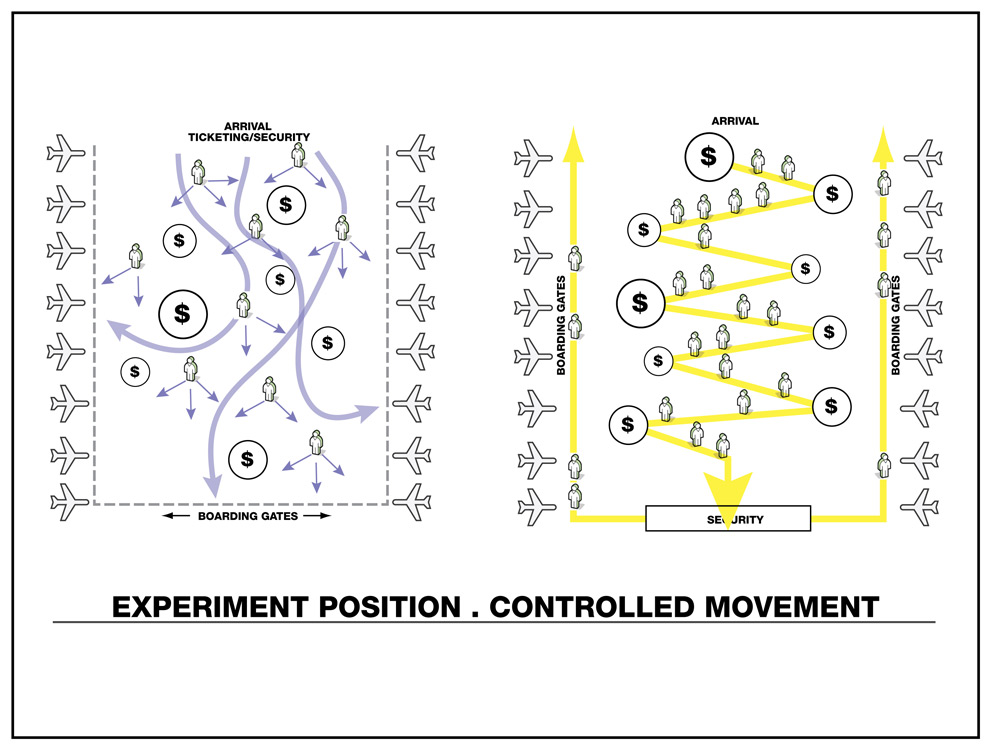
Freedom of movement for business class passengers on the left, forced path through retail space for tourist class passengers on the right. Trade offs of flying for free.
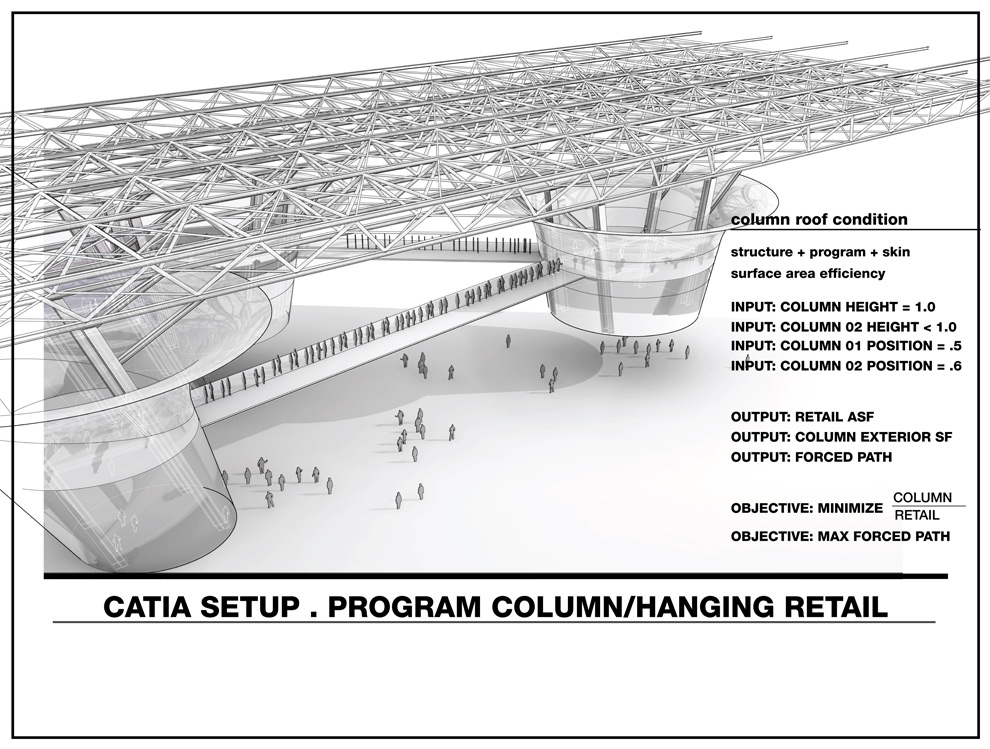
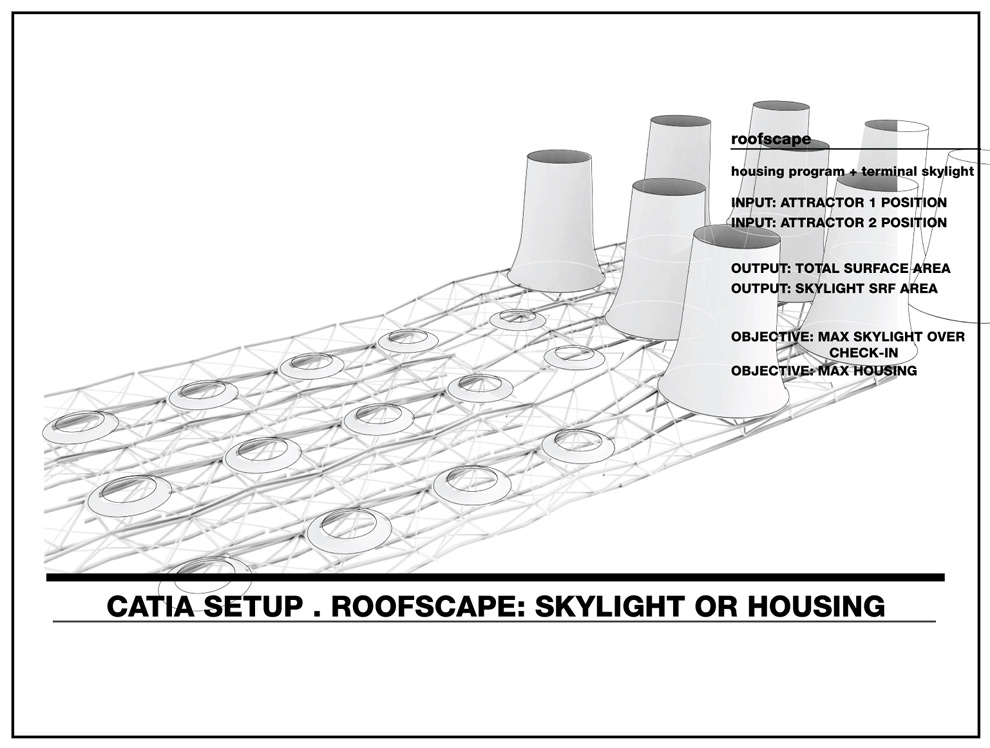
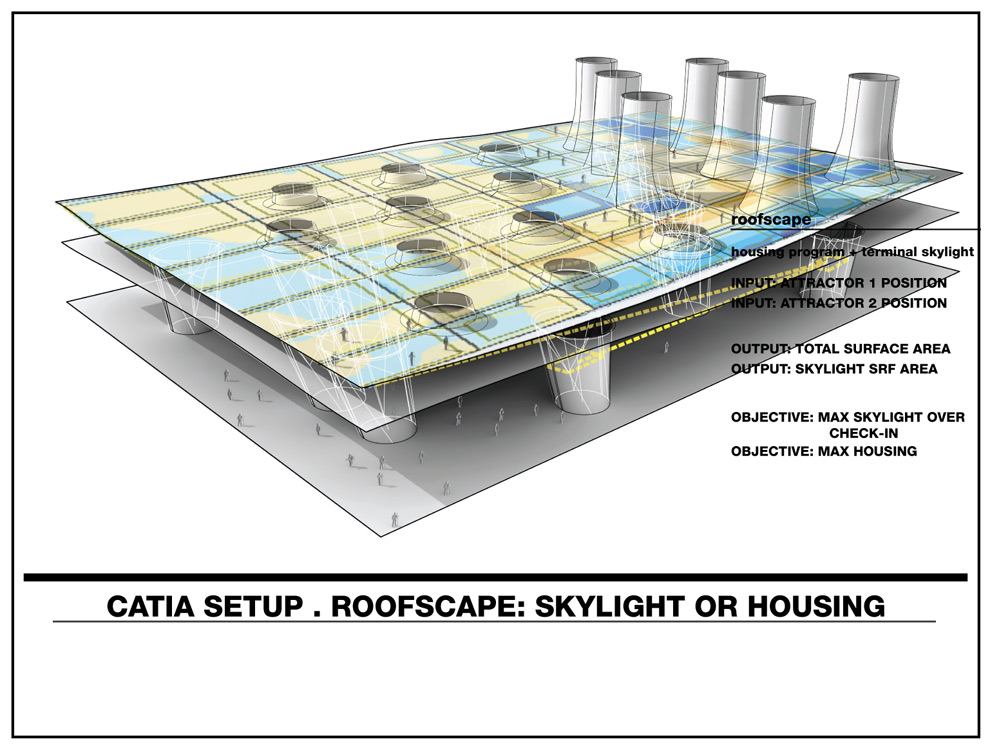
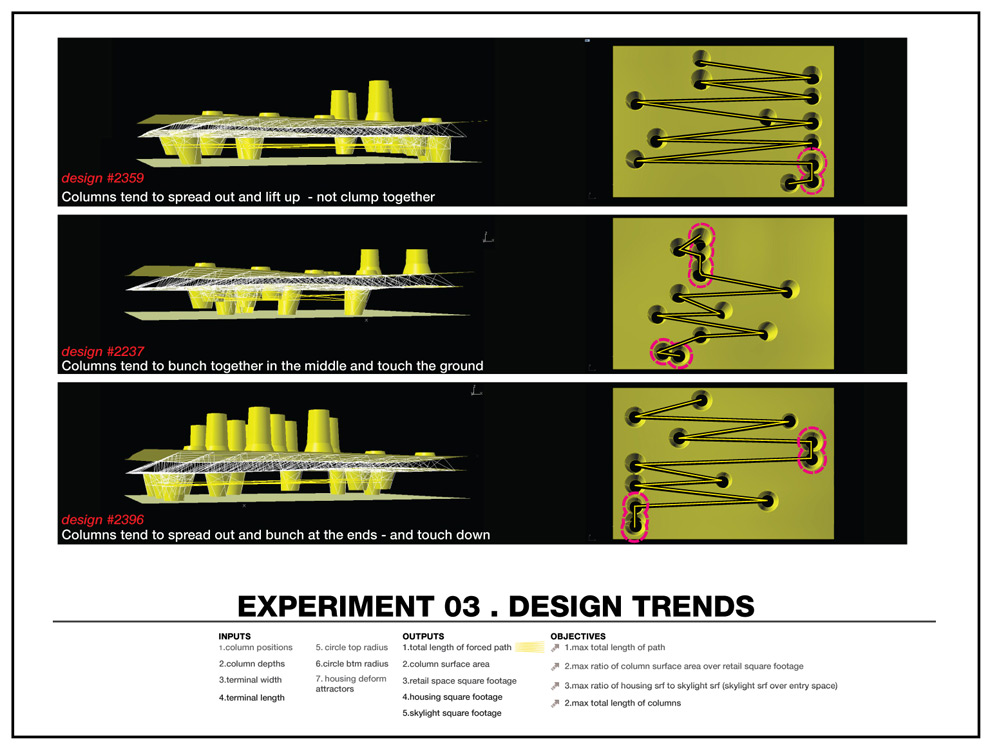
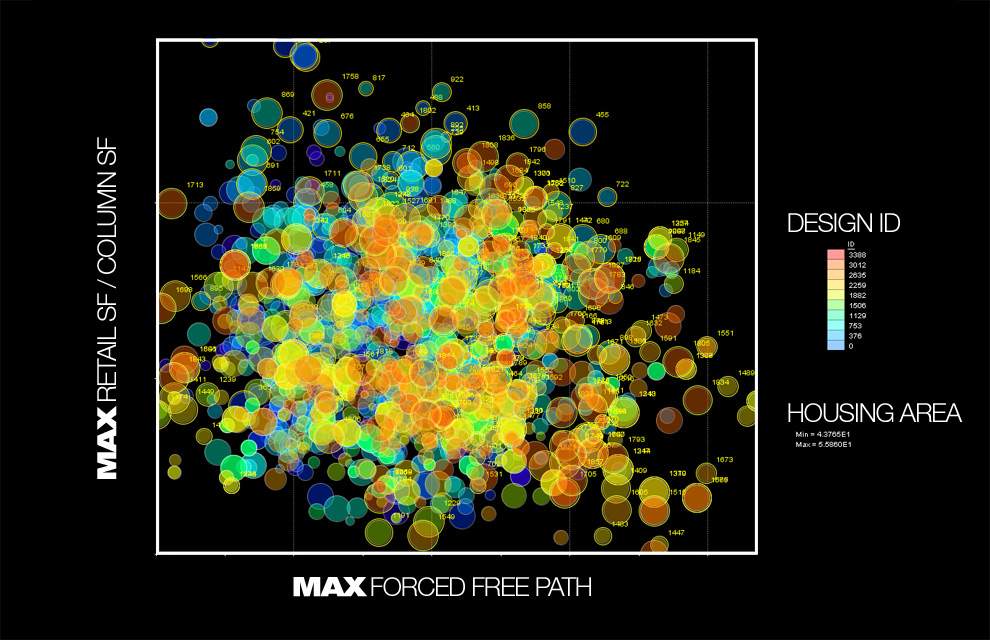
The addition of structure as an object creates more complex results

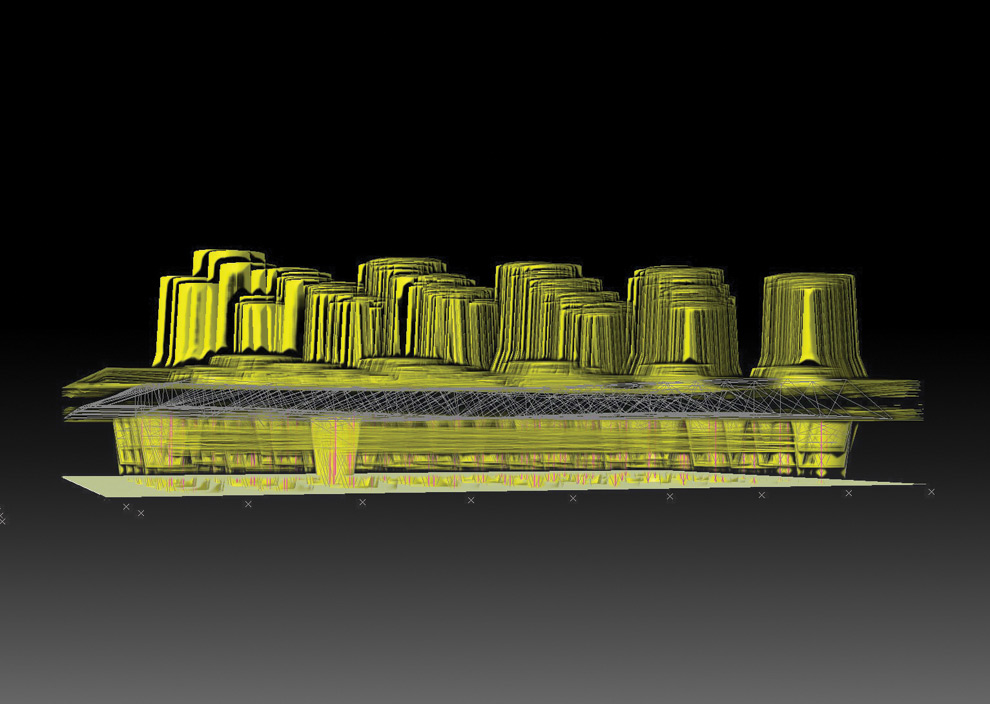
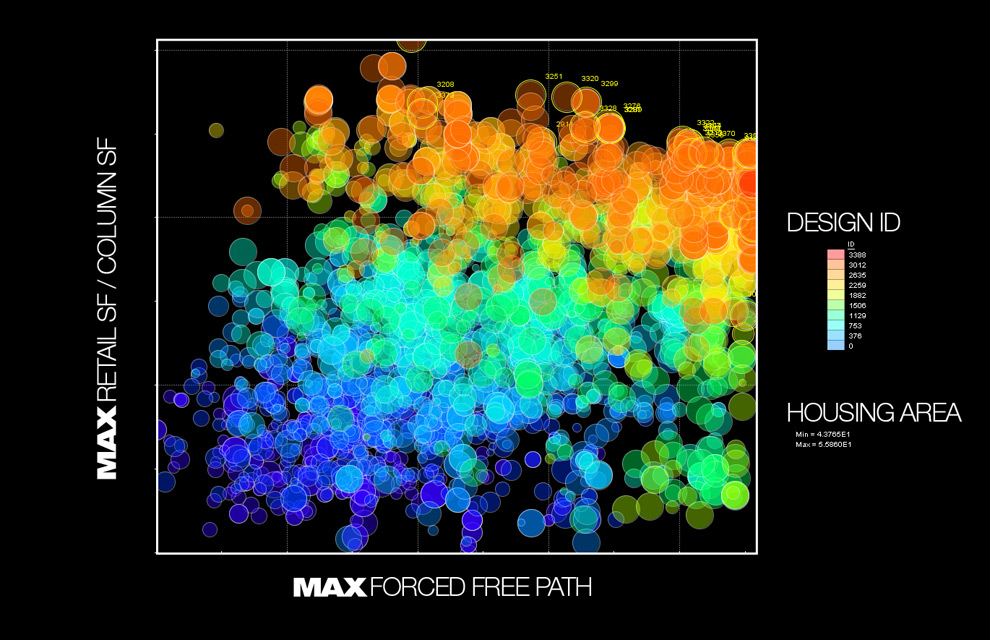
Overlay of 2500 designs to detect trends
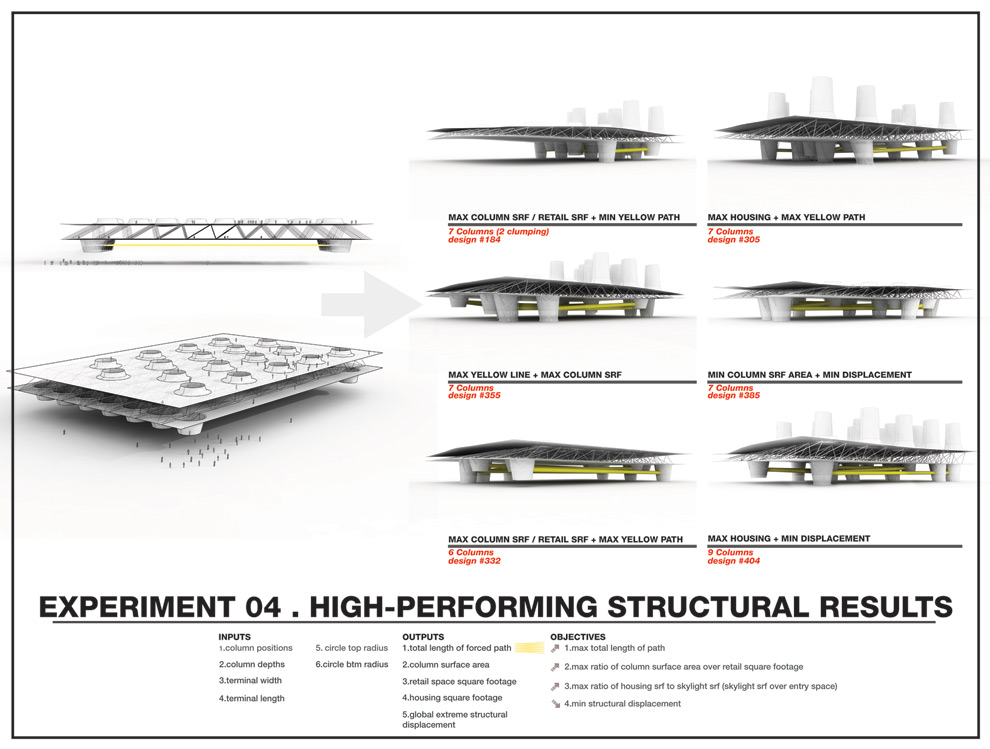
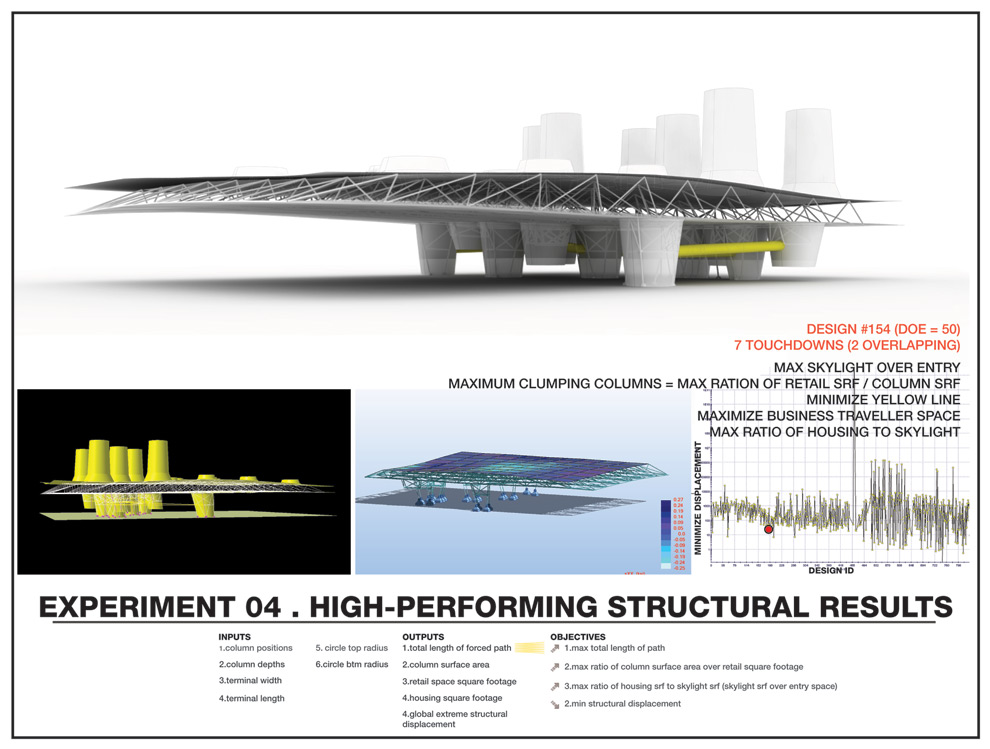
Unexpected, high-performing results. Columns shift to one side with housing towers above, while cantilevered roof tapers to minimize movement.

January 11th, 2010 at 9:30 am
Very interesting project John,
Really enjoy the diagrams, very easy to understand.
I would be interested to hear what your position is in regards to the role of the architect to provide good public spaces within a commercial enterprise such as an airport. Should the visitor be forced into each of the commercial spaces?
Very interesting project.
Cheers.
January 12th, 2010 at 12:14 am
Hi Jesse,
Thanks for the comment and it’s an interesting conundrum. I suppose with this project I was admittedly being a little simplistic and somewhat nefarious in projecting that airports are no longer public spaces (if they ever were), but are closer to cities predicated on consumer transactions – malls in effect. And to design a good mall is to encourage people to spend more, not necessarily what’s in their best interests, but what produces the best outcome for the owner. So instead of the myriad psychological tricks designers use to get them to open their wallets, let’s just create an honest consumer space that extrapolates where airport design is going and provide the choice. Everything is a trade off after all. If you can’t pay you’re forced through a commercial space, in exchange for your eyeballs on ads and ubiquitous opportunities for spending, you’re rewarded with an airplane ticket. Wow, it sounds harsher than I remember it!
best, John
April 3rd, 2011 at 10:45 am
Hi John
Nice work; but could this airport have been anywhere? You’ve already explained your premise as considering the airport to be a mall and designed to encourage consumers to spend more. That said, did the cultural context of the site factor in in your design process?
On a different track, would appreciate your help on a few questions: what software do you use for presentations, particularly for your portfolio on issuu.com? Also, did you send the entire portfolio to the grad schools or a few selected plates?
Thanks and regards
Devina
April 3rd, 2011 at 6:54 pm
Hi Devina,
This project was definitely inspired by the blatant wealth disparity that exists in Mumbai. This is a place where there are currently 200,000 slum dwellers living illegally on the grounds of the airport itself, perilously close to the runways. So that is where the “efficiency/opportunity through segmentation” came in to play.
On your second question, that’s more difficult to answer, I typically used rhino for modelling, vray/3ds max for rendering, then all the adobe programs for putting it all together. And yes, what’s there is what was sent to grad schools.
cheers, -J
June 5th, 2011 at 8:06 am
[…] used genetic algorithms for form finding with a previous project, and that time I was using a tenuous connection between catia, modeFrontier and Robot. So I was […]