JOHN LOCKE, ARCHITECT

  • Featured Work
  • Design Blog           
  • Photography
  • Graphic Design
  • Dept of Urban Betterment

About

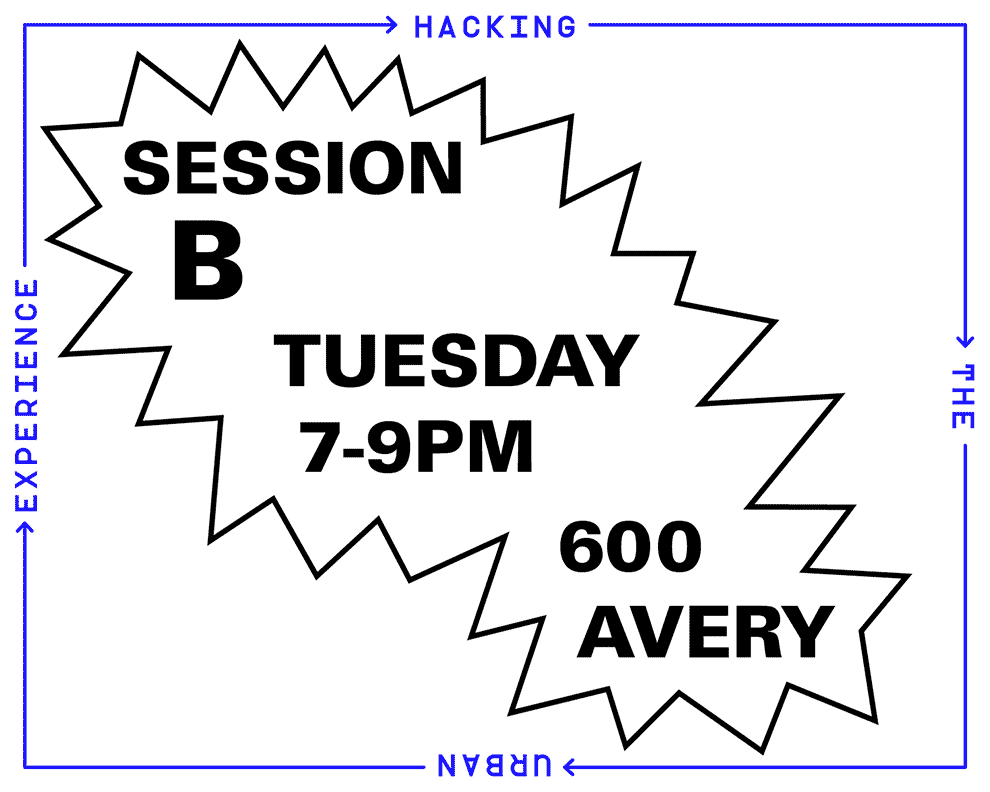
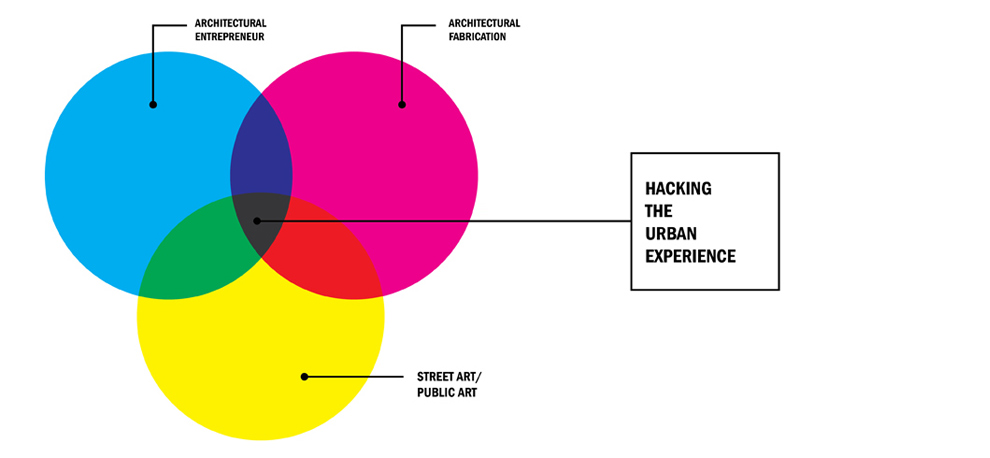
Hello. I live in New York and work at The Living. I hold a graduate degree from Columbia University's GSAPP and an undergraduate architecture degree from the University of Texas at Austin. I have more than seven years of professional experience at noted architecture firms, including New York-based Rogers Marvel Architects and SOM. I also tackle freelance graphic and photography work with my partner in crime, the multi-talented Jackie Caradonio at Lion in Oil. In addition, I teach a course, Hacking the Urban Experience, at Columbia. View my CV here: CV(html). Thanks and have a nice day.

Contact

john.h.locke{at}gmail.com
310.735.3333

Architecture Portfolios

Portfolio 2002-2007 (issuu)
Portfolio 2008-2009 (issuu)

HOME / BLOG

fabrication

20140913 Tags: 3DPrinting, fabrication | No Comments »

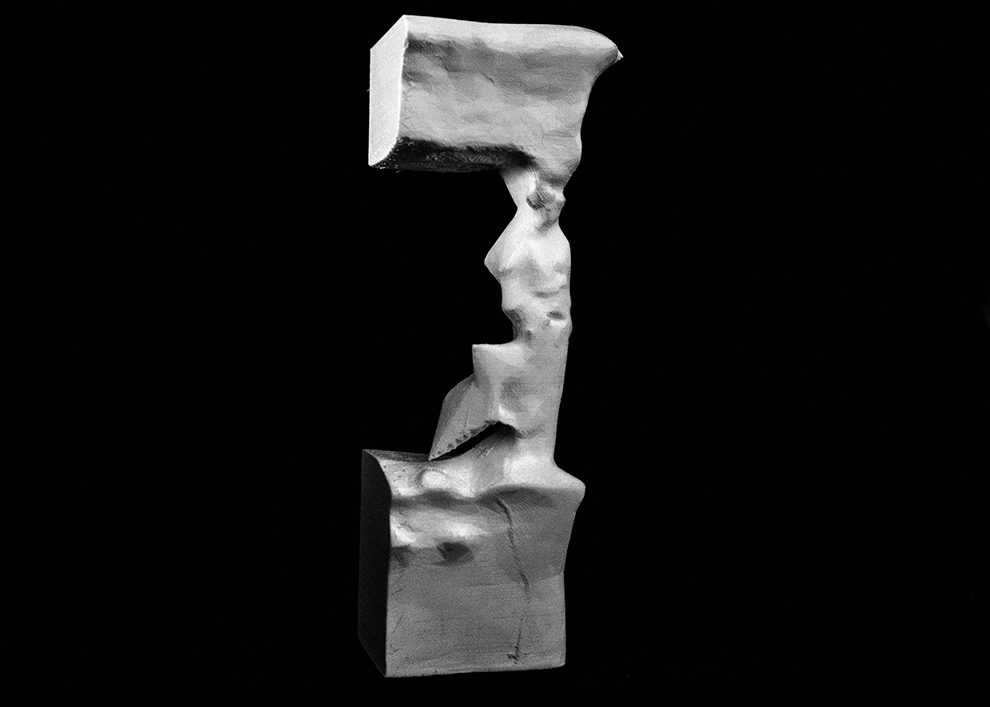
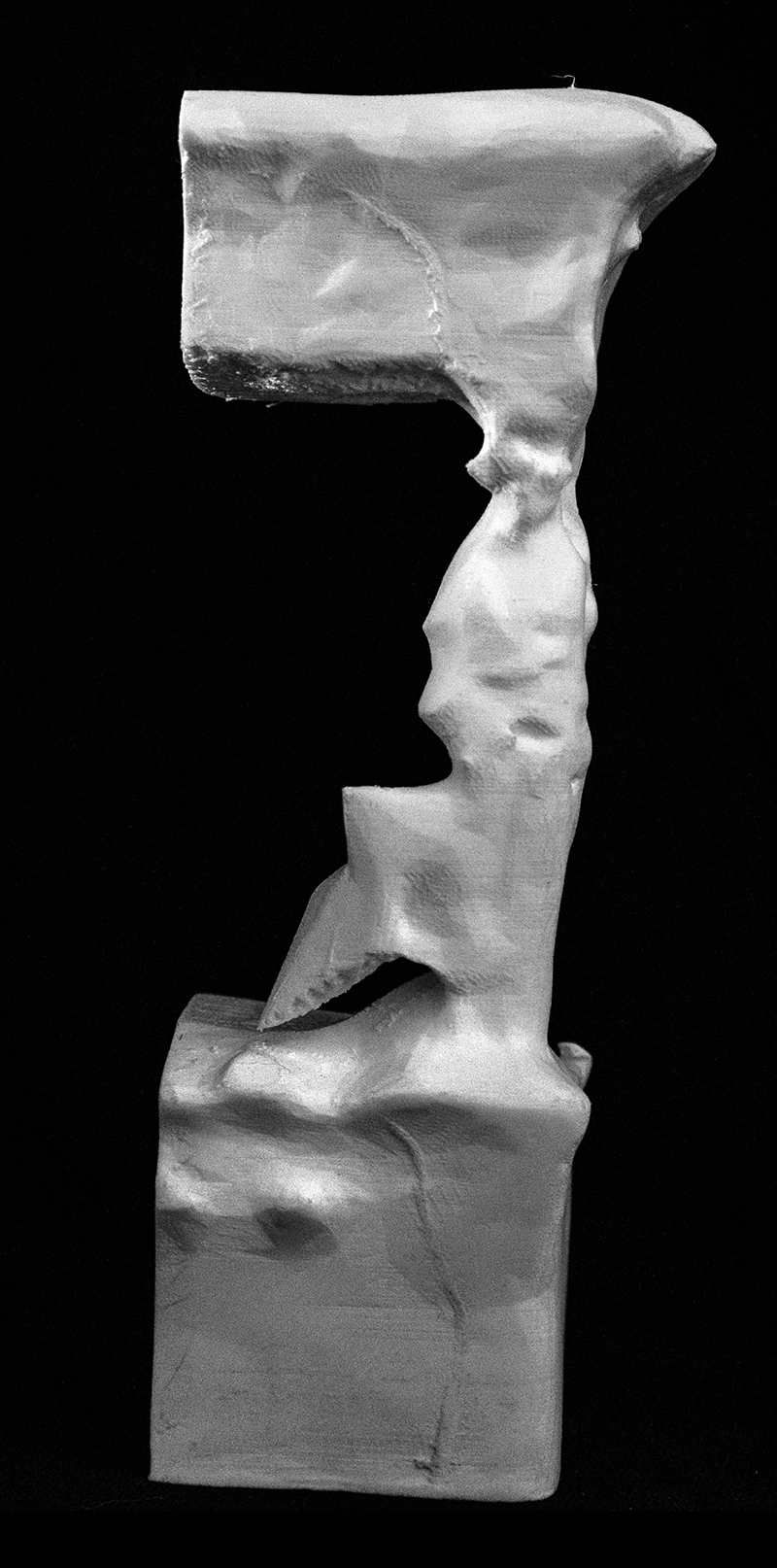
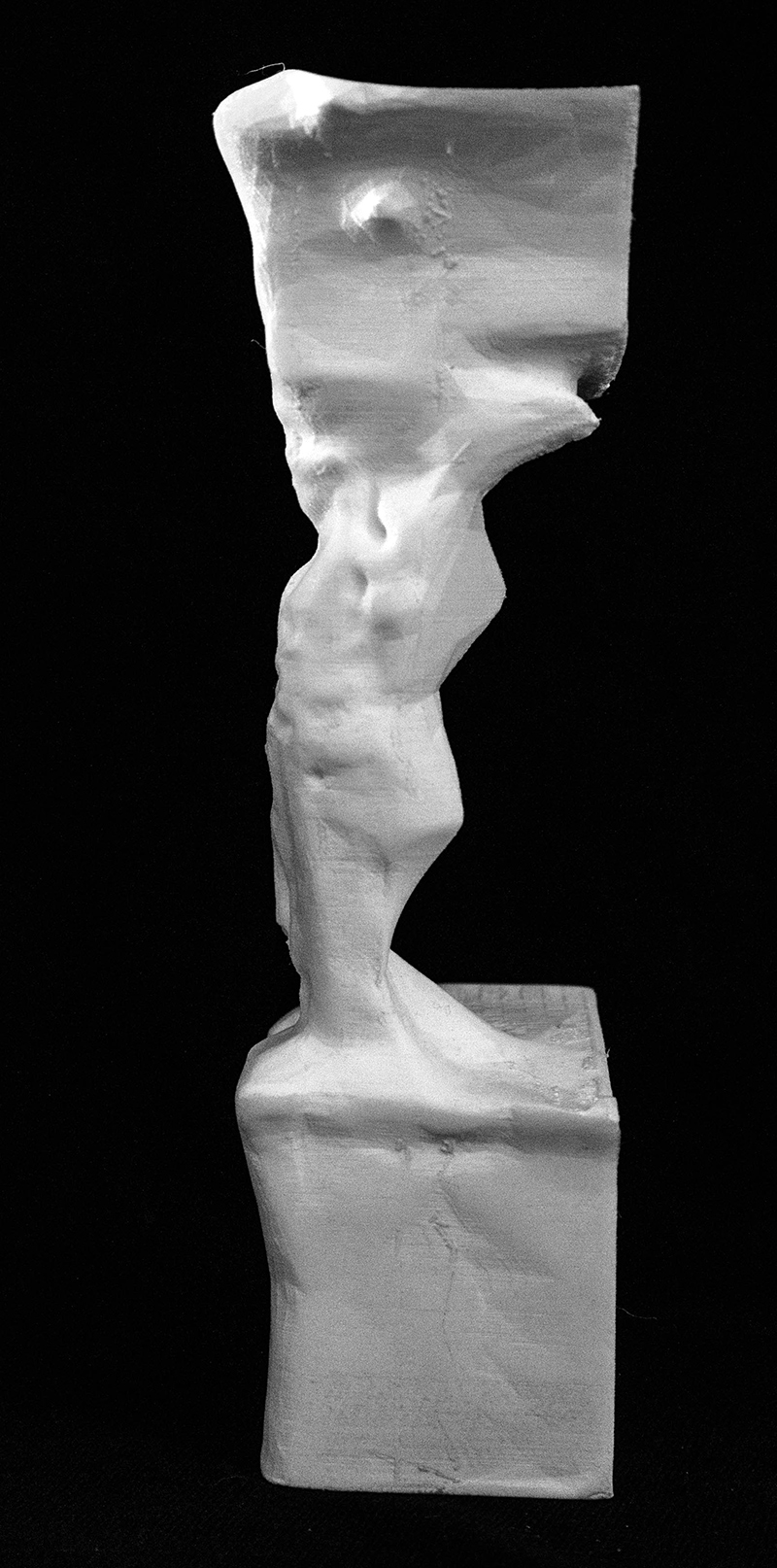
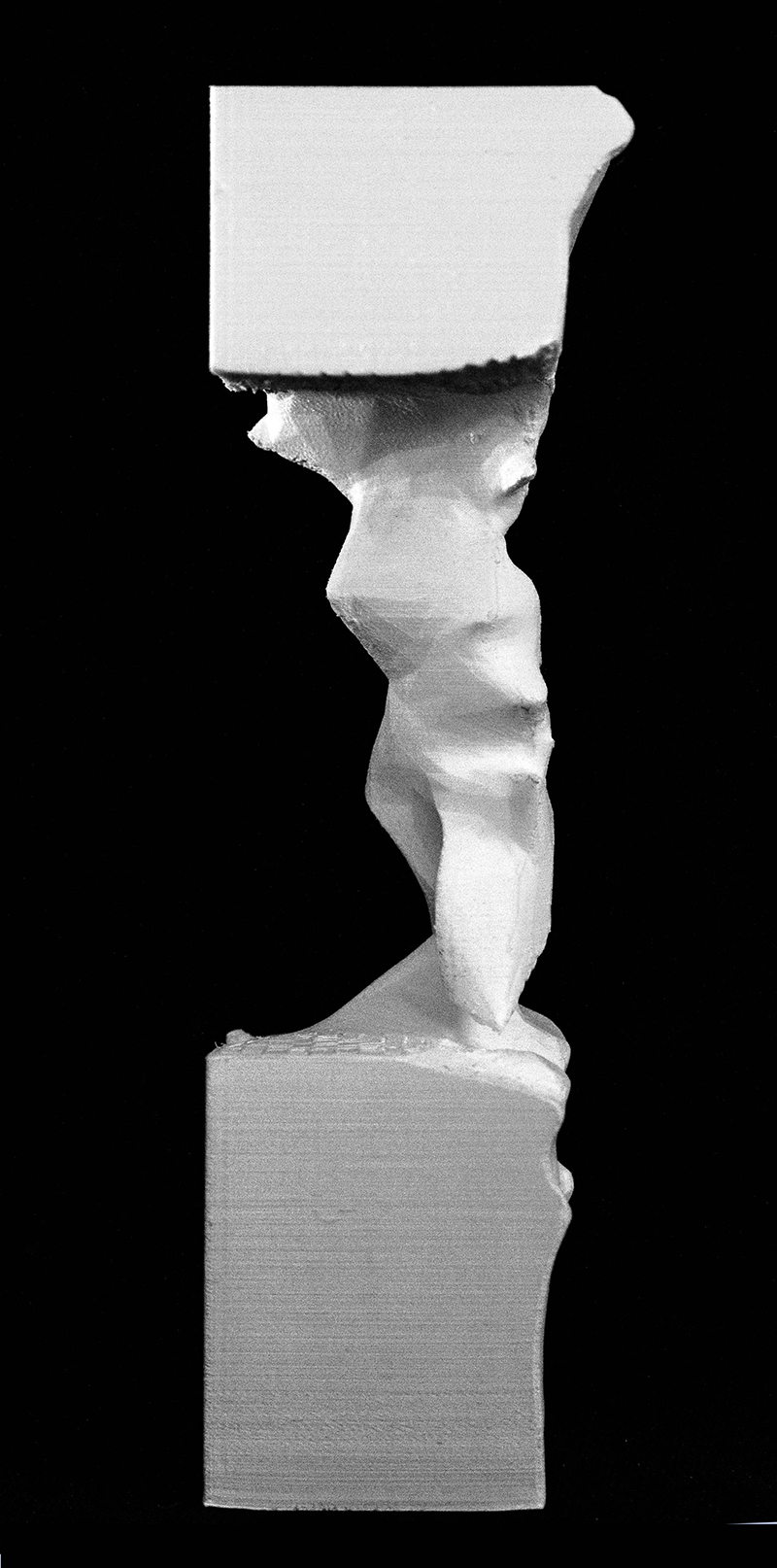
3DP Maiden E

CARYATID-01-web
CARYATID-FRONT-webCARYATID-LFT-webCARYATID-BACK-webCARYATID-RT-web


“should any one wish for information on the origin of those draped matronal figures crowned with a mutulus and cornice, called Caryatides, he will explain it by the following history. Carya, a city of Peloponnesus, joined the Persians in their war against the Greeks. These in return for the treachery, after having freed themselves by a most glorious victory from the intended Persian yoke, unanimously resolved to levy war against the Caryans. Carya was, in consequence, taken and destroyed, its male population extinguished, and its matrons carried into slavery. That these circumstances might be better remembered, and the nature of the triumph perpetuated, the victors represented them draped, and apparently suffering under the burthen with which they were loaded, to expiate the crime of their native city. Thus, in their edifices, did the antient architects, by the use of these statues, hand down to posterity a memorial of the crime of the Caryans.”

Vitruvius (De Architectura)


The six maidens stood unmolested for 2,500 years, until a year into the 19th Century, Lord Elgin of Scotland came to saw and chisel one away, kidnapping her for the purpose of decorating the grounds of his estate. A second was spared a similar abduction only by virtue of suffering extensive damage in the Lord’s clumsy attempt to disentangle her from the stone, eventually ending up smashed amongst the other marble ruins of the Acropolis, before undergoing a haphazard reconstruction. Severely degraded by the Athenian air pollution of the late 1970’s, the five remaining sisters were removed in 1978 and replaced with carefully reconstructed replicas. For the past 3 years, the conservators at the Athens Museum have undergone a round the clock restoration effort to eliminate the centuries of soot and grime. Lasers excise millimeter by millimeter of foreign matter before reaching the original apricot-colored patina of the ancient marble.


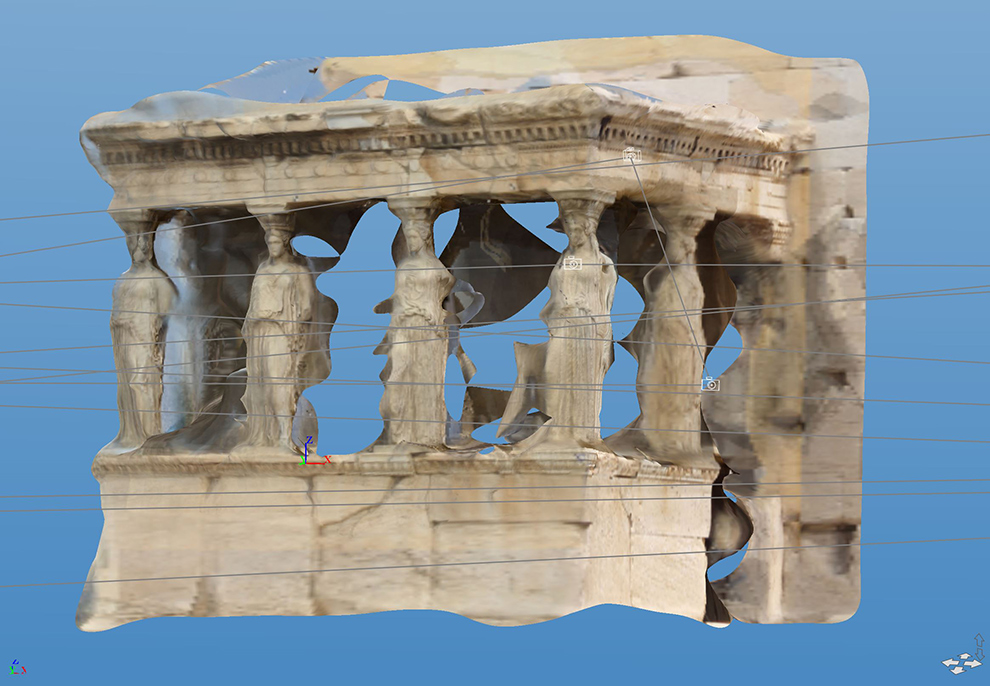
Caryatids are architectural elements, taking the female figure to support a building’s entablature. The six that make up the Caryatid Porch of the Erechtheion on the Acropolis at Athens are the most famous and most widely photographed.


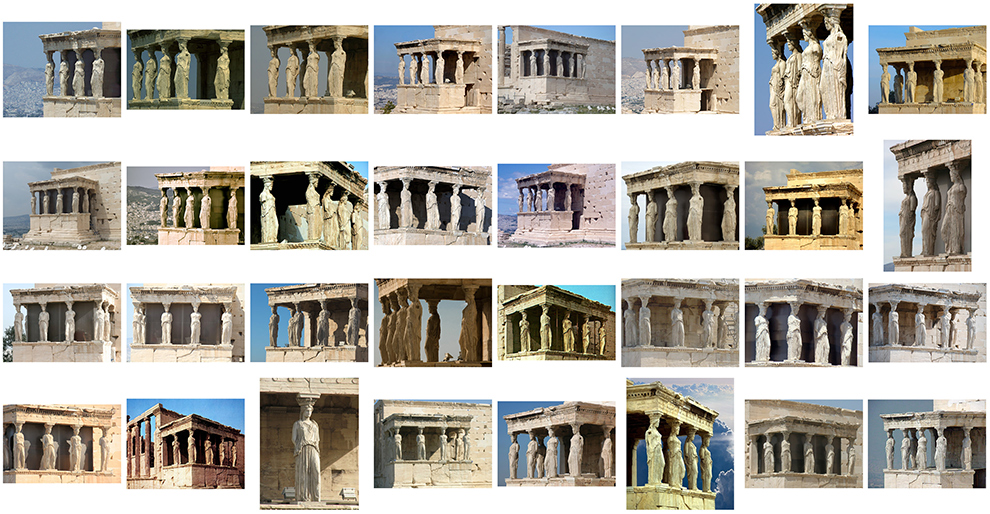
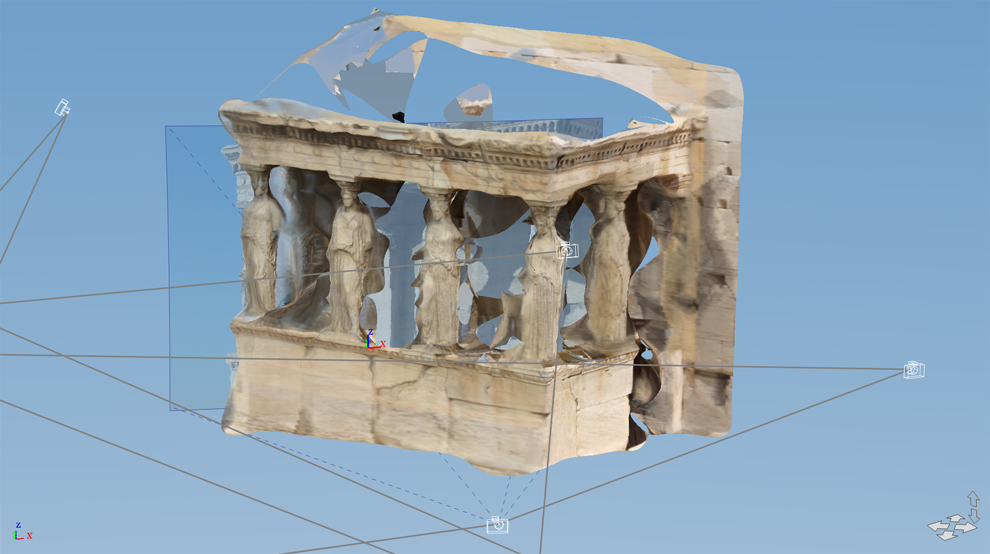
Here, photogrammetry software was used to construct a 3D mesh model of the fifth Caryatid – Maiden E – and 3D printed. Having never had the pleasure to visit Athens myself, the 3D model for this print was generated from images of the Porch of the Erechtheion as found through a Google image search. The GIS photos have all been taken after 1978, and are themselves images of copies – the original sisters having been secured and replaced with ersatz, in-situ replicas. Therefore, this print is in effect a copy of multiple of copies and degradations, both due to time and translation into varied mediums. There has been a translation from original marble to a lesser replicated stone, to a series of flat images, to a software’s algorithmic understanding and reconstruction of 3d depth, and ultimately to a plastic, physical print. Within that gamut of transformations there is ample room for glitches and anomalies to present themselves, however the loss of resolution and additional artifacts only serve to reinforce the confinement and fusion between form and weight.


*3D Printed with an Ultimaker2 Machine


REF-IMGS-web
CATCH-web

2014095 Tags: 3DPrinting, fabrication | No Comments »

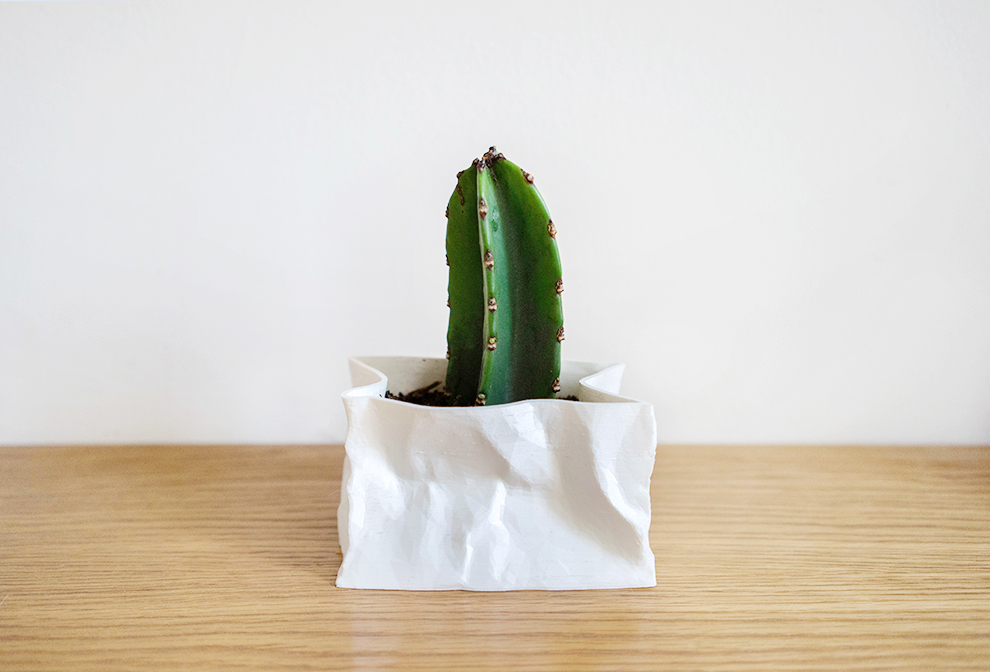
3DP Crumpled Pot

FINAL-web-rev4

01-web02-web

03-web04-web

05-web06-web


Procedure:
1) Purchase waffle from bakery across the street (optional)
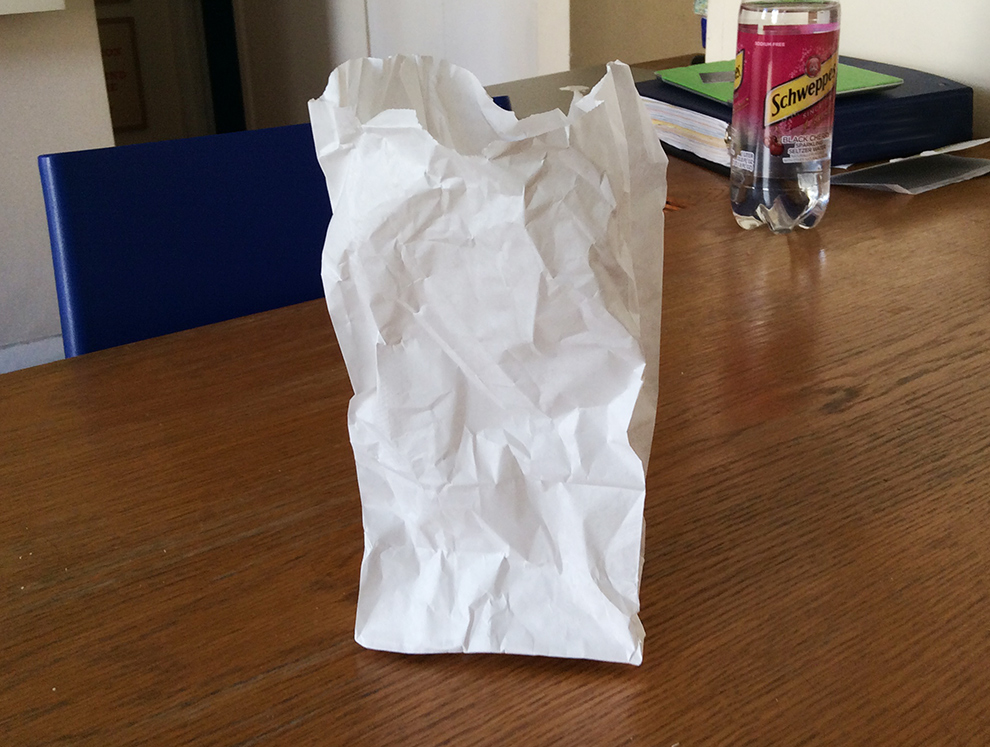
2) Save paper bag
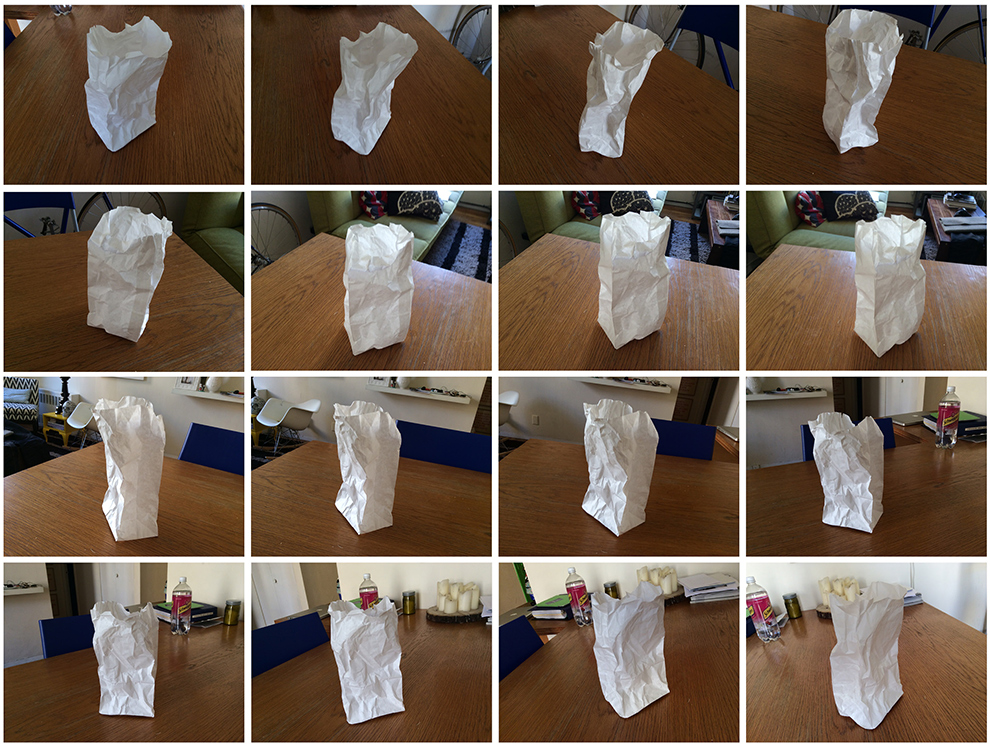
3) Take sequence of images to describe all sides of object (the paper bag)
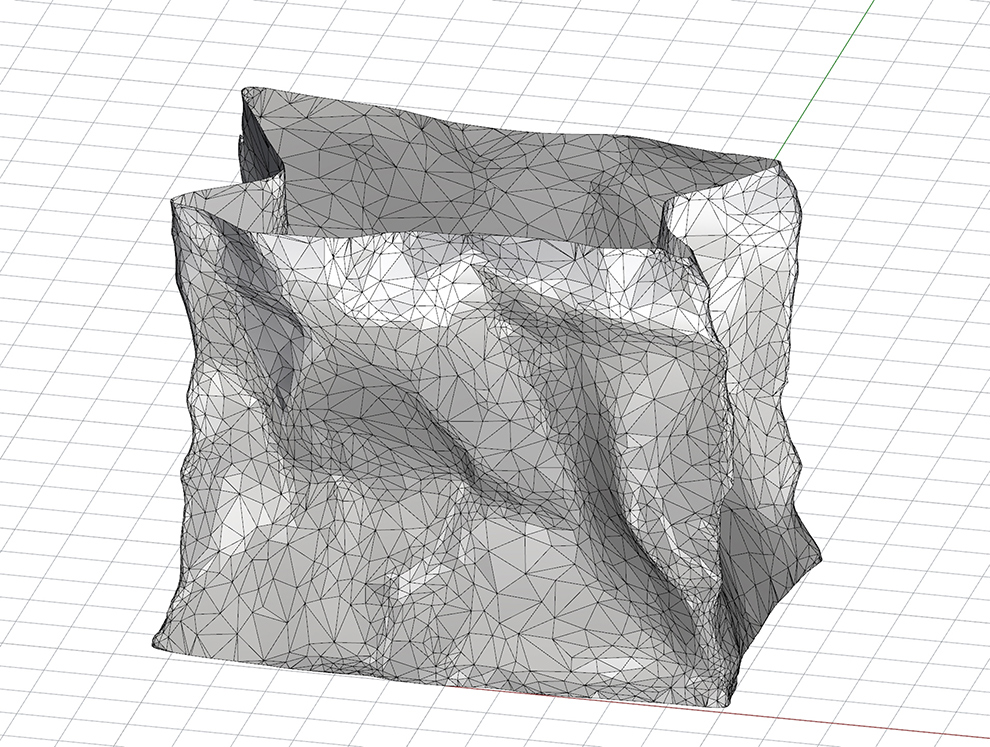
4) Load into Autodesk 123D Catch and create 3D mesh file
5) Export and clean up in Rhino
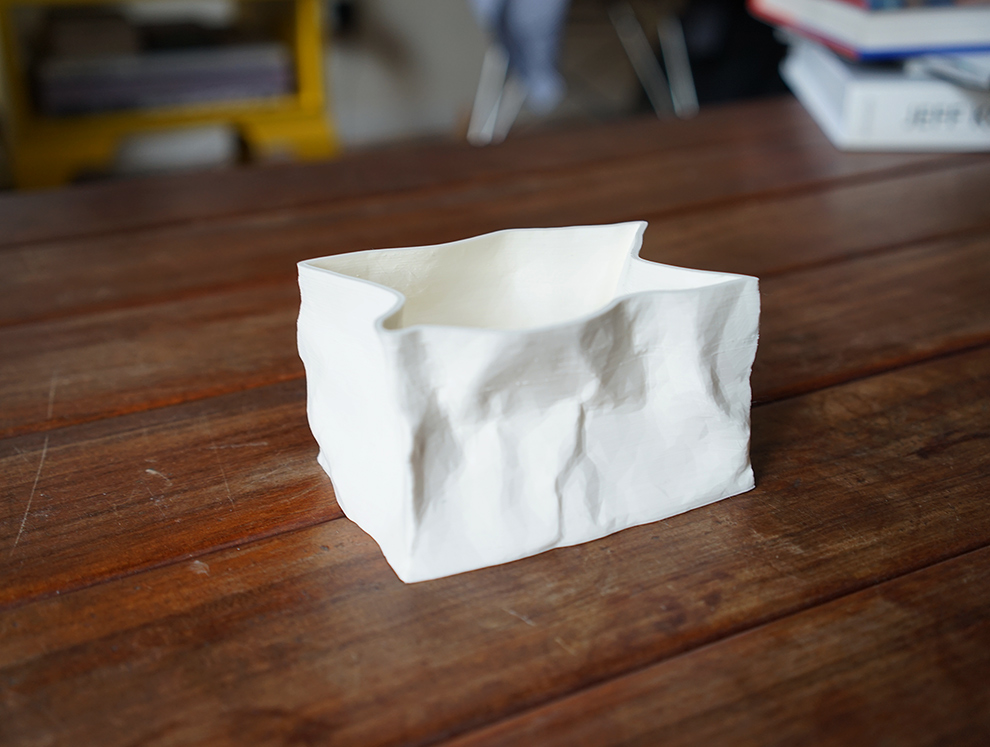
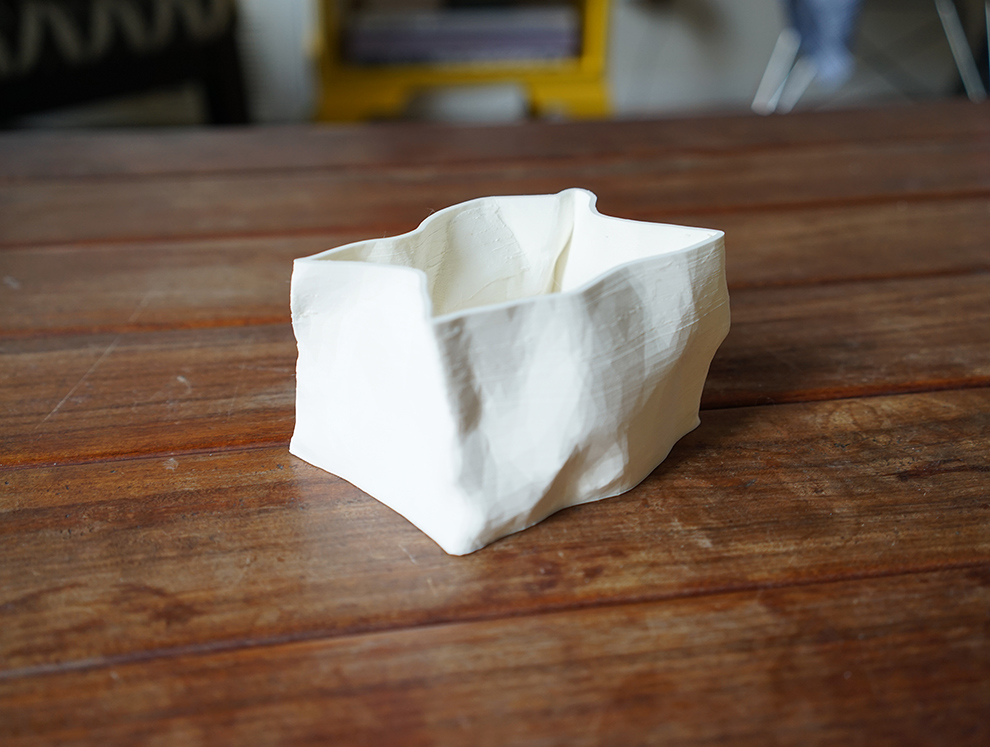
6) 3D Print
7) Welcome cactus to its new home


*3D Printed with an Ultimaker2 Machine

2014095 Tags: architecture, fabrication, gsapp, school, teaching | No Comments »

School’s in for Fall

fall_2013

BE THERE YALL!


Past course work:
http://hackingtheurbanexperience.tumblr.com/

20140727 Tags: architecture, DUB, fabrication, inflatable, new york, parametric, urban | No Comments »

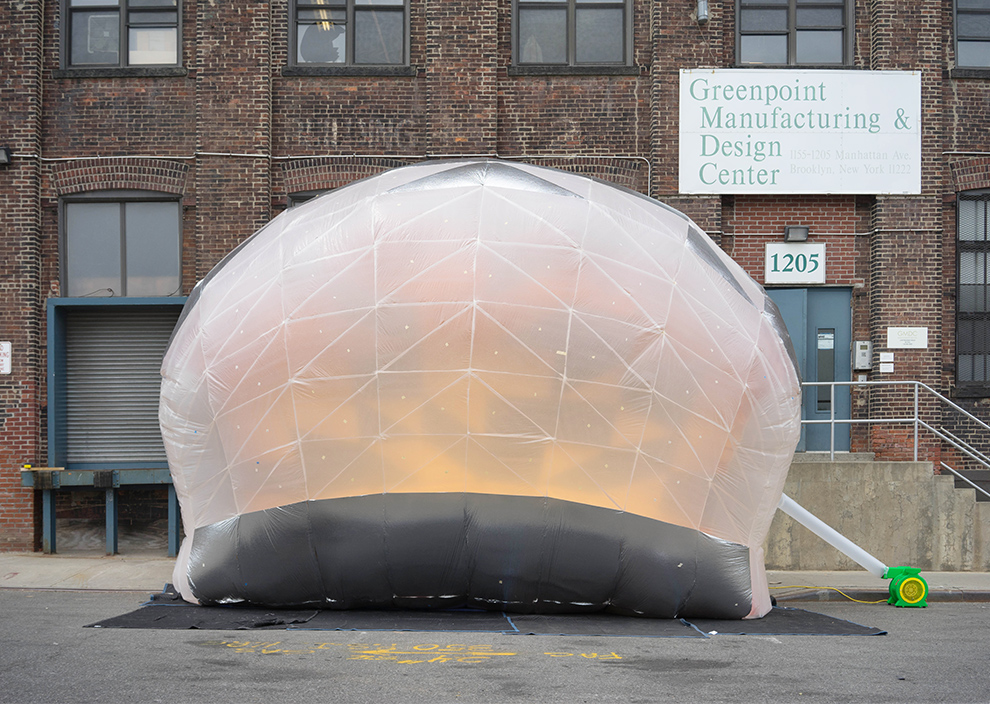
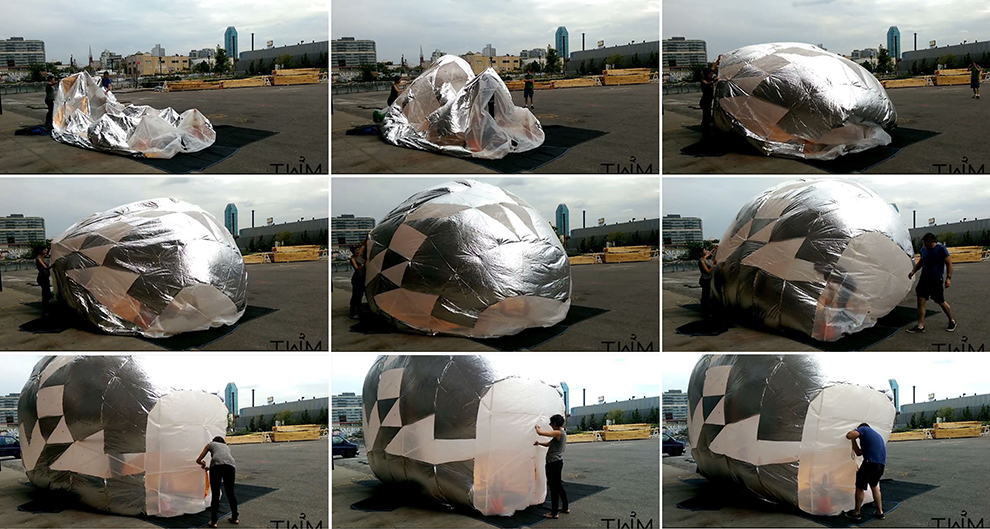
Inflato Inflates

inflato-inflated

inflate-web

Only missing the dumpster…

20140428 Tags: competition, fabrication, graphic design, interaction, new york, urban | No Comments »

Muybridge + Kelly

overall
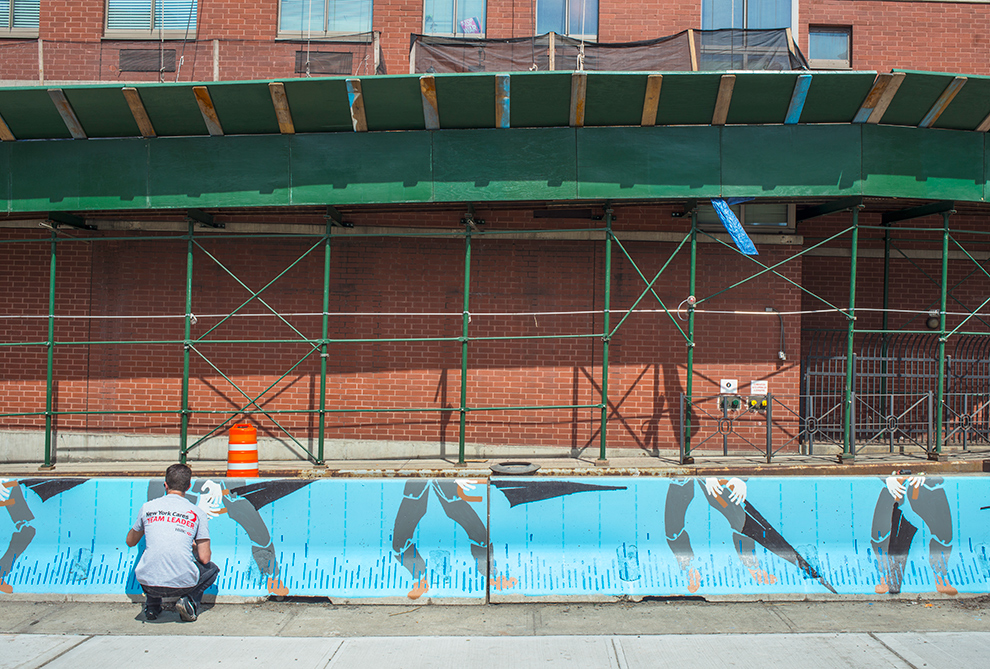
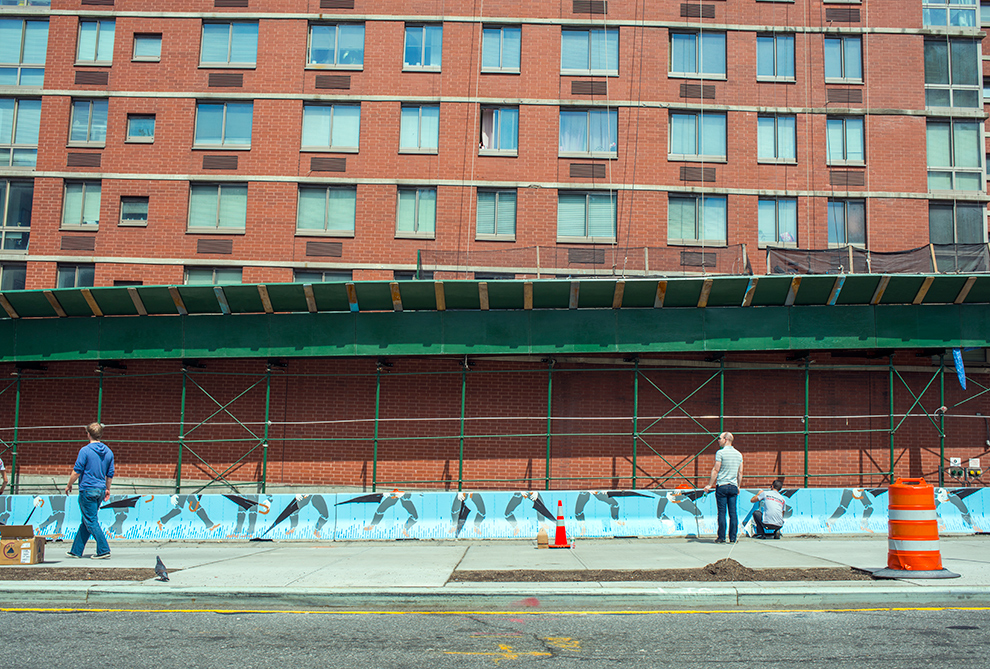
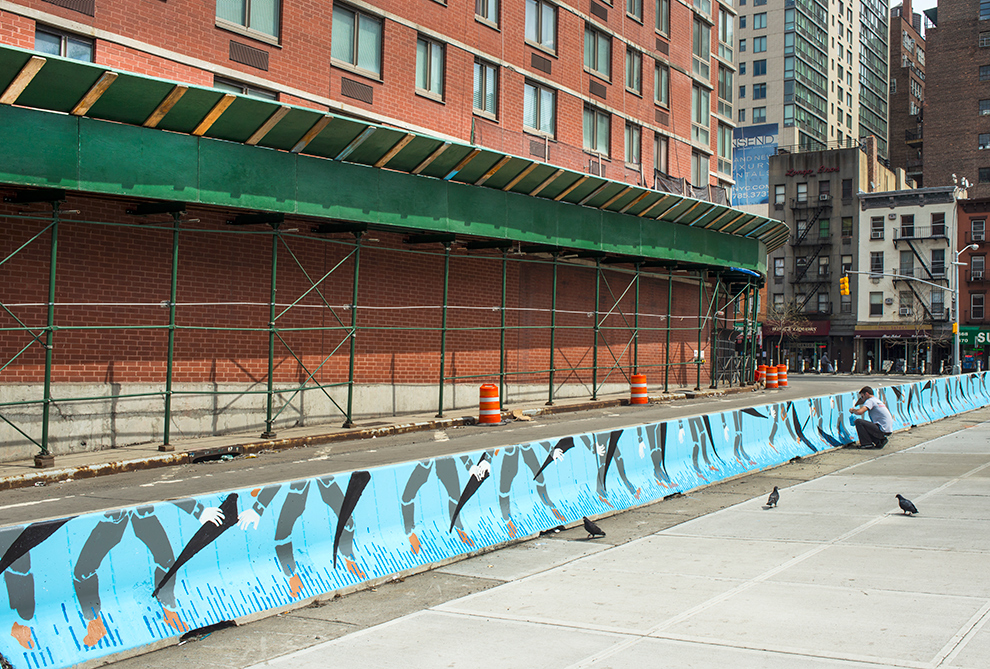
Final painted barrier
final01
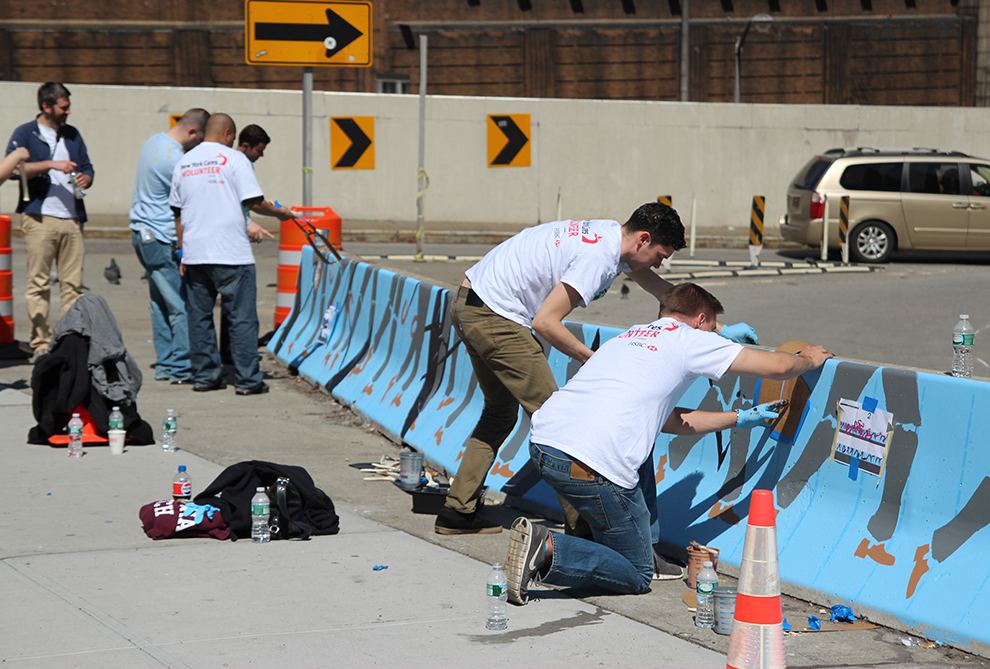
NYCares Volunteers paint the barrier
install

stencil-design
Stencils with movable joints
stencil-design-03

Barrier made of (10) 20′ long modules
SECTION-01-rev

SECTION-02-rev

SECTION-03-rev

SECTION-04-rev

Stencils laser cut out of oil board with rotating brass pin joints
stencil01stencil02
200′ of barrier painted in 4 hours
corner-01corner-01corner-01corner-01

corner-01corner-01corner-01corner-01

corner-01corner-01corner-01corner-01

NYCares volunteers painted barrier number 10
install02
Final painted barrier images
final_01final_02

final_03final_04


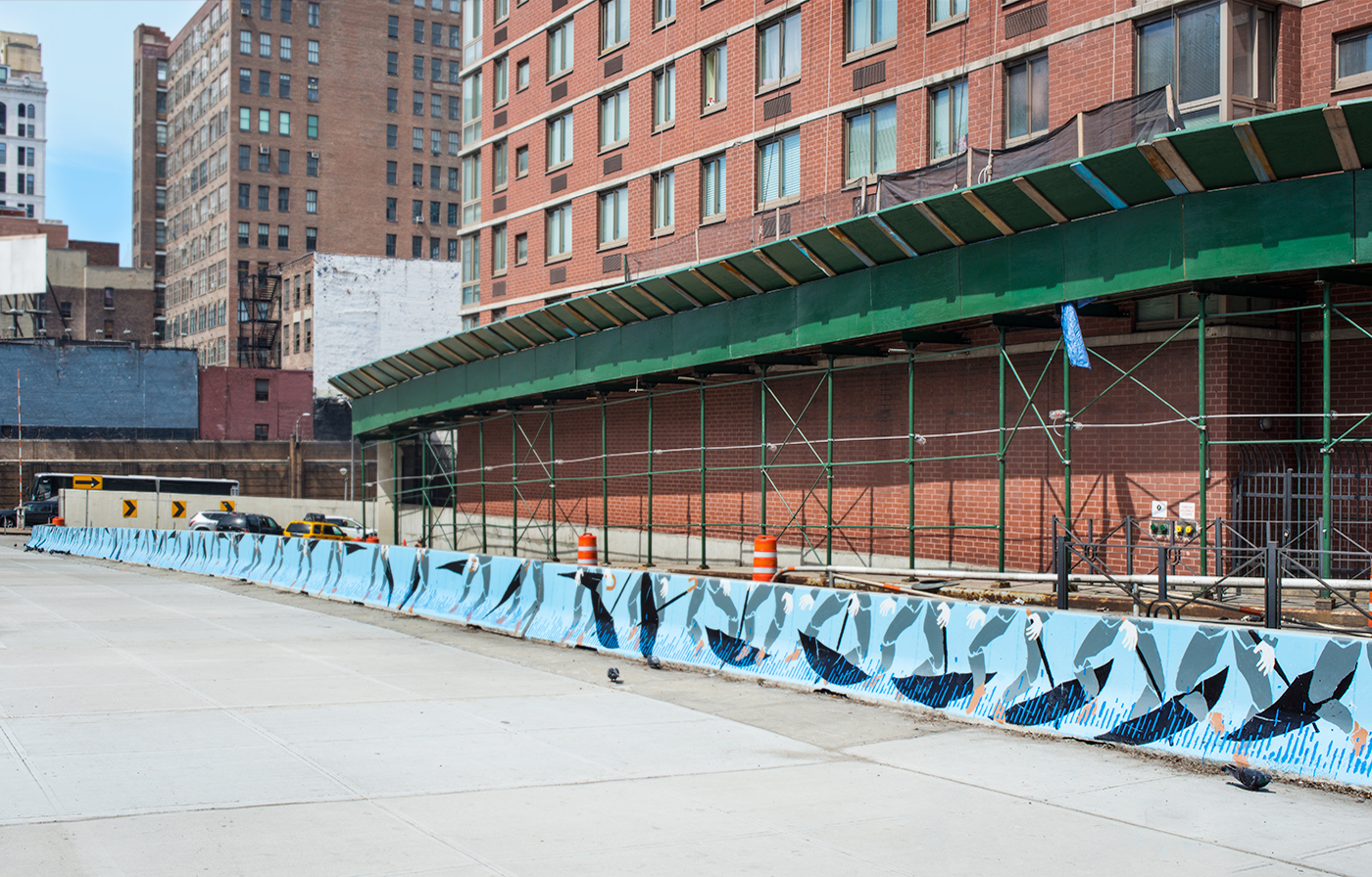
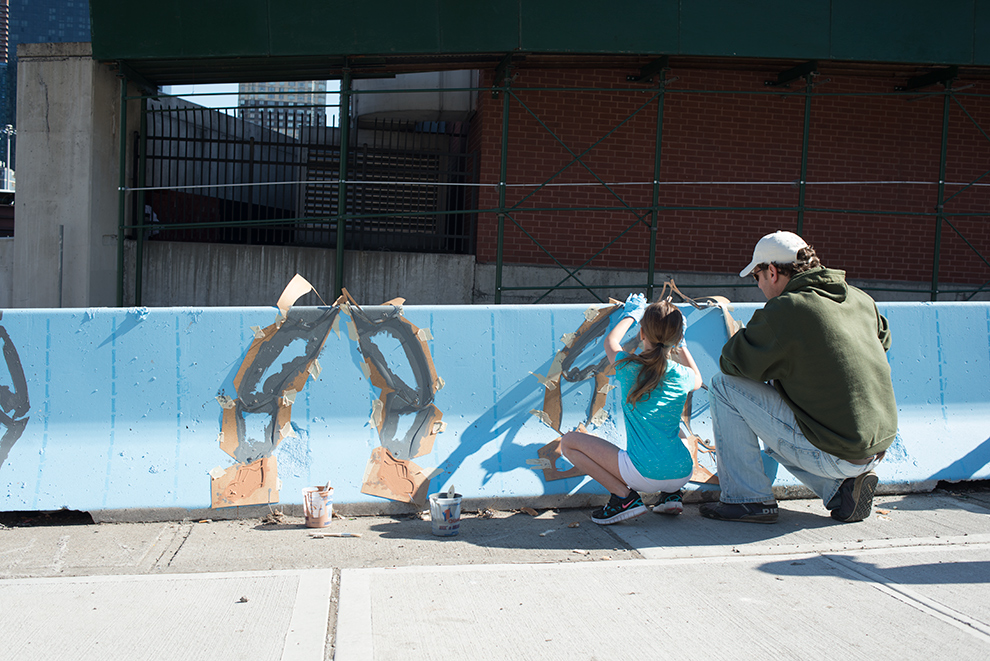
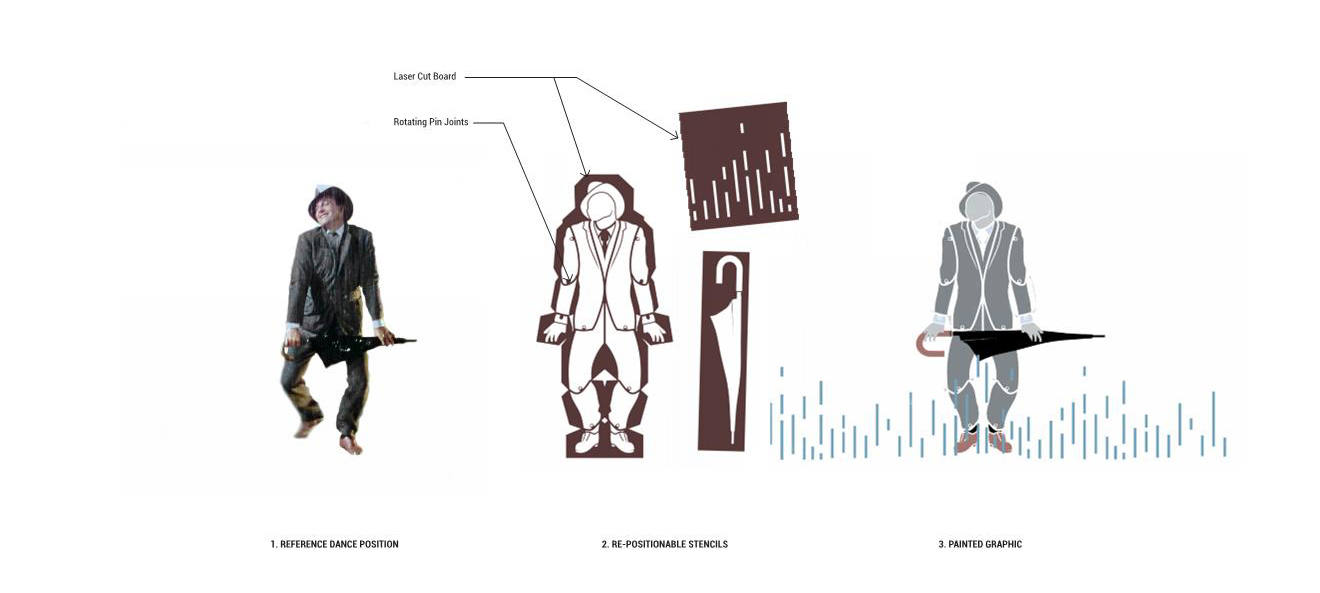
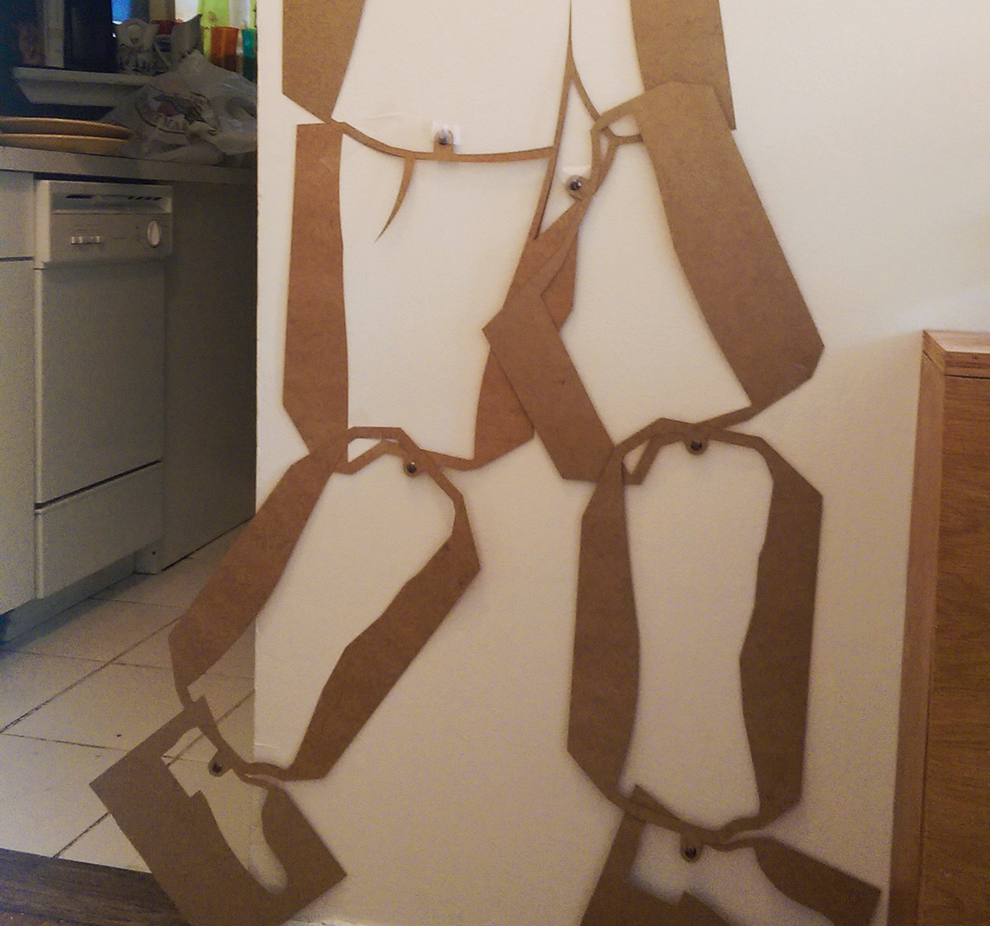
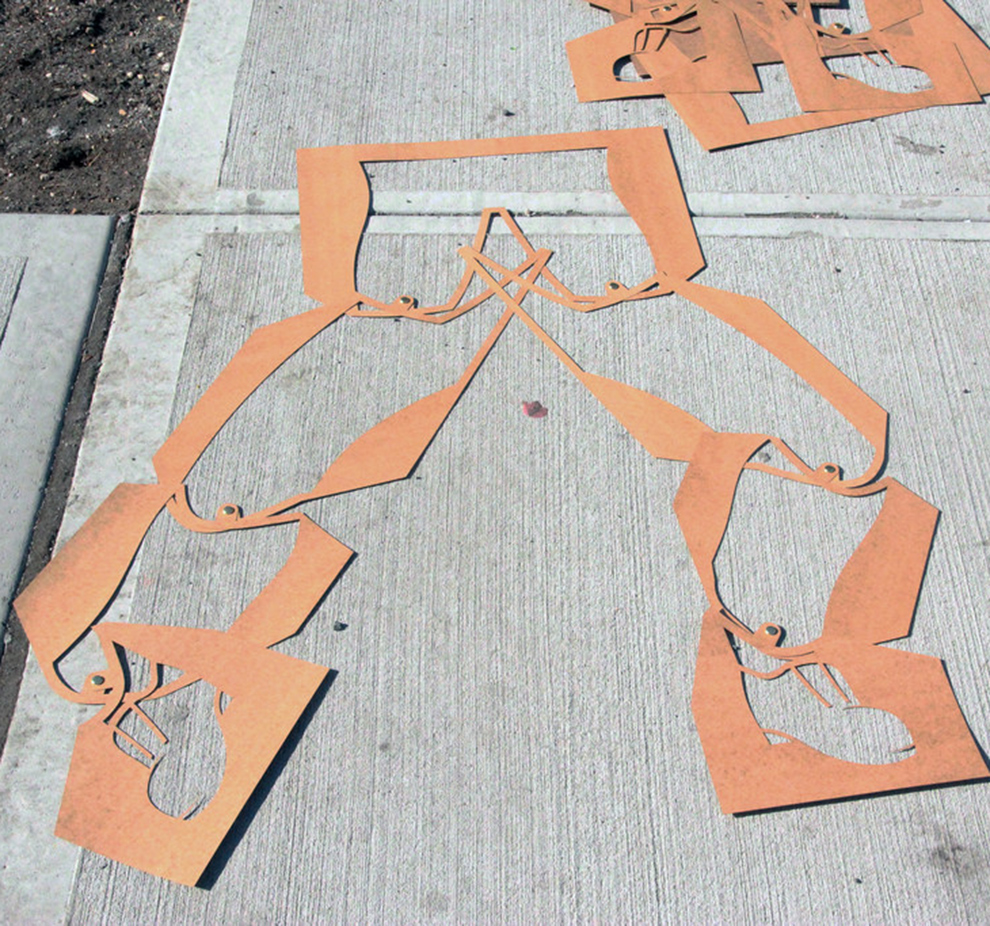
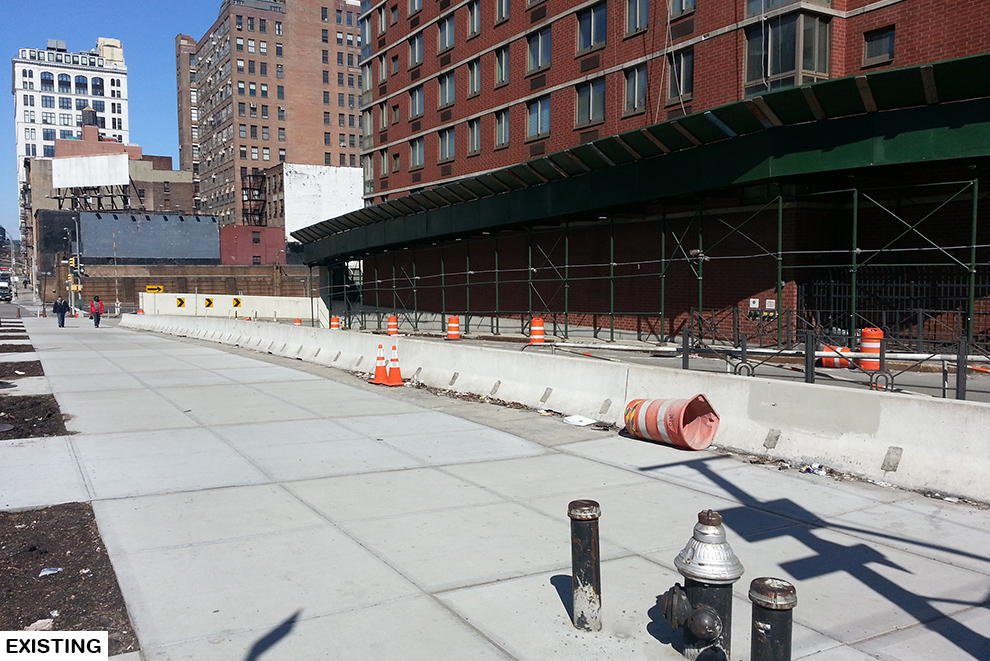
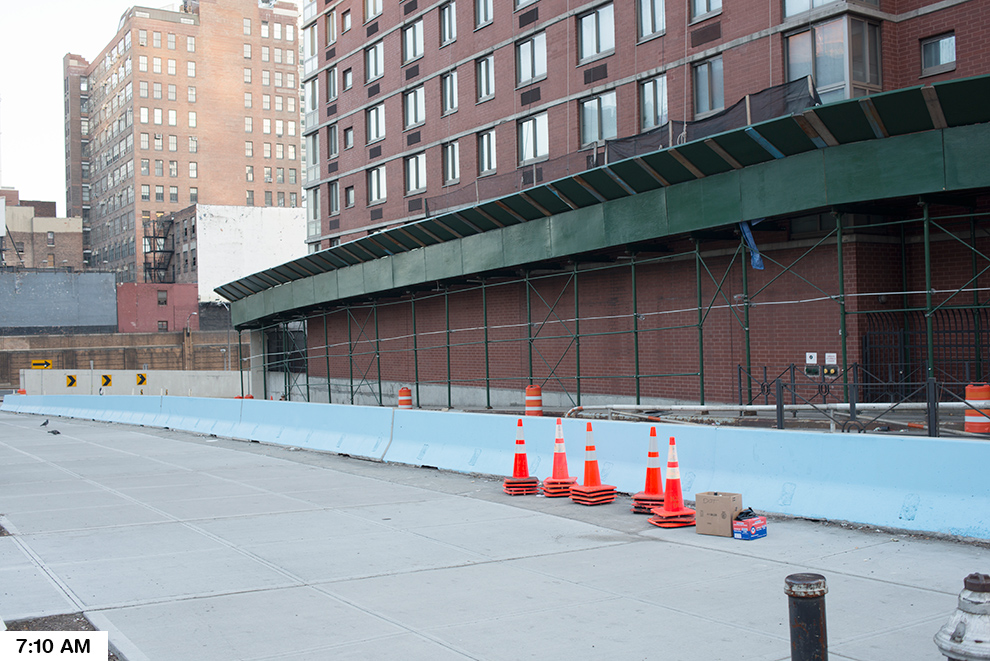
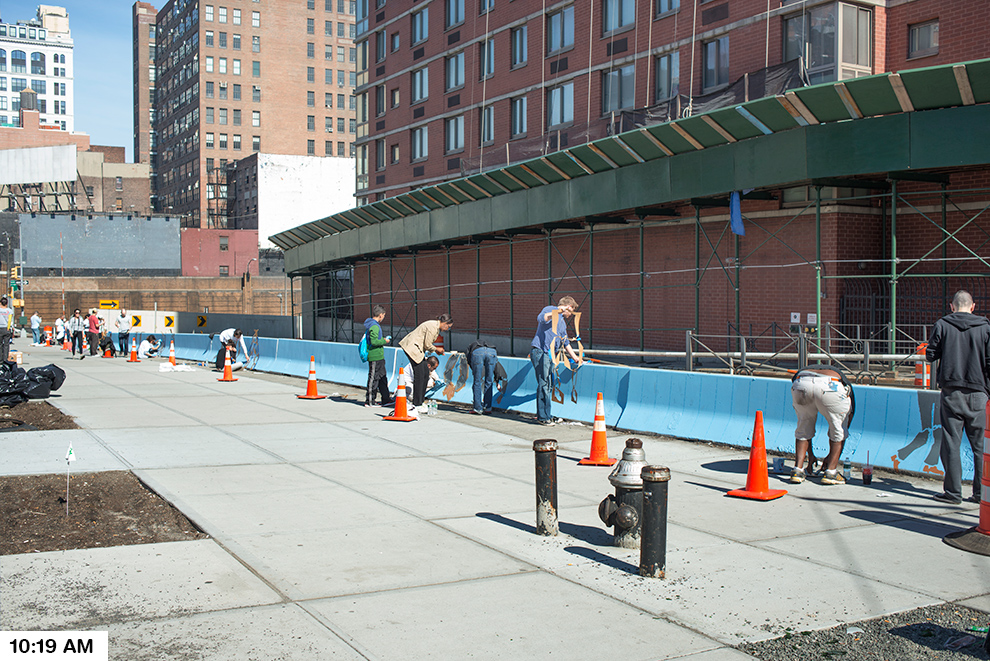
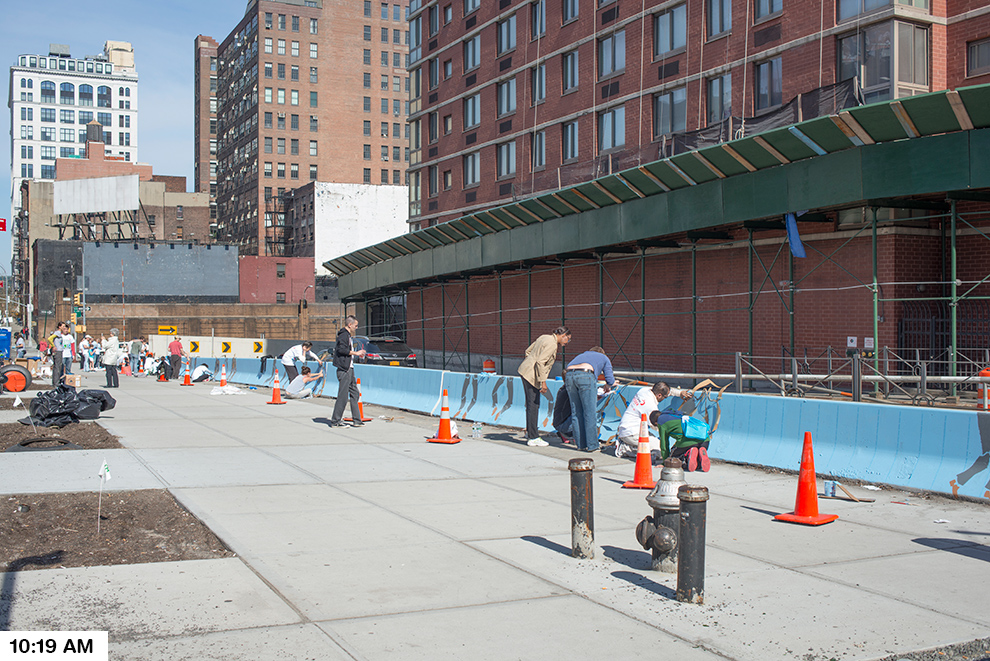
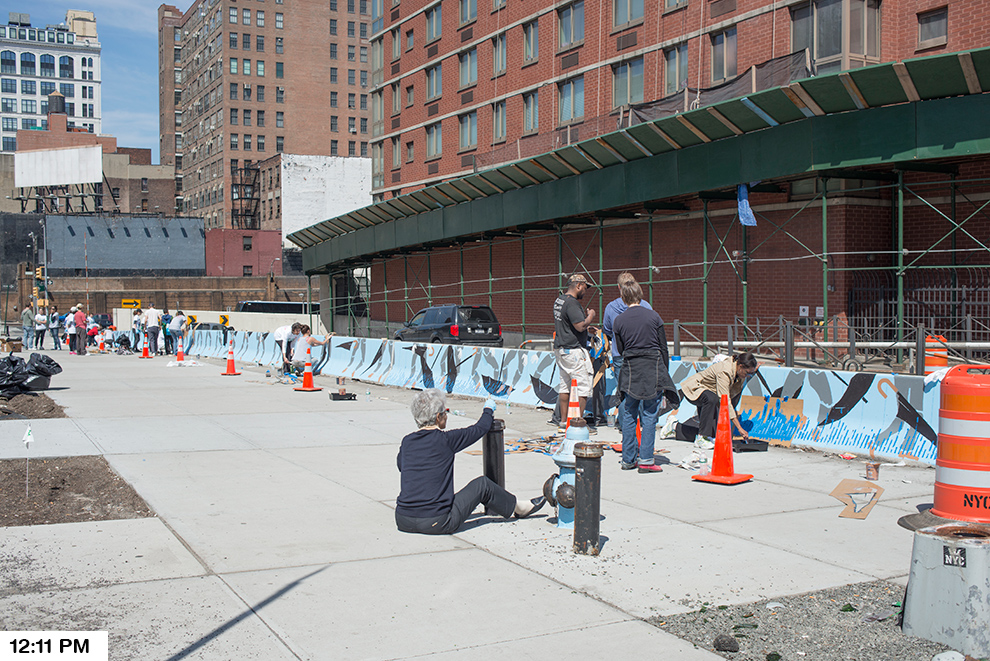
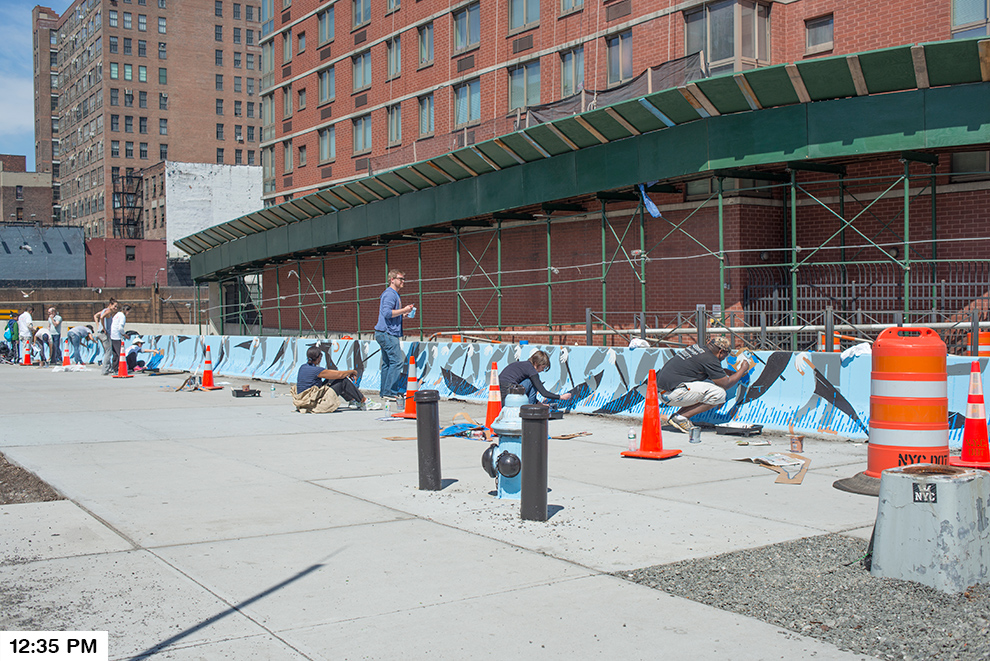
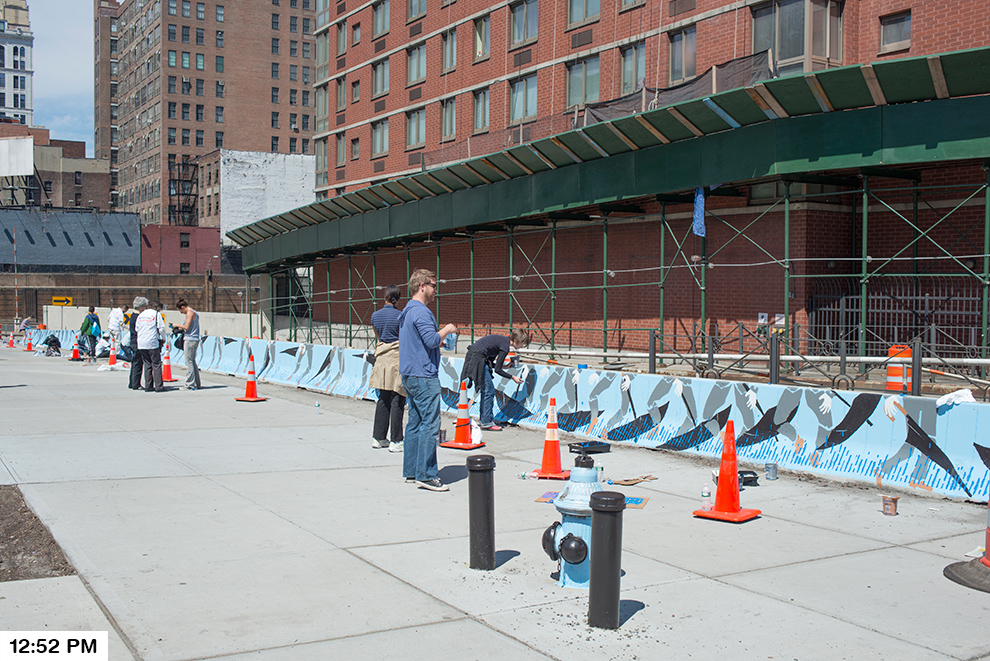
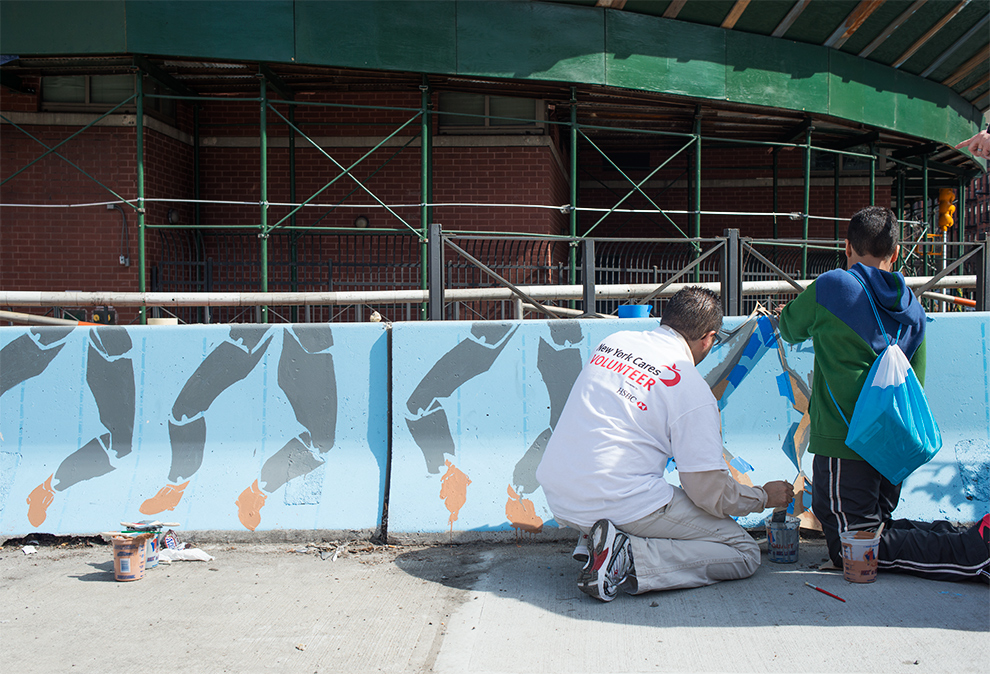
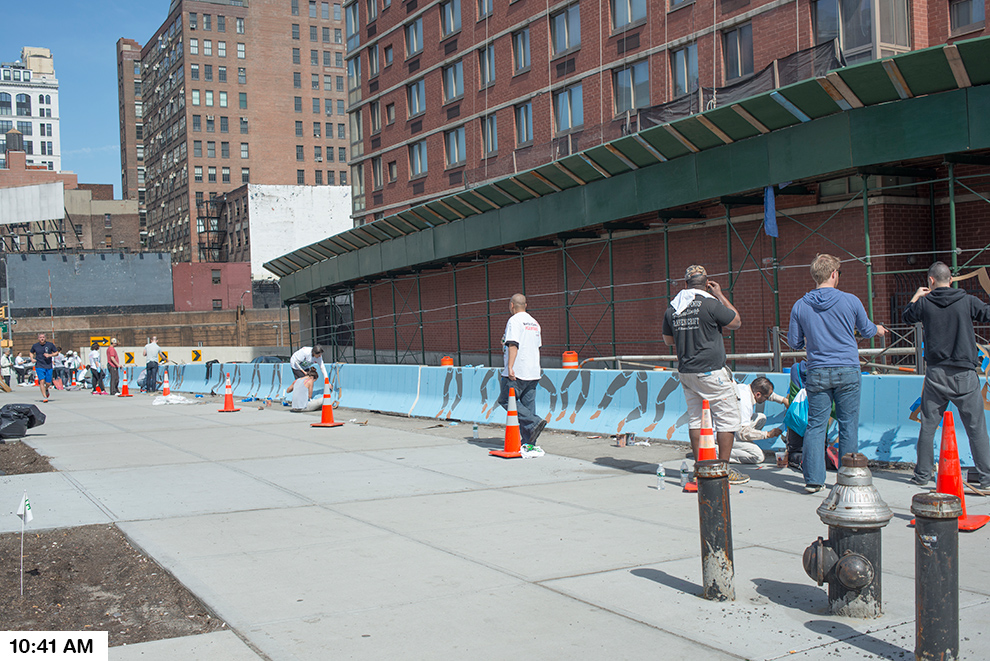
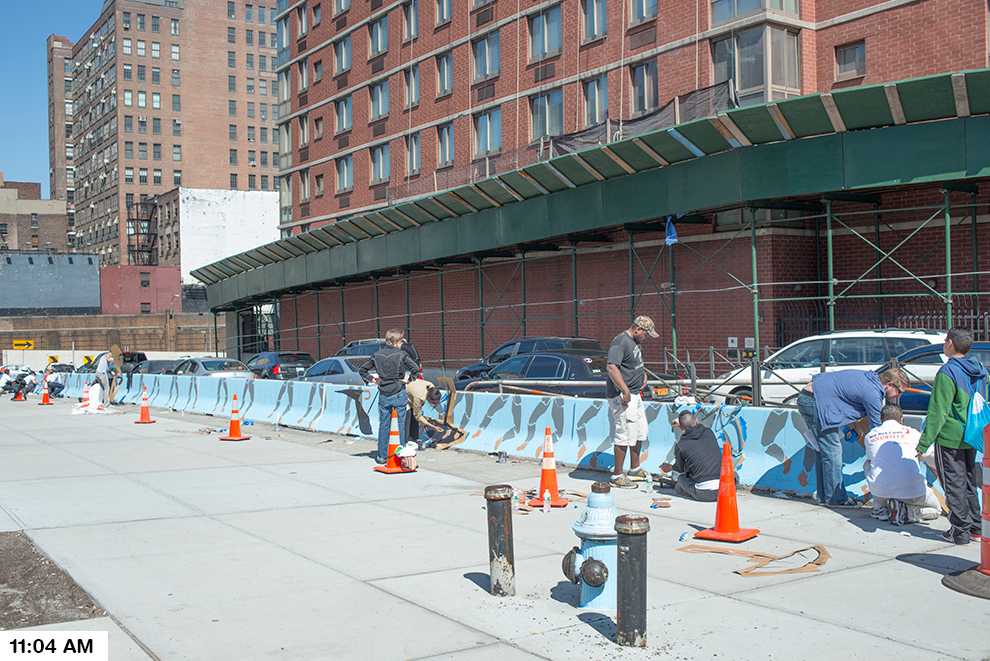
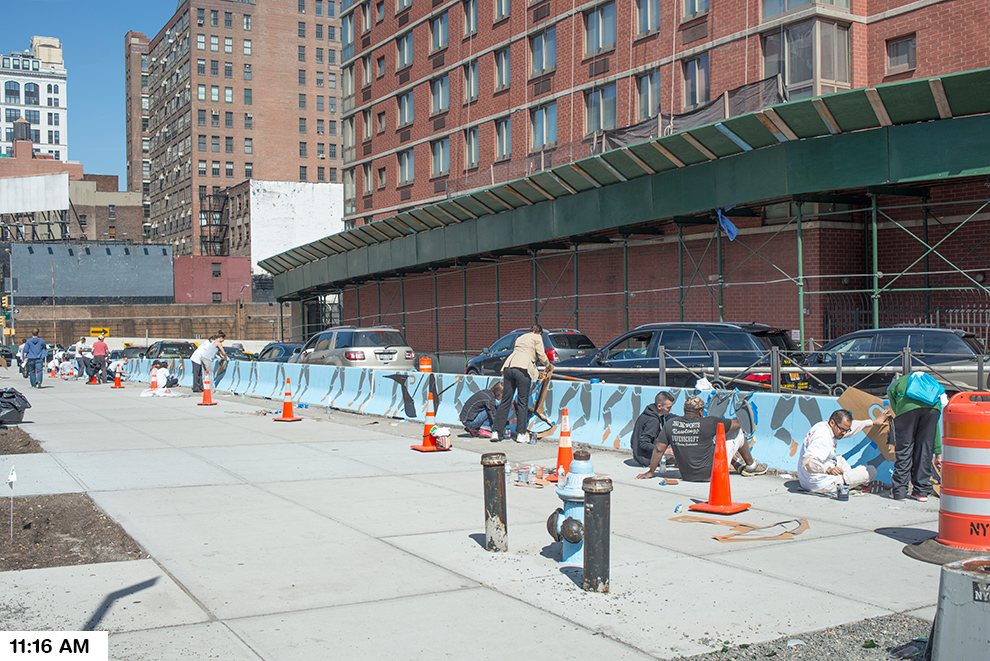
My design for “Singing in the Rain” was commissioned by the NYC DOT as part of the Urban Art program to Beautify Barriers throughout the city. The site is located just South of the theater district and Times Square at 36th St and 9th Ave in Manhattan, and references musicals – especially one in particular – as well as motion, animation and street rhythm. The piece will be up for 1 year and made use of a series of movable stencils of figures with articulated joints to allow for variation in the 200′ barrier length. 20 awesome volunteers of all ages participating in the NYC Cares program (many who had never picked up a paintbrush before) were able to arrange the stencils and finish painting the design in 4 hours based off of a series of detailed instruction sheets.

2013125 Tags: architecture, DUB, fabrication, inflatable, urban | No Comments »

Blowing UP


Update – Kickstarter goal reached, Inflato lives to pop up soon!


Read More:

The Atlantic Cities. “New York Could Get a Classroom Inside a Dumpster” Oct 16, 2013

FastCompanyDesign. “Architect Wants To Reclaim Public Space, One Dumpster At A Time” Oct 31, 2013

FastCompanyLabs. “The Future of Pop-Up Hackspaces Is… Dumpsters?” Oct 21, 2013

Architizer. “Can An Inflatable Pop-Up Dumpster Help NYC Residents Transform Their Neighborhoods?” Nov 1, 2013

Treehugger. “Presto, Inflato! Dumpsters to be reclaimed as “pop-up” public spaces in NYC” Nov 5, 2013

DesignBoom. “Inflato Dumpster Gives NYC a Blow-up Mobile Learning Lab.” Oct 18, 2013

Gothamist. “One Day We Will All Live In Dumpsters.” Oct 22, 2013

UntappedCities. ““Inflato Dumpster”: Turning a Dumpster into an Inflatable Classroom in NYC” Oct 16, 2013

2013108 Tags: architecture, DUB, fabrication, inflatable, urban | 1 Comment »

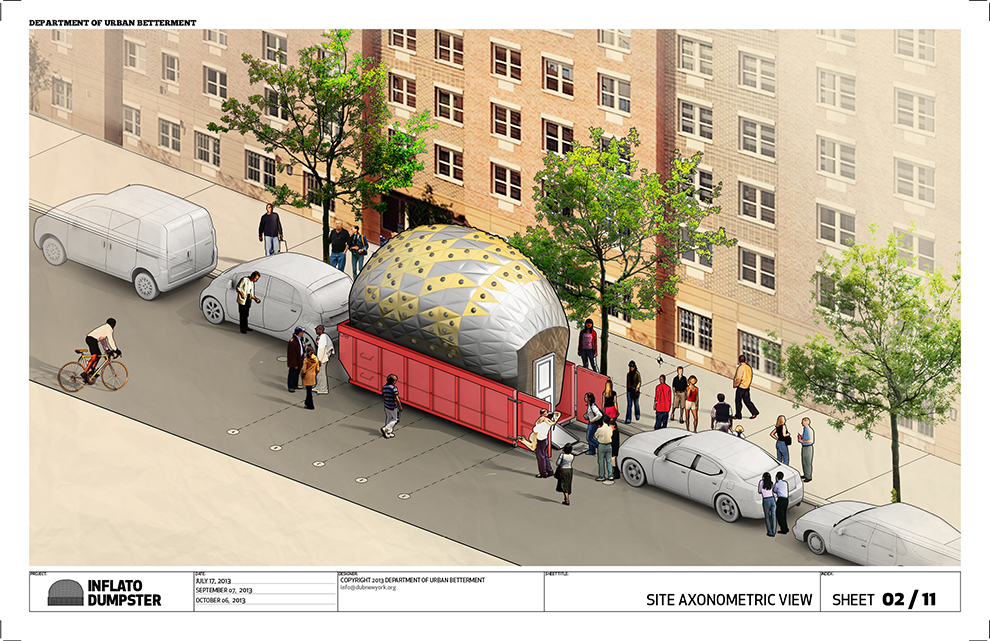
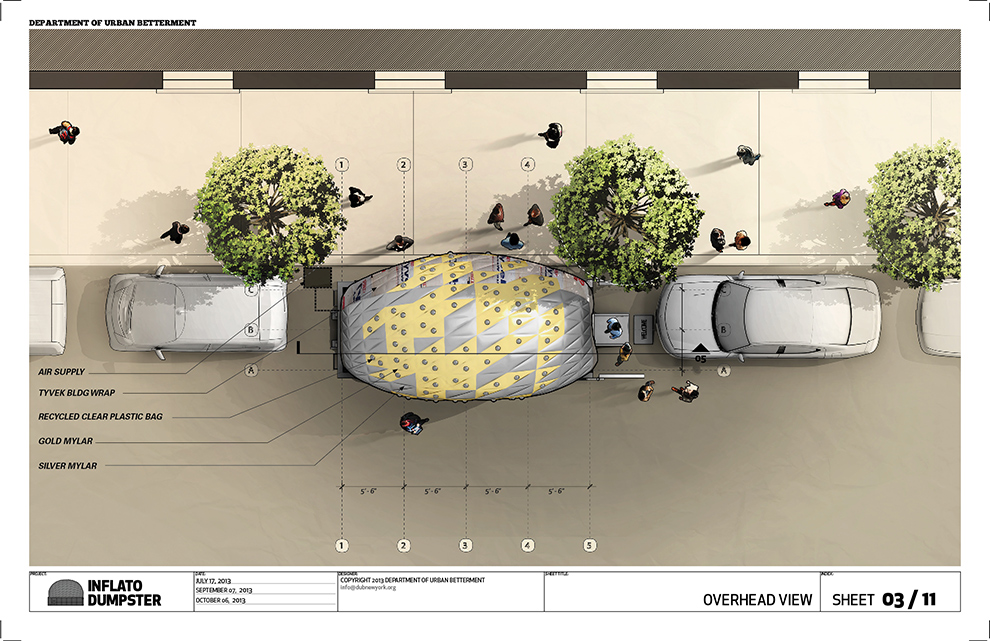
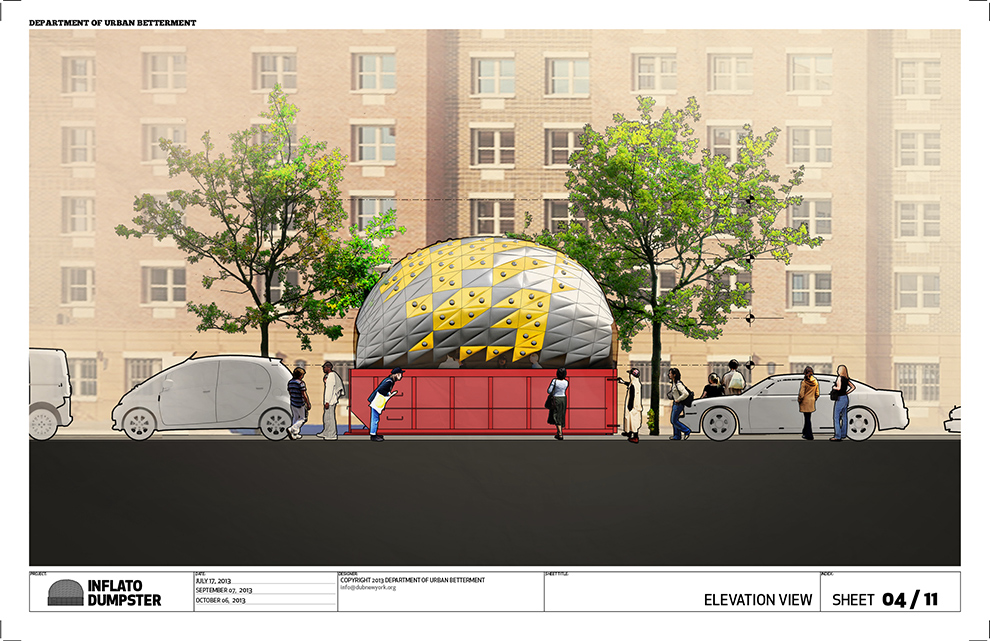
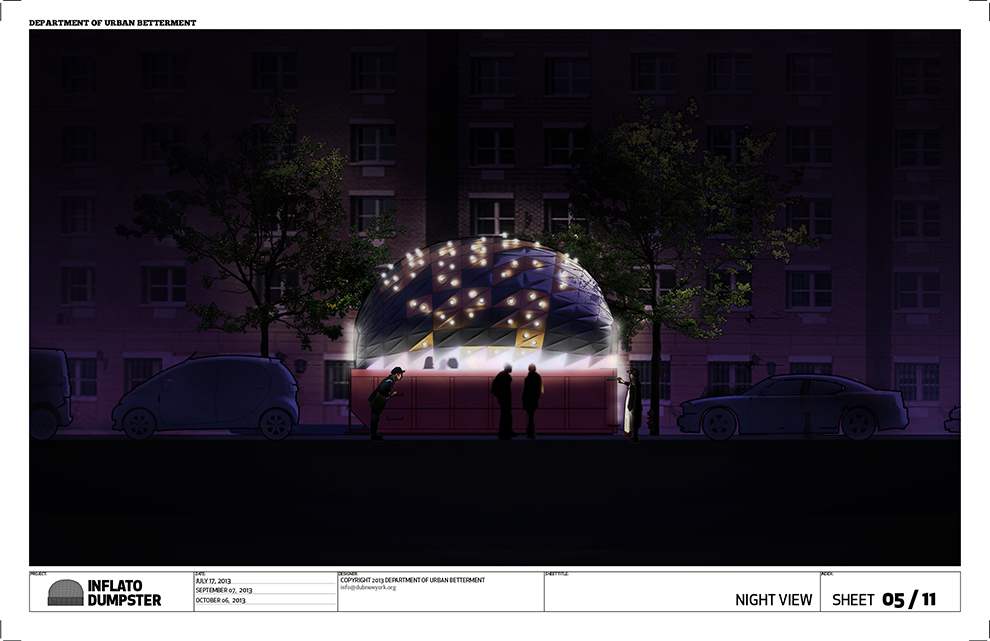
Inflato Dumpster

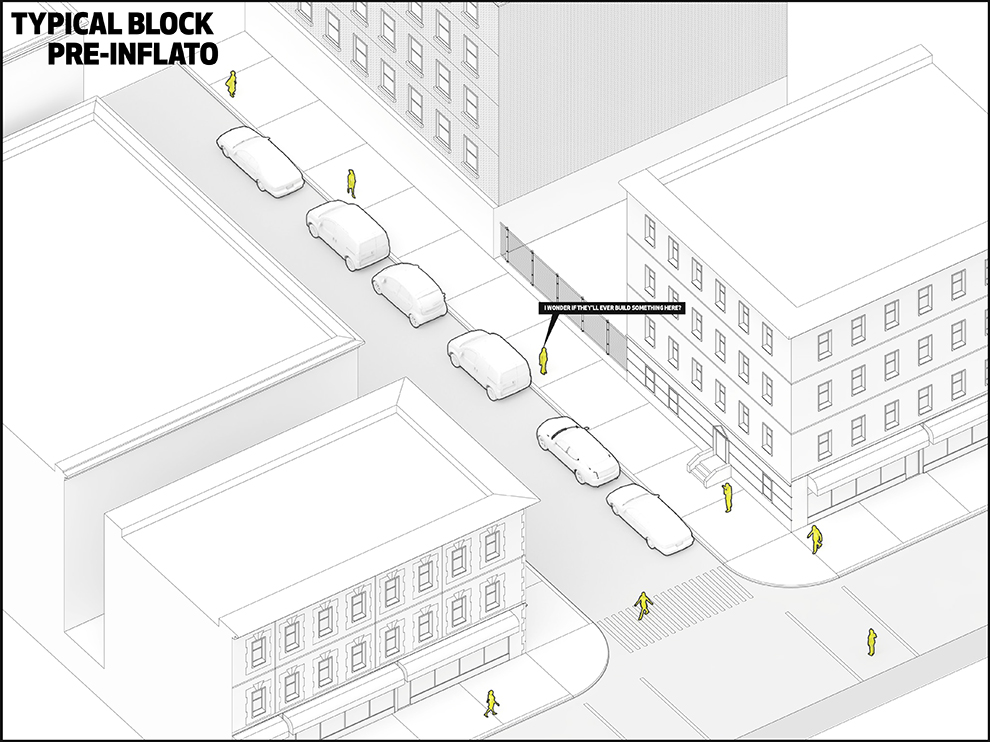
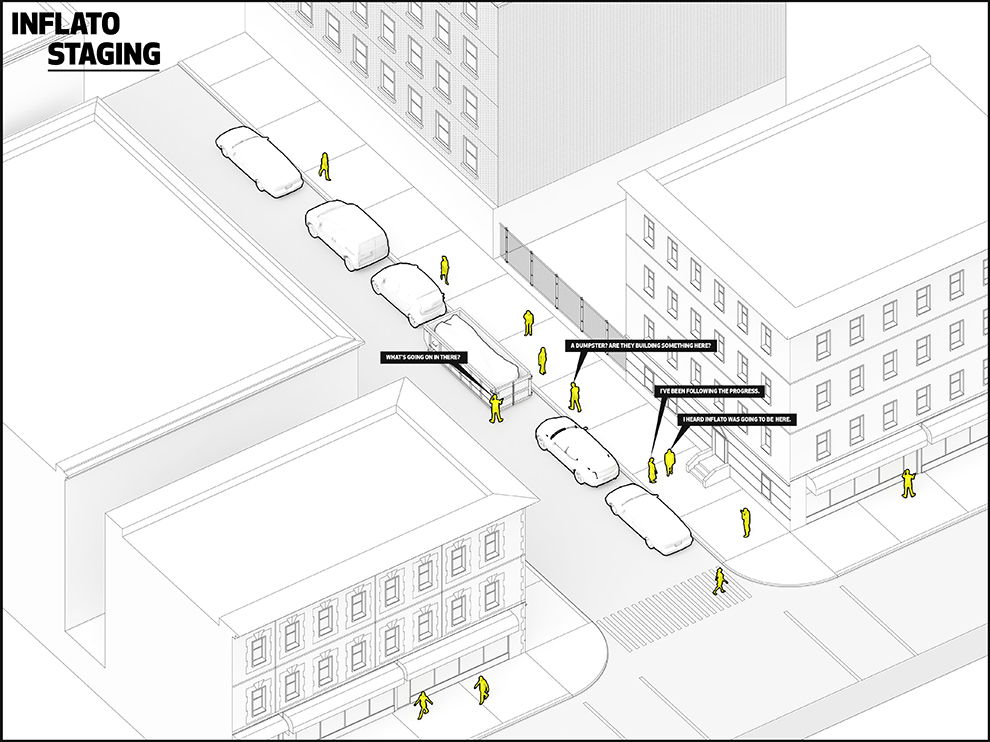
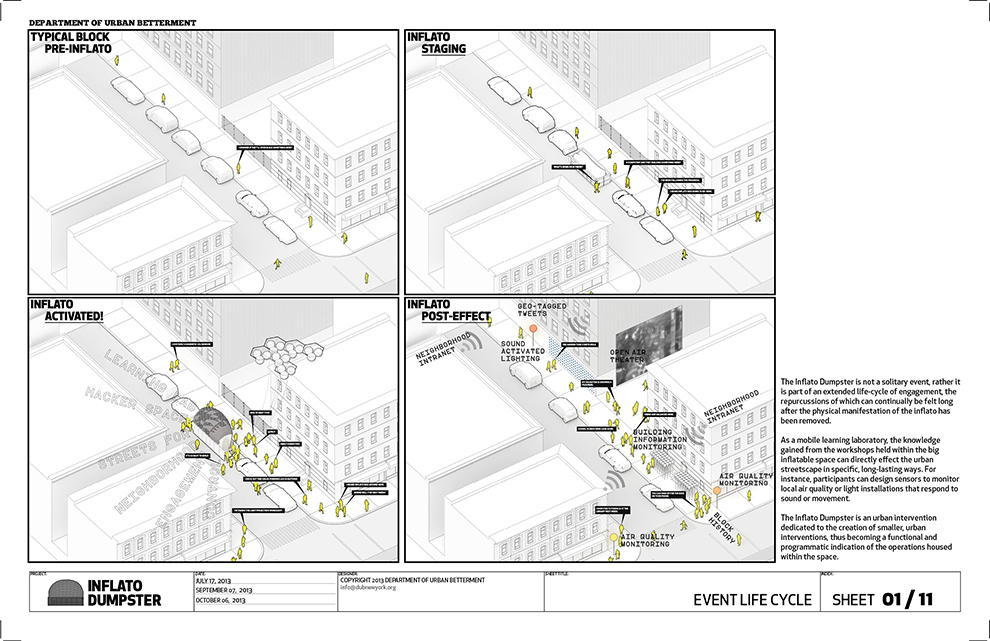
01_TYPICAL02_STAGING

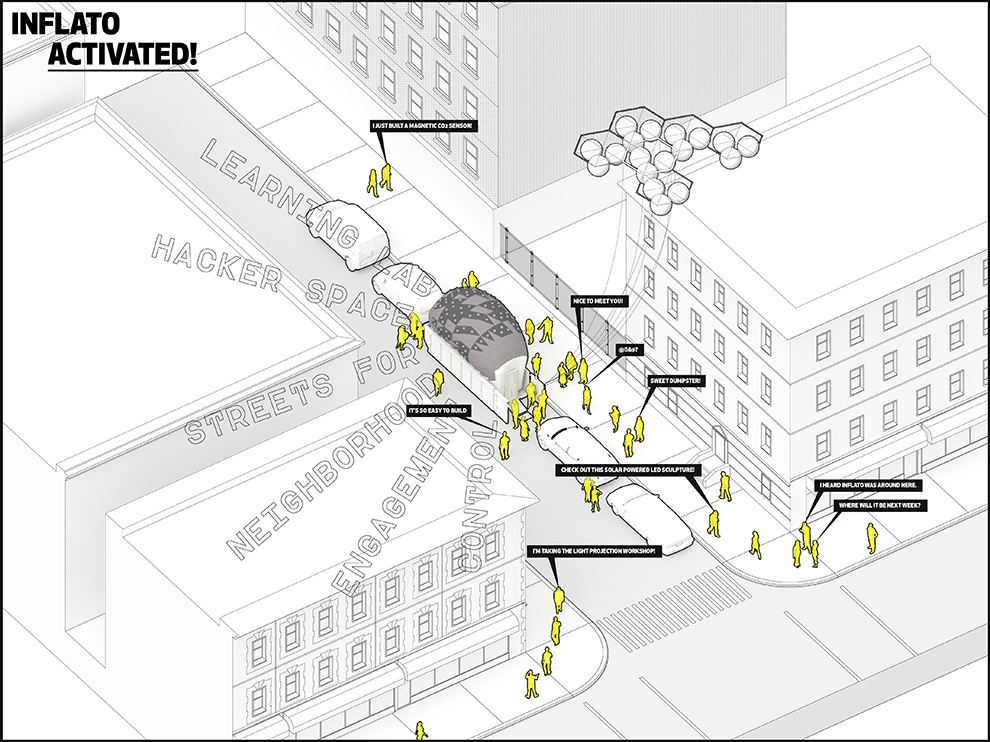
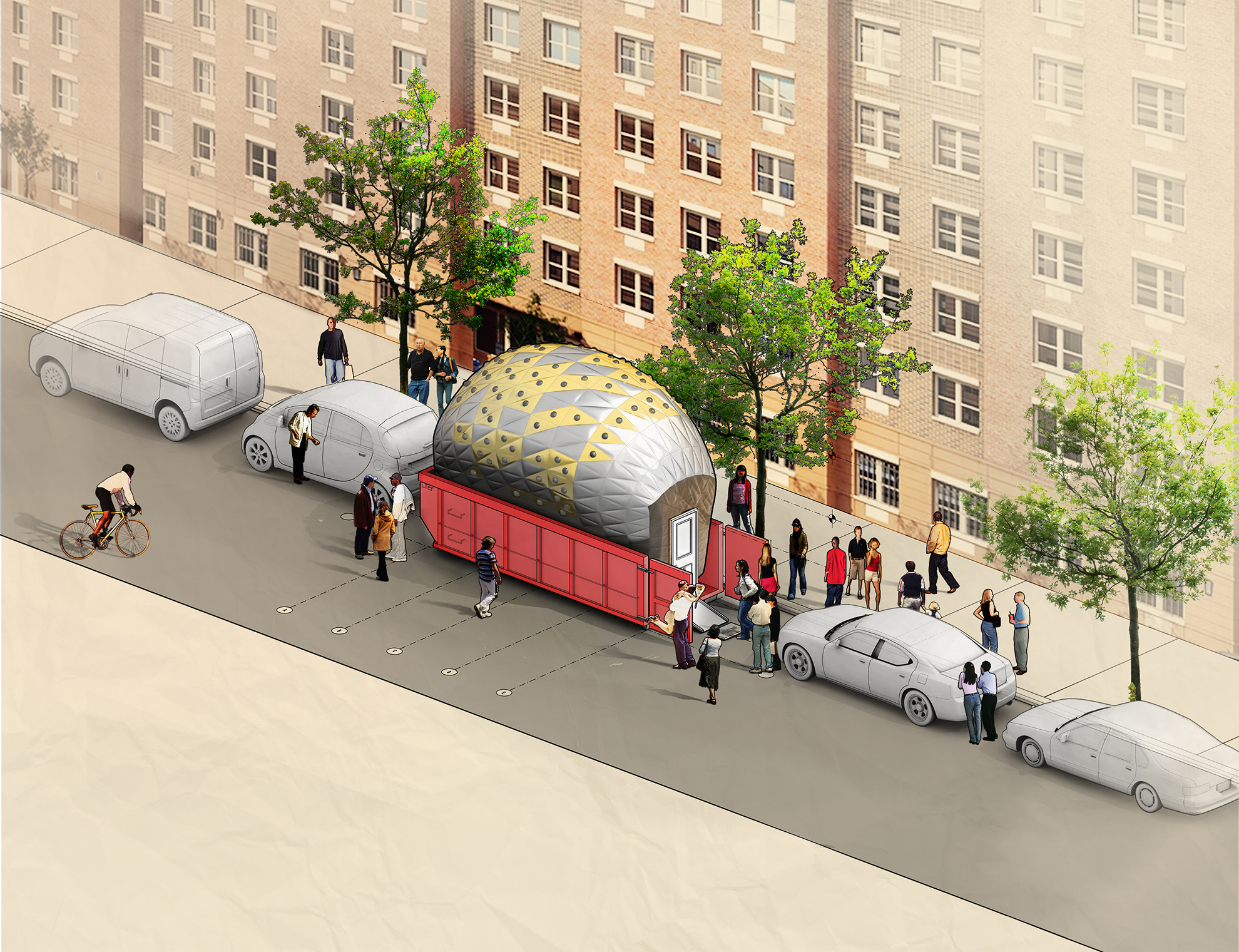
03_ACTIVATED04_EFFECT


01_AXON_WEB
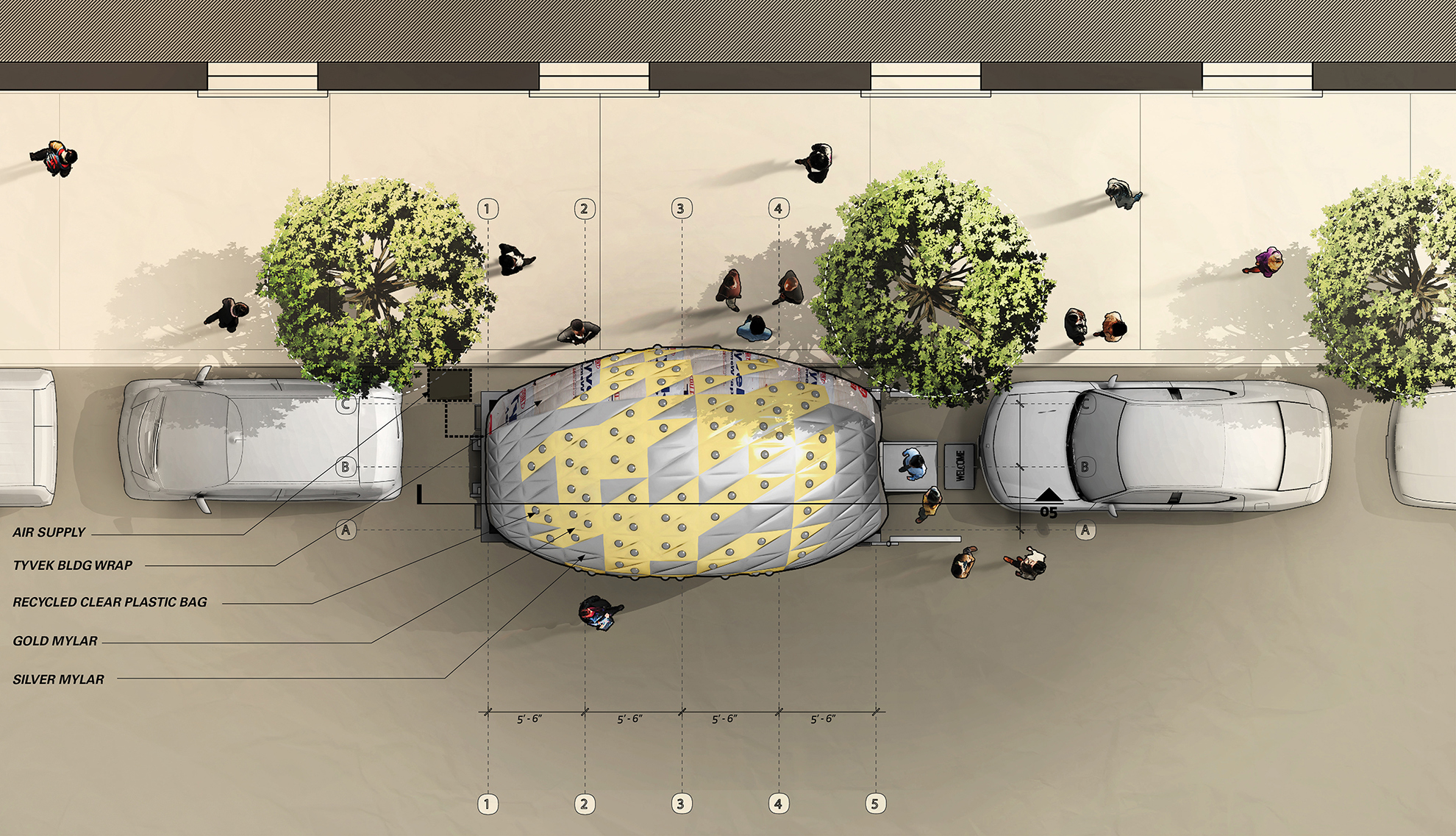
02_PLAN_WEB
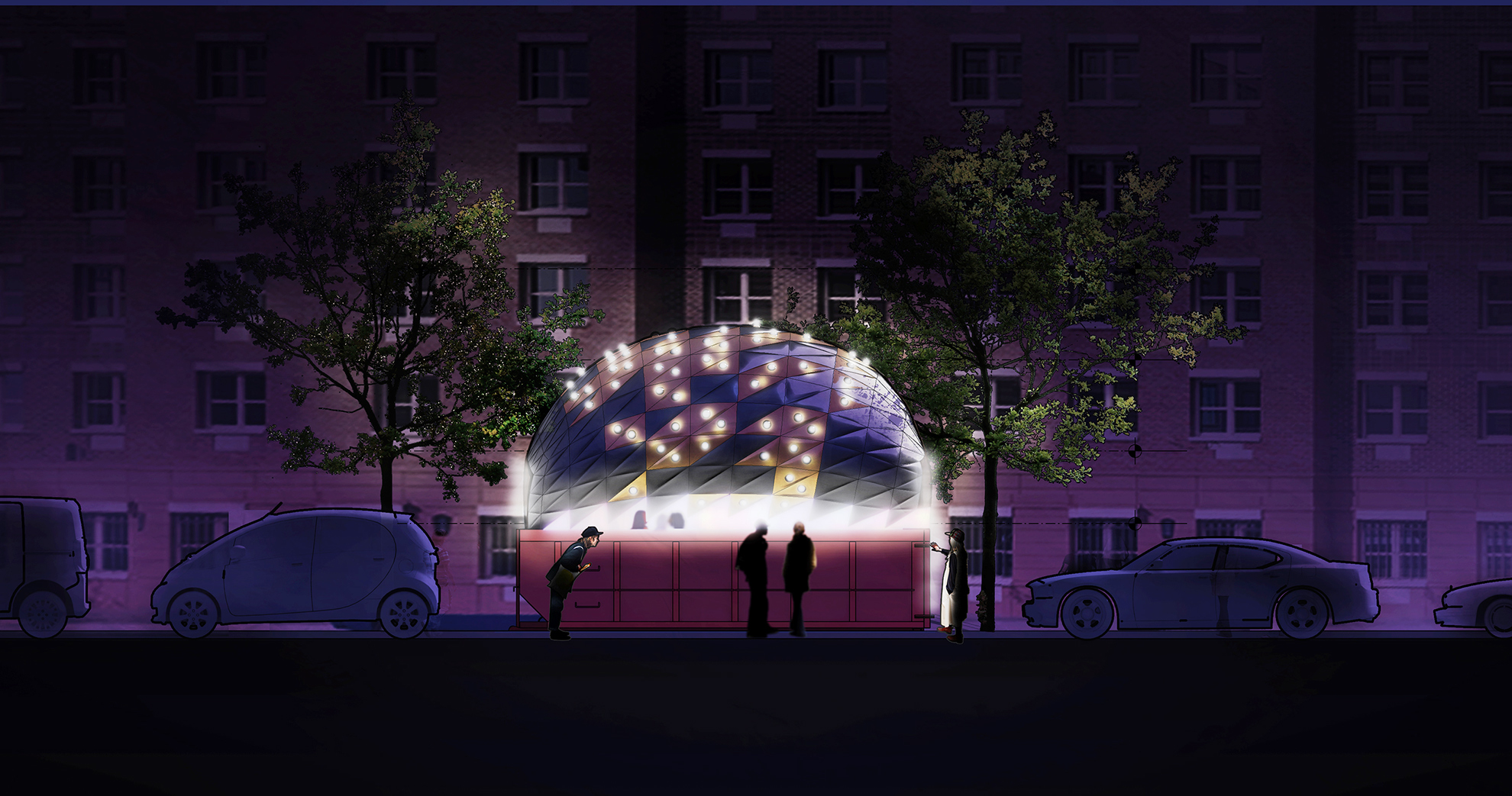
03_ELEV_NIGHT_WEB
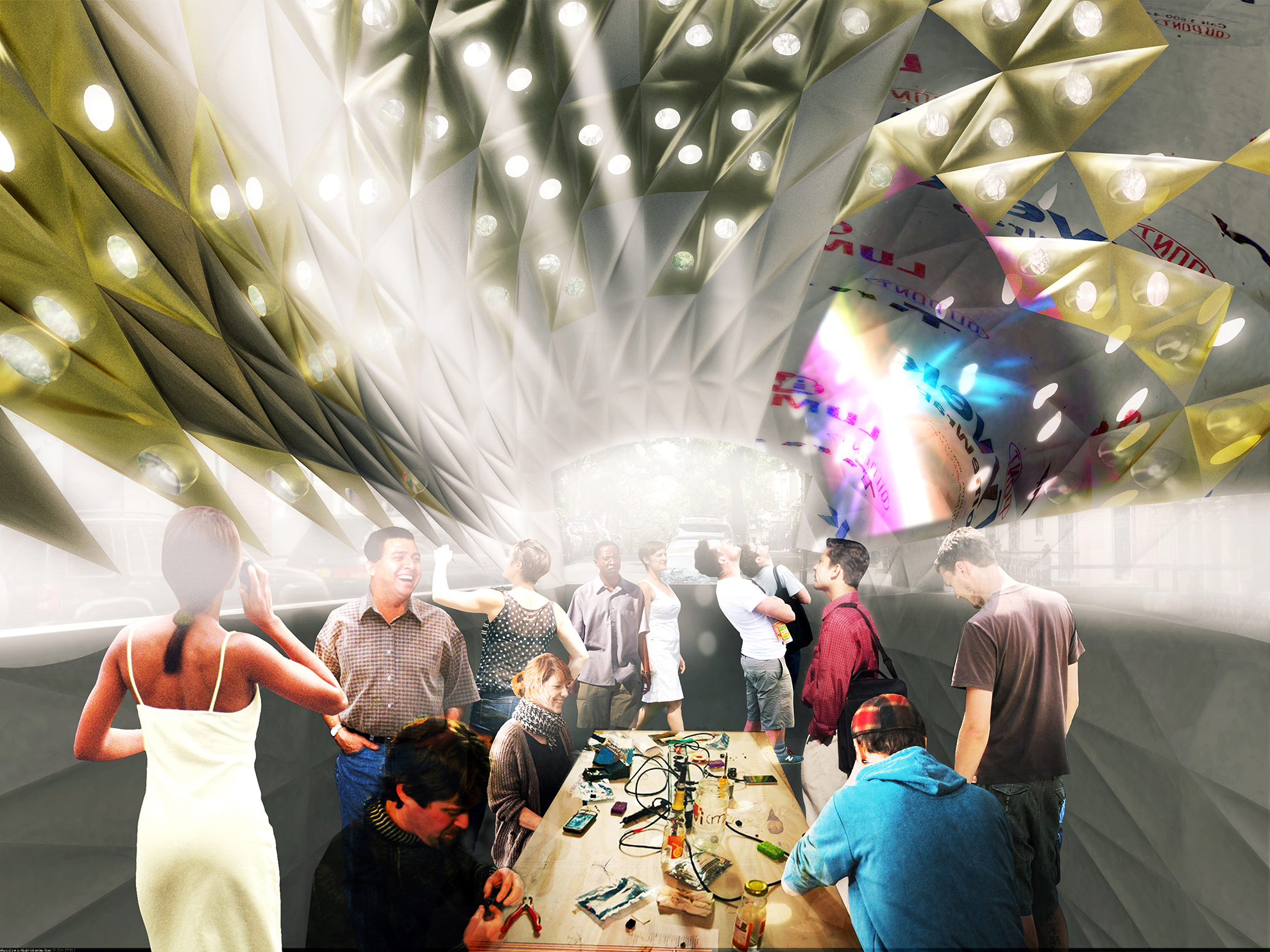
04_INTERIOR_PERSPECTIVE_WEB

Final_Inflato_Dumpster_Book1Final_Inflato_Dumpster_Book2

Final_Inflato_Dumpster_Book3Final_Inflato_Dumpster_Book4

Final_Inflato_Dumpster_Book5Final_Inflato_Dumpster_Book6

Final_Inflato_Dumpster_Book7Final_Inflato_Dumpster_Book8

Final_Inflato_Dumpster_Book9Final_Inflato_Dumpster_Book10

Final_Inflato_Dumpster_Book11


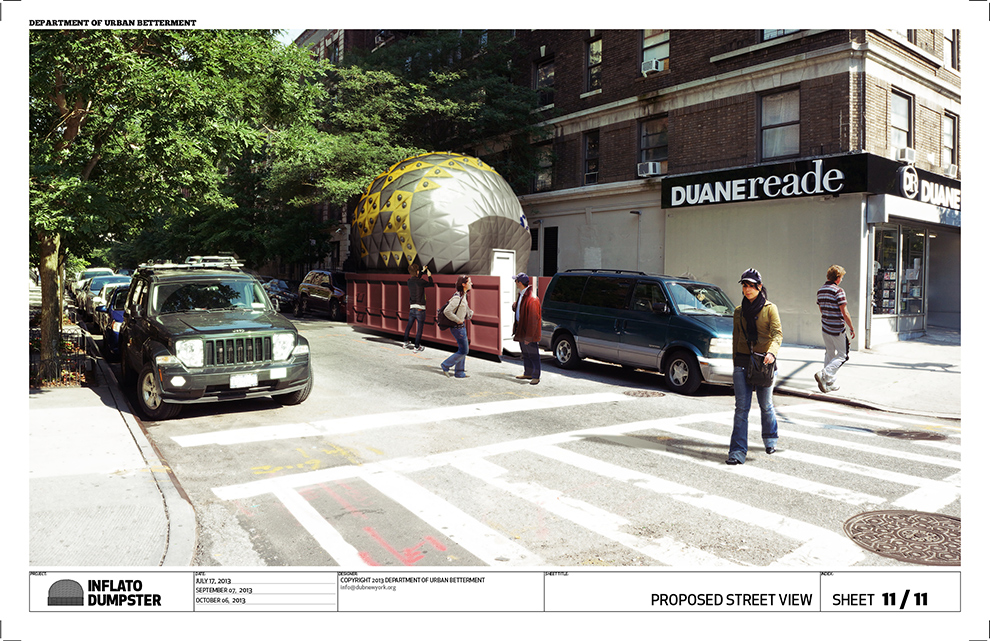
I’m really excited to introduce a new project by the Department of Urban Betterment (John Locke and Joaquin Reyes) – The Inflato Dumpster, and the accompanying KICKSTARTER campaign:


http://www.kickstarter.com/projects/851648659/inflato-dumpster


A pre-emptive, heartfelt thank you! Also, please email me if you’d like to help out in any way, with any ideas for site, or just to say hi.


Project Description:
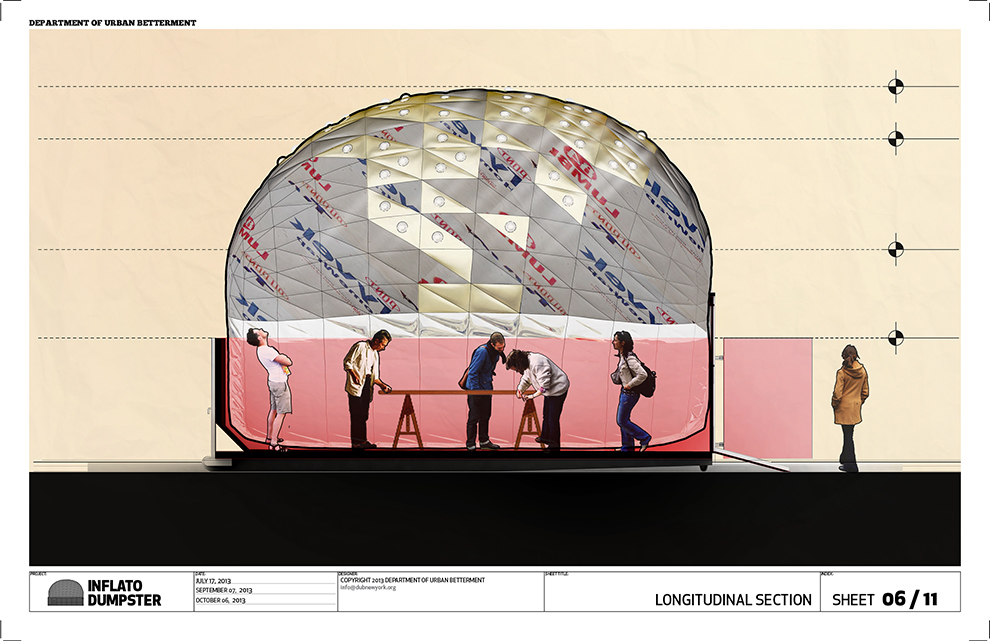
As public space in New York becomes increasingly privatized and commodified, The Inflato Dumpster seeks to counter that tendency by serving as an open, engaging street-level structure that acts as a mobile learning laboratory.


For five days this fall, the temporary, dome-like structure will confront the tendency of city space to limit public exchange by serving as a large scale urban intervention in which workshops to create and explore the possibilities for smaller, targeted urban interventions will be produced and deployed from within.


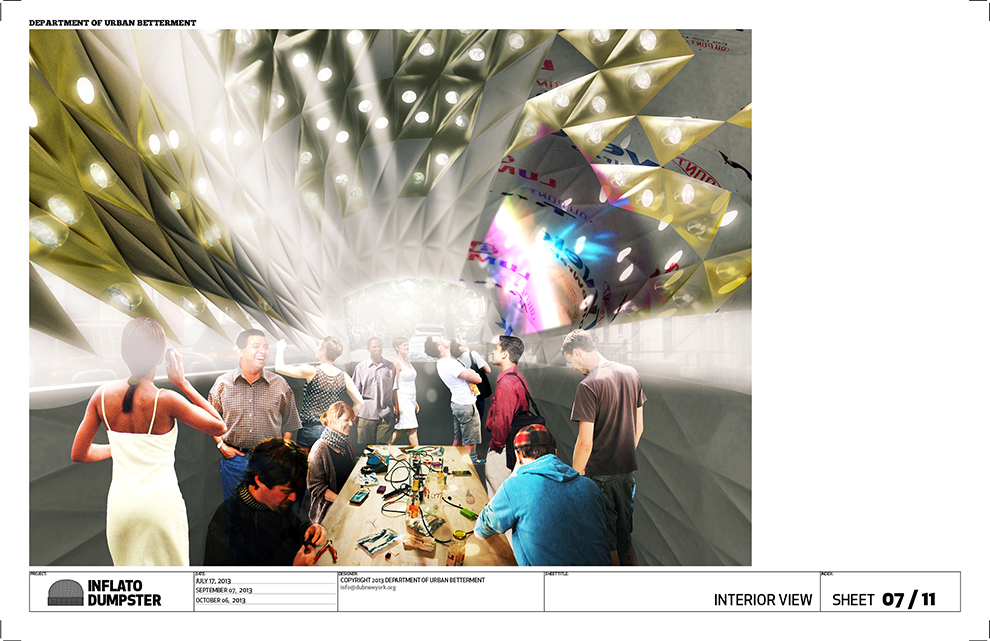
We believe that the architecture of the Inflato Dumpster can act as a networked node of neighborhood information – using screens and sensors to produce constantly updating streams of demographic and subjective information regarding the local site – and then in turn produces a smaller constellation of satellite interventions created by locals and visitors alike. We envision the site as a hub for all, to create a gathering space where programs can be curated to the needs of the community.

Visitors can enter, visualize, learn and explore various urban techniques and strategies before leaving the structure armed with the knowledge to redesign their own total environment.


Initially, we see this space as taking the form of a hacker workshop where simple, off the shelf components can be procured and combined to provide local residents with access to technology and a means for hands-on testing of public space concerns.


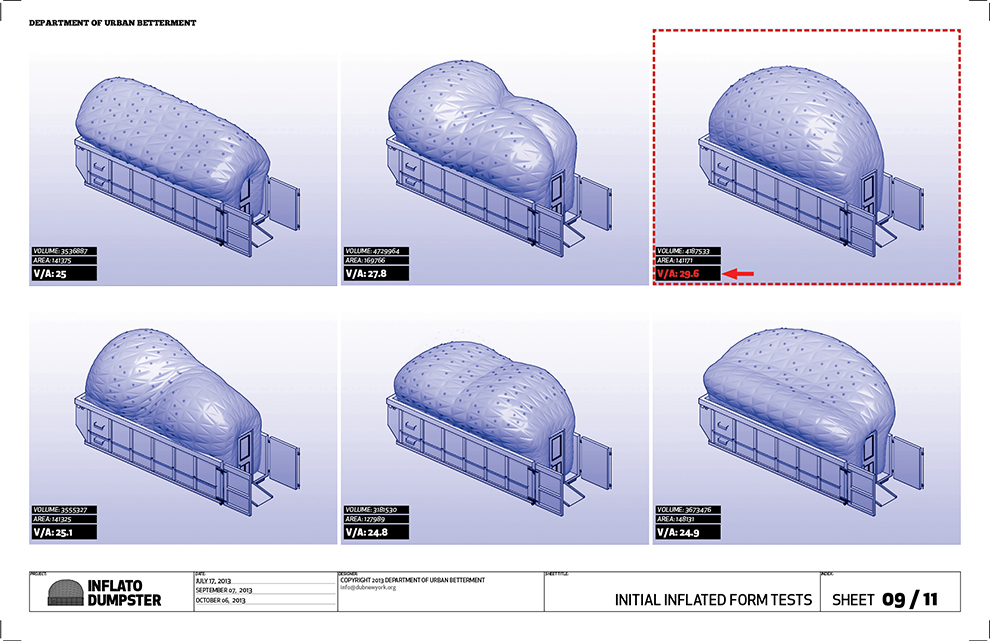
The structure’s faceted shape, materials and unexpected location will all combine to make for a fun, dynamic addition to the streetscape with the inflated structure evoking the blow-up castles of street festivals and the long history of big inflatable space from AntFarm to Spacebuster. We’ve been seeing a lot of construction dumpsters on the streets in the neighborhood, they symbolize change but also an opportunity for us to create something new.


As residents of various areas in New York City, we aim to take advantage of the mobile, temporary nature of the Inflato Dumpster to pop-up in areas that we love, neighborhoods where we live and around the people and communities that we know. We’ve identified a number of intersections and areas where the workshops and education laboratory programs would have the greatest impact, so stay tuned as we finalize the exact spot.


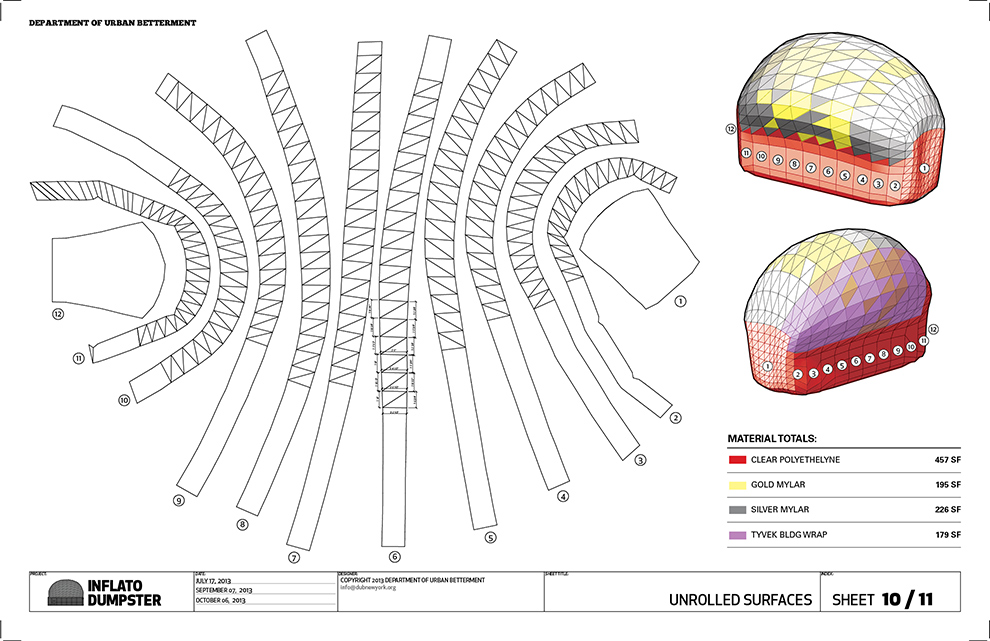
The Inflato Dumpster will be built from readily available lightweight materials and combined into a structure that can be inflated and occupied. Consisting of gold and silver mylar, it will reflect the light filtering down from the trees and create a shimmering, inviting structure on the street.The logic behind the materials is as follows: up to a datum level of approximately six and a half feet, the structure will be made of clear polyethylene. This is an inexpensive, common and biodegradable plastic material that will allow views both from the street into the space, and from within back out to the street. The street side will be primarily comprised of gold and silver mylar material with small clear holes throughout to allow light to filter in, evoking the feeling of being under a shaded tree. The highest point on the dome will be approximately 28’ and the space will comprise nearly 2000 cubic feet of overall volume. The sidewalk side will be built from faceted white tyvek building wrap, used both for its lightweight capabilities and also to provide a surface for projections of film and data. The final and most important material is of course the dumpster, a 30 yard refuse container that is 23’ long by 8’ wide and will form the solid base of the intervention.


Looking forward to seeing you in the dumpster!


A link for high resolution images:
https://www.dropbox.com/s/8x1wpc1m3wo6nfx/INFLATO_DUMPSTER_IMG.zip

 
20130520 Tags: fabrication, gsapp, interaction, new york, research, teaching, urban | No Comments »

HACKING THE URBAN EXPERIENCE III – STUDENT WORK


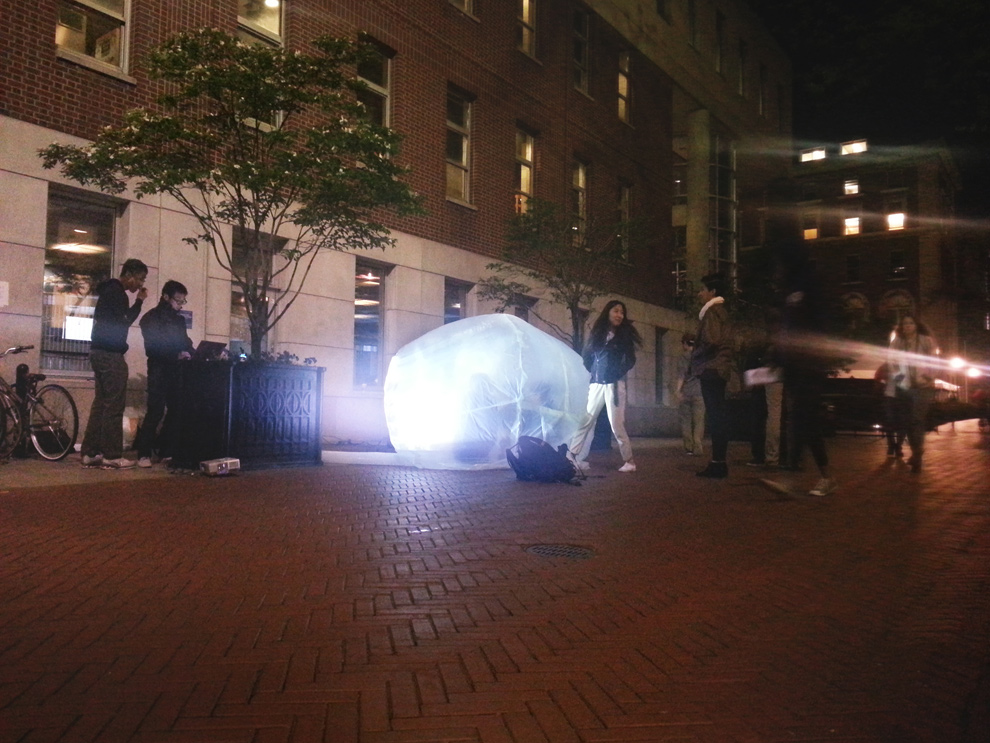
While my natural tendency can lead toward convolution, in the interest of concision here is my attempt to sum up the course objectives in one sentence: “to self-initiate and identify a problem statement relating to the urban environment, and then manifest a possible solution through a public, physical object, while confronting the myriad issues associated with that decision.” Problems addressed included the notion that strangers occupying proximate space are too disconnected – how can you encourage interaction? As well as the problem of physical space inducing a heightened sense of agitation during a stressful time (finals on a college campus) – how can a space be created that produces an alternately playful, soothing affect for passersby? So with that, here’s a sampling of self-initiated work from the third iteration of HTUE.


See previous work and extensive course descriptions here:
Hacking the Urban Environment II – Student Work
Hacking the Urban Environment I – Student Work


All images and work by students Amir Afifi, Hanxiao Yang, Marielle Simone Vargas, Wilbur Lee and Will Chen


Assignment 01 – PARASITES


Assignment 02 – LIGHT PROJECTION


Assignment 03 – FINAL

20130511 Tags: architecture, competitions, fabrication, graphic design, urban | No Comments »

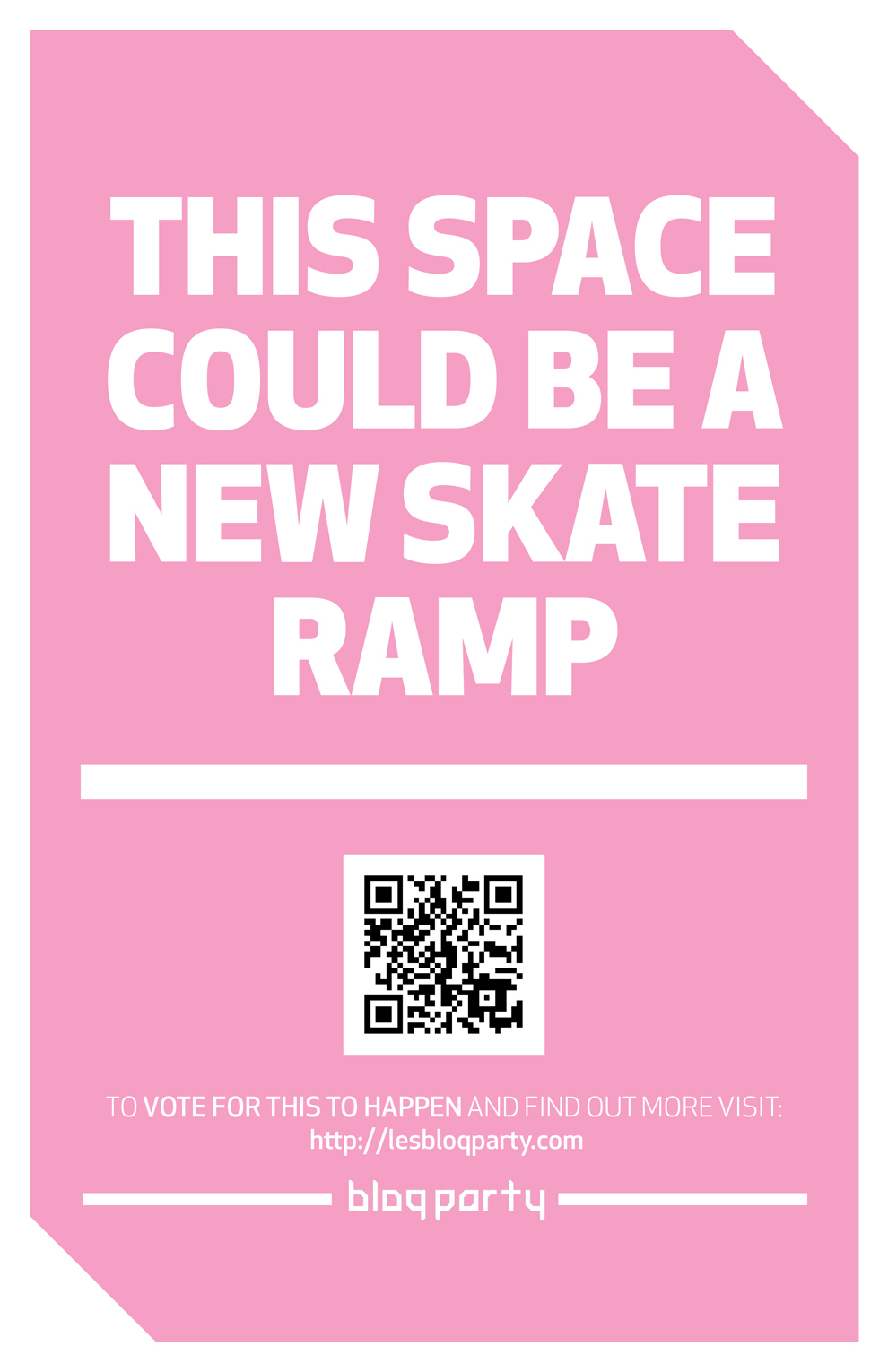
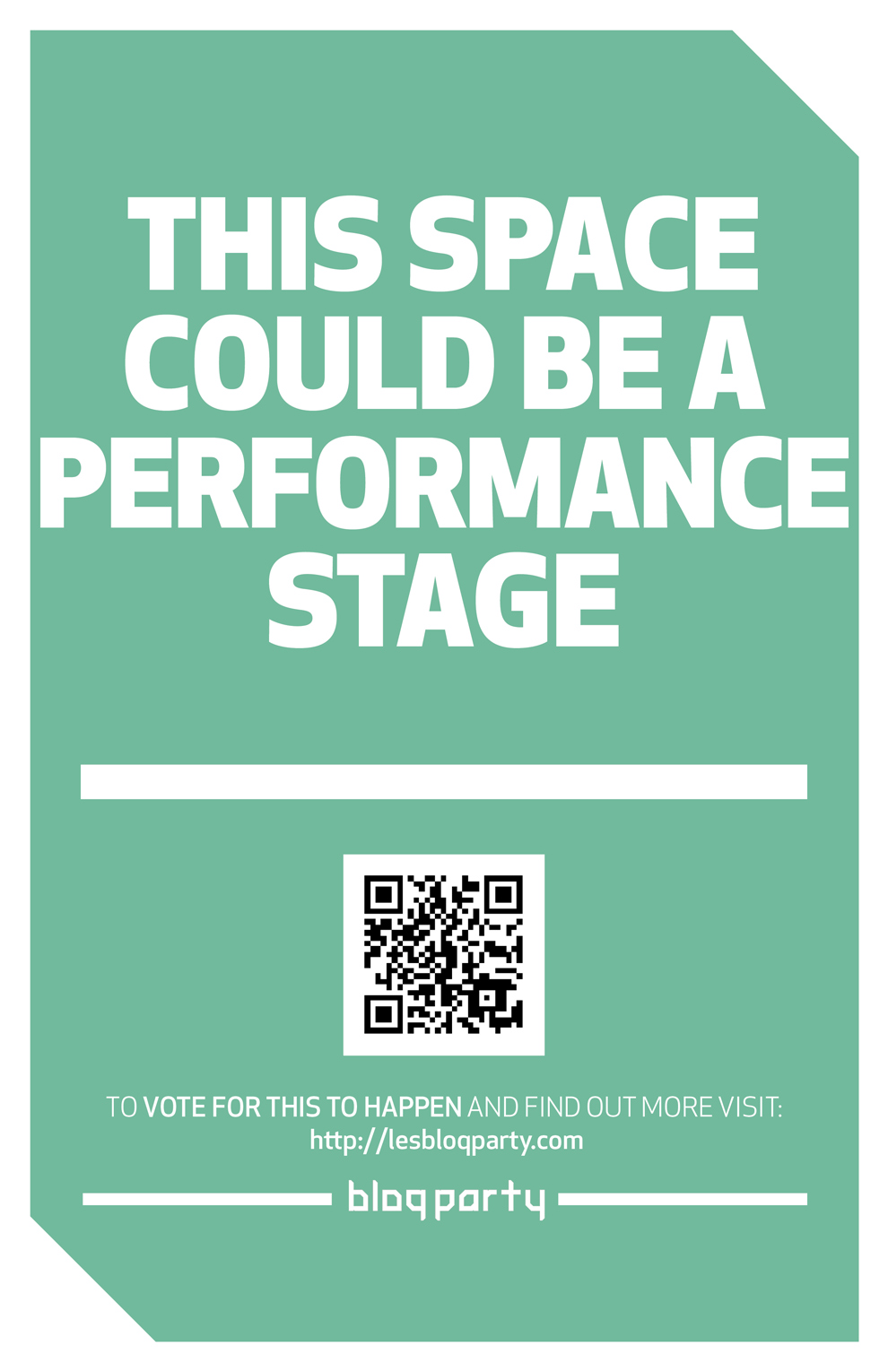
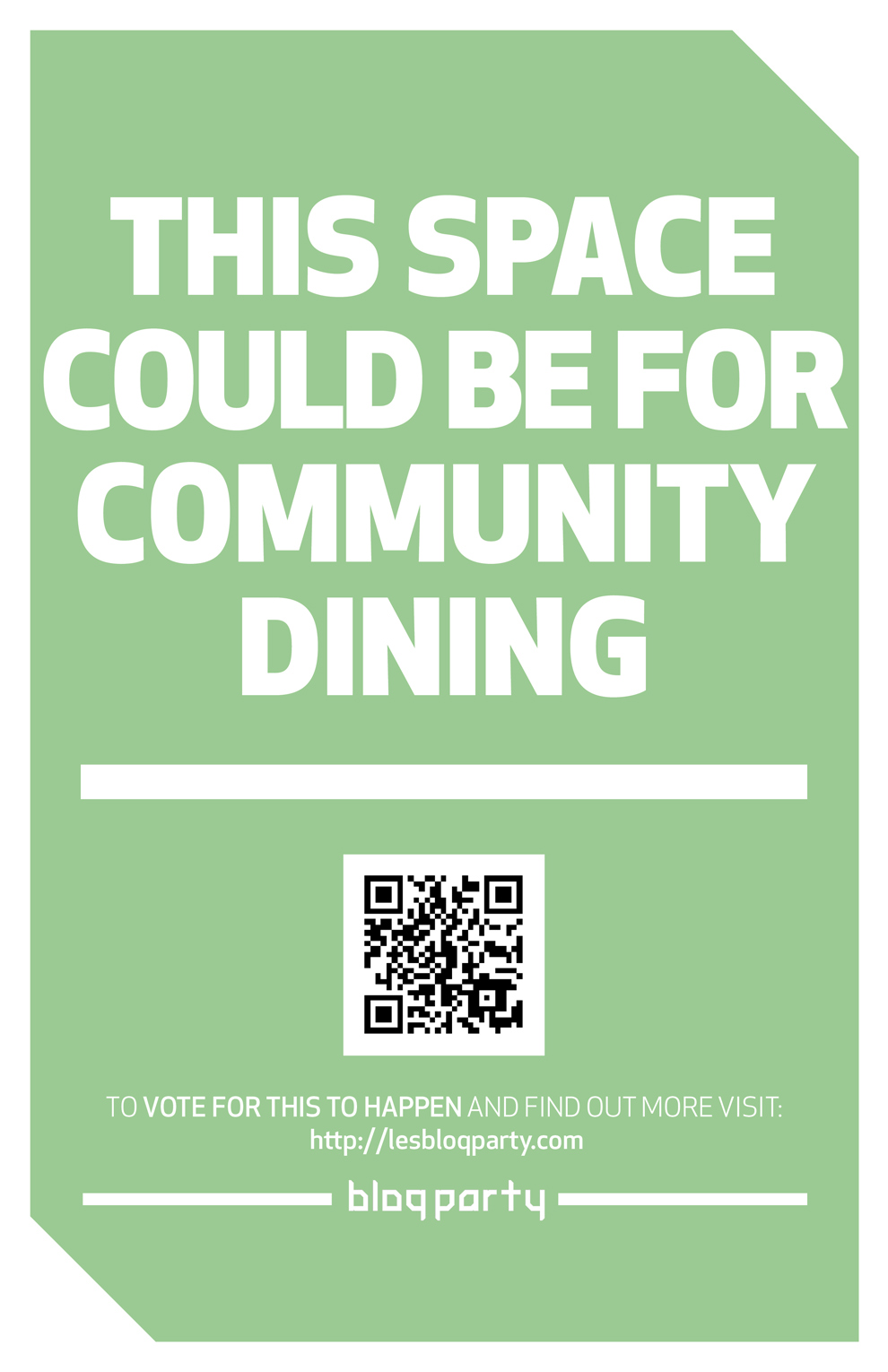
This space could be…


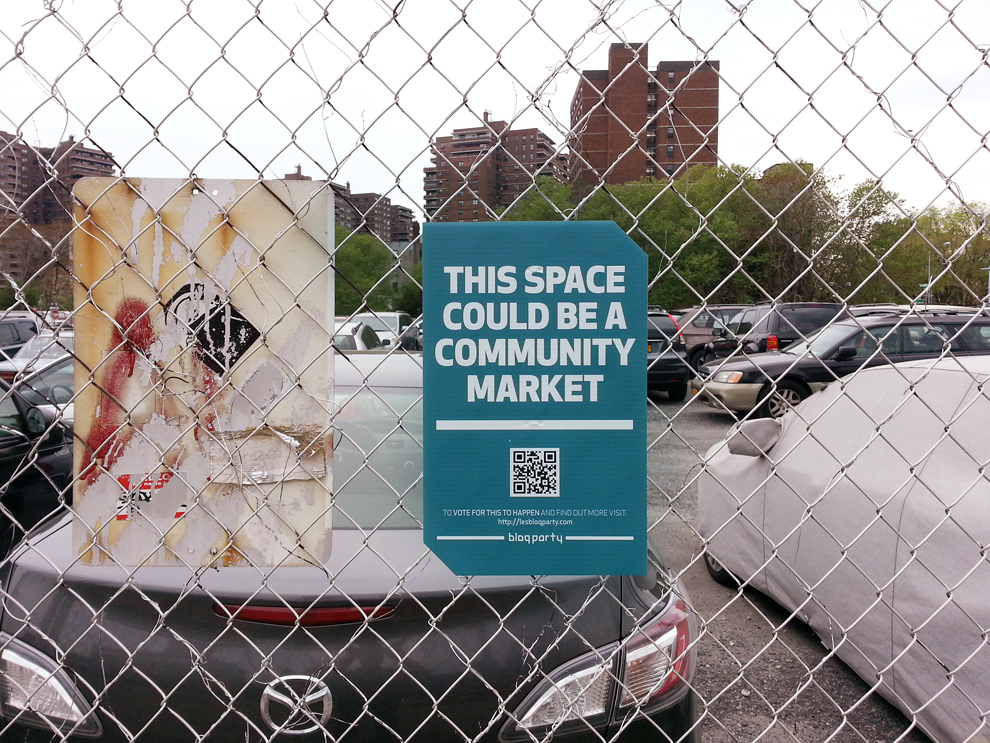
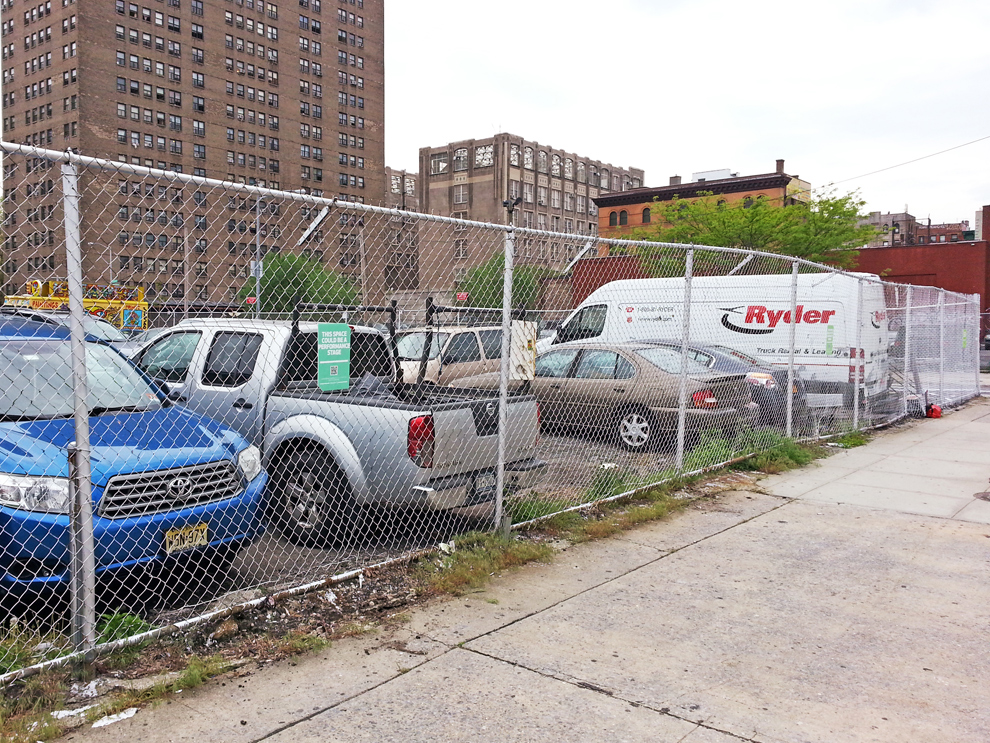
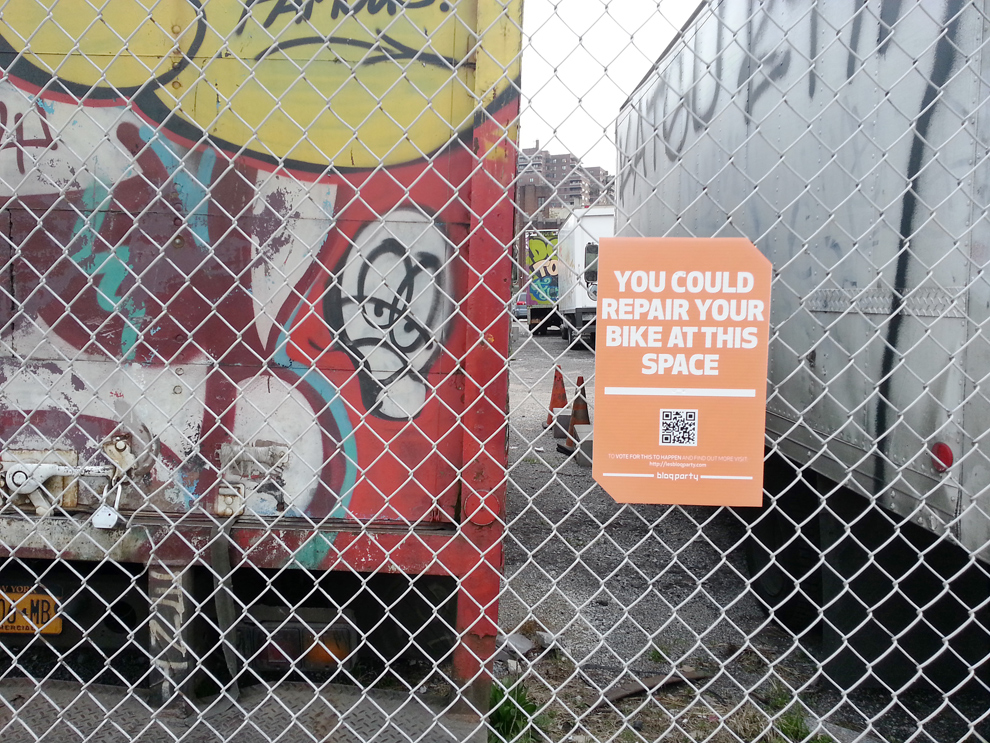
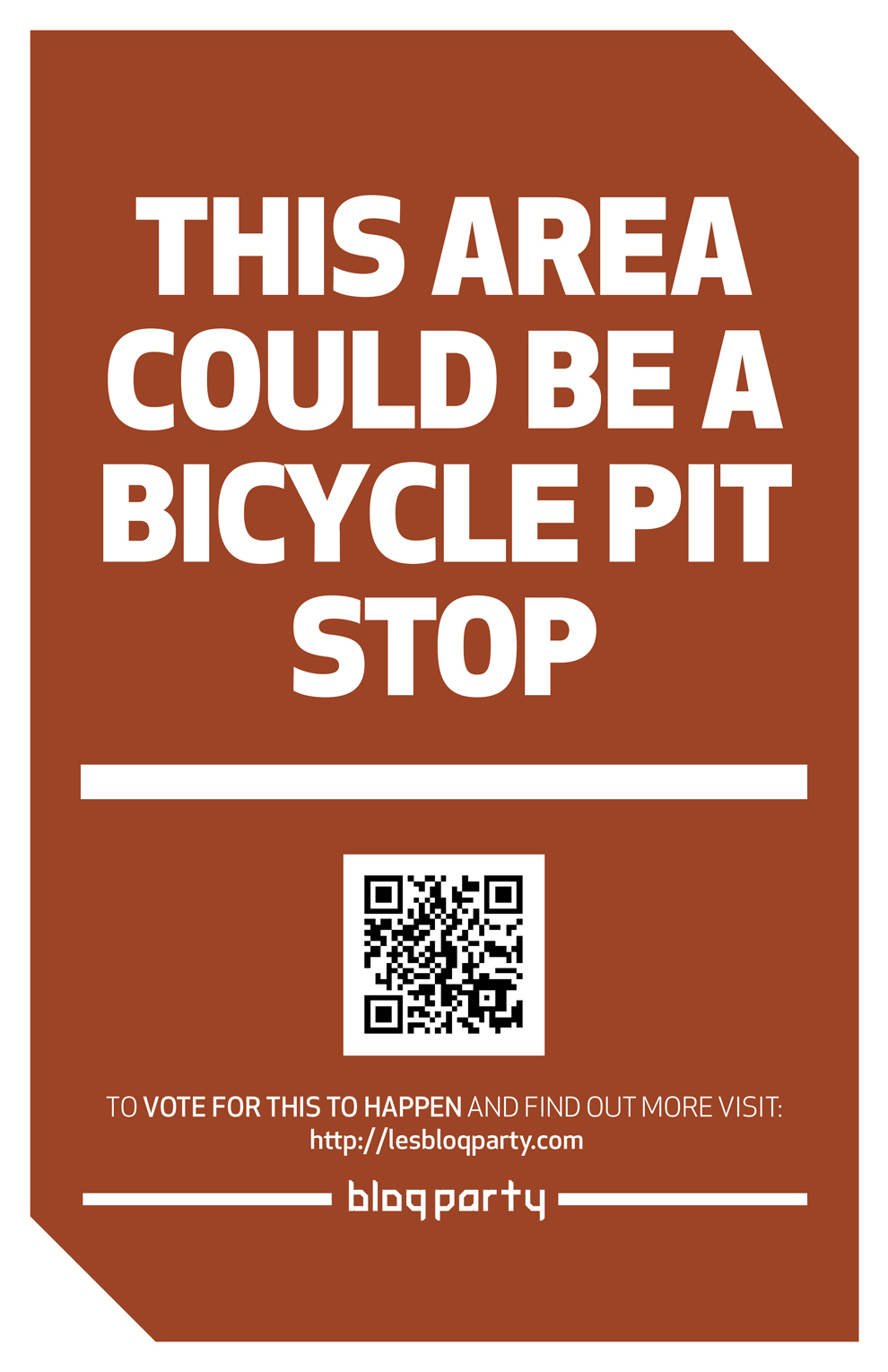
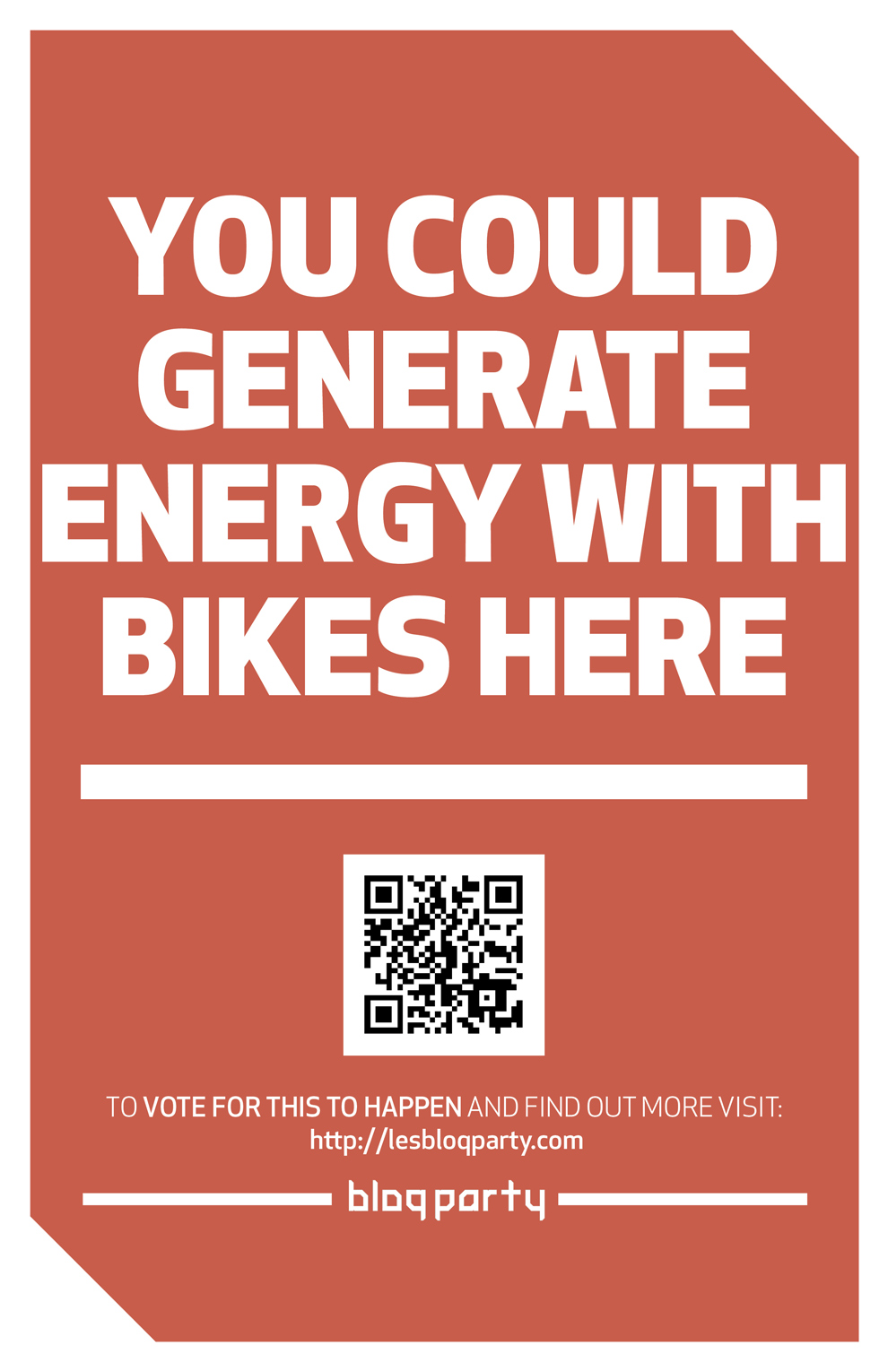
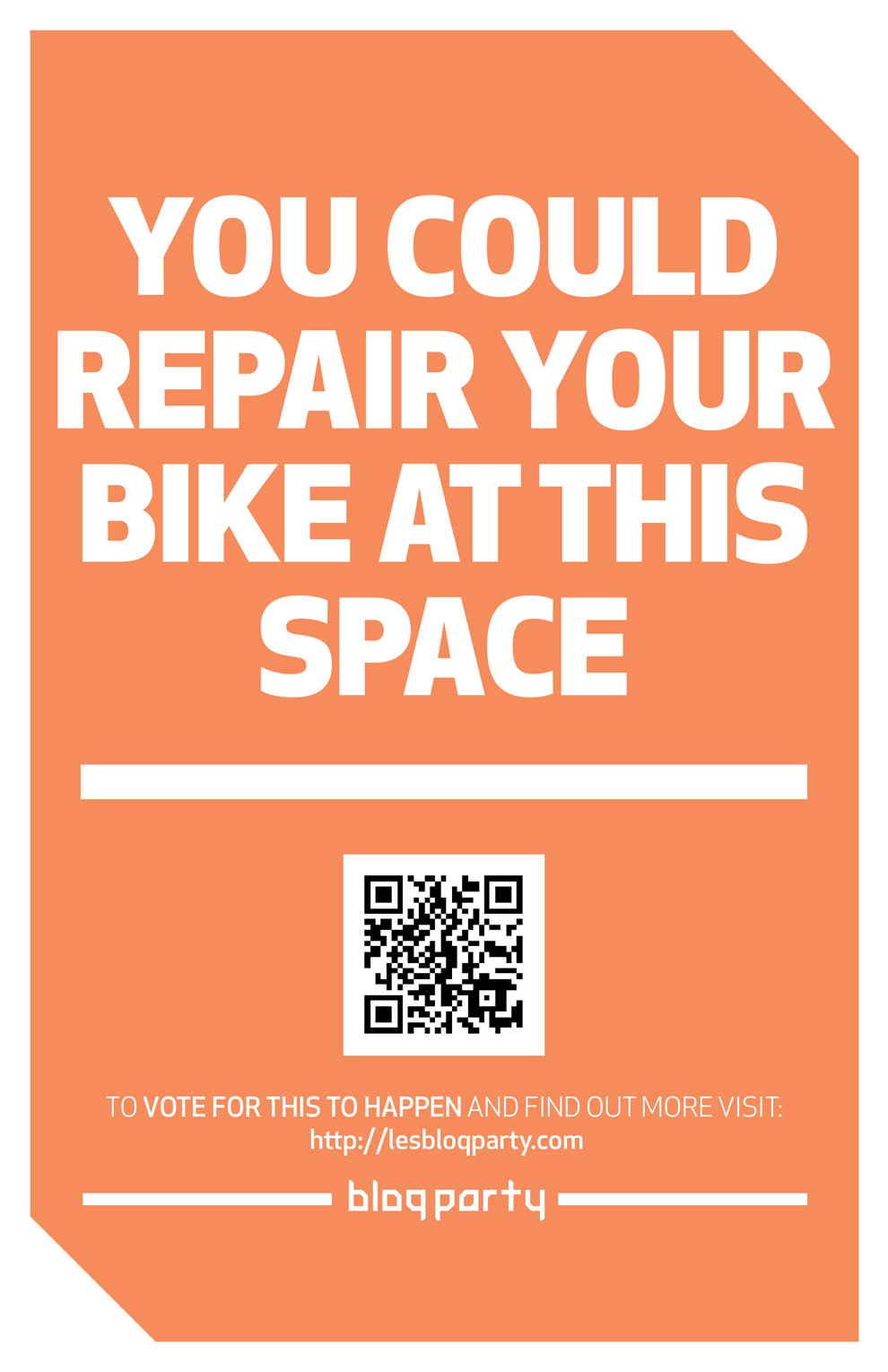
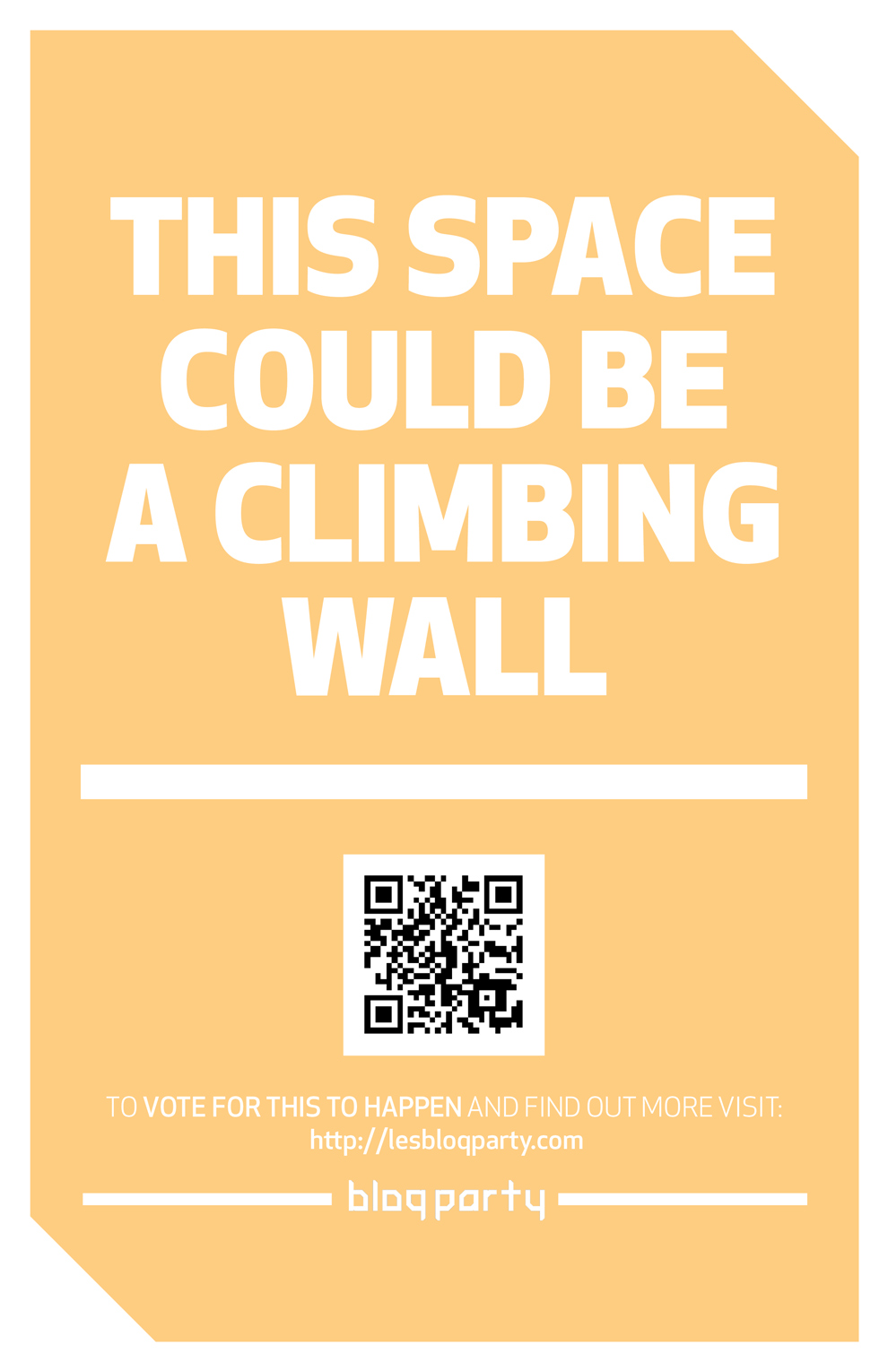
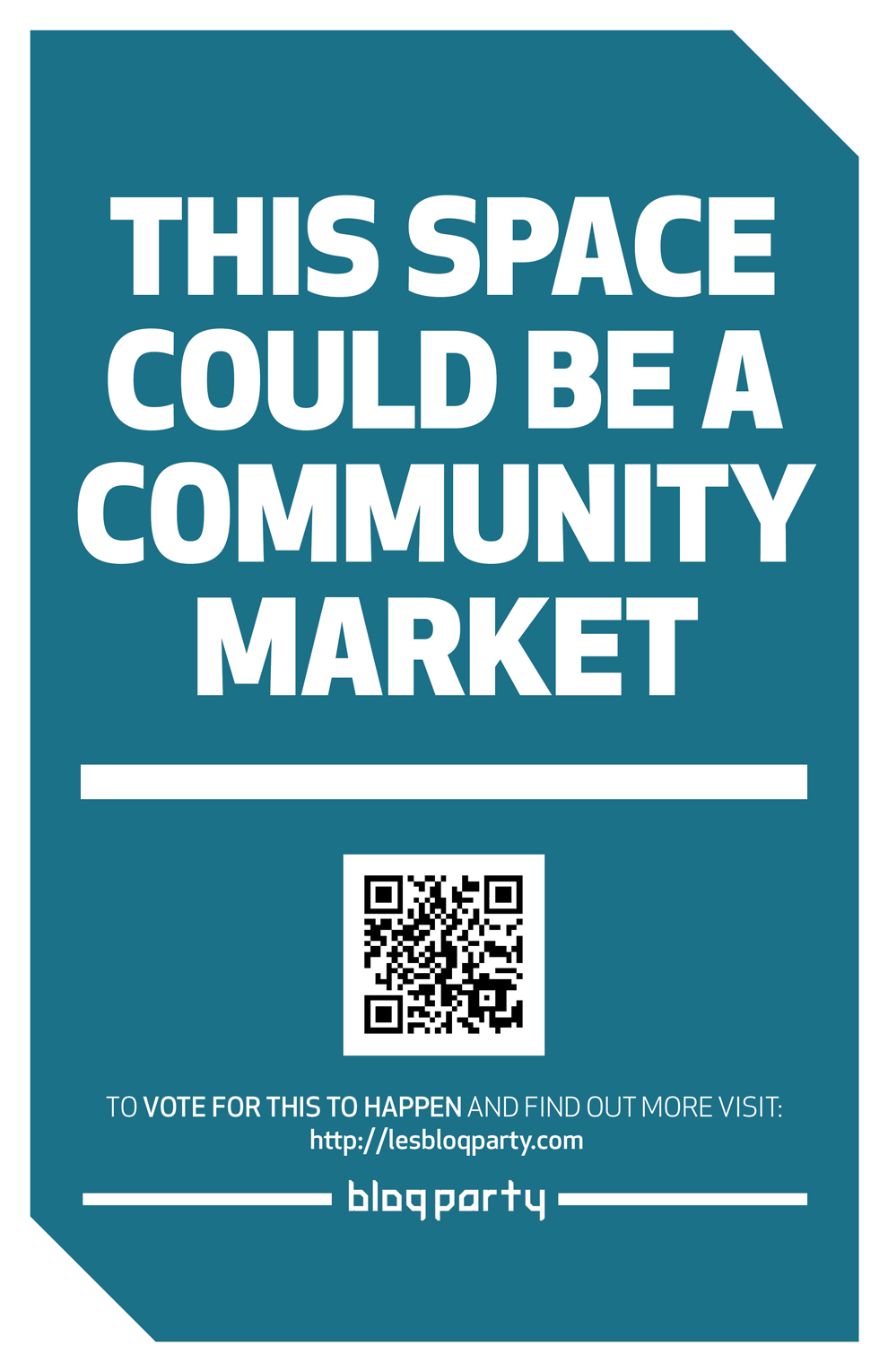
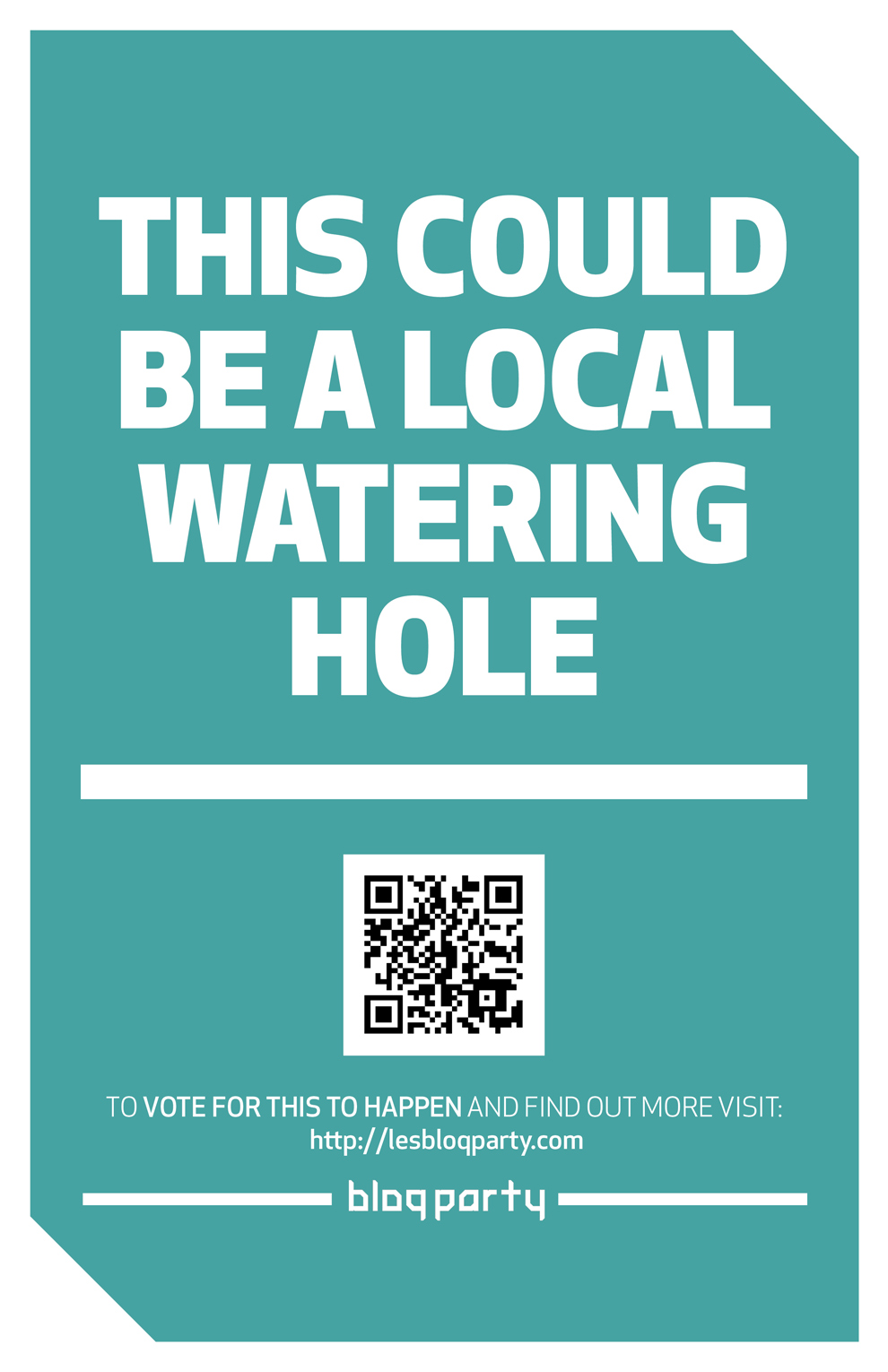
To generate interest and excitement for our BLOQ PARTY proposal, we wanted to start a conversation by showing how the program elements we produced could potentially activate the competition site. Competitions, design proposals and urban space planning oftentimes fall under the radar of the actual users of the site who are both unaware that a competition is taking place and then have no voice in the process or outcome. The plastic signs are intended to link the digital proposal to an actual physical space – less obscure websites and more public posters. It also helped to see how our space division laid out on the actual site, we had treated the eastern, narrower plaza area as space for movement and dynamic interaction – biking, running, skating. The western, more generous plaza was designed for slower, more spontaneous meeting areas. We hope the signs can begin to create a diaglogue for the best use of the space including potentially new and different program ideas that can eventually bring the space to life in a vibrant manner for all.

20130113 Tags: architecture, competitions, fabrication | No Comments »

Continuous Contour


Looking North from the Sculpture Park


Assembly Diagram


Elevation Looking West


Site View


Typical Connection Diagram


Quick Project Description
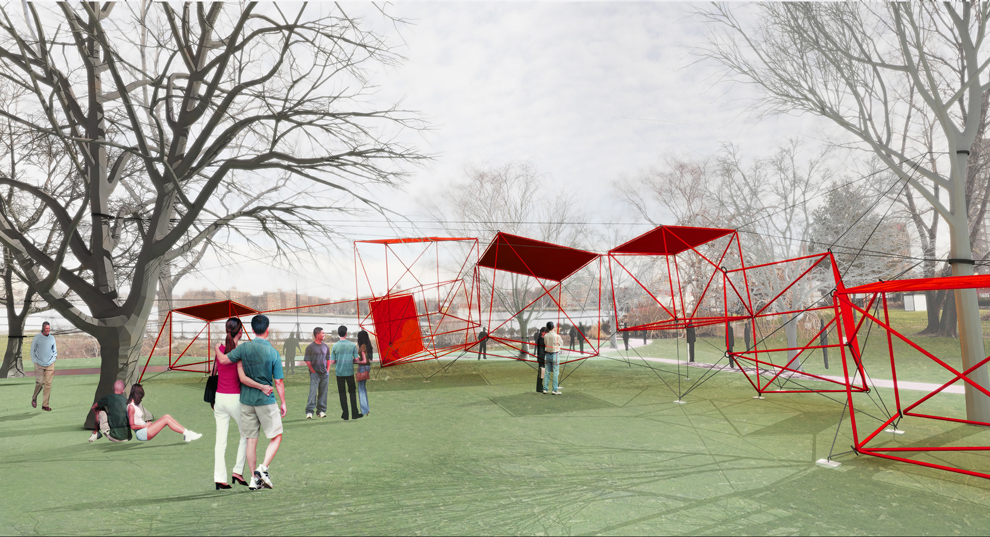
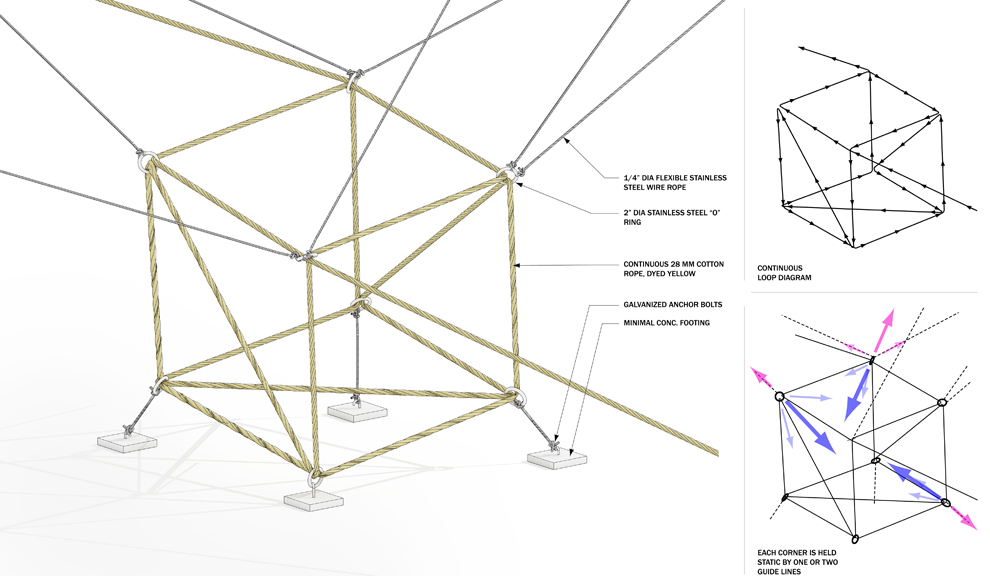
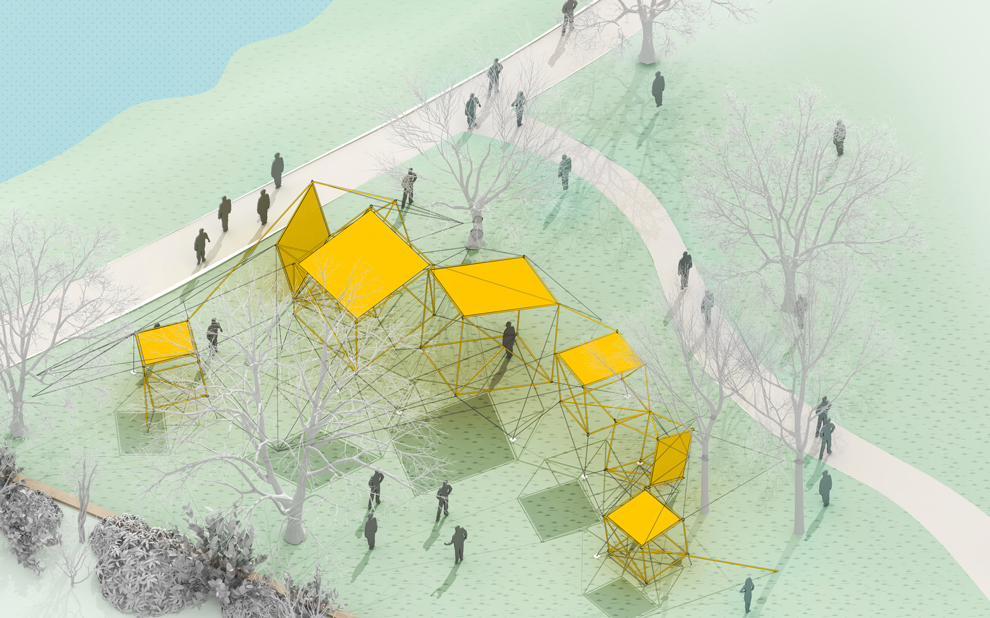
Continuous Contour is a folly built from one single 1050’ length of rope – sourced in Long Island City and hearkening back to the area’s historical role as a center of nautical manufacturing – as well as a series of guide wires and steel rings. Evoking a contour drawing where the pencil never leaves the paper, this rope becomes a continuous, eccentric line that winds its way through a series of metal rings to transform into a phantom geometrical construction, capturing space with visible boundary lines while still remaining imminently temporal and open. The folly proposal comments on architecture’s attempt to force order on the natural world by highlighting the impractical tension between the rigid, recognizable cubic forms and the seemingly chaotic guide wires that connect to the naturally occurring trees that circumnavigate the site. This forms a contradictory structure that is both delicate – being able to sway along with trees and grasping hands – but also completely in tension and dependent on each node to remain standing.


Description
The folly Continuous Contour is constructed from a number of locally manufactured and off the shelf materials. Long Island City was once a hub of naval construction and the area still retains some capabilities for producing nautical components, cotton rope primary amongst them. This became the basis for the design proposal and the main feature becomes a single, continuous line of dyed rope facilitating an investigation into the latent possibilities inherent in the material’s strength for flexibility and manipulation.


Architecture school begins with drawing, and one of the first methods taught in the development of a young architect is the contour drawing method, essentially a line drawing that traces the outline of a given subject – a simple means of emphasizing mass and volume on a flat two-dimensional surface. In Continuous Contour the subject becomes spactial and is manifested in a three-dimensional construction that forms the outline of a number of cubic forms that tumble about the sculpture park appearing to take flight as they near the water line. A canvas or plastic tarp is affixed to one side of the forms to potentially provide shade or a projection surface while further emphasizing the geometry. The single approx. 1000’ strand of the rope winds through a series of metal rings, back in on itself and then away again to form a unified decorative agglomeration. The eye can delight in following the eccentric path of the rope, tracing its voyage as it weaves through the park, transforming from a material that connotes a coiled, resting mass into a temporal folly that is now slightly recognizable as something structural. The folly defines space, both within its individual forms and within the park, defining zones of play and contemplation. However, as the folly is merely an outline – the graphical representation of space constructed from a linear material – it is inherently empty and creates a dramatic tension from the play between the two contradictory notions of void and outline.


The rigid, recognizably intentional geometric forms are held in place by a delicate system of guide wires attached to the park’s trees and a minimal number of ground anchoring points. The guide wires are constructed from flexible steel rope and a number of standard connection systems, amongst them stainless steel rings and carabiners. The folly comments on architecture’s ambition to manipulate forced, ordered forms out of the chaos of nature by emphasizing the seemingly chaotic web of guide wires required to stabilize the cubic volumes that appear to hover above the ground. The overall structure of the folly becomes delicate in one sense, in that it gently sways in the breeze in tune with the supporting trees, while the effects of someone tugging on the rope on one end are felt and seen as a rippling throughout the overall system. The folly is then at once elaborate and extravagant, necessitating a detailed site survey for tree locations and a complex system of guidewires in tension to form the node points, while it is also built from modest, common materials.


After the exhibition ends all of the materials can be easily reused and recycled into a number of alternate uses. Due to its softness to the touch, cotton rope is frequently used in railings and could become woven together in a net or other shape to make a wonderful addition to a number of city playgrounds. Likewise, steel rope is frequently used for railings and other tensile applications, but can be easily melted down and recycled.

2013014 Tags: architecture, fabrication, interaction, new york, research, teaching, urban | No Comments »

HACKING THE URBAN EXPERIENCE II – STUDENT WORK

I spent a second semester with a great group of young architects, urban designers and planners teaching a course at Columbia. The class was titled “Hacking the Urban Experience” and was about a number of things I’m interested in, specifically how to fabricate, repurpose and interact with urban space. It was a very good short semester and I was super proud of all of the student’s work. I thought the ideas went deeper and successfully built off the earlier semester. All lectures and process work are archived on the class tumblr: http://hackingtheurbanexperience.tumblr.com. Classes typically took the form of lectures on precedents and concepts, a discussion of student work and tutorials on materials or software techniques as required. Topics during the semester included overviews of unsolicited architectural proposals, building-scale light projections, inflatable materials, urban siting opportunities and community/crowd sourced funding.


Course Description
The course goals haven’t changed dramatically since the last semester, the course still seeks to assert the relevance of the fabrication tools at our disposal as potentialities for social and environmental relevance. Through the re-appropriation and re-imagining of existing urban conditions, the student will design and fabricate a working prototype that embraces the messy reality of our city and promotes community involvement. The student will begin by identifying a quality of the urban condition that includes the latent capability for improvement and work toward fabricating an adaptive, responsive and environmentally viable solution. Specific emphasis will be placed on testing and exploring through hands on research the possibilities of detailing and fabricating connections using unorthodox materials. At the conclusion of the course the student will produce a full scale urban intervention and observe and document their relevant successes or failures.


Workshops were conducted to introduce the students to the possibilities inherent in new material technologies, through production and detailing techniques, and the proper use of fabrication techniques. Material workshops encouraged students to explore with everything from dynamic, variable surfaces using latex and silicone to parametric agglomerations using quotidian materials.


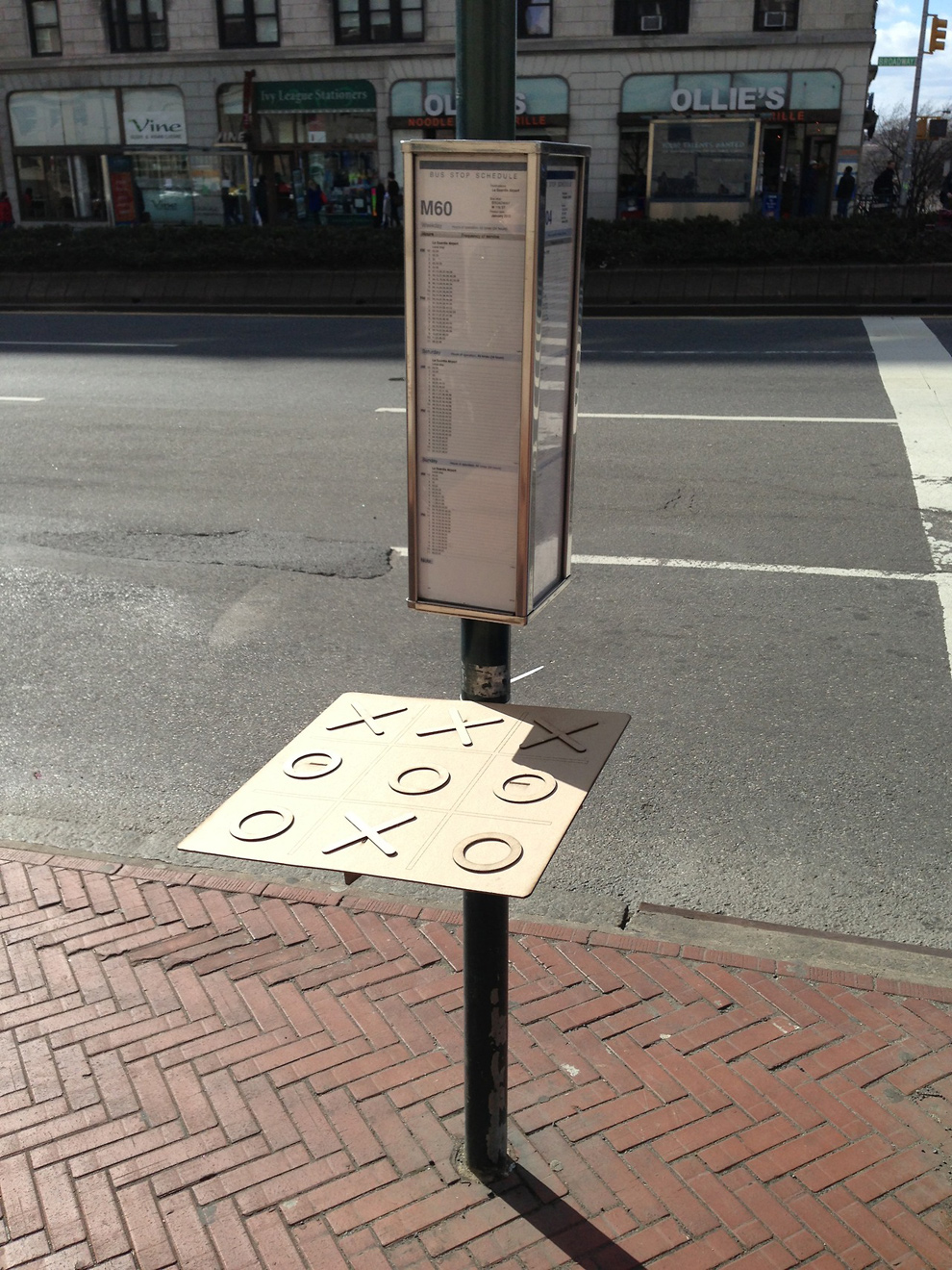
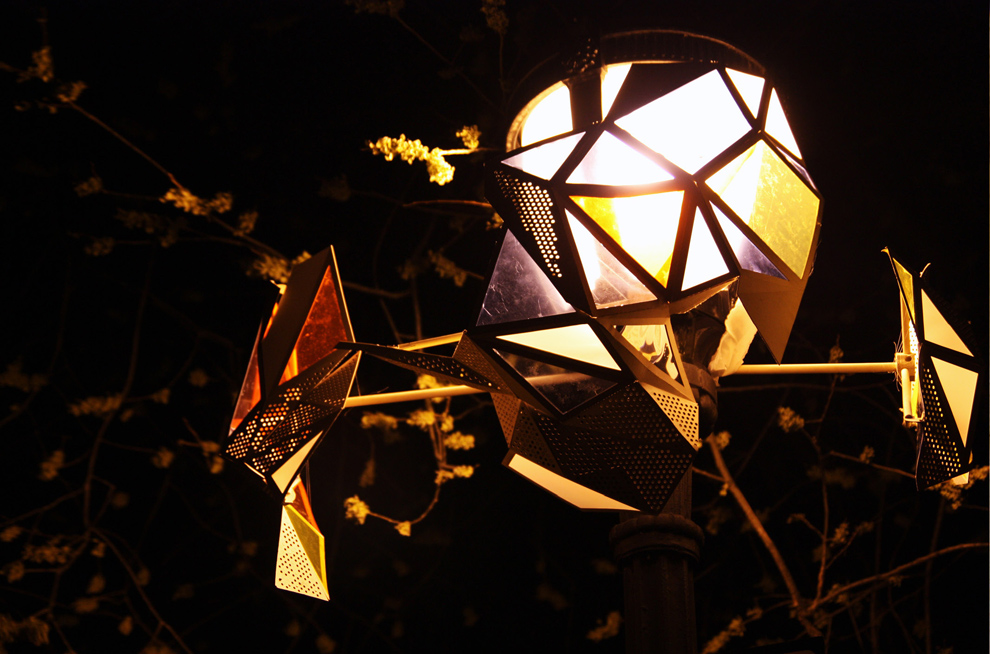
The first investigation was the creation of the connection detail. It was encouraged that this be a parametric joint that breaches the gap between the existing streetscape and the student’s intervention. Flexibility, safety, durability, adaptability will all be tested while exploring different possibilities for a potential synthesis with existing urban forms, examples of which can include: will the student’s intervention clamp on to a lamppost, hang from a phone booth, project from an existing building or rest in a parking lot?


By attempting to capture a broader audience for architectural interventions, a number of questions presented themselves and the student was challenged to anticipate possible eventualities – how will it be used? Can its use be changed? Is it durable? Is it waterproof? Can it safely stand up? Fabrication was considered less from a formal quality, and more from a use, durability, improvisation and public participation viewpoint.


Ultimately the student should have come out of the course with a healthy respect for two core concepts: Firstly, an increased skill in the use and applicability of the fabrication machines we have at our disposal for solving design issues using unorthodox materials in unconventional settings; and two, that there is an opportunity for architects to regain lost relevance by inserting themselves through unsolicited proposals into the public consciousness as steward’s of urban well being.


Assignment 01 – PARASITES
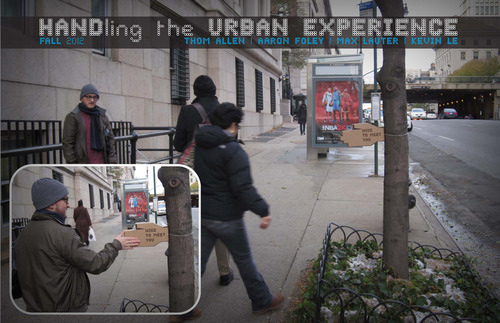
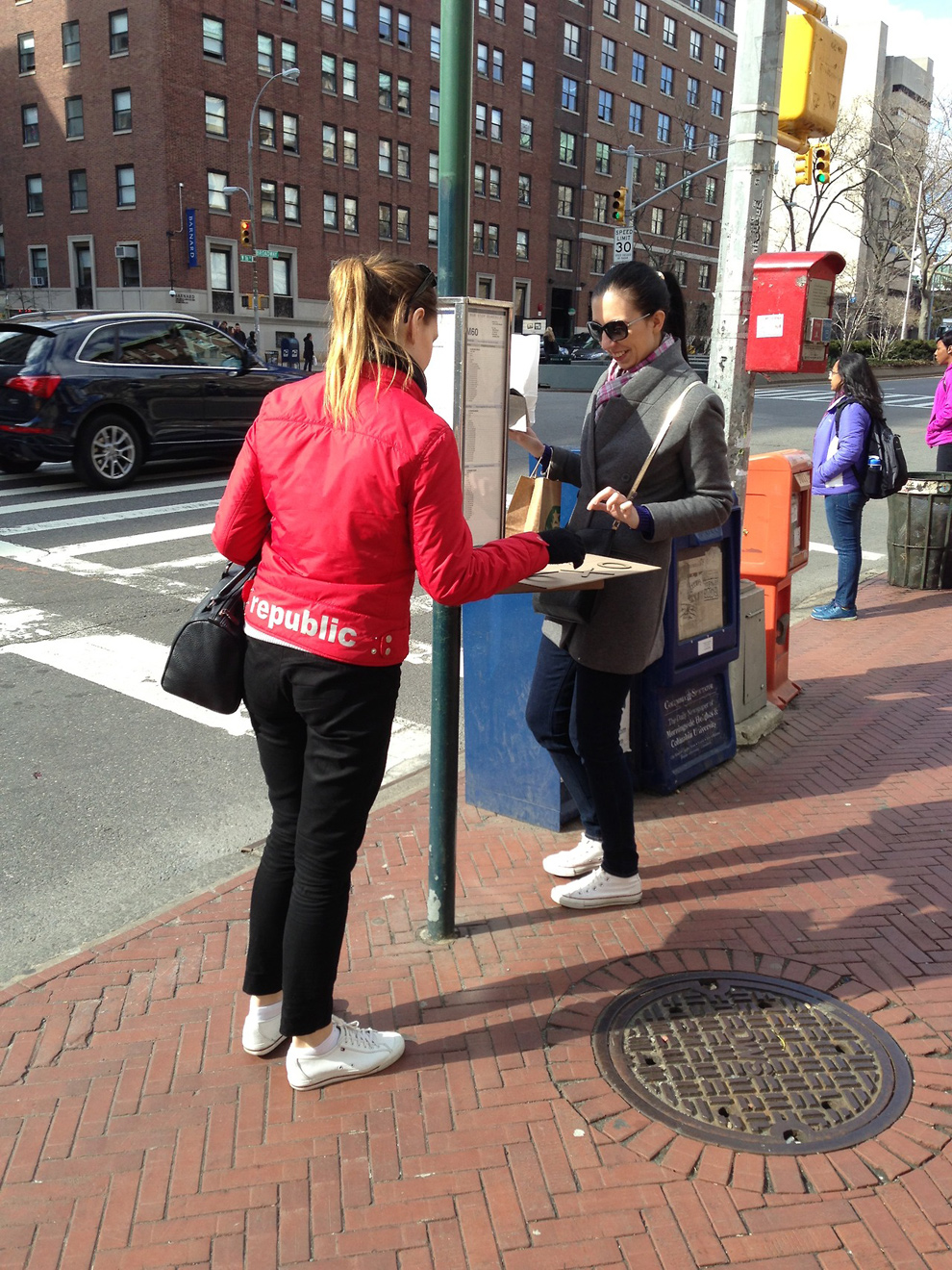
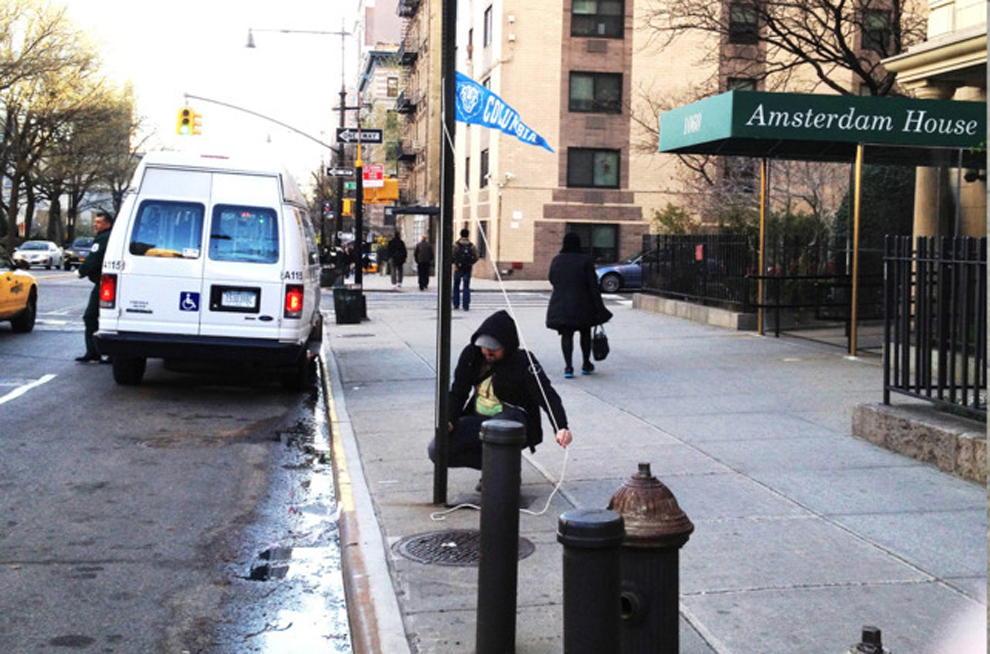
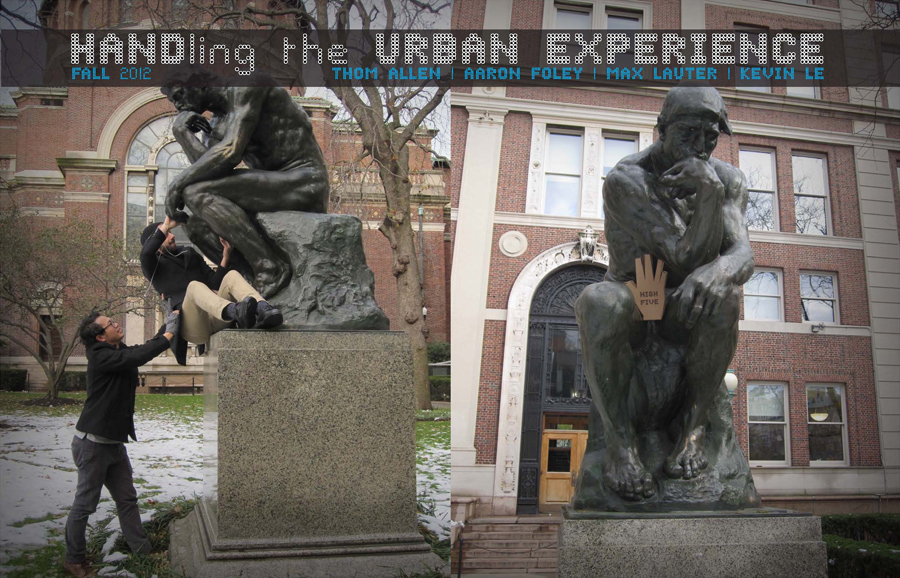
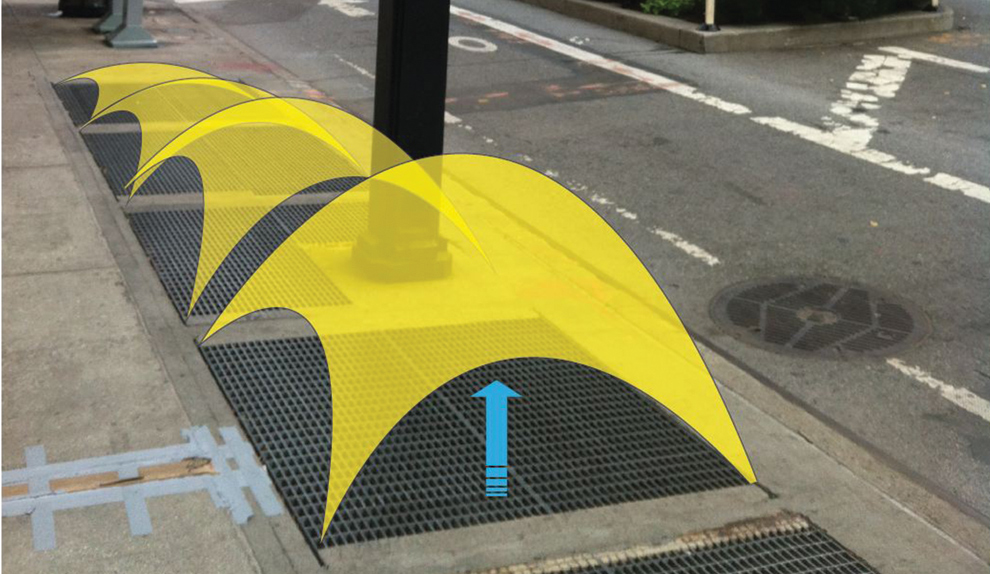
Part of the Atlas of Urban Connections project (TBD), the first assignment involved designing and fabricating a joint to connect something, anything, to a vertical street extrusion (such as a tree, street sign, light pole, etc…). The members of the Public Works Department in NYC are masters of improvisation, you can see it walking down any street here, and there is a lot to learn from their successful and not-so successful techniques for attaching to existing sidewalk infrastructure. This assignment was prepared to introduce the student to the capacity to breaching the gap between the pedestrian and existing streetscape objects, with the goal to test flexibility, safety, durability, adaptablility while exploring different possibilities for potential synthesis with existing urban forms.


Tom, Aaron, Max, Kevin
 

ChunChun, Yuri, Shuang, Rubing, Renwick


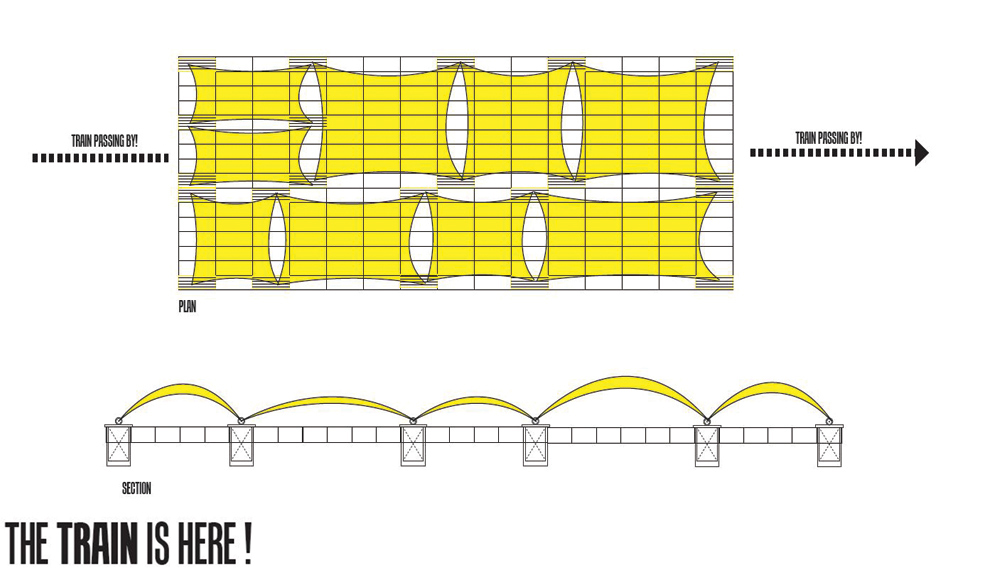
Assignment 02 – INFLATABLES
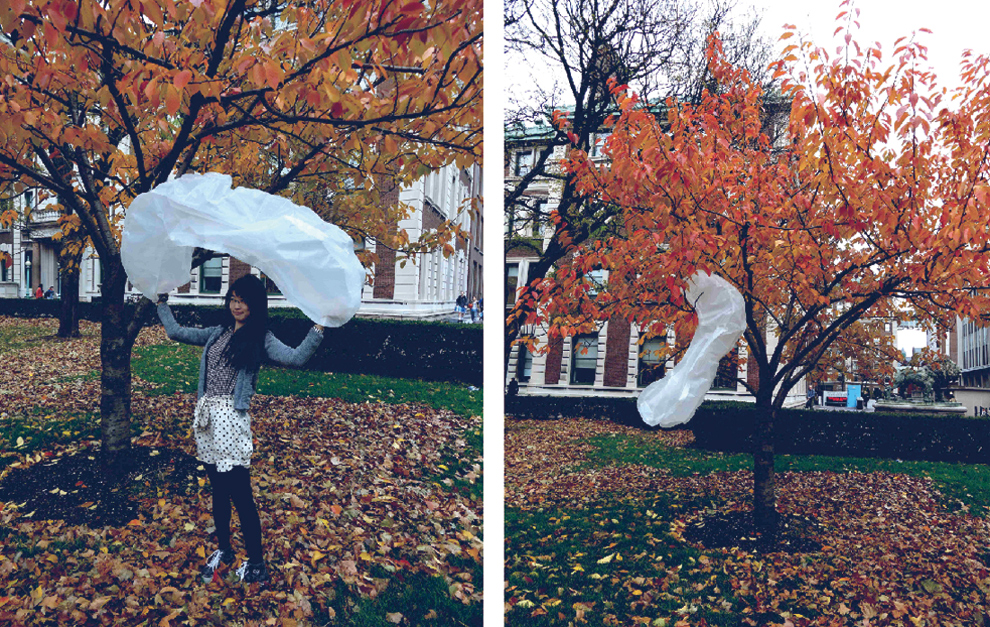
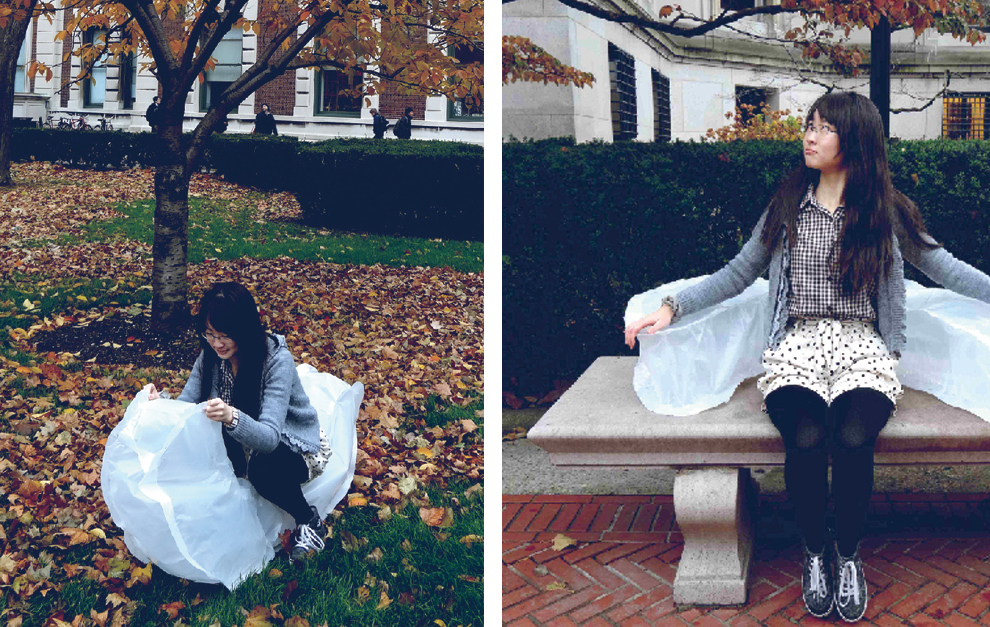
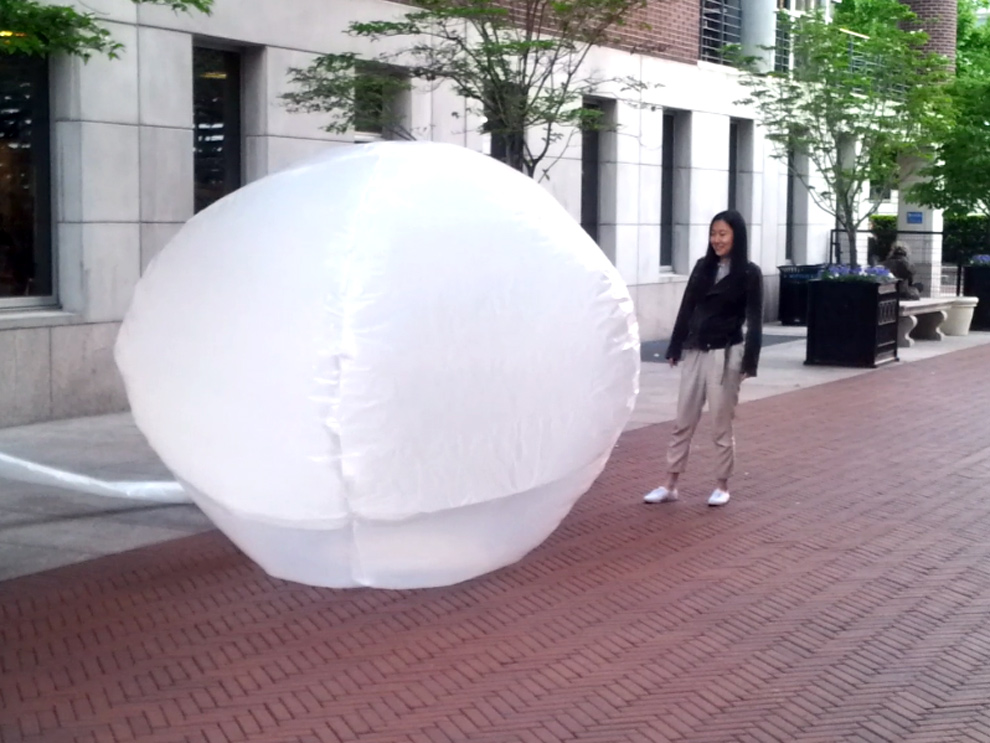
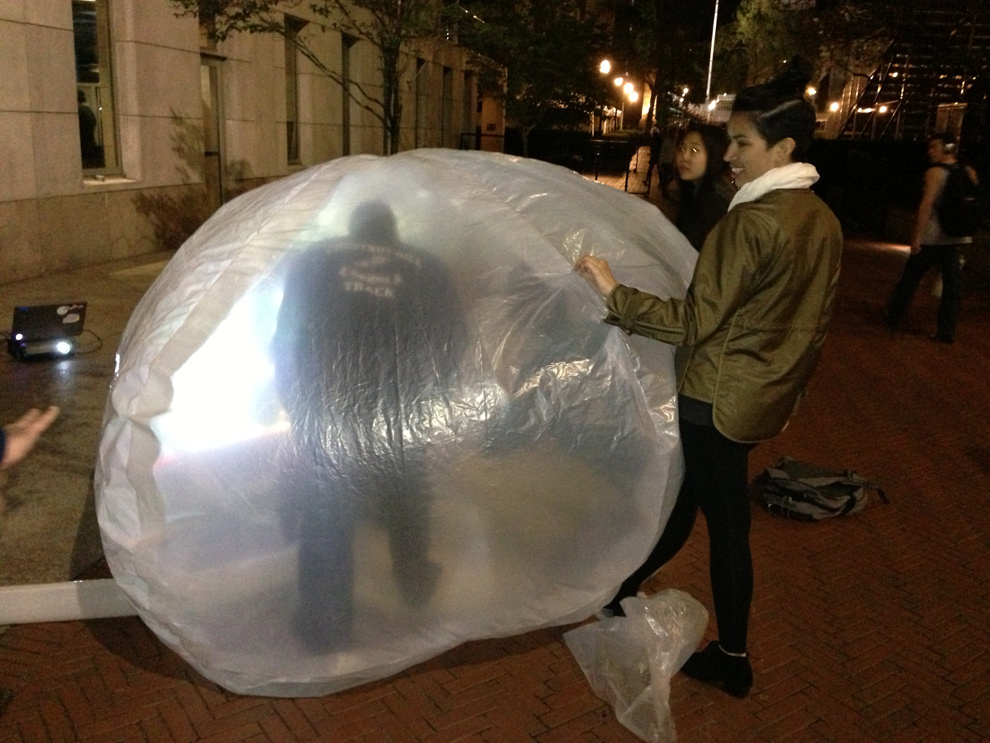
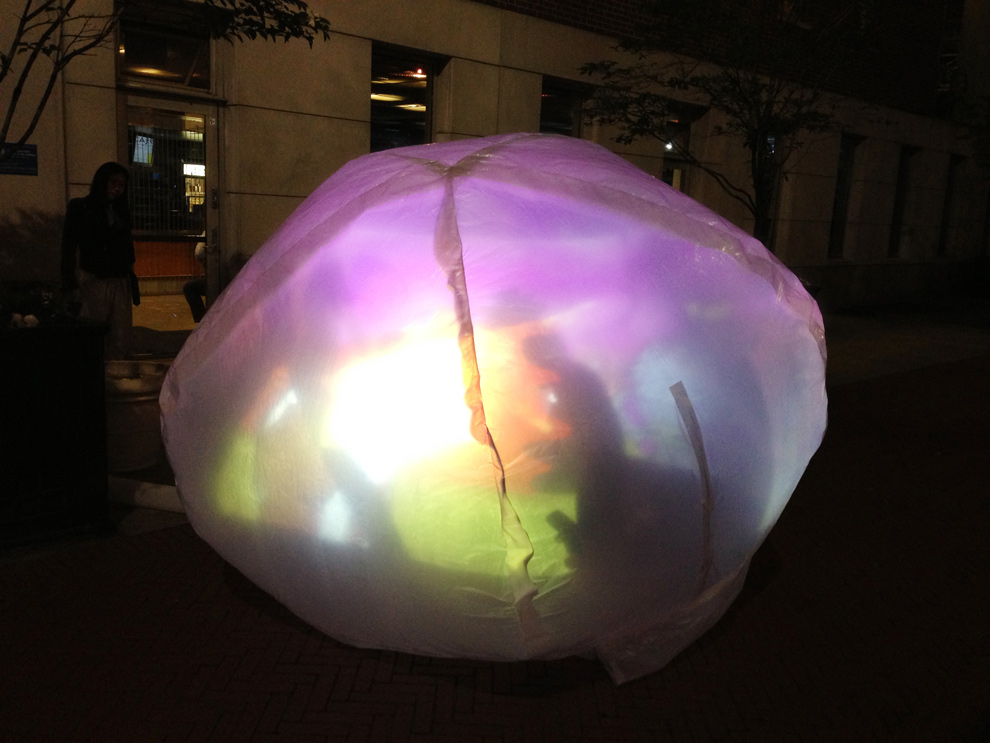
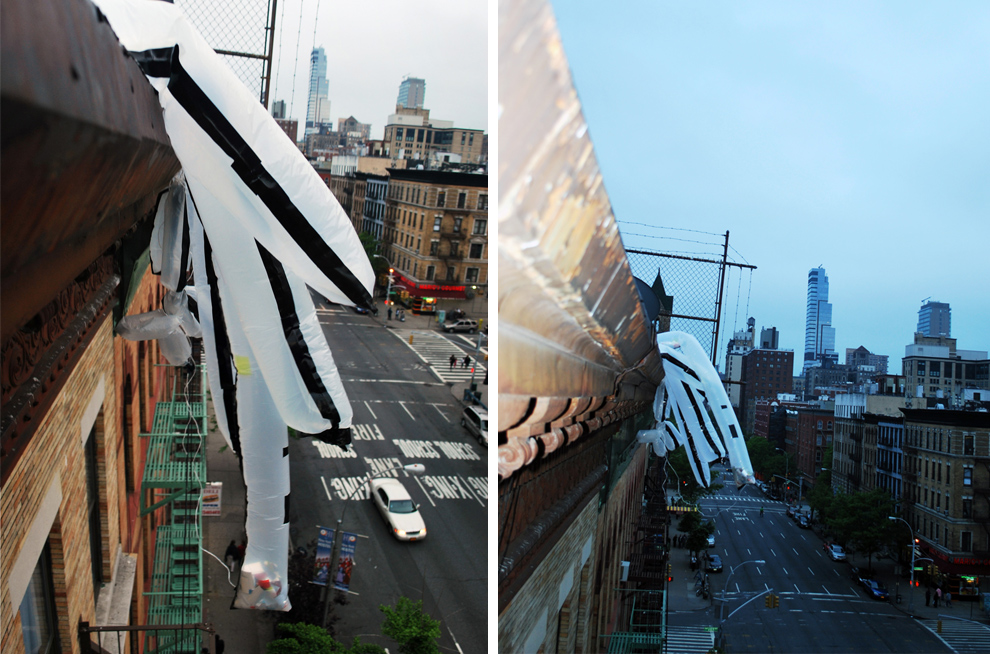
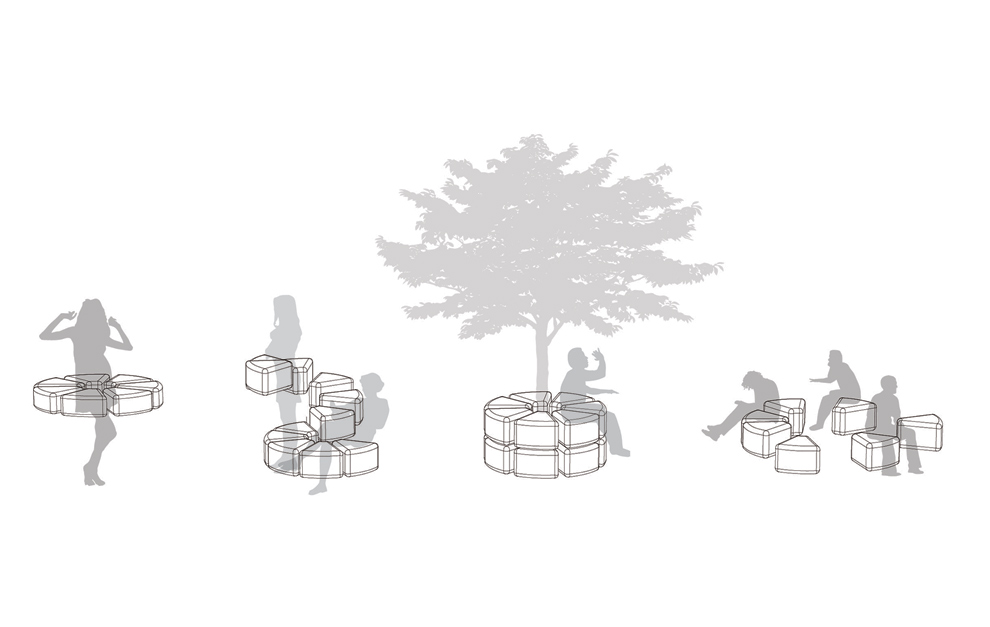
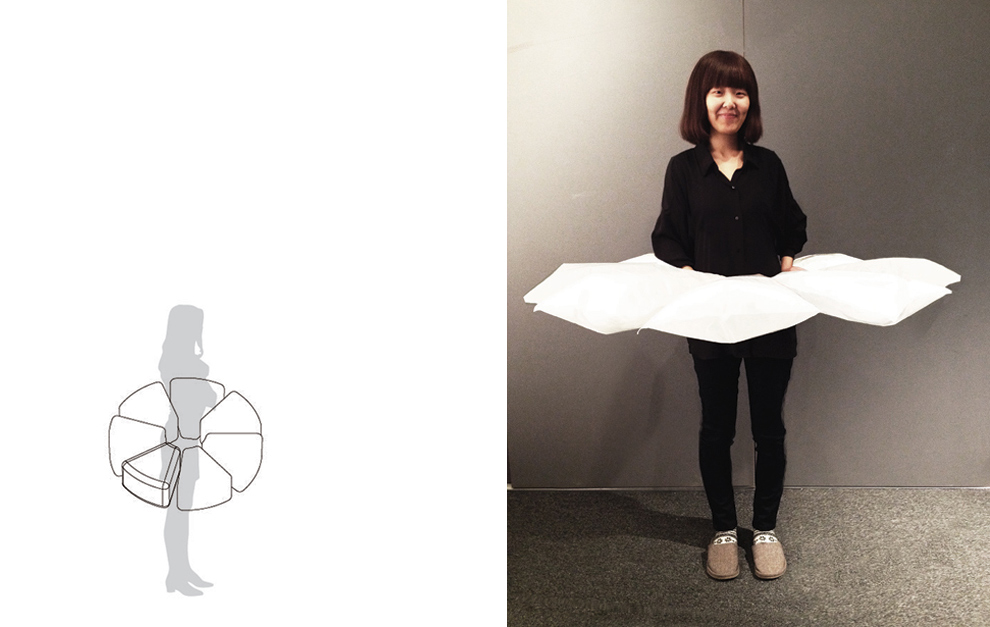
Hurricane Sandy played hell with our first few weeks, and necessitated that the initial assignments were bundled together. However, we still had a chance to look at inflatables and the material qualities inherent in cheap polyethylene of different mil thickness. Using an iron, tape and plastic, quick inflatable bladders were constructed and tested. The students were tasked with creating an inflatable, mobile “seating” system that was either self-supporting or used a site’s natural currents to inflate.


ChunChun, Yuri, Shuang, Rubing, Renwick
 

Ni, Mengna, Darian, Juan, Ying


Assignment 03 – LIGHT PROJECTION
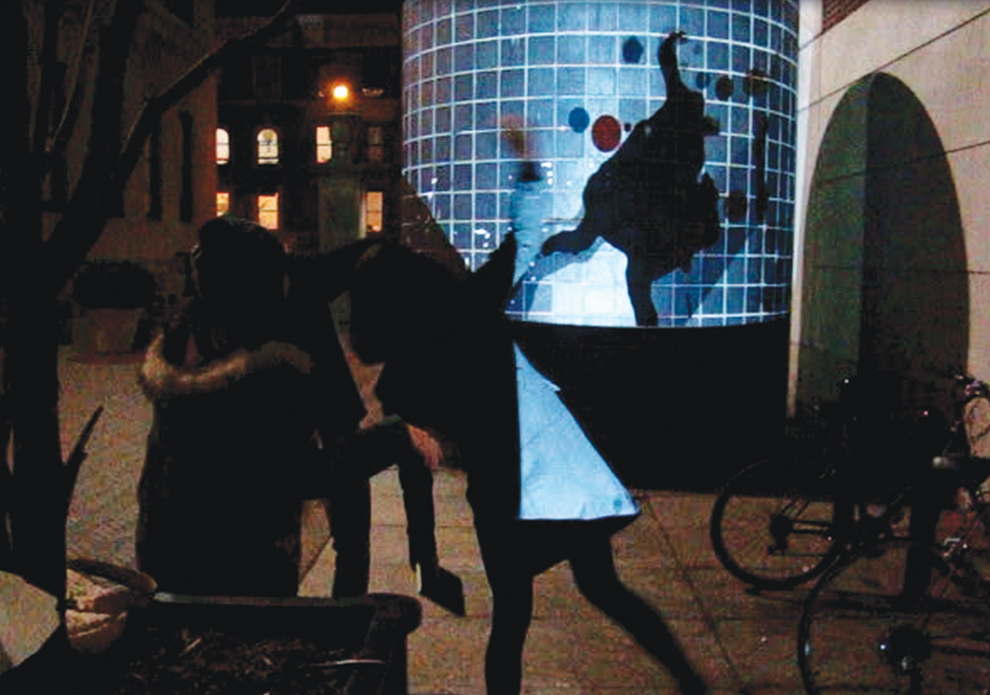
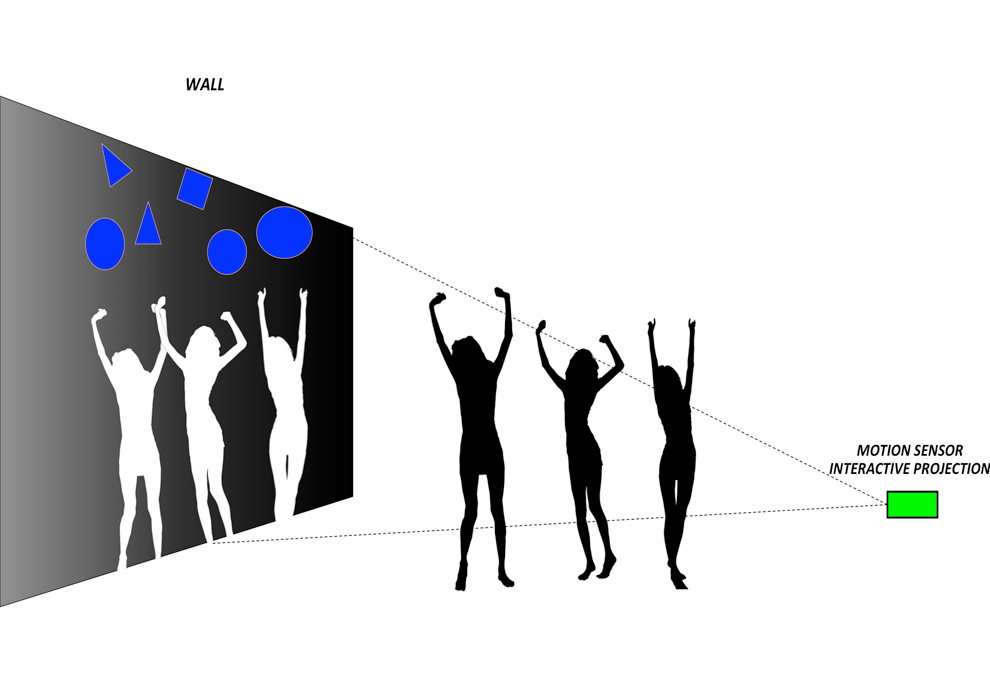
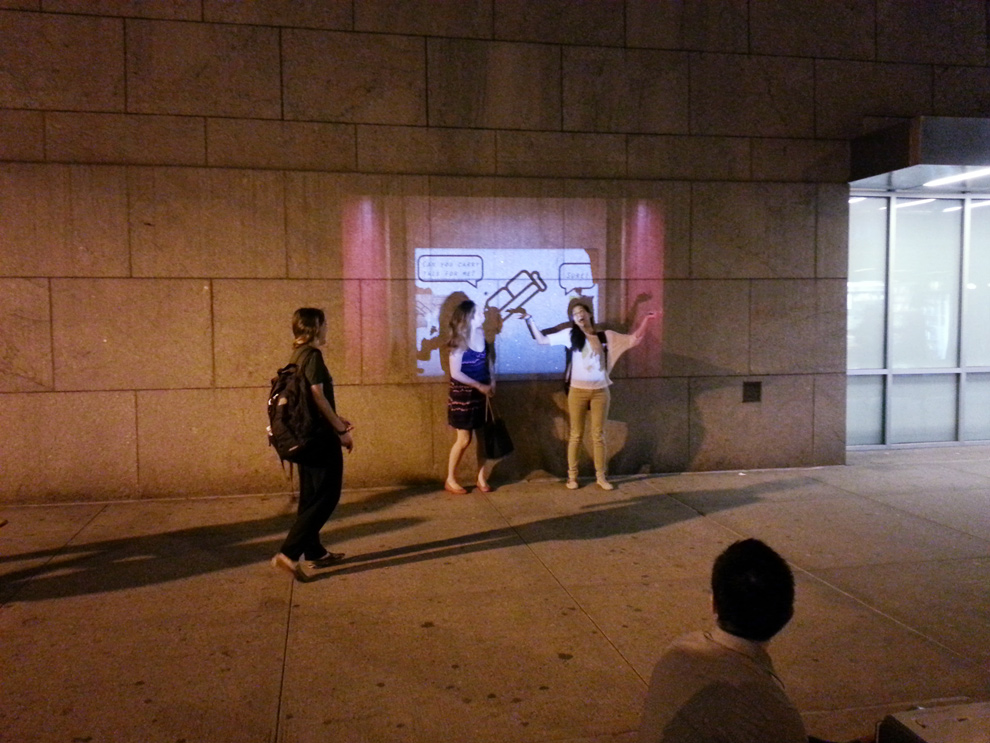
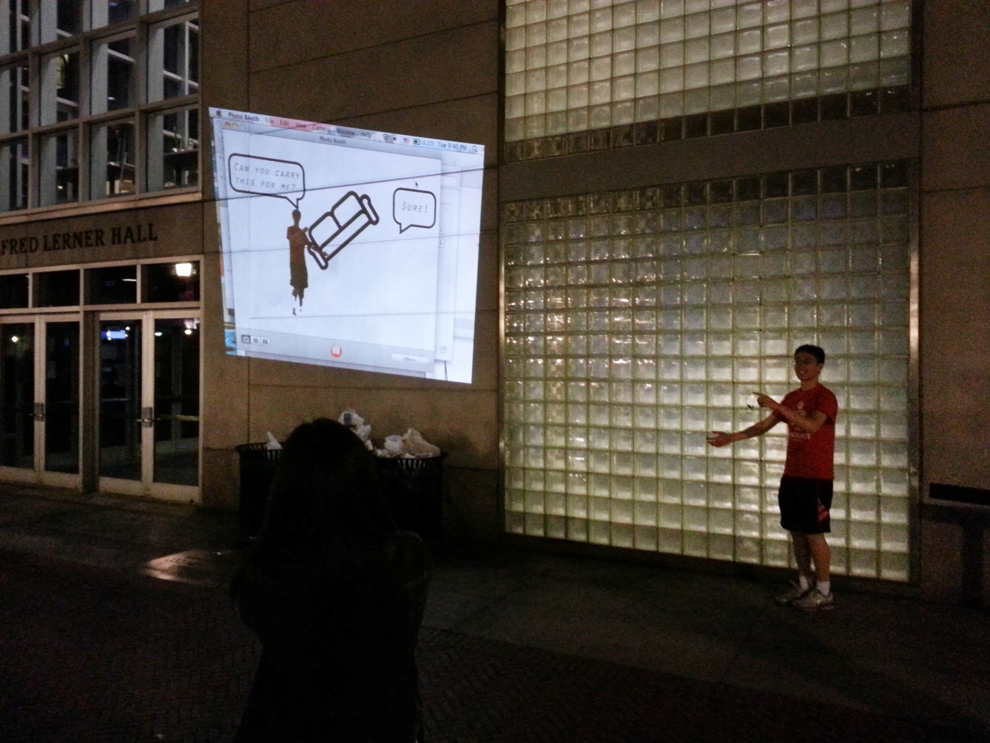
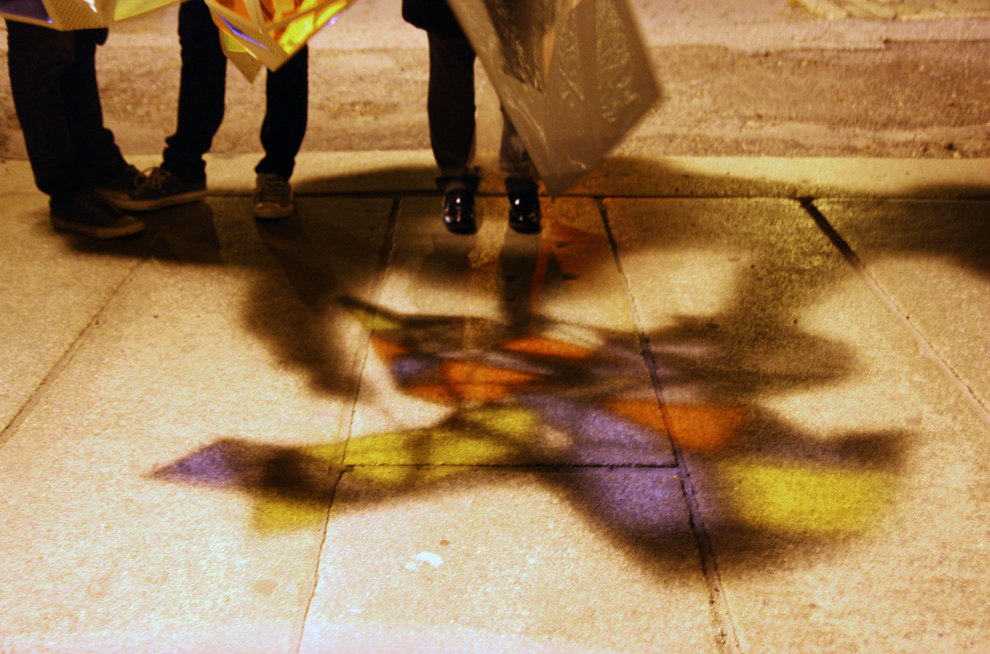
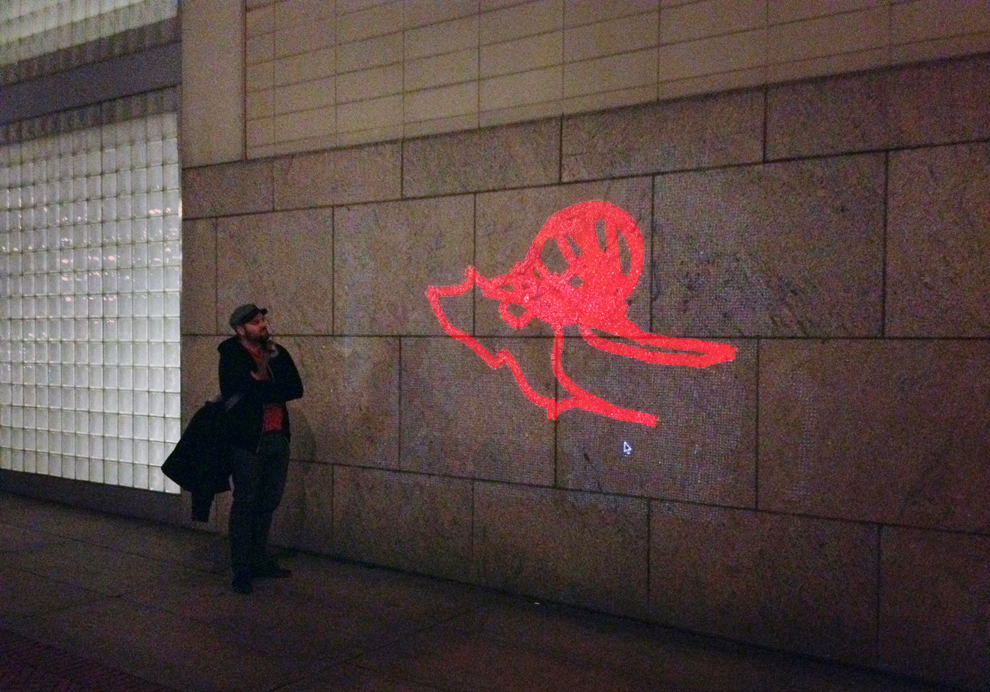
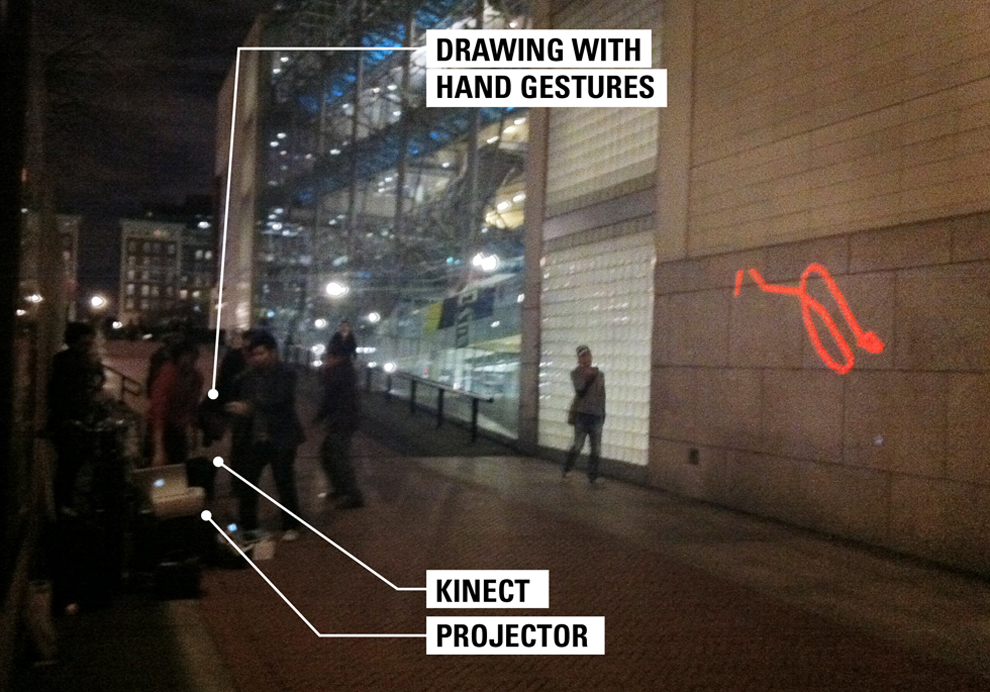
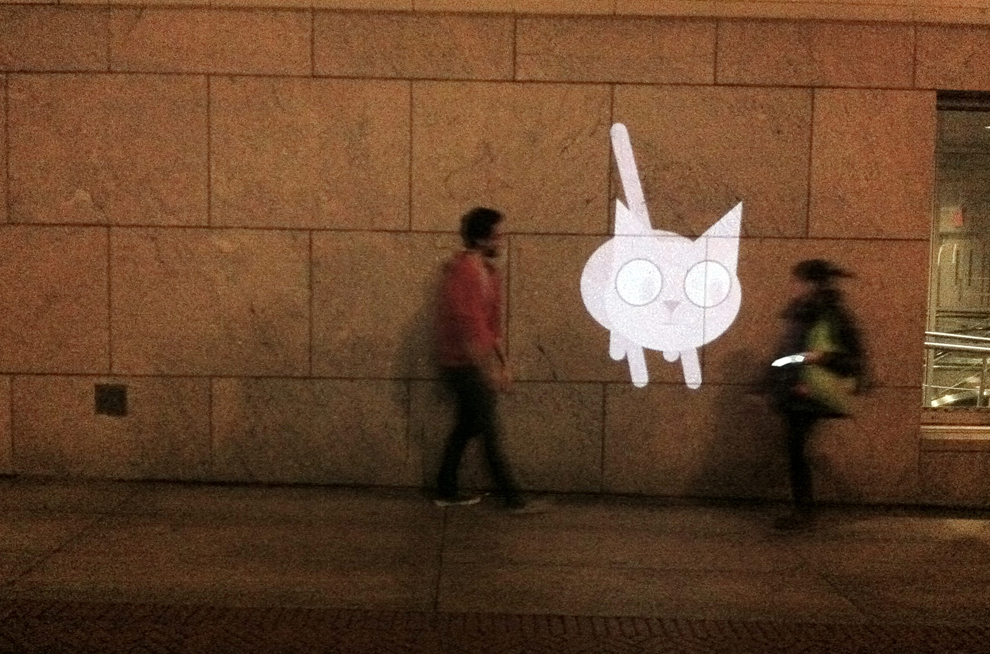
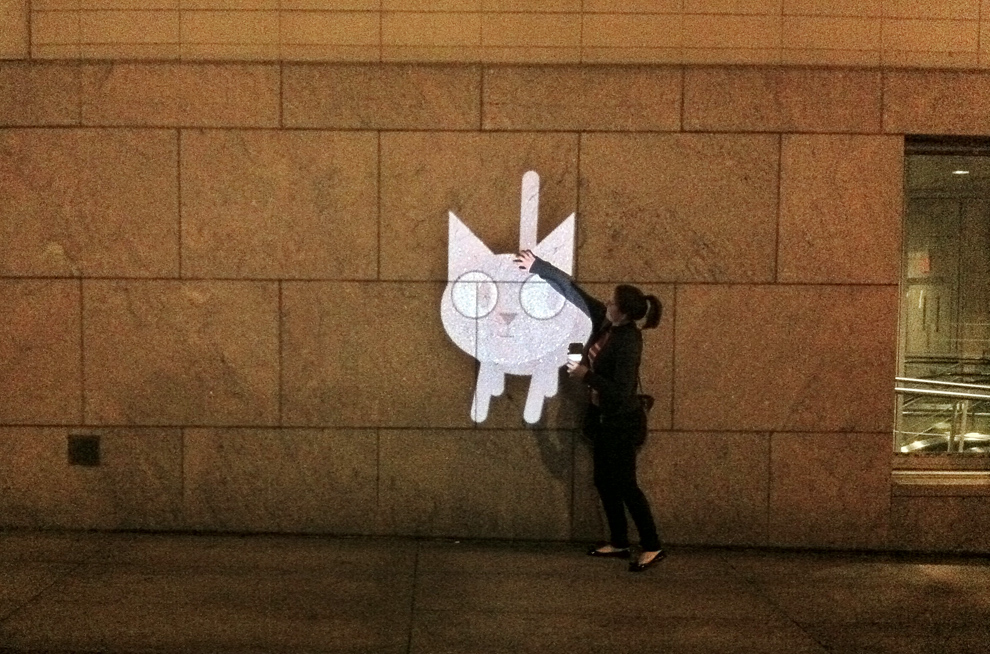
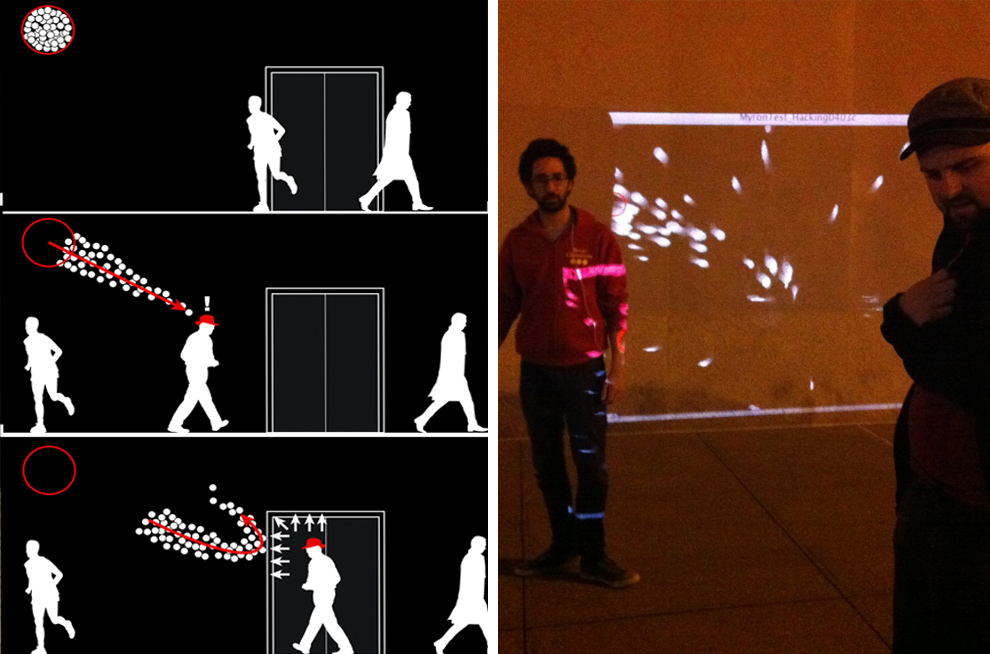
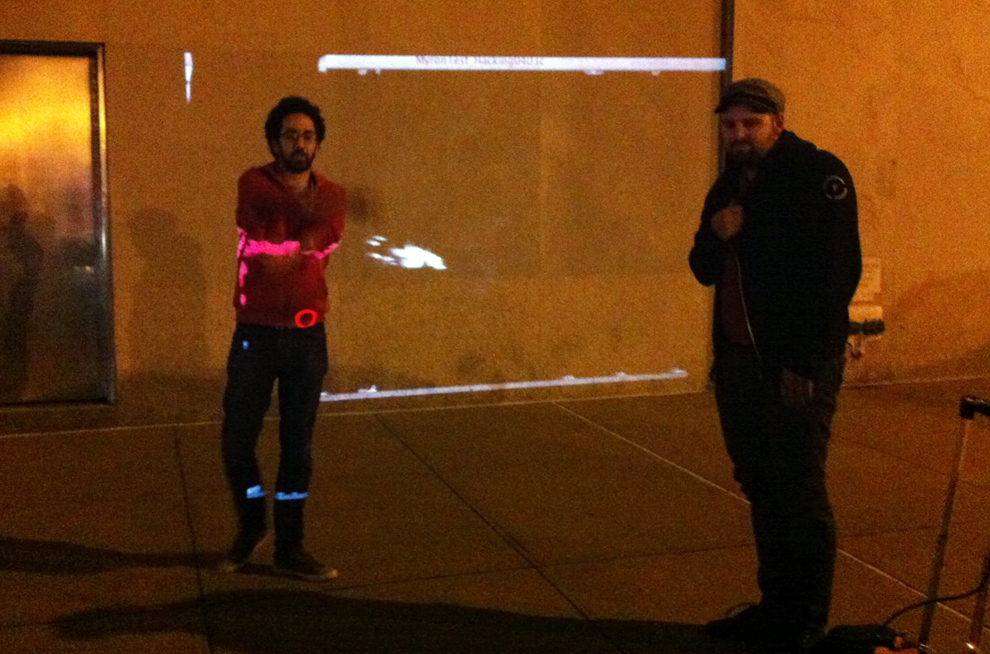
Using Graffiti Research Lab’s projection bombing tutorial at Instructables, the class set up a mobile power station using a 75V marine battery, and set off around the neighborhood near Columbia to experiment and throw up some interactive light projections.
The last year has seen some truly inspiring displays of the potential light can have as an interventionist tool, and the class studied this problem using three main strategies: 1) messaging independent of site, i.e. you only need a blank wall, 2) site dependent projections, like those following the curving, horizontal bands on the Guggenheim, and 3) flexible projections that can adapt and interact to a number of different sites, taking advantage of the unique characteristics of each. Care was given to create projects that both actively and passively engage those passing by the site. Each group’s projects was able to successfully confront one of these strategies.


Ni, Mengna, Darian, Juan, Ying


ChunChun, Yuri, Shuang, Rubing, Renwick
 

Tom, Aaron, Max, Kevin


Kaz, Greg, Ella


Assignment 04 (FINAL)
Building off the previous assignments, the final assignment sought to synthesize the work and concepts of the class into a larger installation that could still be completed in our very tight time frame, but started to explore the core ideas of the course, in effect becoming a proof-of-concept, working model. By attempting to capture a broader audience for architectural interventions, a number of questions presented themselves and the students were challenged to anticipate a range of possible eventualities – how will it be used? Can its use be changed? Is it durable? Is it waterproof? Can it safely stand up? Fabrication was considered less from a formal quality, and more from a use, durability, improvisation and public participation viewpoint.
Ultimately, A successful project would accomplish three things: 1) display ingenuity in fabrication technique and material 2) re-imagine or re-design a specific urban site/condition to take advantage of its hitherto hidden potential, and 3) have a performative component, in that the intervention has a temporal quality that while engaged promotes public interaction.


ChunChun, Yuri, Shuang, Rubing, Renwick
 

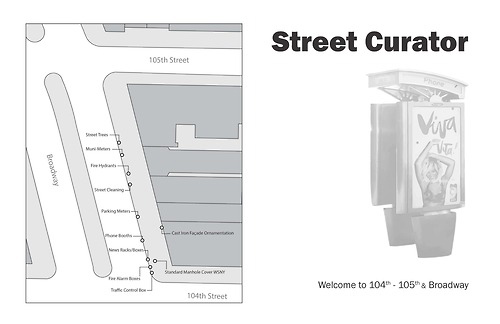
Kaz, Ella, Greg
 

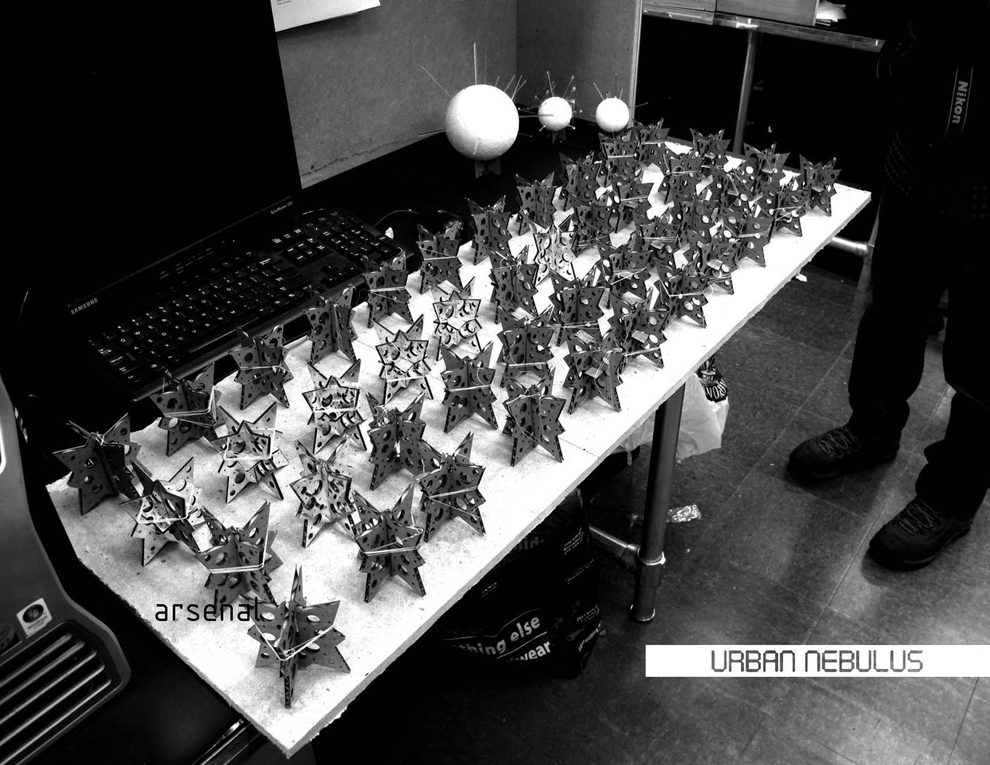
Tom, Aaron, Max, Kevin
 

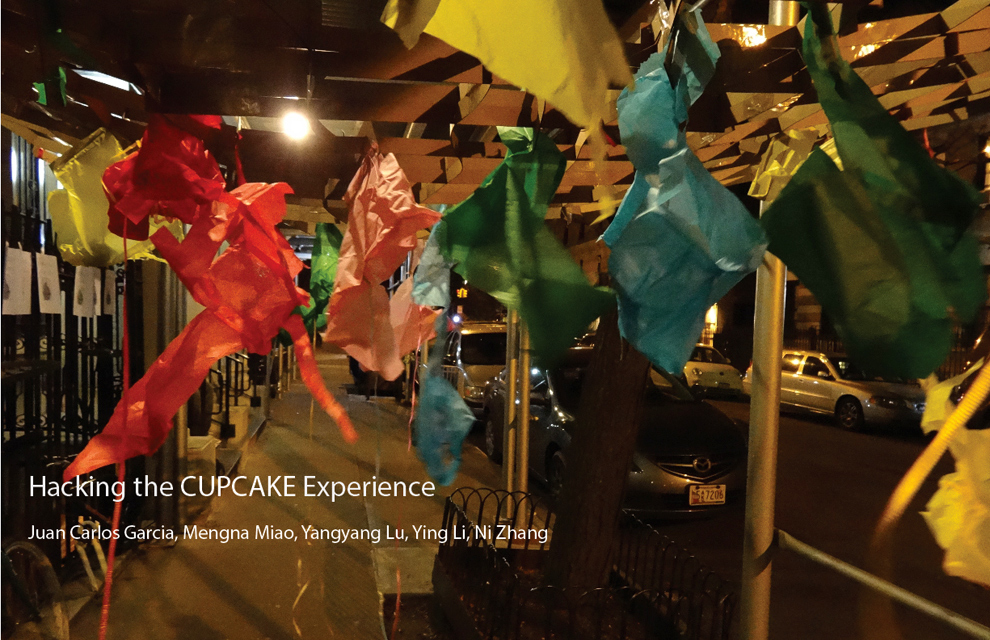
Ni, Mengna, Darian, Juan, Ying
2012111 Tags: DUB, fabrication, newyork, urban | No Comments »

DUB 004


See more here.

20120911 Tags: competitions, fabrication | No Comments »

Light Caryatids


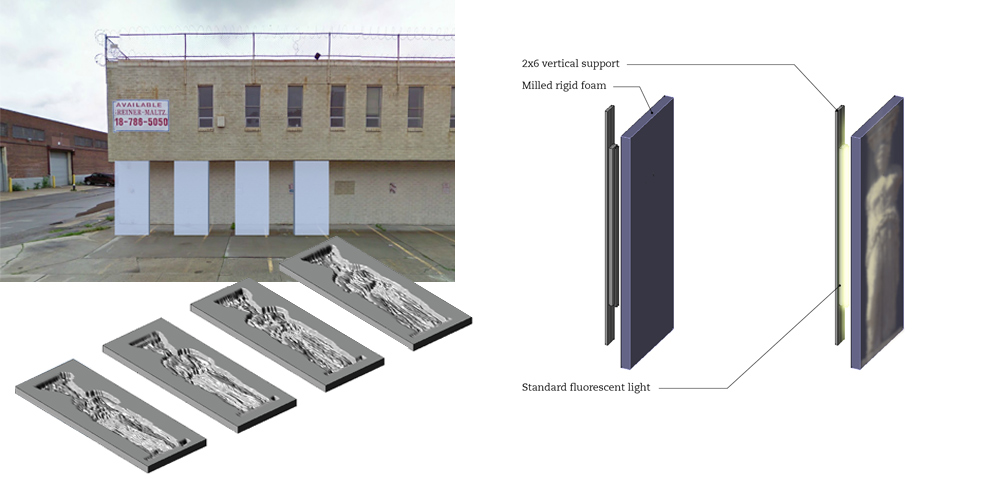
3D model of the Caryatids at the Temple of Erechtheion, constructed from flickr images and Autodesk’s 123D Catch. A little buggy, but close enough.


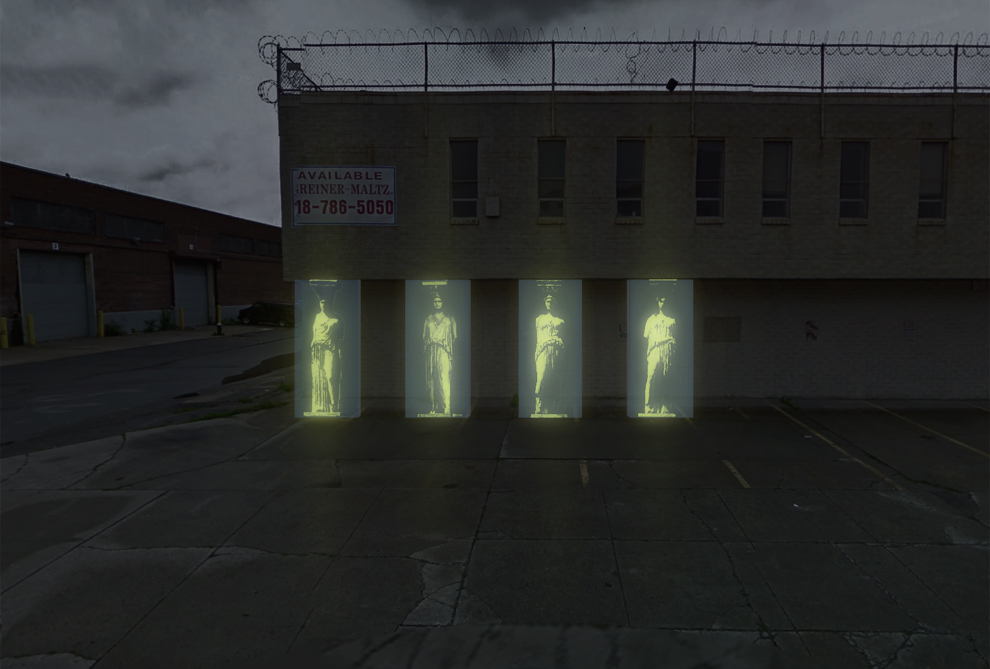
Sited at the corner of India and West St. in Greenpoint, the project situates itself as a gateway, a ceremonial entrance to Pier 11 and the East River Ferry. The four Caryatid models are milled out of standard Dow rigid foam insulation.


Activating the fluorescent lights allows wattage to bleed through where the foam material is thinnest, illuminating the ghostly forms of four of the maidens. The four foam panels match the rhythm of the warehouse windows above and reveal themselves as non-loadbearing elements, while still taking the expected position of structural elements – placed under the building’s overhang. Here light takes on volumetric properties, giving life to the caryatids and briefly rendering them in an effervescent glow that contrasts with their current Hellenistic confinement, hewn from Grecian stone and forever supporting the Porch’s entablature above.

 

Projected budget: $415

20120724 Tags: DUB, fabrication, newyork, urban | 1 Comment »

DUB 003


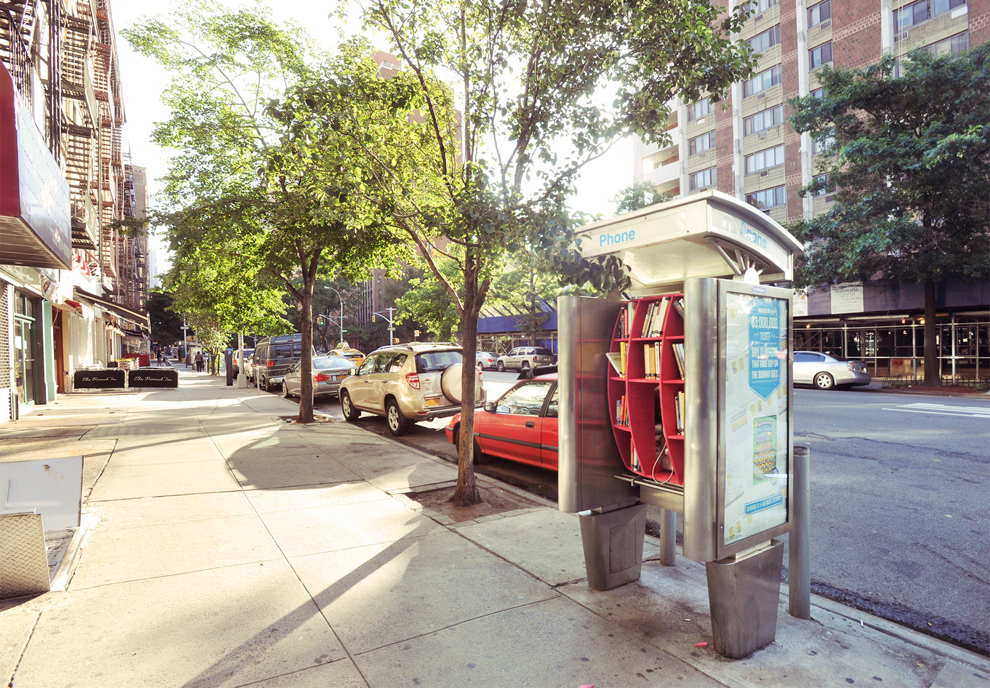
Located on the NW Corner of 87th and Amsterdam Ave Google Map link


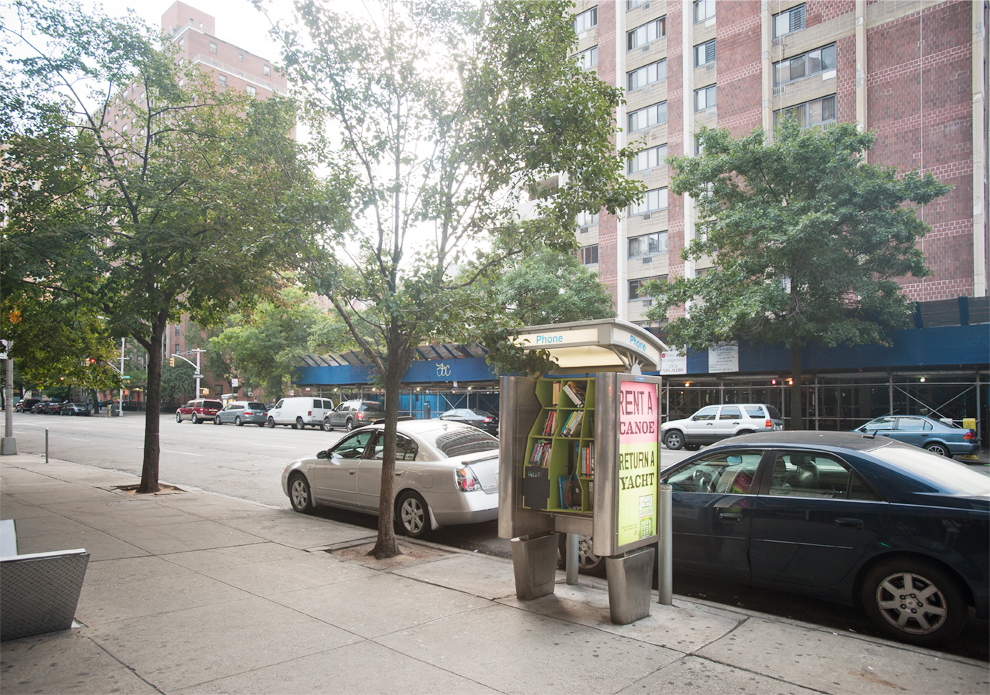
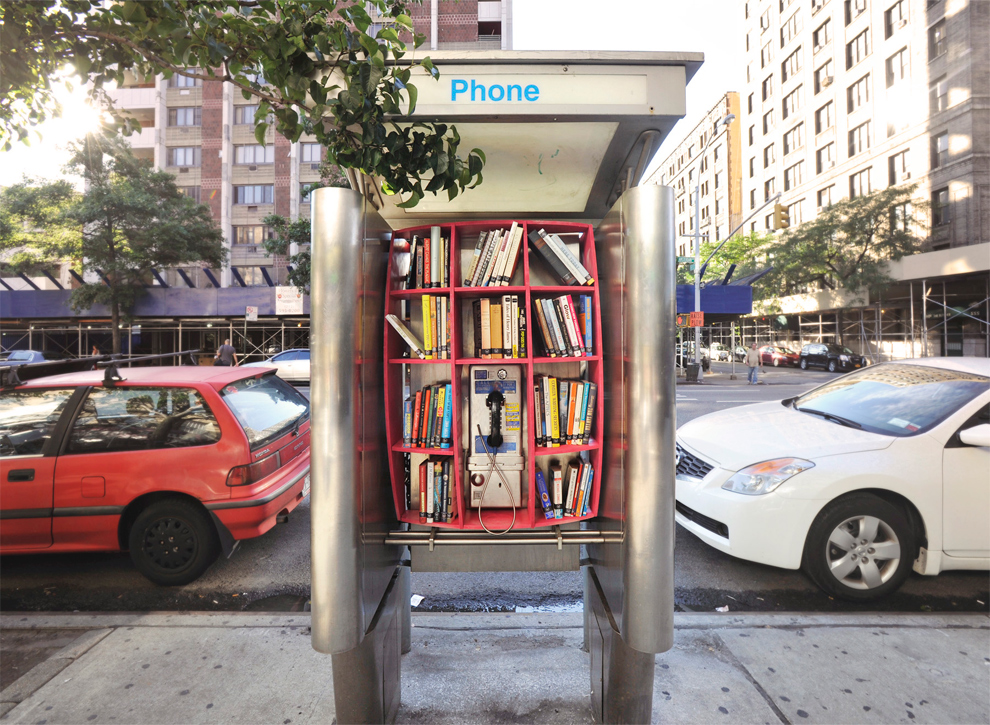
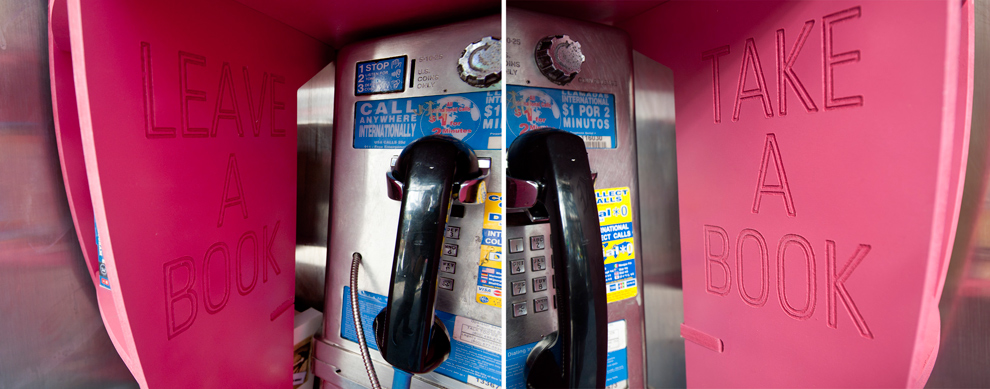
With some slight modifications from the previous iteration, a new version popped up on 87th over the weekend. The only significant changes were the addition of some slight suggestive text: “take a book,” “leave a book,” and removing additional shelf material to expose the sides of the actual phone mechanism. I had been tipped off by a telephone repair technician that the likely cause of the prior shelf disappearances could be attributed to the tech’s inability to access the locking mechanisms on either side of the phone, requiring him to remove and probably toss the shelves. Further observation will be required to see if this version can outlast the former’s 5 weeks of operation.


The intersection here is part of a pretty interesting area with a diverse mix of pedestrian traffic. 86th street acts as a strong east-west thoroughfare that effectively splits the northern portion of the neighborhood from the rest of the upper west side, and predictably there is also a visible, distinct change in scale when looking south versus north. The site is a mixing chamber of sorts with four quadrants that come together here: the chain retail stores to the south and west along Broadway; the Innovative Diploma Plus High School and P.S. 334 to the southeast; an eclectic mix of housing scales to the northeast and a growing dining and leisure strip taking off to the north. The goal here is to try play to all those users, and create a community focal point of nearby residents, commuters on their way to and from the train, diners, and spillover from the large retail stores.


It was great to spend a few hours observing how people interacted with the shelves. Even at 9am on a Sunday morning, it quickly became a point of attraction on the sidewalk, at one time hosting a queue of six random strangers waiting to get a closer look. The addition of subtle instructions seemed to help, as this time there were two separate occasion when people left holding a book. It still remains to be seen whether anyone begins leaving their own and adding to the collection, but it will be certainly be interesting to find out.


After further observation of this iteration, I’ll post the cut files if anyone wants to make their own. Let me know if interested.


Made possible with generous support from the following:
Materials and Fabrication:
SFDS Fabrication and Design Shop, Brooklyn, NY


Book Donation:
Mrs. and Mrs. Moon
Housingworks Bookstore
Kay Gardiner
Residents of 951 Amsterdam Ave.


Photography:
Jackie Caradonio


more »

20120516 Tags: architecture, fabrication, interaction, new york, research, teaching, urban | No Comments »

HACKING THE URBAN EXPERIENCE – STUDENT WORK

I had the pleasure to teach a course this semester with a great group of young architects and urban designers, titled “Hacking the Urban Experience” at Columbia. I couldn’t be more proud of all the hard work and the high level of engagement with which the students approached the class. All lectures and process work are archived on the class tumblr: http://hackingtheurbanexperience.tumblr.com. Classes typically took the form of lectures on precedents and concepts, a discussion of student work and tutorials on materials or software techniques. Topics during the semester included overviews of unsolicited architectural proposals, building-scale light projections, inflatable materials, urban siting opportunities and community/crowd sourced funding.


The course sought to assert the relevance of the fabrication skills at our disposal as potentialities for social and environmental relevance. Through the re-appropriation and re-imagining of existing urban conditions, the students designed and fabricated working prototypes that embraced the messy reality of our city and promoted community involvement. The students began by identifying a quality of the urban condition that included the latent capability for improvement and worked toward fabricating an adaptive, responsive and environmentally viable solution. Specific emphasis was placed on testing and exploring through hands on research the possibilities of detailing and fabricating connections using unorthodox materials. At the conclusion of the course the students produced a full scale urban intervention and observed and documented their relevant successes or failures.


Material workshops were held to encourage the students to explore constructions from inflatables to parametric agglomerations using quotidian materials. Ultimately, the goal was for the students to come out of the course with a healthy respect for two core concepts: firstly, an increased skill in the use and applicability of the fabrication skills we have developed for solving design issues using unorthodox materials in unconventional settings; and secondly, that there is an opportunity for architects to regain lost relevance by inserting themselves through unsolicited proposals into the public consciousness as steward’s of urban well being.


Students:
Jared Dignanci, Farzin Lofti-Jam, Ehsaan Mesghali, Katerina Petrou, Paul Tran, Wassim Shaaban, Maryam Zamani


Assignment 01
Part of the Atlas of Urban Connections project (TBD), the first assignment involved designing and fabricating a joint to connect something, anything, to a vertical street extrusion (such as a tree, street sign, light pole, etc…). The members of the Public Works Department in NYC are masters of improvisation, you can see it walking down any street here, and there is a lot to learn from their successful and not-so successful techniques for attaching to existing sidewalk infrastructure. This assignment was prepared to introduce the student to the capacity to breaching the gap between the pedestrian and existing streetscape objects, with the goal to test flexibility, safety, durability, adaptablility while exploring different possibilities for potential synthesis with existing urban forms.
Wassim, Katerina, Paul


Jared, Farzin, Ehsaan, Maryam


Assignment 02
Using Graffiti Research Lab’s projection bombing tutorial at Instructables, the class set up a mobile power station using a 75V marine battery, and set off around the neighborhood near Columbia to experiment and throw up some interactive light projections.
The last year has seen some truly inspiring displays of the potential light can have as an interventionist tool, and the class studied this problem using three main strategies: 1) messaging independent of site, i.e. you only need a blank wall, 2) site dependent projections, like those following the curving, horizontal bands on the Guggenheim, and 3) flexible projections that can adapt and interact to a number of different sites, taking advantage of the unique characteristics of each. Care was given to create projects that both actively and passively engage those passing by the site.
Wassim, Katerina, Paul


Ehsaan, Maryam


Jared, Farzin


Assignment 03 (FINAL)
Building off the first two assignments, the final assignment sought to synthesize the work and concepts of the class into a larger installation that could still be completed in our very tight time frame, but started to explore the core ideas of the course, in effect becoming a proof-of-concept, working model. By attempting to capture a broader audience for architectural interventions, a number of questions presented themselves and the students were challenged to anticipate a range of possible eventualities – how will it be used? Can its use be changed? Is it durable? Is it waterproof? Can it safely stand up? Fabrication was considered less from a formal quality, and more from a use, durability, improvisation and public participation viewpoint.
Ultimately, A successful project would accomplish three things: 1) display ingenuity in fabrication technique and material 2) re-imagine or re-design a specific urban site/condition to take advantage of its hitherto hidden potential, and 3) have a performative component, in that the intervention has a temporal quality that while engaged promotes public interaction.
Wassim, Katerina, Paul


Maryam, Jared, Farzin, Ehsaan

« Older Entries
Newer Entries »

COPYRIGHT © 2011 \ JOHN LOCKE \ ALL RIGHTS RESERVED (RSS)

TOP OF PAGE

last update: 201102:1627