parametric image sampling
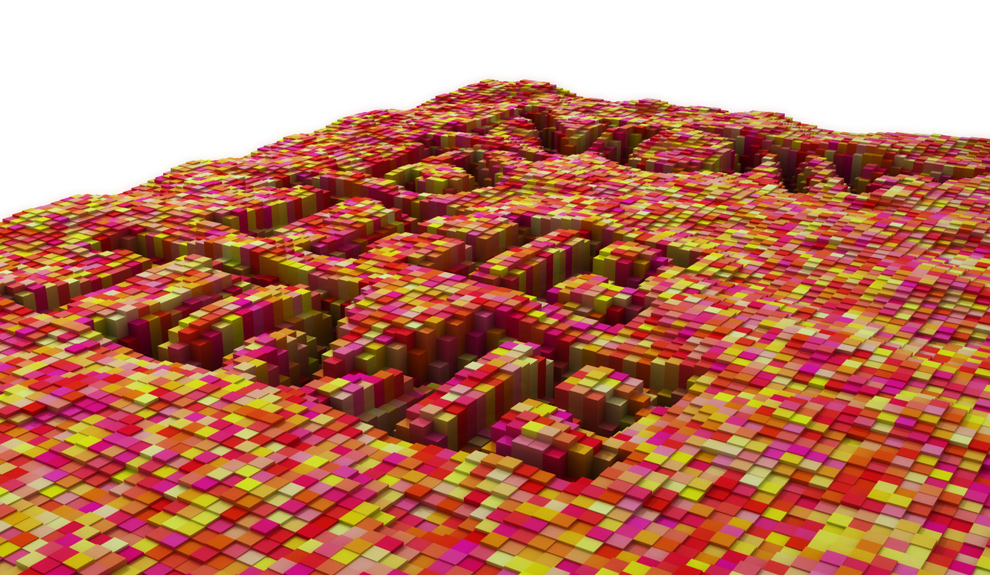
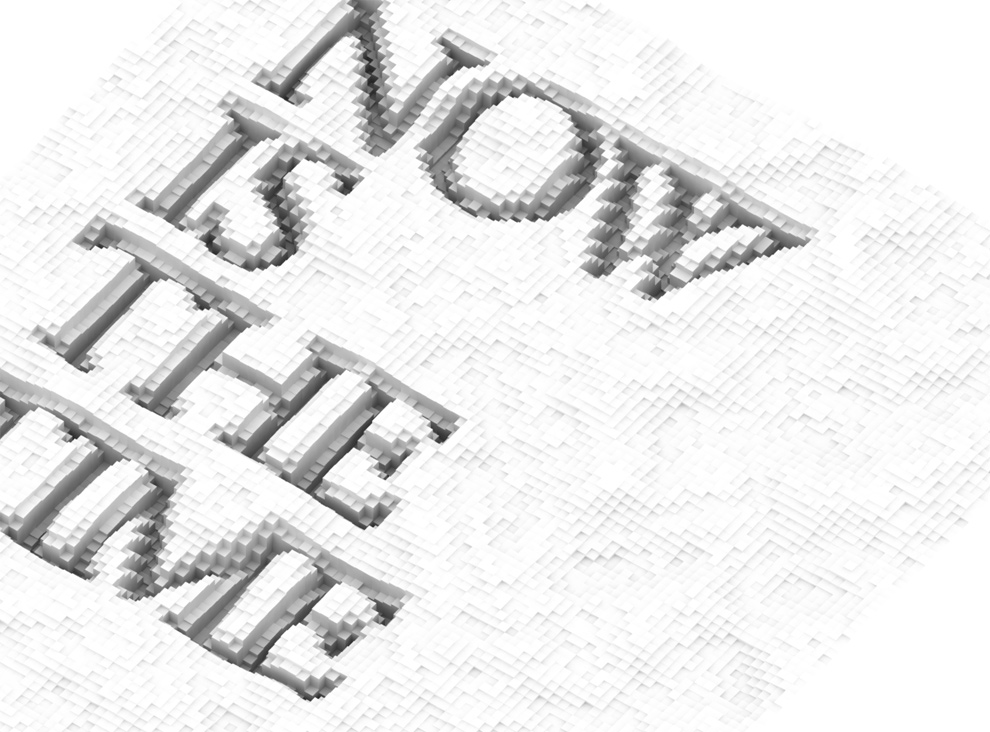
A simple test based on Sanghoon Yoon’s Grasshopper definition for using the new image sampler node, I swapped out a text image for an image image, because, well I just like fonts and 3D I guess. One of the things that’s cool is that the image is “live,” so as you change the text, the grasshopper definition updates. And of course you can also parametrically control the size of the pixels, the multiplication of the heightfield and the overall size of the surface. To get a random color on each polysurface, I modified Dale Fugier’s script located on the rhinoscript wiki page to include a function to assign the object color to the material color so it will render out in vray. See grasshopper definition and code below:
[[Edit: Added Link to download grasshopper definition and source image file. Click Here (zip file).]]
more »
interactive elevator installation

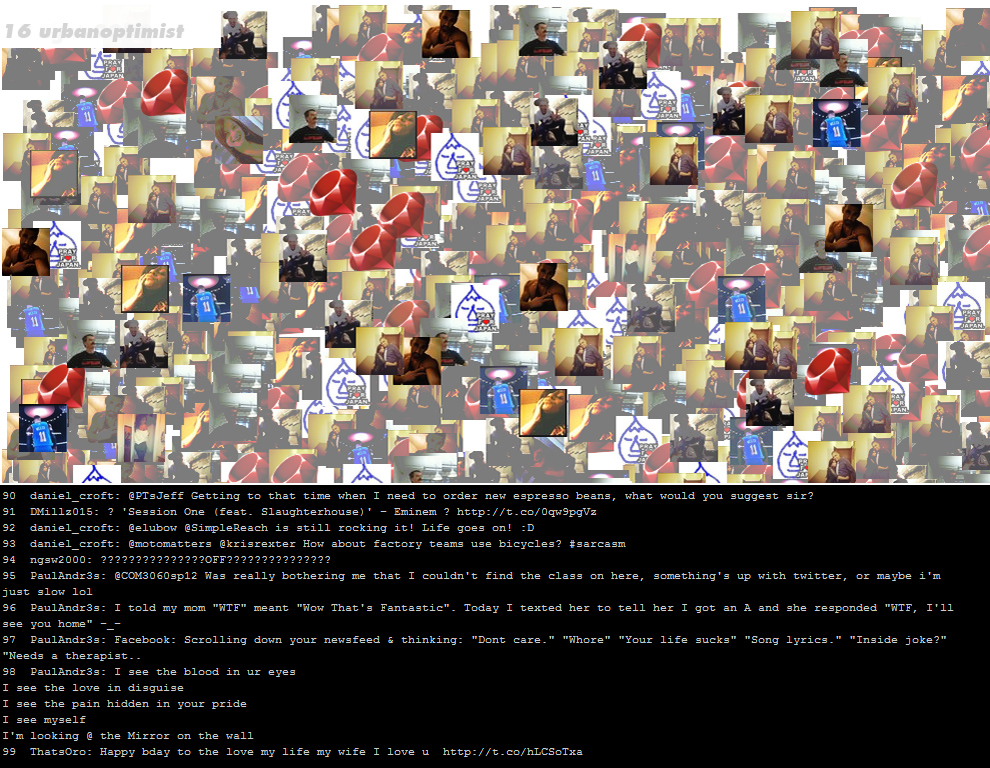
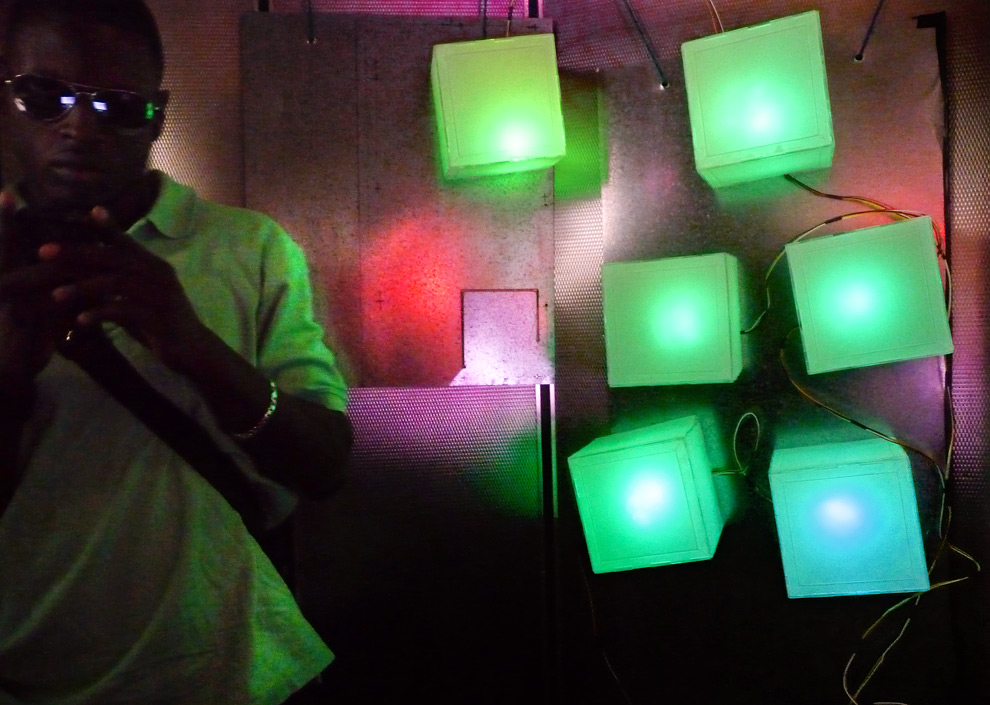
For our living architecture course, we created an interactive light installation in the elevator of Avery Hall, controllable by anyone with a cell phone and a twitter account. The simplified process includes texting an emotion to twitter from any cellular phone using the #livarch hashtag. That tweet is then picked up by a realtime search, fed through our twitterfeed rss, then added to our own twitter account. For a more detailed explanation, see this previous post on getting multiple twitter users onto one twitter feed. That emotion is then directed to our pachube feed and sent through processing to an arduino microcontroller that controls the color and pulsing of the individual leds. The installation non-invasively attaches to the surface of the elevator via magnets. Allowing it to be placed on any metal surface, such as a building exterior, furniture, or a vehicle.
The lights within the elevator respond to the mood of the user. For instance, if a student texted “happy #livarch” the space within the elevator would begin to slowly pulse with a greenish/blue hue. However, if another student sent “angry #livarch” the first light will quickly flash a bright red. There are twelve lights total and show the collective mood of the twelve most recent users.
In this way, the elevator becomes a living representation of the collective mood of the building, but it is also hoped that a feedback loop can be created, a loop that actually influences the mood of those that ride the elevator. The emotion felt in the lobby will be altered by the time you reach the sixth floor. And that new emotion becomes what gets texted back to the elevator.
Lastly, future installations will be physically located away from the target user. For instance, Avery’s mood will be projected to the elevator in Uris Hall and vice versa. In this manner, we can both create a new form of pen-pal with distant locations, but also hope that our mood, whether angry, sad, happy or nervous, will both manifest itself in a new form of architecture, but also have an effect on the greater world around us.
The project team also included Talya Jacobs and Guanghong Ou.
See more for video and code:
the remix

Mark Collins & Toru Hasegawa, the masterminds behind Proxyarch, and instructors of the course Search: Advanced Algorithmic Design at Columbia, ‘remixed’ the audio waveform code into something much more smooth and elegant. They’re awesome, and there were a lot of super interesting projects from the course which can all be viewed in the video here.
one more week

…until the final final review. That circadian rhythm won’t know what hit it.
visualizing sound in processing

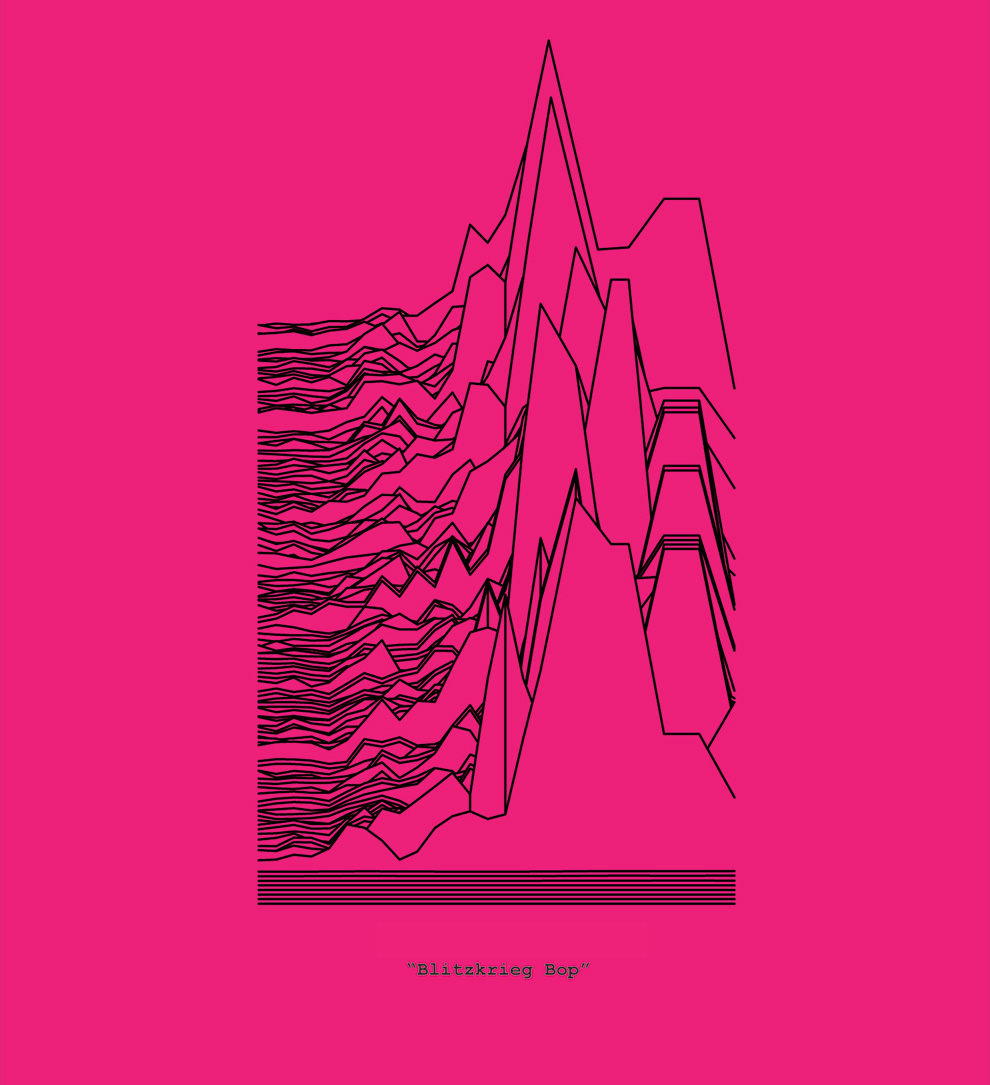
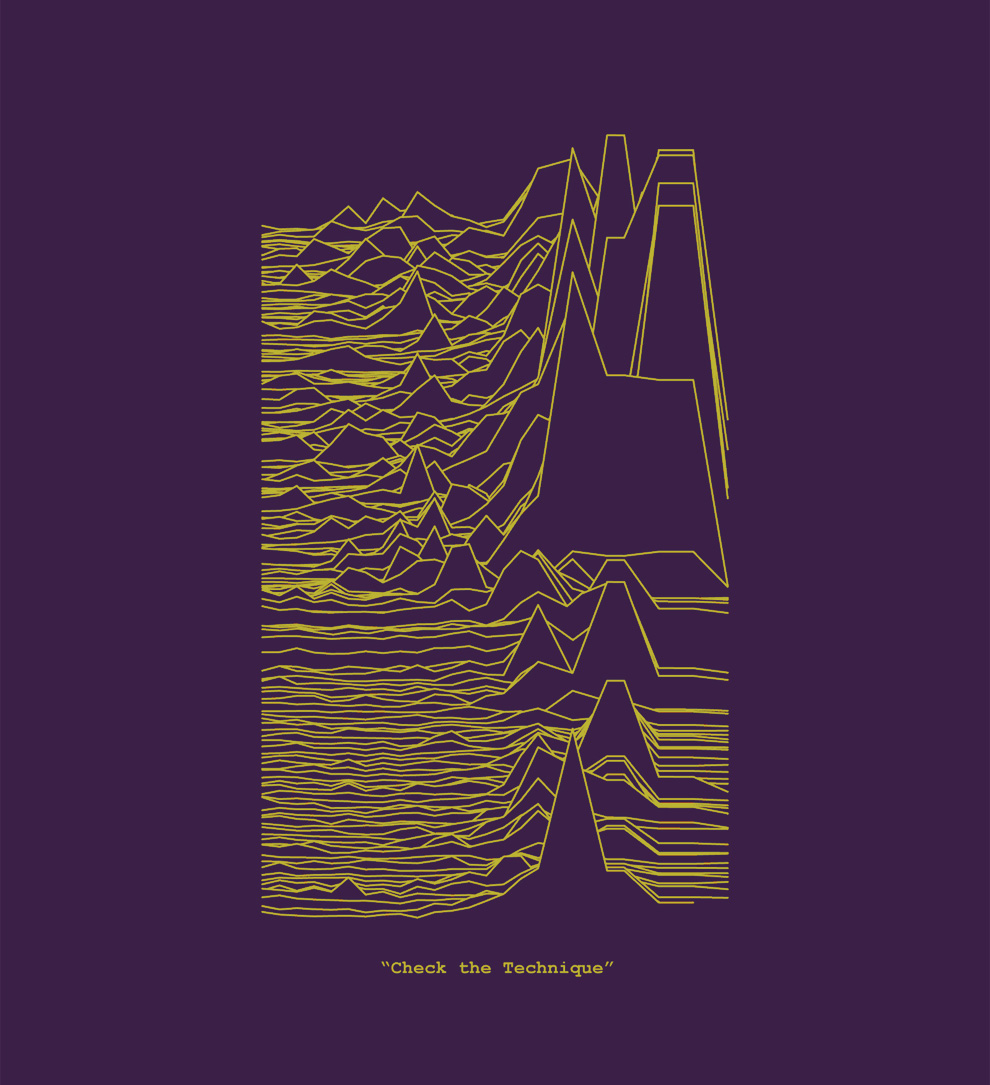
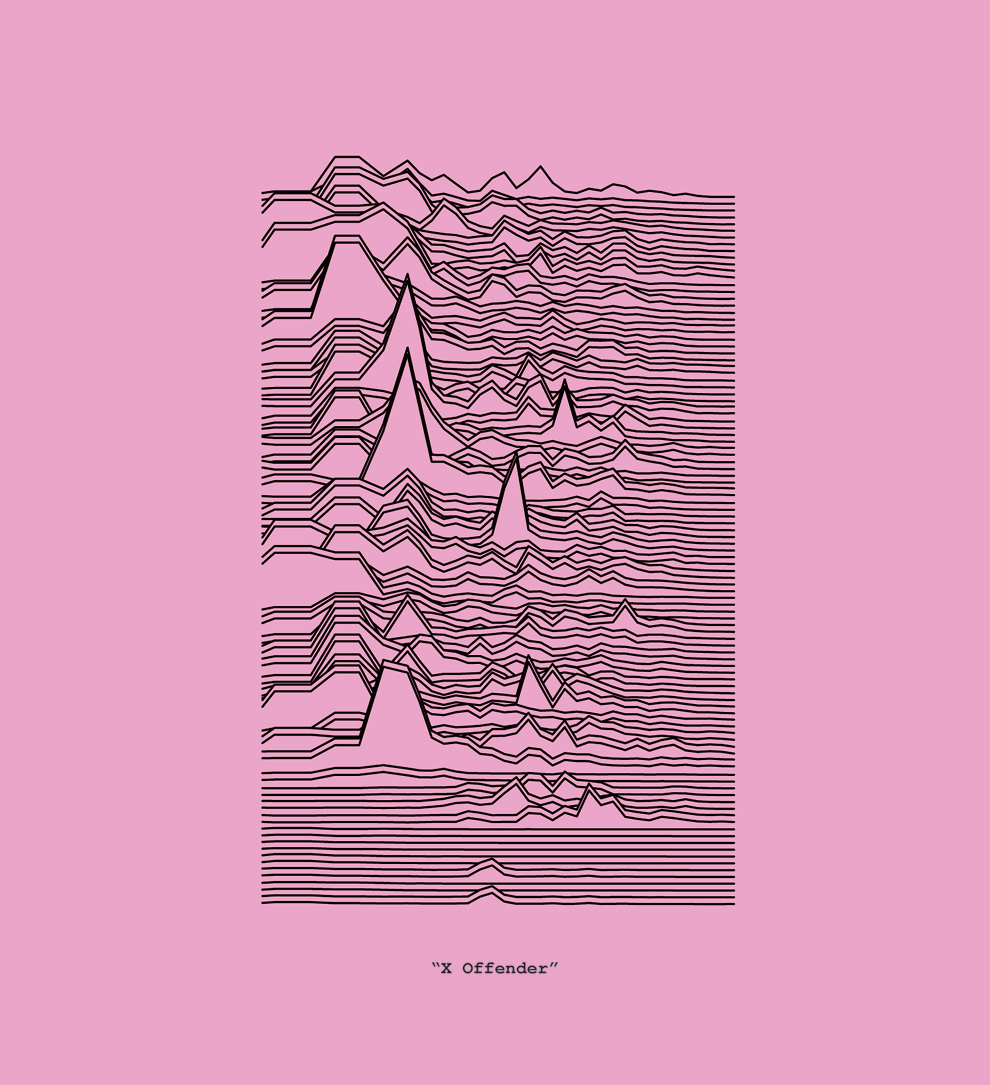
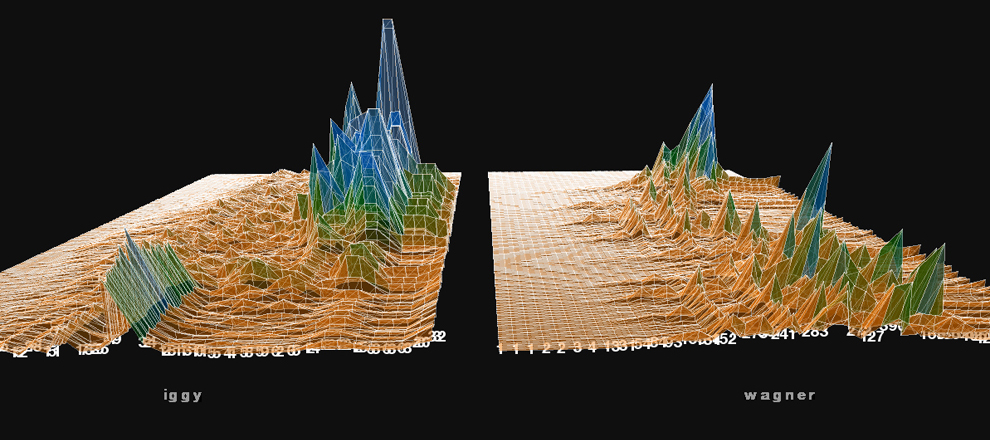
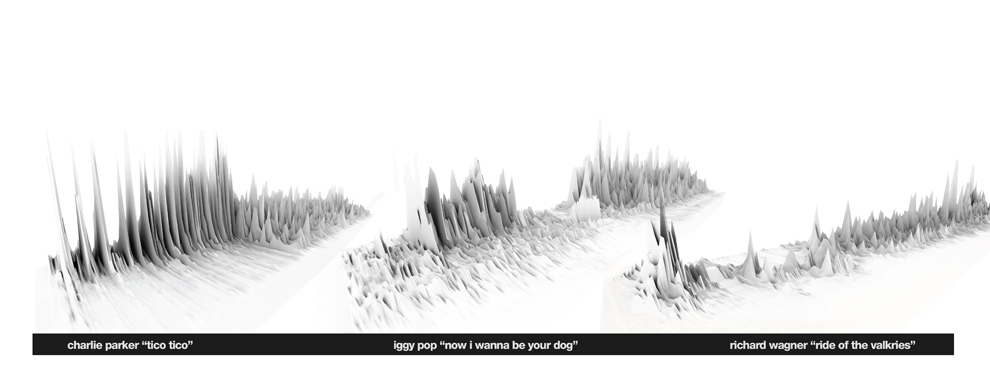
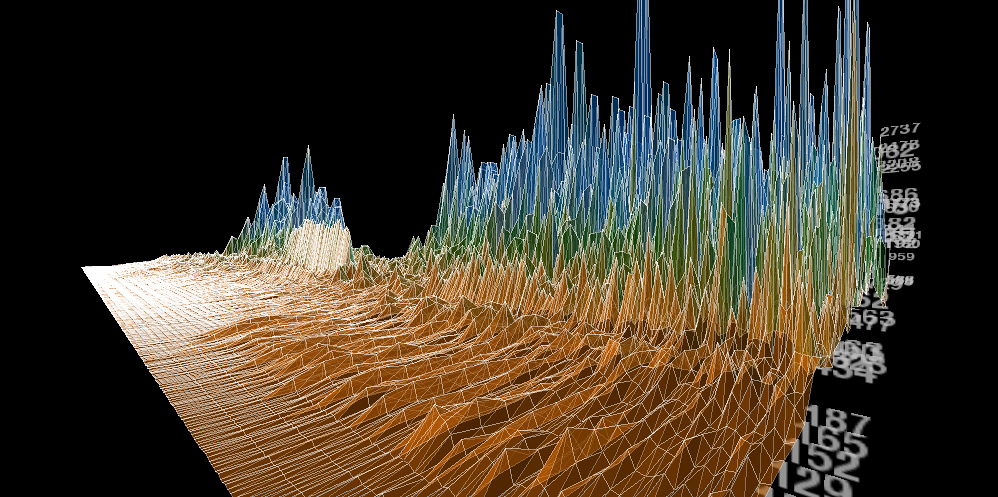
This was the final applet in motion. Using the minim library for processing, each waveform is generated in realtime as the two sounds play over eachother creating a pretty chaotic sound, but there are some instances of overlapping patterns where the mashup works pretty well. In the third version of the code, the boolean of the two waveforms is generated, producing a new way to visualize the waveforms. View the youtube video here, but I really need to figure out a way to add sound to the video, silence doesn’t do it justice. Charlie Parker, Iggy Pop and Richard Wagner comparison + code:
iggy wave

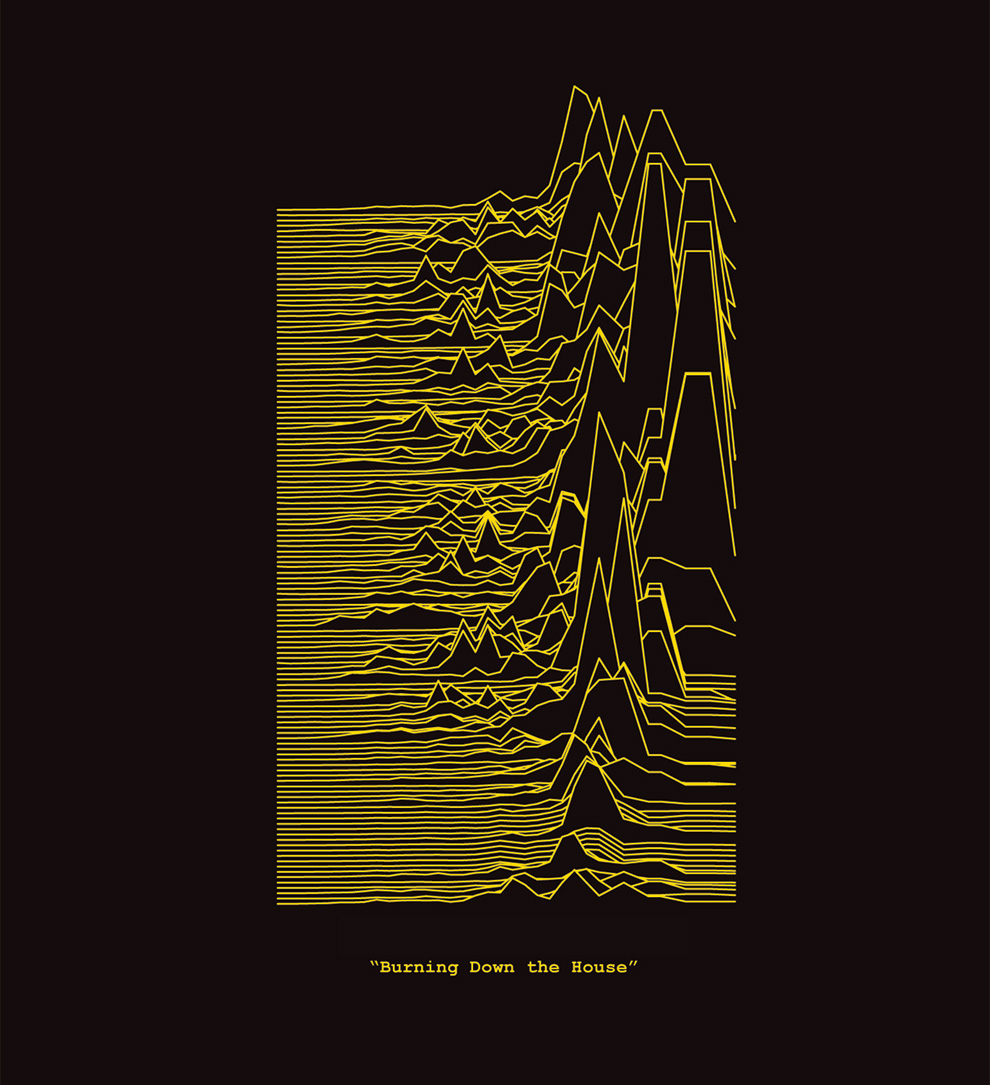
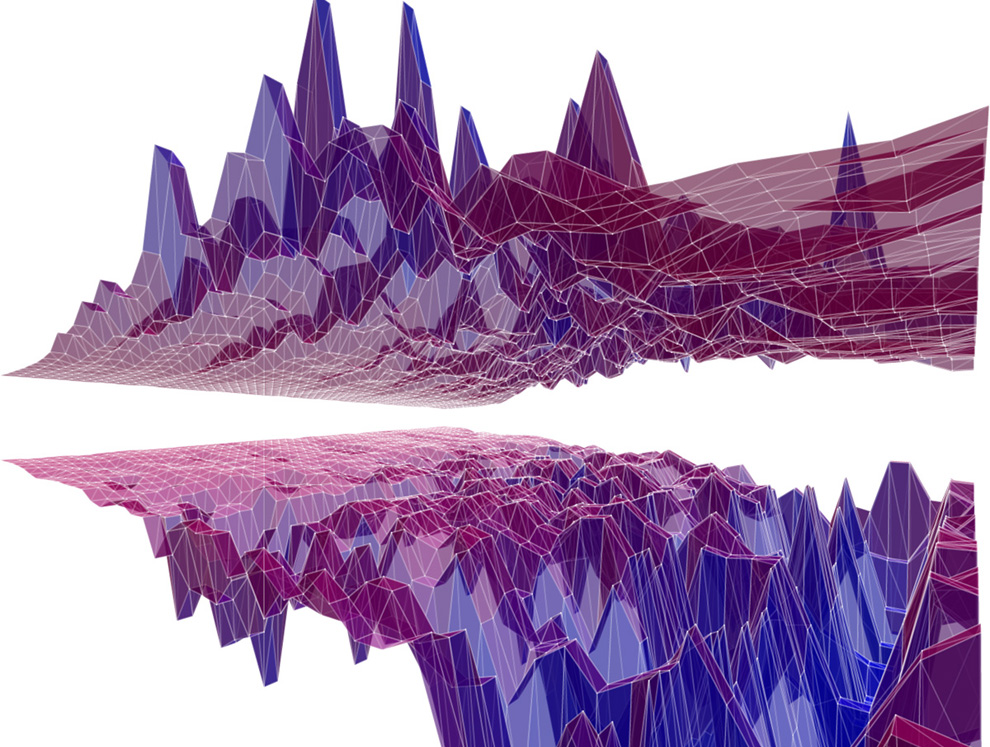
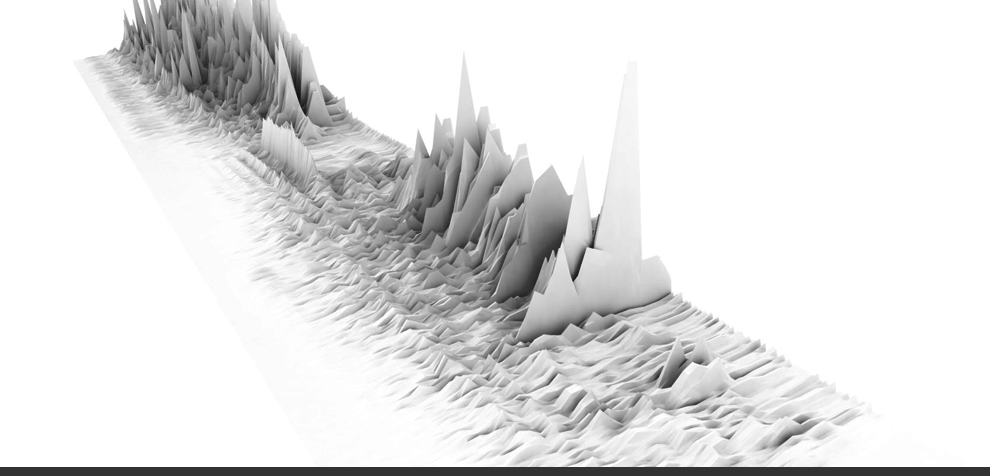
“Now I Wanna Be Your Dog” as a 3d landscape. I was using the minim library in processing to visualize the sound level data stream, then exporting out to rhino. Many thanks to the proxyarch team for help with the code.
EDIT:
Added link to processing app, see it in action (loud rock music will begin playing…so turn it up!)
http://gracefulspoon.com/processingapps/singlewave/index.html
airport studio
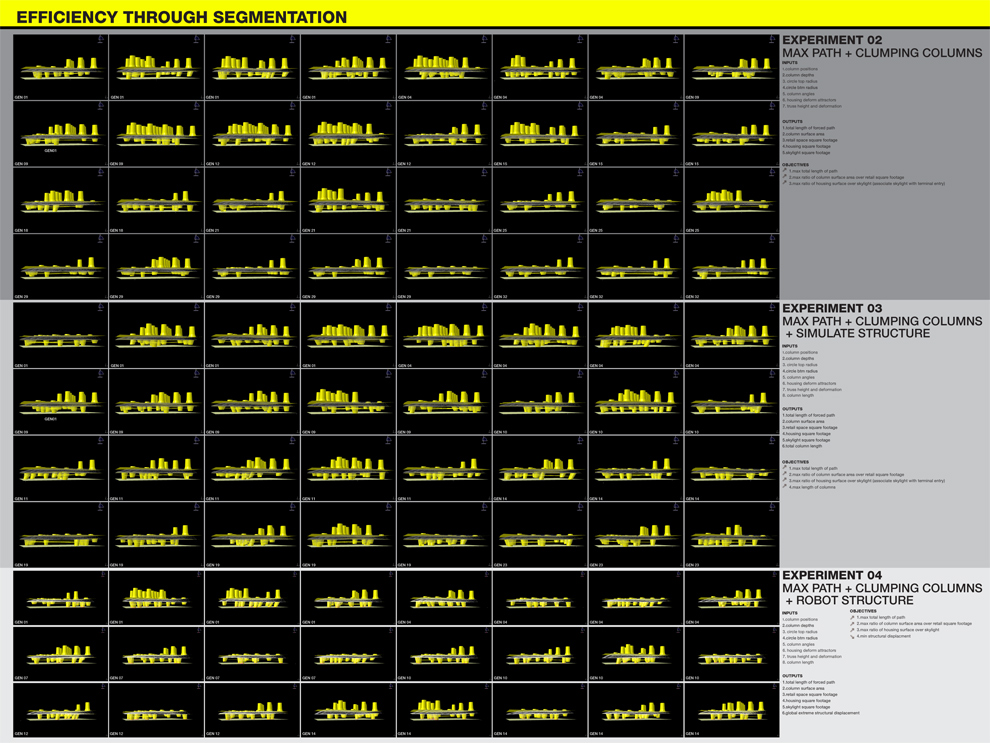
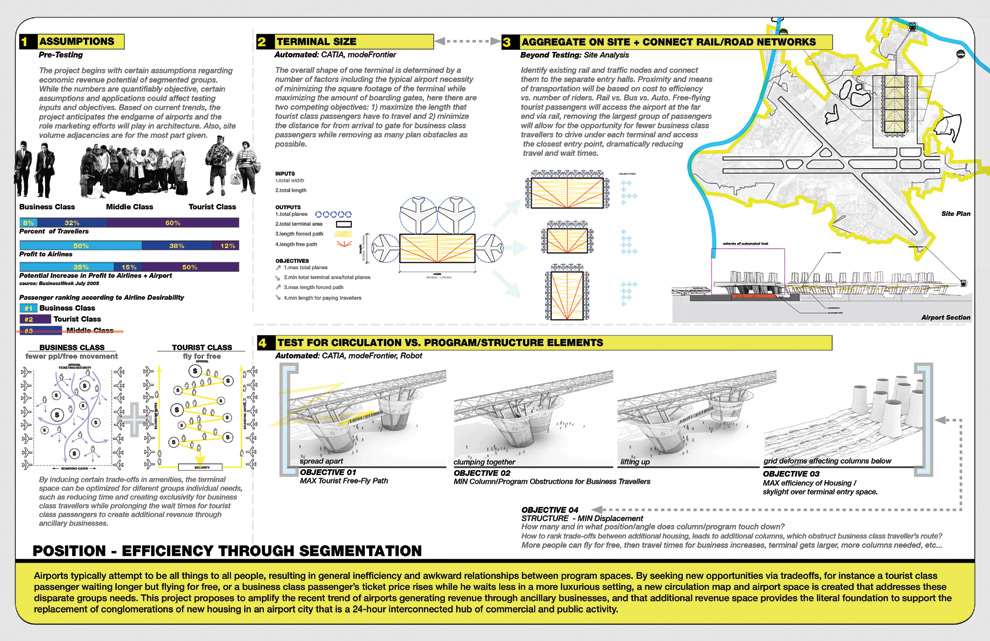
Quick Project Desciption: Airports typically attempt to be all things to all people, resulting in general inefficiency and awkward relationships between program spaces. By seeking new opportunities via trade-offs, for instance a tourist class passenger waiting longer but flying for free, or a business class passenger’s ticket price rises while he waits less in a more luxurious setting, a new circulation map and airport space is created that addresses these disparate groups needs. Optimal relationships between airlines, airport, and users are handled through parametric models and genetic algorithms.
What is the metric for a good design? Or rather, now that parametric modelling allows us to easily create thousands of variations of a given design, how do we chose the “correct” one?
First, Creating a parametric model in catia, whose inputs are optimized through the engineering program modeFrontier with additional structural finite element analysis coming from autodesk’s newly aquired robot. The challenge became how to convert your design position, parti, whatever, into a quantifiable metric that the software can optimize for. For instance, to optimize for material efficiency, you could let the software optimize a shape for maximize volume with minimal surface area. After 3000 designs you’d have a sphere, but things can get very complex fast when you begin optimizing for competing objectives. See our complete studio blog here. Project description…
I was drawn to the metrics of passenger economy and profit. Airports typically attempt to be all things to all people, resulting in general inefficiency and awkward relationships between program spaces and passengers, especially business and tourist class. By seeking new opportunities via tradeoffs, for instance a tourist class passenger waiting longer but flying for free, or a business class passenger’s ticket price rises while creating multiple, separate dedicated entry points that allow shorter waits, a new optimized circulation map presents itself.
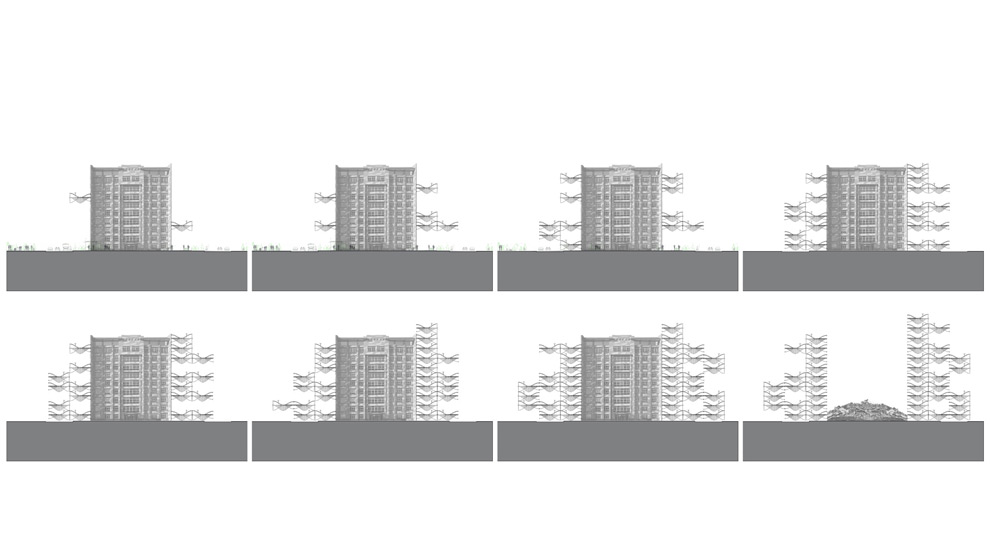
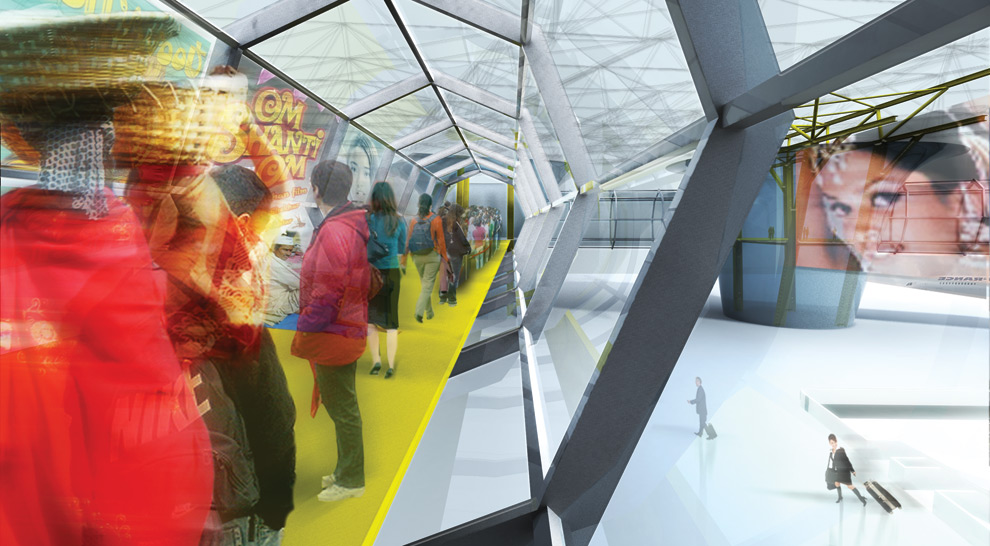
Each hanging element is a program + structural column connected by a circulation tube. Within the circulation tube tourist class passengers have the opportunity to fly for free, passing through each commercial program space. One objective is to maximize the length of the tube – thereby allowing more passengers to fly for free maximizing the airports ancillary profits. Another objective is to create an unobstructed space for business class passengers requiring few of the program spaces to touch the ground but rather hang, allowing business class passengers to freely pass through below. The more columns that touch the ground, the more structurally stabe the ceiling space frame becomes, allowing more housing towers above. The program mediates between these competing objectives finding high-performing, unexpected solutions and it becomes the role of the user to rank and chose designs based on desired criteria. Most housing = most columns = fewer business class travellers, etc…
processing growth
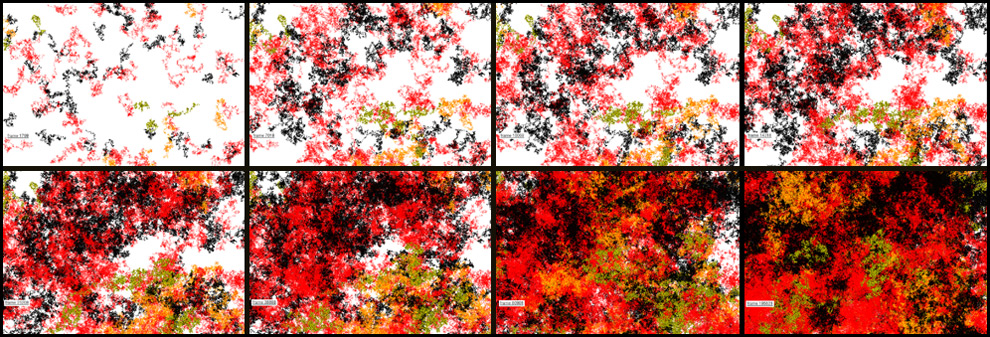
Looking at simple growth with classes and arrays. Next up, programming more behavior into the system.
Processing to Rhino
I was playing around with different processing sketches and different export procedures to get cool images out of rhino. The dxf exporter works great for lines and solids, then once in rhino run a simple grasshopper command to pipe all the curves.