airport studio
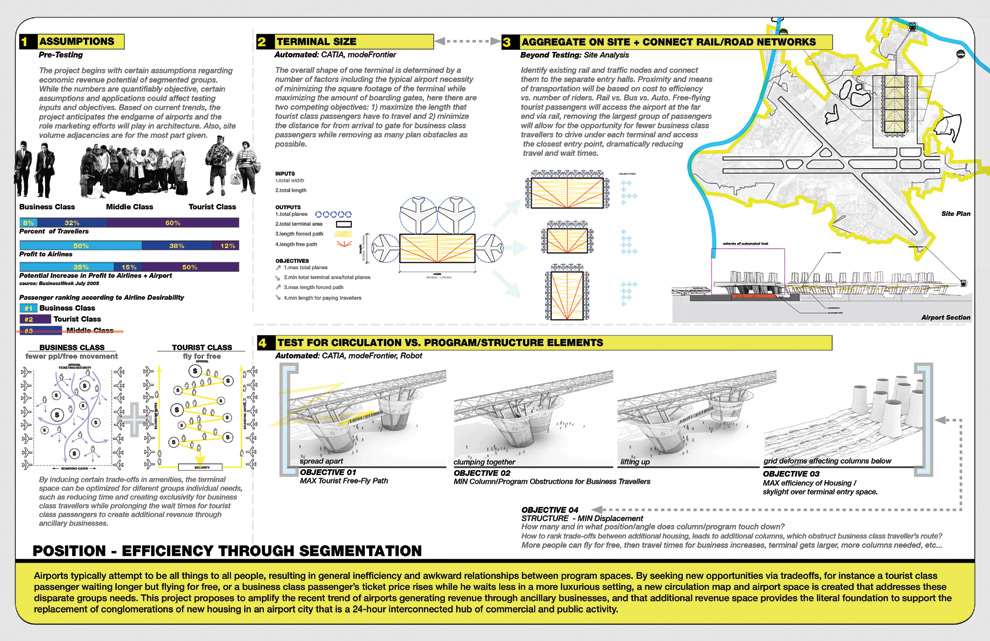
Quick Project Desciption: Airports typically attempt to be all things to all people, resulting in general inefficiency and awkward relationships between program spaces. By seeking new opportunities via trade-offs, for instance a tourist class passenger waiting longer but flying for free, or a business class passenger’s ticket price rises while he waits less in a more luxurious setting, a new circulation map and airport space is created that addresses these disparate groups needs. Optimal relationships between airlines, airport, and users are handled through parametric models and genetic algorithms.
What is the metric for a good design? Or rather, now that parametric modelling allows us to easily create thousands of variations of a given design, how do we chose the “correct” one?
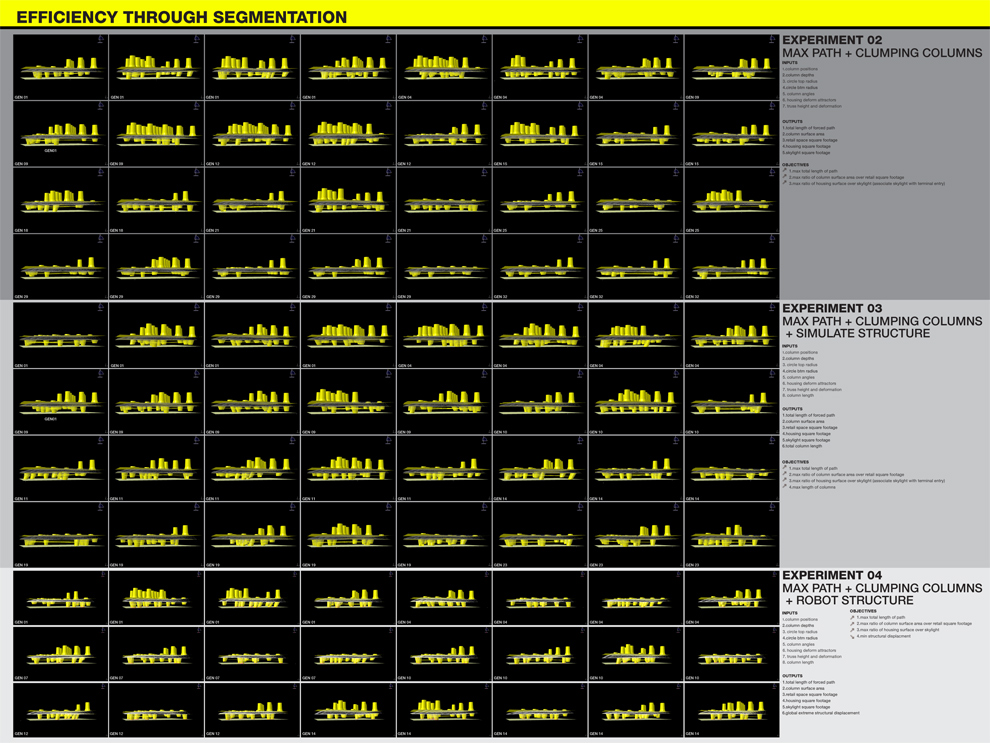
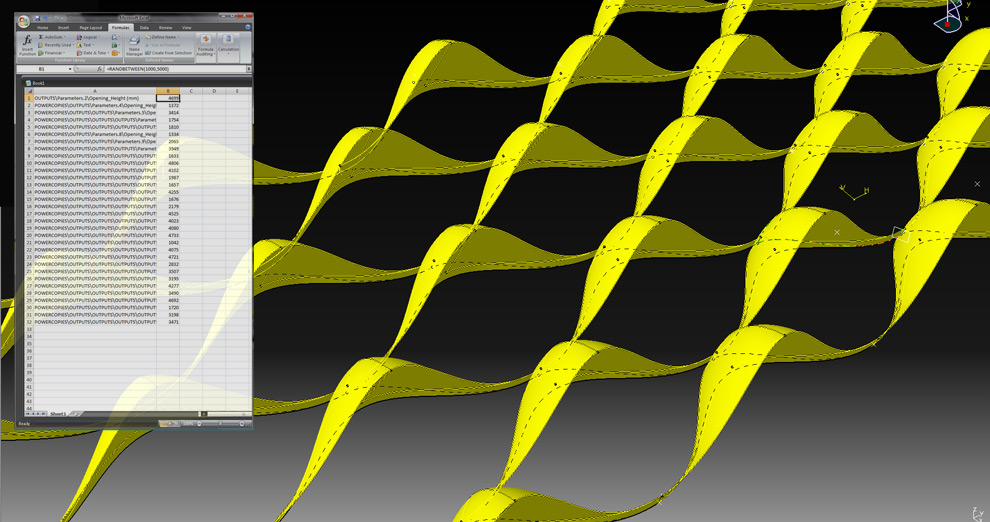
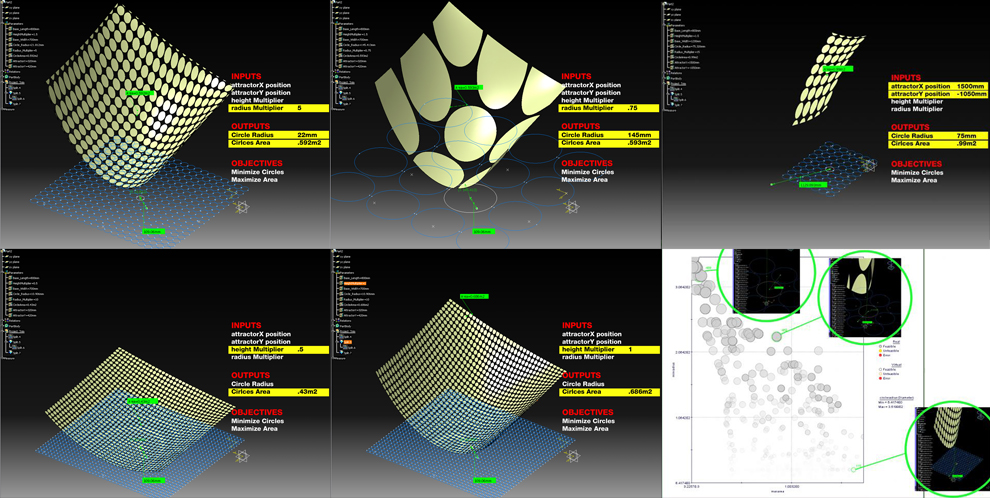
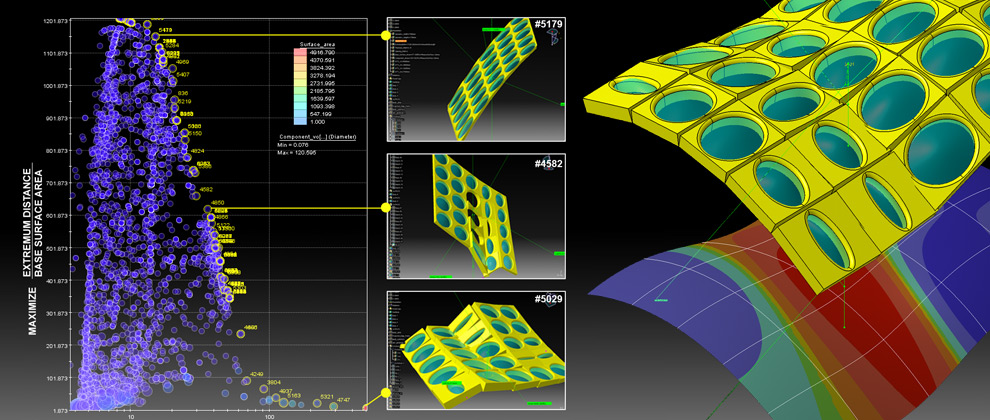
First, Creating a parametric model in catia, whose inputs are optimized through the engineering program modeFrontier with additional structural finite element analysis coming from autodesk’s newly aquired robot. The challenge became how to convert your design position, parti, whatever, into a quantifiable metric that the software can optimize for. For instance, to optimize for material efficiency, you could let the software optimize a shape for maximize volume with minimal surface area. After 3000 designs you’d have a sphere, but things can get very complex fast when you begin optimizing for competing objectives. See our complete studio blog here. Project description…
I was drawn to the metrics of passenger economy and profit. Airports typically attempt to be all things to all people, resulting in general inefficiency and awkward relationships between program spaces and passengers, especially business and tourist class. By seeking new opportunities via tradeoffs, for instance a tourist class passenger waiting longer but flying for free, or a business class passenger’s ticket price rises while creating multiple, separate dedicated entry points that allow shorter waits, a new optimized circulation map presents itself.
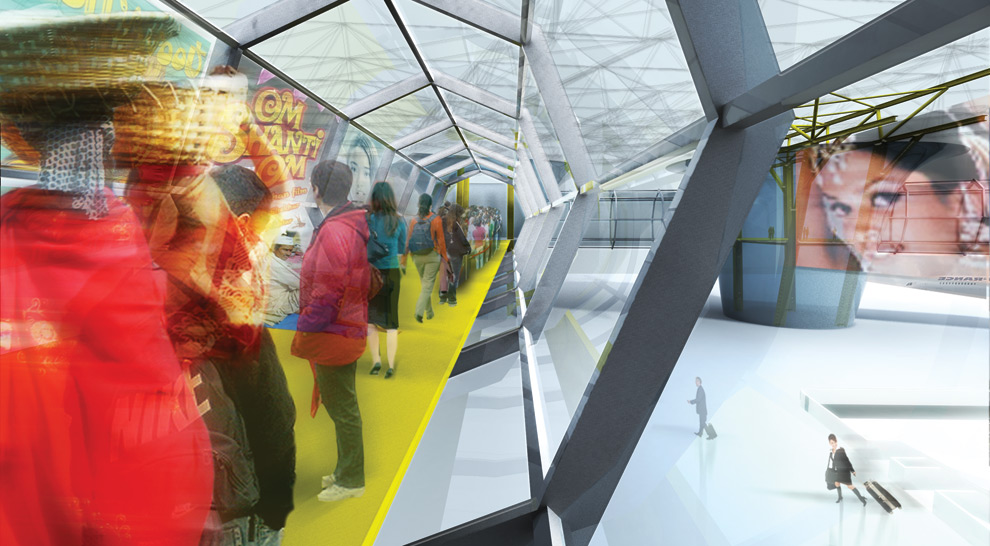
Each hanging element is a program + structural column connected by a circulation tube. Within the circulation tube tourist class passengers have the opportunity to fly for free, passing through each commercial program space. One objective is to maximize the length of the tube – thereby allowing more passengers to fly for free maximizing the airports ancillary profits. Another objective is to create an unobstructed space for business class passengers requiring few of the program spaces to touch the ground but rather hang, allowing business class passengers to freely pass through below. The more columns that touch the ground, the more structurally stabe the ceiling space frame becomes, allowing more housing towers above. The program mediates between these competing objectives finding high-performing, unexpected solutions and it becomes the role of the user to rank and chose designs based on desired criteria. Most housing = most columns = fewer business class travellers, etc…