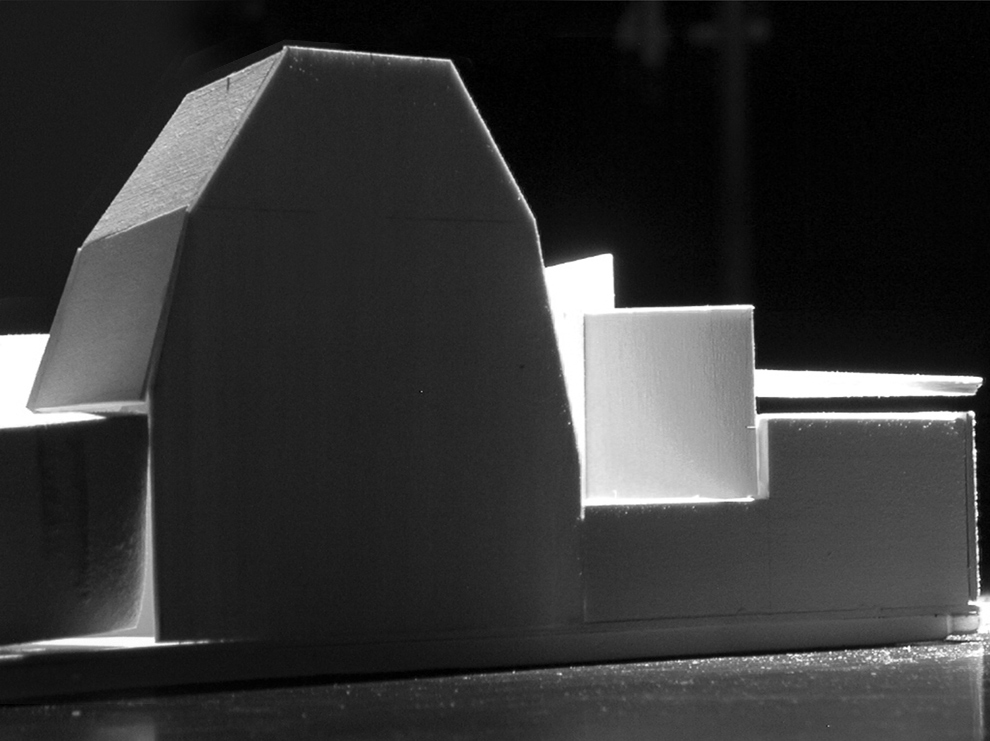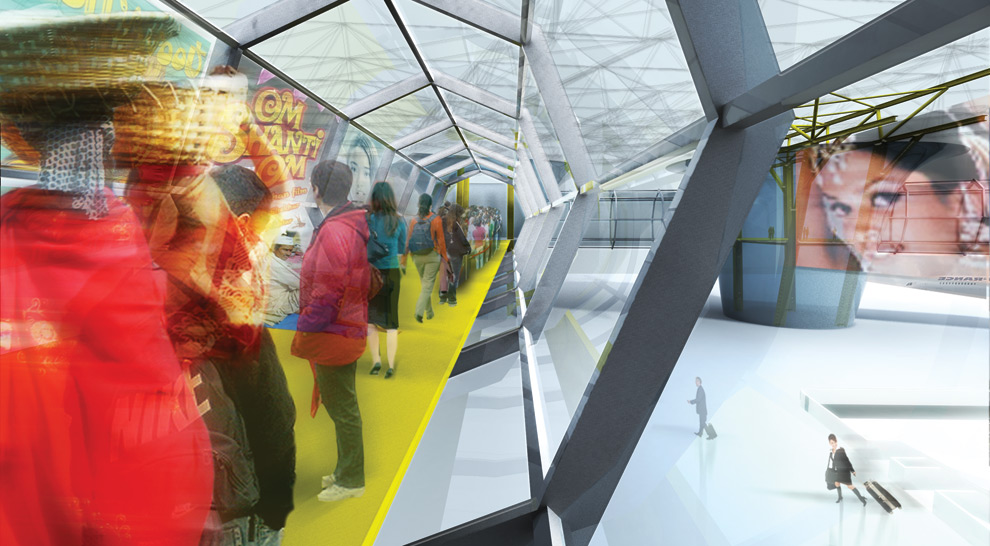
I didn’t really cut anything from the presentation included below. So, yeah, there’s a lot of slides. It’s (almost) the entire final presentation. I left it pretty much intact because not only 1) I can never edit my own work, but 2) the project is conceived more as a sci-fi narrative of Beijing and it will hopefully make more sense if read in complete order. And you can always just scroll way down to the end for some sweet images. This was for Ed Keller’s SpeedTerritoryCommunication studio, Spring 2009.
quick project description:
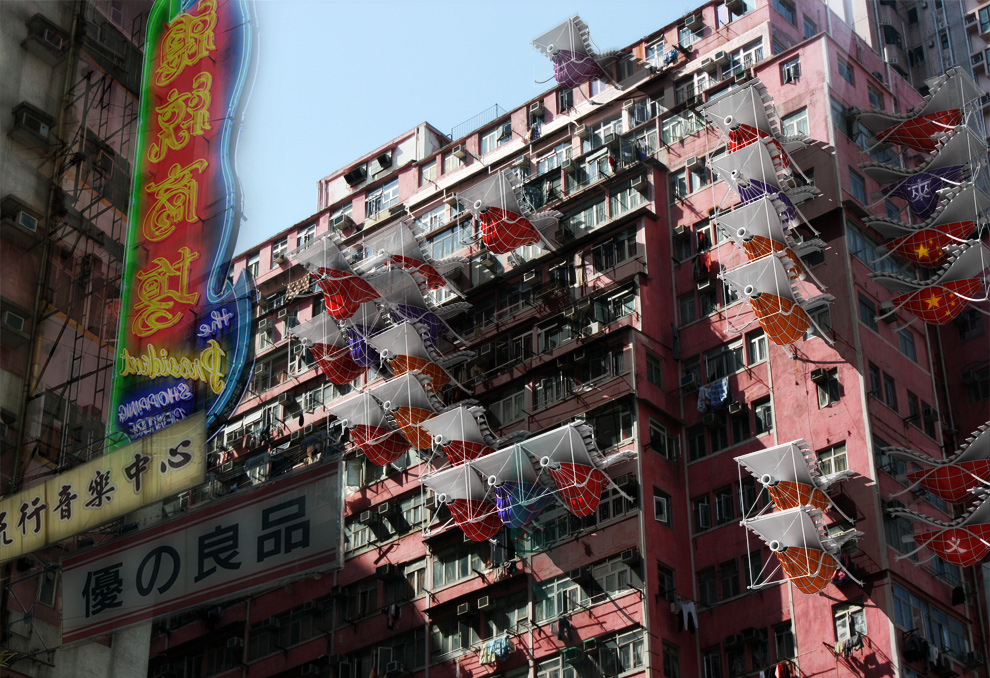
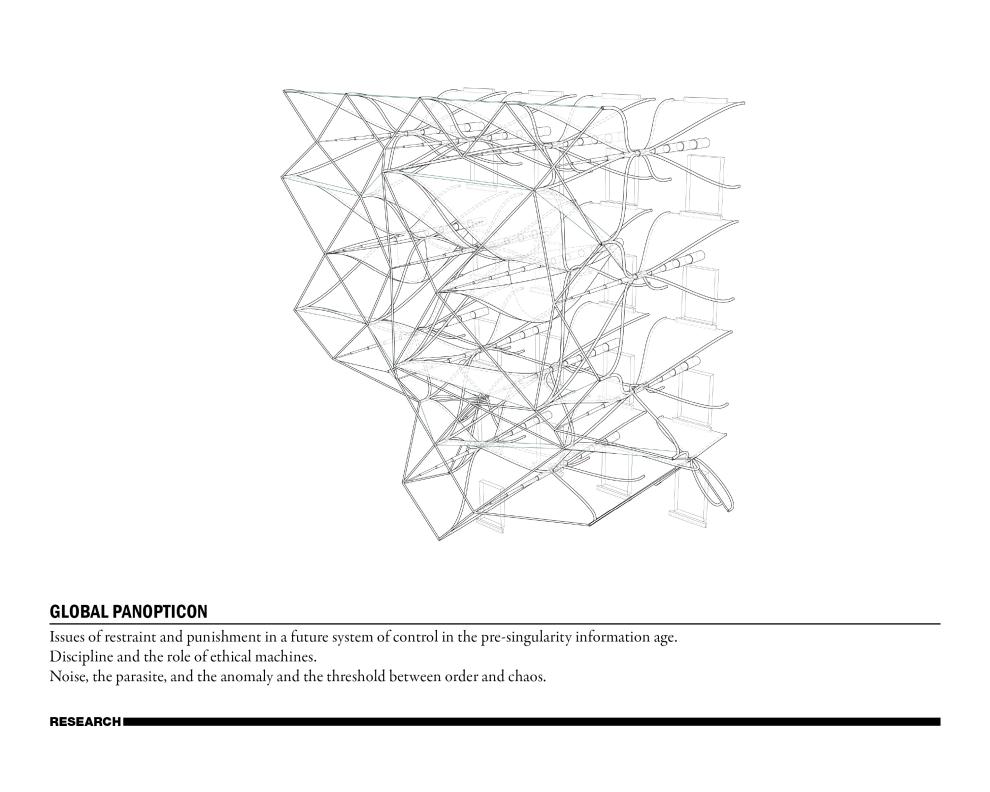
Architecture is a system of control predicated on limitations. This project is a study of the existing control systems in Beijing and a projection of how architecture and technology will merge to change not only prisons, but also the urban environment, the social stratification of society. Also addressed are what confinement and freedom will mean in relation to our relationship with how we build our world.
more »

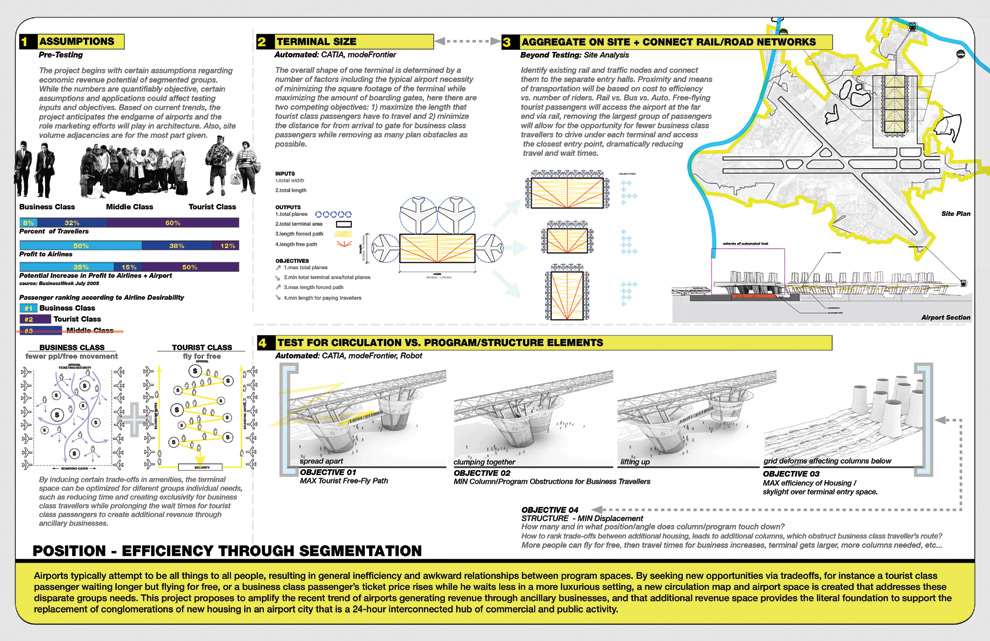
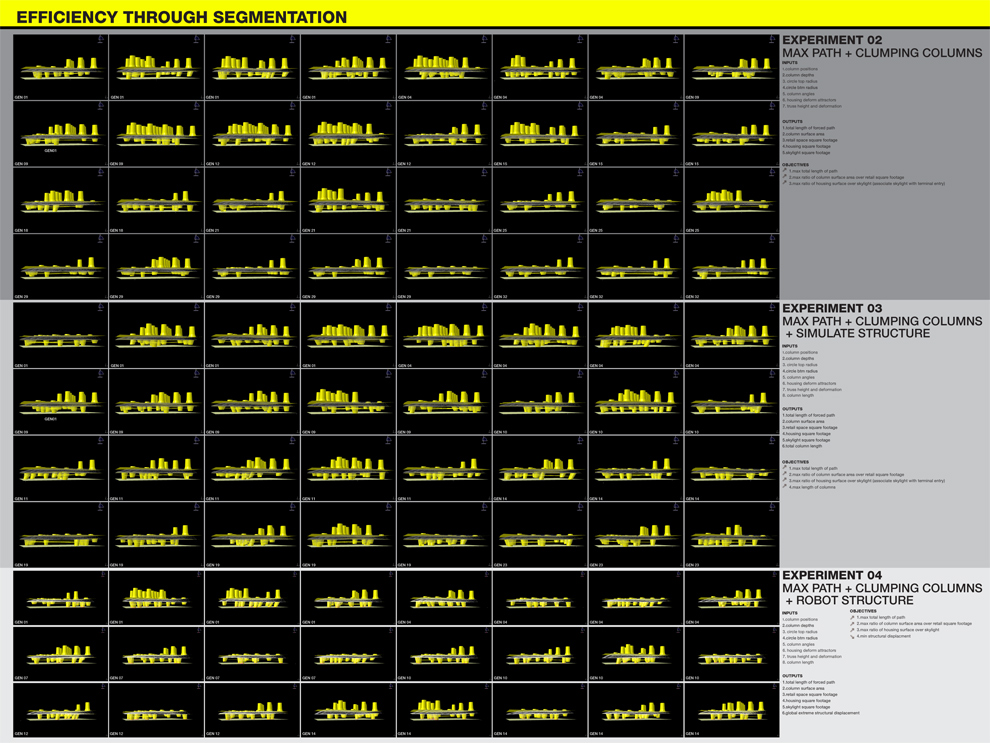
Quick Project Desciption: Airports typically attempt to be all things to all people, resulting in general inefficiency and awkward relationships between program spaces. By seeking new opportunities via trade-offs, for instance a tourist class passenger waiting longer but flying for free, or a business class passenger’s ticket price rises while he waits less in a more luxurious setting, a new circulation map and airport space is created that addresses these disparate groups needs. Optimal relationships between airlines, airport, and users are handled through parametric models and genetic algorithms.
more »

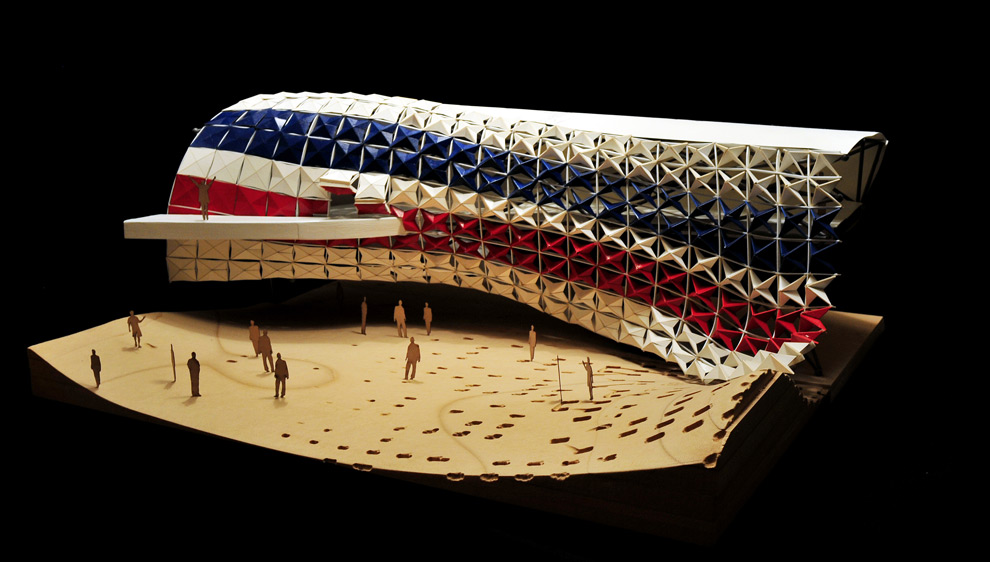
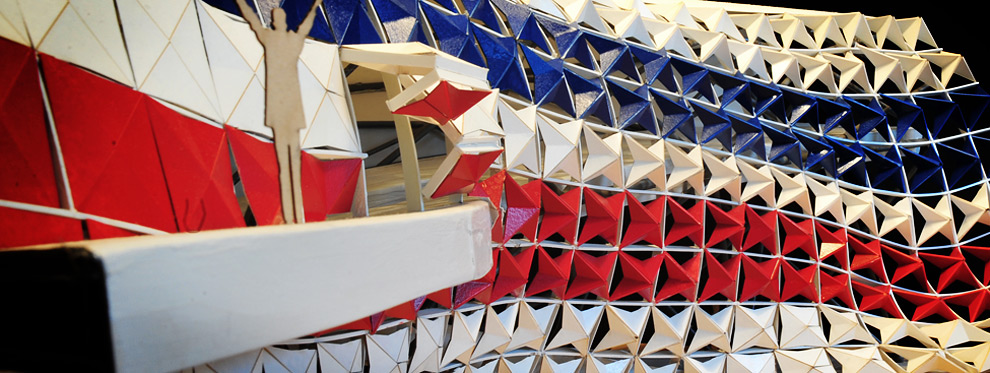
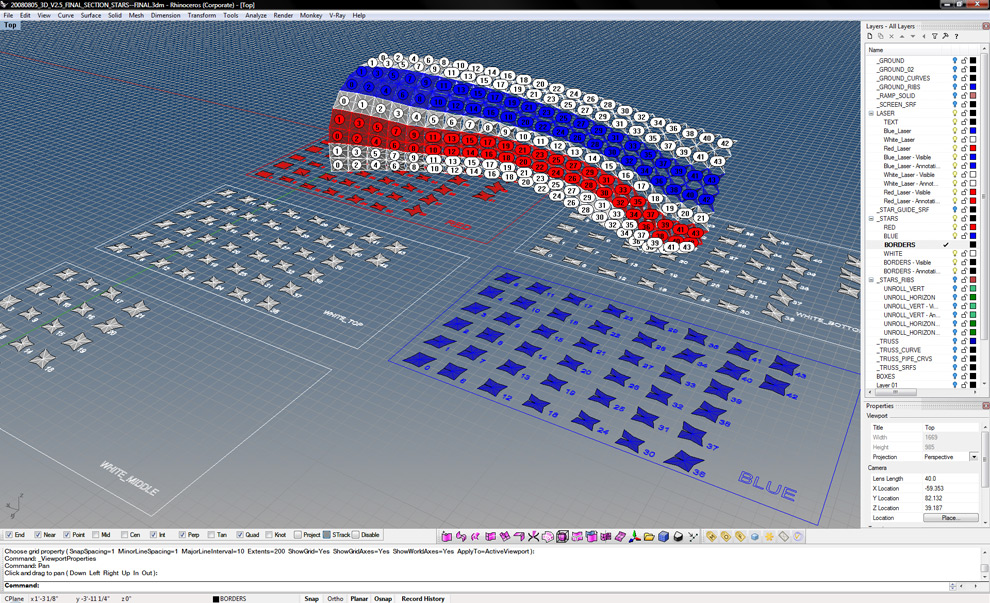
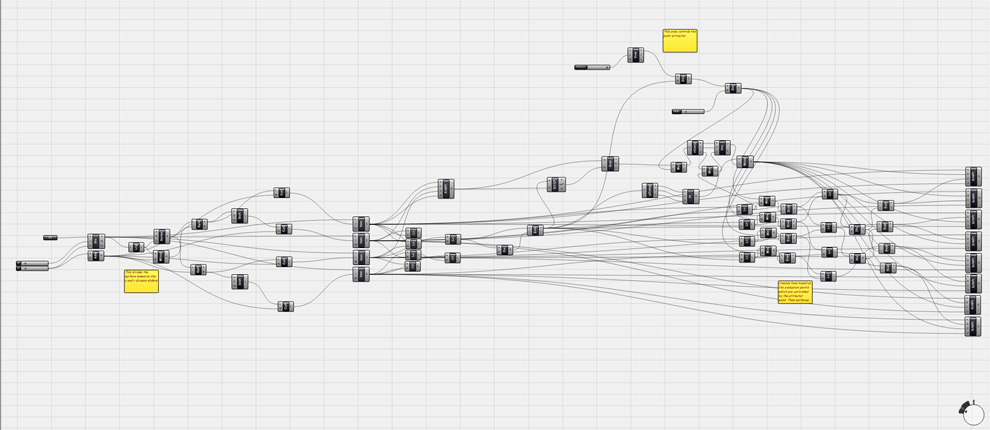
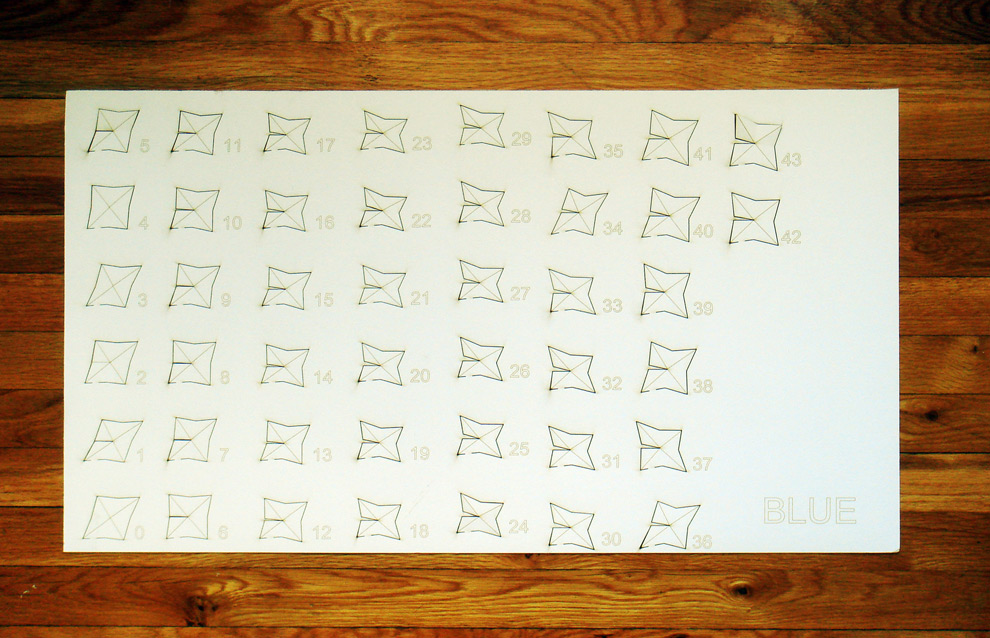
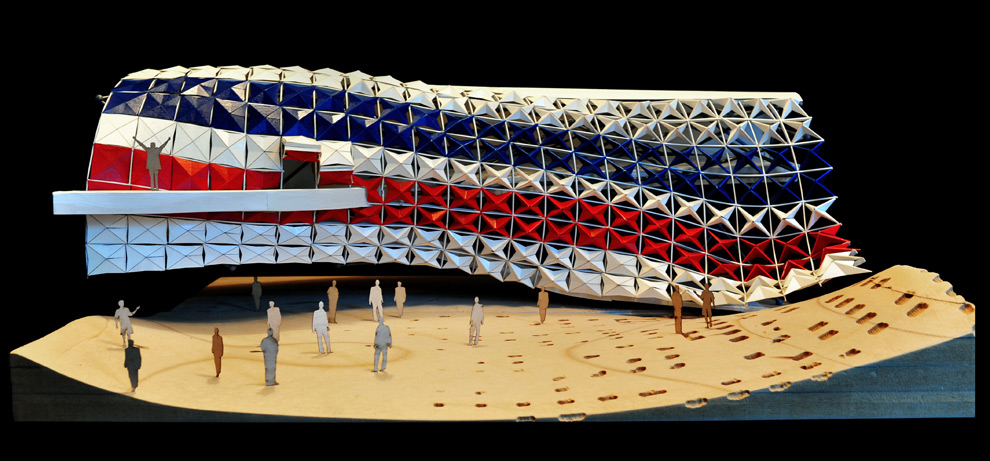
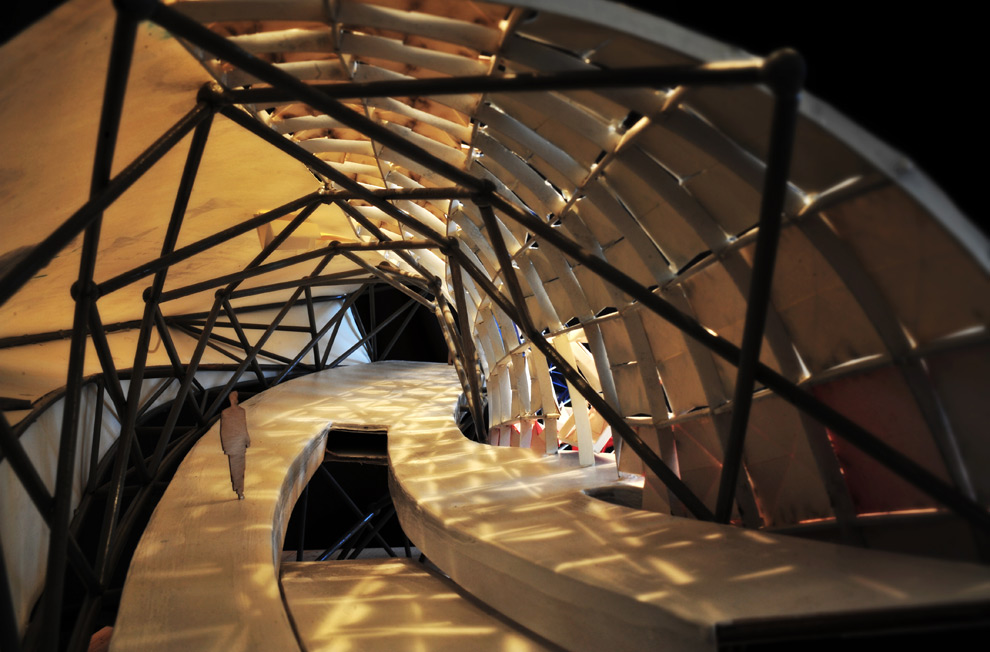
After my final model from last summer was misplaced in the trash, then the compacter, the lazy days of the winter break seemed like a good time to rebuild. One of the benefits of digital fabrication is you just have to re-lasercut all the files, though there is a certain level of zen like calm in folding and gluing 300 panels. The modular panels and truss were created in grasshopper, then scripted in rhino to unroll onto sheets.
more »

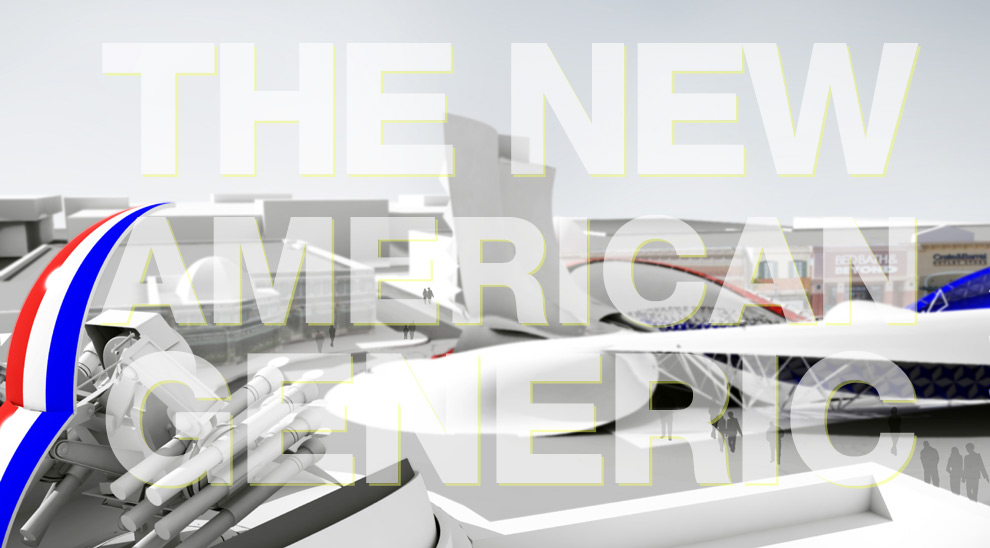
Quick Project Description: In America, the most active civic space is no longer public plazas or parks, but rather a new typology—“town centers”—Mall/Promenade hybrids of housing, public space, and shopping. This is where people gather, and into each of these places a civic function is inserted—political debate arenas where the viewer is no longer passive but takes an active role in the decision process, and is loudly confronted with a newfound political reality.
more »

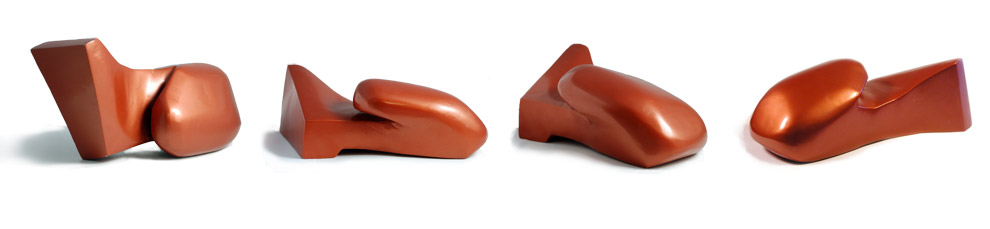
car/truck shape study model 14.5”x7”x5.5”
layers of bondo molded over a rectangular metal base
The perception of color is relative. The interaction of multiple colors creates a new relationship that alters the nature of the individual shades. The light quality in the project is important to the reading of the building shape, therefore, stable colors were chosen that are also dull, cool and light. The value of the red/blue colors were the same, creating an underlying unity while also influencing the perception of the forms reflecting in sunlight - and hidden in shadow. The colors reinforce the overall formal gesture while maintaining the indivual integrity of the facets. This was the third component of the Shape Studio, the first component can be viewed here.
more »

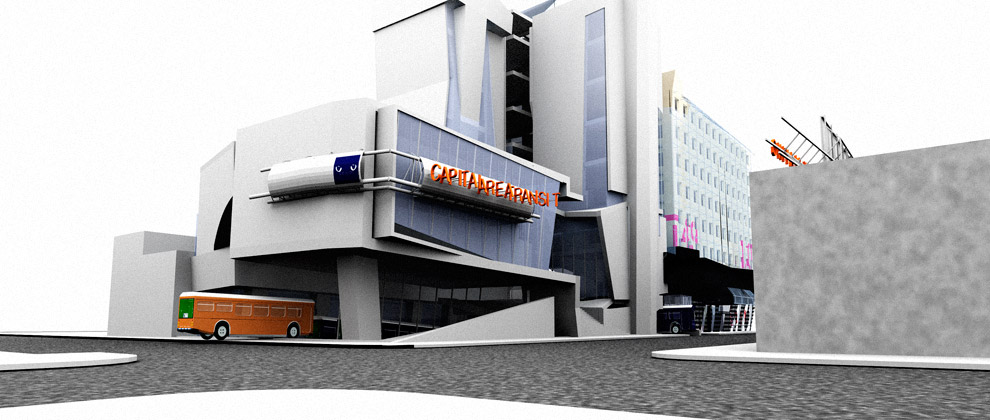
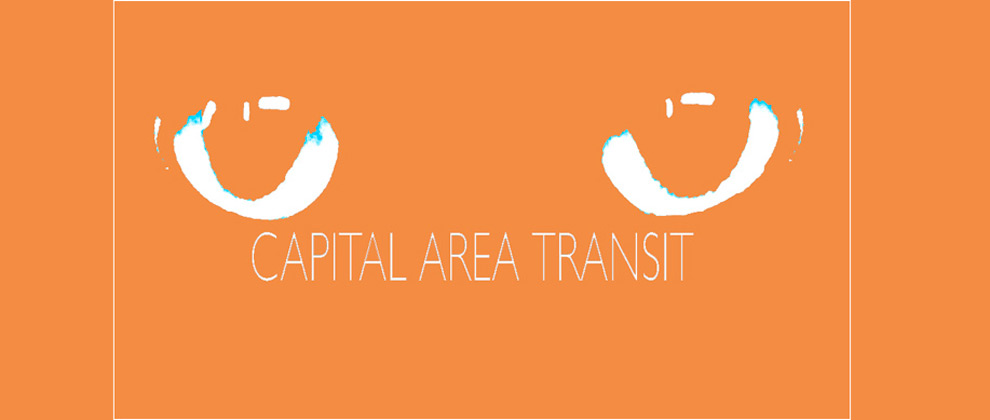
Far too often the ones advocating increased public transportation are absent when it came to riding public buses. The capital metro brand has become too associated with a misrepresentation of resources and nondescript buses. We proposed to do away with the old name and replace it with ‘Capital Area Transit.’ Much of the imagery for the logo and design of the bus stop came from ‘CAT,’ the idea of nimbleness and sharp vision. This also created something inclusive, bringing more people together by a shared name that allowed the riders to give the transit system their own slang term, not an official nickname.
I wanted to simplify the contradictory organization method, and replace it with a more universal color-coding system: each route will be color-coded and each bus stop will correspond with the color of the bus. With television screens commonplace in automobiles and advertising becoming increasingly obtrusive, we sought to take this one step further: starting with the idea of the eye, I proposed fitting the buses with image protectors. Passing cars, buildings and people all become part of the image. Changing projection and led screens on the bus help target specific audiences. They can be programmed to display different images to specifically target economic and ethnic parts of the city. Also, the coveted rush hour times could bring in increased revenue.
more »

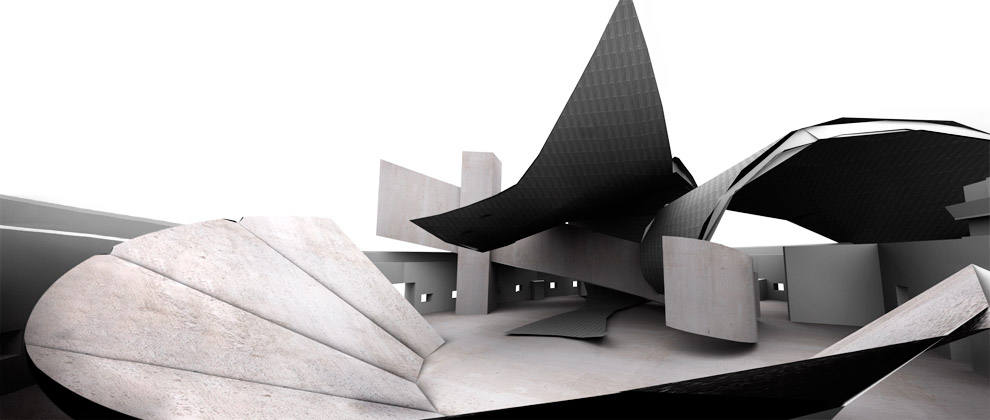
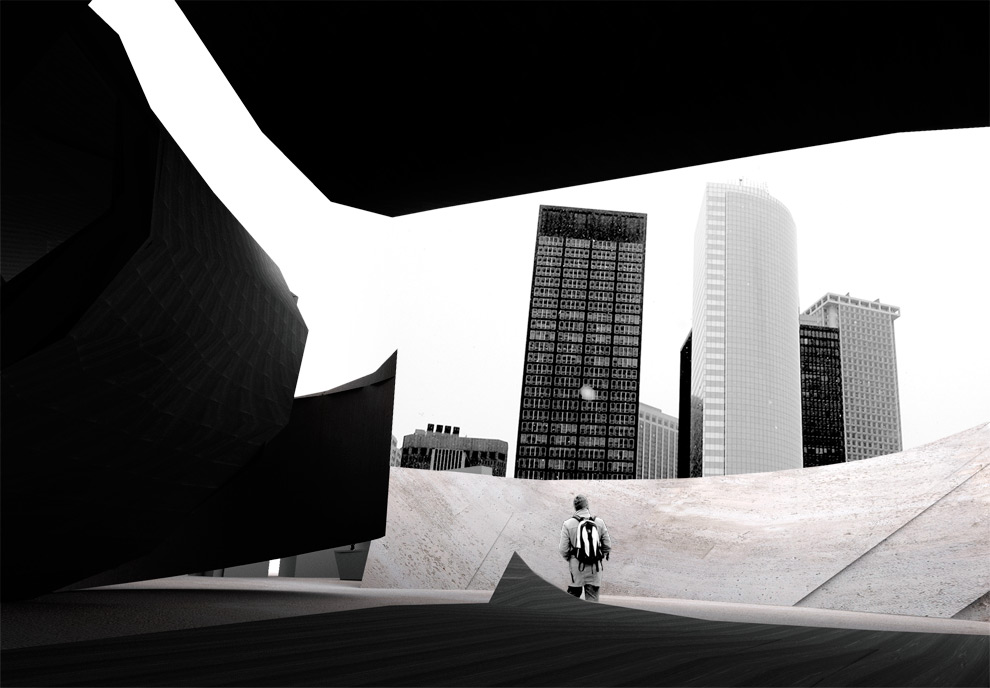
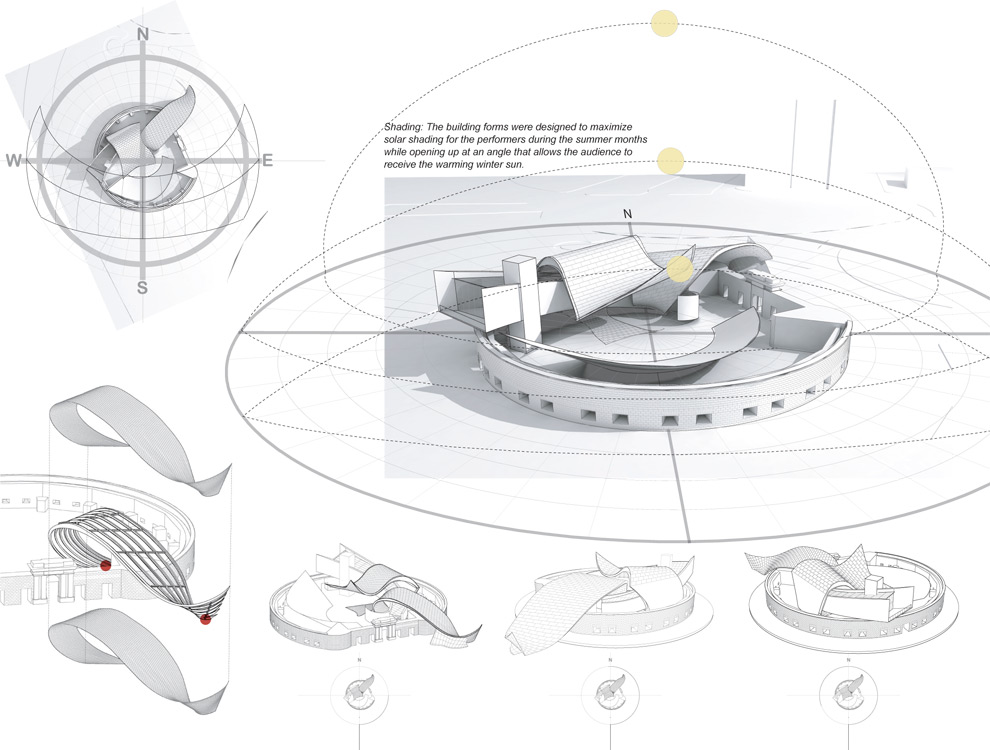
Since its creation as a defensive fortification during the war of 1812, Castle Clinton has undergone a series of reinventions. While the inner activities have changed, the solid masonry walls have withstood, providing a blank slate - or bowl - for new programmatic activities, from an immigration processing station to an aquarium to its latest iteration as a performance space for lower Manhattan and the centerpiece of a renovated Battery Park.
The challenge became how to maintain the ring shaped exterior walls, while creating a welcoming and inviting space for artistic expression. To both emphasize the existing historic walls and the new intervention, the differences between the two were played for maximum effect - avoiding any attempts at a formal or historic similarly. In stark contrast, each could maintain their individual sense of integrity: new vs. old, light vs. heavy, closed vs. open, solid construction vs. modern building techniques all became overriding principles. In addition, because the intervention is without enclosed volume, the relationship between sharp-inside and curved-outside corners were emphasized. Thomas Phifer was the studio critic for this project.
This was also my last project at UT. It was also the harshest review I’d ever experienced. I don’t know what UT is like now, but back then they highly frowned upon any project that didn’t conform to the high modernist ideals they were desperately clinging to.
more »

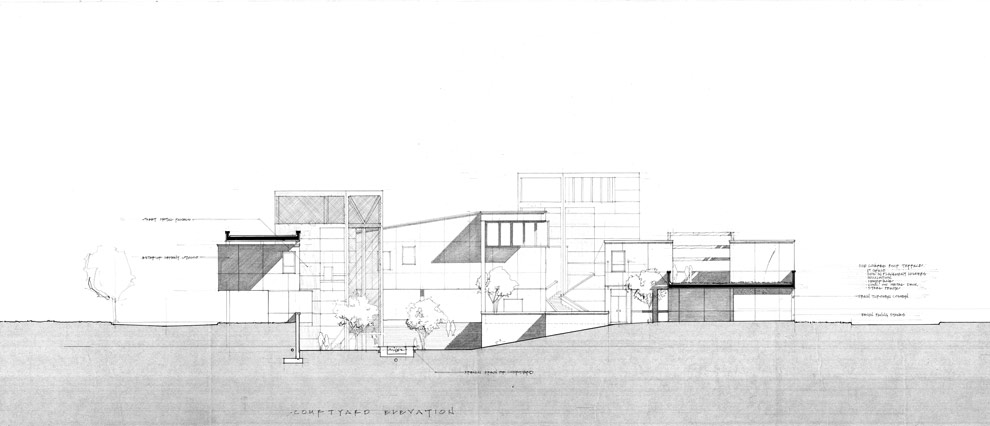
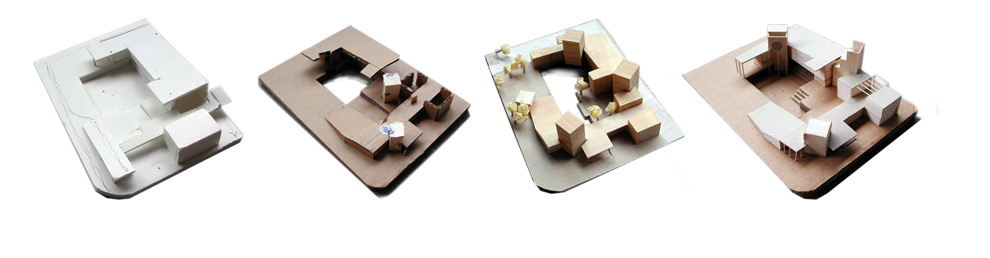
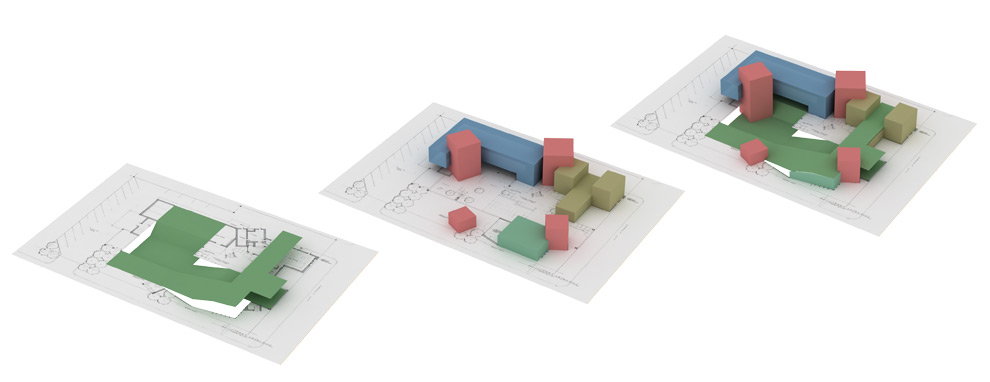
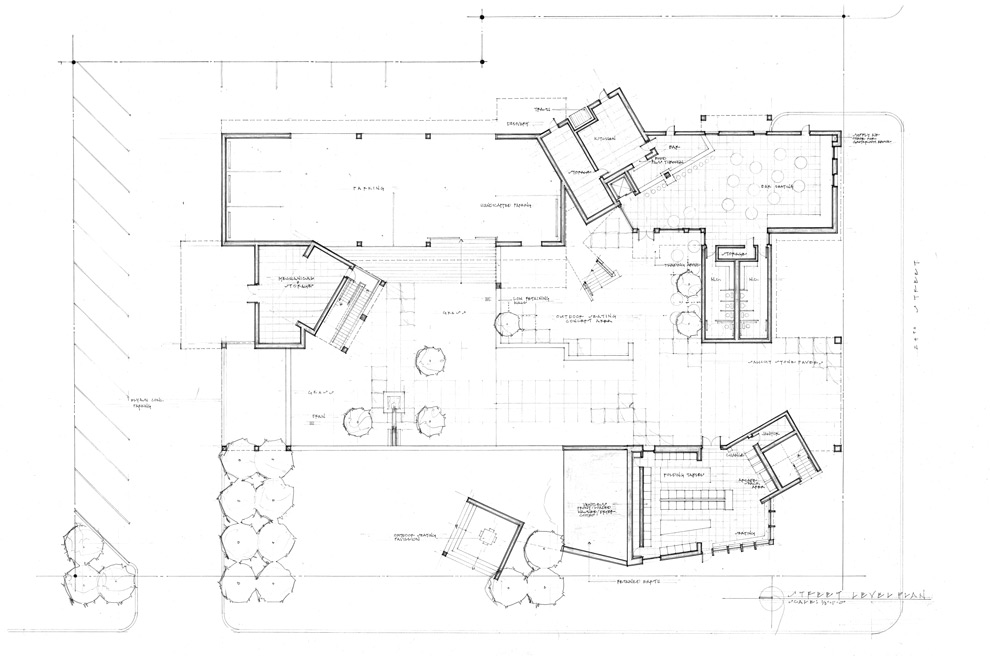
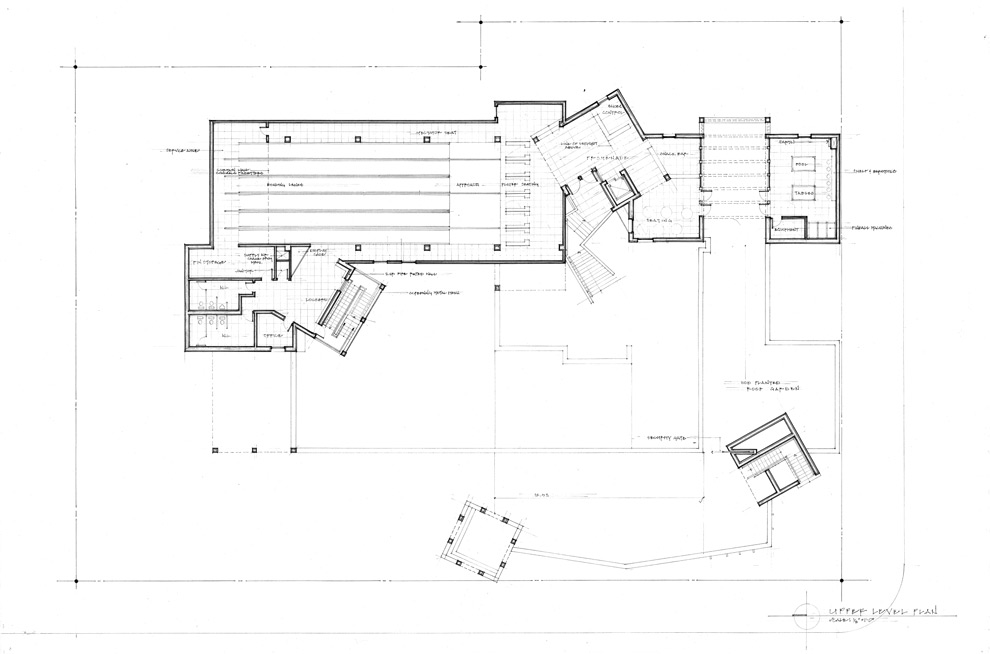
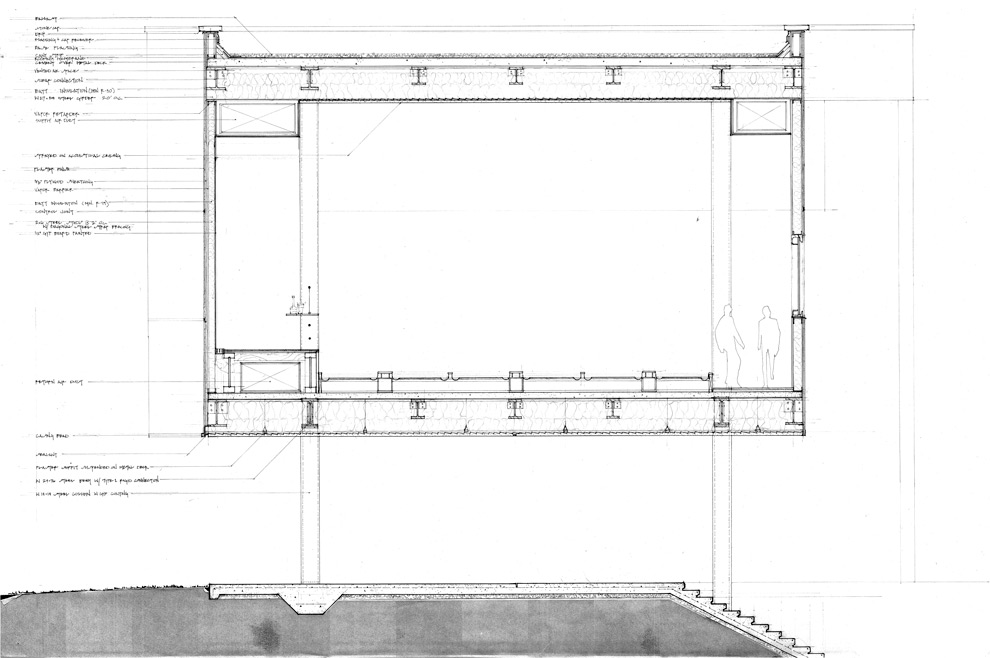
The program called for a combination of leisure activities that any college student is well acquainted with: bowling, drinking and washing laundry. The design reflects some of these playful qualities while also creating a ground, a city within a city. The building is meant to provide a strong presence in an area where the inhabitants are recycled every four years - perpetually created anew.
The design is separated along program and wraps itself protectively around a central sunken courtyard that provides shade and solace. The line between inside and outside is blurred through the use of roof gardens, cantilevered overhang spaces and the absence of a traditional central front door to the business. As opposed to one central building, the programmatic elements are separated into a collection of buildings, meant to evoke the layout of a college campus. Inhabitable outside void spaces were key and provide open areas for outside cafes and meeting spaces. Also, each program is expressed separately to accommodate differing hours of operation. The space is unified by a consistent structural grid of 20 x 45 feet.
more »
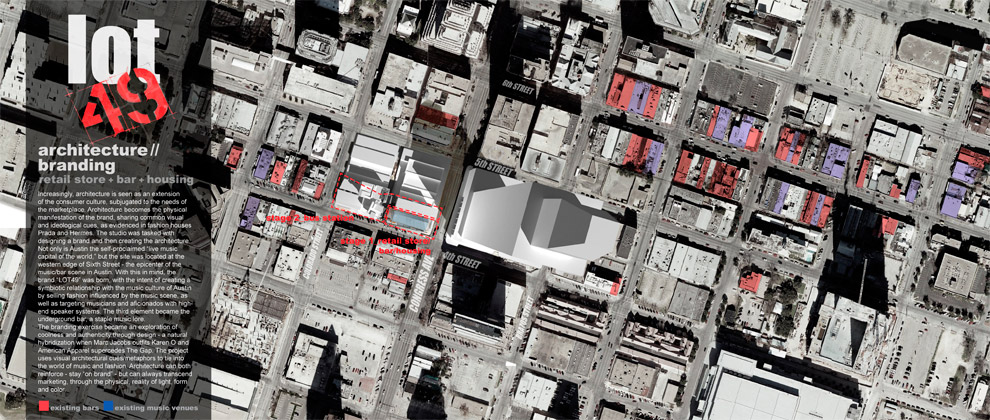
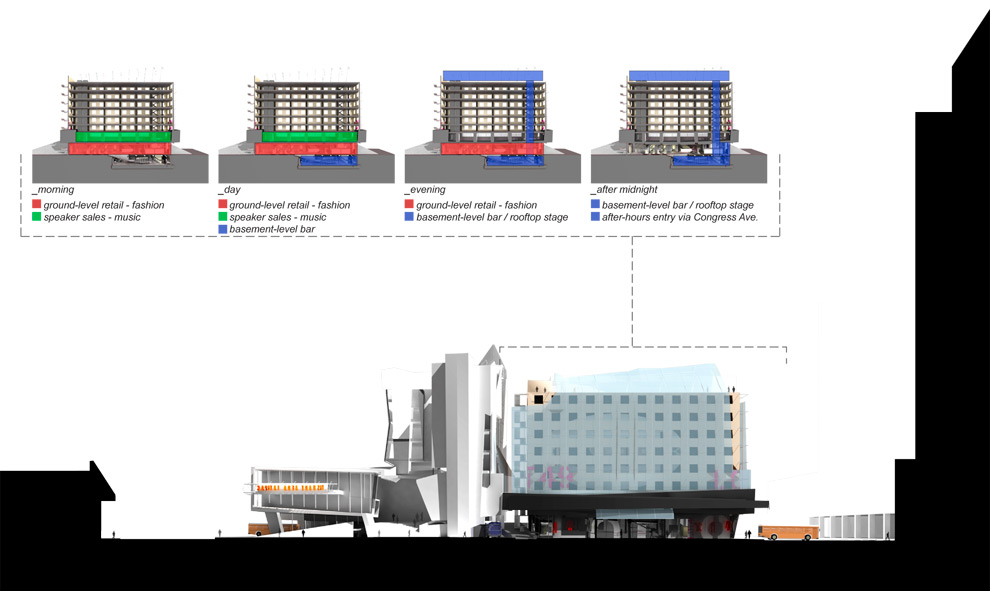
Increasingly, architecture is seen as an extension of the consumer culture, subjugated to the needs of the marketplace. Architecture becomes the physical manifestation of the brand, sharing common visual and ideological cues, as evidenced in fashion houses Prada and Hermes. The studio was tasked with designing a brand and then creating the architecture.
Not only is Austin the self-proclaimed “live music capital of the world,” but the site was located at the western edge of Sixth Street - the epicenter of the music/bar scene in Austin. With this in mind, the brand “LOT49” was born, with the intent of creating a symbiotic relationship with the music culture of Austin by selling fashion influenced by the music scene, as well as targeting musicians and aficionados with high-end speaker systems. The third element became the underground bar, a staple music lore.
more »

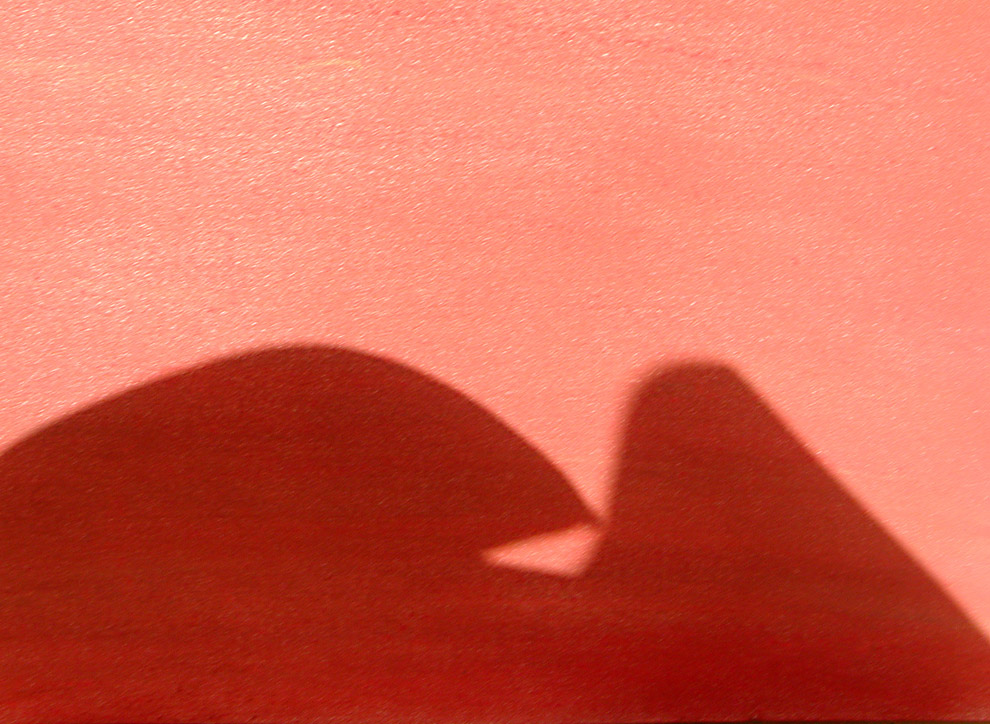
Architecture is a game of limits. Some studios work within the confines of context, program and site, here we explored limits that were more intangible. The studio worked directly with a strong emphasis on space, shape, color, light, shade and shadow. We searched for limits, letting function simmer while heating up the form. We explored limits in three shape studies in a variety of form and media: 1) Two dimensional shape black and white paintings 2) Three dimensional car/truck bondo shape studies and 3) Building design studies: proposals for an automotive body shop and paint shop.
more »