JOHN LOCKE

  • Featured Work
  • Design Blog           
  • Photography
  • Graphic Design
  • Lion in Oil

About

Hello. I live in New York and work at RMA. I hold a graduate degree from Columbia University's GSAPP and an undergraduate architecture degree from the University of Texas at Austin. I have more than six years of combined professional experience at both SOM in New York and Randall Stout Architects in L.A . I also tackle freelance graphic and photography work with my partner in crime, the multi-talented Jackie Caradonio at Lion in Oil. View my CV here: CV(html) or CV(pdf) for more info or contact me for further work samples, questions or collaborations. Thanks and have a nice day.

Contact

john.h.locke{at}gmail.com
310.735.3333

Architecture Portfolios

Portfolio 2002-2007 (issuu)
Portfolio 2008-2009 (issuu)

HOME / BLOG

gsapp

20110117 Tags: gsapp, korea, seoul, work | No Comments »

living light

livinglight01


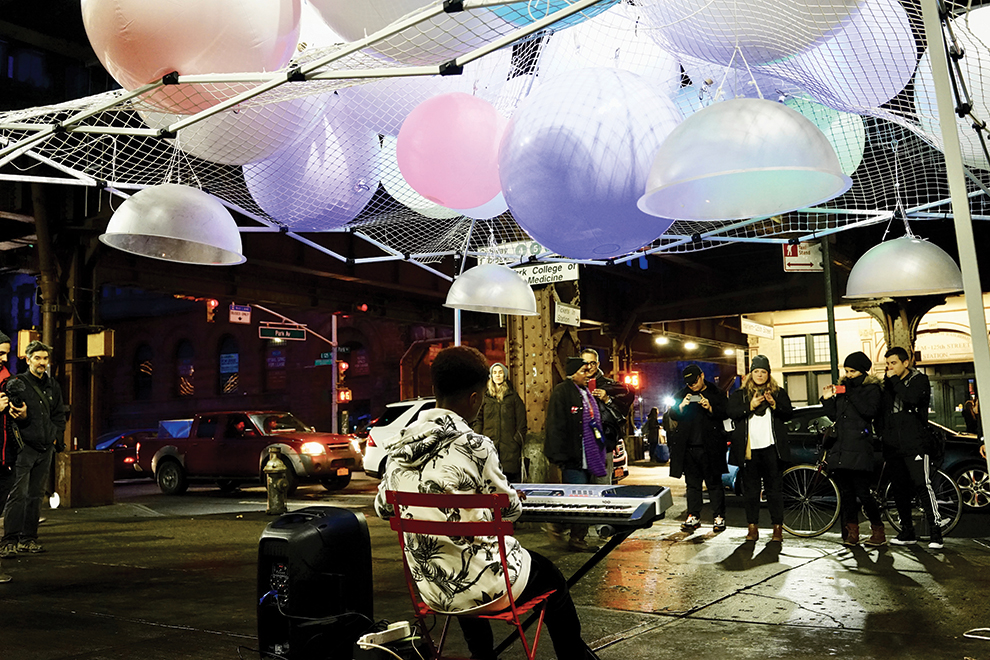
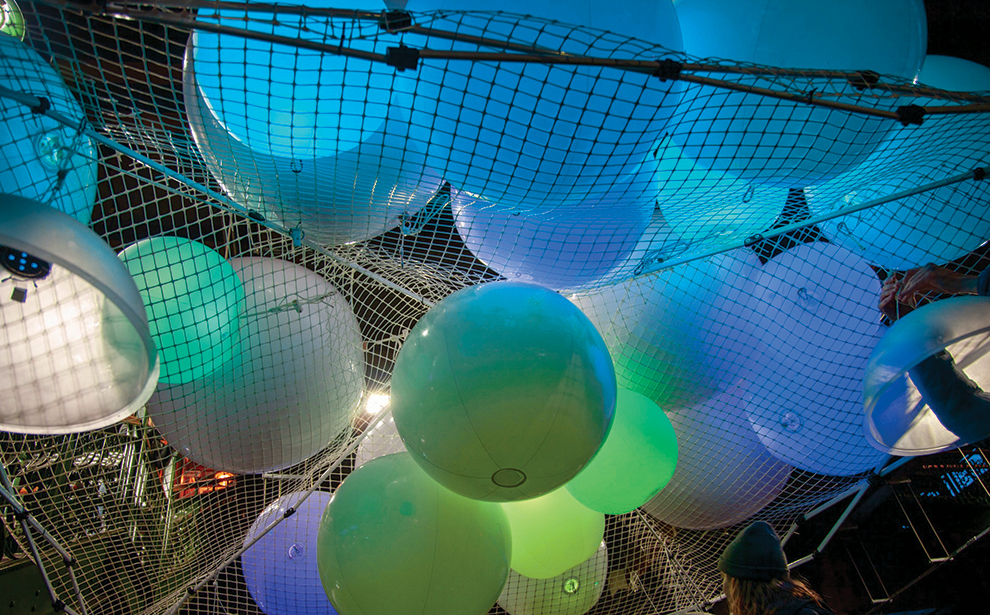
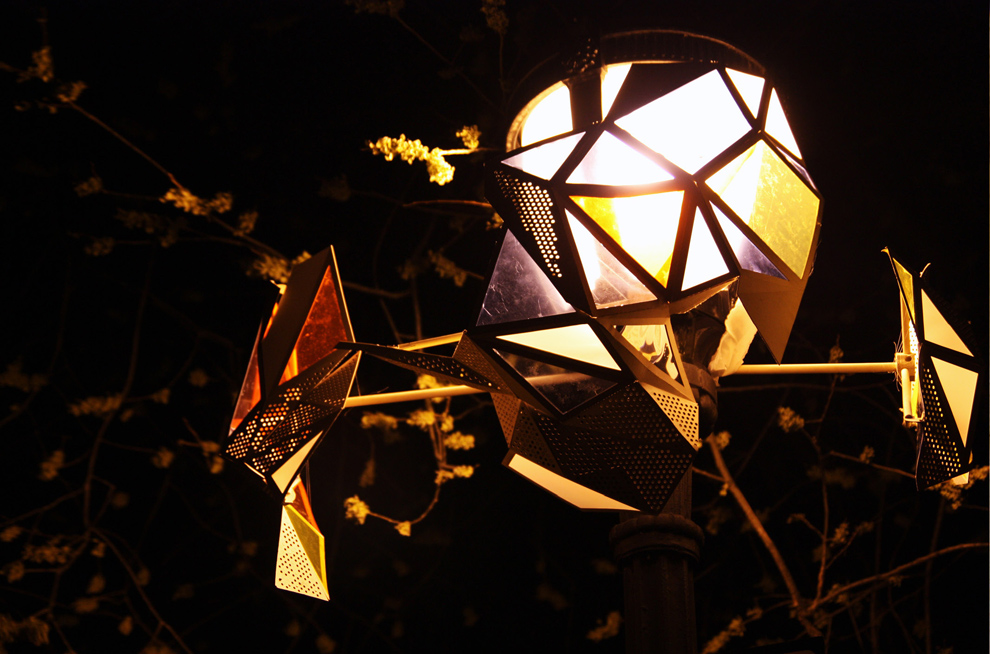
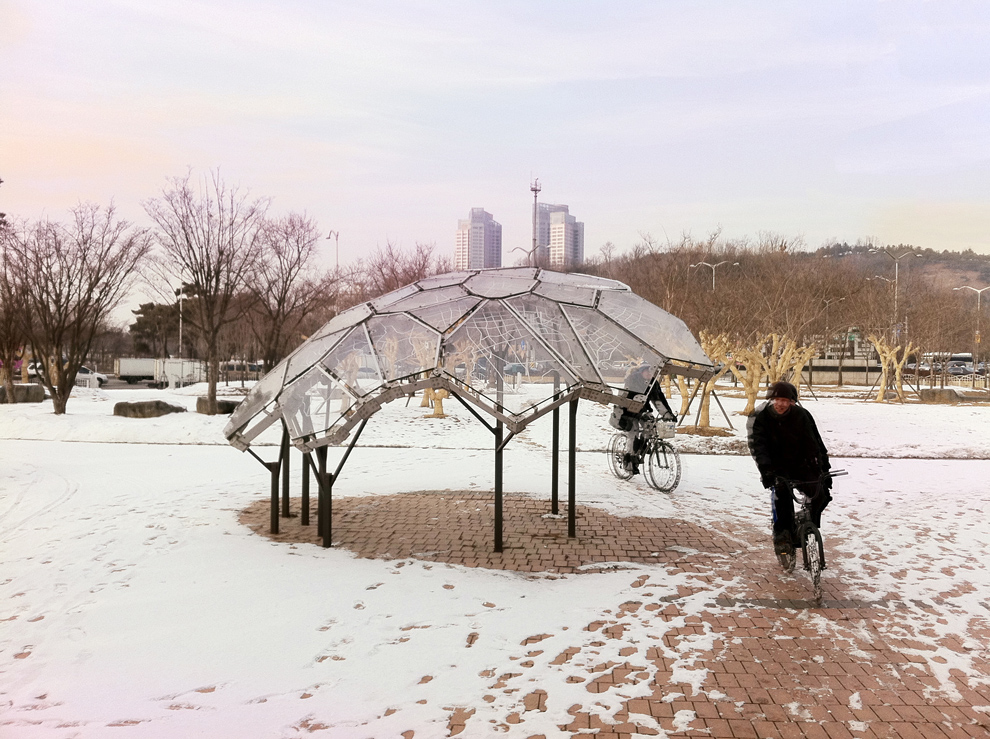
Last year I had the great opportunity to briefly work with David Benjamin and Soo-in Yang of TheLiving by assisting on this project in Seoul’s Peace Park. Their ideas about new, collaborative avenues for architects to pursue using sensor technologies – amongst others – made their courses some of my favorite at Columbia, and it was an inspiration to see this pavilion come together. When I found myself in Seoul last week, this was on my list of sights and it was a true pleasure to experience the work in person.


Described on their project site, as such:
“Living Light is a permanent outdoor pavilion in the heart of Seoul with a dynamic skin that glows and blinks in response to both data about air quality and public interest in the environment. Citizens can enter the pavilion or view it from nearby streets and buildings, and they can text message the building and it will text them back.”

Popularity: 3% [?]
20100430 Tags: gsapp, kinne, photography, research, writing | No Comments »

fast, cheap and out of control (without architects), or: why infrastructure won’t save us

titlepage1


view google map


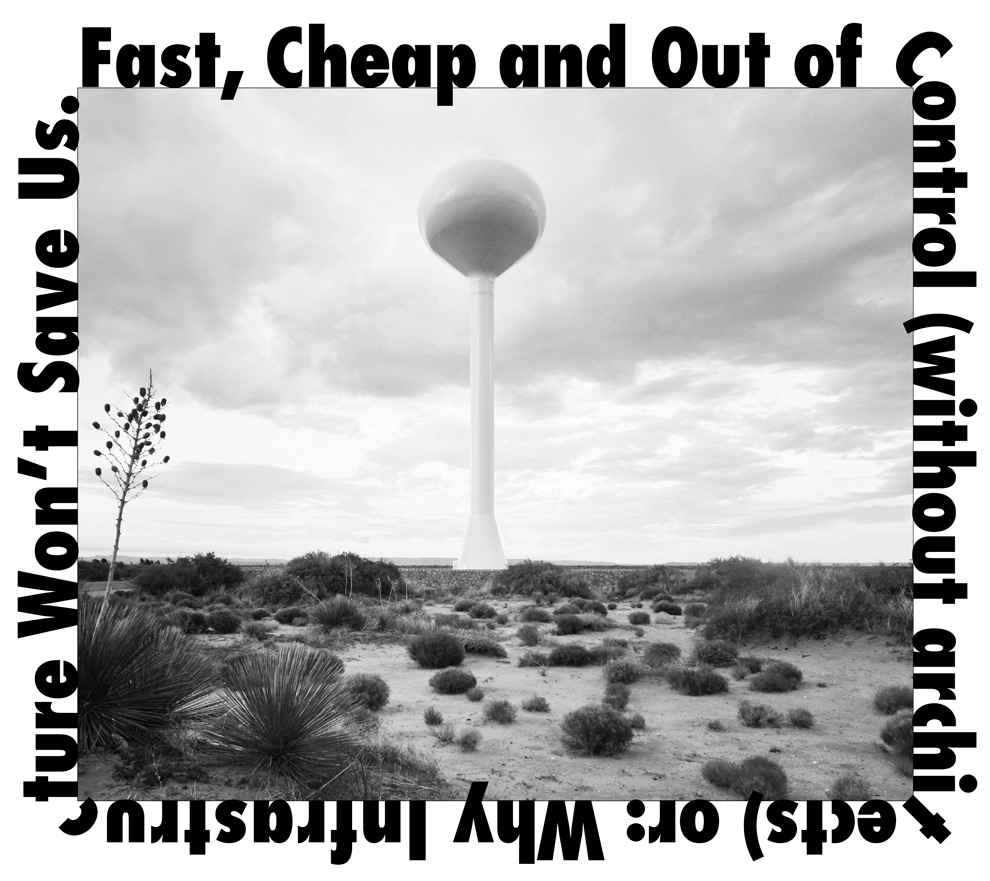
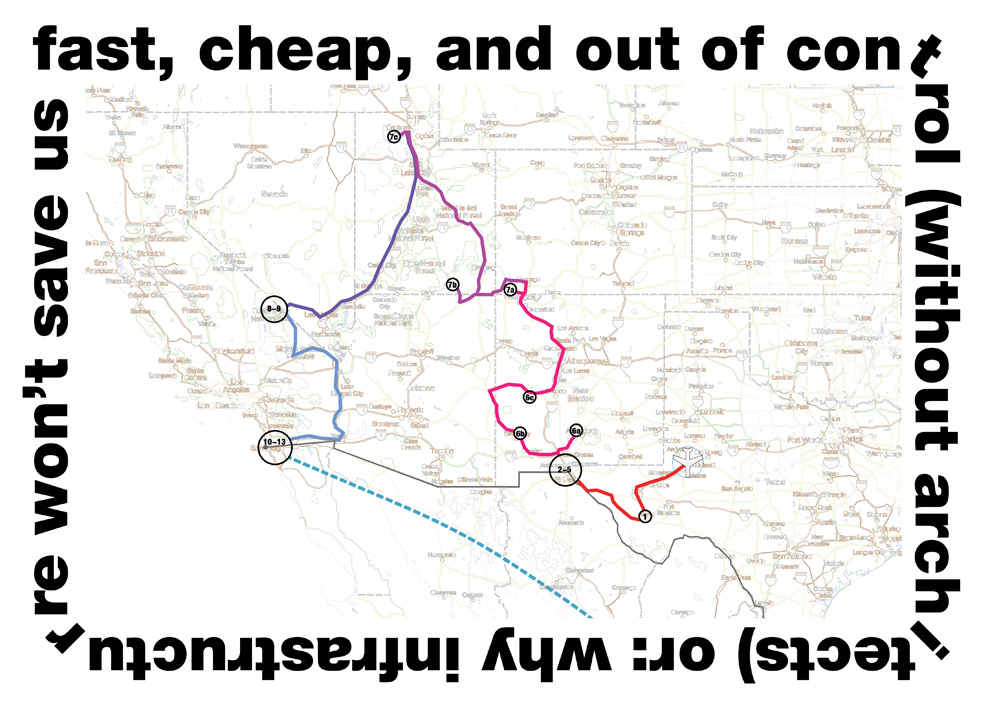
My final submission for the Kinne Research Fellowship at Columbia. Keep in mind this is the first part through the American Southwest and Northern Mexico from late last summer (!), the second session in Mexico City is still looming on the horizon.


Fast, Cheap and Out of Control is research through observation: structures, installations, natural landforms, urban growth and manipulated landscapes constructed in the blank slate of the Southwest Desert. A place where time stretches from Planck’s constant – used to record the chain reactions that produce an atomic detonation – to Robert Smithson brushing up against the infinite on the Great Salt Flats, all of which is tested and implemented under the powerful spell of the Western landscape – a strange entity mixed in with notions of nation and empire, bravery and myth, history and fiction.


The result of a six-week exploration in the form of a road trip lies before you in an ambling, somewhat desultory first-hand narration of a nomadic journey across the desert’s offensively vast spaces. Situated between the region’s fragmented vignettes of activity, I attempt to resolve the disparate nature of the desert’s strange, isolated events into a coherent narrative.


See the edited book above, or browse some of the original posts/chapters below:

Donald Judd and the myth of Marfa
Peace through deterrence in the underground titan missile silo
Improvisation at Arcosanti
The hyper fictional landscape of Tijuana
Ballard and the Spiral Jetty
The border wall that no one wanted
De Maria’s Lightning Field and Tourism
Water rights and development in the El Paso Colonias

Popularity: 5% [?]
2009062 Tags: architecture, china, gsapp, parametric, school, studio | 6 Comments »

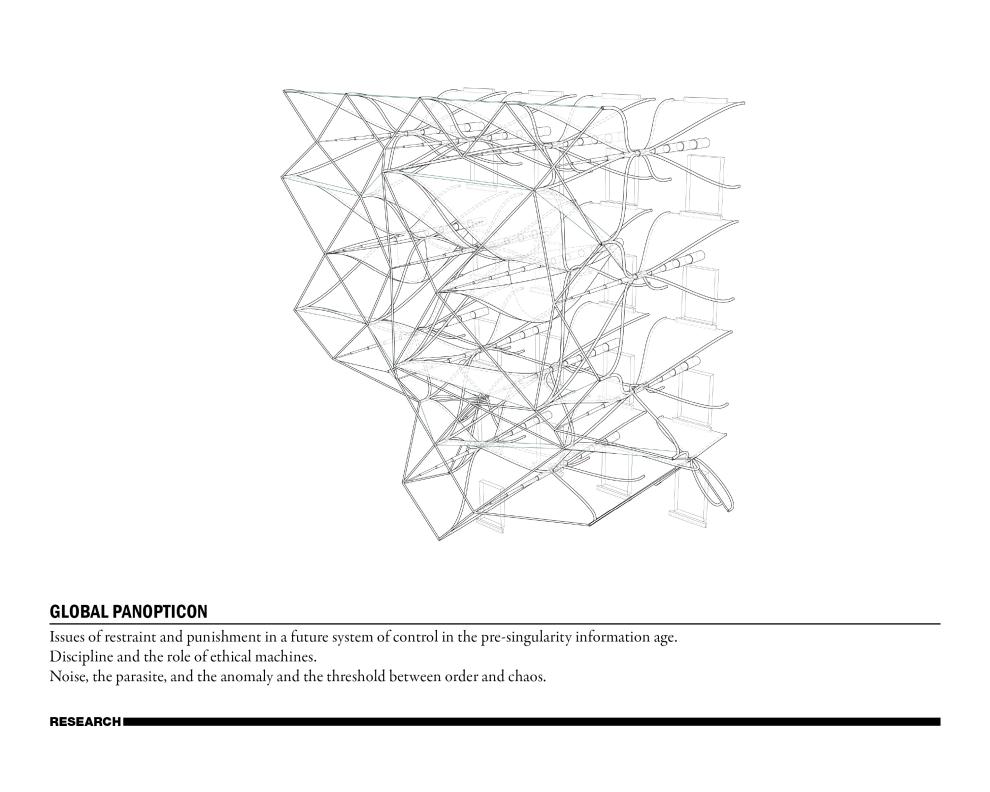
global panopticon

beijing01


I didn’t really cut anything from the presentation included below. So, yeah, there’s a lot of slides. It’s (almost) the entire final presentation. I left it pretty much intact because not only 1) I can never edit my own work, but 2) the project is conceived more as a sci-fi narrative of Beijing and it will hopefully make more sense if read in complete order. And you can always just scroll way down to the end for some sweet images. This was for Ed Keller’s SpeedTerritoryCommunication studio, Spring 2009.


quick project description:
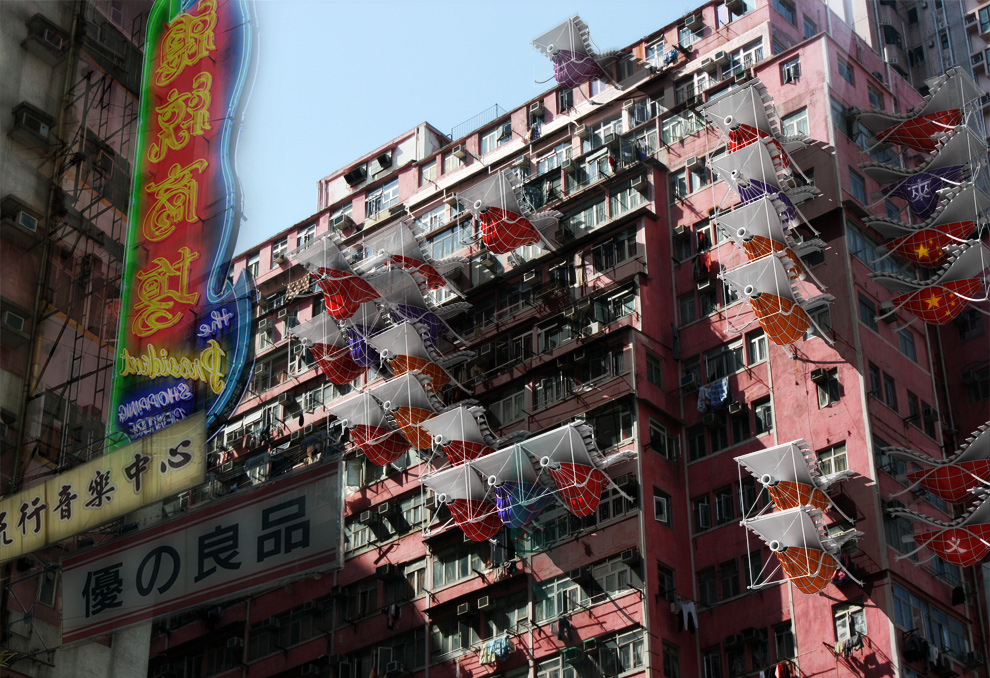
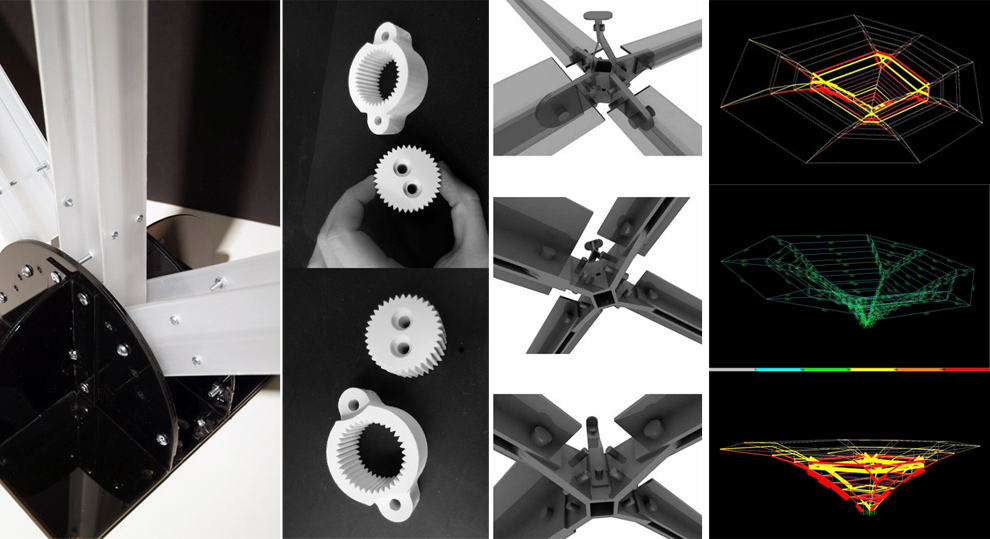
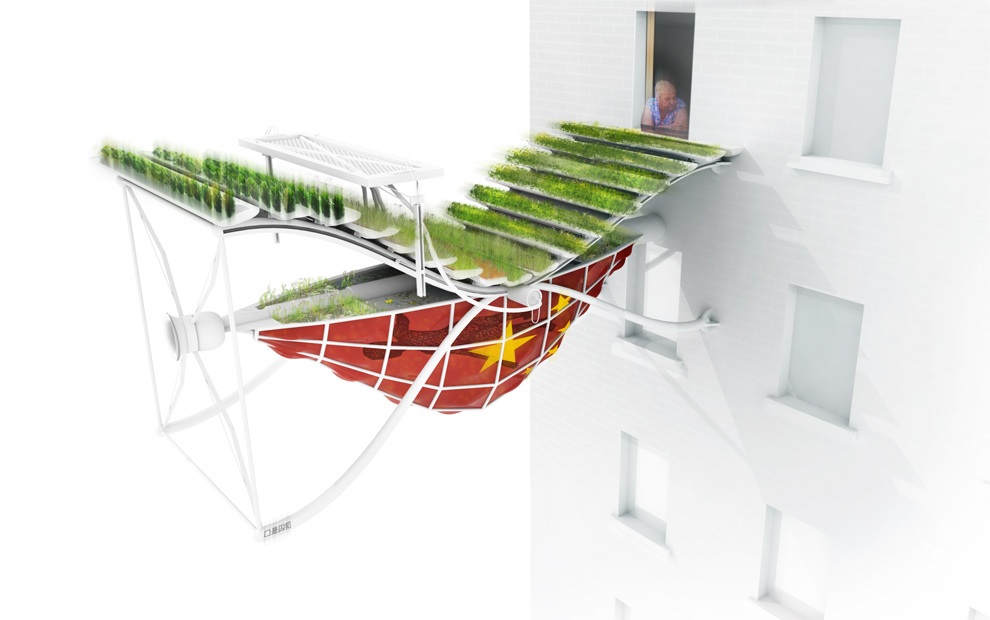
Architecture is a system of control predicated on limitations. This project is a study of the existing control systems in Beijing and a projection of how architecture and technology will merge to change not only prisons, but also the urban environment, the social stratification of society. Also addressed are what confinement and freedom will mean in relation to our relationship with how we build our world.


locke_final
more »

Popularity: 10% [?]
2009061 Tags: architecture, fabrication, gsapp, school, teaching | No Comments »

component systems

comp-sys
It was a certainly good times working with Professor Joe Vidich as teaching assistant for the courses Intro to Digital Fabrication and Advanced Fabrication: Component Systems. In component systems we only had five students, and they were pushed really hard, but there was some great work. I appreciated the sensibility that yes, we would make some cool stuff with the machines, but we also would test it for performance using structural engineering analysis, and explore material properties using Solidworks parametric models. It was an ambitious agenda for a short course, and the waterjet was un-operational pretty much the whole time, but the students came through with some sweet projects using the laser cut plexi and the heat bender, the metal mill as well as the 3d printer. Visit the class blog here.
Student work above from left: HoKyung Lee, JiYoon Oh, Kiseok Oh, Dave Kwon and Christo Logan

Popularity: 6% [?]
20090529 Tags: architecture, grasshopper, gsapp, parametric, school | No Comments »

beijing 2014

01
single-cell-section


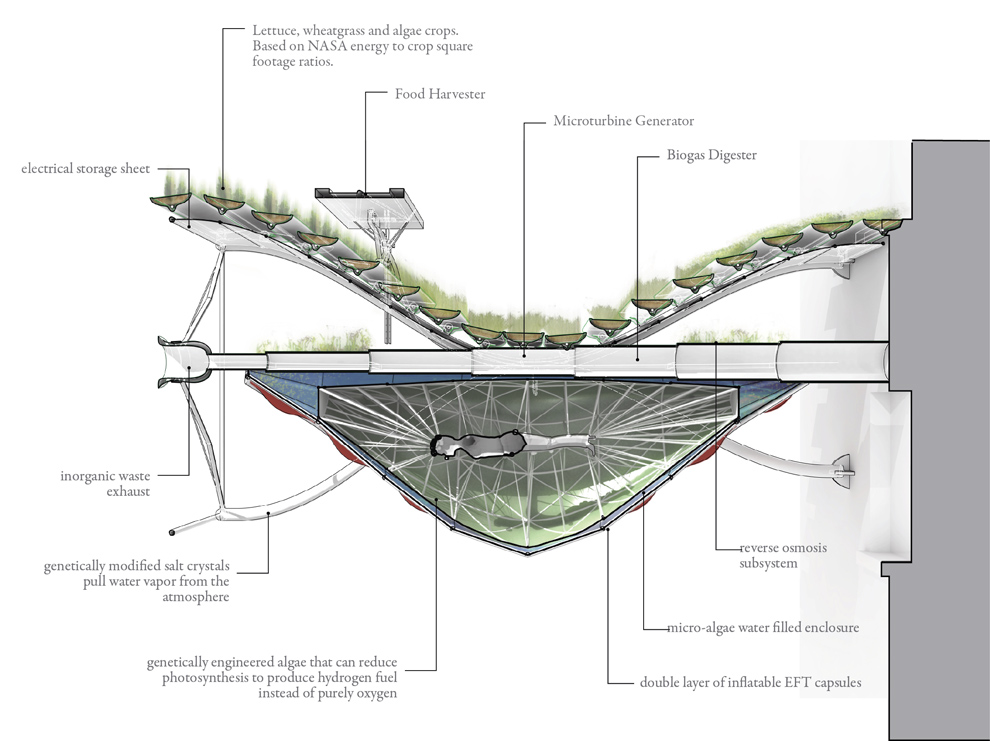
Detail from my final studio presentation of one symbiotic cell. See also a sankey diagram of the flows of energy through this system here.

Popularity: 14% [?]
20090524 Tags: architecture, fabrication, gsapp, interaction, processing, school, scripting | No Comments »

interactive elevator installation

living01
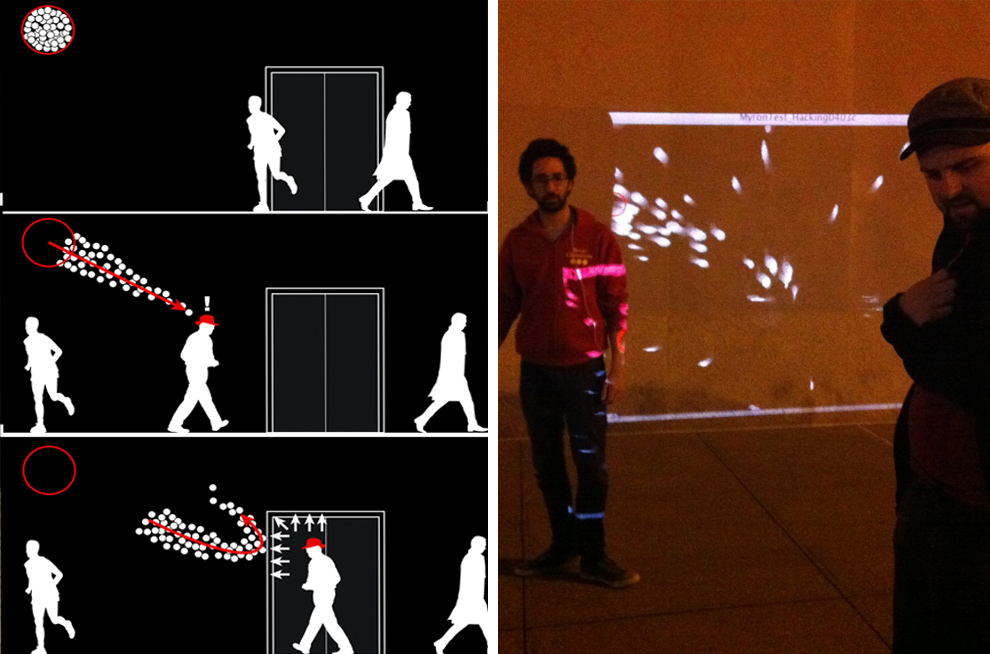
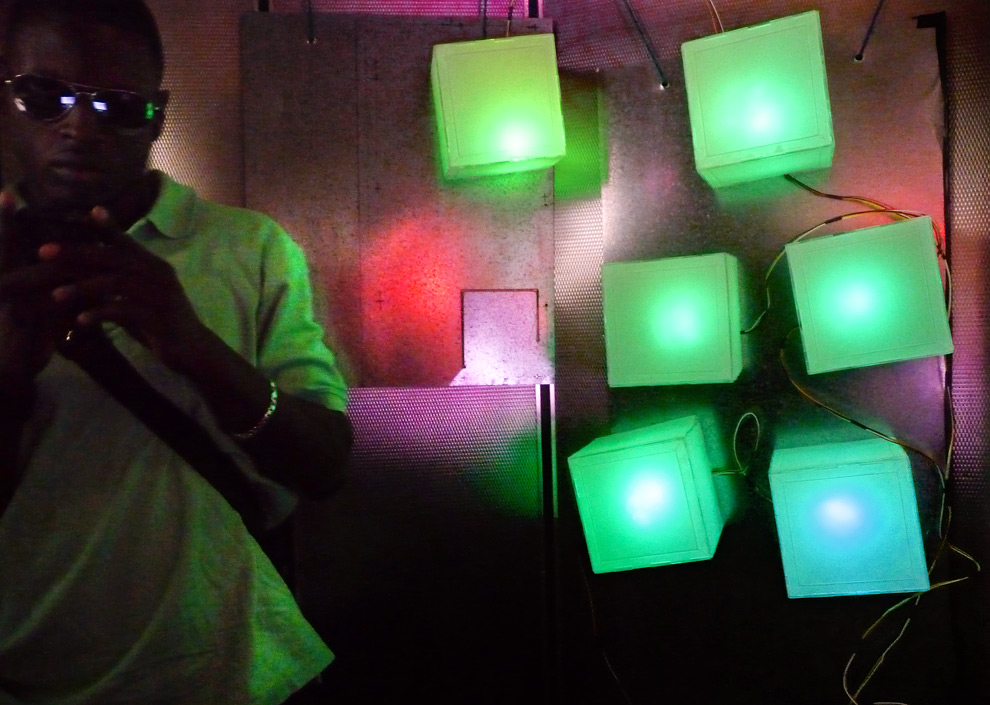
For our living architecture course, we created an interactive light installation in the elevator of Avery Hall, controllable by anyone with a cell phone and a twitter account. The simplified process includes texting an emotion to twitter from any cellular phone using the #livarch hashtag. That tweet is then picked up by a realtime search, fed through our twitterfeed rss, then added to our own twitter account. For a more detailed explanation, see this previous post on getting multiple twitter users onto one twitter feed. That emotion is then directed to our pachube feed and sent through processing to an arduino microcontroller that controls the color and pulsing of the individual leds. The installation non-invasively attaches to the surface of the elevator via magnets. Allowing it to be placed on any metal surface, such as a building exterior, furniture, or a vehicle.


The lights within the elevator respond to the mood of the user. For instance, if a student texted “happy #livarch” the space within the elevator would begin to slowly pulse with a greenish/blue hue. However, if another student sent “angry #livarch” the first light will quickly flash a bright red. There are twelve lights total and show the collective mood of the twelve most recent users.


In this way, the elevator becomes a living representation of the collective mood of the building, but it is also hoped that a feedback loop can be created, a loop that actually influences the mood of those that ride the elevator. The emotion felt in the lobby will be altered by the time you reach the sixth floor. And that new emotion becomes what gets texted back to the elevator.


Lastly, future installations will be physically located away from the target user. For instance, Avery’s mood will be projected to the elevator in Uris Hall and vice versa. In this manner, we can both create a new form of pen-pal with distant locations, but also hope that our mood, whether angry, sad, happy or nervous, will both manifest itself in a new form of architecture, but also have an effect on the greater world around us.


The project team also included Talya Jacobs and Guanghong Ou.
See more for video and code:


living02c
more »

Popularity: 11% [?]
20090521 Tags: gsapp, kinne, research, school, writing | 2 Comments »

fast, cheap, and out of control (without architects) or: why infrastructure won’t save us

kinne-card
My proposal for a post-graduate Kinne travelling fellowship was accepted. Not only does it further delay the inevitable job search, but it affords me the means to visit what I consider to be some of the most interesting territory in the world – the American Southwest and the US-Mexico Border area. It’s an area I’m familiar with having lived in California and Texas, with frequent detours into Mexico, but it’ll feel good to re-visit with a more critical eye. Dean Wigley also seemed to particularly relish reading the title at graduation, giving extra emphasis to “won’t.” Download the entire pdf proposal here. See Abstract below:
more »

Popularity: 5% [?]
20090518 Tags: architecture, graphic design, gsapp, portfolio, school | No Comments »

graduate portfolio

Final portfolio from my time at Columbia University’s GSAPP. “Arguments” seemed like an apropos title after the discussion provoked during my final final review. And, yeah, I always default to that yellow.


Popularity: 16% [?]
20090518 Tags: architecture, grasshopper, gsapp, parametric, school | No Comments »

grasshopper final

grasshopper rhino 3d meshing
This was my final project for David Fano’s (of DesignReform.net fame) Meshing Course. It was an intense introduction to using Grasshopper with Rhino. My goal was too make a parametric array of cells, where each cell could be controlled individually, but changing one would affect all other neighboring cells in the system. Creating this type of recursive system led to a giant 18mb Grasshopper file, but the logic of the node-based layout made it surprisingly simple if you break it down into steps. See more for Vimeo Vids:
more »

Popularity: 15% [?]
2009053 Tags: graphic design, gsapp, parametric, processing, school, scripting | No Comments »

the remix

john_laurent
Mark Collins & Toru Hasegawa, the masterminds behind Proxyarch, and instructors of the course Search: Advanced Algorithmic Design at Columbia, ‘remixed’ the audio waveform code into something much more smooth and elegant. They’re awesome, and there were a lot of super interesting projects from the course which can all be viewed in the video here.

Popularity: 14% [?]
20090425 Tags: architecture, gsapp, parametric, school | No Comments »

one more week

symbiosis
…until the final final review. That circadian rhythm won’t know what hit it.

Popularity: 8% [?]
20090421 Tags: architecture, graphic design, gsapp, school | 2 Comments »

sankey diagram // life support system

sankey_final_web1
Working on a sustainable prison cell unit for future Beijing. Because of their high population density, prisons are actually prime contenders for tests of renewable energy methods, such as waste to energy, and water recycling features. Much like the panopticons of yore, each prisoner generates energy for their own confinement, but also send excess energy back to a central grid, acting like capacitors. Here, the sankey diagram is parametric, the size of the flows are tied to the things like the volume of the cell, the square footage of the plant growth surface, and the amount of solar heat gain. more »

Popularity: 11% [?]
2009042 Tags: graphic design, gsapp, processing, school, scripting | 4 Comments »

visualizing sound in processing

02_waveforms
This was the final applet in motion. Using the minim library for processing, each waveform is generated in realtime as the two sounds play over eachother creating a pretty chaotic sound, but there are some instances of overlapping patterns where the mashup works pretty well. In the third version of the code, the boolean of the two waveforms is generated, producing a new way to visualize the waveforms. View the youtube video here, but I really need to figure out a way to add sound to the video, silence doesn’t do it justice. Charlie Parker, Iggy Pop and Richard Wagner comparison + code:


graphs_990


more »

Popularity: 15% [?]
20090327 Tags: architecture, graphic design, gsapp, school | 1 Comment »

multiple users into one twitter feed for pachube

01
Somewhat of a circuitous hack through five sites, but it works, unfortunately there is about a 50 minute lag time, and a max of 5 users per half hour. But by pulling an rss feed from a search of all tweets with a certain hashtag (#livarch), then feeding that into a public google reader feed, publishing that back out to twitterfeed, then all the way back again to my twitter account with the pachube feed id prefix automatically appended (“d pachtweet set 1499″), anyone in the world can sms text data to your pachube feed and control an arduino. When a local interactive piece can be manipulated by a global audience, it brings up issues of siting and why a physical, localized kinetic piece of architecture is even necessary. Shouldn’t it be an ephemeral piece living online, able to respond to everyone at once?
more »

Popularity: 8% [?]
2009036 Tags: gsapp, processing, school, scripting | 15 Comments »

iggy wave

dog
“Now I Wanna Be Your Dog” as a 3d landscape. I was using the minim library in processing to visualize the sound level data stream, then exporting out to rhino. Many thanks to the proxyarch team for help with the code.


EDIT:
Added link to processing app, see it in action (loud rock music will begin playing…so turn it up!)


http://gracefulspoon.com/processingapps/singlewave/index.html


processingapp

more »

Popularity: 9% [?]
2009036 Tags: architecture, catia, evolution, gsapp, parametric, school, scripting, studio | 5 Comments »

airport studio

airport


Quick Project Desciption: Airports typically attempt to be all things to all people, resulting in general inefficiency and awkward relationships between program spaces. By seeking new opportunities via trade-offs, for instance a tourist class passenger waiting longer but flying for free, or a business class passenger’s ticket price rises while he waits less in a more luxurious setting, a new circulation map and airport space is created that addresses these disparate groups needs. Optimal relationships between airlines, airport, and users are handled through parametric models and genetic algorithms.


What is the metric for a good design? Or rather, now that parametric modelling allows us to easily create thousands of variations of a given design, how do we chose the “correct” one?


First, Creating a parametric model in catia, whose inputs are optimized through the engineering program modeFrontier with additional structural finite element analysis coming from autodesk’s newly aquired robot. The challenge became how to convert your design position, parti, whatever, into a quantifiable metric that the software can optimize for. For instance, to optimize for material efficiency, you could let the software optimize a shape for maximize volume with minimal surface area. After 3000 designs you’d have a sphere, but things can get very complex fast when you begin optimizing for competing objectives. See our complete studio blog here. Project description…
I was drawn to the metrics of passenger economy and profit. Airports typically attempt to be all things to all people, resulting in general inefficiency and awkward relationships between program spaces and passengers, especially business and tourist class. By seeking new opportunities via tradeoffs, for instance a tourist class passenger waiting longer but flying for free, or a business class passenger’s ticket price rises while creating multiple, separate dedicated entry points that allow shorter waits, a new optimized circulation map presents itself.


Each hanging element is a program + structural column connected by a circulation tube. Within the circulation tube tourist class passengers have the opportunity to fly for free, passing through each commercial program space. One objective is to maximize the length of the tube – thereby allowing more passengers to fly for free maximizing the airports ancillary profits. Another objective is to create an unobstructed space for business class passengers requiring few of the program spaces to touch the ground but rather hang, allowing business class passengers to freely pass through below. The more columns that touch the ground, the more structurally stabe the ceiling space frame becomes, allowing more housing towers above. The program mediates between these competing objectives finding high-performing, unexpected solutions and it becomes the role of the user to rank and chose designs based on desired criteria. Most housing = most columns = fewer business class travellers, etc…


airport2
locke_matrix_final


more »

Popularity: 11% [?]
2009034 Tags: architecture, fabrication, grasshopper, parametric, school, studio | 10 Comments »

we can rebuild you

model05
model01


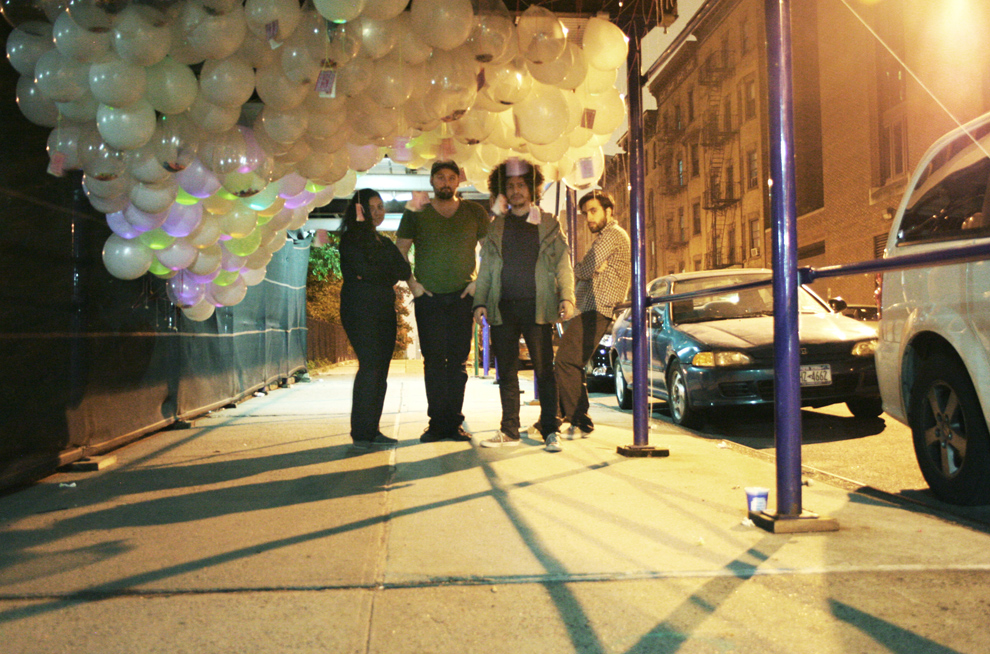
After my final model from last summer was somehow misplaced in the trash, then the compactor where it was crushed into a little cube before being placed in a trash barge a mere 36 hours before the final review, five months later the lazy days of winter break seemed like a good time to rebuild. One of the benefits of digital fabrication is you just have to re-lasercut all the files, though there is a certain level of zen like calm in folding and gluing 300 panels. The modular panels and truss were created in grasshopper, then scripted in rhino to unroll onto sheets.


more »

Popularity: 14% [?]
2009034 Tags: architecture, grasshopper, gsapp, parametric, school, studio | 1 Comment »

summer studio

summer


Quick Project Description: In America, the most active civic space is no longer public plazas or parks, but rather a new typology­—“town centers”­—Mall/Promenade hybrids of housing, public space, and shopping. This is where people gather, and into each of these places a civic function is inserted­—political debate arenas where the viewer is no longer passive but takes an active role in the decision process, and is loudly confronted with a newfound political reality.


The project becomes a version of American Flag 2.0, something that doesn’t only wave from above in the wind, but rather demands work, a back and forth engagement between voter and candidate. The goal is that these can be sold to these town centers and through their sheer ubiquity and the rise of spectacle as a means of increasing shopping revenue, these proposals become the new American generic space.


Moving forward from midterm, I began identifying eight specific sites in the six battleground states that will have the most impact on the 2008 election. Two sites were explored further, specifically the purplest county – Franklin – in the purplest state – Ohio – located in the Columbus metroplex area. The Easton Town Center in Ohio displays a number of contradictions, home to the largest university in the country, but also numerous military contracting connections, including North American Aviation which manufactured components for the B-1 bomber in addition to missiles and guidance systems.


Each site was chosen not only for its status as a battleground state, but also as the 21st century incarnation of what constitutes public and civic space in America today, the outdoor shopping, dining, living spaces that are labeled as the new urban Town Centers, evolutions of the 1970s covered mall. If the goal is to affect and inform the greatest number of voters/shoppers, this is where the project would have to go, a placeless place lacking any form of civic engagement


more »

Popularity: 15% [?]
2009034 Tags: architecture, fabrication, gsapp, school | No Comments »

pavilion fabrication

fab01


We had free range of the lab last summer, and tried to use as many of the machines as possible: waterjet aluminum, foam milling with plaster casting, and metal cnc milling of a 1″ thick slab of aluminum (inaugural use!) for the joint capsules. It all came together in five minutes, ten minutes before the presentation.


The project team also included Brad Engelsman and James O’Meara


more »

Popularity: 8% [?]
2009031 Tags: architecture, graphic design, gsapp, school | 1 Comment »

max renderings

ultra05


Whenever you have a computer course at a university, there’s always a struggle to make it more than just about being a software jockey. The ultrareal course did a good job straddling the line of teaching us to use the program, 3ds max, but also thinking about different techniques of representation. I used my studio project from the summer as a testing base, both because I wanted some new images and it was convenient.


more »

Popularity: 11% [?]
2009023 Tags: architecture, catia, gsapp, parametric, school | No Comments »

powercopies through excel

excel1


This was an attempt to use an excel file to control the openings of a number of powercopies in catia. There is a lot of potential in creating a hive of components that can be individually optimized through excel and modeFrontier. If I get some time, I want to come back to this.

Popularity: 7% [?]
2009022 Tags: architecture, catia, gsapp, parametric, school | No Comments »

circle packing

test01


This was an initial experiment setting up a parametric model in catia that could be tested and optimized in modeFrontier. The goal of the test was to (1) determine the shape of a base surface and (2) calculate the optimal circle radius, that would create an optimal component suface with a minimal amount of circles that maximized the total area. The results produced both a flat surface with a few large circles and a more highly deformed surface that included more tightly packed circles.

Popularity: 9% [?]
2009021 Tags: fabrication, gsapp, school | No Comments »

glueless joints

fabrication1


A very early fabrication project using laser cut plexi and the heat bender in the shop. It was super difficult to get a smooth deformation on the petal forms – using a heat gun to slump the plexi over a form would have been far superior.

Popularity: 5% [?]
20090123 Tags: architecture, catia, gsapp, parametric, school | No Comments »

optimizing smart component geometry

component

Part of the Adaptive Formulations visual studies course taught in conjunction with structural engineers from Buro Happold. We were designing parametric skin components in catia then using optimization software modeFrontier to generate a large design space of high performing designs. The size of the apertures of this system are dependent on the surface deformation of the underlying base surface, and I’m testing for a base surface with a maximum deflection that results in the largest aperture size.

more »

Popularity: 10% [?]

COPYRIGHT © 2011 \ JOHN LOCKE \ ALL RIGHTS RESERVED (RSS)

TOP OF PAGE

last update: 201102:1627