JOHN LOCKE, ARCHITECT

  • Featured Work
  • Design Blog           
  • Photography
  • Graphic Design
  • Dept of Urban Betterment

About

Hello. I live in New York and work at The Living. I hold a graduate degree from Columbia University's GSAPP and an undergraduate architecture degree from the University of Texas at Austin. I have more than seven years of professional experience at noted architecture firms, including New York-based Rogers Marvel Architects and SOM. I also tackle freelance graphic and photography work with my partner in crime, the multi-talented Jackie Caradonio at Lion in Oil. In addition, I teach a course, Hacking the Urban Experience, at Columbia. View my CV here: CV(html). Thanks and have a nice day.

Contact

john.h.locke{at}gmail.com
310.735.3333

Architecture Portfolios

Portfolio 2002-2007 (issuu)
Portfolio 2008-2009 (issuu)

HOME / BLOG

urban

20130520 Tags: fabrication, gsapp, interaction, new york, research, teaching, urban | No Comments »

HACKING THE URBAN EXPERIENCE III – STUDENT WORK


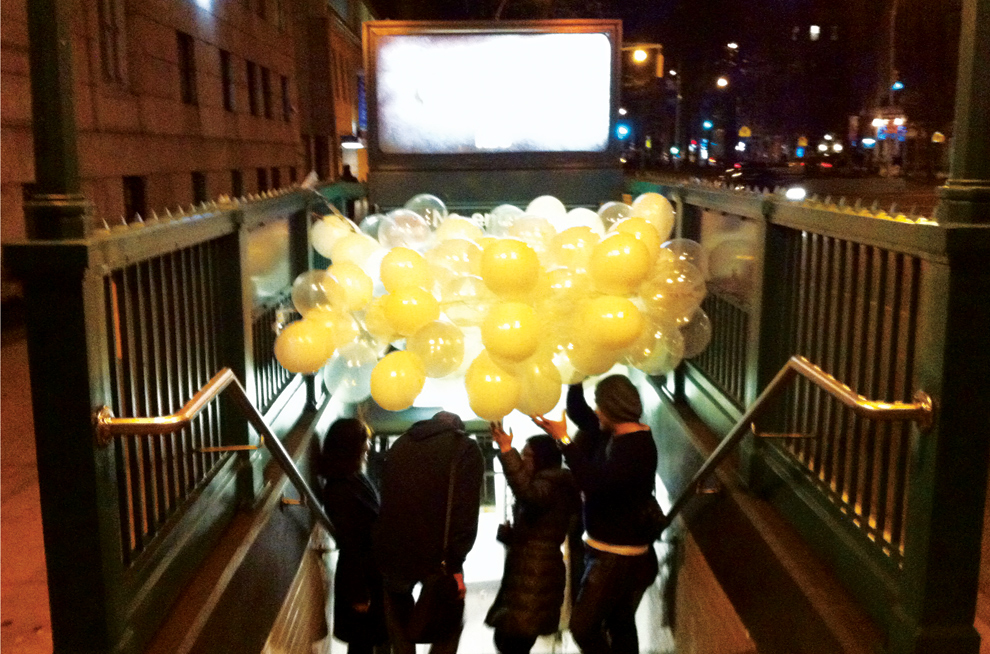
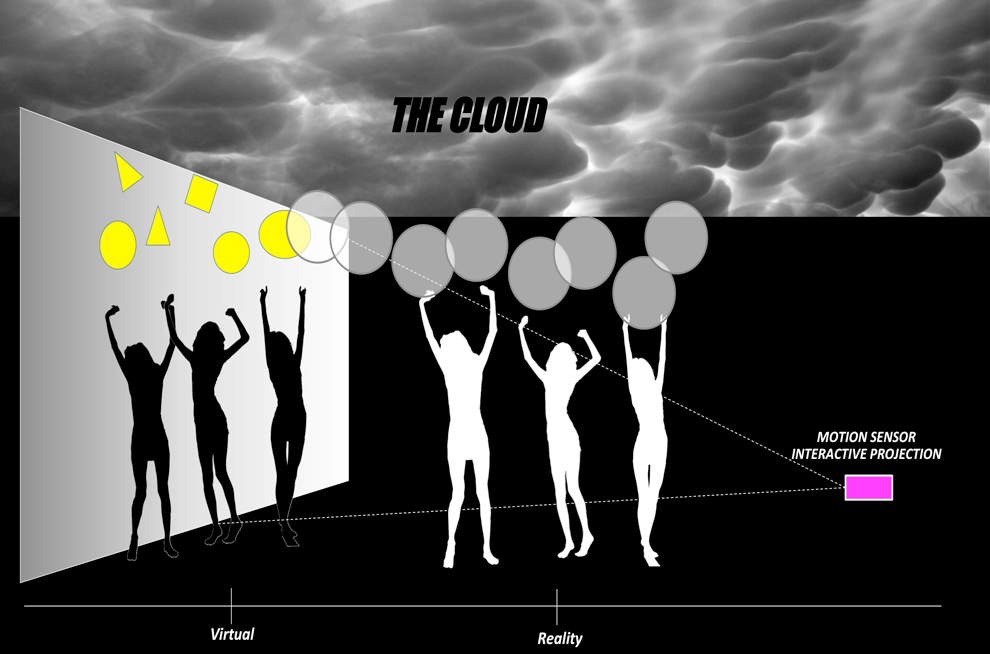
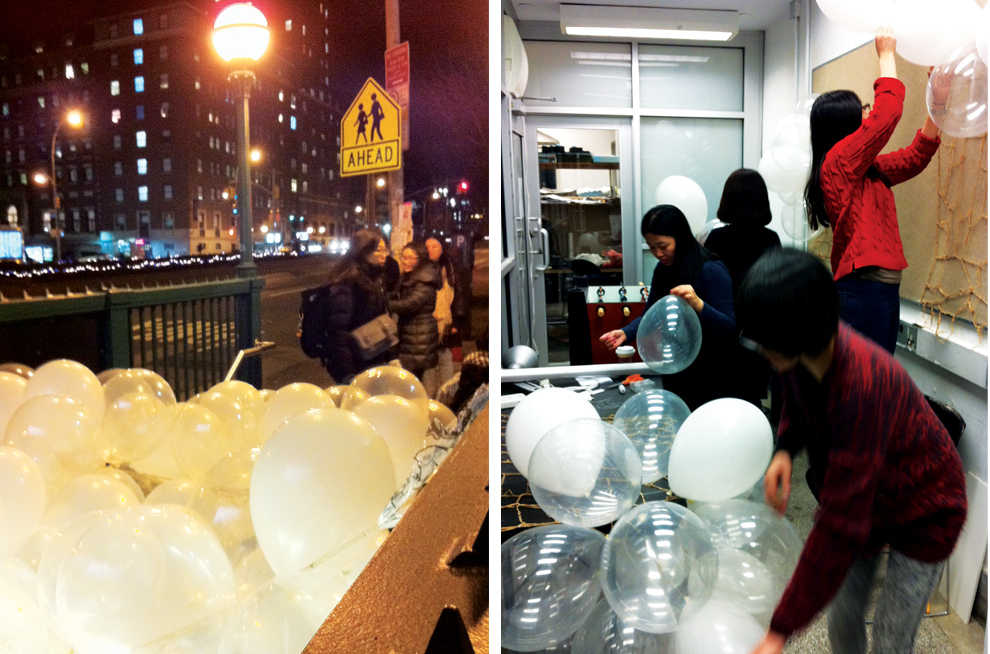
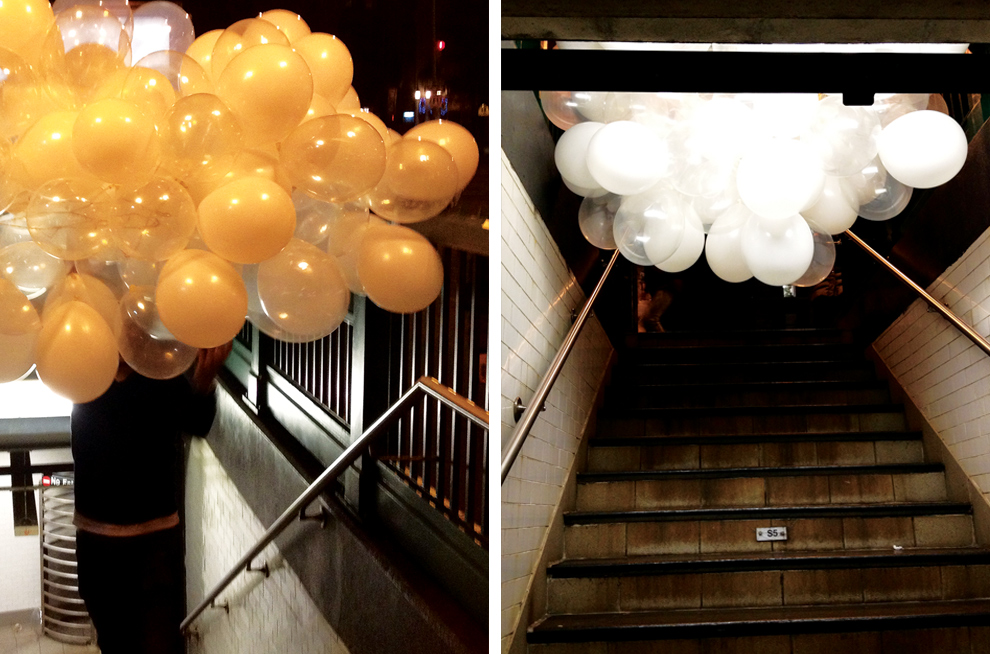
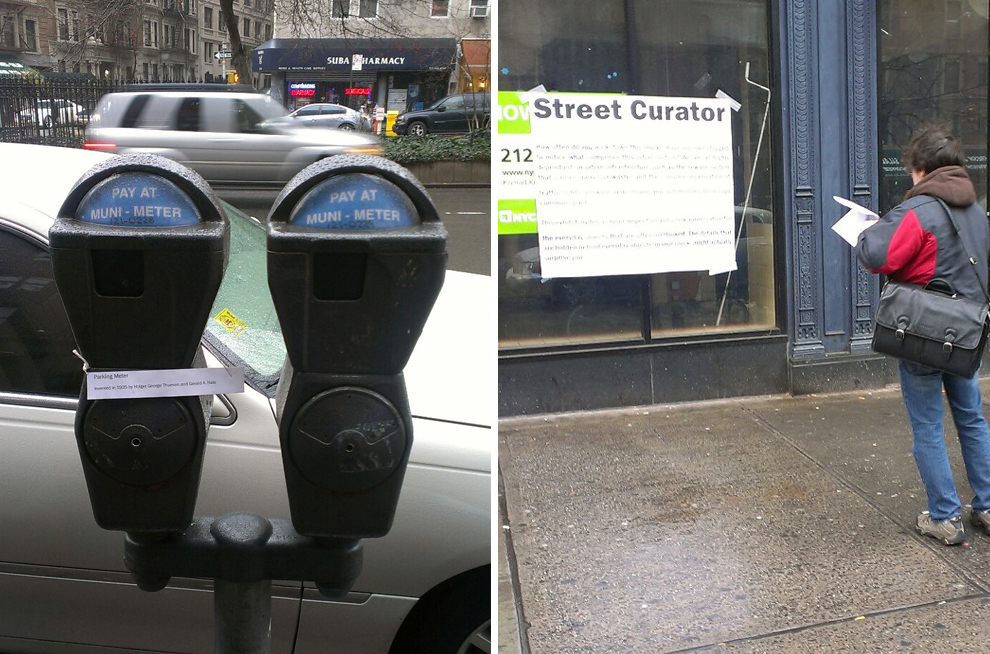
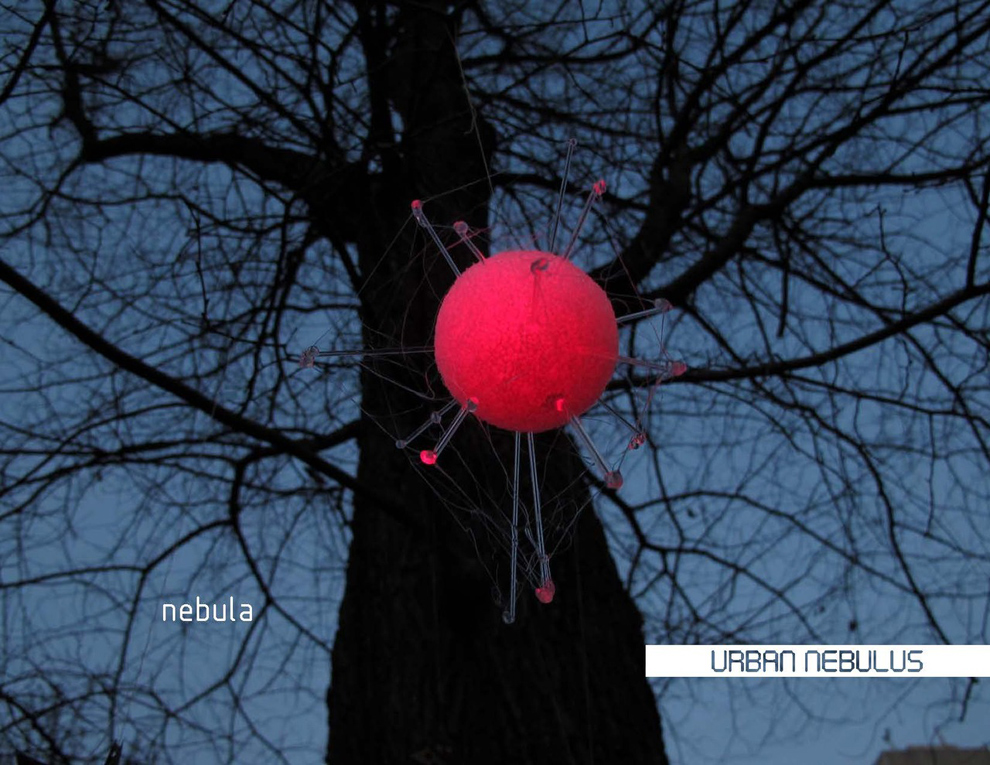
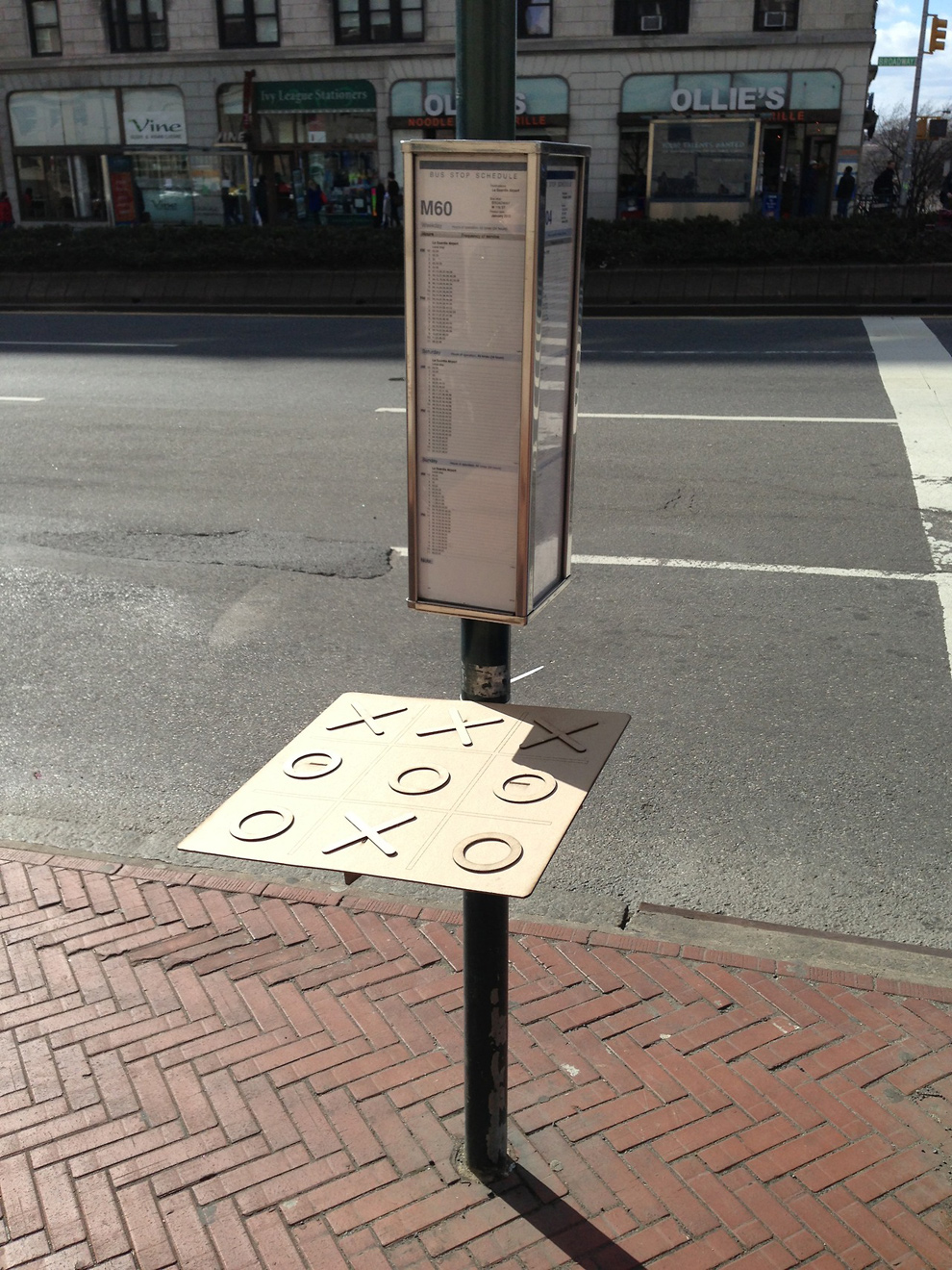
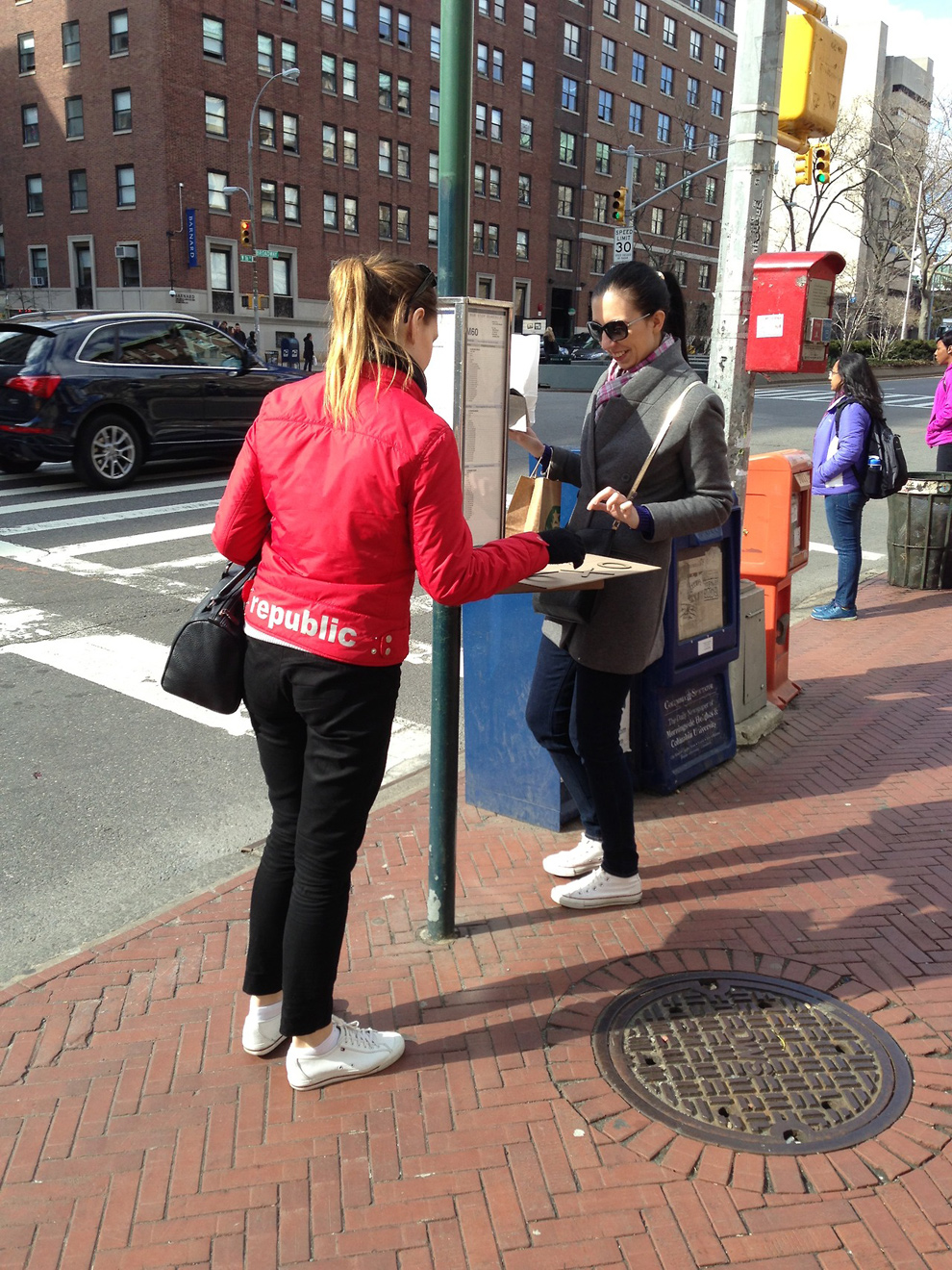
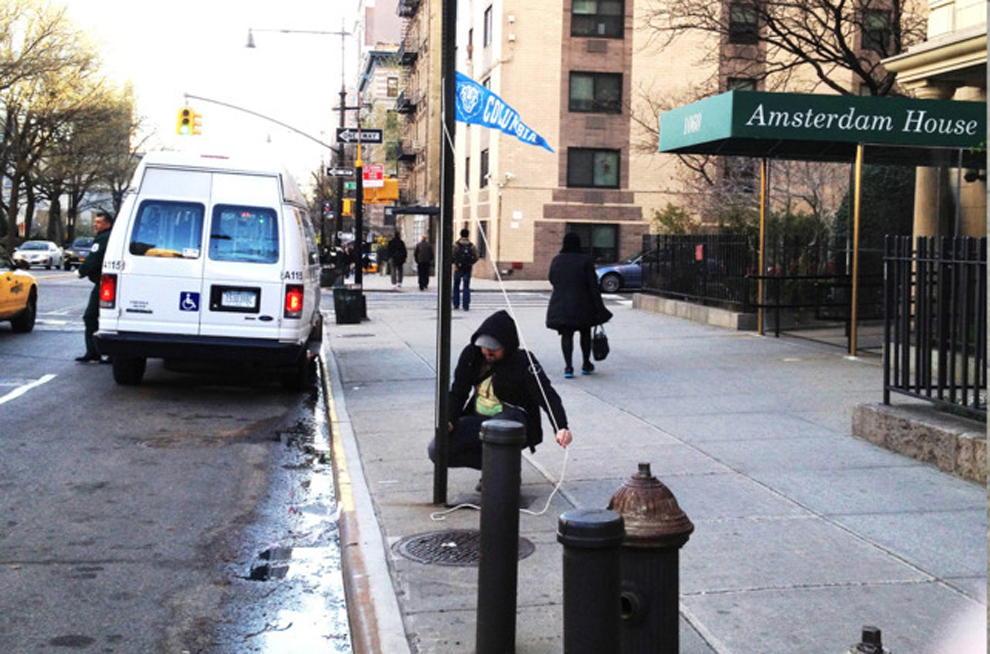
While my natural tendency can lead toward convolution, in the interest of concision here is my attempt to sum up the course objectives in one sentence: “to self-initiate and identify a problem statement relating to the urban environment, and then manifest a possible solution through a public, physical object, while confronting the myriad issues associated with that decision.” Problems addressed included the notion that strangers occupying proximate space are too disconnected – how can you encourage interaction? As well as the problem of physical space inducing a heightened sense of agitation during a stressful time (finals on a college campus) – how can a space be created that produces an alternately playful, soothing affect for passersby? So with that, here’s a sampling of self-initiated work from the third iteration of HTUE.


See previous work and extensive course descriptions here:
Hacking the Urban Environment II – Student Work
Hacking the Urban Environment I – Student Work


All images and work by students Amir Afifi, Hanxiao Yang, Marielle Simone Vargas, Wilbur Lee and Will Chen


Assignment 01 – PARASITES


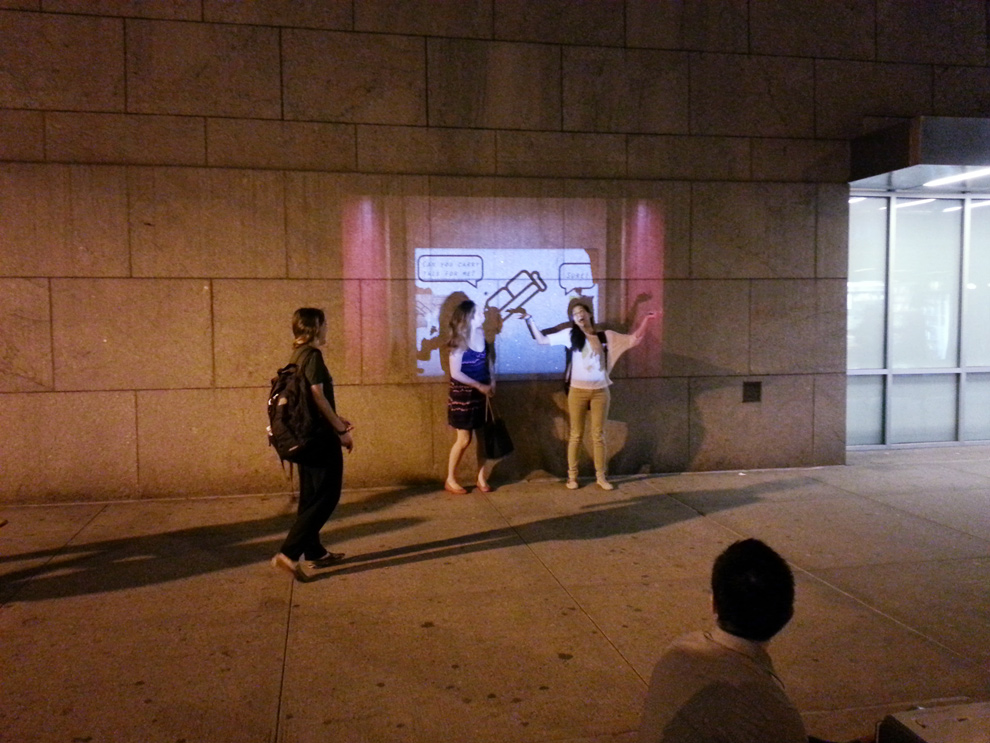
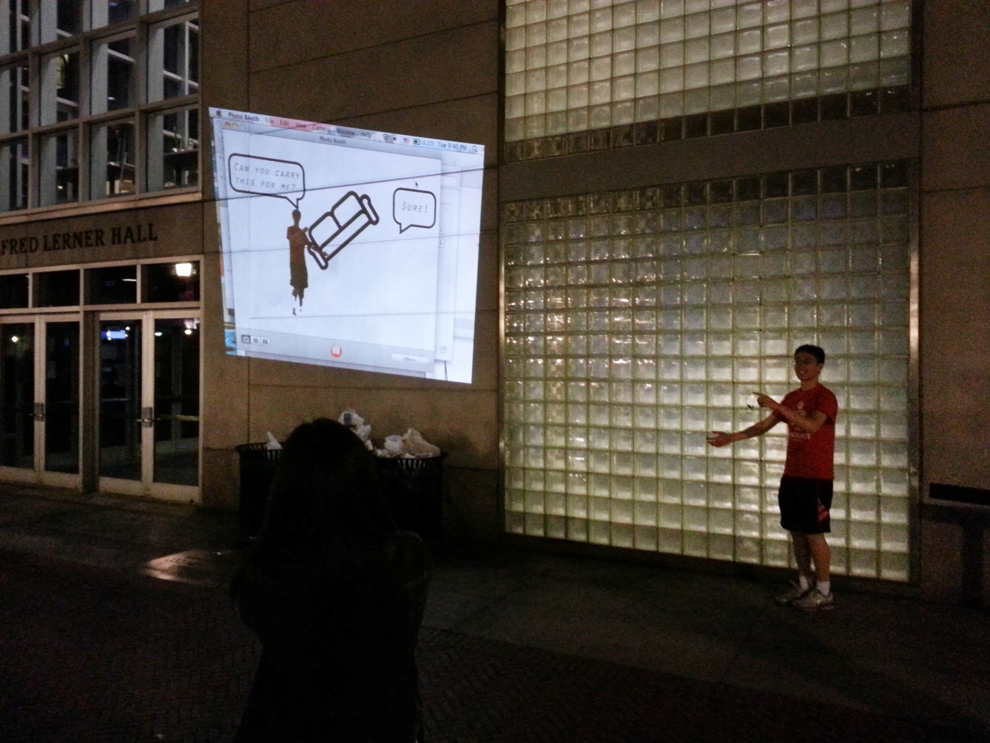
Assignment 02 – LIGHT PROJECTION


Assignment 03 – FINAL

20130511 Tags: architecture, competitions, fabrication, graphic design, urban | No Comments »

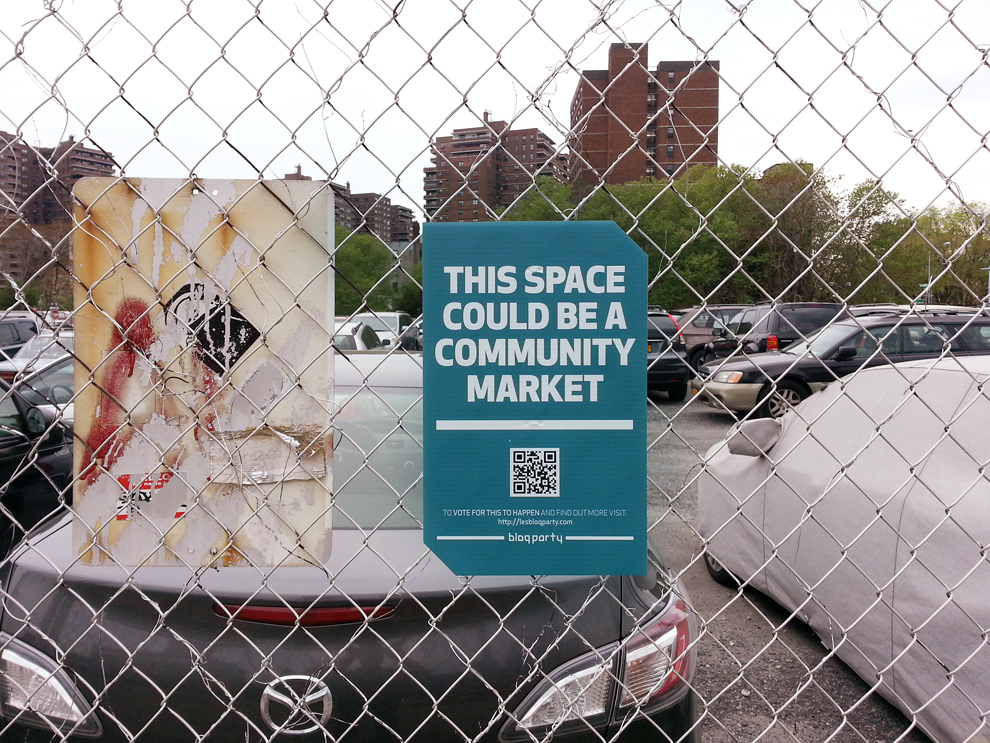
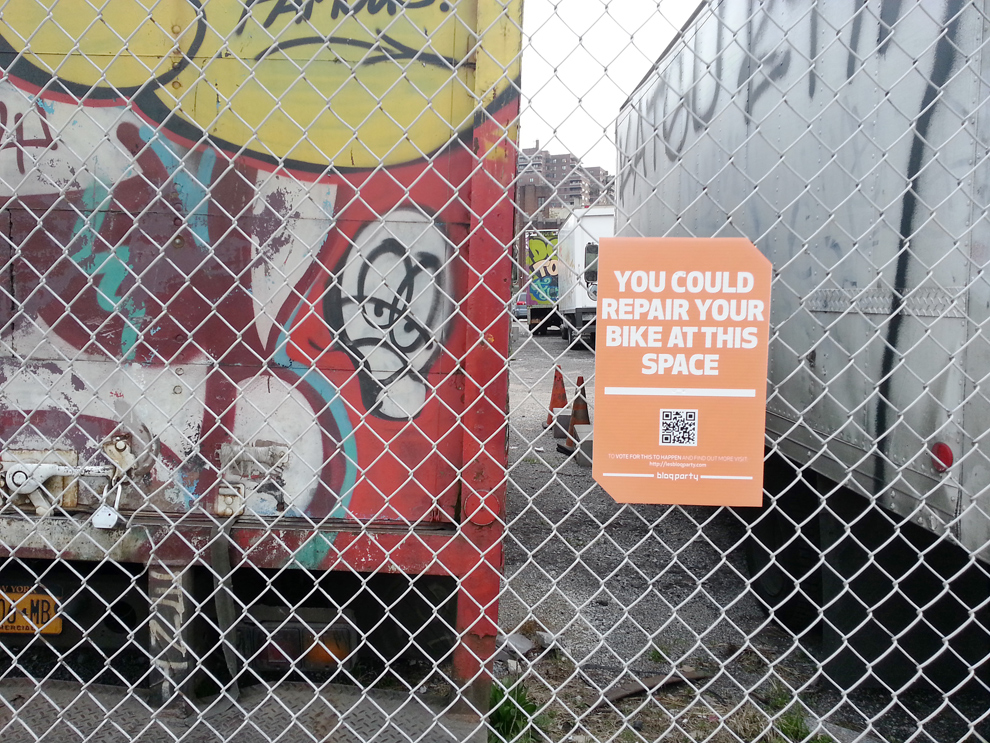
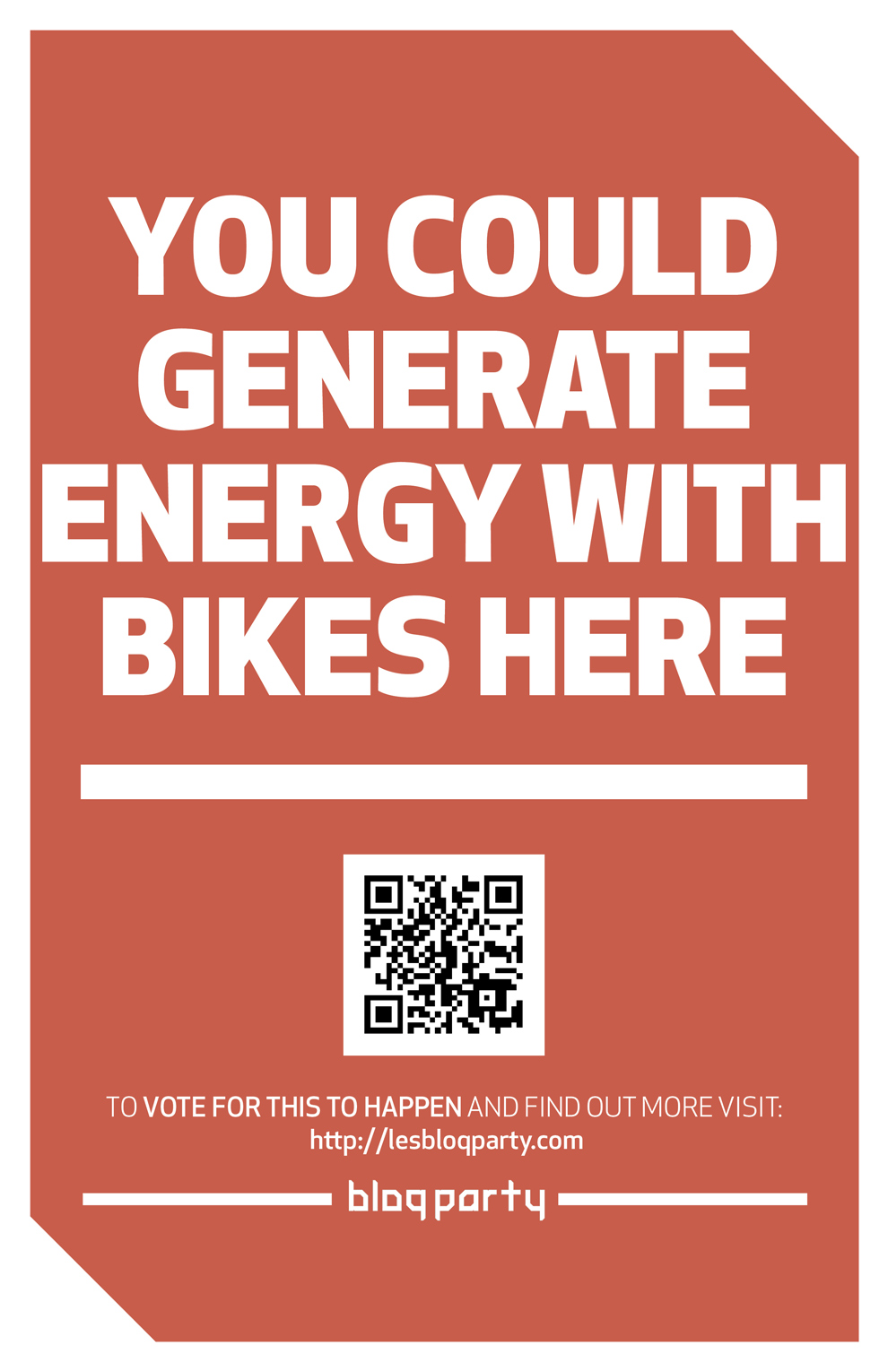
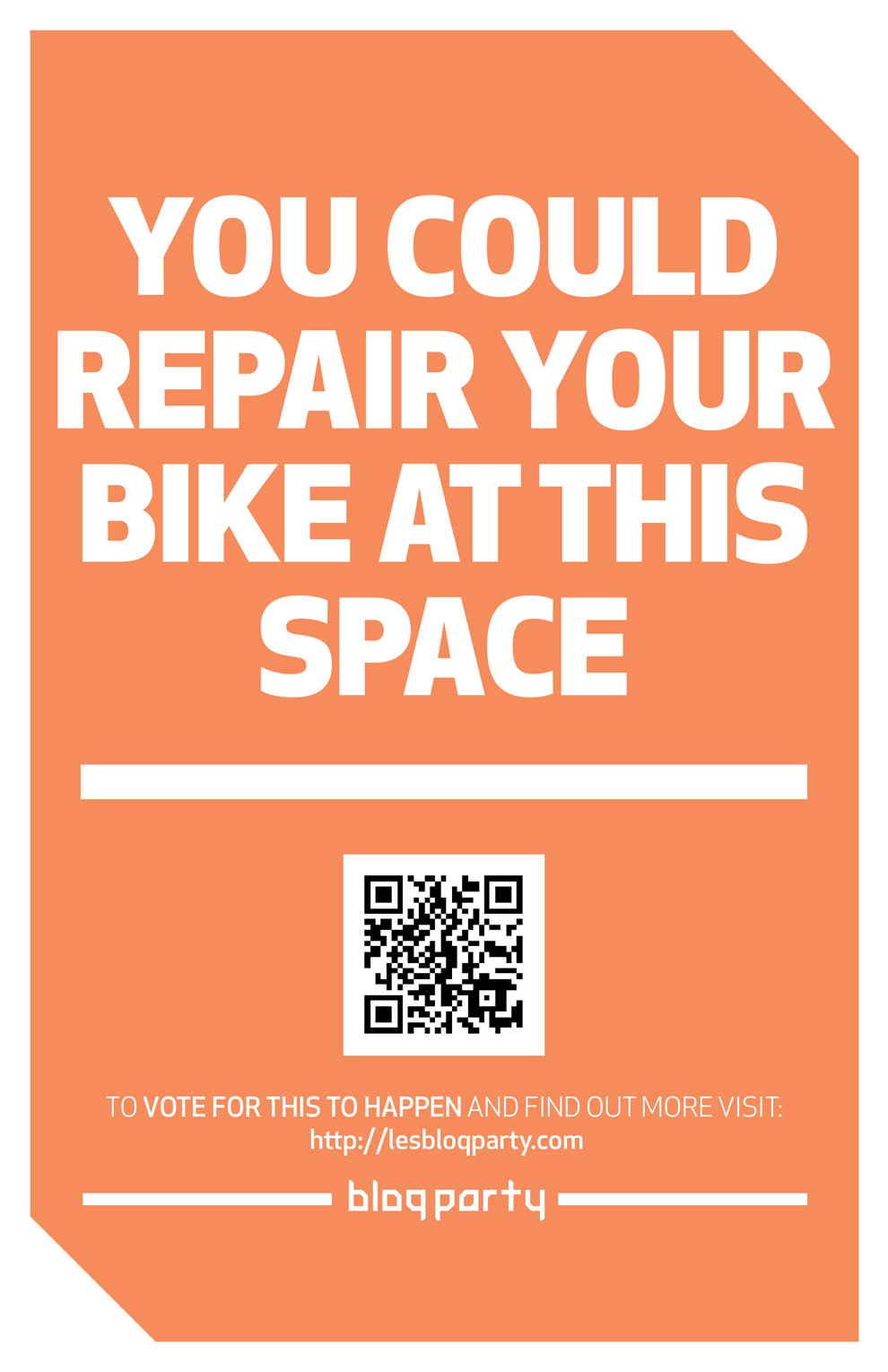
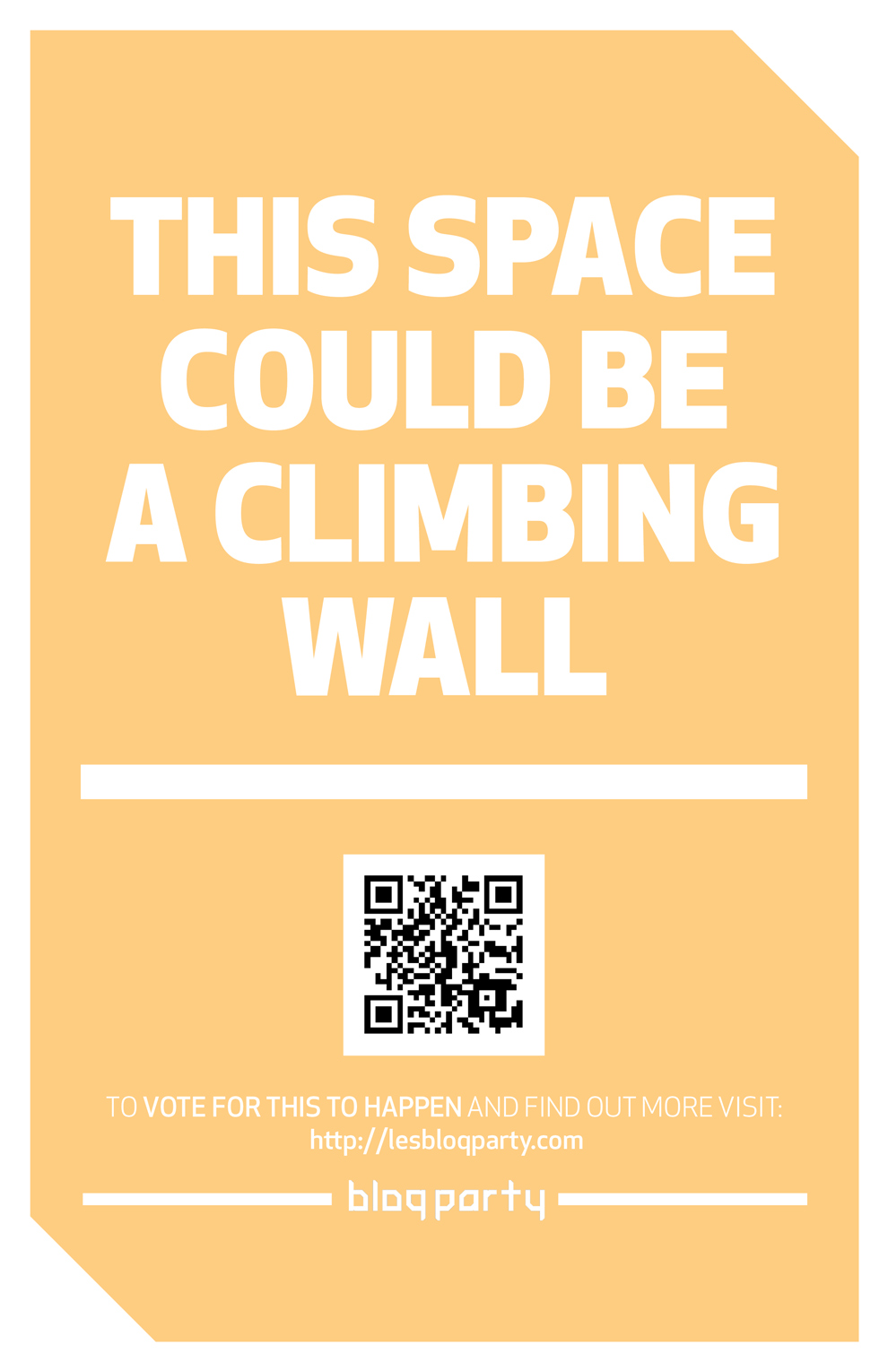
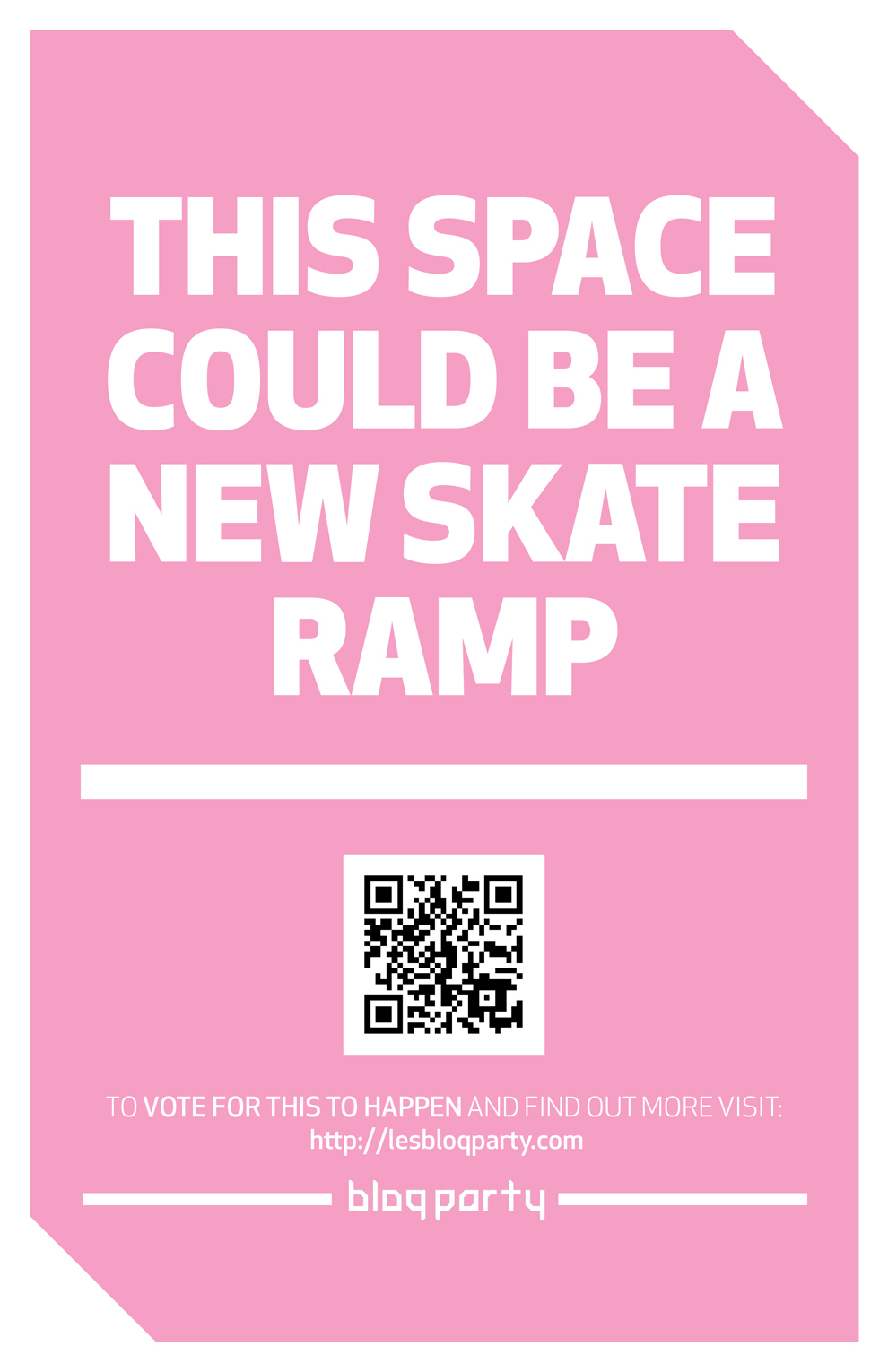
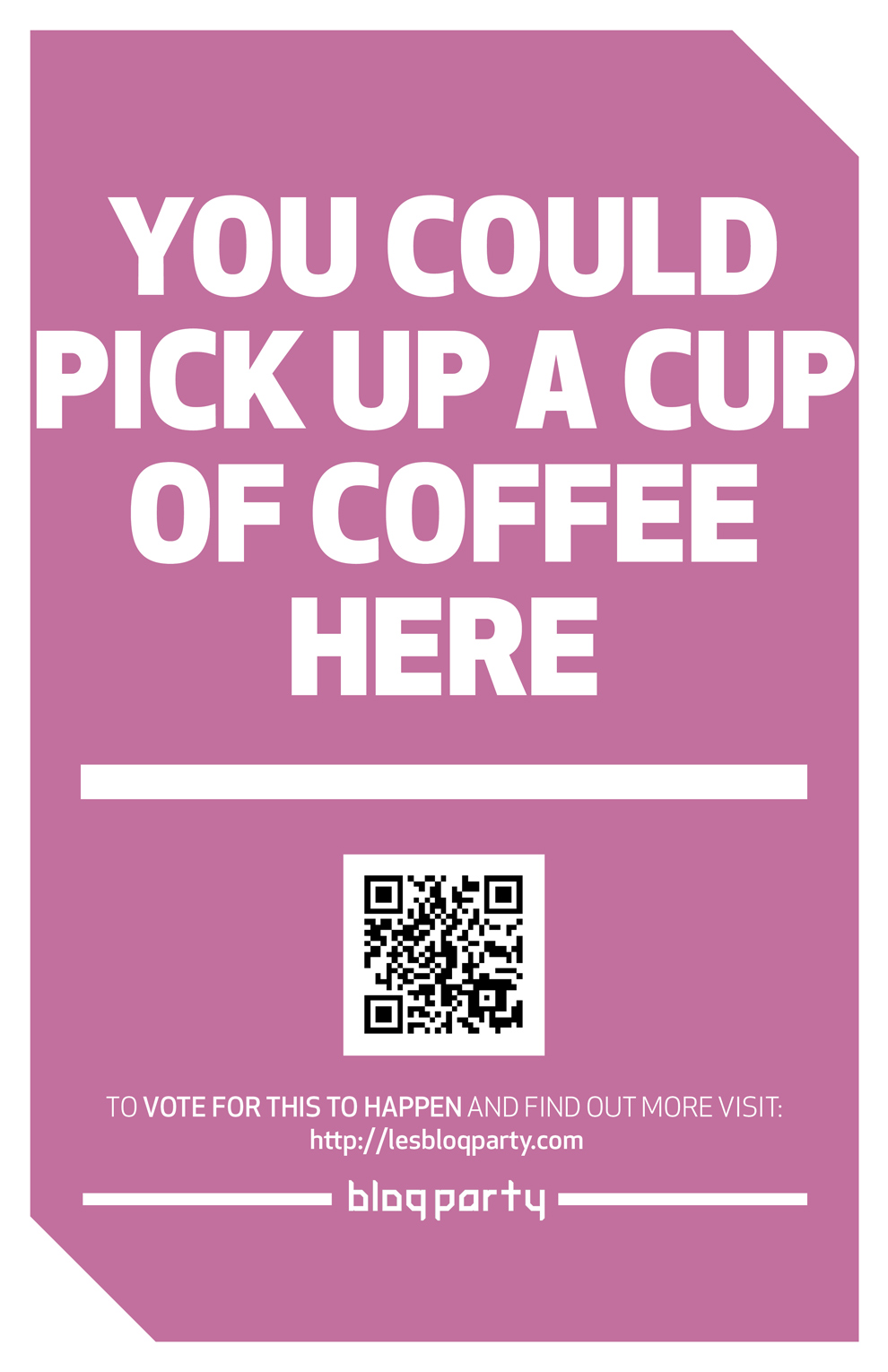
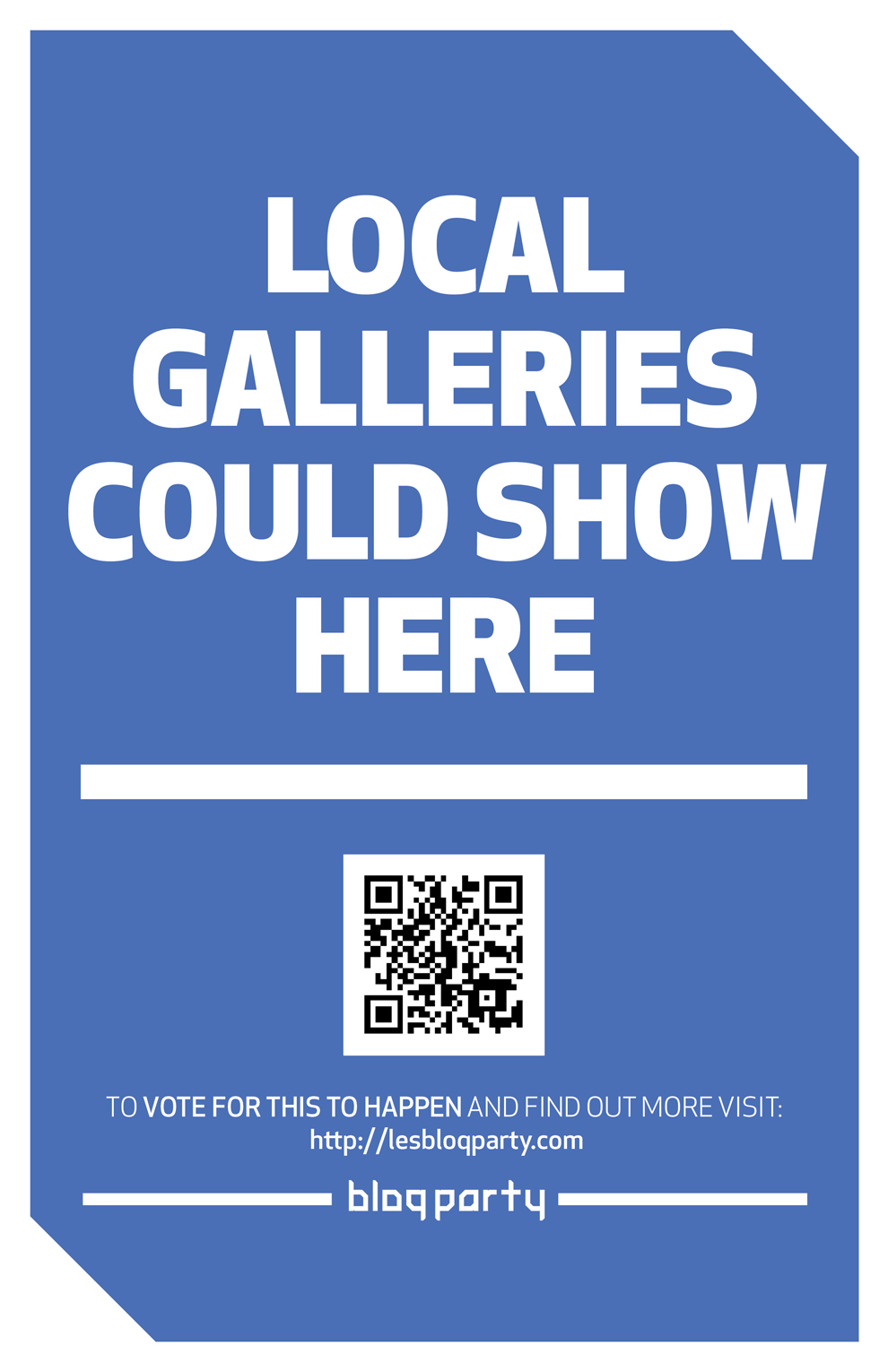
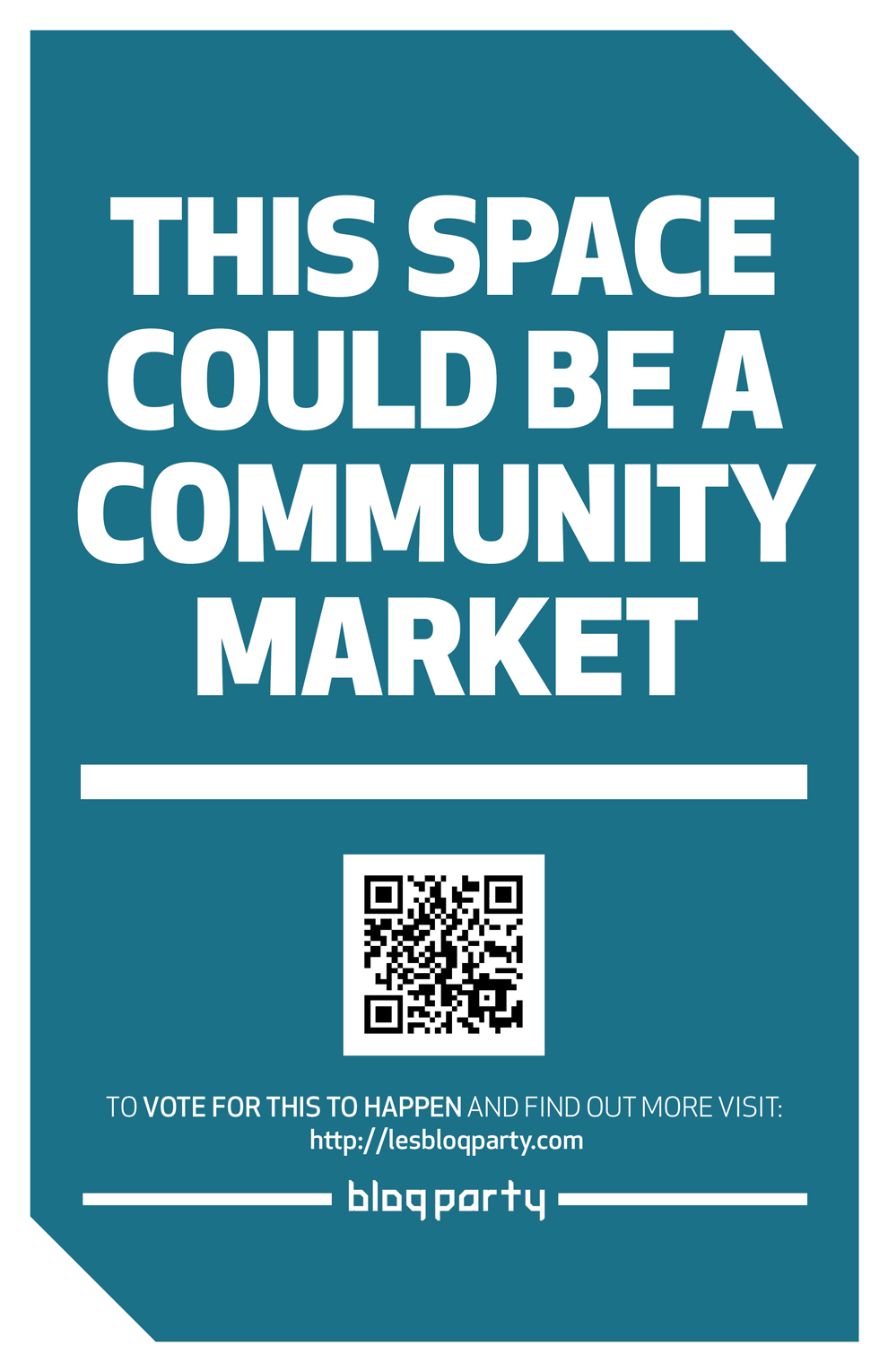
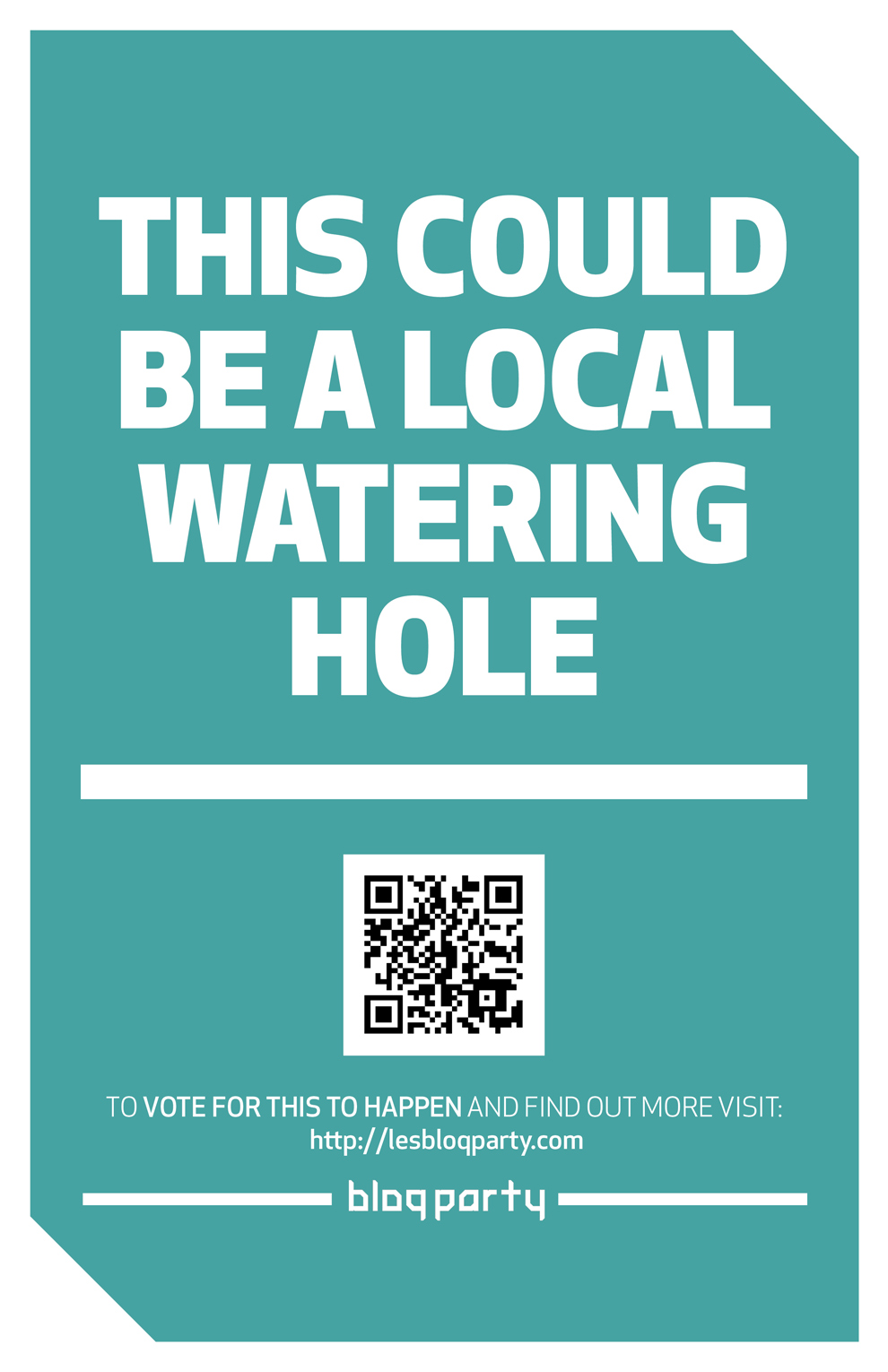
This space could be…


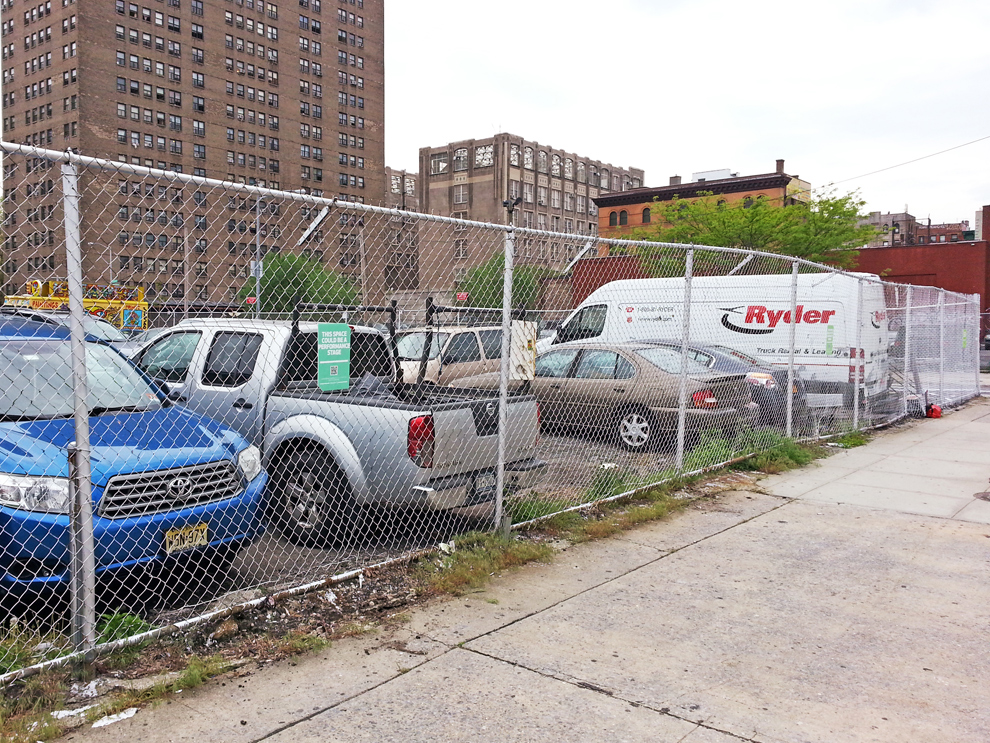
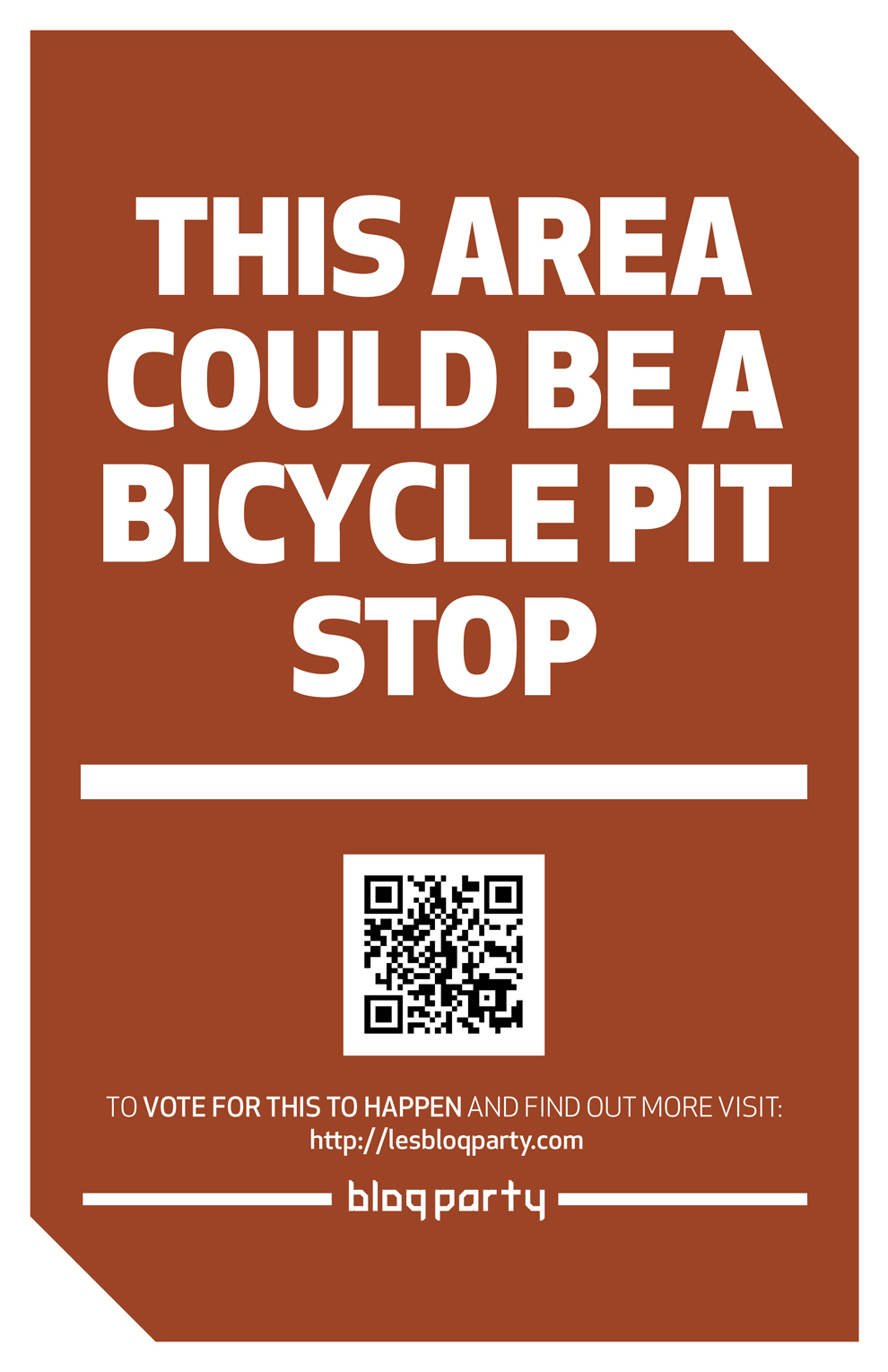
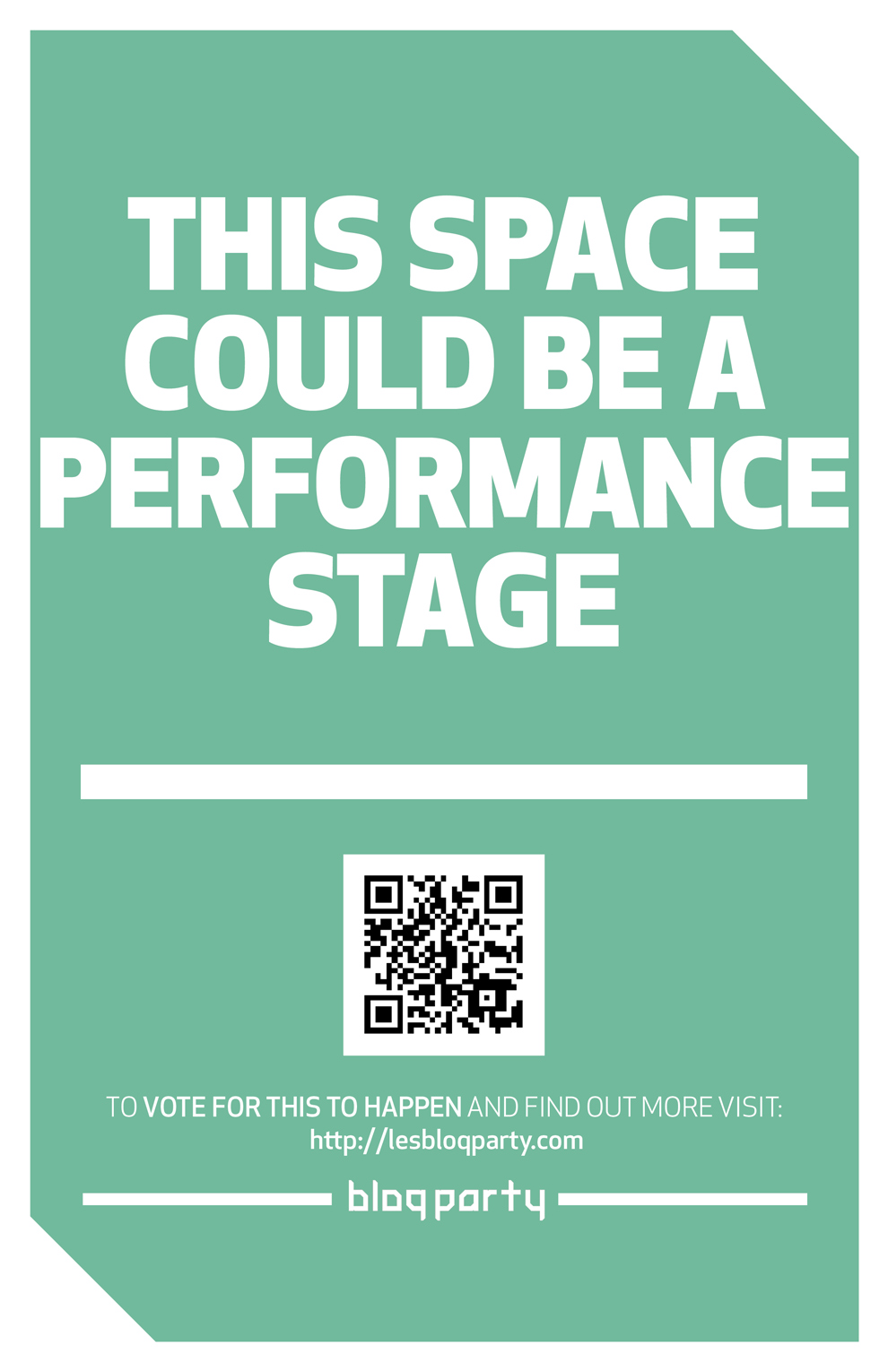
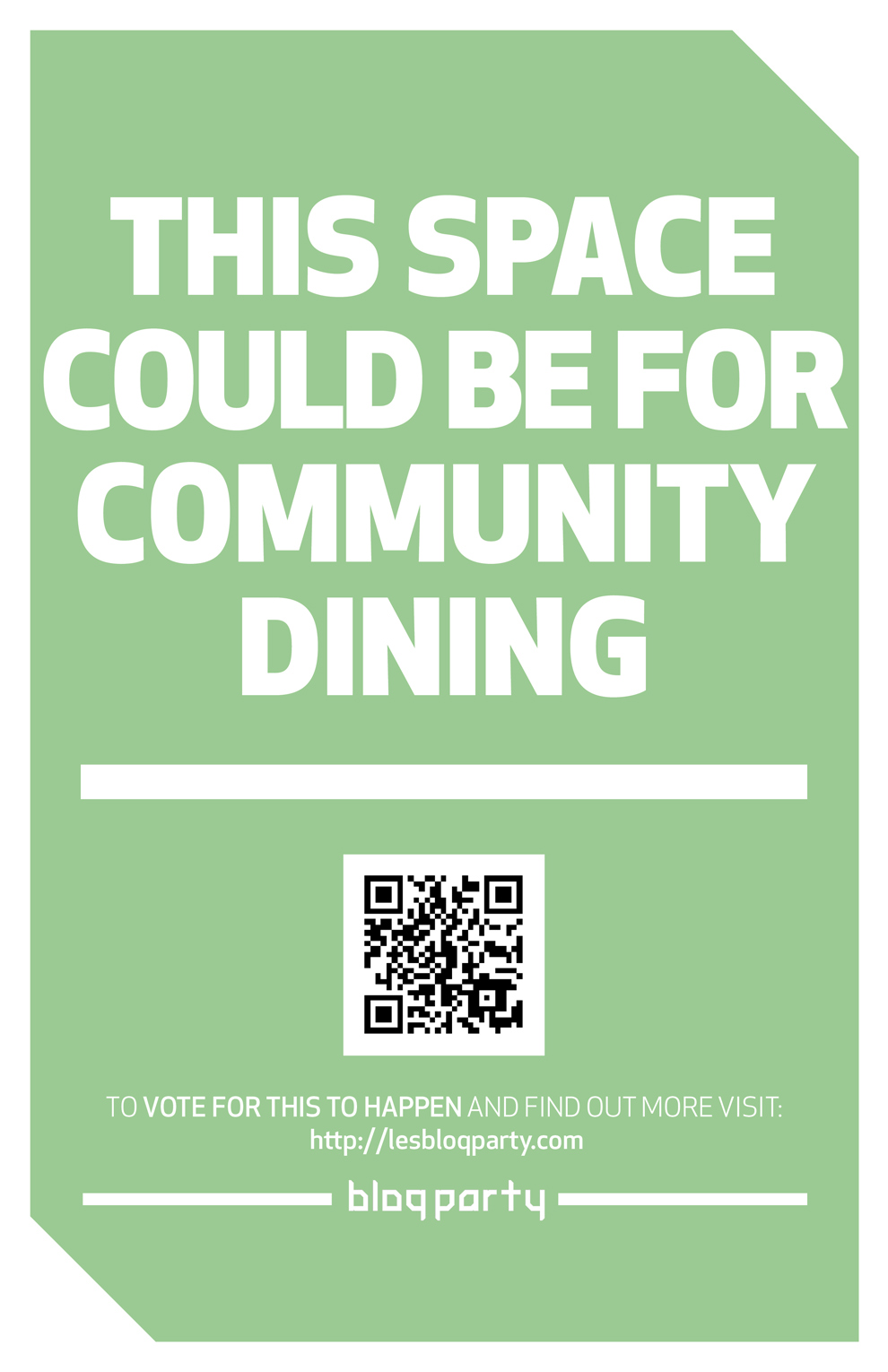
To generate interest and excitement for our BLOQ PARTY proposal, we wanted to start a conversation by showing how the program elements we produced could potentially activate the competition site. Competitions, design proposals and urban space planning oftentimes fall under the radar of the actual users of the site who are both unaware that a competition is taking place and then have no voice in the process or outcome. The plastic signs are intended to link the digital proposal to an actual physical space – less obscure websites and more public posters. It also helped to see how our space division laid out on the actual site, we had treated the eastern, narrower plaza area as space for movement and dynamic interaction – biking, running, skating. The western, more generous plaza was designed for slower, more spontaneous meeting areas. We hope the signs can begin to create a diaglogue for the best use of the space including potentially new and different program ideas that can eventually bring the space to life in a vibrant manner for all.

2013053 Tags: architecture, competitions, graphic design, urban | No Comments »

BLOQ PARTY


Designed with Mark Bearak and Yuval Borochov


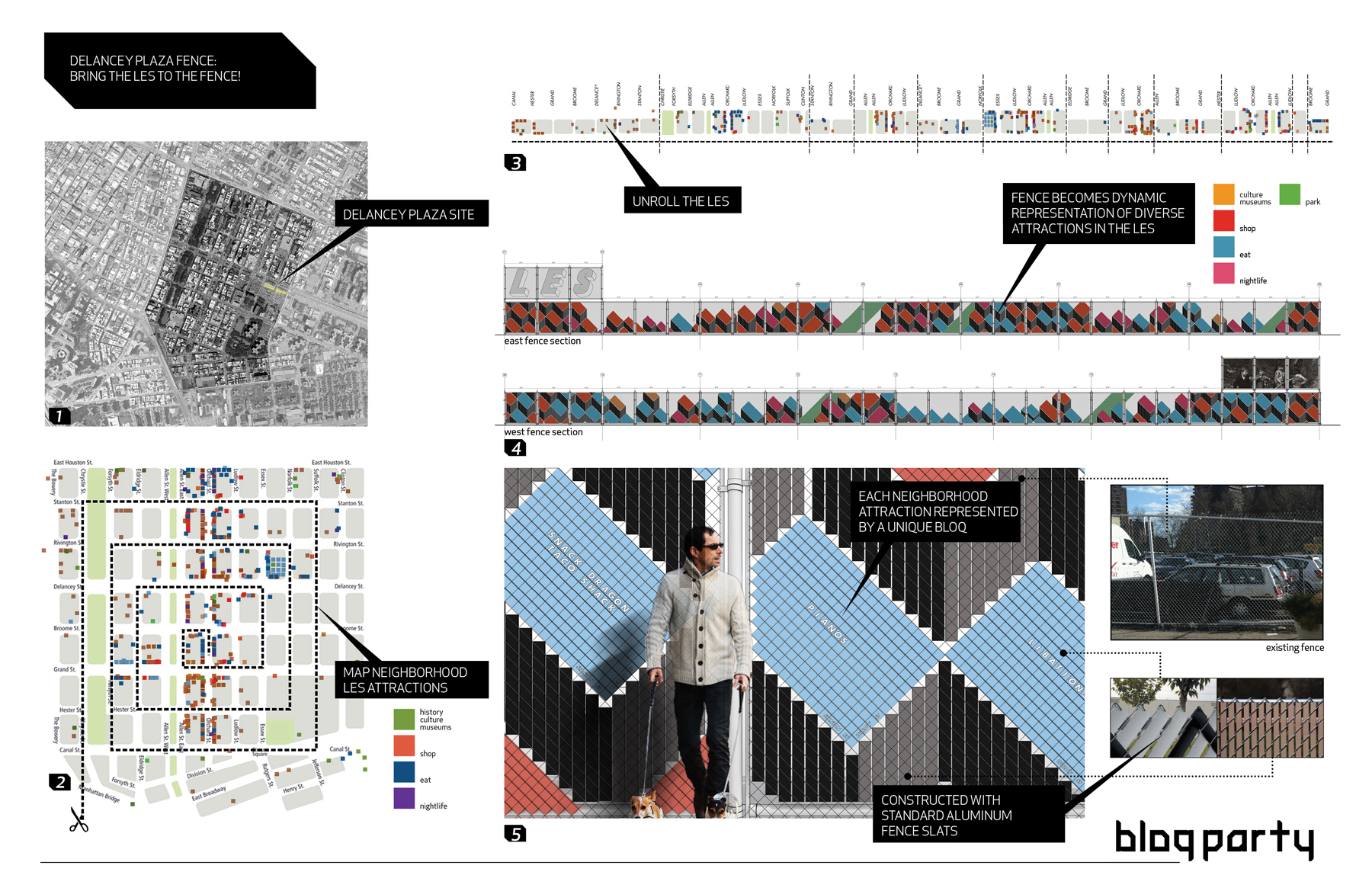
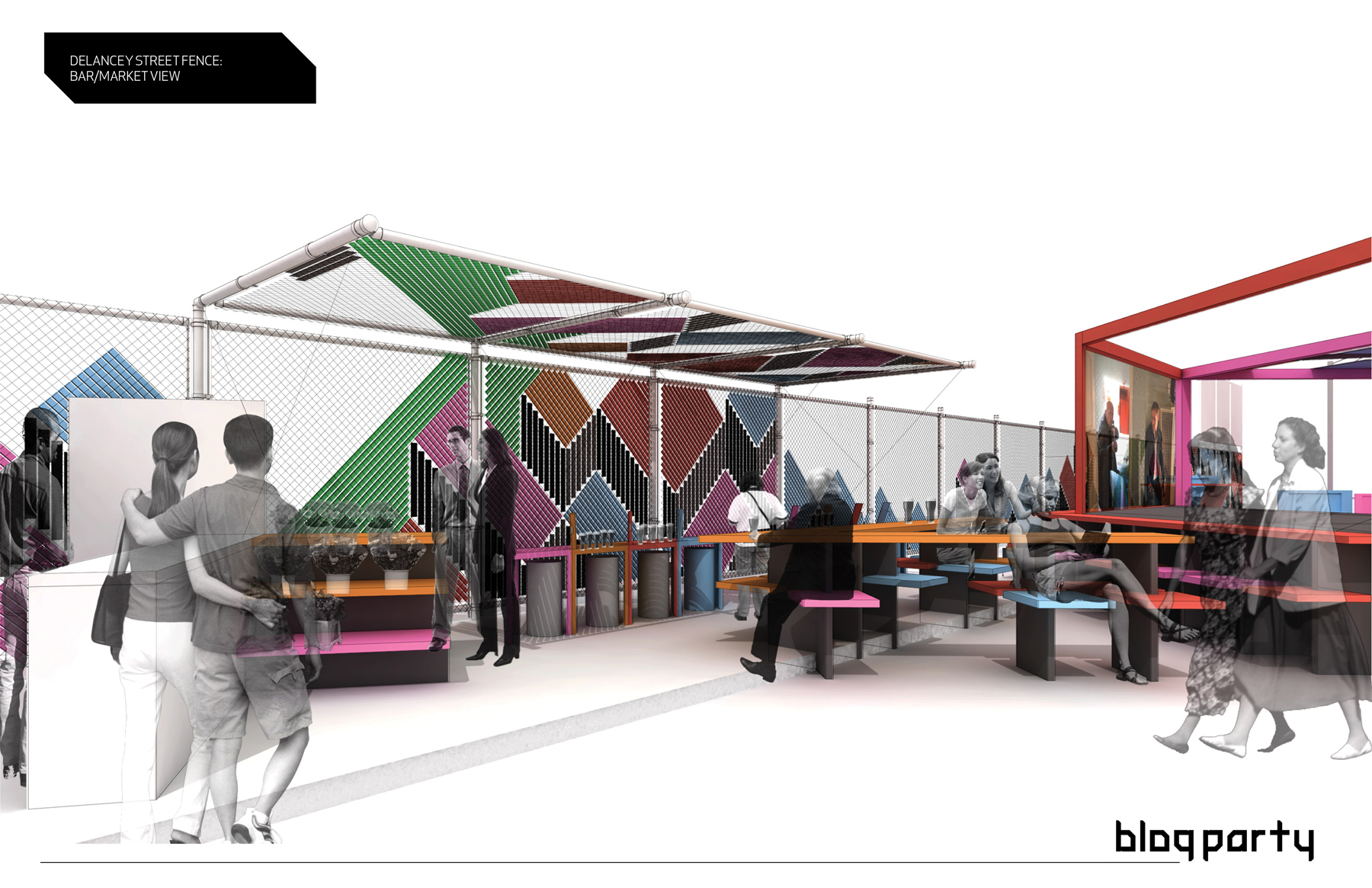
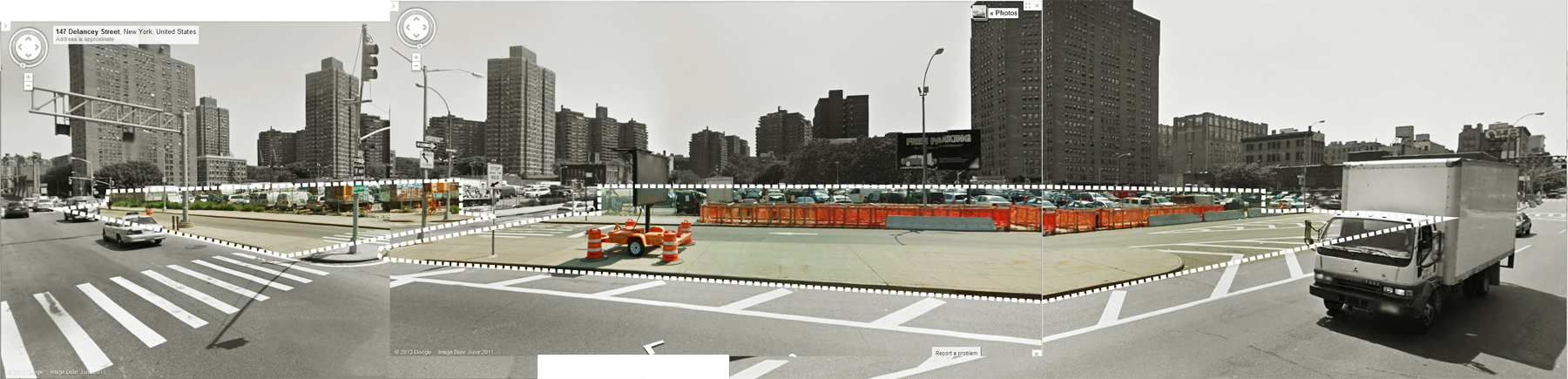
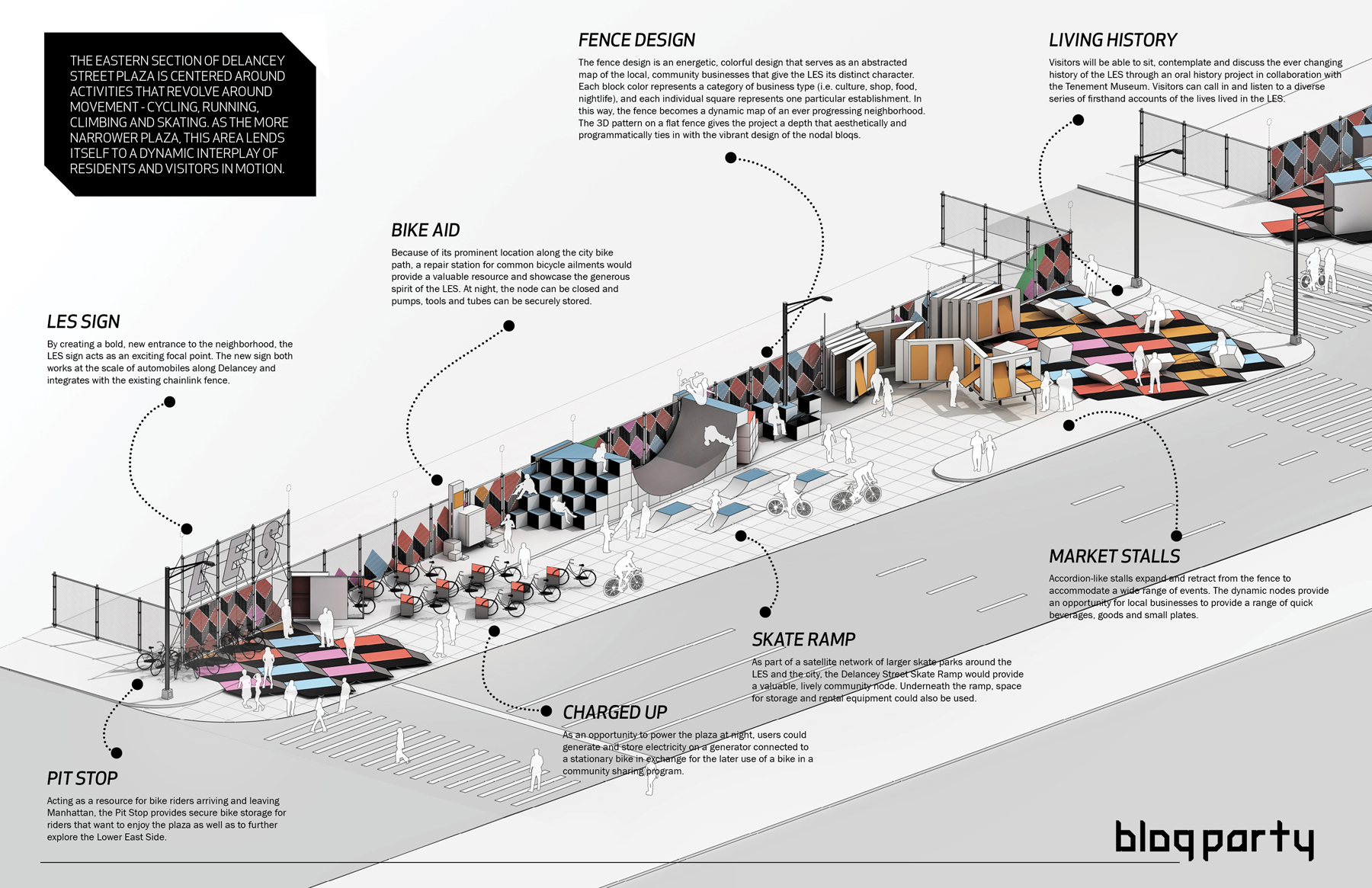
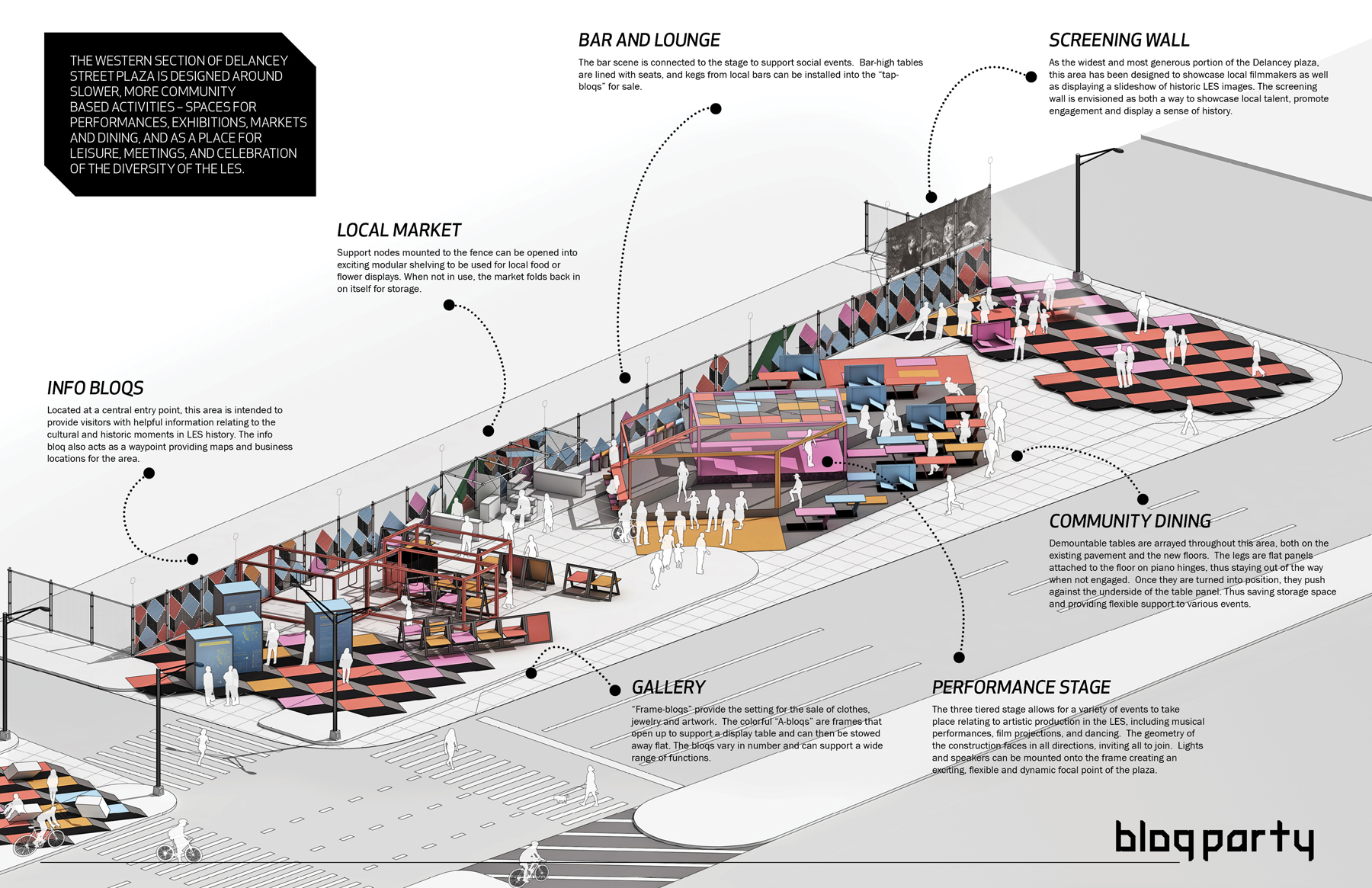
What began as a competition for a temporary rehabilitation of an existing chain link fence along two blocks – adjacent to a pair of parking lots – quickly became a more encompassing proposal as we realized the latent potential of the two narrow, un-programmed plazas bordering the modest chain link fence. Located at the Delancey Street connection to the Williamsburg Bridge, the site acts as the symbolic gateway to the Lower East Side for those leaving and entering Manhattan, and as such, displays a great wealth of untapped design opportunity. As a temporary proposal of less than 5 years duration, we identified a variation of possible plug-in nodes that could be used to test ideas for the site and generate community engagement by bringing the scattered, diverse collection of LES attractions together at the fence, displaying the street-level density and multiple, overlapping functions that have historically characterized the LES. Budget and business plans were also developed to illustrate the feasibility of a more ambitious program at the site through a variety of funding and sponsorship options.


PROJECT DESCRIPTION:
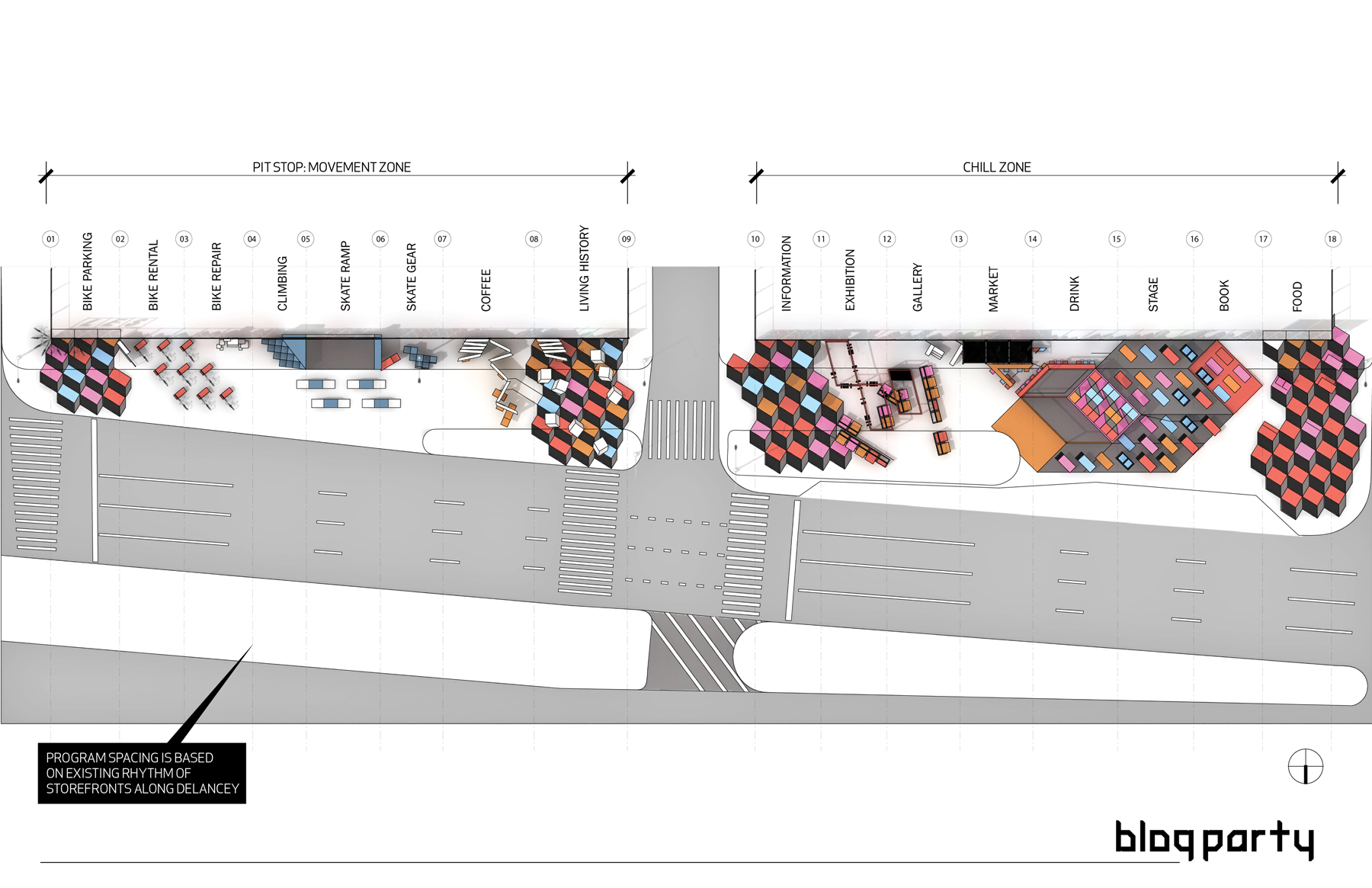
The possibilities of programming a BLOQ are endless, ranging from a bike repair station, to a satellite location of a Lower East Side business, to a concert venue stage. Each block will have its’ own identity, but share geometric cues from its neighbors. In our proposal we will aggregate 16 BLOQS that will serve as a gateway to the LES while also providing an oasis of attractions within the neighborhood.
The site will consist of two city blocks and each section will have its own identity. We call the Eastern section the PIT-STOP based on its adjacency to the Williamsburg Bridge and its planned programmatic functions. The BLOQS located in this section will serve as a way station for pedestrians heading to Brooklyn or entering the LES. This section will have BLOQS with services such as bike repair, coffee and skate gear.


We call the Western section the CHILL space and we will treat it as more of a destination. The width of the site allows for larger gatherings of people who can congregate into the farmers market or catch a drink at the pop-up bar. Our proposal represents a handful of potential BLOQS; over the life of the project there are endless possibilities for temporary and permanent installations.


Further exploring the actual BLOQS, each zone will be defined by a fence which will act as a billboard for the community and patterns placed along the ground. Each section of fence will be a billboard representing an actual block of the LES. The design of each section of the fence will be a series of parallelograms that advertise local businesses within the represented blocks of the LES. The parallelograms will be colored based on following four categories: Shop, Eat, Explore & Nightlife. The adjacent ground will be a continuation of this theme containing patterns unique to each BLOQ.


The most liberating feature of the BLOQS will be created when the fence is used as a jumping off point to an architectural installation. We will bend, fold, cut, extend and warp the fence to accommodate the unique functions of each BLOQ. In some cases the drama of the gesture will be relatively modest; in the case of the market the fence will simply be extended horizontally to create a canopy to protect the produce. In more complex situations, structure and furniture will be built off of the fence to create a space suitable to host large groups of visitors. One of the largest BLOQS will be composed of a bar, stage and viewing area built within the distinct vocabulary of the installation.


The main purpose of the BLOQ installation is to activate the space. The BLOQ will not only serve as a gateway to the LES, it will serve as a destination for all New Yorkers. The project will never be static and its potential can be tested over time as the project evolves to suit the changing needs of the community. Eventually the project will not only be a representation of the vitality of the neighborhood, it will also serve as a benchmark for the evolution of the Lower East Side.


http://newyorkcity.arthere.org/art/bloq-party-2/
http://lesbloqparty.com


Existing Site

2013014 Tags: architecture, fabrication, interaction, new york, research, teaching, urban | No Comments »

HACKING THE URBAN EXPERIENCE II – STUDENT WORK

I spent a second semester with a great group of young architects, urban designers and planners teaching a course at Columbia. The class was titled “Hacking the Urban Experience” and was about a number of things I’m interested in, specifically how to fabricate, repurpose and interact with urban space. It was a very good short semester and I was super proud of all of the student’s work. I thought the ideas went deeper and successfully built off the earlier semester. All lectures and process work are archived on the class tumblr: http://hackingtheurbanexperience.tumblr.com. Classes typically took the form of lectures on precedents and concepts, a discussion of student work and tutorials on materials or software techniques as required. Topics during the semester included overviews of unsolicited architectural proposals, building-scale light projections, inflatable materials, urban siting opportunities and community/crowd sourced funding.


Course Description
The course goals haven’t changed dramatically since the last semester, the course still seeks to assert the relevance of the fabrication tools at our disposal as potentialities for social and environmental relevance. Through the re-appropriation and re-imagining of existing urban conditions, the student will design and fabricate a working prototype that embraces the messy reality of our city and promotes community involvement. The student will begin by identifying a quality of the urban condition that includes the latent capability for improvement and work toward fabricating an adaptive, responsive and environmentally viable solution. Specific emphasis will be placed on testing and exploring through hands on research the possibilities of detailing and fabricating connections using unorthodox materials. At the conclusion of the course the student will produce a full scale urban intervention and observe and document their relevant successes or failures.


Workshops were conducted to introduce the students to the possibilities inherent in new material technologies, through production and detailing techniques, and the proper use of fabrication techniques. Material workshops encouraged students to explore with everything from dynamic, variable surfaces using latex and silicone to parametric agglomerations using quotidian materials.


The first investigation was the creation of the connection detail. It was encouraged that this be a parametric joint that breaches the gap between the existing streetscape and the student’s intervention. Flexibility, safety, durability, adaptability will all be tested while exploring different possibilities for a potential synthesis with existing urban forms, examples of which can include: will the student’s intervention clamp on to a lamppost, hang from a phone booth, project from an existing building or rest in a parking lot?


By attempting to capture a broader audience for architectural interventions, a number of questions presented themselves and the student was challenged to anticipate possible eventualities – how will it be used? Can its use be changed? Is it durable? Is it waterproof? Can it safely stand up? Fabrication was considered less from a formal quality, and more from a use, durability, improvisation and public participation viewpoint.


Ultimately the student should have come out of the course with a healthy respect for two core concepts: Firstly, an increased skill in the use and applicability of the fabrication machines we have at our disposal for solving design issues using unorthodox materials in unconventional settings; and two, that there is an opportunity for architects to regain lost relevance by inserting themselves through unsolicited proposals into the public consciousness as steward’s of urban well being.


Assignment 01 – PARASITES
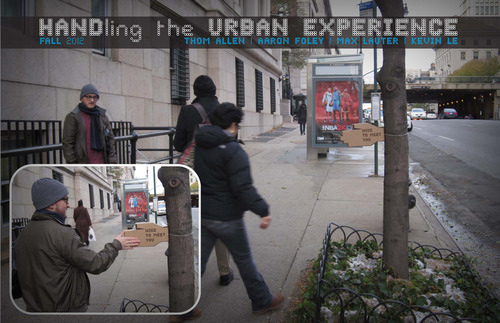
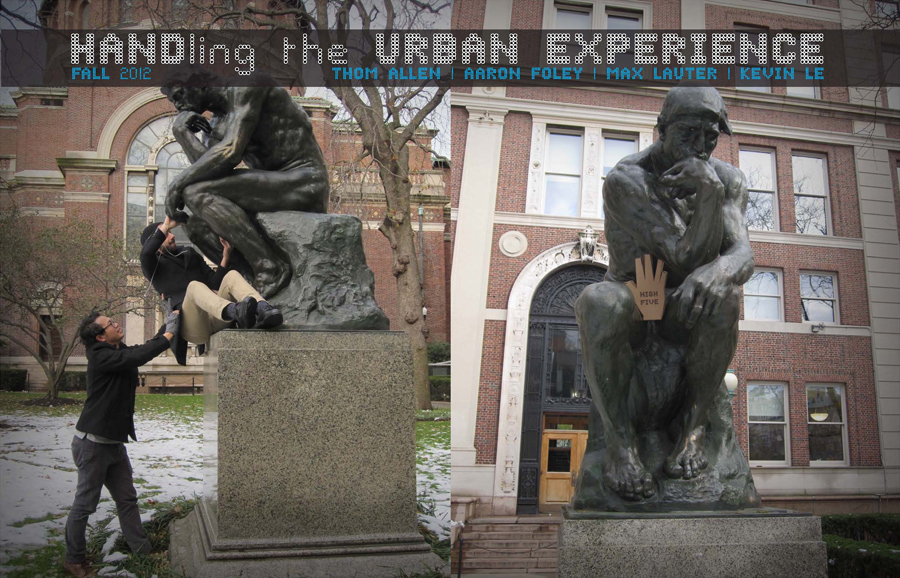
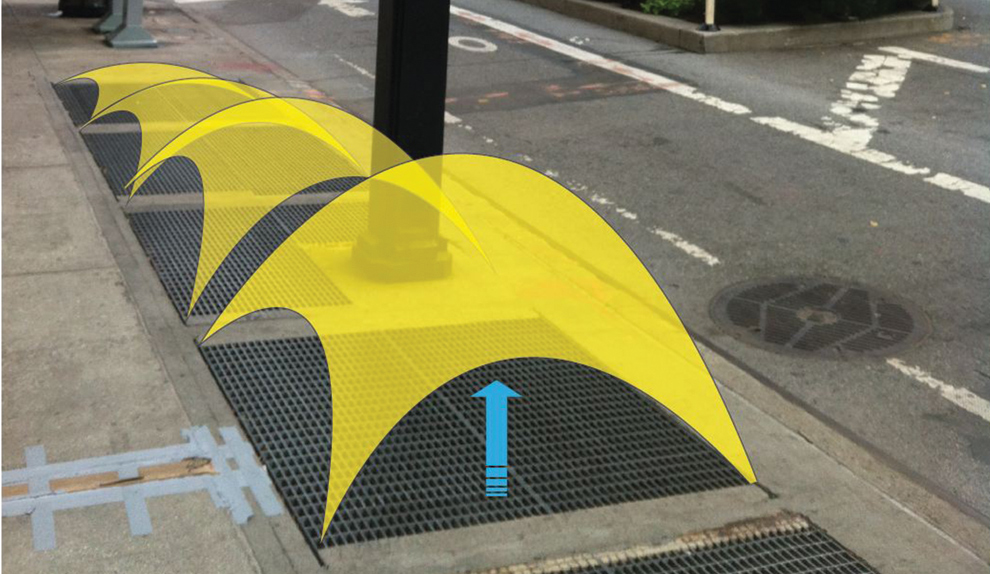
Part of the Atlas of Urban Connections project (TBD), the first assignment involved designing and fabricating a joint to connect something, anything, to a vertical street extrusion (such as a tree, street sign, light pole, etc…). The members of the Public Works Department in NYC are masters of improvisation, you can see it walking down any street here, and there is a lot to learn from their successful and not-so successful techniques for attaching to existing sidewalk infrastructure. This assignment was prepared to introduce the student to the capacity to breaching the gap between the pedestrian and existing streetscape objects, with the goal to test flexibility, safety, durability, adaptablility while exploring different possibilities for potential synthesis with existing urban forms.


Tom, Aaron, Max, Kevin
 

ChunChun, Yuri, Shuang, Rubing, Renwick


Assignment 02 – INFLATABLES
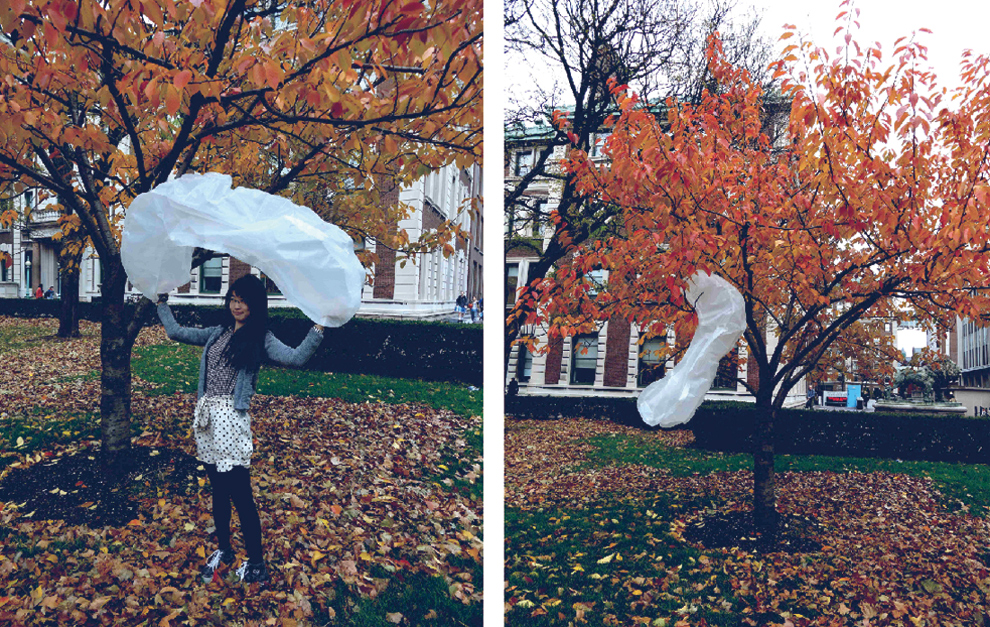
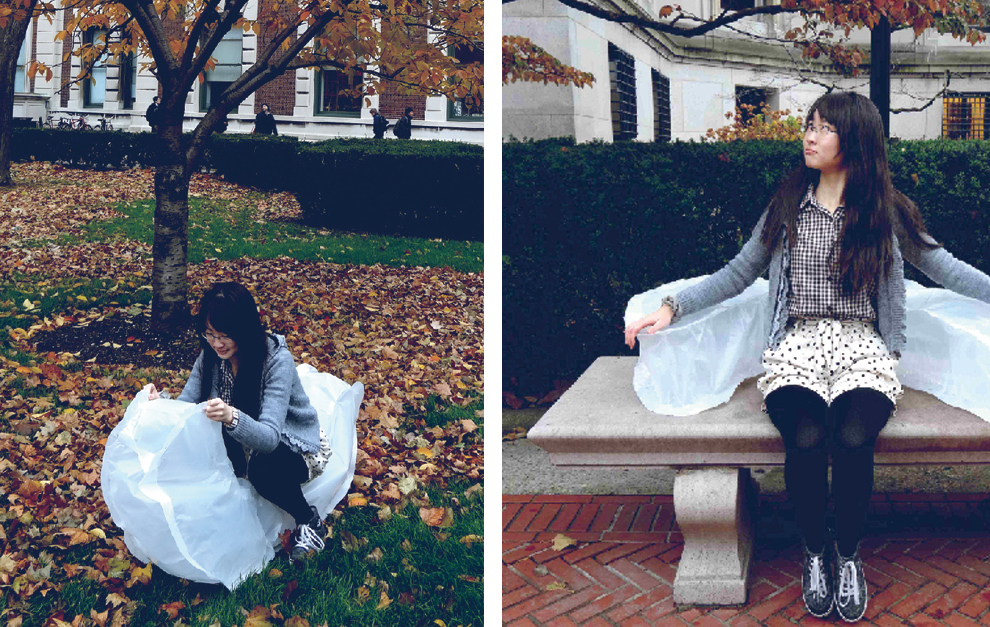
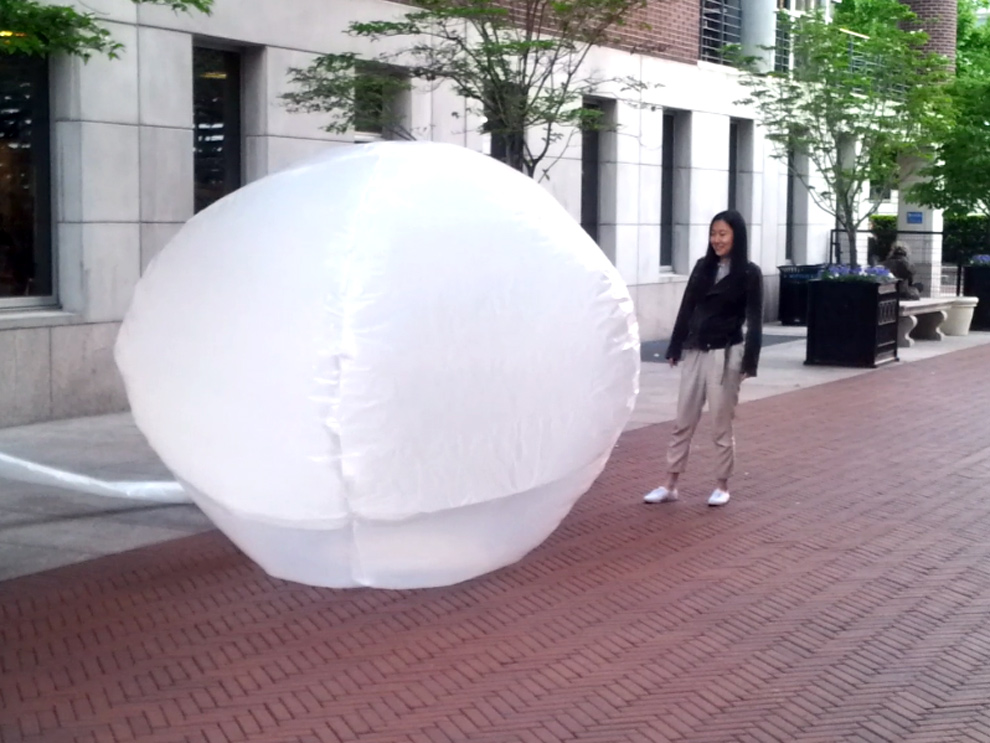
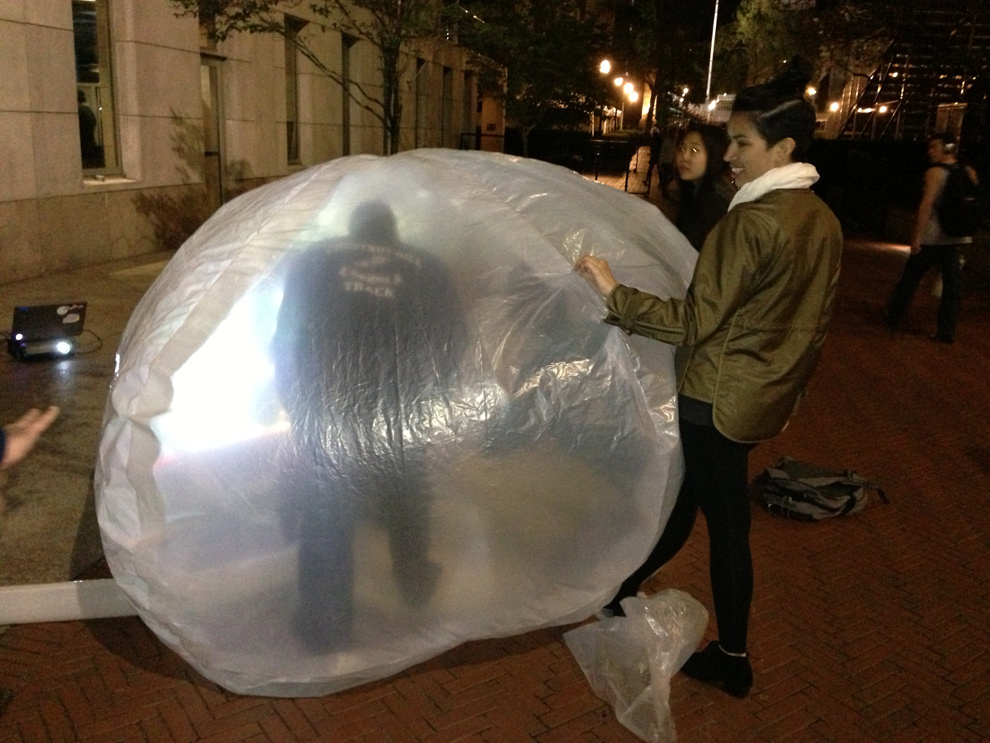
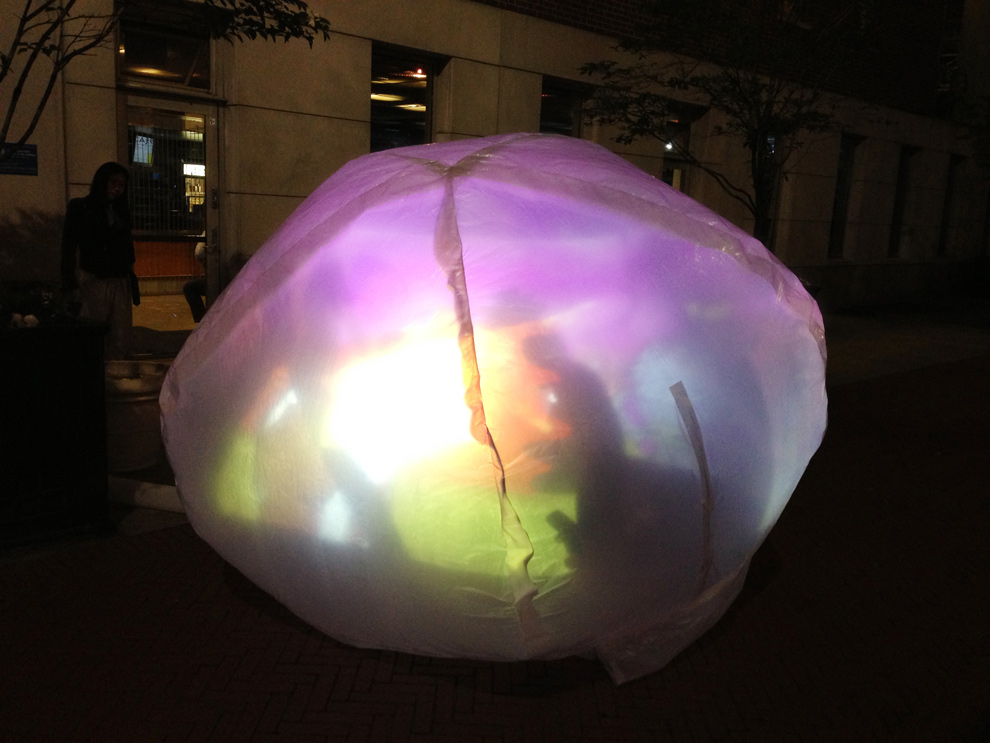
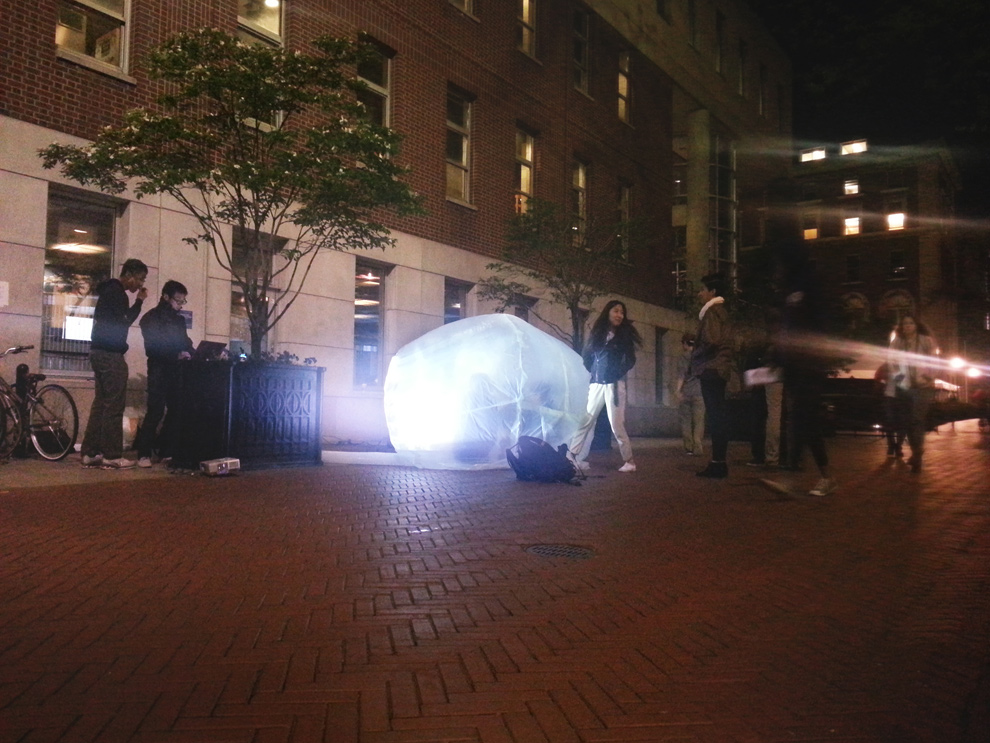
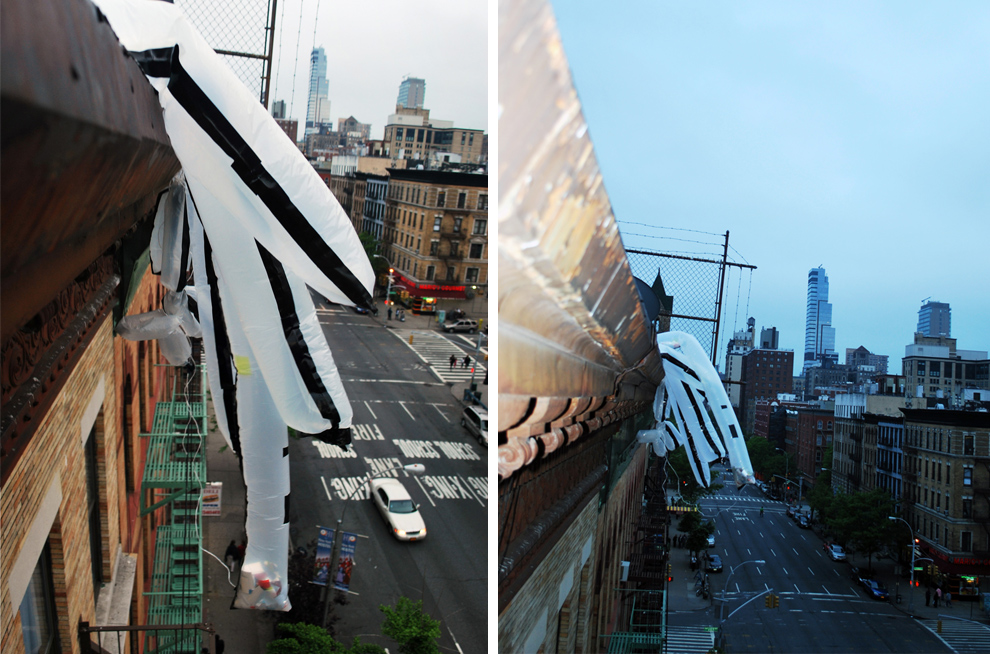
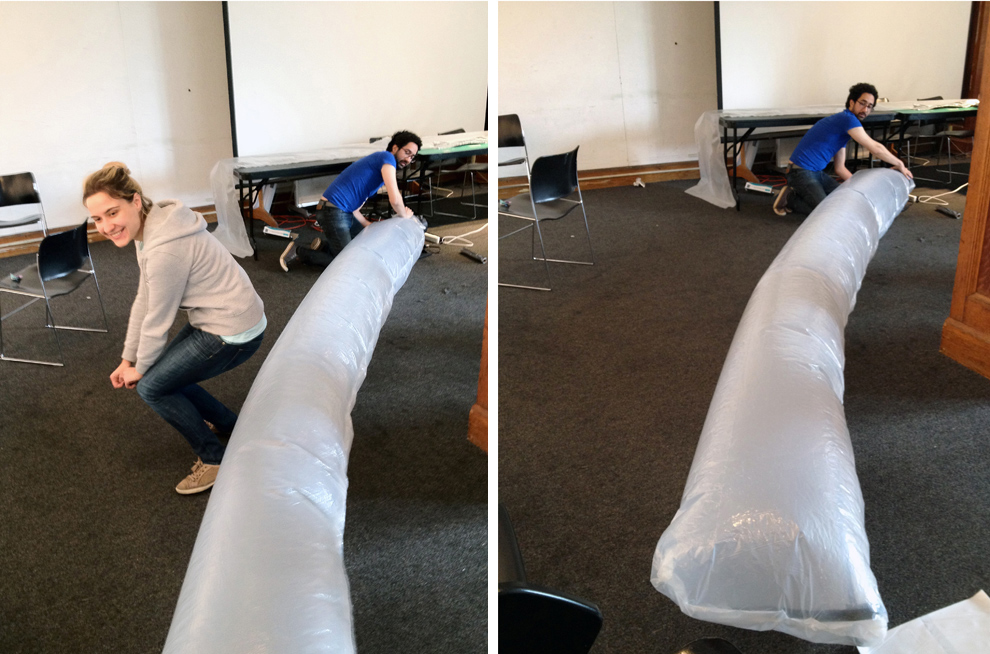
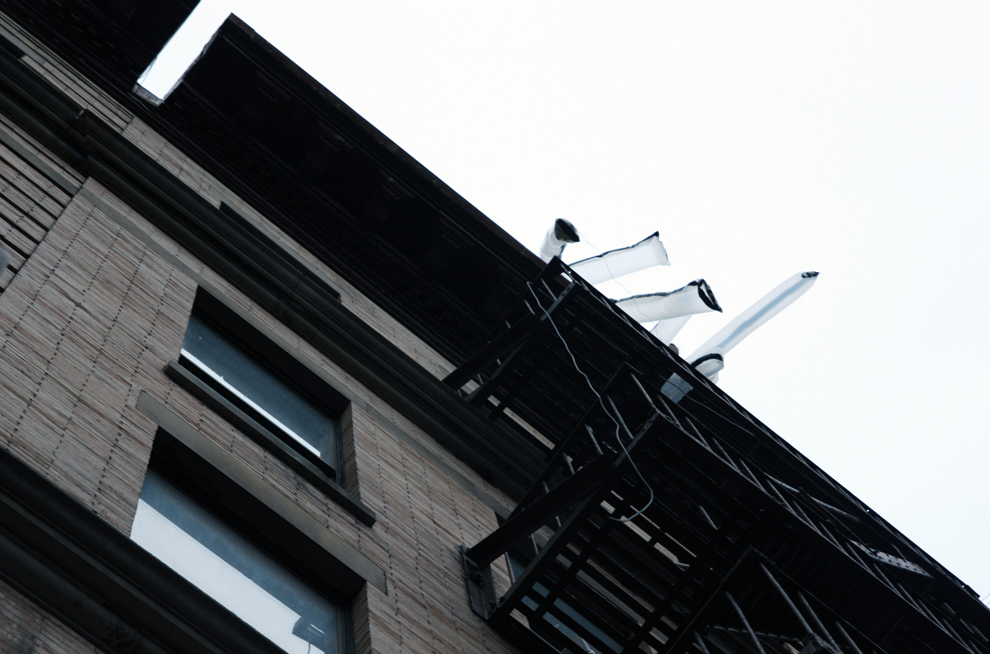
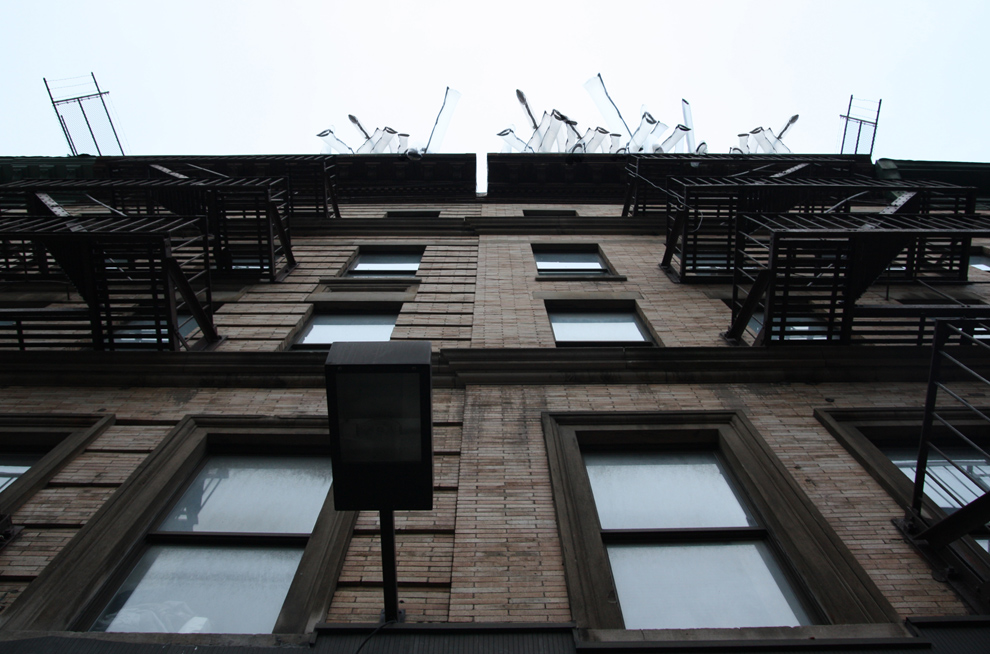
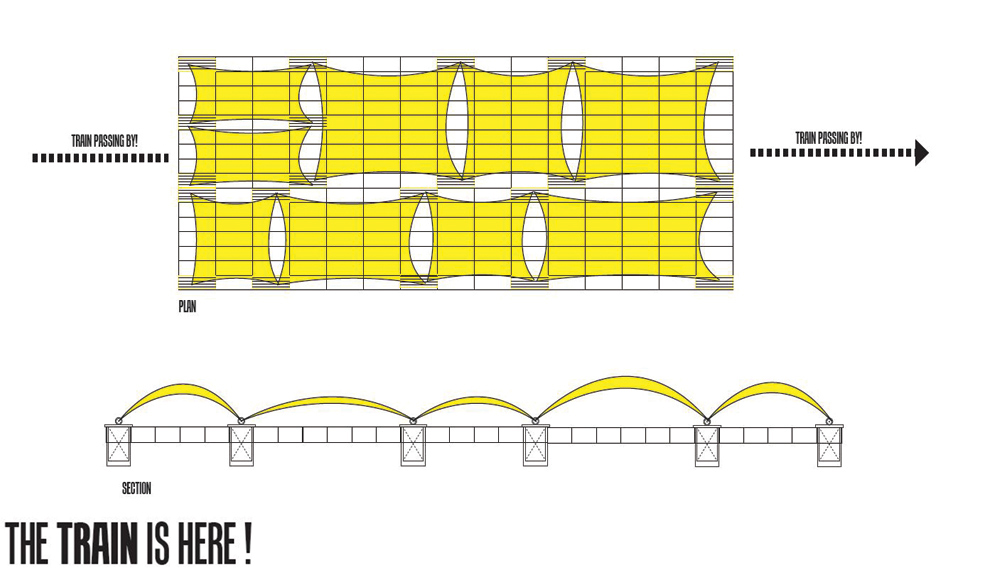
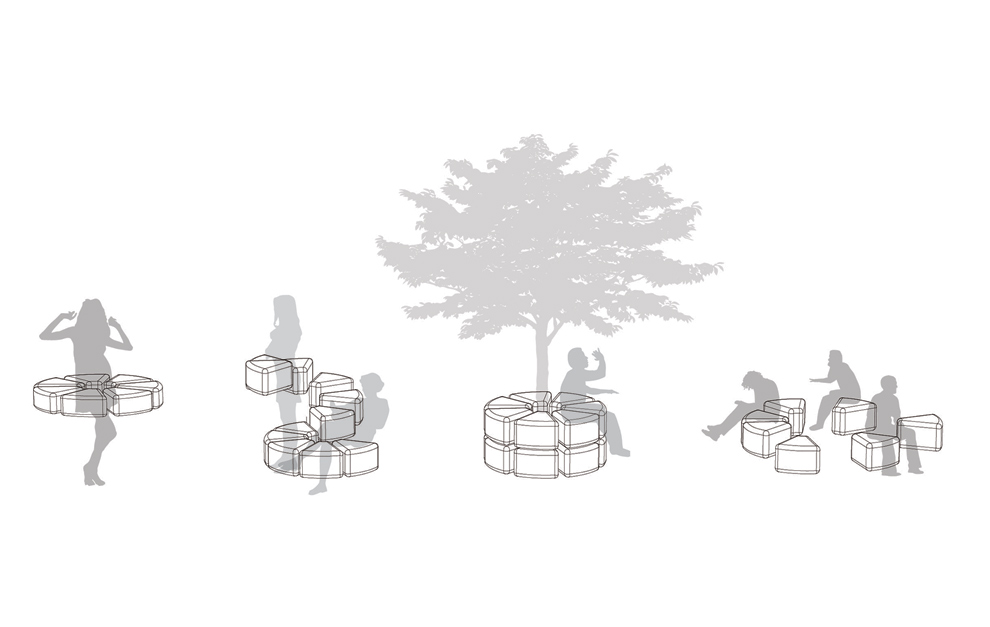
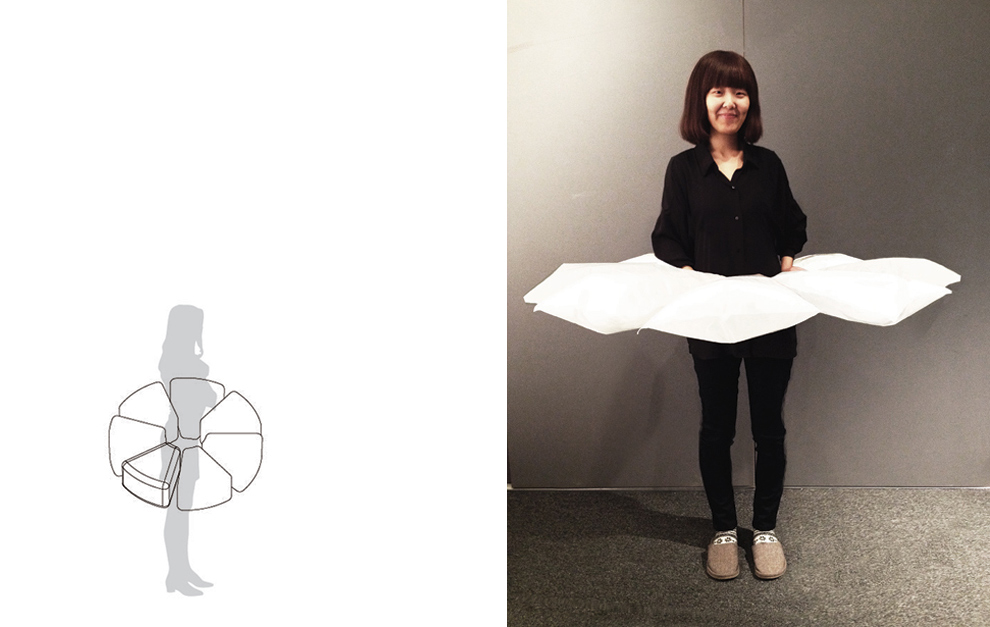
Hurricane Sandy played hell with our first few weeks, and necessitated that the initial assignments were bundled together. However, we still had a chance to look at inflatables and the material qualities inherent in cheap polyethylene of different mil thickness. Using an iron, tape and plastic, quick inflatable bladders were constructed and tested. The students were tasked with creating an inflatable, mobile “seating” system that was either self-supporting or used a site’s natural currents to inflate.


ChunChun, Yuri, Shuang, Rubing, Renwick
 

Ni, Mengna, Darian, Juan, Ying


Assignment 03 – LIGHT PROJECTION
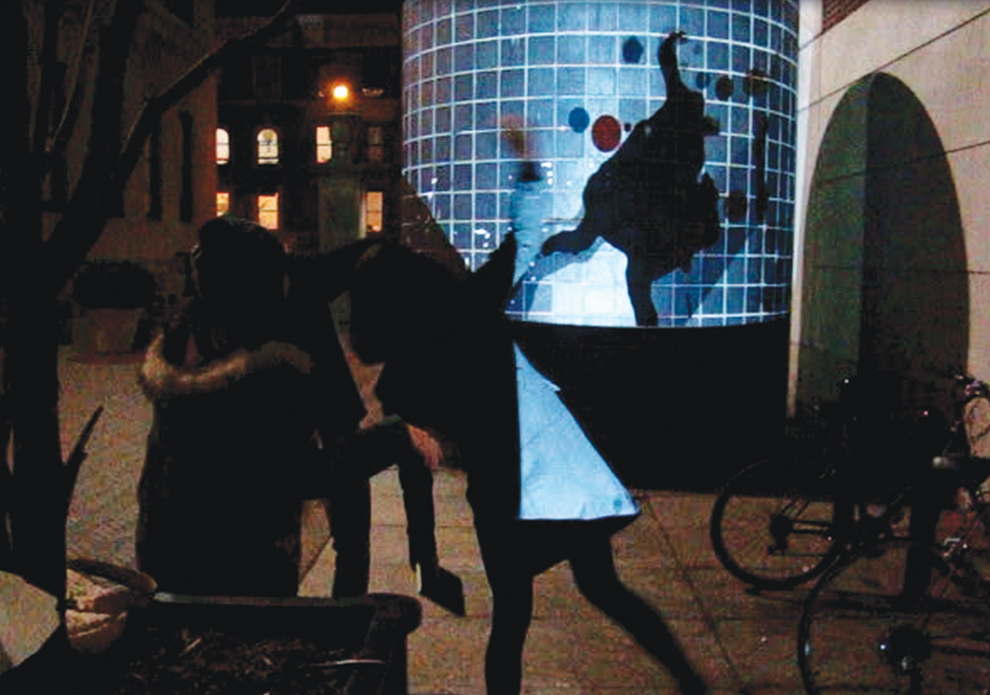
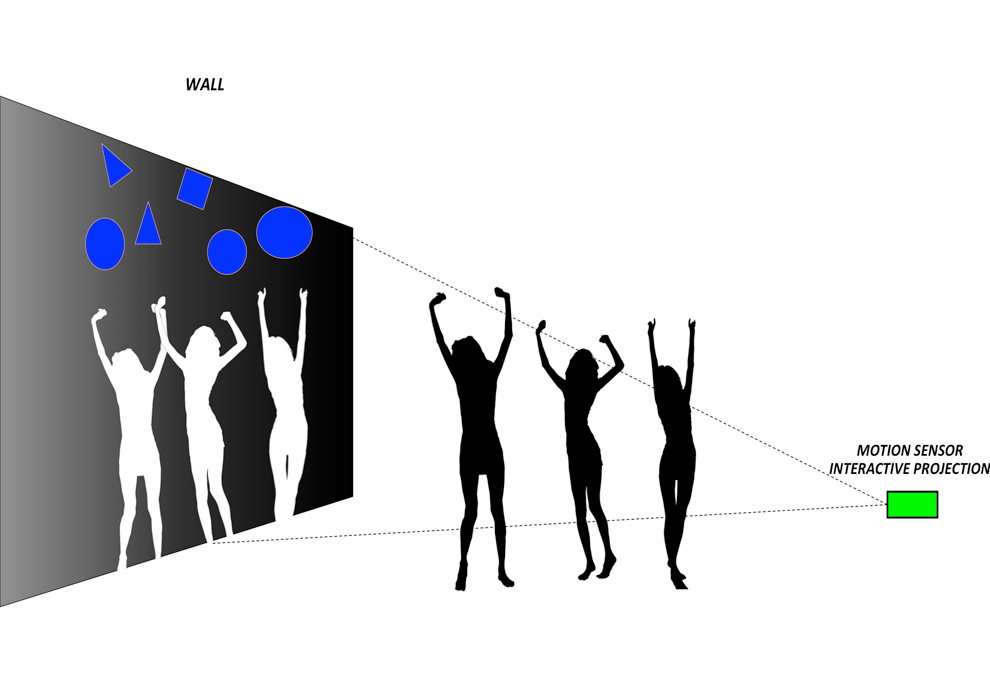
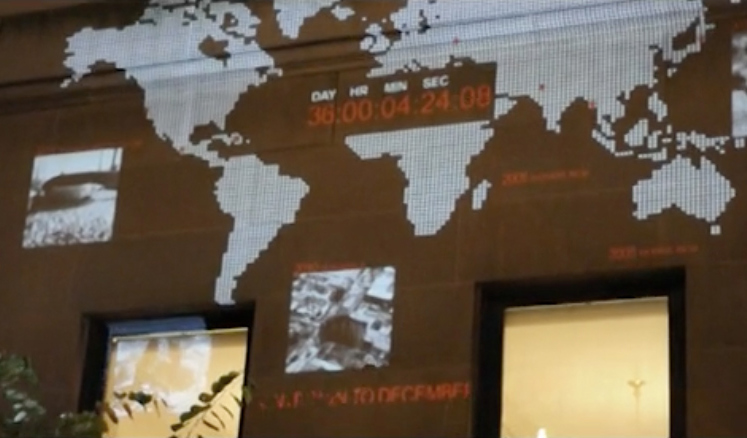
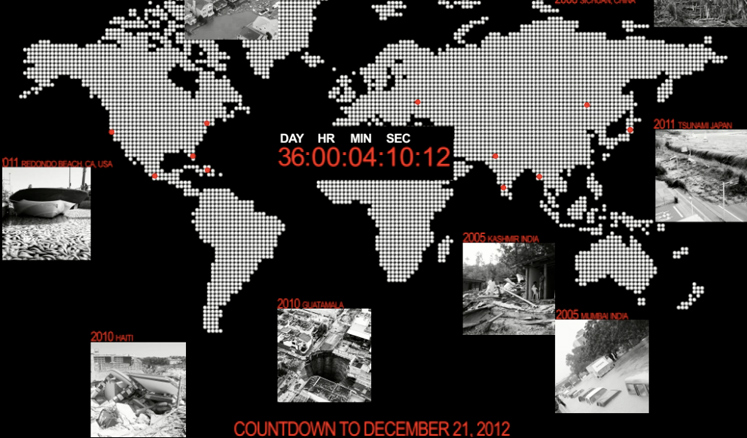
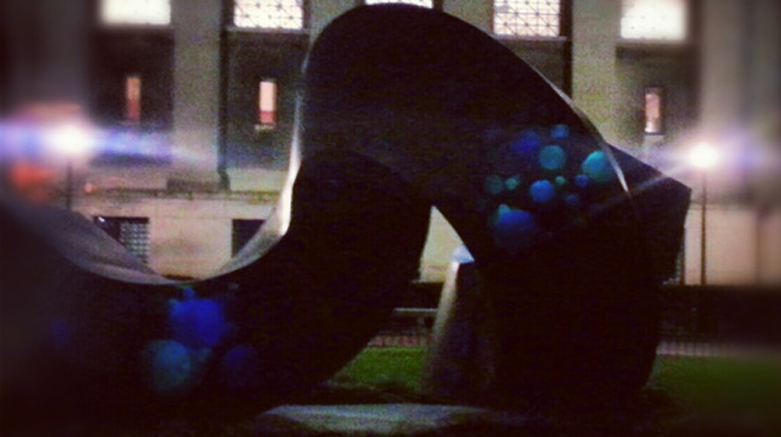
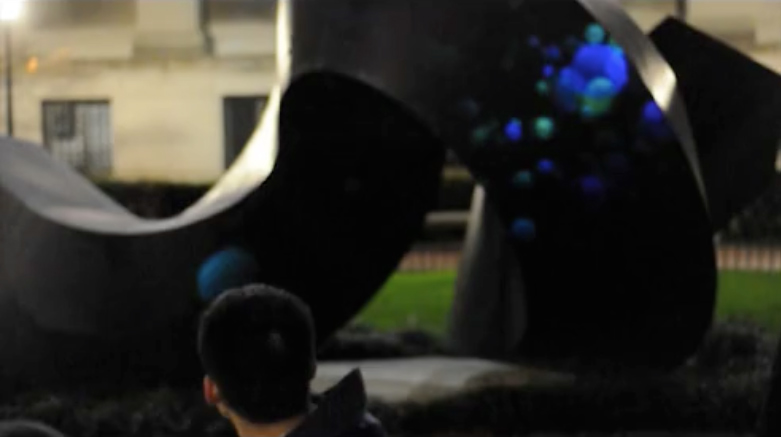
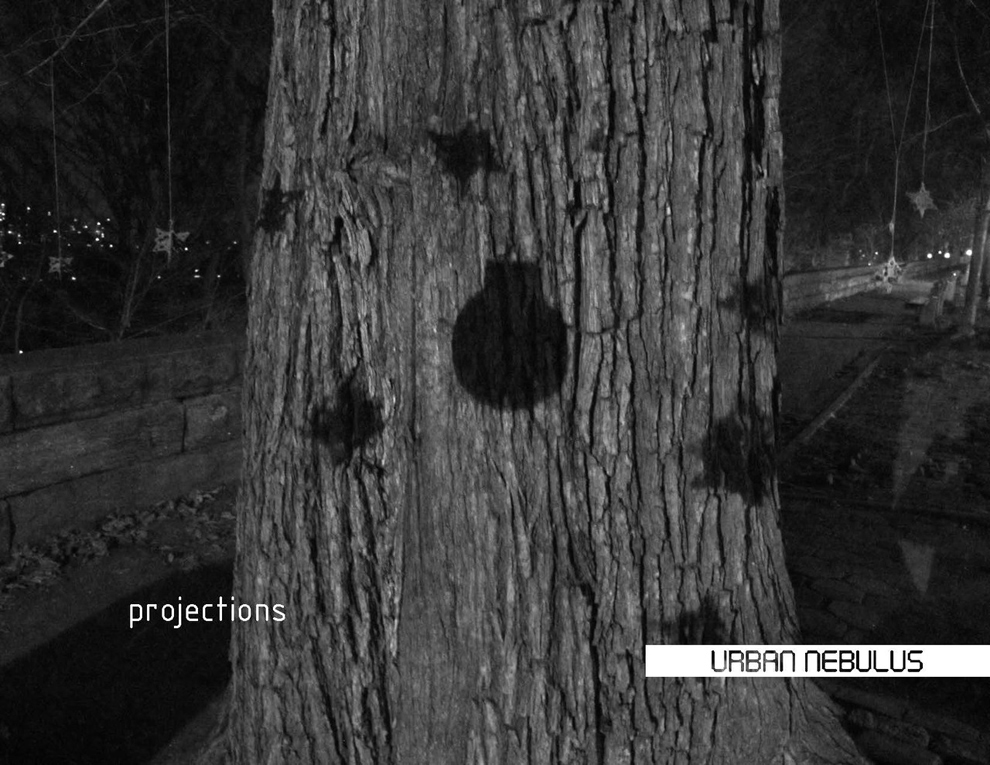
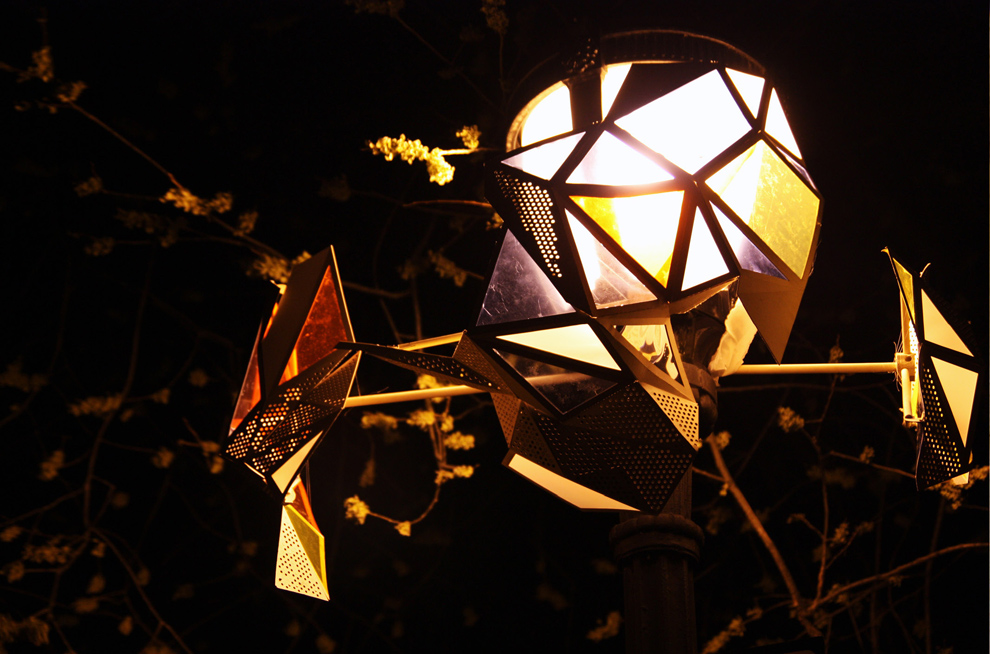
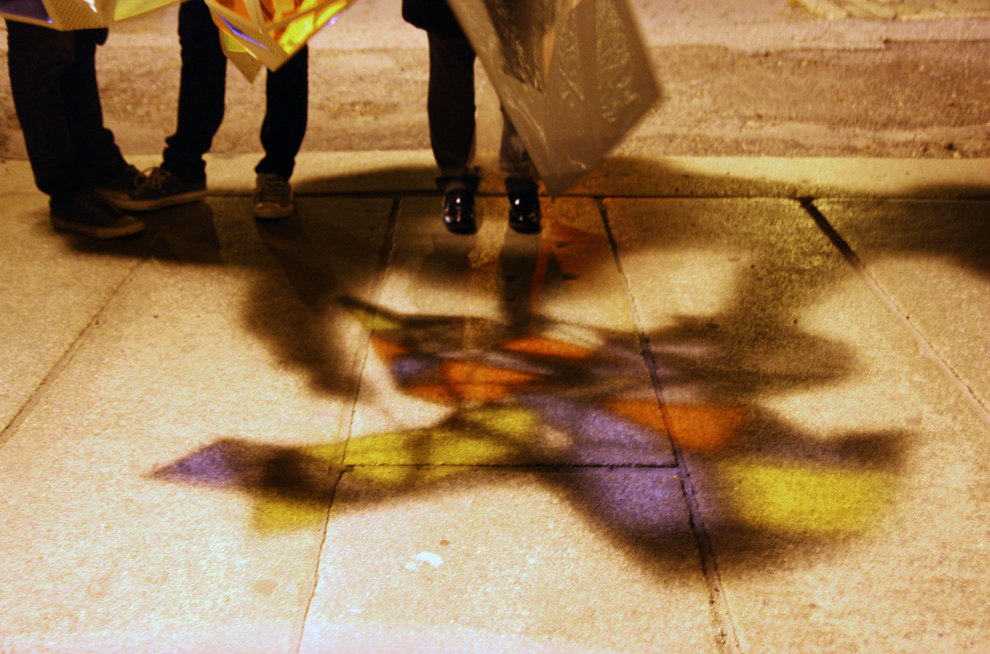
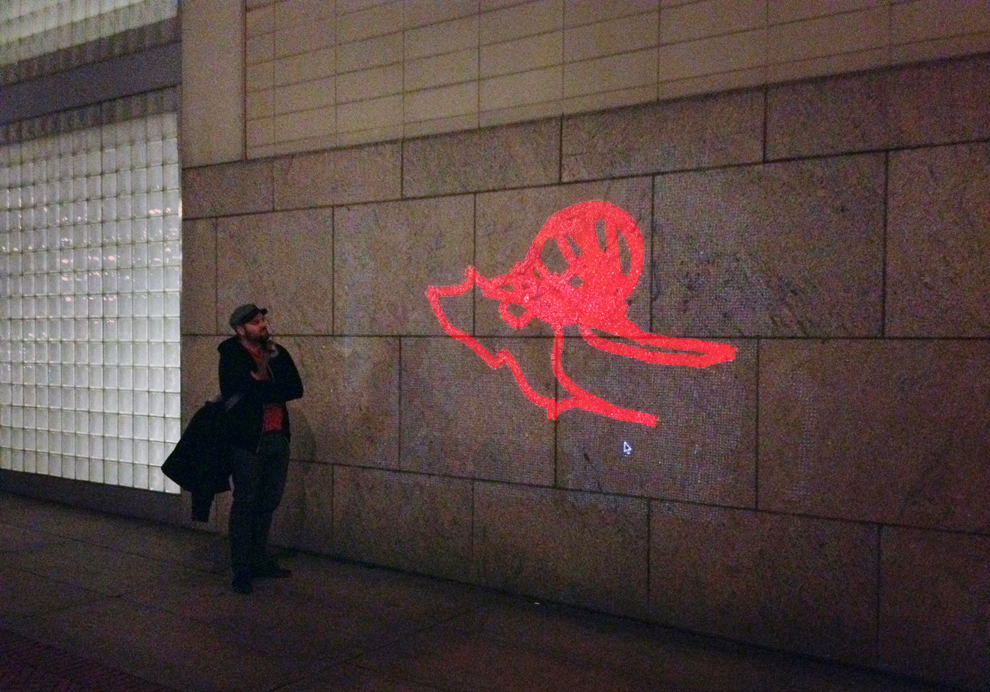
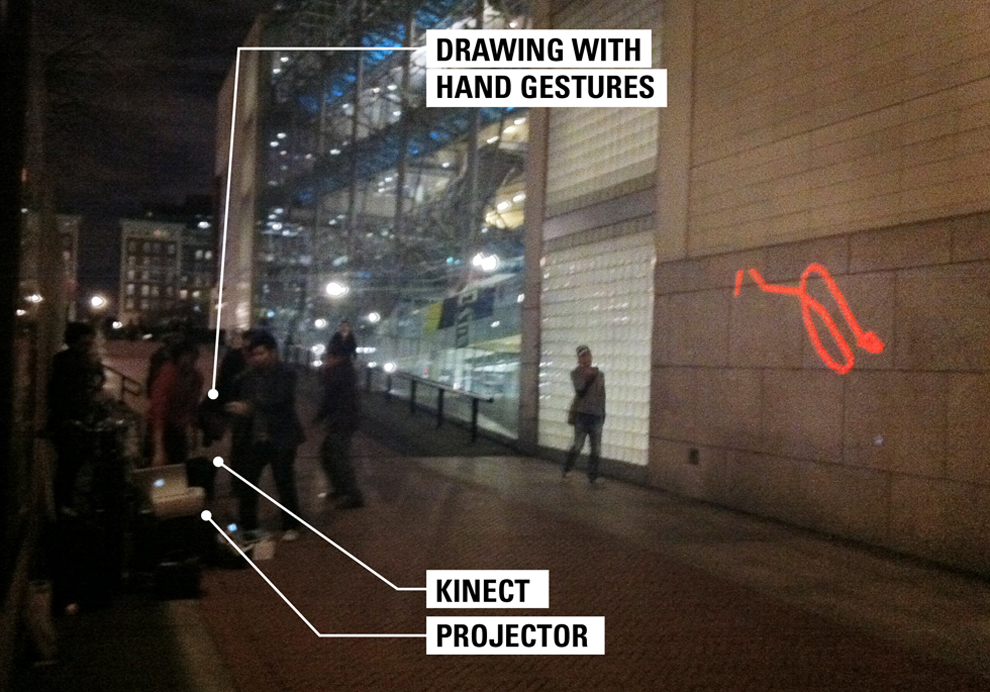
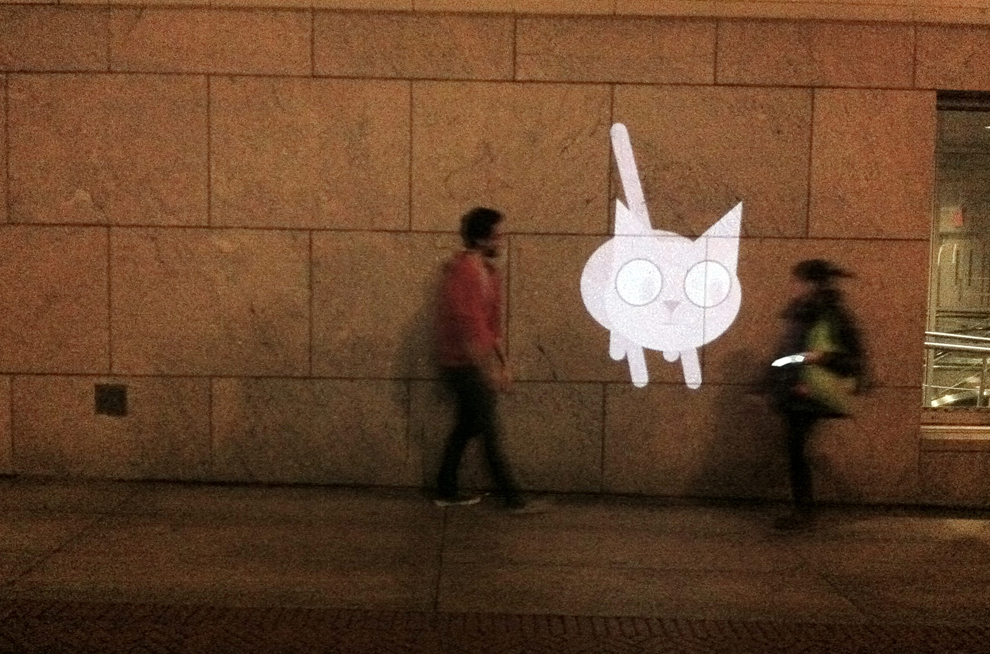
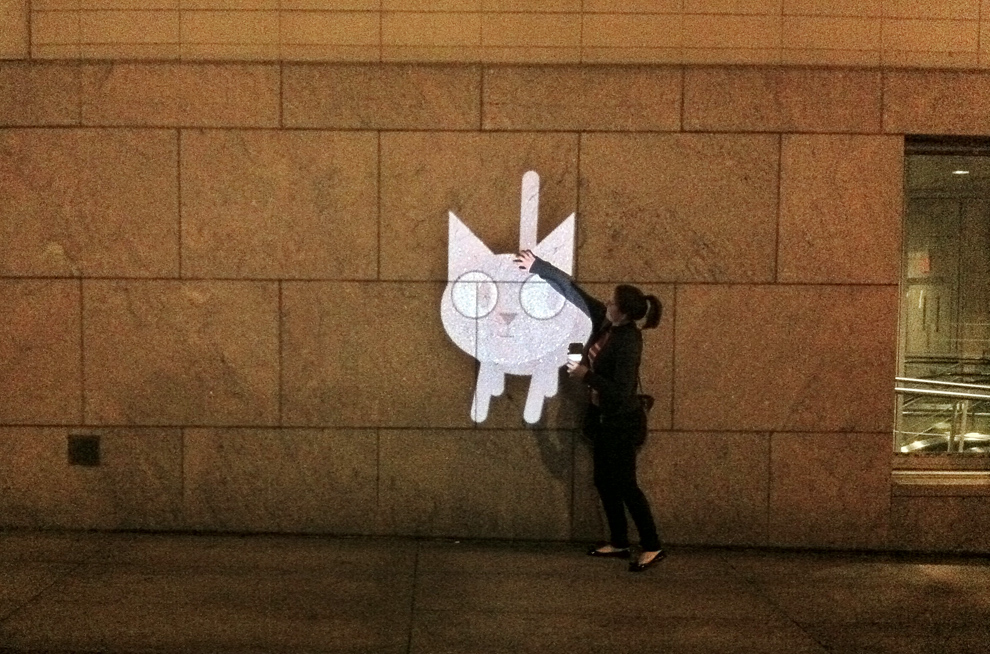
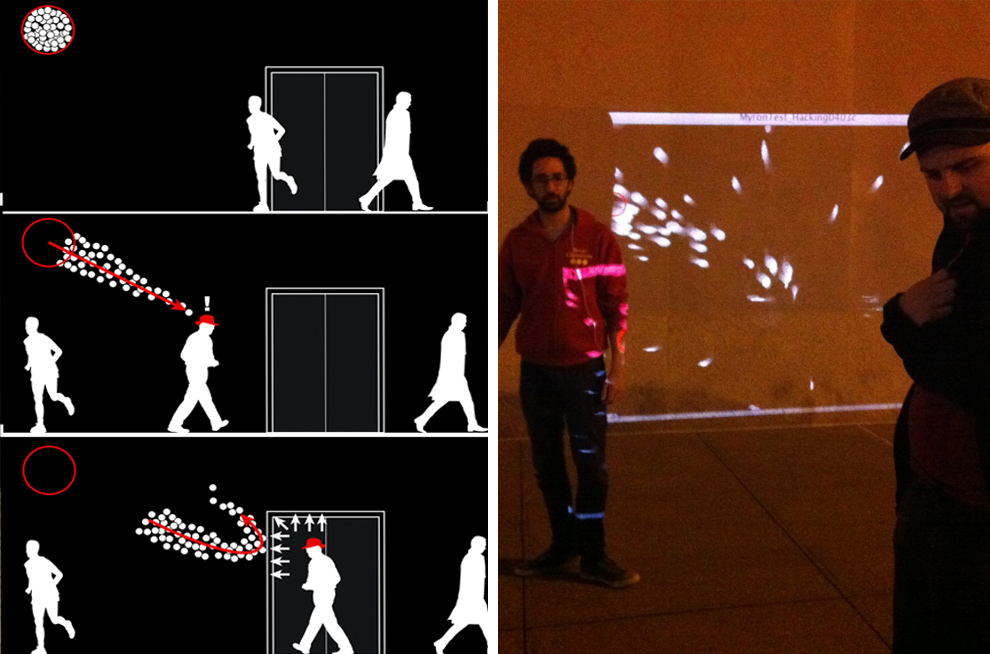
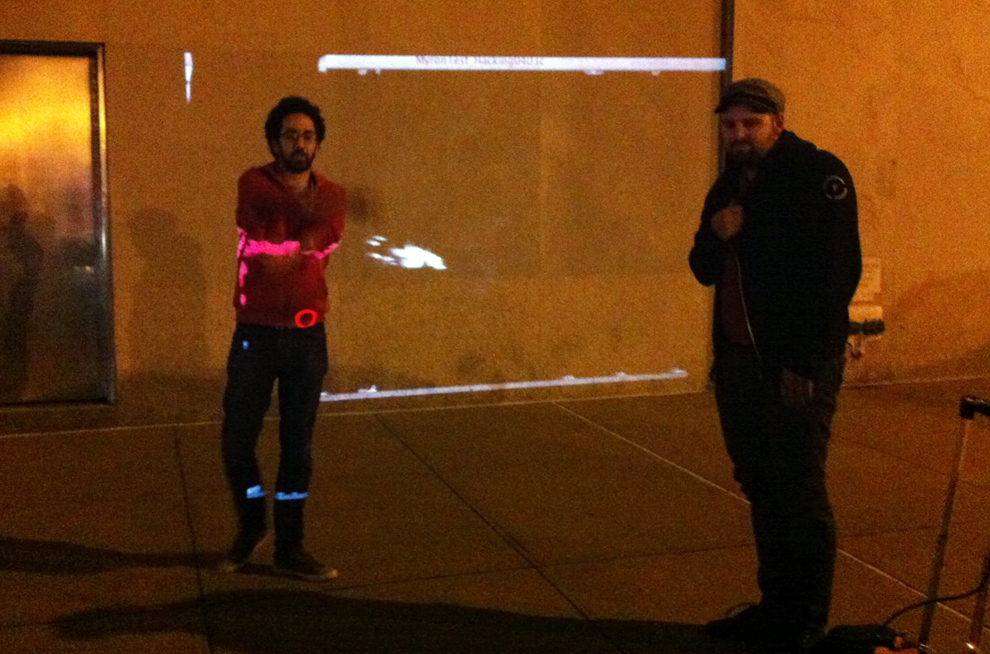
Using Graffiti Research Lab’s projection bombing tutorial at Instructables, the class set up a mobile power station using a 75V marine battery, and set off around the neighborhood near Columbia to experiment and throw up some interactive light projections.
The last year has seen some truly inspiring displays of the potential light can have as an interventionist tool, and the class studied this problem using three main strategies: 1) messaging independent of site, i.e. you only need a blank wall, 2) site dependent projections, like those following the curving, horizontal bands on the Guggenheim, and 3) flexible projections that can adapt and interact to a number of different sites, taking advantage of the unique characteristics of each. Care was given to create projects that both actively and passively engage those passing by the site. Each group’s projects was able to successfully confront one of these strategies.


Ni, Mengna, Darian, Juan, Ying


ChunChun, Yuri, Shuang, Rubing, Renwick
 

Tom, Aaron, Max, Kevin


Kaz, Greg, Ella


Assignment 04 (FINAL)
Building off the previous assignments, the final assignment sought to synthesize the work and concepts of the class into a larger installation that could still be completed in our very tight time frame, but started to explore the core ideas of the course, in effect becoming a proof-of-concept, working model. By attempting to capture a broader audience for architectural interventions, a number of questions presented themselves and the students were challenged to anticipate a range of possible eventualities – how will it be used? Can its use be changed? Is it durable? Is it waterproof? Can it safely stand up? Fabrication was considered less from a formal quality, and more from a use, durability, improvisation and public participation viewpoint.
Ultimately, A successful project would accomplish three things: 1) display ingenuity in fabrication technique and material 2) re-imagine or re-design a specific urban site/condition to take advantage of its hitherto hidden potential, and 3) have a performative component, in that the intervention has a temporal quality that while engaged promotes public interaction.


ChunChun, Yuri, Shuang, Rubing, Renwick
 

Kaz, Ella, Greg
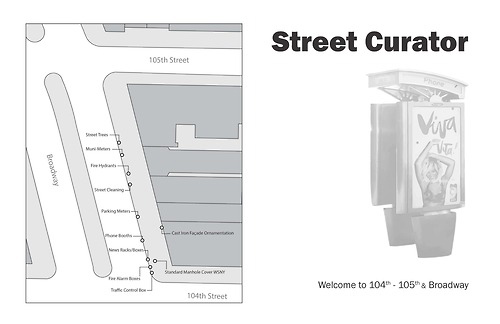
 

Tom, Aaron, Max, Kevin
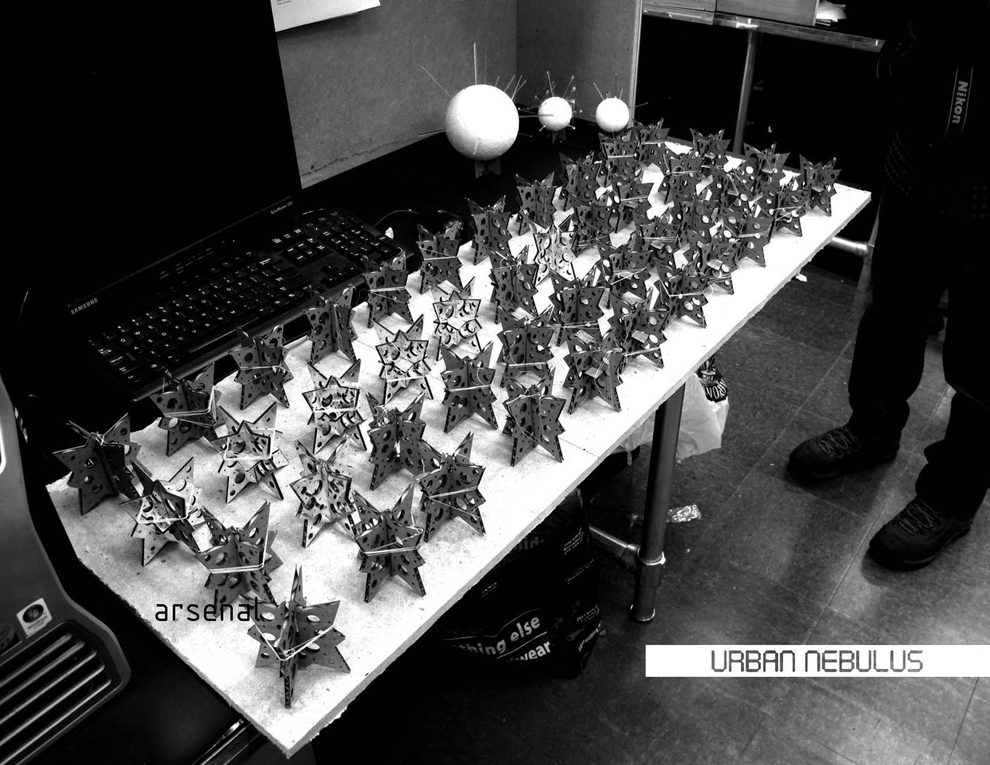
 

Ni, Mengna, Darian, Juan, Ying
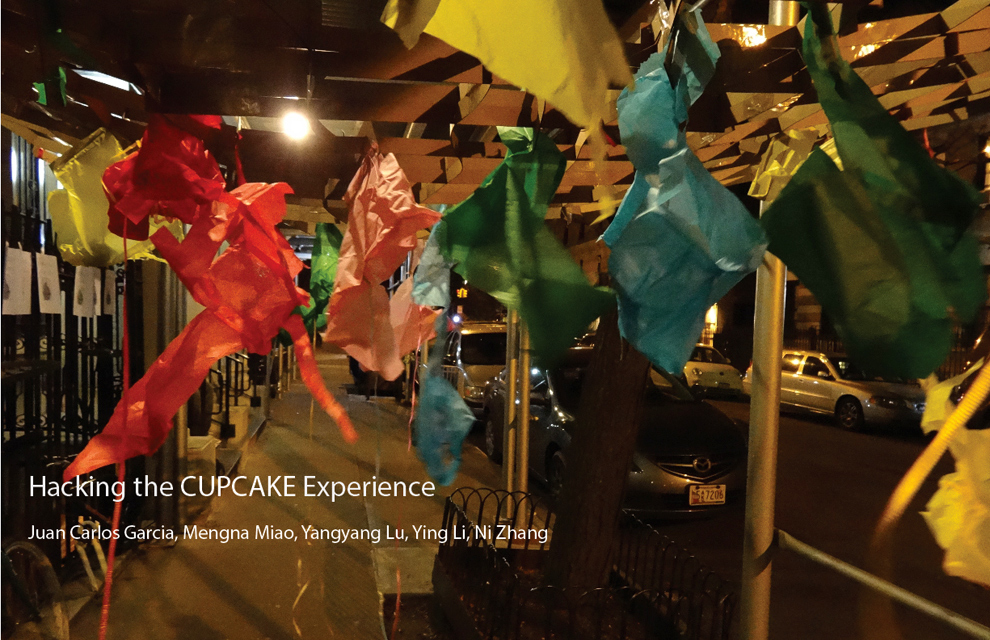
2012111 Tags: DUB, fabrication, newyork, urban | No Comments »

DUB 004


See more here.

20120724 Tags: DUB, fabrication, newyork, urban | 1 Comment »

DUB 003


Located on the NW Corner of 87th and Amsterdam Ave Google Map link


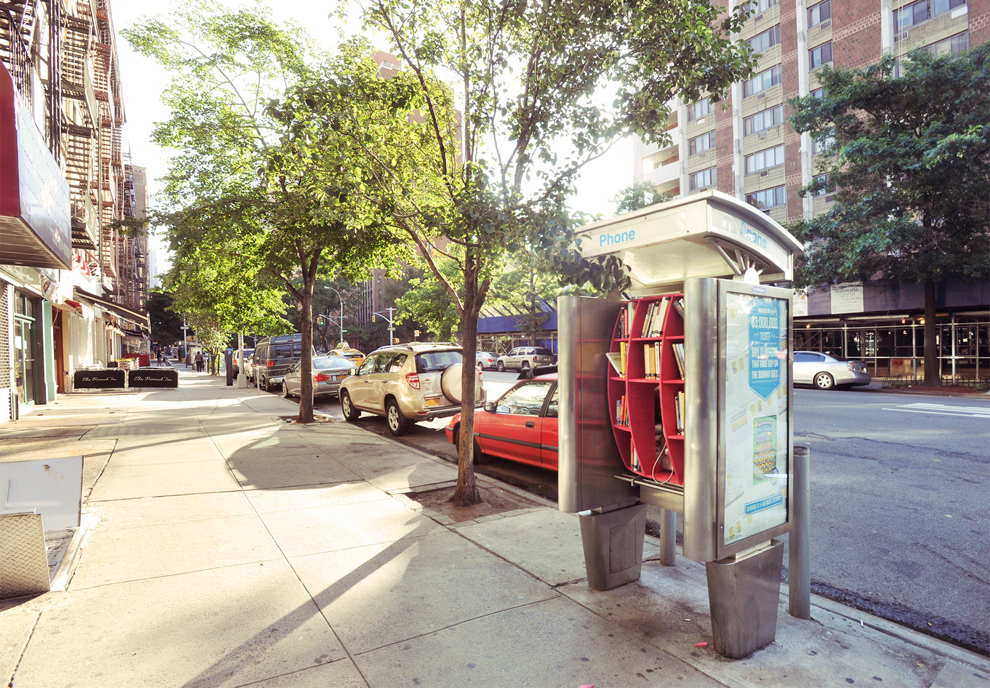
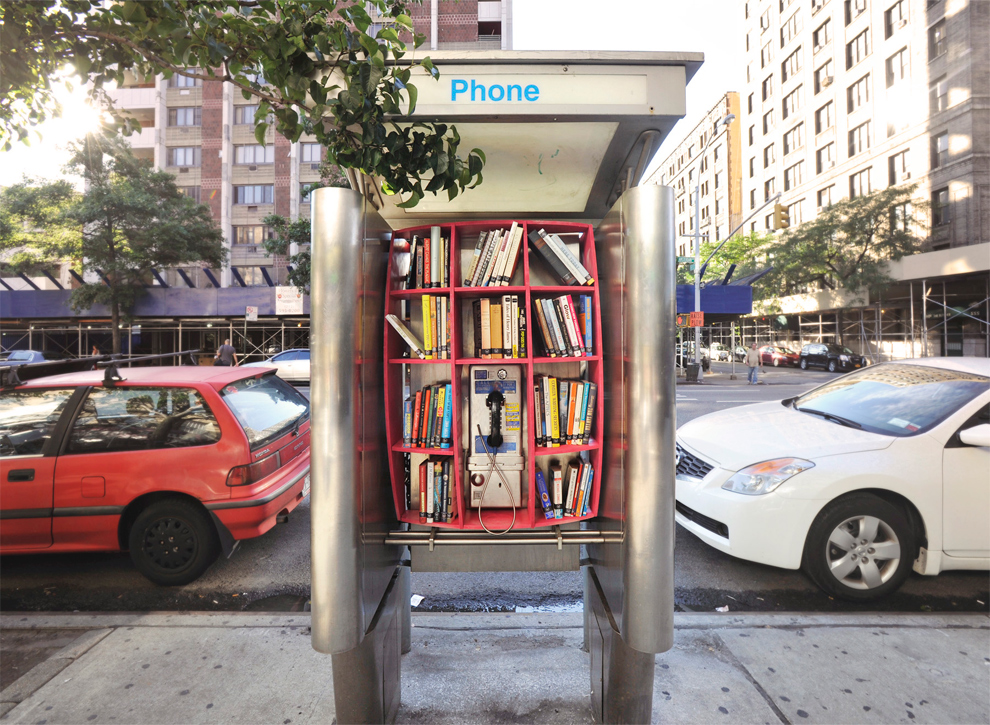
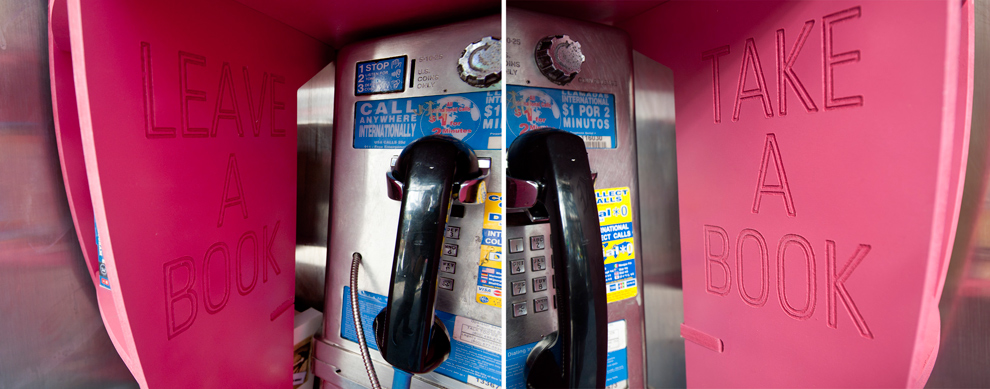
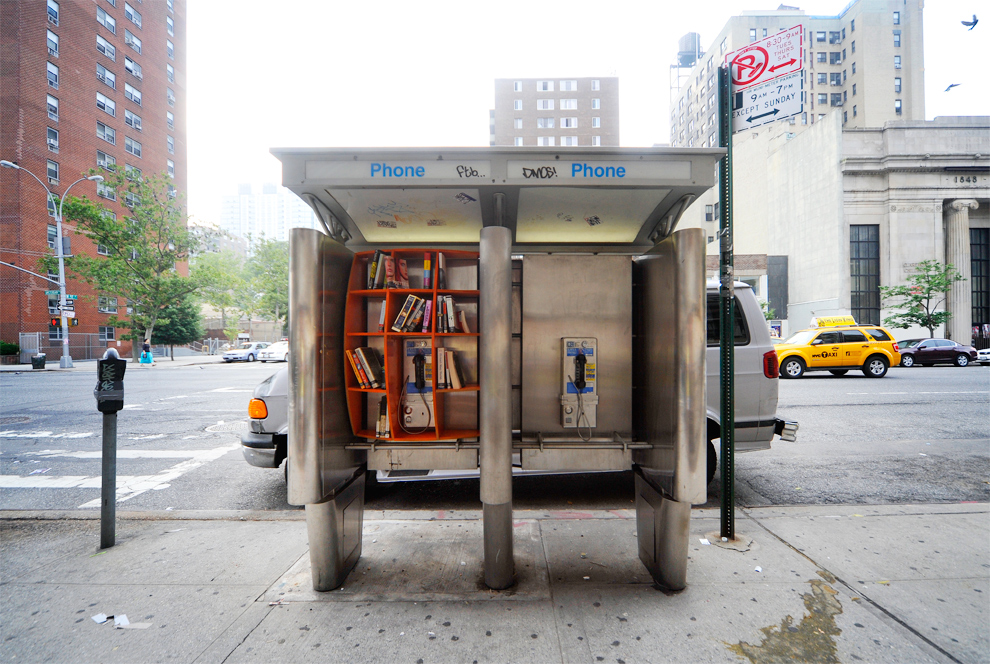
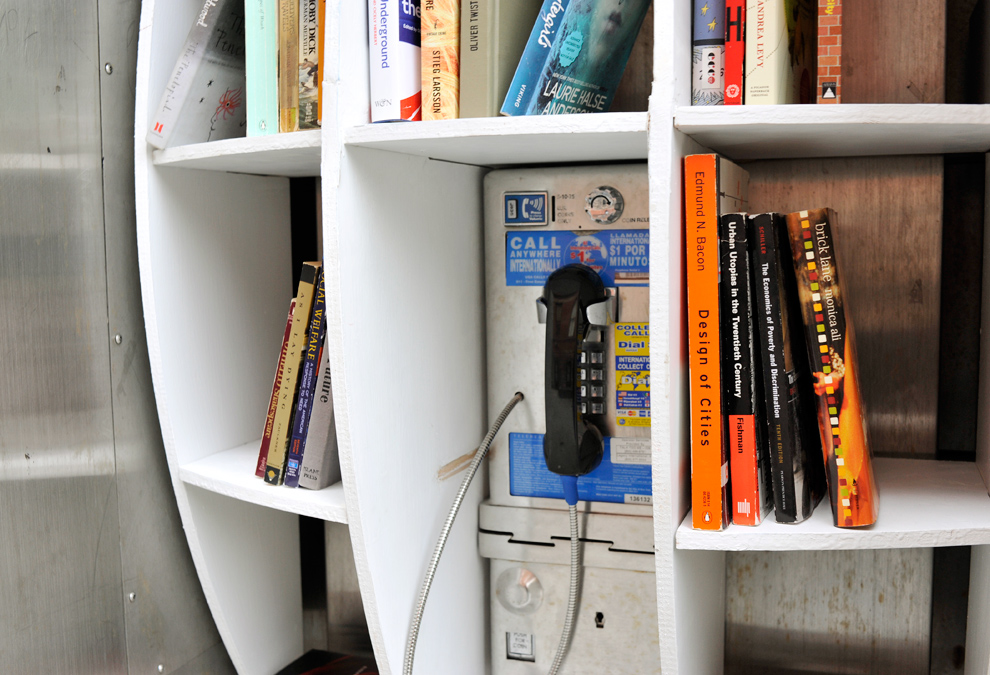
With some slight modifications from the previous iteration, a new version popped up on 87th over the weekend. The only significant changes were the addition of some slight suggestive text: “take a book,” “leave a book,” and removing additional shelf material to expose the sides of the actual phone mechanism. I had been tipped off by a telephone repair technician that the likely cause of the prior shelf disappearances could be attributed to the tech’s inability to access the locking mechanisms on either side of the phone, requiring him to remove and probably toss the shelves. Further observation will be required to see if this version can outlast the former’s 5 weeks of operation.

 

The intersection here is part of a pretty interesting area with a diverse mix of pedestrian traffic. 86th street acts as a strong east-west thoroughfare that effectively splits the northern portion of the neighborhood from the rest of the upper west side, and predictably there is also a visible, distinct change in scale when looking south versus north. The site is a mixing chamber of sorts with four quadrants that come together here: the chain retail stores to the south and west along Broadway; the Innovative Diploma Plus High School and P.S. 334 to the southeast; an eclectic mix of housing scales to the northeast and a growing dining and leisure strip taking off to the north. The goal here is to try play to all those users, and create a community focal point of nearby residents, commuters on their way to and from the train, diners, and spillover from the large retail stores.


It was great to spend a few hours observing how people interacted with the shelves. Even at 9am on a Sunday morning, it quickly became a point of attraction on the sidewalk, at one time hosting a queue of six random strangers waiting to get a closer look. The addition of subtle instructions seemed to help, as this time there were two separate occasion when people left holding a book. It still remains to be seen whether anyone begins leaving their own and adding to the collection, but it will be certainly be interesting to find out.


After further observation of this iteration, I’ll post the cut files if anyone wants to make their own. Let me know if interested.


Made possible with generous support from the following:
Materials and Fabrication:
SFDS Fabrication and Design Shop, Brooklyn, NY


Book Donation:
Mrs. and Mrs. Moon
Housingworks Bookstore
Kay Gardiner
Residents of 951 Amsterdam Ave.


Photography:
Jackie Caradonio


more »

20120516 Tags: architecture, fabrication, interaction, new york, research, teaching, urban | No Comments »

HACKING THE URBAN EXPERIENCE – STUDENT WORK

I had the pleasure to teach a course this semester with a great group of young architects and urban designers, titled “Hacking the Urban Experience” at Columbia. I couldn’t be more proud of all the hard work and the high level of engagement with which the students approached the class. All lectures and process work are archived on the class tumblr: http://hackingtheurbanexperience.tumblr.com. Classes typically took the form of lectures on precedents and concepts, a discussion of student work and tutorials on materials or software techniques. Topics during the semester included overviews of unsolicited architectural proposals, building-scale light projections, inflatable materials, urban siting opportunities and community/crowd sourced funding.


The course sought to assert the relevance of the fabrication skills at our disposal as potentialities for social and environmental relevance. Through the re-appropriation and re-imagining of existing urban conditions, the students designed and fabricated working prototypes that embraced the messy reality of our city and promoted community involvement. The students began by identifying a quality of the urban condition that included the latent capability for improvement and worked toward fabricating an adaptive, responsive and environmentally viable solution. Specific emphasis was placed on testing and exploring through hands on research the possibilities of detailing and fabricating connections using unorthodox materials. At the conclusion of the course the students produced a full scale urban intervention and observed and documented their relevant successes or failures.


Material workshops were held to encourage the students to explore constructions from inflatables to parametric agglomerations using quotidian materials. Ultimately, the goal was for the students to come out of the course with a healthy respect for two core concepts: firstly, an increased skill in the use and applicability of the fabrication skills we have developed for solving design issues using unorthodox materials in unconventional settings; and secondly, that there is an opportunity for architects to regain lost relevance by inserting themselves through unsolicited proposals into the public consciousness as steward’s of urban well being.


Students:
Jared Dignanci, Farzin Lofti-Jam, Ehsaan Mesghali, Katerina Petrou, Paul Tran, Wassim Shaaban, Maryam Zamani


Assignment 01
Part of the Atlas of Urban Connections project (TBD), the first assignment involved designing and fabricating a joint to connect something, anything, to a vertical street extrusion (such as a tree, street sign, light pole, etc…). The members of the Public Works Department in NYC are masters of improvisation, you can see it walking down any street here, and there is a lot to learn from their successful and not-so successful techniques for attaching to existing sidewalk infrastructure. This assignment was prepared to introduce the student to the capacity to breaching the gap between the pedestrian and existing streetscape objects, with the goal to test flexibility, safety, durability, adaptablility while exploring different possibilities for potential synthesis with existing urban forms.
Wassim, Katerina, Paul


Jared, Farzin, Ehsaan, Maryam


Assignment 02
Using Graffiti Research Lab’s projection bombing tutorial at Instructables, the class set up a mobile power station using a 75V marine battery, and set off around the neighborhood near Columbia to experiment and throw up some interactive light projections.
The last year has seen some truly inspiring displays of the potential light can have as an interventionist tool, and the class studied this problem using three main strategies: 1) messaging independent of site, i.e. you only need a blank wall, 2) site dependent projections, like those following the curving, horizontal bands on the Guggenheim, and 3) flexible projections that can adapt and interact to a number of different sites, taking advantage of the unique characteristics of each. Care was given to create projects that both actively and passively engage those passing by the site.
Wassim, Katerina, Paul


Ehsaan, Maryam


Jared, Farzin


Assignment 03 (FINAL)
Building off the first two assignments, the final assignment sought to synthesize the work and concepts of the class into a larger installation that could still be completed in our very tight time frame, but started to explore the core ideas of the course, in effect becoming a proof-of-concept, working model. By attempting to capture a broader audience for architectural interventions, a number of questions presented themselves and the students were challenged to anticipate a range of possible eventualities – how will it be used? Can its use be changed? Is it durable? Is it waterproof? Can it safely stand up? Fabrication was considered less from a formal quality, and more from a use, durability, improvisation and public participation viewpoint.
Ultimately, A successful project would accomplish three things: 1) display ingenuity in fabrication technique and material 2) re-imagine or re-design a specific urban site/condition to take advantage of its hitherto hidden potential, and 3) have a performative component, in that the intervention has a temporal quality that while engaged promotes public interaction.
Wassim, Katerina, Paul


Maryam, Jared, Farzin, Ehsaan

20110828 Tags: DUB, fabrication, new york, urban | 1 Comment »

AR on the cheap

qr001
qr02
qr03


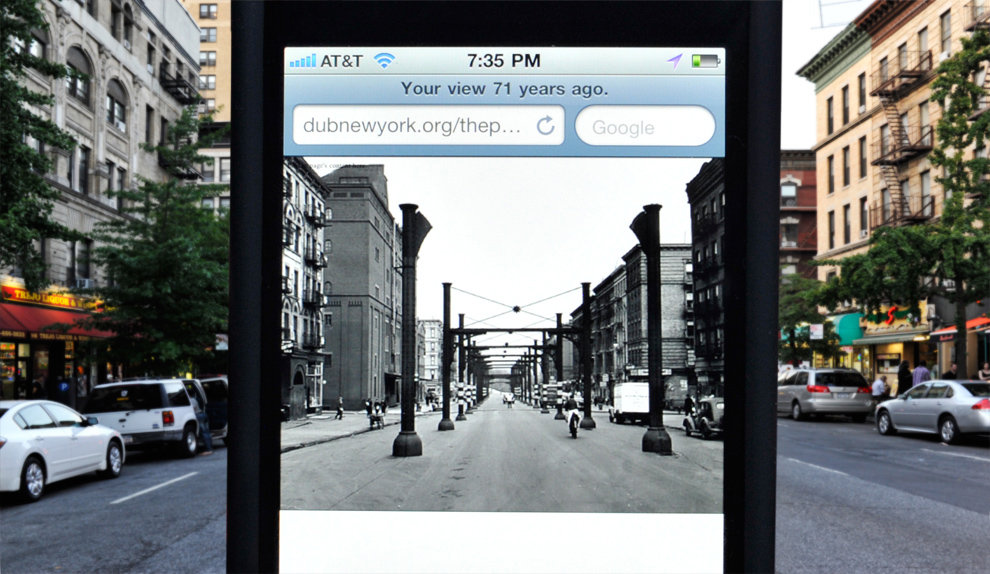
When I first saw this image of my block from the 40s, I knew it was something I wanted to share. Sure, part of it was a sense of pride, that our seemingly nondescript, uptown block once held a moment in time that was deemed important enough for someone to capture. And further, that that historical memory was saved, and became indicative of the history of the subway and the city. Properly fitting amongst a slideshow of once momentous occasions such as crowds cheering with Fiorello at the opening of the 34th St station and documentary photos of the surprisingly frequent automobile on train accidents. But it was also the content of the image.
The included caption was such:

1940: In a view north from 106th Street, only the supports of the old Ninth Avenue elevated line remained as the push to go underground continued.

As the subway ceded elevation in favor of the earth, the Amsterdam avenue elevated train disappeared. I can only imagine the revelation as light and some semblance of uninterrupted silence returned to the street. This image captured a frozen moment of transition, where the elevated train could be either in the act of disassemblage or erection, and with it the hope of revitalization. The newness and flux of urban change was just as relevant then as now, and should serve as a reminder that the present isn’t static and transitions are as true in the New York of 2011 as in 1941. However, that truism seems to have become forgotten in a city where there are now over 25,000 buildings and 100 neighborhoods classified as historic and under the jurisdiction of the NY Landmarks Commission, complete with all the associated zoning regulations and limitations on new building.


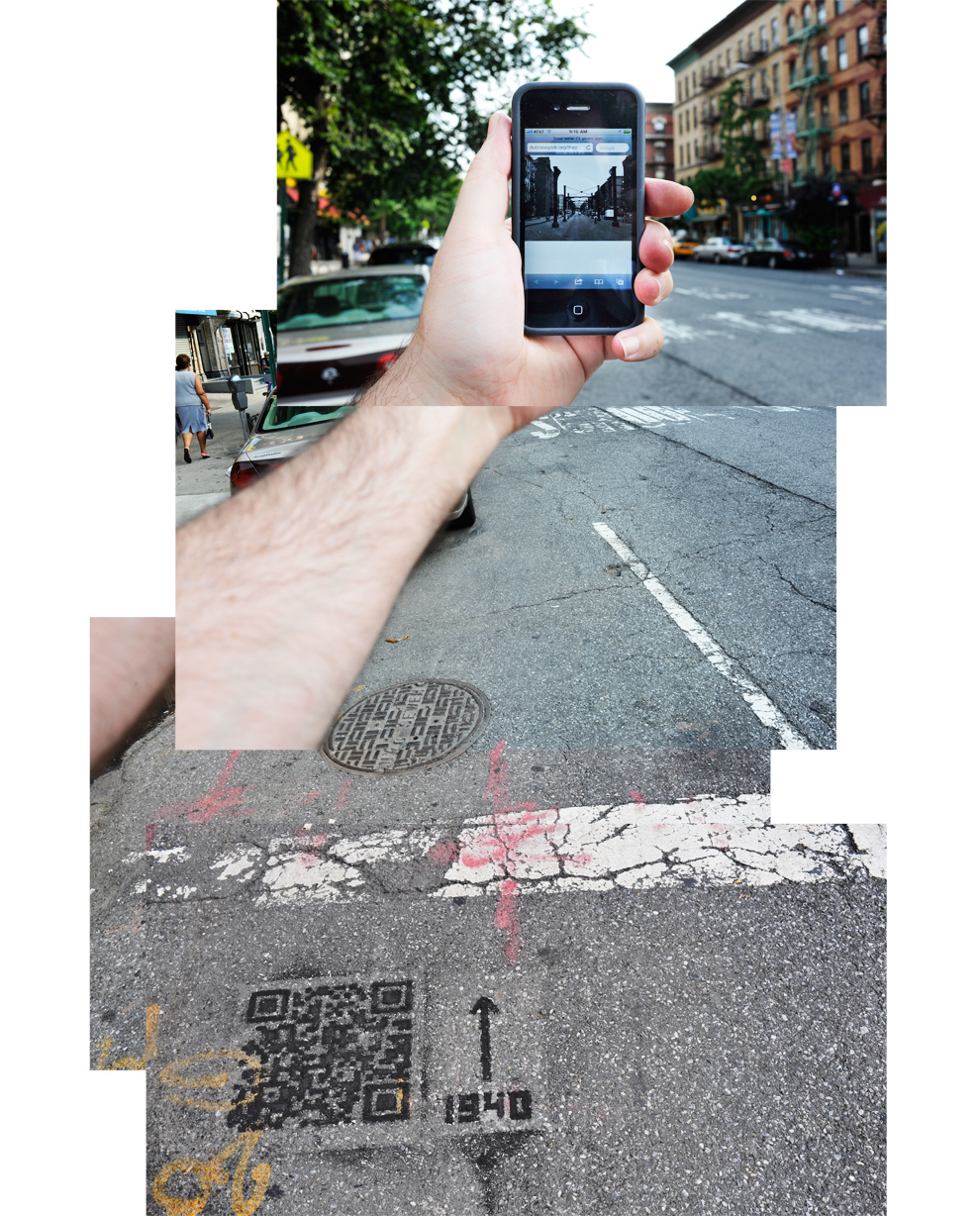
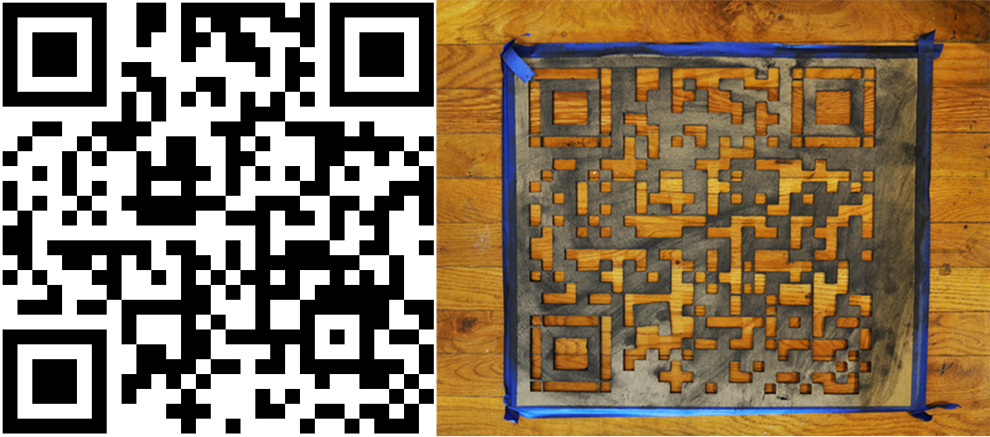
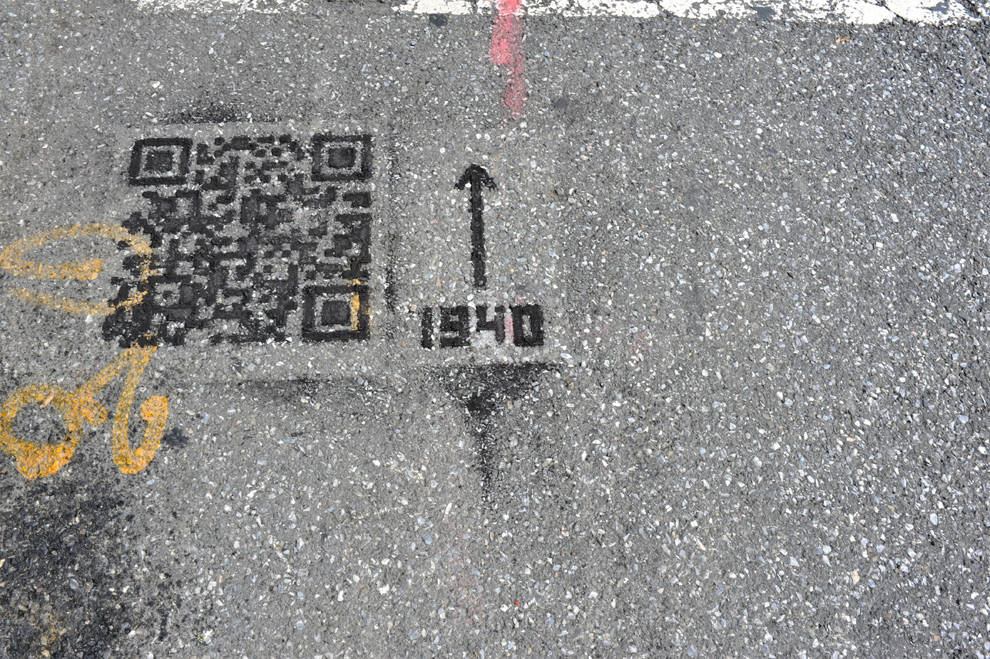
The QR code was translated into a laser cut ready file via F.A.T. lab’s QR_STENCILER utility. Using marking chalk, the stencil was painted on the street near to where the original photographer stood in 1941. All in all, this rudimentary, proto-augmented reality was created on the cheap in under four hours.


The removal of the overhead train tracks and the introduction of smart phones in the neighborhood are both changes to be resisted or encouraged. The means of accessibility to this installation are still beyond the means of many people in the area, and as ubiquitous as they may be among some, phones that can read a qr code are still not available to all. In that way, the moment in the original photo and this street marking can define a line through two points, the past and present, collapsed into one and defined by and within the smartphone. The direction and ultimate meaning of that vector is dependent on your own personal point of view. My initial inclination was to create a fantastical image to represent the street in 2081, but that would be devoid of meaning and furthered severed from people’s daily reality. By referring to a historic, shared reality, ultimately then, the means of this technological view of the past is as much of a harbinger of potential futures of the neighborhood as any fantasy image could ever hope to be.


qr04

2011076 Tags: DUB, fabrication, new york, urban | 39 Comments »

DUB 002

booth_001
booth_002
booth_003
booth_004


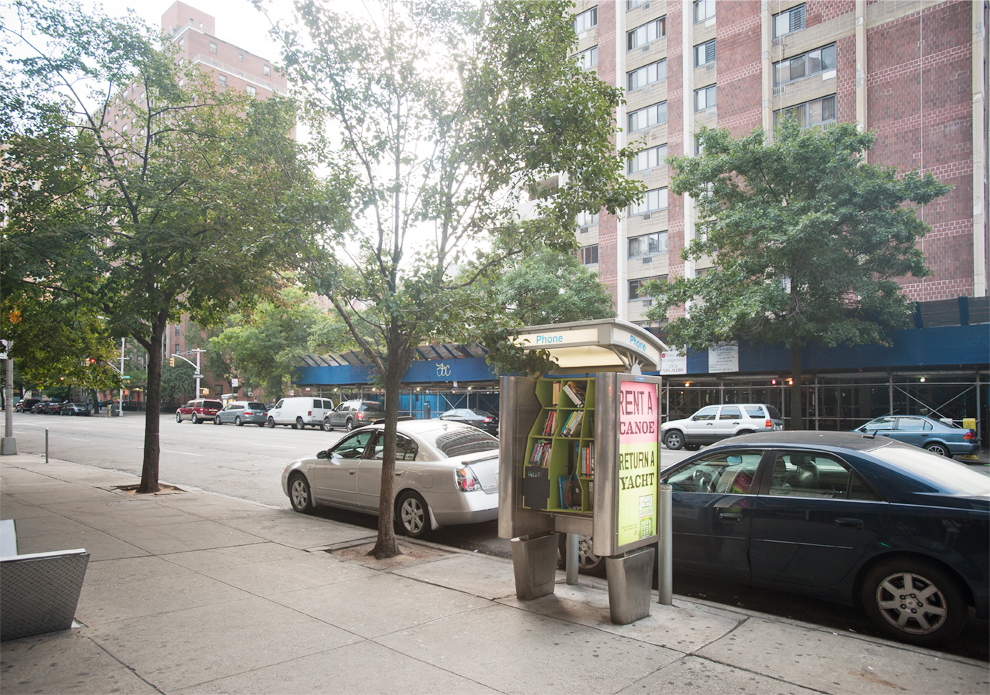
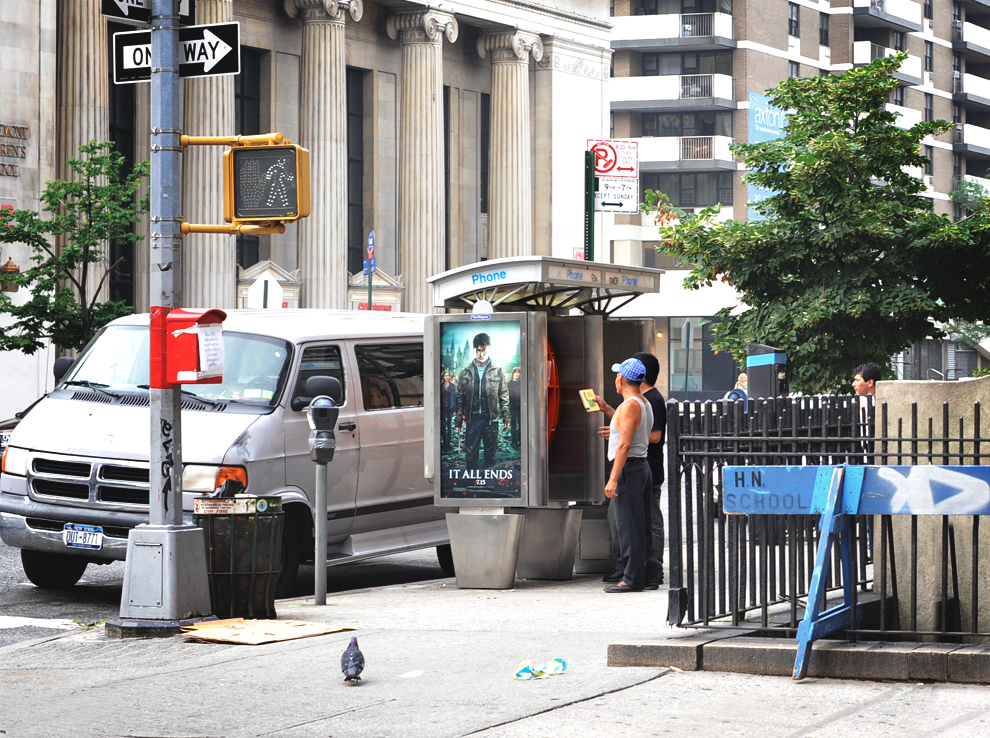
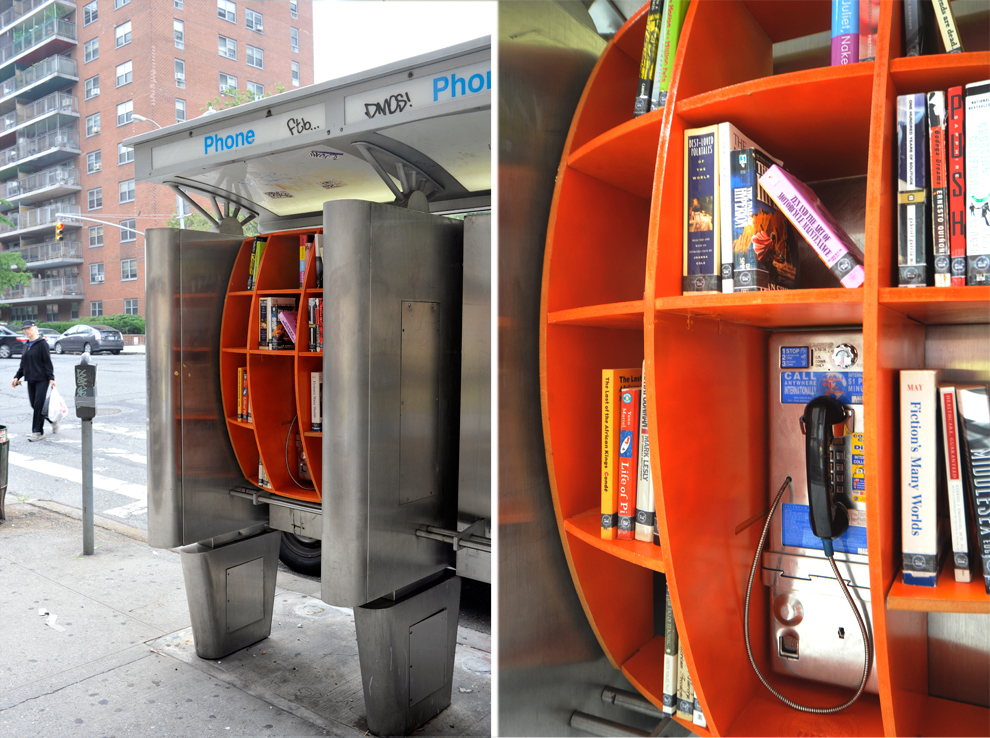
Following from the dispiriting failures of 001, 002 proved to be more successful, and not only because of it’s pumpkin orange color, but because it wasn’t cleared of books within 6 hours and the empty shelves themselves weren’t removed after 10 days. I attribute this mostly to an adjustment of tactics and location. Every block has its own subtleties and micro-urban climates, one block is boarded up with for “rent signs” while the next is a thriving pocket of activities and street-level engagement. By moving to a location 8 blocks further south, 002 was placed nearer to a major thoroughfare – 96th street – and received a more steady stream of mixed pedestrian traffic leaving the express train stop on Broadway and by virtue of being closer to street level retail (a large CVS), educational (a school and church) as well as the residential apartments along 97th street. 001 just didn’t get enough foot traffic and frankly felt deserted. I thought being near a hostel and school would generate some interest, but the hostel is an imposing Victorian Gothic structure with a decidedly prison-like bent reflecting its previous use as a nursing home for “Respectable, Aged and Indigent Females” and unsurprisingly generates little sidewalk traffic and even less urge to stop and inspect some books in a phone booth.


In an attempt to encourage sharing and free distribution of the initial selection of books, I didn’t mark the books in any way. But in lieu of the entire initial selection of 001’s books being carted off within a few hours, I tested out being more explicit and treating the books more like a library. Almost like a Dewey decimal number taped to the spine of a library book, I added a visible logo to the bottom of each spine. I hoped this would prevent the books from easily winding up in the hands of sidewalk book resellers, but I fear that the marking implies an ownership that prevents a casual exchange of taking and leaving their own books. I observed a number of people reach out and pick up a book, flip through it, but then return it to the shelf. Some even doubled back for a second look and to engage in a closer inspection of the shelves, but they still refrained from actually taking a book. Perhaps feeling hesitant to, I don’t know, steal/vandalize (irony) something that’s out in public? I can see how there might be a stigma there, to not just keep walking straight along the sidewalk with your head down, but to stop and engage with the street. I intentionally wanted to avoid any directions, like a sign that would say something along the lines of “hey this is for sharing books, you can leave some here” and I still want to avoid anything that seems overtly prescriptive, but after seeing people hesitate when confronted with 002, perhaps there is a more subtle way to gently describe an intended use.


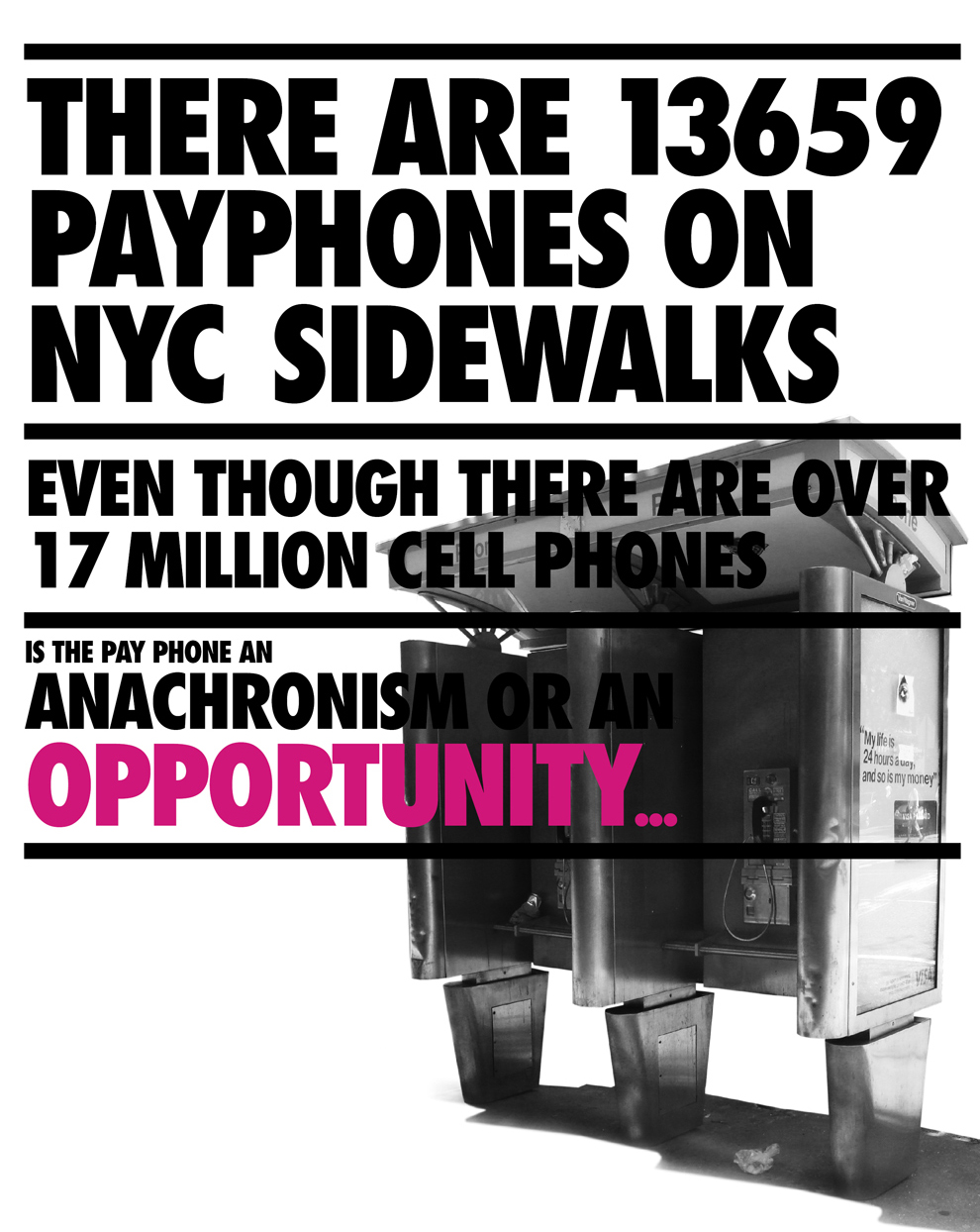
Even as they are rendered obsolete by the ubiquity of smartphones, I’m interested in pay phones because they are both anachronistic and quotidian. Relics, they’re dead technology perched on the edge of obsolescence, a skeuomorph hearkening back to a lost shared public space we might no longer have any use for. Something to be nostalgic for, in the way I can’t think about a phone booth without conjuring up images of an old, impatient woman banging on the door to one while I was inside using a calling card to ask for money. And of course they are nuisance, basically pedestrian level billboards that only blight certain neighborhoods (good luck finding a payphone in Tribeca, while there are eight separate phone kiosks on one block between 108th and 109th streets and Columbus Ave). But they can also be a place of opportunity, something to reprogram and somewhere to come together and share a good book with your neighbors.


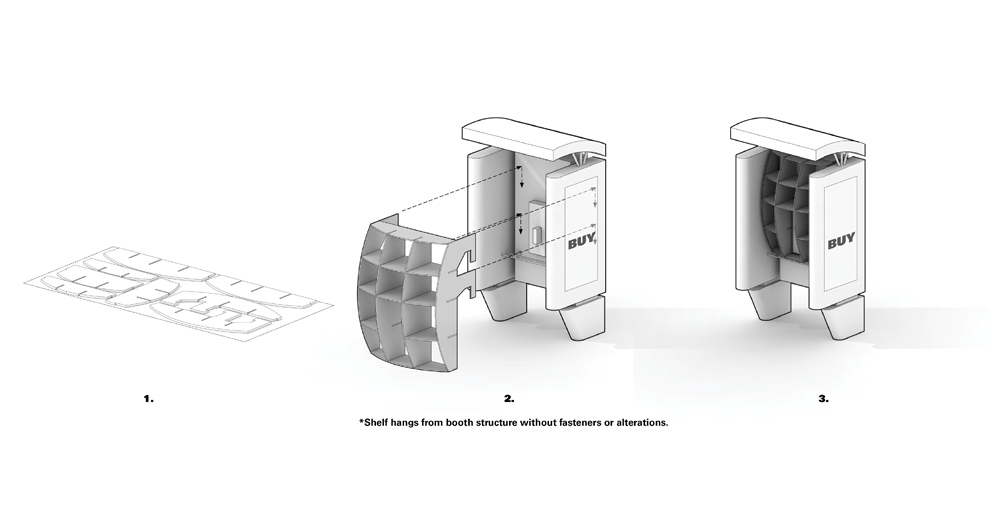
All the books were donated by local residents and the plywood was milled by Kontraptionist.


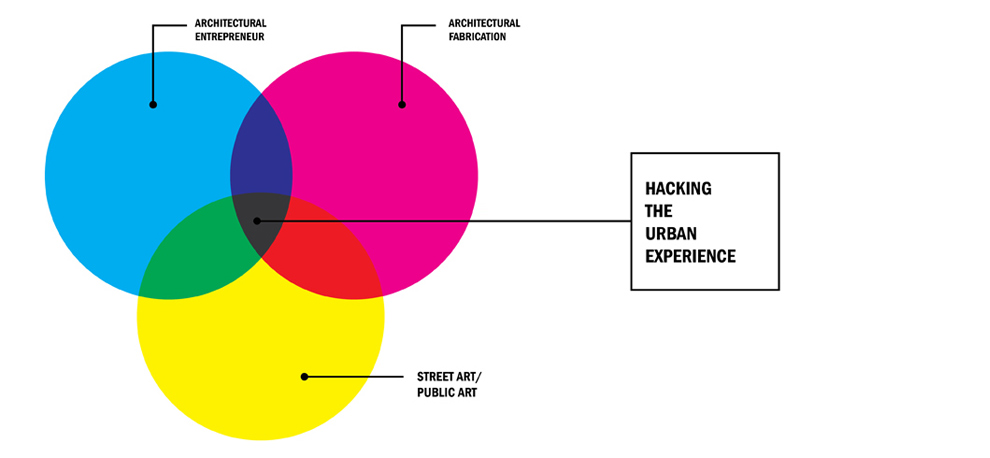
dub_diagram
more »

20110524 Tags: DUB, fabrication, new york, urban | 3 Comments »

DUB 001A


dub_booth_01
dub_booth_03
dub_booth_02


Reappropriating anachronistic messaging infrastructure (which are really just props for pedestrian scaled billboards) into something potentially more useful. In this case a community book drop.


diagram_05
more »

Newer Entries »

COPYRIGHT © 2011 \ JOHN LOCKE \ ALL RIGHTS RESERVED (RSS)

TOP OF PAGE

last update: 201102:1627