JOHN LOCKE, ARCHITECT

  • Featured Work
  • Design Blog           
  • Photography
  • Graphic Design
  • Dept of Urban Betterment

About

Hello. I live in New York and work at The Living. I hold a graduate degree from Columbia University's GSAPP and an undergraduate architecture degree from the University of Texas at Austin. I have more than seven years of professional experience at noted architecture firms, including New York-based Rogers Marvel Architects and SOM. I also tackle freelance graphic and photography work with my partner in crime, the multi-talented Jackie Caradonio at Lion in Oil. In addition, I teach a course, Hacking the Urban Experience, at Columbia. View my CV here: CV(html). Thanks and have a nice day.

Contact

john.h.locke{at}gmail.com
310.735.3333

Architecture Portfolios

Portfolio 2002-2007 (issuu)
Portfolio 2008-2009 (issuu)

HOME / BLOG

architecture

2020113 Tags: africa, architecture, photography, work | No Comments »

The Last Normal Day


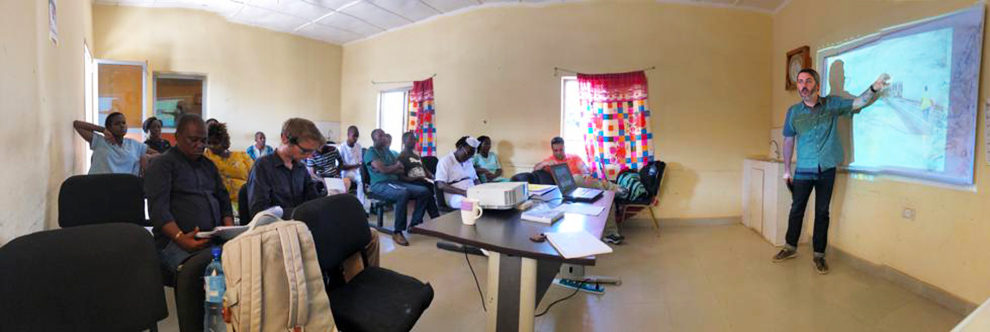
My last in-person design presentation to a room of medical professionals and staff for a health care facility in Sierra Leone, February 2020.


With the weather in New York lurching towards a quarantined pandemic winter and the election about to bring forth…something, it feels like the endless year of 2020 is about to enter some heretofore new phase. To prevent/distract me from constantly clicking refresh on every poll tracking site, I’ve instead been thinking back to the last normal day. It’s always difficult to reconstruct in hindsight, because you obviously didn’t know at the time that you were in fact living your last normal day. For most people it’s probably sometime in March when you were hanging out with friends at a bar, going to a movie, eating out at a restaurant or any of the other countless quotidian social interactions that we took for granted. For me, the gap between normal life and pandemic life is filled by the bright, vivid memories of my three weeks in Sierra Leone at the end of February doing architecture – presenting design ideas, sketching charettes, visiting the project site, finding new material suppliers and sustainable supply chains, understanding construction possibilities and finding equitable labor approaches – basically finding solutions to all of these challenges are what I really enjoy about my job. And I was with some amazing people.


The maternal mortality rate in Sierra Leone is the worst in the world. A mother is almost one hundred times more likely to die during childbirth than in the United States. There is no single issue or failure that you can point to as the cause of such an offensive statistic. This is a systemic issue, in part caused by deep political issues brought about by a history of colonialism with its attendant official extractive policies, endemic corruption, a civil war, the ebola outbreak, well meaning but failed NGOs, and a whole host of other issues that would require me as an American to understand much more deeply. However, there is no singular heroic act to solve this, no superhero to punch out maternal mortality, and building one hospital can’t singlehandedly correct for decades of neglect and the lack of an infrastructural support system required to both educate a new generation of doctors and pave the roads to get them to the hospital and a power grid that keeps the equipment running. Yet in the face of all these obstacles there are people devoting their lives to caring for each other and making things a little better for those that have been neglected and poor. It is a movement of people working together, fighting for other people just as you would do for yourself. A new hospital building can significantly aid in that work, but it is simply a part of a vast network of care and another step forward to justice and progress for those that are driving that change day in and day out.


Amongst the daily intensive collaborative design work and nightly dinner discussions, the steady background din of news from home got louder. First the cases in the Pacific Northwest, then evidence of person-to-person transmission in California, some false optimism thrown in for good measure: “You have 15 people, and the 15 within a couple of days is going to be down to close to zero,” then finally the first verified cases in New York state. While it was still over a month before Sierra Leone confirmed its first Covid case, ebola was a recent memory for people there, and hand sanitizing and temperature checks became a standard routine before entering any building, and while meeting at the Health Ministry, no-contact greetings were standard (though I appreciate protocol was broken for a trip highlight bear hug from the Health Minister). Maybe this wasn’t the last time that was necessarily “normal”, and the setting was most definitely different that what I was used to, but it was the last time I felt wholeheartedly positive about the future. I suppose all architecture proposals are inherently utopian in that way. Designing is an optimistic act. When you’re designing something you’re part of a team envisioning and sharing this idea for a project that when built will be a manifestation of that mission to create a better world. The work continues.
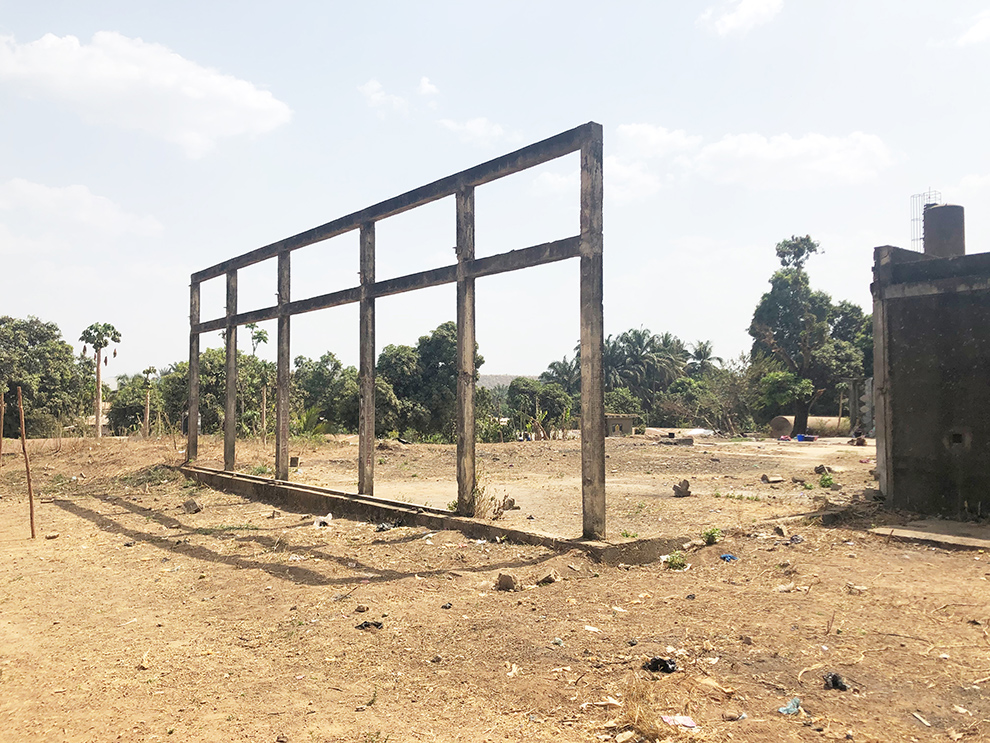


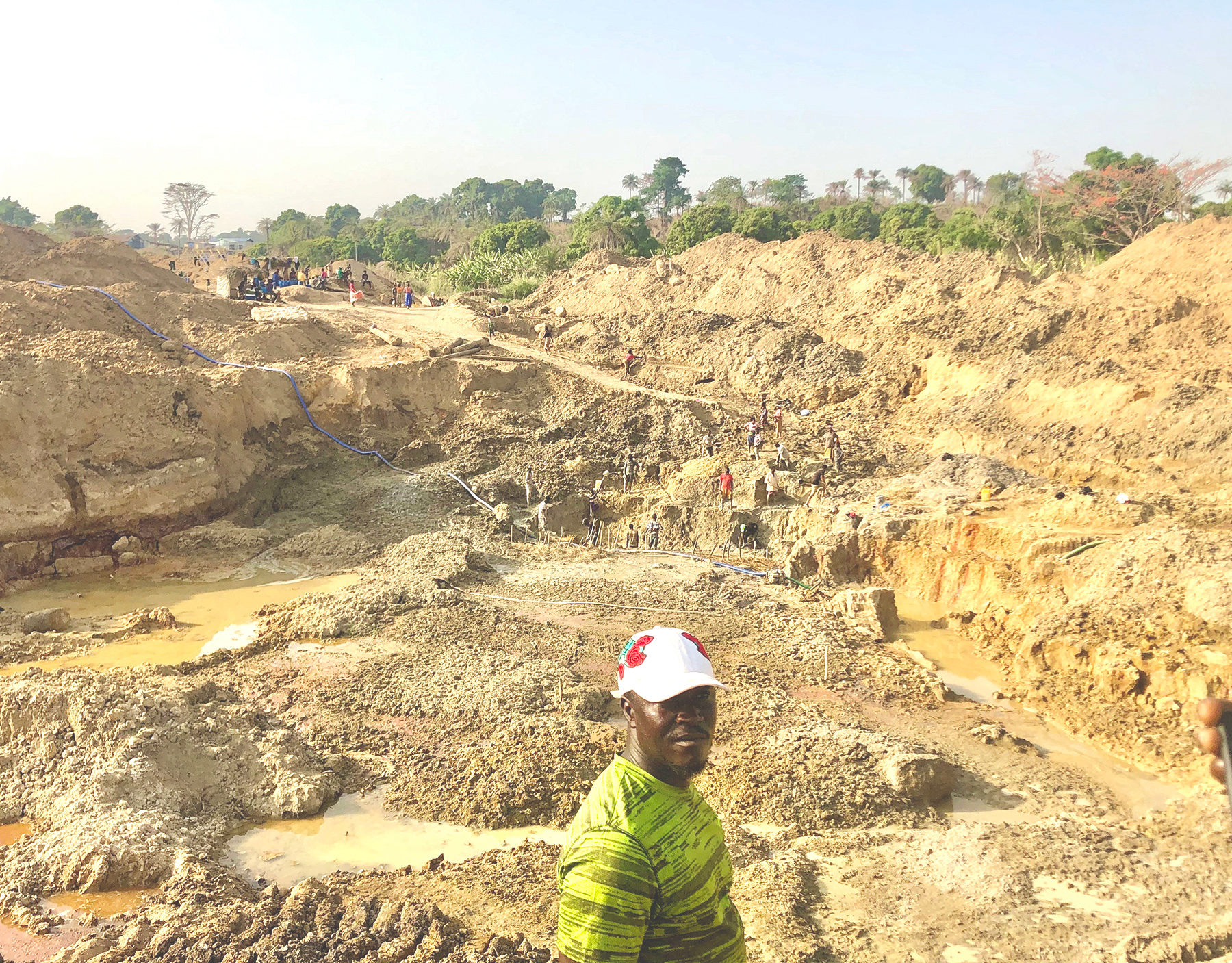
The project site (above).


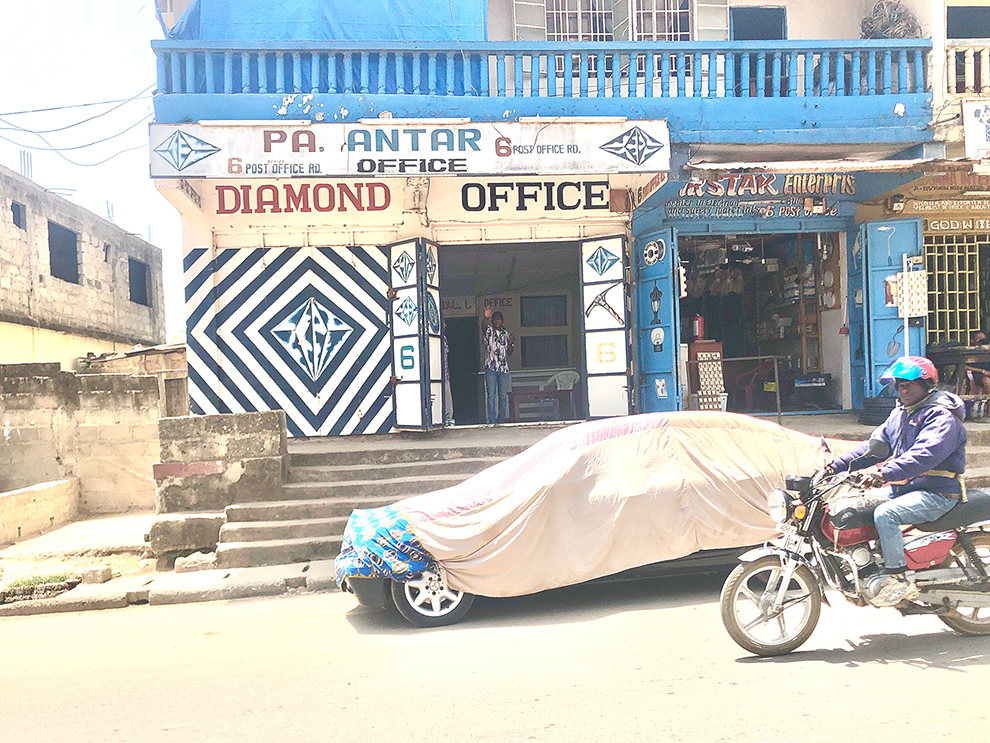
There are a huge number of mining concerns throughout Sierra Leone, including both one of the world’s largest – Koidu Holdings – as well as well as smaller, more independent operations. However, regardless of the corporate structure, this natural resource belonging to the country has historically been extracted to create enormous wealth for the South African mining conglomerates, Lebanese diamond brokers and high-end Belgian auction houses who control the supply and reap the profits before the stones end up in some engagement ring. There is little to no benefit for the poor, surrounding areas and it just becomes a reason to die working in an open pit or a resource to kill for control over. Through a fluke of geological forces – one of the globes richest kimberlite pipes spiked outwards from the earth’s core out to this small county – and an overly permissive central government, the country is pockmarked with these open pits where 500m3 of earth is removed and discarded for every carat of diamond dug out of the ground.
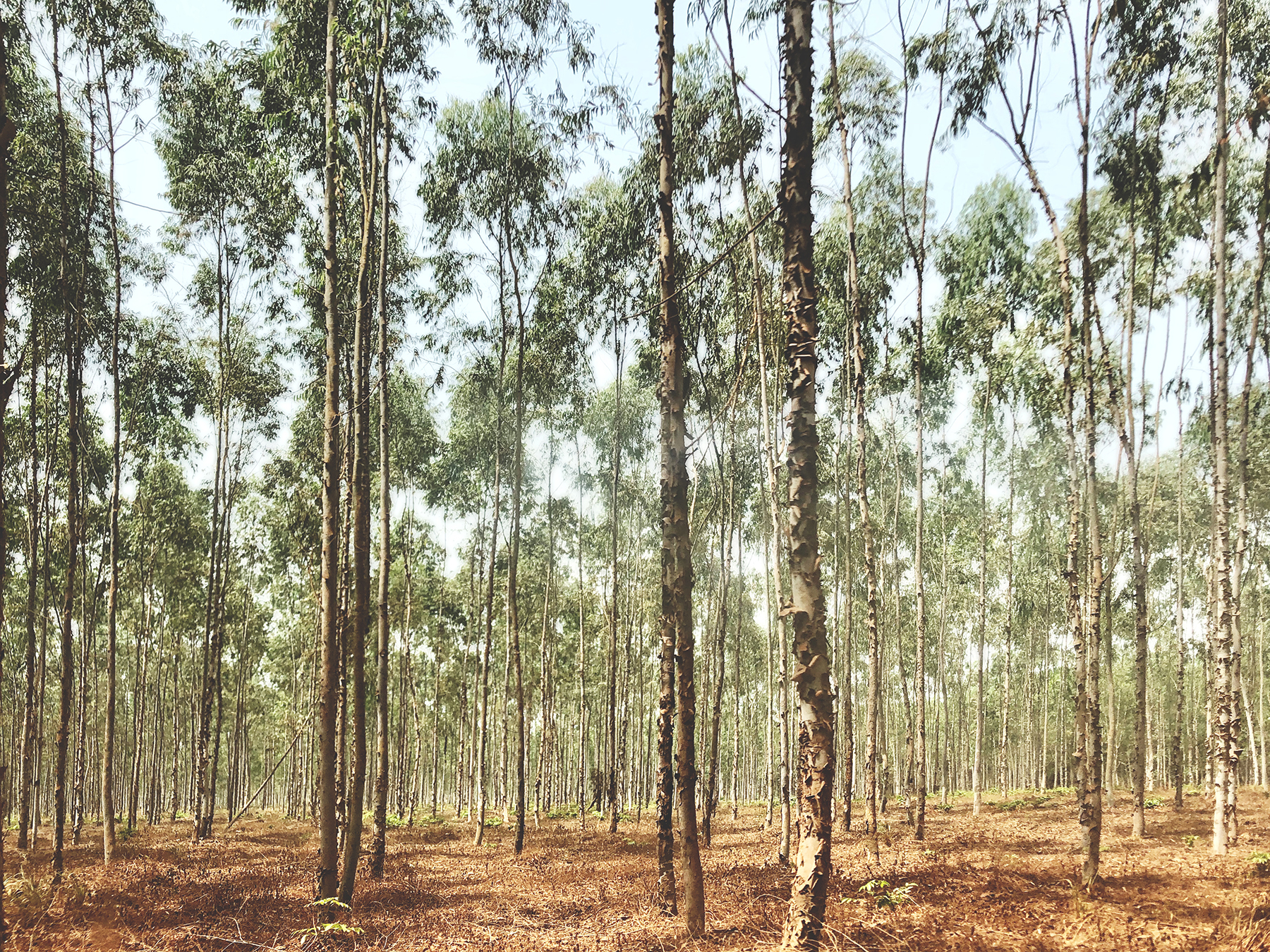


Sustainable forestry initiatives have started to take hold in West Africa, and ideally this project could act as a lighthouse for potential future adoption of timber in the built environment. We visited a timber company producing FSC-certified fast growth, short rotation species of Acacia (shown) and Eucalyptus trees for construction material. These nascent industries promote social and economic development programs within their community, while also providing a more sustainable building material for a fast growing construction market.
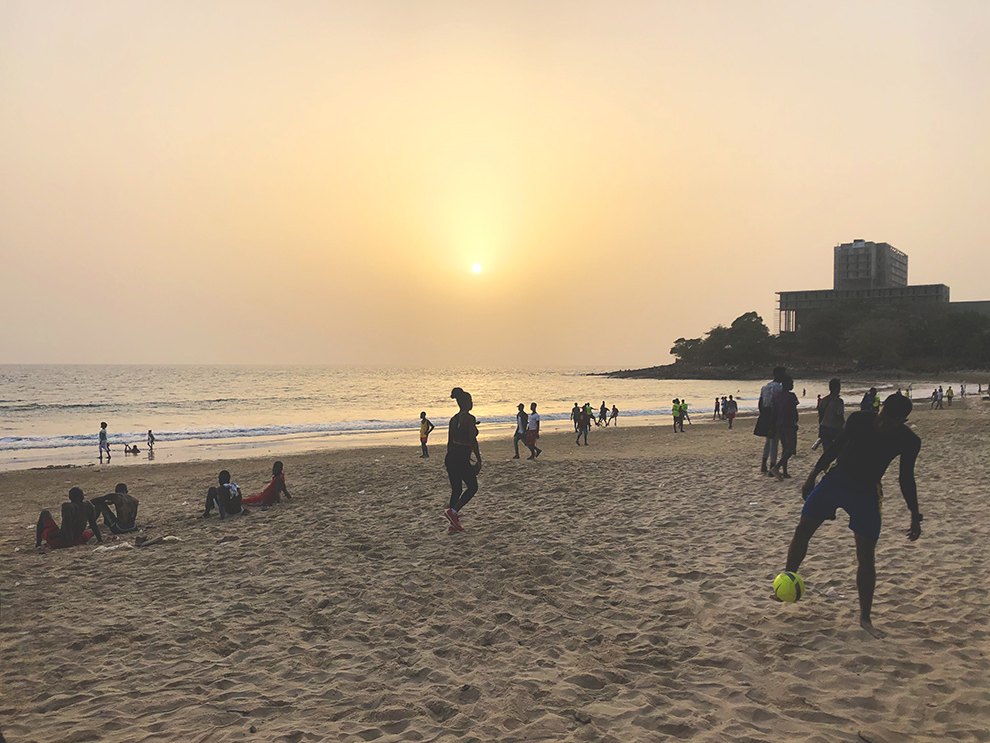
 

The Freetown beaches are some of the most beautiful and active beaches I’ve ever been to. So many people laughing, walking, and playing together as the sun sets.


20190128 Tags: architecture, fabrication, gsapp, interaction, new york, teaching, urban | No Comments »

Cloud Box Performance Space – 2018 Class Work

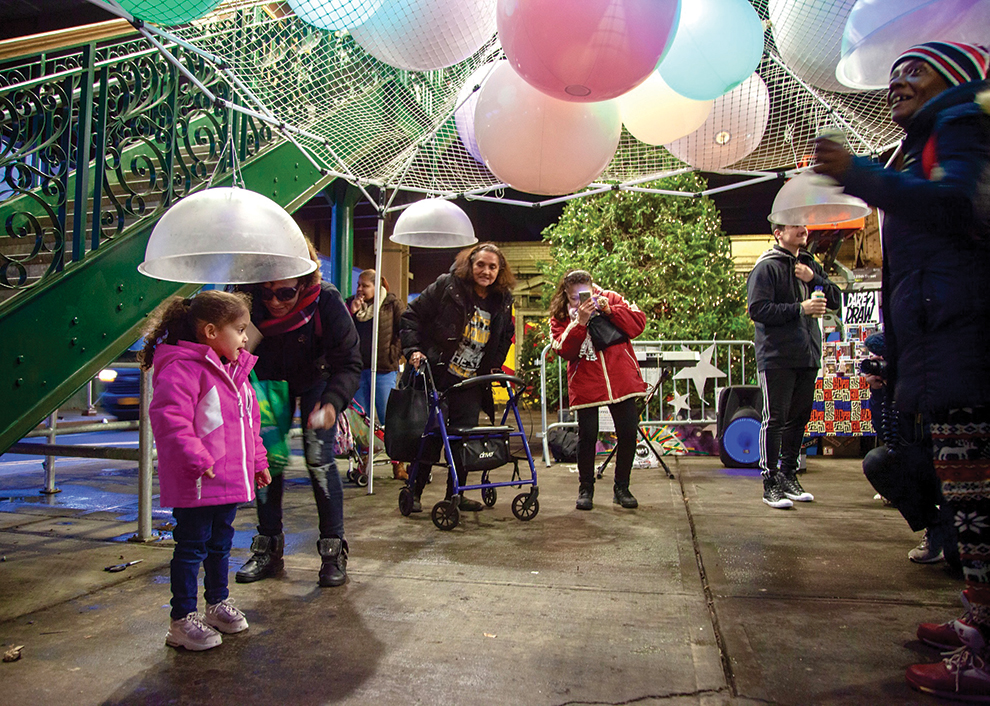
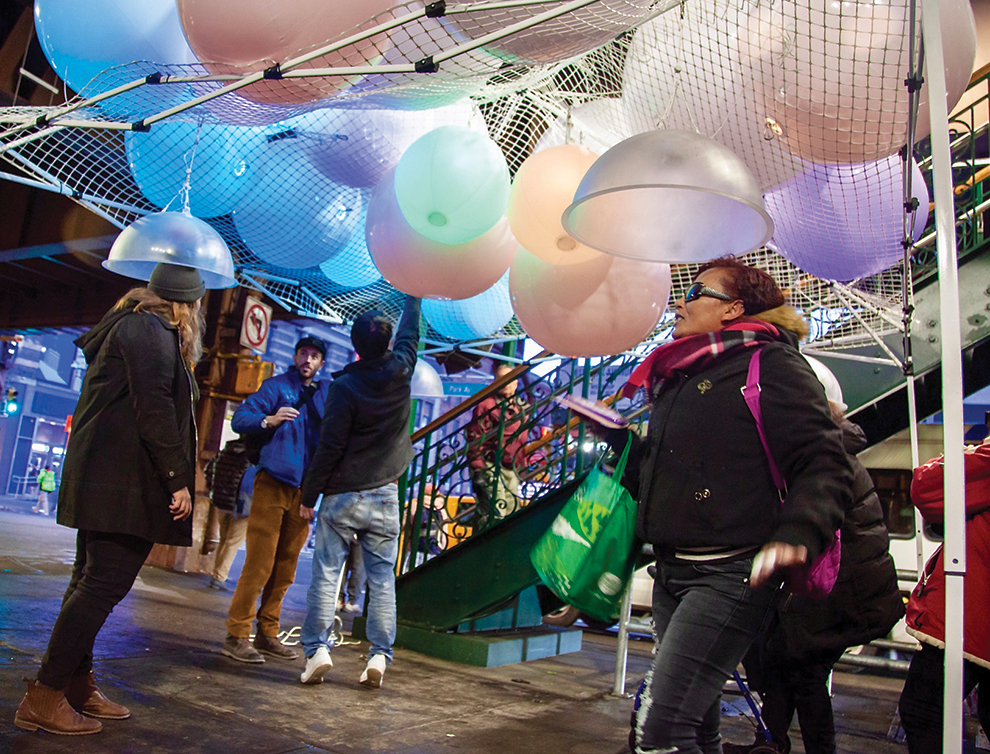
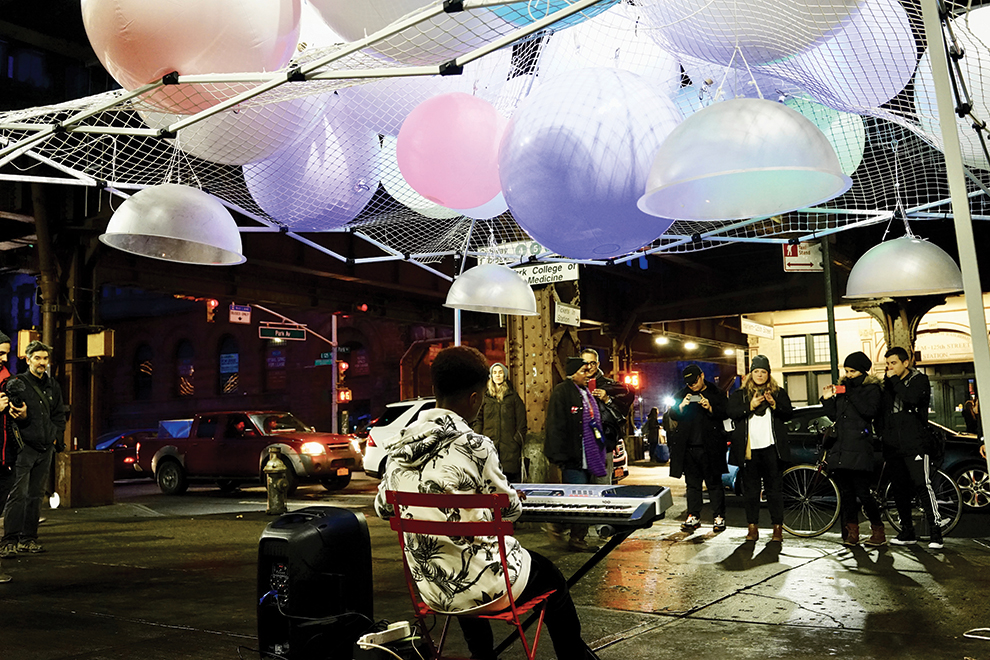
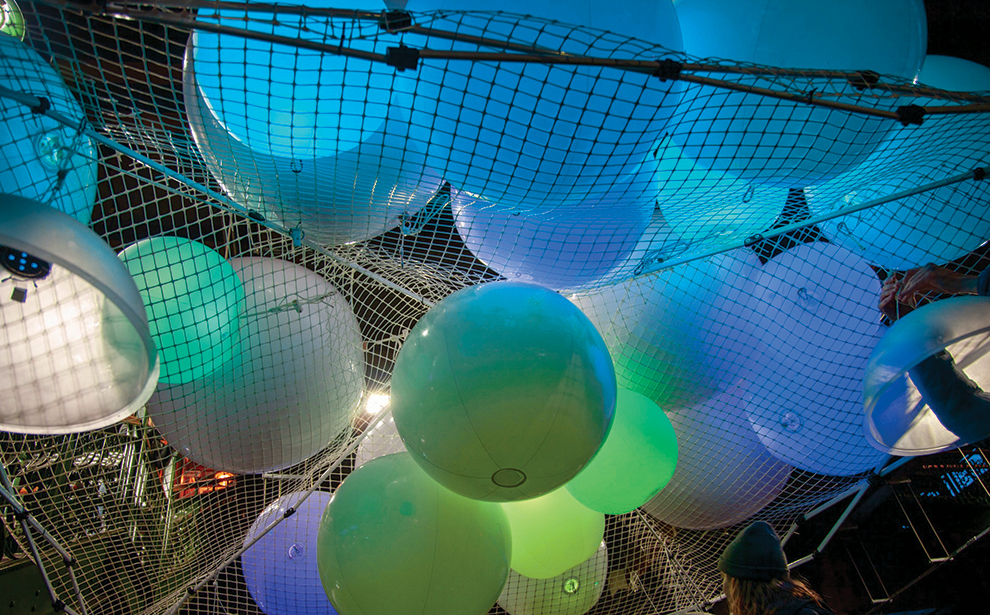
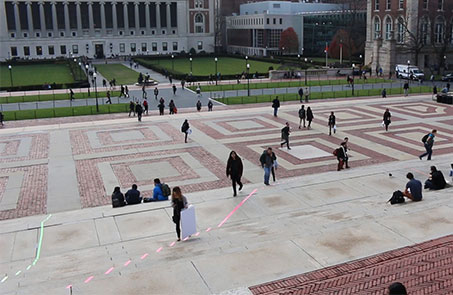
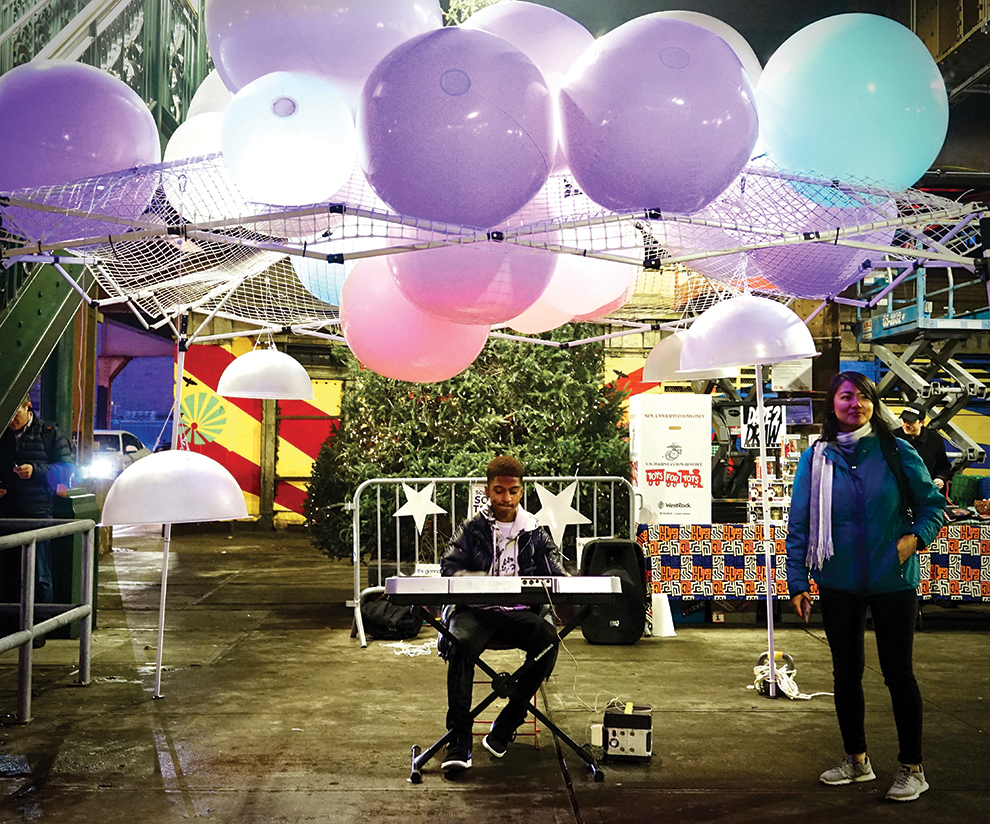
An amazing and talented group of students made something worthwhile and in a manner that I think is unique to GSAPP. Below are images from the final intervention – a mobile sound and light performance space. As a quick overview, we spent the first session reading, drawing, and talking to community groups about who gets to build things in the city and why. What systemic issues result in this urban area being neglected? The second session we worked hands-on and in close collaboration with a number of organizers and community artists including the Uni-Project, Uptown Grand Central, as well as Harlem’s young musician Carlito Ratti. I thought it was very worthwhile for the students to not only work collaboratively amongst themselves, but also to fabricate something meaningful and interesting for actual people to use and experience.


An abbreviated syllabus below, full syllabus here: https://medium.com/@john.h.locke/hacking-the-urban-experience-2018-18f267862c10:


Session A Overview
“Attack current conditions in a manner that will change them.”
– Siegfried Kracauer


“It’s easy to say we need recyclable, sustainable technologies, old and new — pottery making, bricklaying, sewing, weaving, carpentry, plumbing, solar power, farming, IT devices, whatever. But here, in the midst of our orgy of being lords of creating, texting as we drive, it’s hard to put down the smartphone and stop looking for the next technofix. Changing our minds is going to be a big change. To use the world well, to be able to stop wasting it and our time in it, we need to relearn our being in it…”
-Ursula K. Le Guinn, Deep in Admiration (2017)


This semester we will collaborate with the UNI Project (www.theuniproject.org) — a non-profit that creates learning environments in public spaces across New York City — to design, build, deploy, test and defend a 1:1 scale prototype intervention intended to facilitate interactive participation in public life.


How we build, how things are made and for whom, reflects the social, economic, and political values of a community. We have the opportunity to help shape those values in our own neighborhoods. Here, on the street, New York’s key urban questions can be explored and tested. This is where in the words of Michael Sorkin, cities are “distribution engines”, separating bodies and power in to distinct tranches, which require a constant vigilance to break down these spatial inequalities in an endless struggle to maintain free, open space that is accessible to all. We’re now living through the broken failures of neoliberal urban planning, where public benefit has been surrendered in deference to a developer’s personal gain. However, with tactical precision, we will apply ourselves to subverting the systemic decisions that have led us to this point, in an attempt to provide an alternate path forward. We can prove that things, ideas, installations can exist in public space only for delight, outside of market forces.


We will begin with Henri Lefebvre’s assertion for a shared “right to the city”, an essential reading of the urban experience against the privileged inertia of entrenched power, in which a pluralistic collection of citizens must collectively create their city. The temporary activations and assemblages that we develop can lead the way toward an urban environment that provides for the many. In this way, our work should by its own definition be critical, it should merge the social, physical, and experiential, and acknowledge the political ramifications behind architecture and planning in 2018’s America.


This course seeks to assert the relevance of the design and fabrication skills at our disposal as potentialities for increased relevance. Through the re-appropriation and re-imagining of existing urban conditions, the student will harness their entrepreneurial spirit to design and fabricate a working prototype that embraces the messy reality of New York. The student will begin by identifying a quality of the urban condition that includes the latent capability for engagement and work toward fabricating an adaptive, responsive and environmentally viable solution. Specific emphasis will be placed on testing and exploring through hands on research the possibilities of detailing and fabricating using unorthodox materials. Formulating a strong guiding thesis idea will be essential to the project’s success, but the core challenge for the student will be converting a strong idea into physical reality, something to be observed, tested and documented.


Session A Goals
By attempting to capture a broader audience for architectural interventions, a number of questions present themselves and the student will be challenged to anticipate possible eventualities — how will it be used? How can we quickly imbue meaning in our work? How do we engage with different communities? How do we collaborate with outside groups? Fabrication will be considered less from a formal quality, and more from a use, durability, improvisation and public participation viewpoint.


Ultimately the student will come out of the course with a healthy respect for two core concepts: Firstly, an increased skill in the use and applicability of the fabrication skills we have at our disposal for solving design issues using unorthodox materials in unconventional settings; and two, that there is an opportunity for architects to regain lost relevance by inserting themselves through unsolicited proposals into the public consciousness as stewards of urban well-being.


Session B Overview
What can architecture accomplish? Is it merely the competent combination of a client’s given program, site, and budget? Are we merely the credentialed executors of assignments? Or worse yet, is society at a point in which it no longer expects anything from us? Do we now have the courage to leave the safety of the assignment and transform ourselves into entrepreneurs and producers? Our goal will be to reclaim the mantle of empowerment. We will form new alliances with groups outside of the architectural aficionado, and imbue our work with dignity and worth to appeal to the non-architect, the average citizen, the neighbor.


Building off the skills and experience gained in the first half of the class, this second session will look deeper into the possibilities of public fabrications to functionally alter everyday urban encounters. What do common materials mean to people? What impact can form have on the reading of a project?


The goal will be to create a proposal for a mobile installation that can accommodate future progress and participation — a malleable first draft that allows a feedback loop with the neighborhood to give back and evolve together. We will push the notion that learning occurs through making, doing, and interactivity; while giving primary focus to the designing of experiences in lieu of objects. How can you engage with a pluralistic public to have them become a partner in your work? How does that experience become fun, easy, and understandable?


Session B Goals
The temporary final intervention should give you an opportunity to upend the distinctions between public and private. You can temporarily disregard social hierarchies, and choreograph a temporary experience that provides for alternative social encounters and shared urban encounters. New York is a palimpsest of change on top of change, but your temporary work should guide the permanent into more democratic, open, and acerbic directions.


You will learn to collaborate with outside groups, in a project for real people, re-defining notions of authorship in architectural work. You will explore new models of practice, and leave the course with an understanding of how your own form, program, and material assemblages can change urban experiences.


Many thanks to Sam and Leslie Davol at the Uni-Project for all their help and advice, as well as Carey King with Uptown Grand Central for the amazing support.


Many thanks to Sam and Leslie Davol for the project photography!

 
2017114 Tags: architecture, fabrication, gsapp, linknyc, new york, research, teaching | 2 Comments »

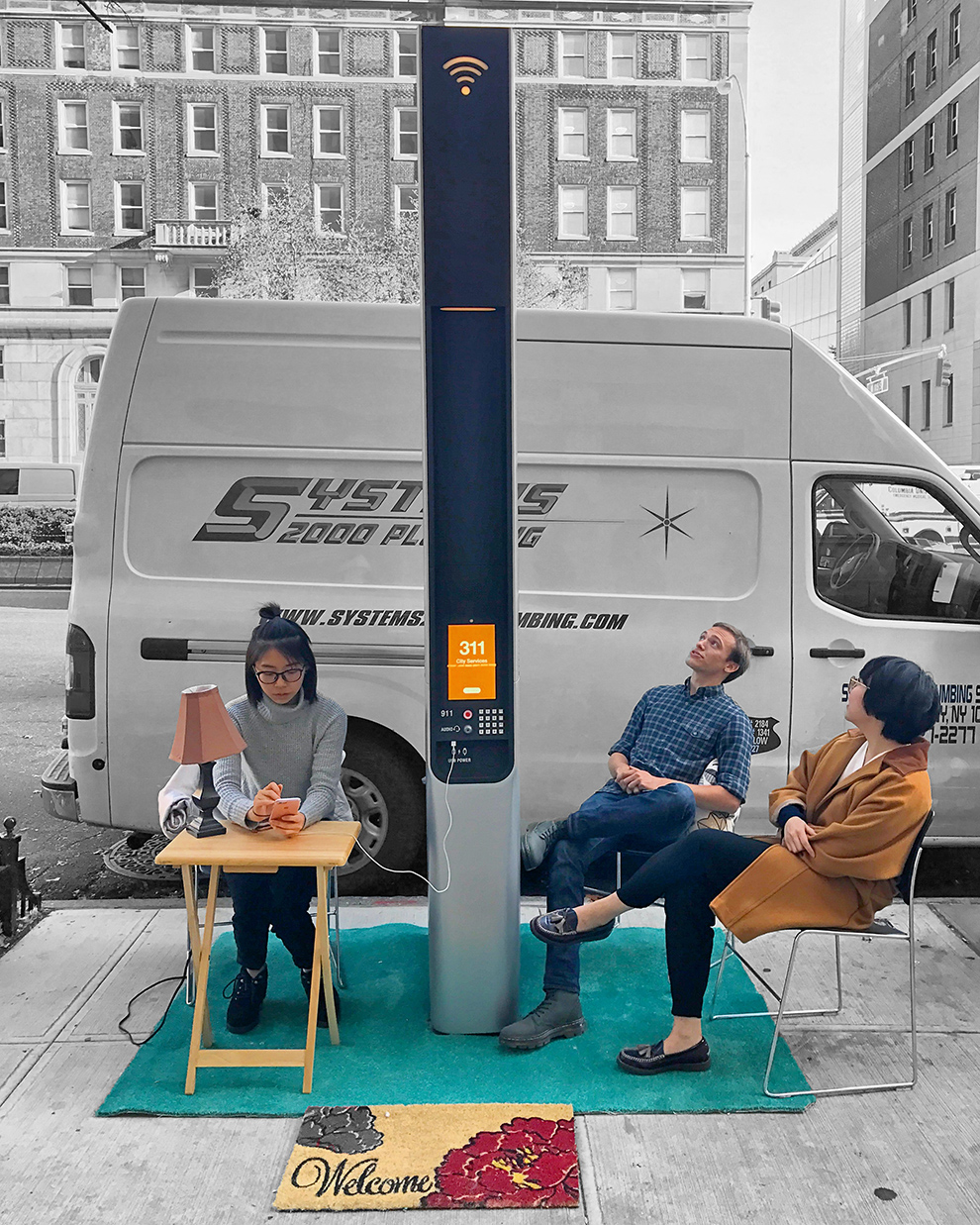
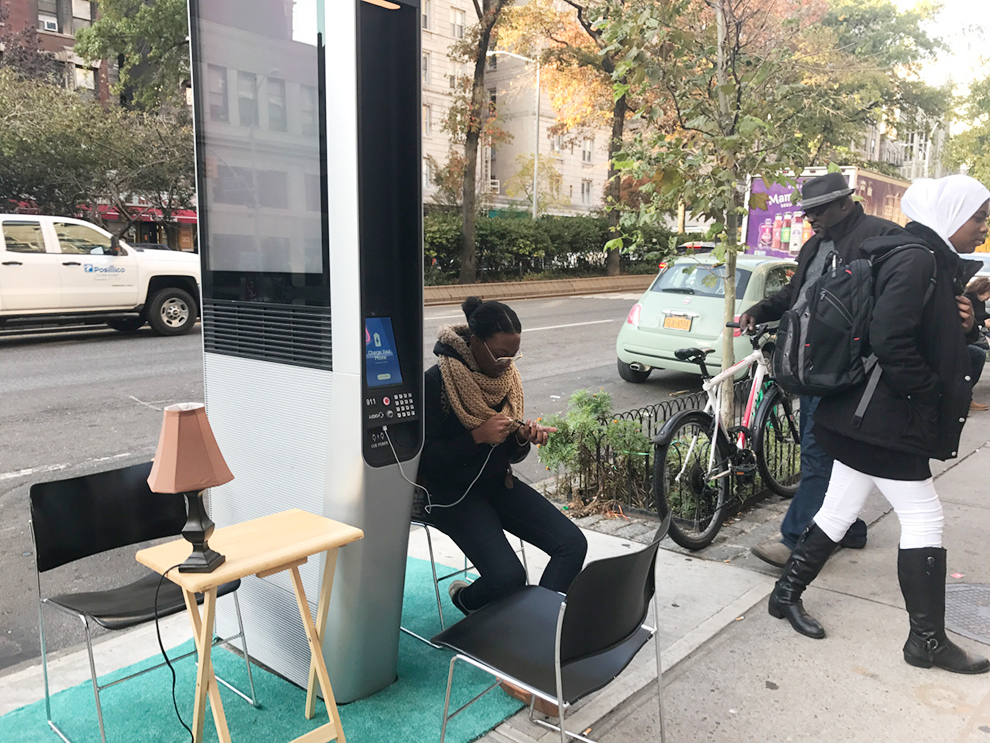
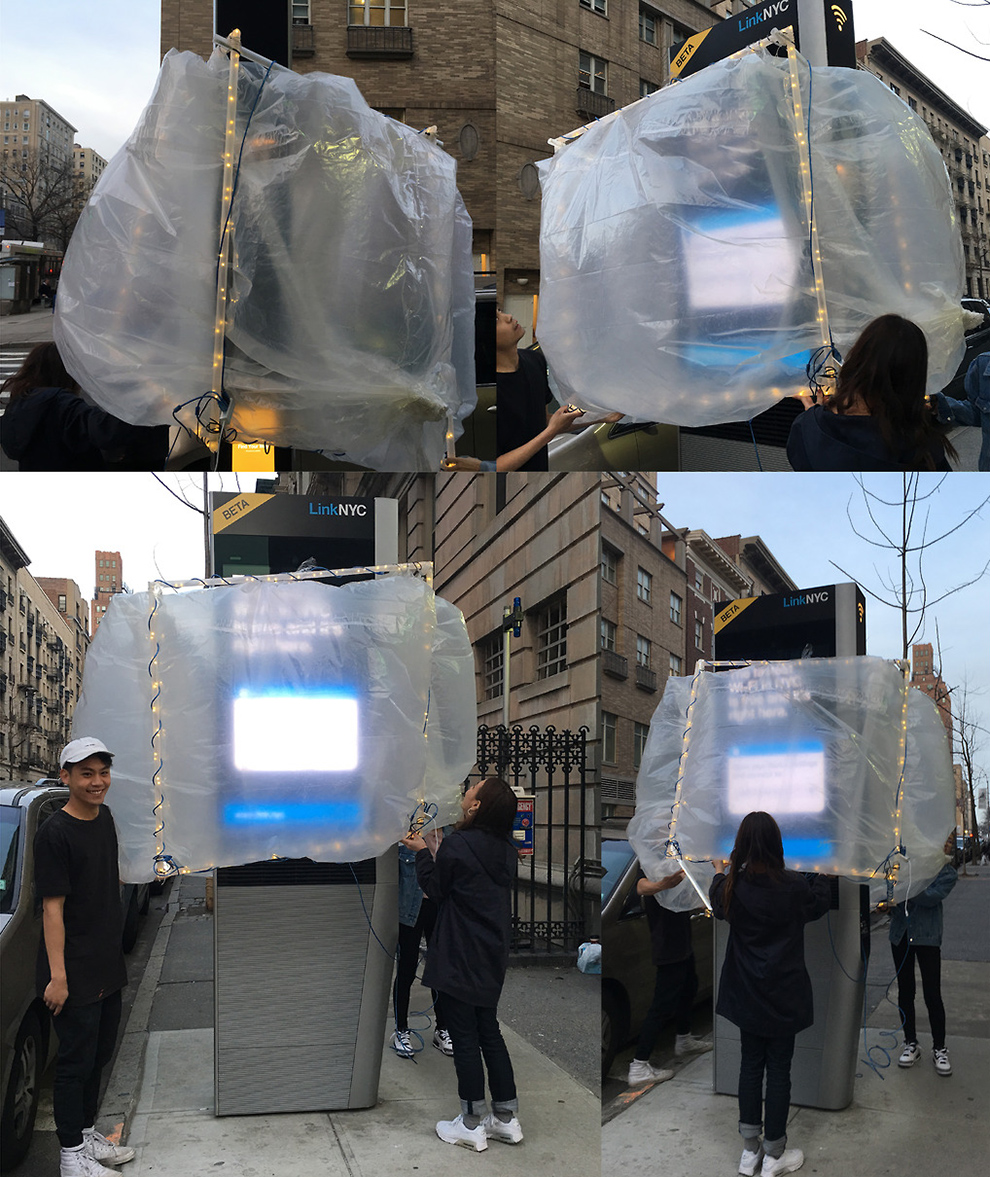
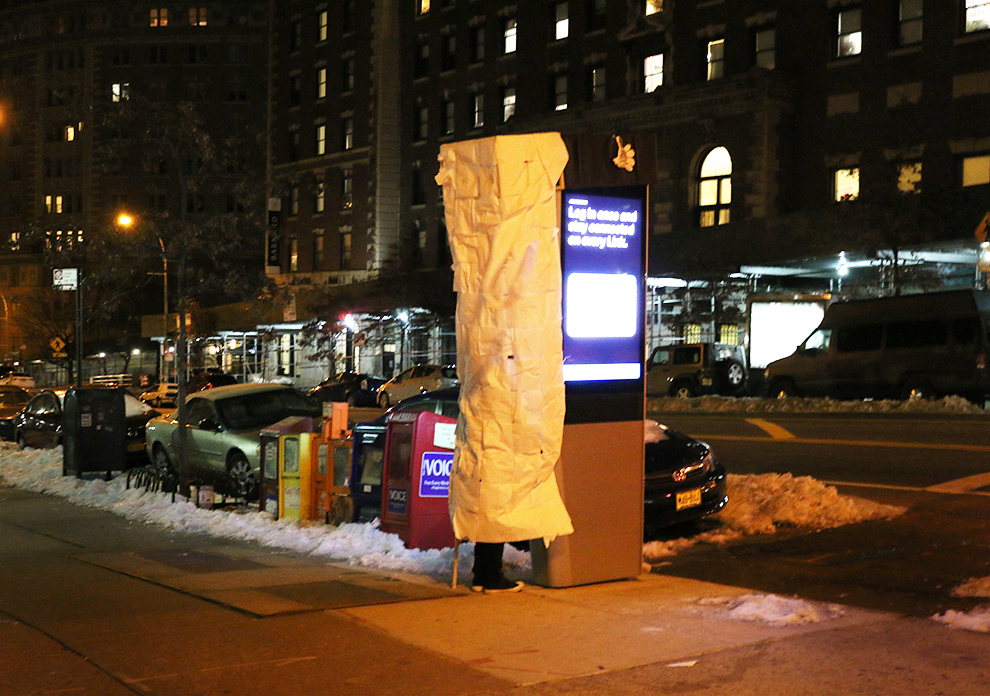
Hacking the Urban Experience – LINK NYC

A story in four parts:


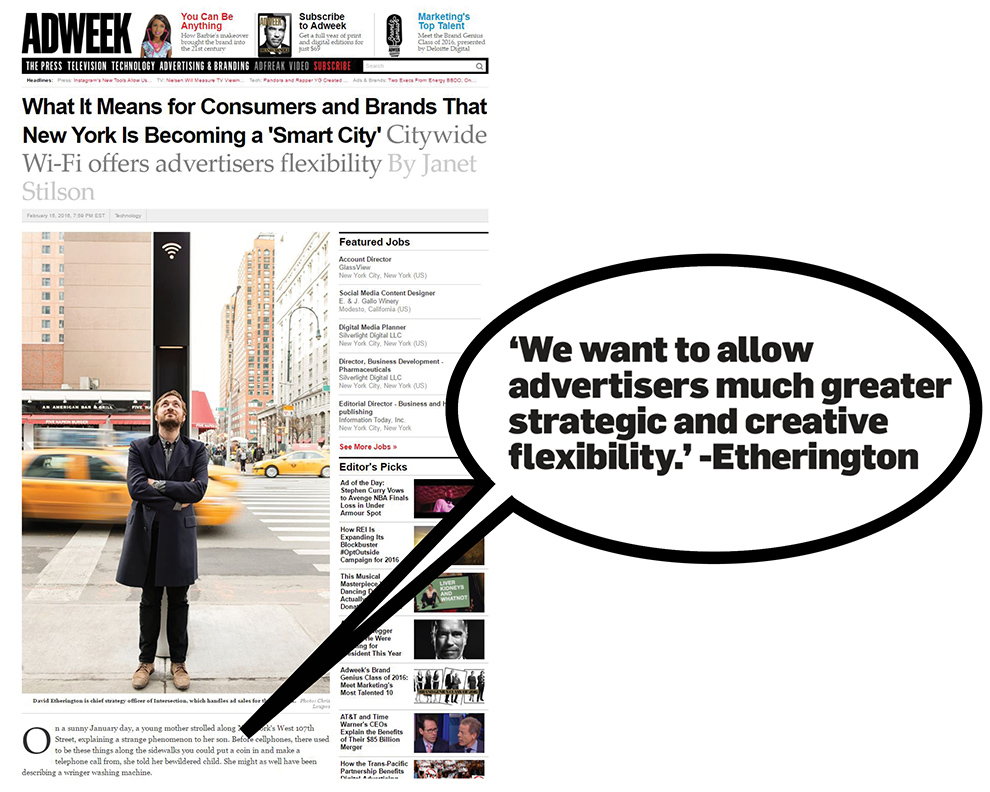
What It Means for Consumers and Brands That New York Is Becoming a ‘Smart City’


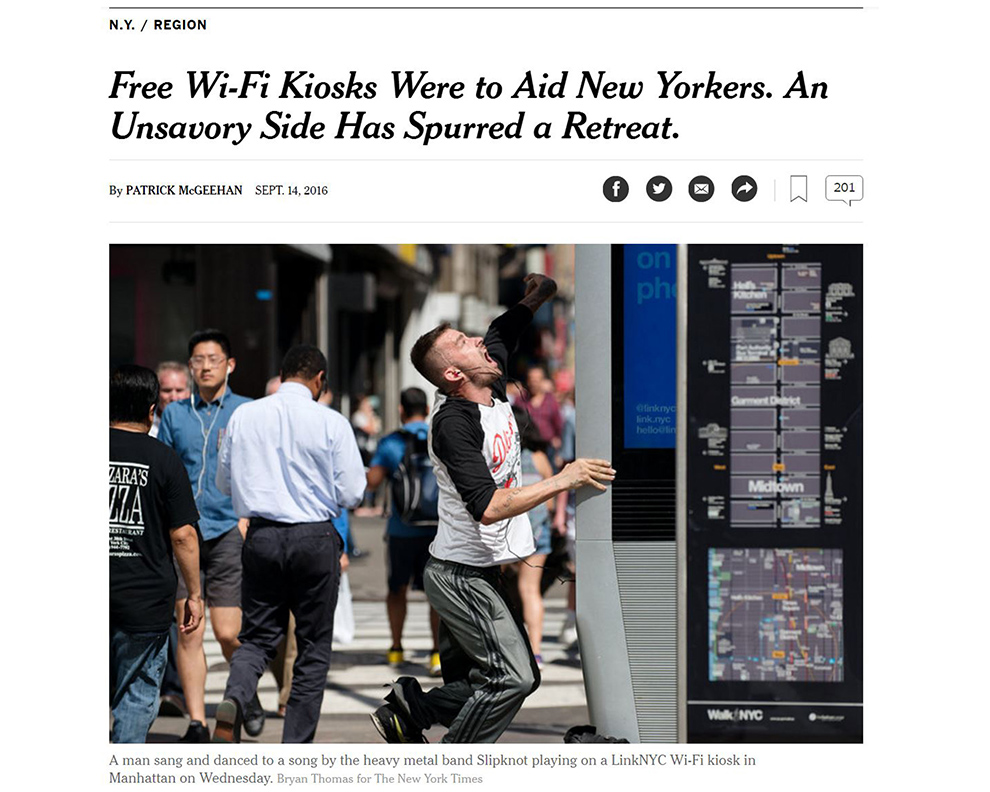
Free Wi-Fi Kiosks Were to Aid New Yorkers. An Unsavory Side Has Spurred a Retreat.


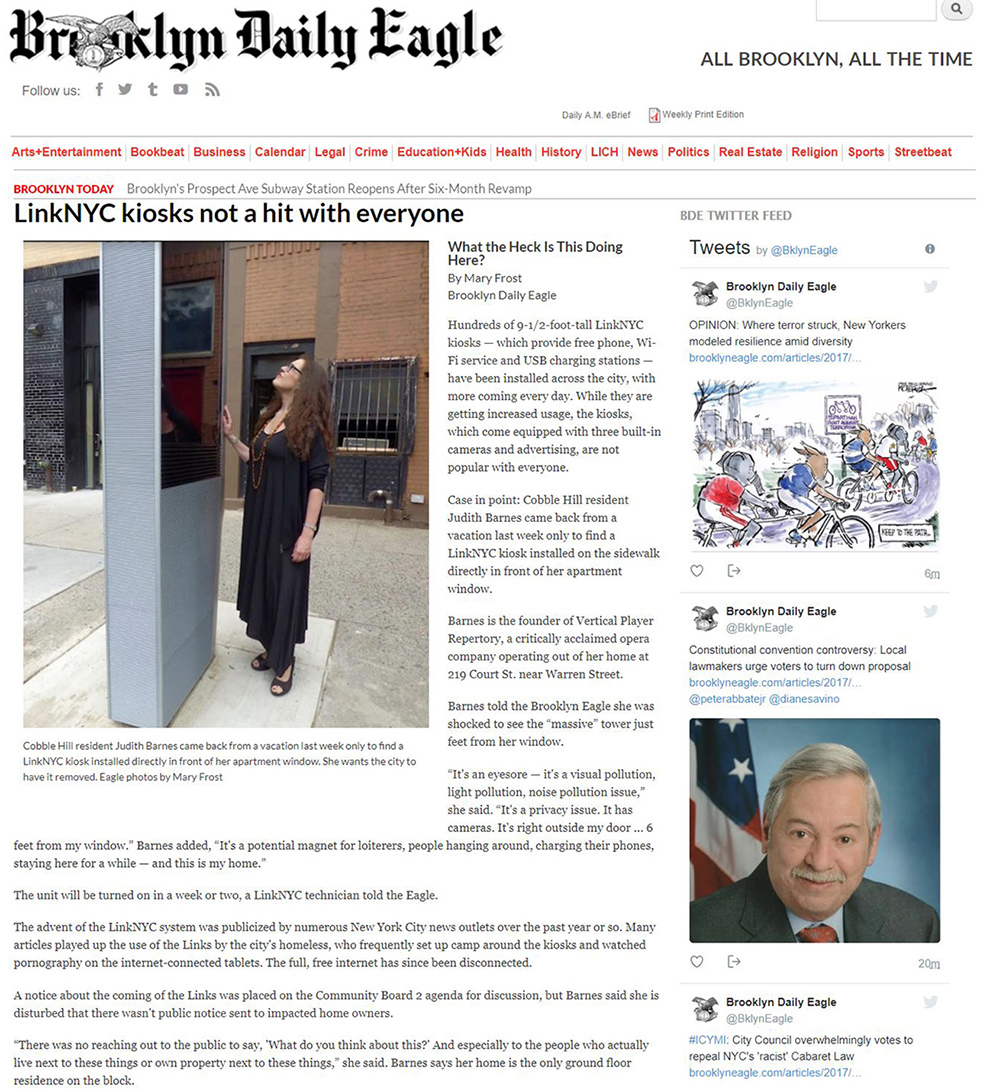
LinkNYC kiosks not a hit with everyone


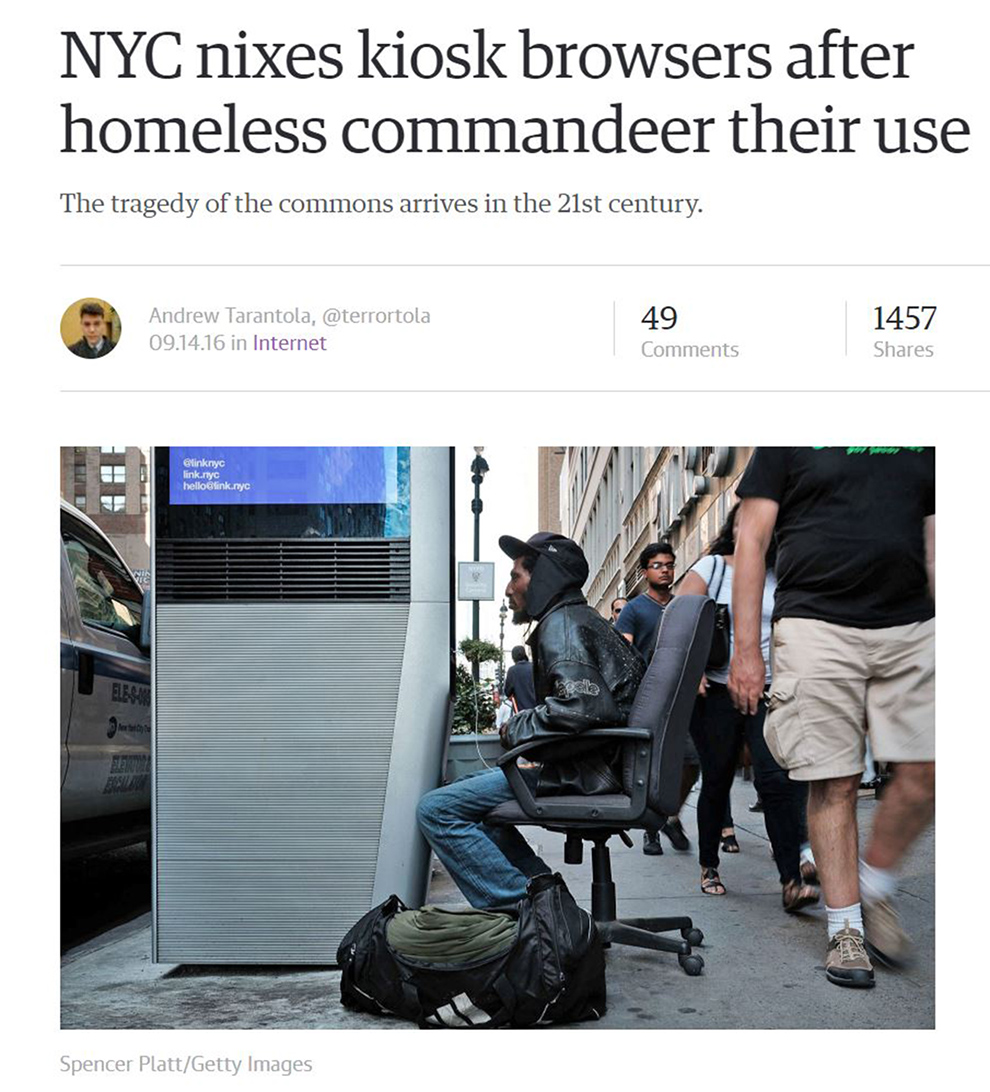
NYC nixes kiosk browsers after homeless commandeer their use


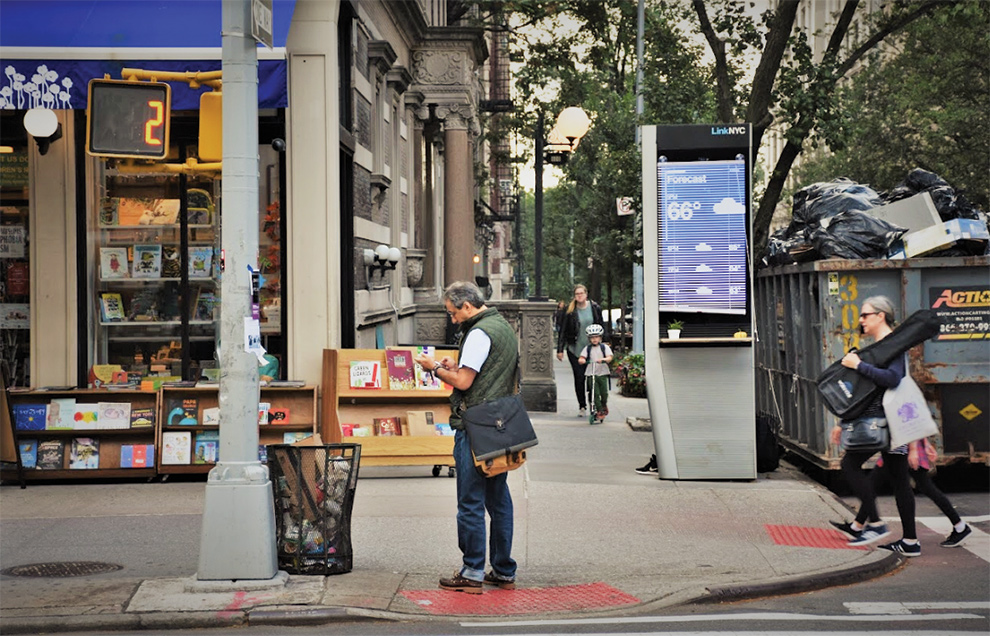
With little fanfare or prior warning, they began bolting the LinkNYC kiosks to the sidewalks in early 2016. Greeted with little more than a New York shrug, these were blatant pedestrian-scale digital billboards. An upgrade from the static posters on bus stops and phone booths. The trade-off for tolerating these new advertising intrusions was the promise of new “world-class” free wifi (of which an email address was initially required) and an internet-enabled, built-in tablet. Instantly, certainly apocryphal stories of rampant homeless porn-watching quickly spread, though a quick look through the offending media images showed that the concern seemed more to do with less desirable folks congregating and watching youtube videos or making voip calls instead of “moving along”. It should also be noted that these kiosks are not evenly distributed throughout the city, but rather more heavily located uptown – either through the result of human decision-making or a black box ROI algorithm is unclear. Seven months after the initial roll-out, access to internet for all passersby was either completely shut off or severely curtailed, though the digital signs remained.


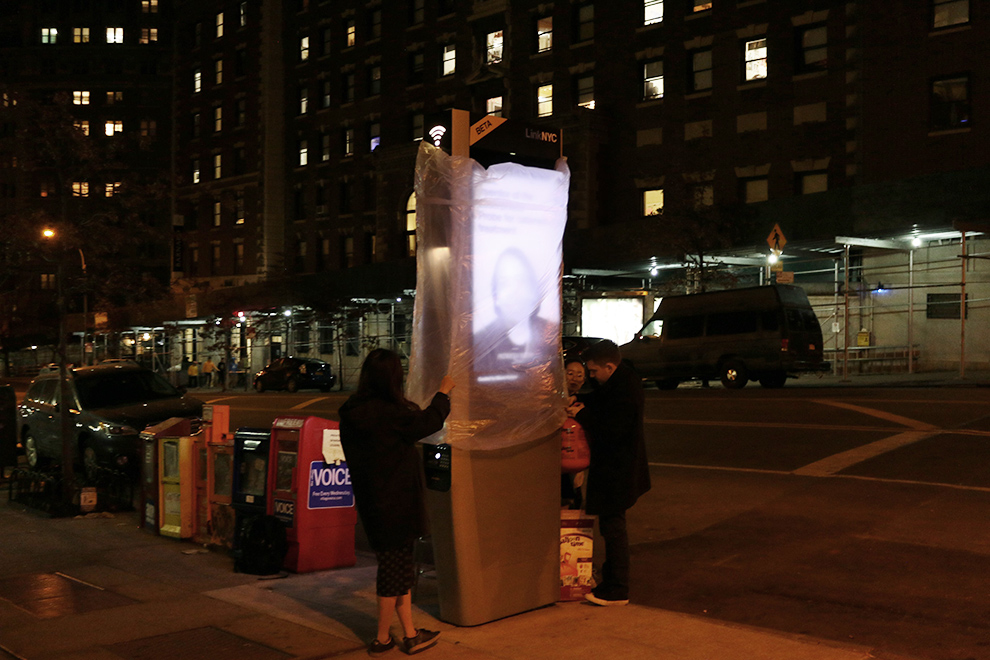
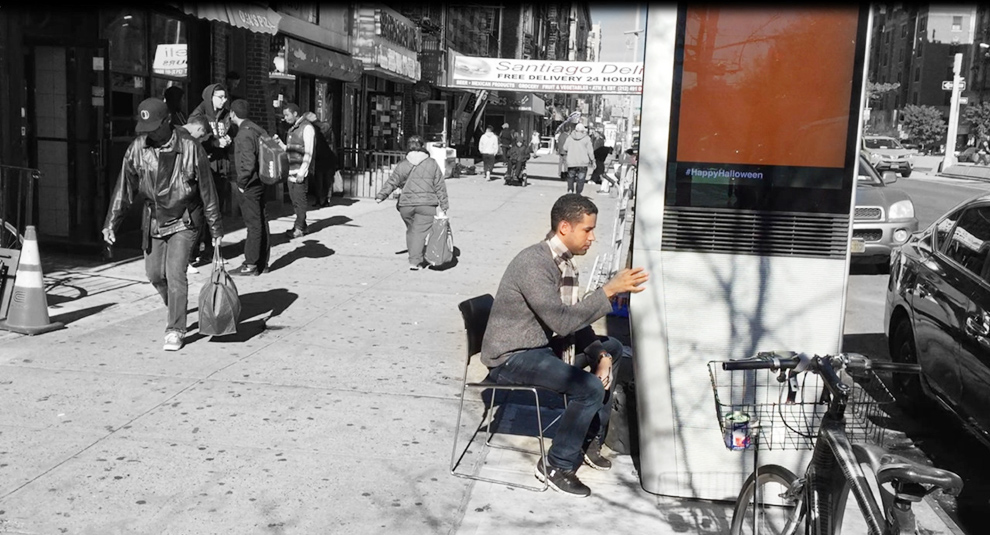
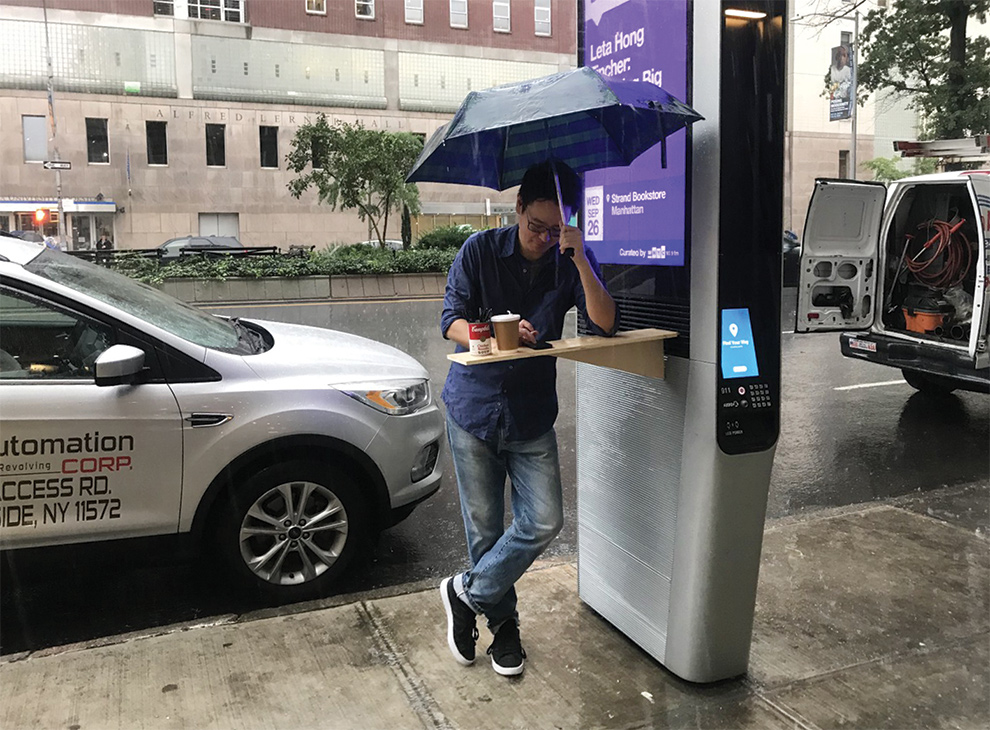
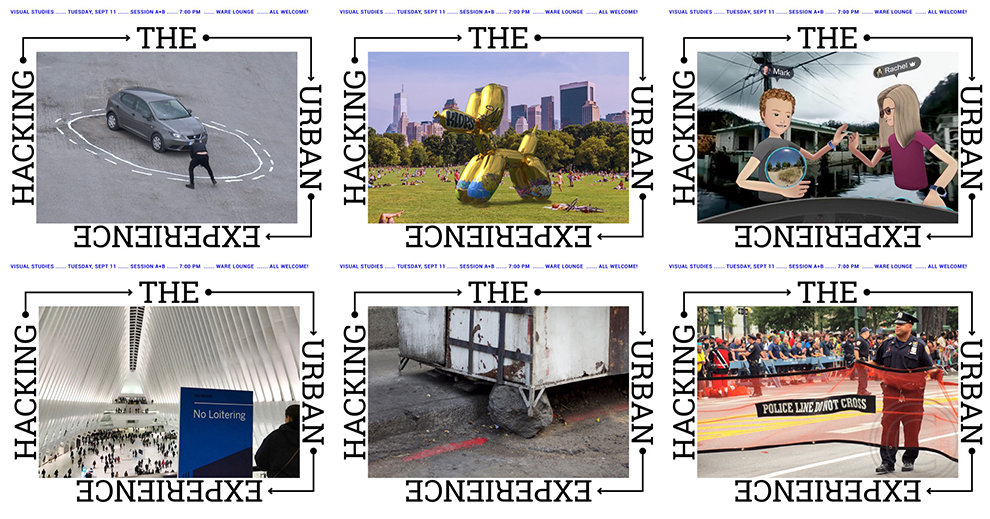
Our course at Columbia, Hacking the Urban Experience, is invested in architectural street interventions at a neighborhood scale. As it appears that the design and implementation of these is driven by public-private advertising concerns (LinkNYC’s parent company is Alphabet’s Google), rather than architects or city planners, the first assignment of the course looked at ways to both acknowledge that these things now exist on NYC streets and to non-invasively study ways that they can be adapted. In the same manner that steetlight poles can act as support posts for help wanted or missing person signs, how can the Link NYC kiosks adapt and provide actual value to the street?


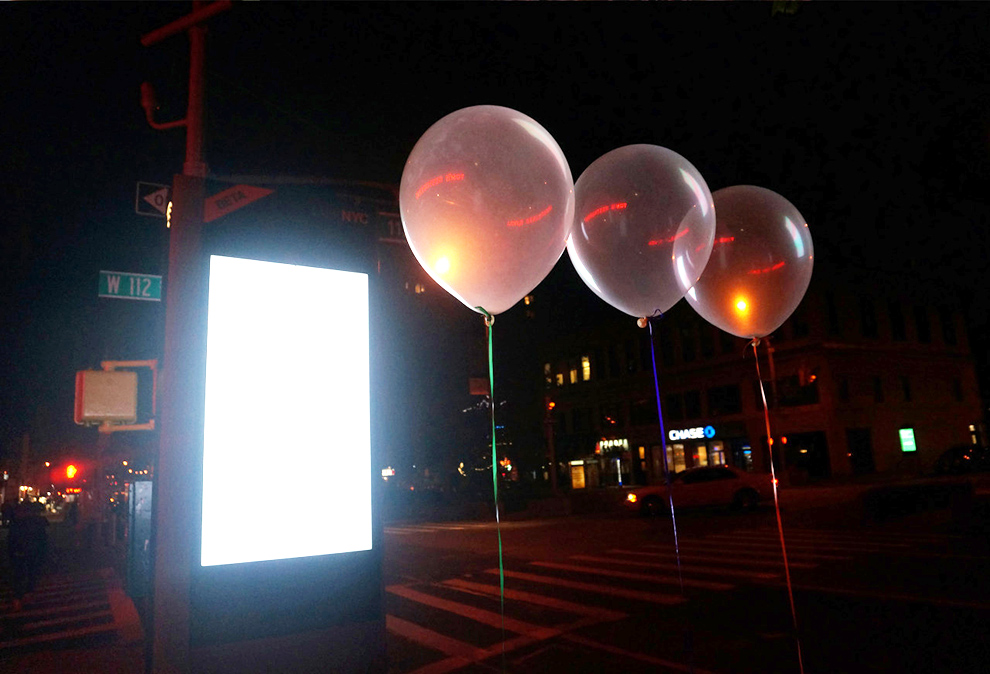
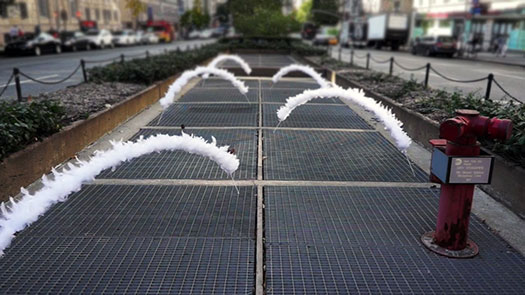
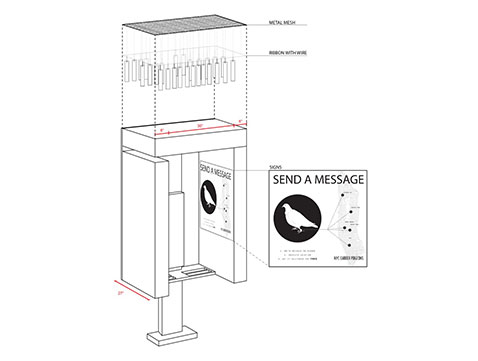
Below are samples of prototypes that were constructed in one week, with the expressed goal of adapting and testing how simple acts and gestures can impact our relation to these structures and public space around us. These kiosks inadvertently provide a number of opportunities – the bright screen can illuminate objects, the usb ports are charged and can power a desk fan, and the invisible wifi signals can define an actual physical space. These interventions became the foundation of a framework to discuss who is public space for, and who can stop and enjoy listening to a song by Slipknot on the sidewalk without a resulting pearl-clutching article by the Times.


2016062 Tags: architecture, fabrication, inflatable, newyork, research, urban | No Comments »

Jamaica Flux Inflato

INFLATO-DUMPSTER-JCAL-01

INFLATO-DUMPSTER-JCAL-02

INFLATO-DUMPSTER-JCAL-05

INFLATO-DUMPSTER-JCAL-03

INFLATO-DUMPSTER-JCAL-04

INFLATO-DUMPSTER-JCAL-06

web-inflato-02

web-inflato


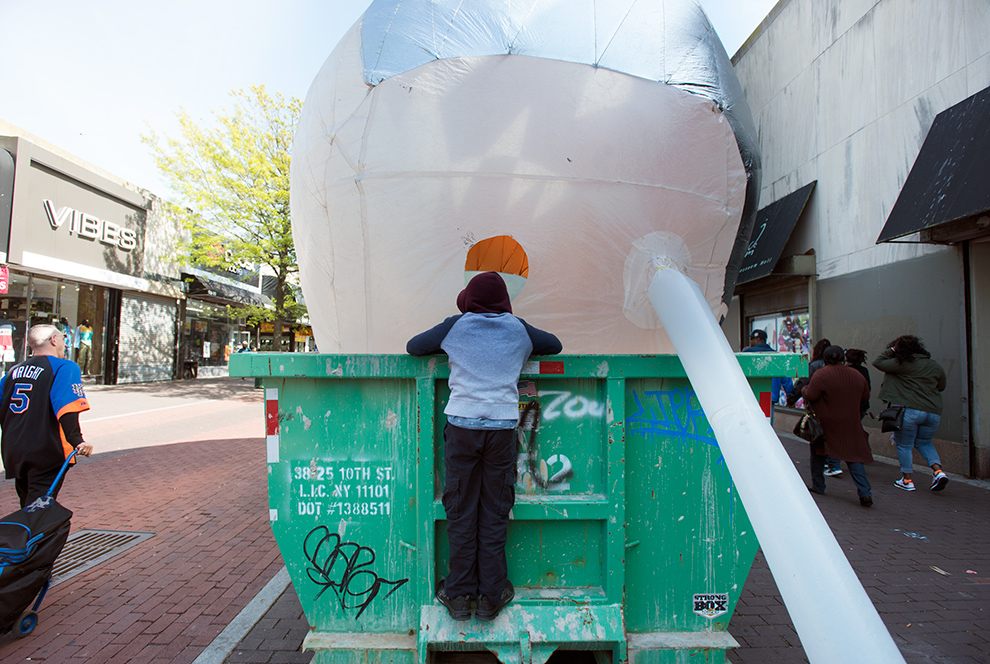
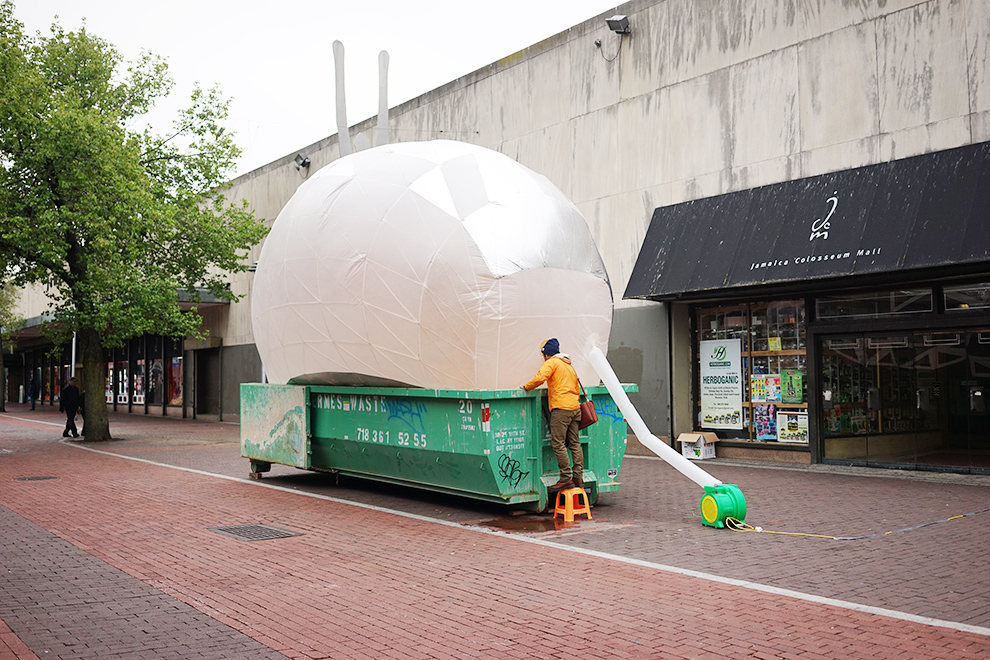
Images from the three-day event in Queens, sponsored by the great team at the Jamaica Center for Arts & Learning and with Joaquin Reyes.


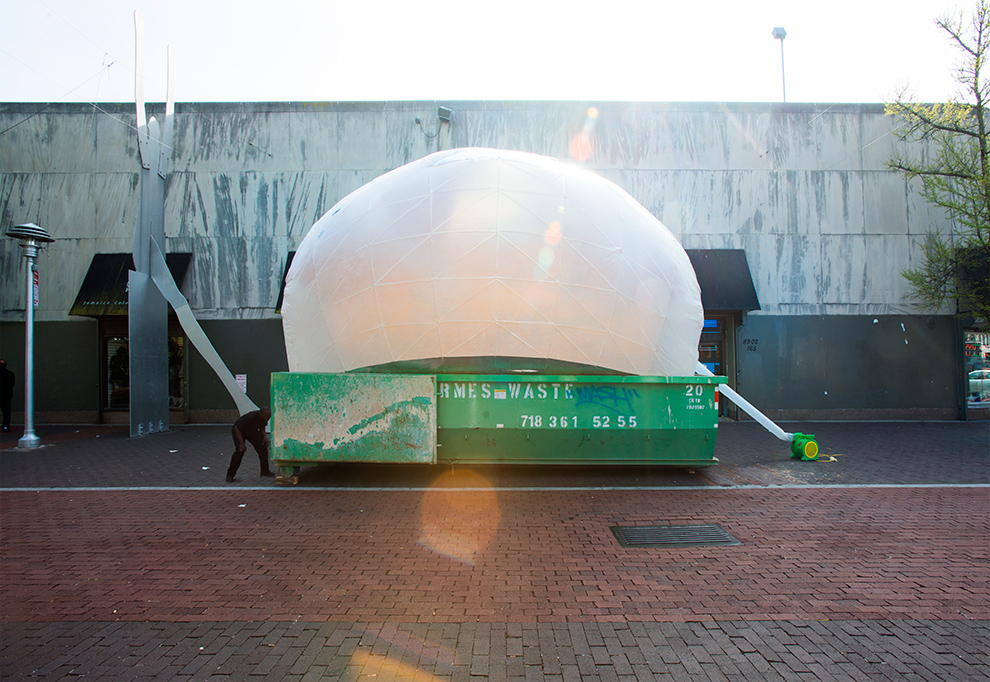
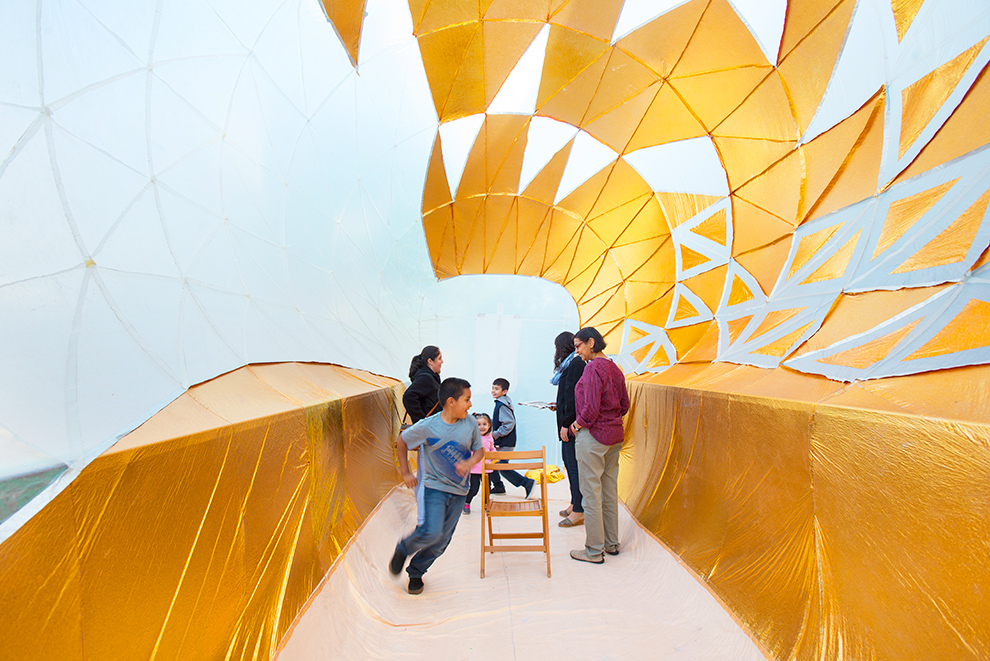
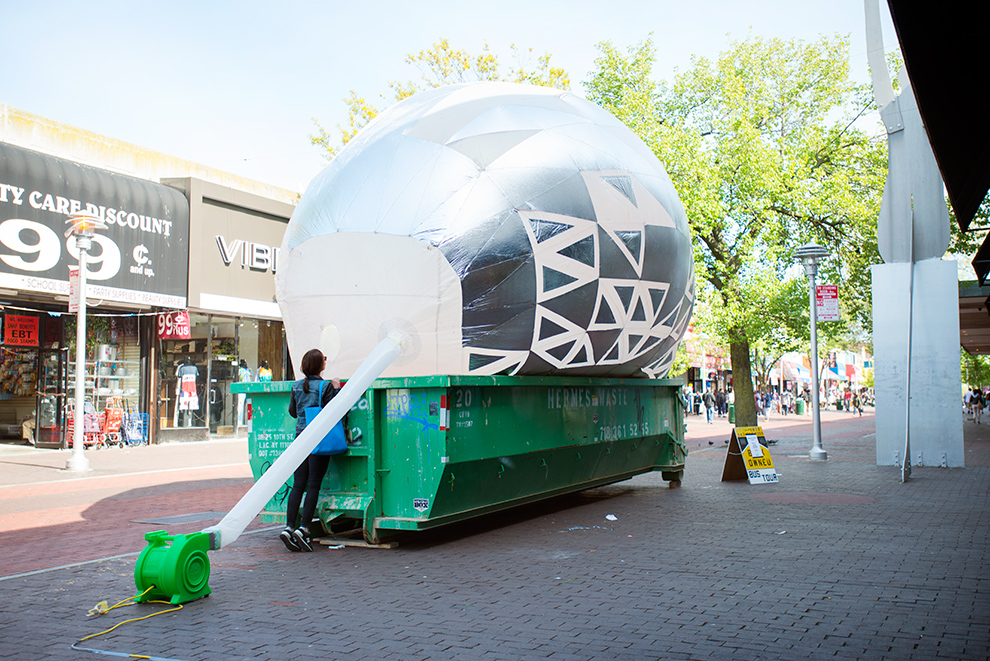
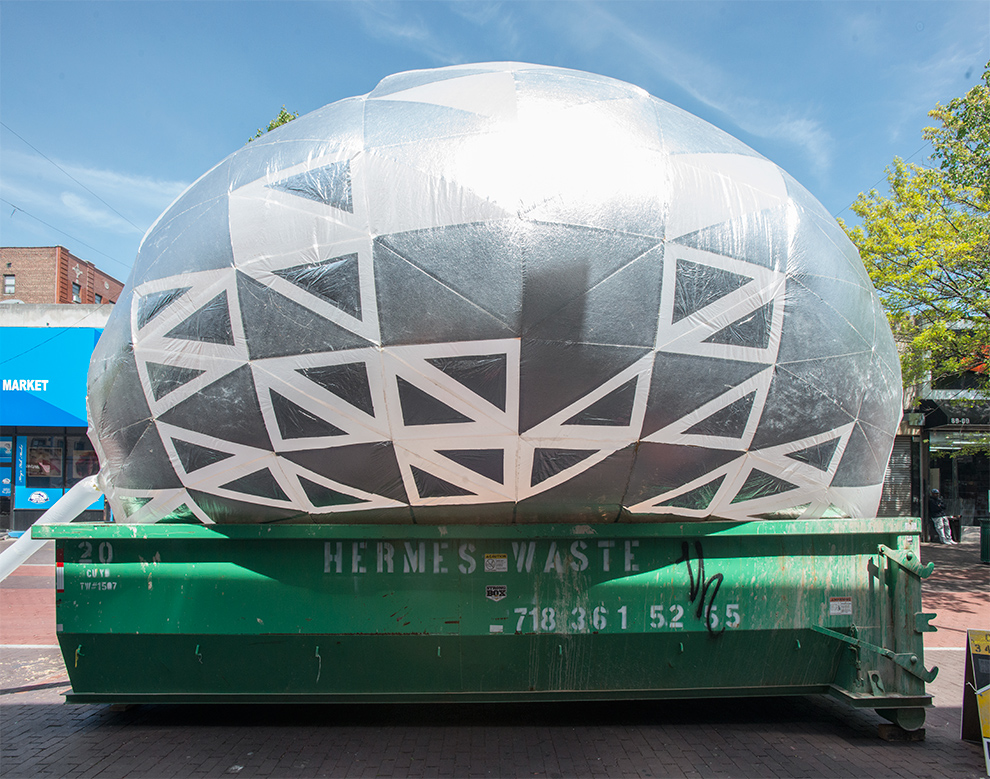
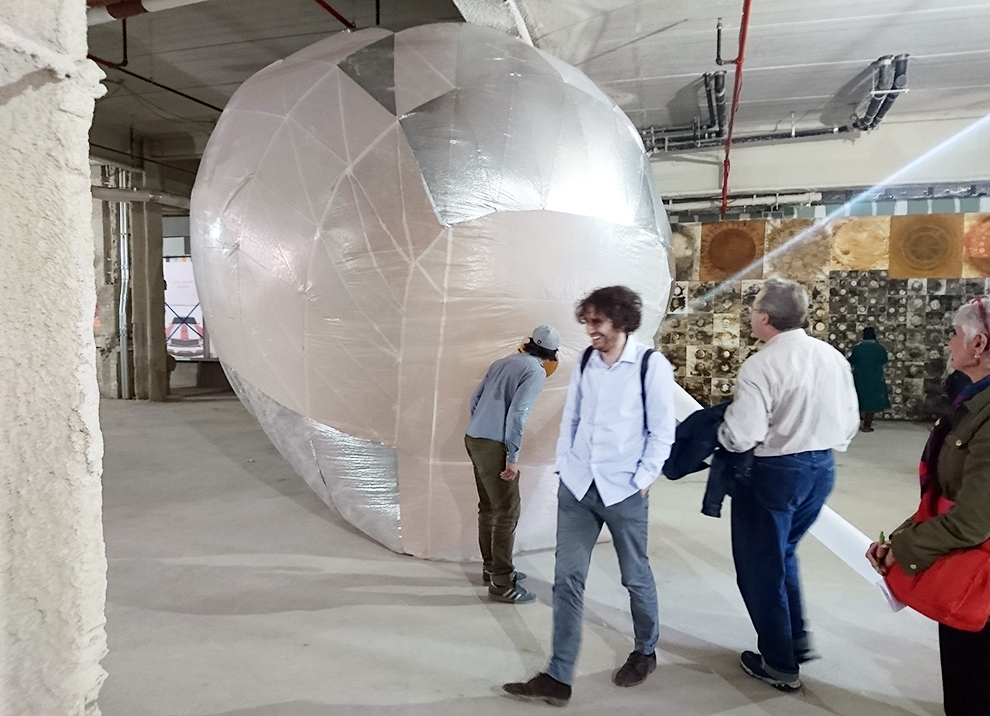
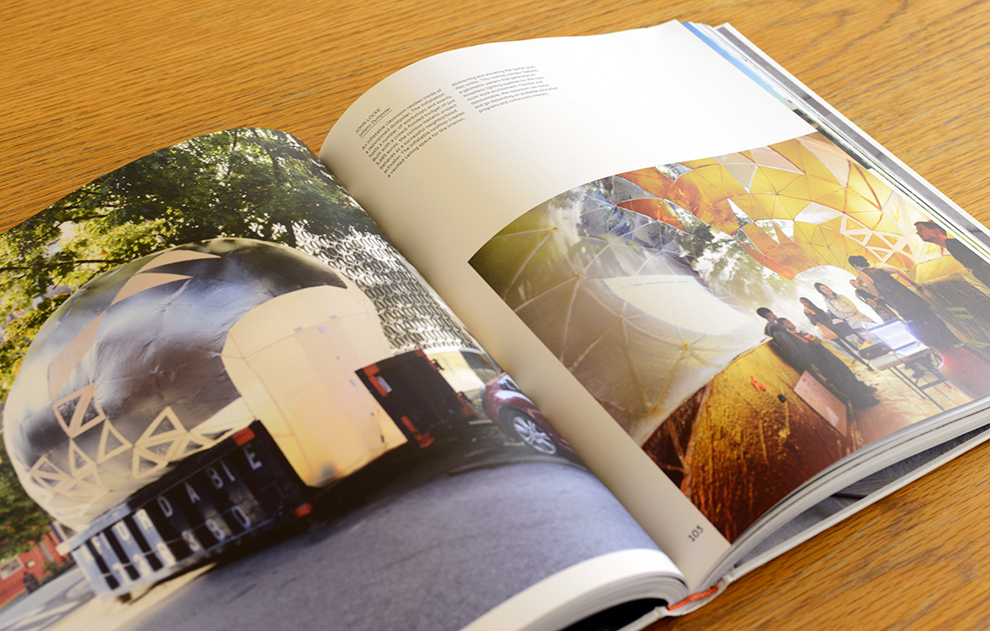
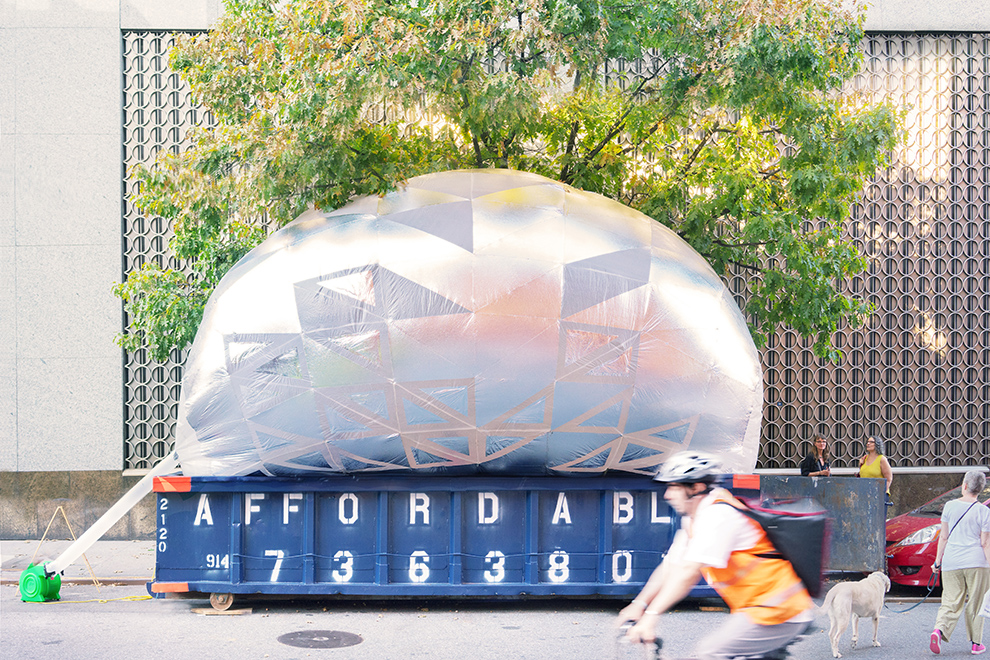
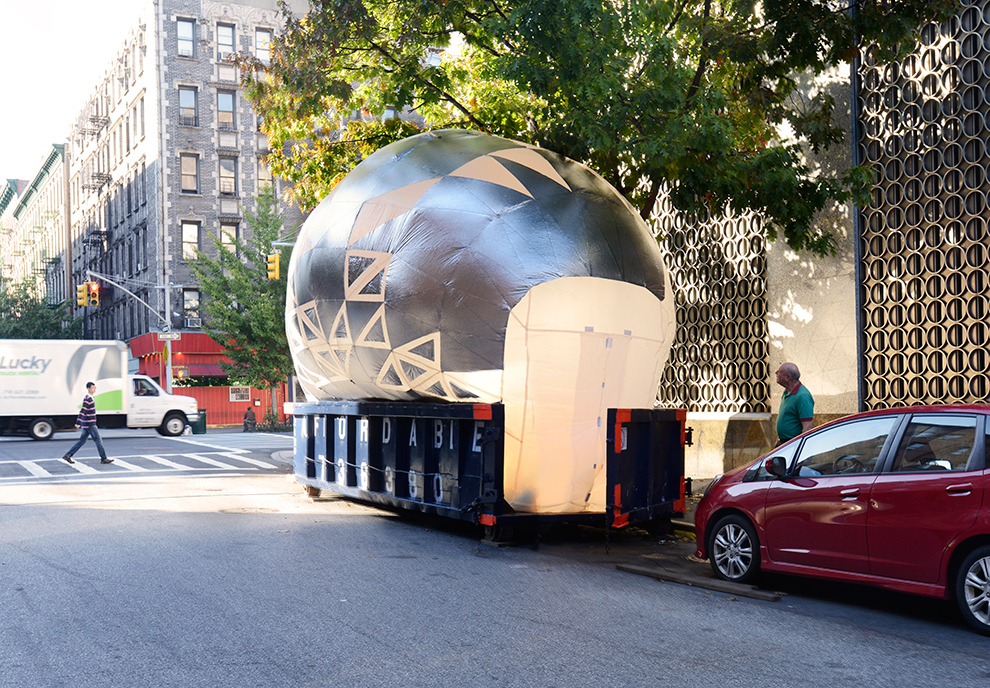
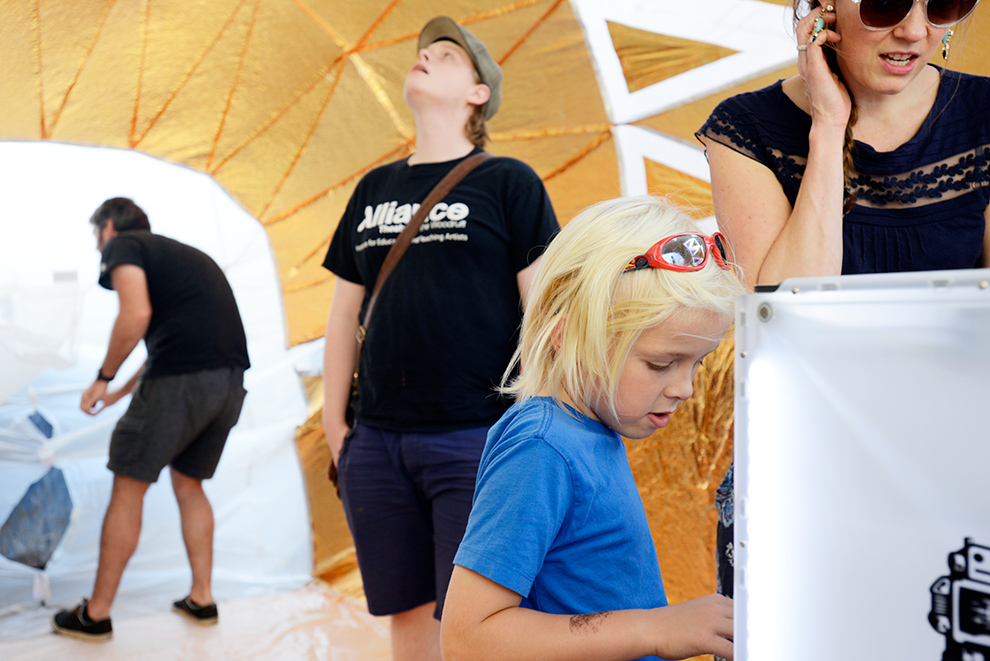
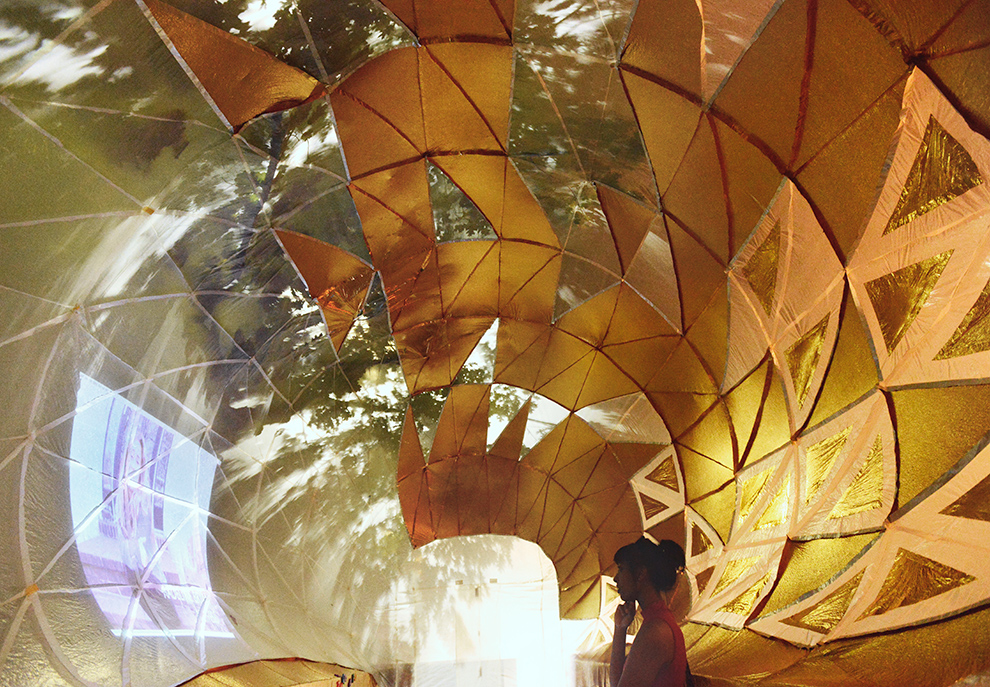
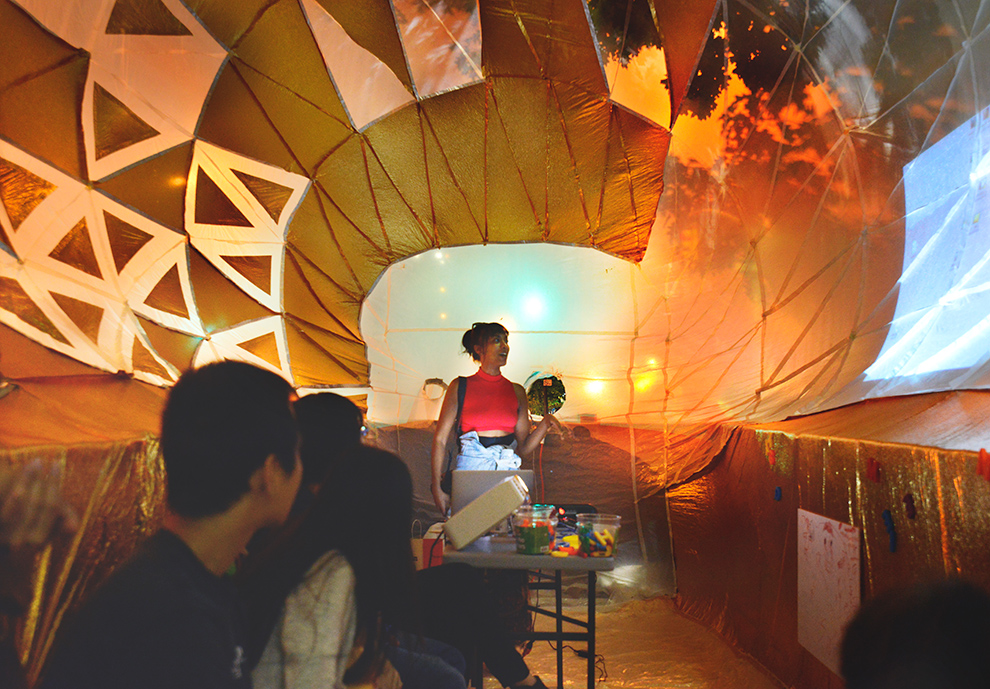
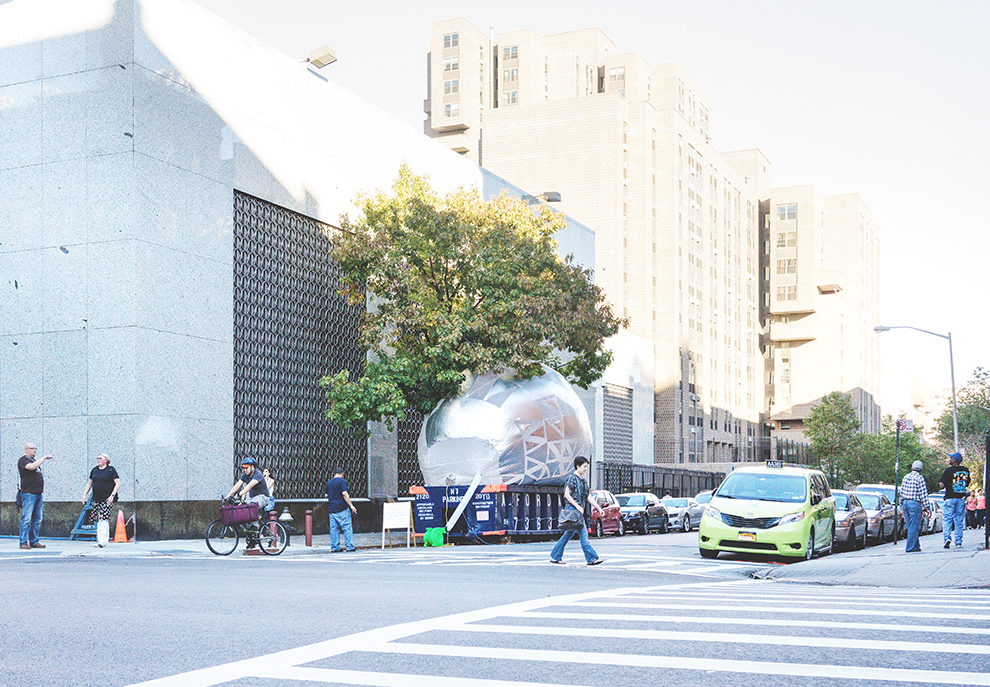
The Inflato Dumpster is a radical new conception of what constitutes public space in New York City. This site-specific work creates an open, engaging street-level structure that acts as a mobile learning laboratory through creative programming events that reflects the diversity of its location. The project takes advantage of digital design and new lightweight fabrication techniques to create a framework for small group discussion and engagement.


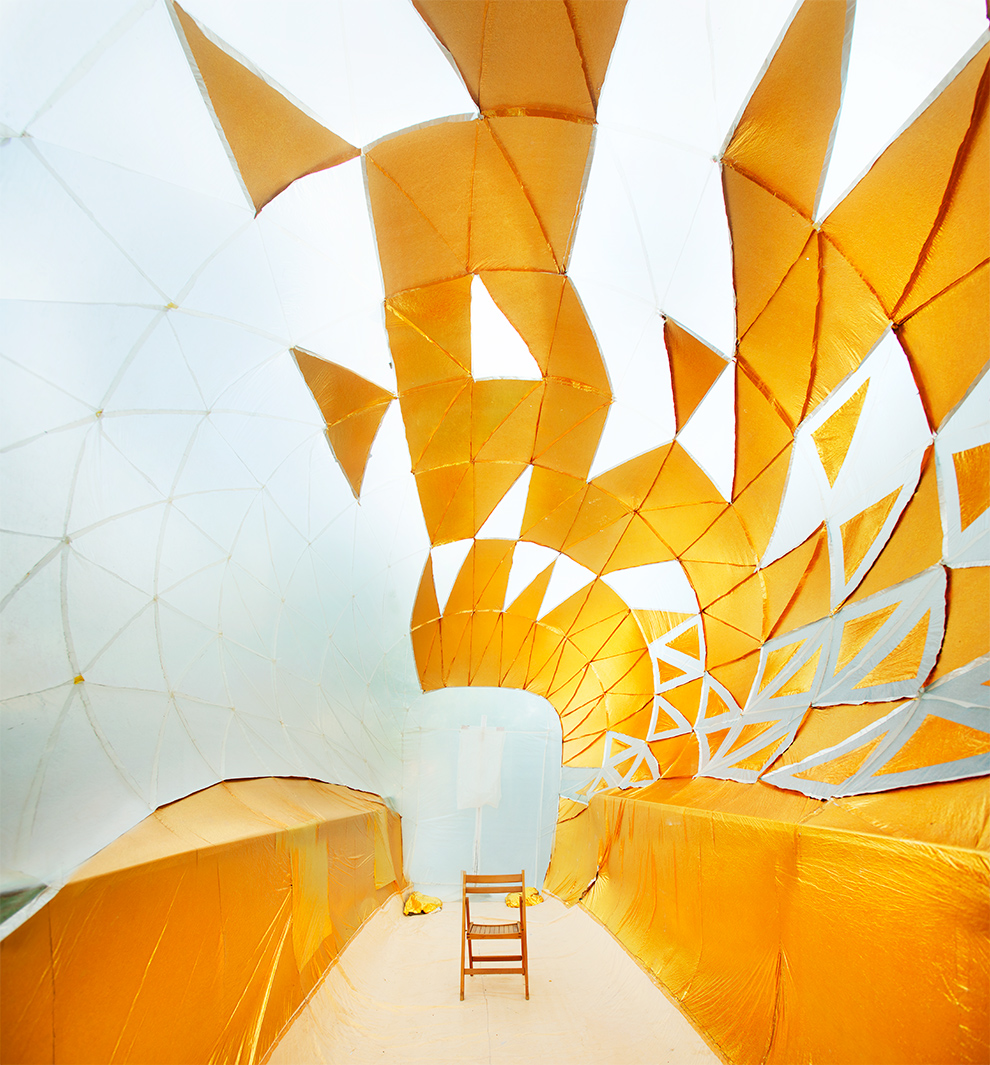
The project includes 165 square feet of enclosed space with maximum dimensions at 17’ height by 12’-6” wide and 24’ long. The main element is an inflatable membrane containing 2000 cubic feet of volume, weighing less than 20 lbs. Made from a combination of lightweight inflatable materials and a modular city dumpster, the Inflato presents a subdued silver, semi-reflective surface from the outside, while the interior creates a gold, brightly gilded interior.

 
2016053 Tags: architecture, fabrication, inflatable, newyork, research, urban | No Comments »

Jamaica Flux 2016

inflato-jcal-01

inflato-jcal-02

inflato-jcal-03

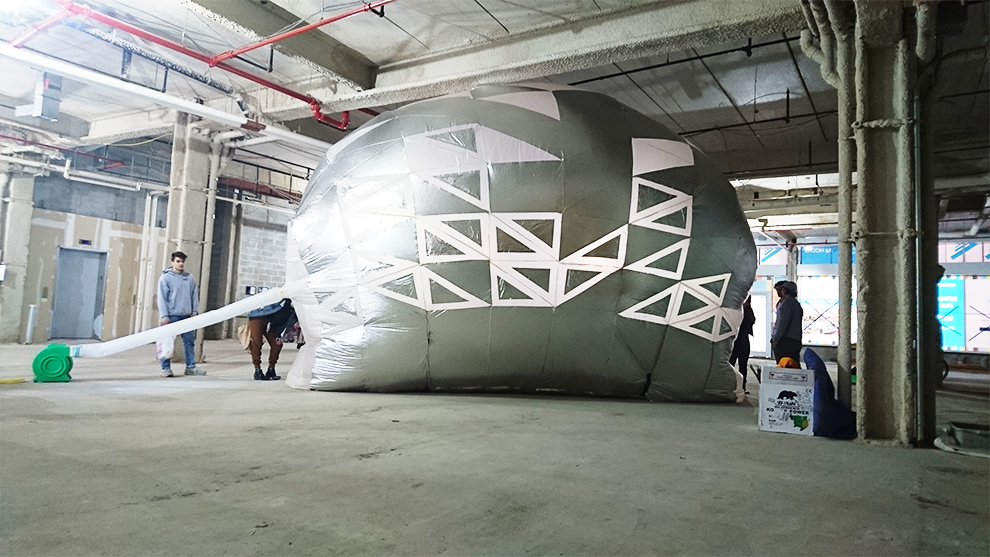
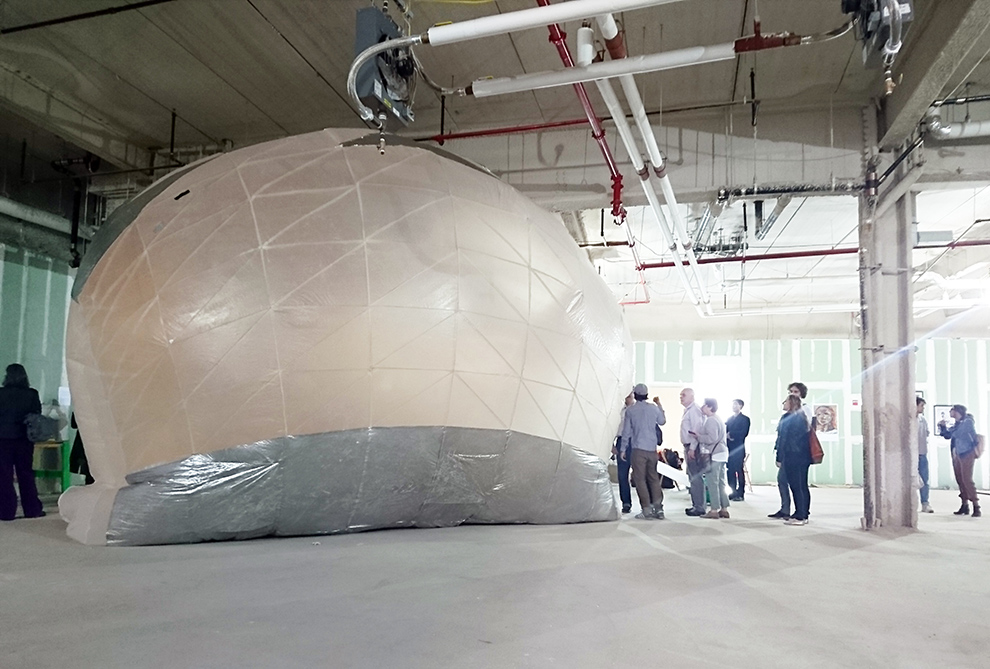
A few quick shots of the Inflato Dumpster project installed in the Jamaica Center for Arts & Learning gallery in Queens as part of the 2016 Jamaica Flux show.


The Flux 2016 exhibition invited 19 artists to study the effects of art in public spaces and provokes conversations regarding art’s role in community, participation, commerce, and urban renewal.


This was a preview exhibition of the Inflato project before its full activation (complete with pre-fab metal base) on the 165th Street Pedestrian Mall.


2015119 Tags: architecture, competition, fabrication, urban | No Comments »

Urban Shed Competition

03_diagram

02_elevation

01_MODEL


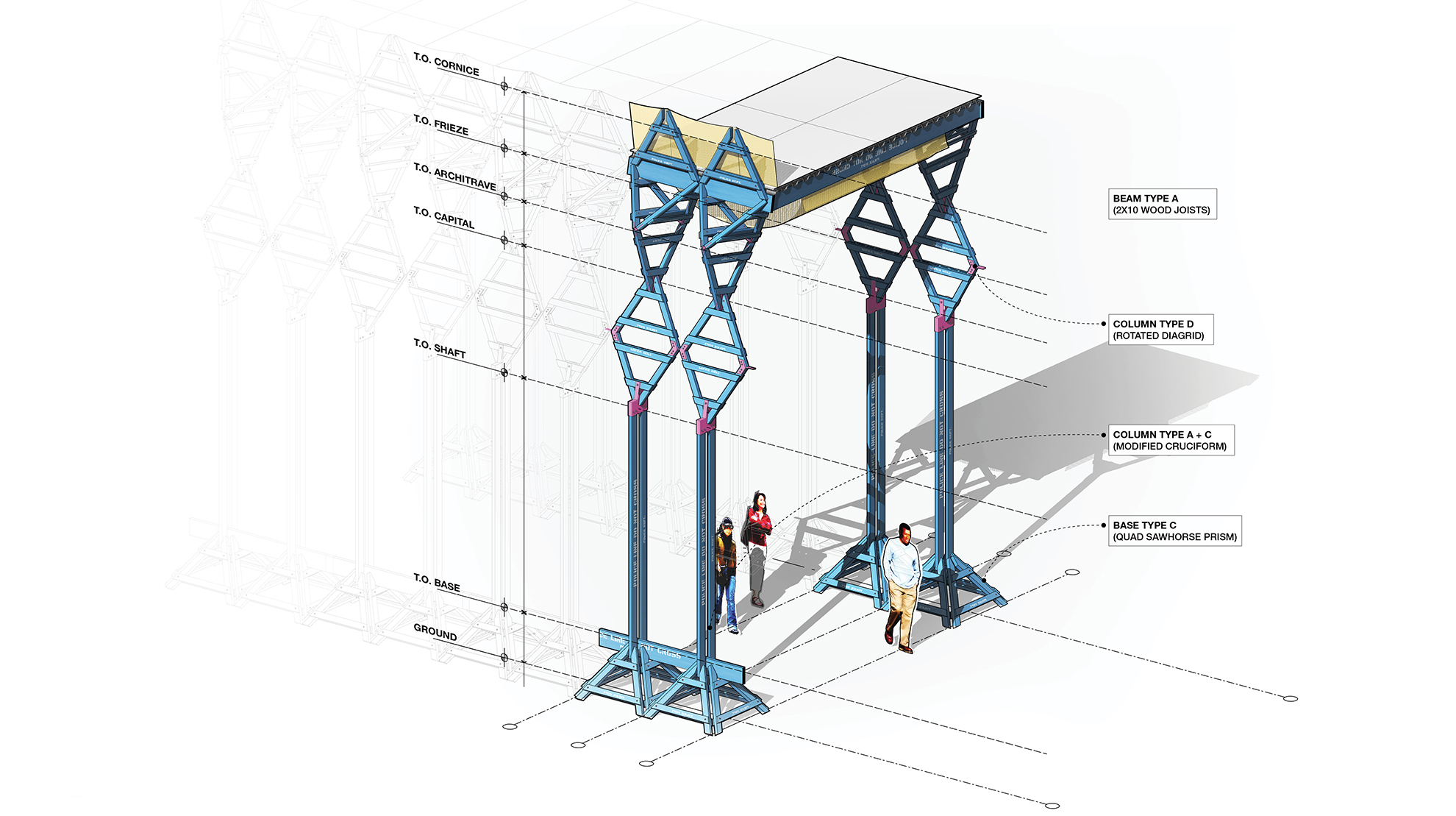
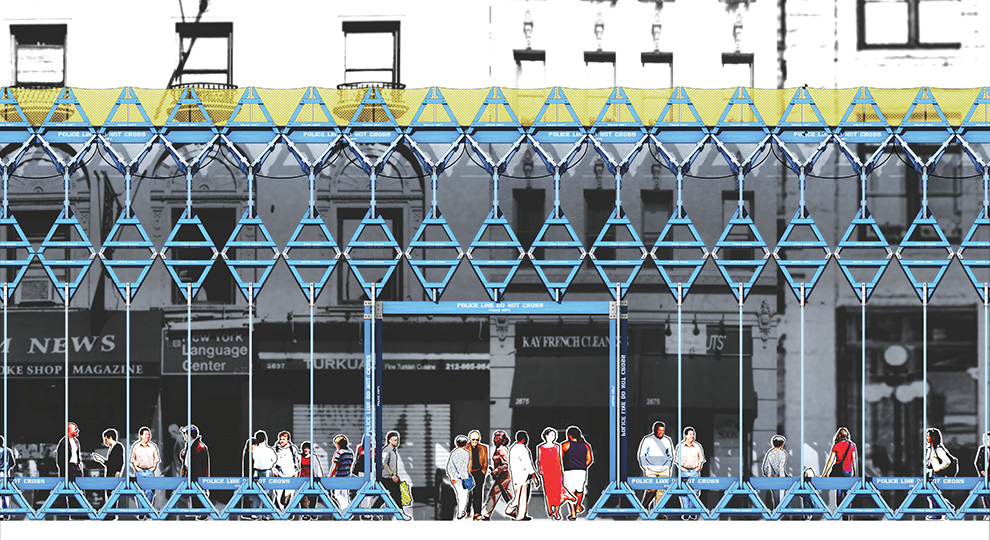
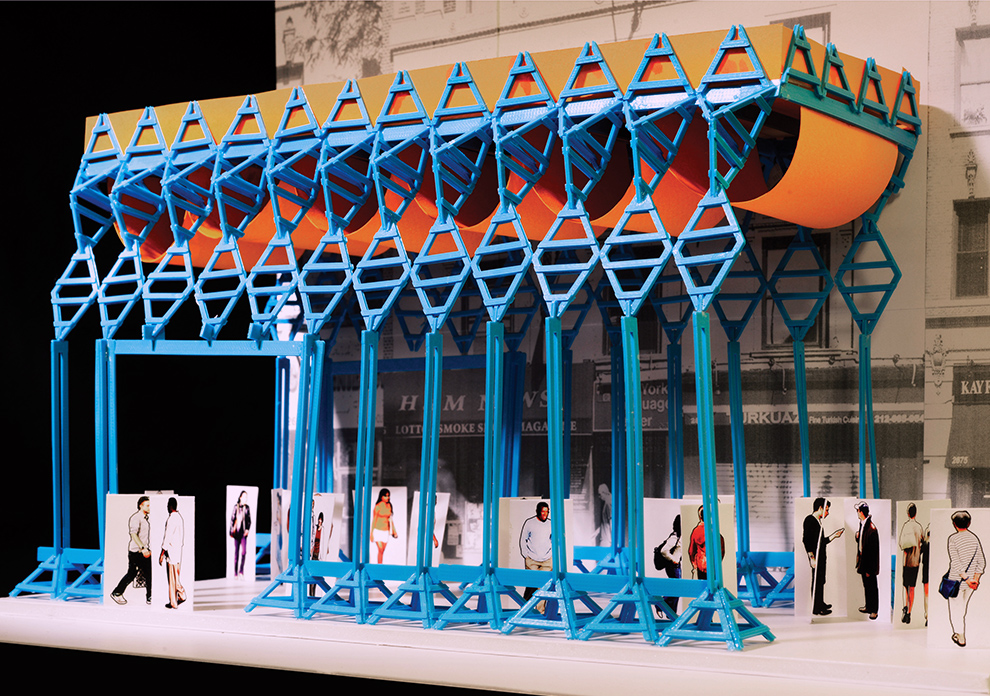
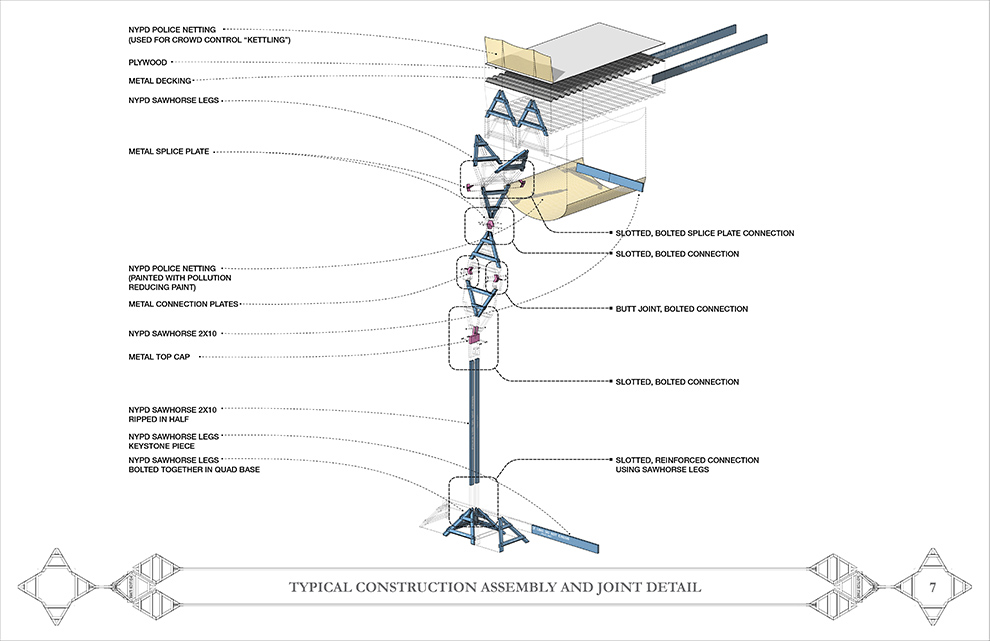
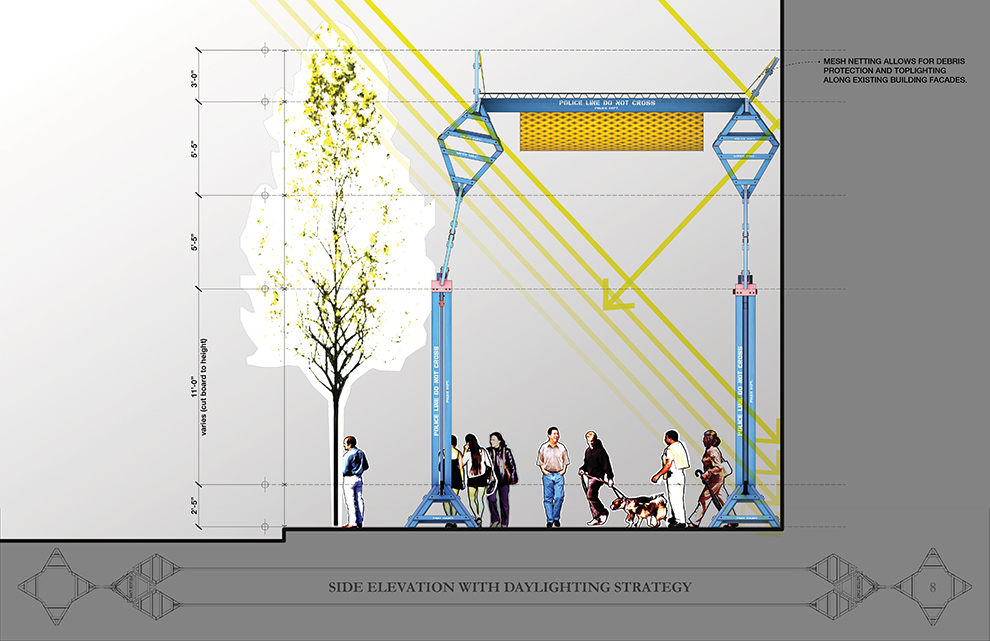
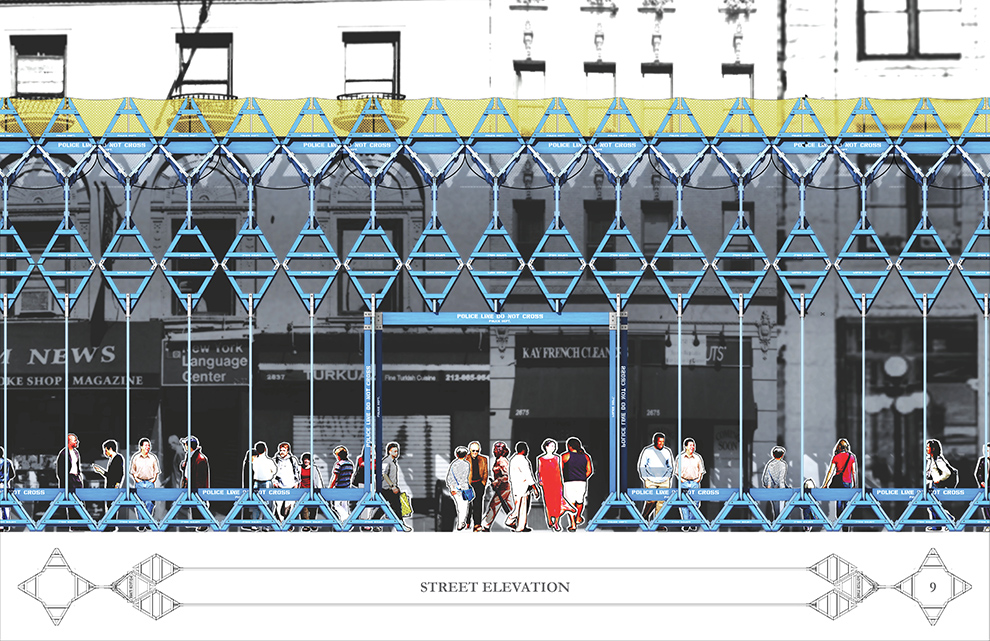
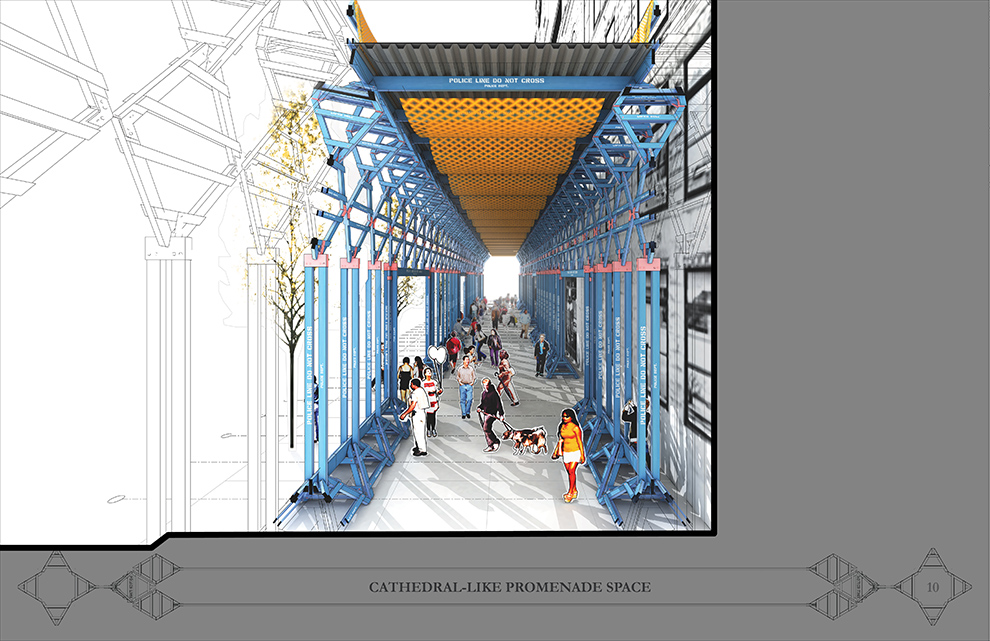
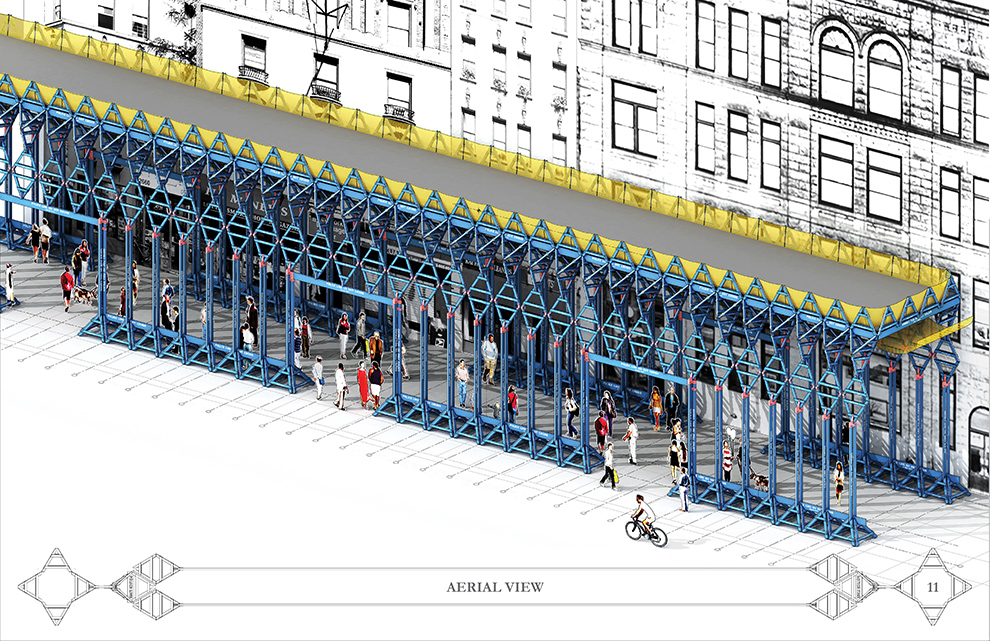
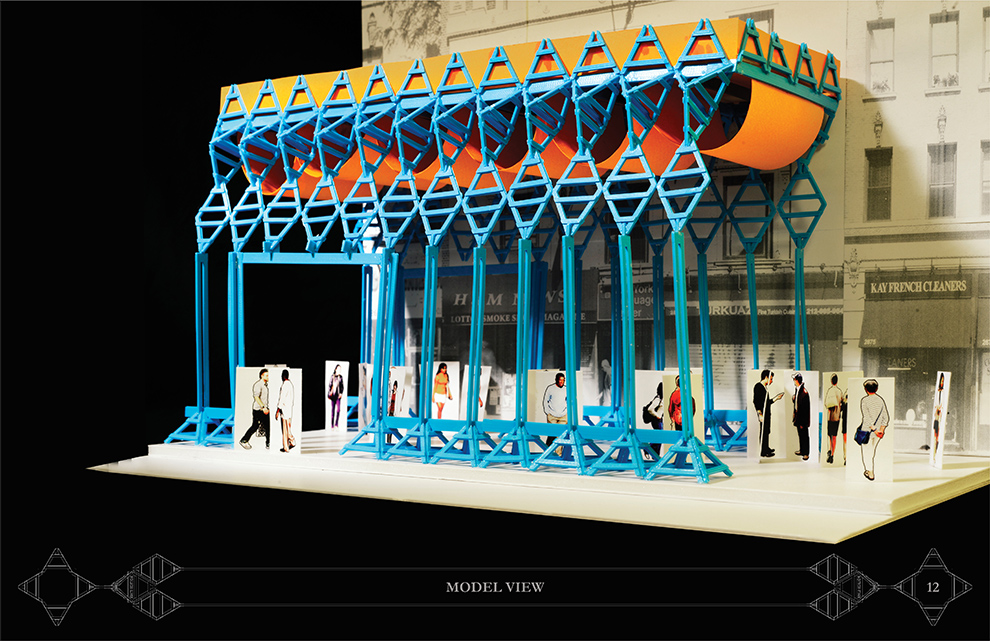
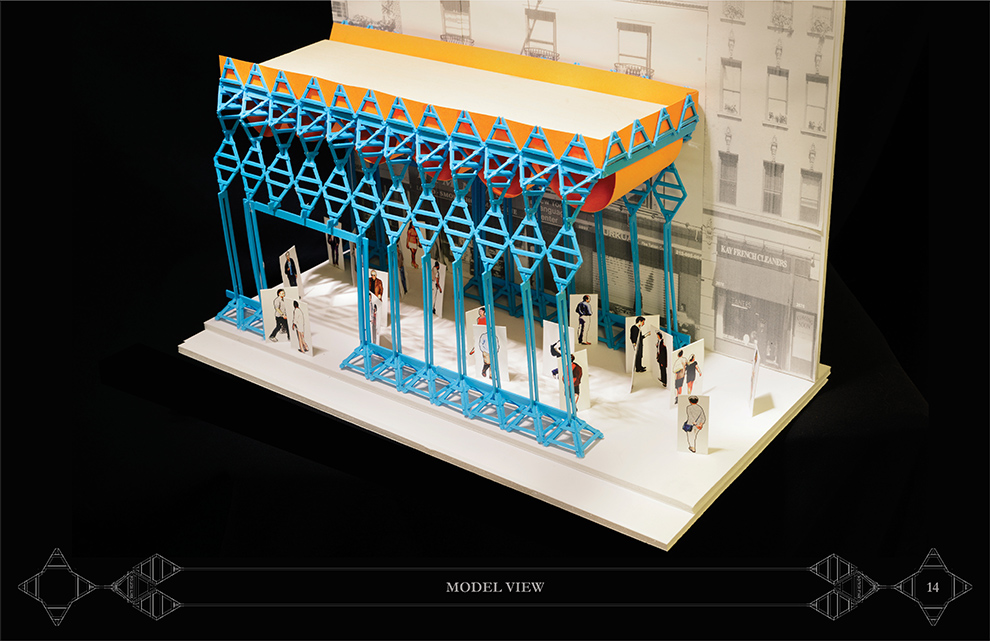
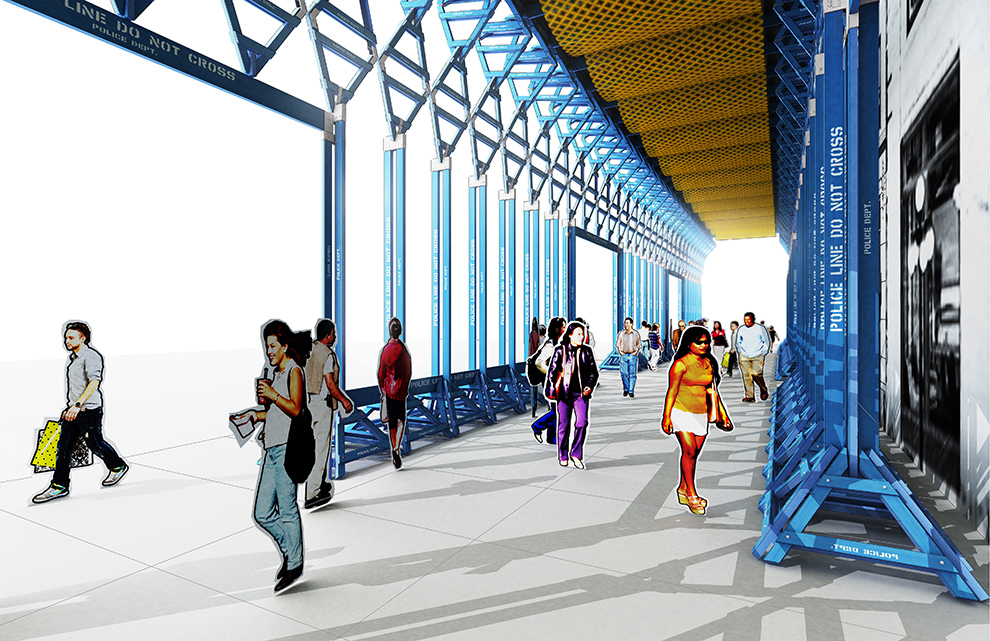
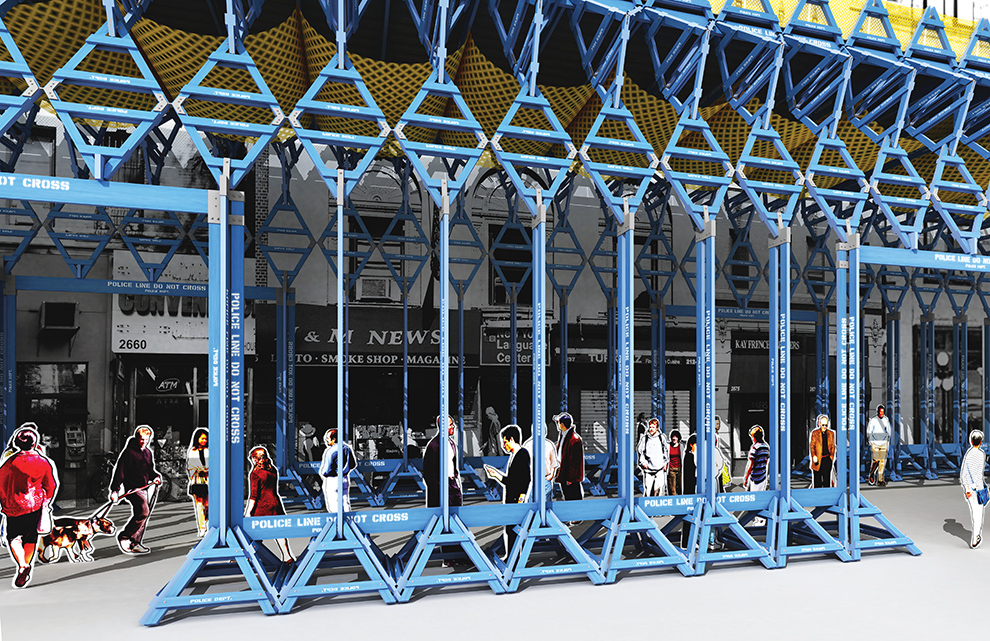
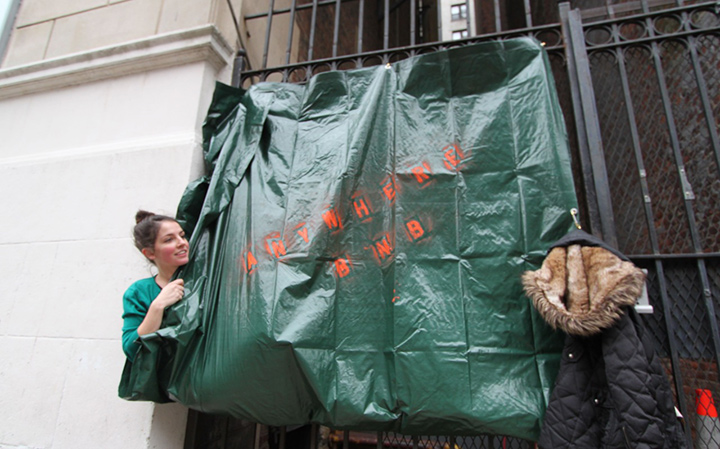
Presented here is a (losing) competition entry for a re-design of the ubiquitous “urban shed” – the pole and plywood constructions temporarily thrown up to protect pedestrians from falling building debris during facade renovations. They are an interesting typology, both because they are everywhere and are also built using pre-fabricated components in a completely market driven approach, every element has been pared down to cost per protective surface. Every couple of years someone tries and re-thinks these things, but due to the cost and existing, entrenched interests, these re-designs never go anywhere. The argument I was trying to push was twofold: 1) taking advantage of an existing material that already relates to street protection could offset costs, and 2) that the design would be exciting enough that building owners could reap some economical benefit through a boost in traffic flow by putting up something like this. Project text below:


A city manifests itself through its architecture, its built form represents its values and priorities. This ideas competition hosted by the New York Building Foundation is an amazing opportunity to explore how the city and building owners will proceed to treat what is in many ways the most modest and ubiquitous of architectural elements, but one that we all encounter each and every day – the construction shed.


The questions before us are simple, will the form of the shed continue to be dictated by that which presents the perceived lowest cost per sf? This is a notion dictated more by complacency and inertia as opposed to New York ingenuity and data-driven metrics. Or, will the shed evolve into a form as slick and scaleless as the latest glass and steel construction, furthering the ever expanding gulf between New Yorkers and relegating architecture and engineering to the realm of a luxury item. Or, will it pursue a sustainable, iconic, human-scaled solution, which can adapt to changing needs in neighborhoods as diverse as ours?


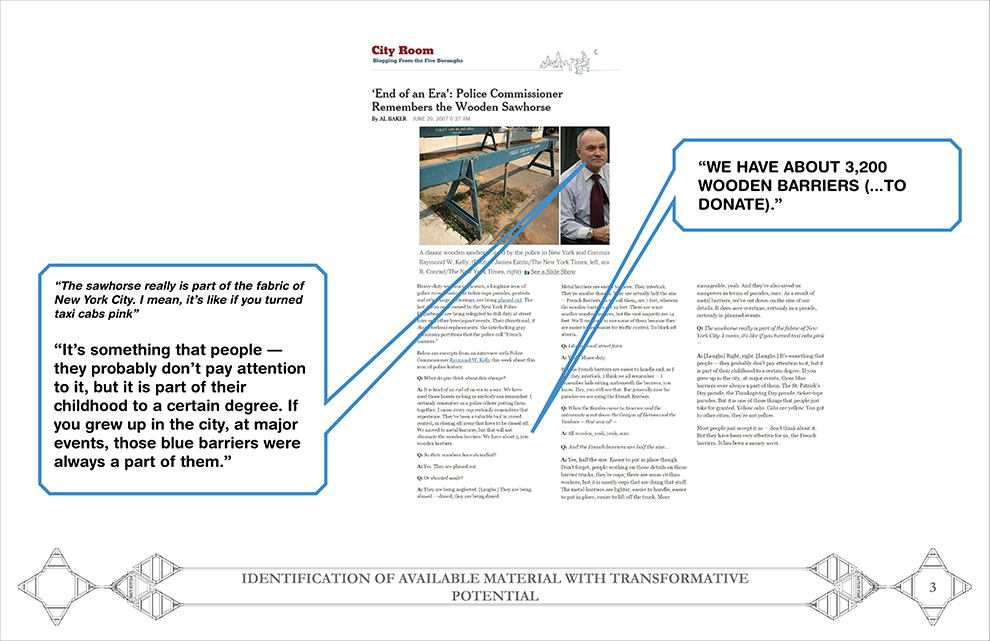
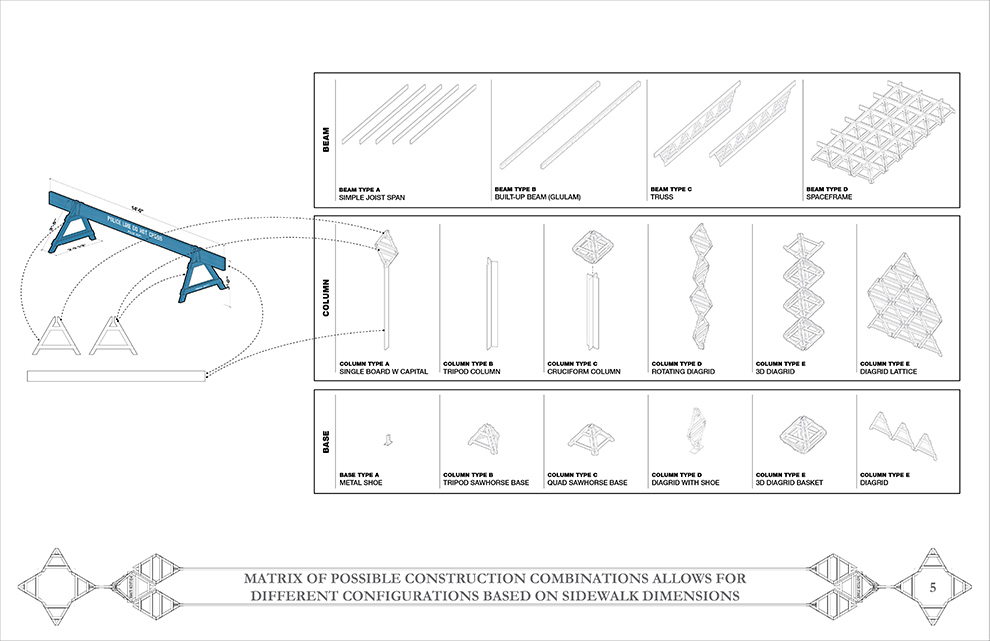
The proposal included here envisions a future construction shed built from reclaimed NYPD wooden sawhorses. These sawhorses were retired in 2007, but they are still available for donation and hold a prominent place in the collective consciousness of the city. Their familiarity with New Yorkers imbues them with an ingrained acceptance to their position as part of the urban streetscape – like seeing an old friend again, but their novel use here, elevates the basic construction assembly into an uplifting form that makes the shed into something more than pure tectonics.


They also present us with an opportunity to acquire a readily available, highly-durable material for a low-cost. In a practical sense, the sawhorses in their previous life as crowd control devices had to withstand a number of structural requirements. Here, the existing sawhorse connection techniques – slotting, nailing and screwing – are used again, this time to withstand a vertical load through multiple connecting load paths and redundant connections that will meet and exceed Section 3307 of the New York City Building Code. Wood also allows for ease of assembly through cutting of pieces and through the use of inexpensive attachments and fasteners as required.


Lastly, this design represents the transformations inherent in the evolving city over the last 50 years. The NYPD wooden sawhorse material here is no longer one that restricts movement and creates artificial barriers in urban space, but rather it is put to a new purpose, one that enables free and open movement while providing shelter and protection for all.


Locke-Urban-Shed1Locke-Urban-Shed2

Locke-Urban-Shed3Locke-Urban-Shed4

Locke-Urban-Shed5Locke-Urban-Shed6

Locke-Urban-Shed7Locke-Urban-Shed8

Locke-Urban-Shed9Locke-Urban-Shed10

Locke-Urban-Shed11Locke-Urban-Shed12

Locke-Urban-Shed13Locke-Urban-Shed14

Locke-Urban-Shed15Locke-Urban-Shed16

 
20151022 Tags: architecture, DUB, fabrication, inflatable, newyork, research, urban | No Comments »

Inflato Dumpster Returns

elev

2015-09-27-14.54

int

int2


The Inflato Dumpster was back as part of the 6th Annual Bloomingdale Family Days located in my neighborhood, steps from my apartment in fact. Many thanks to the Columbus-Amsterdam BID and Budget Dumpster for the generous support. It was a great turnout and a really successful event.


Please see this link for more about this ongoing project.

 
20150525 | No Comments »

A New Nomad

inflato-nomad


Nice to see the Inflato Dumpster pop-up in Gestalten’s The New Nomads, Temporary Spaces and a Life on the Move pub. This is a project I’m really excited about, and am looking forward to further installations around the city throughout the summer.

2015053 Tags: 3DPrinting, architecture, fabrication, urban | 3 Comments »

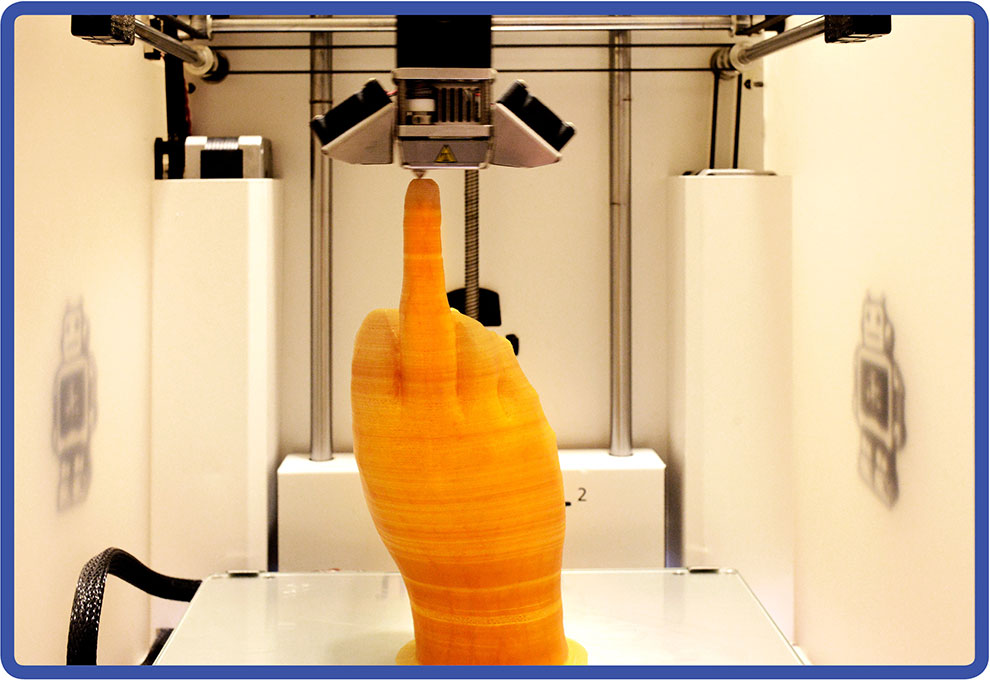
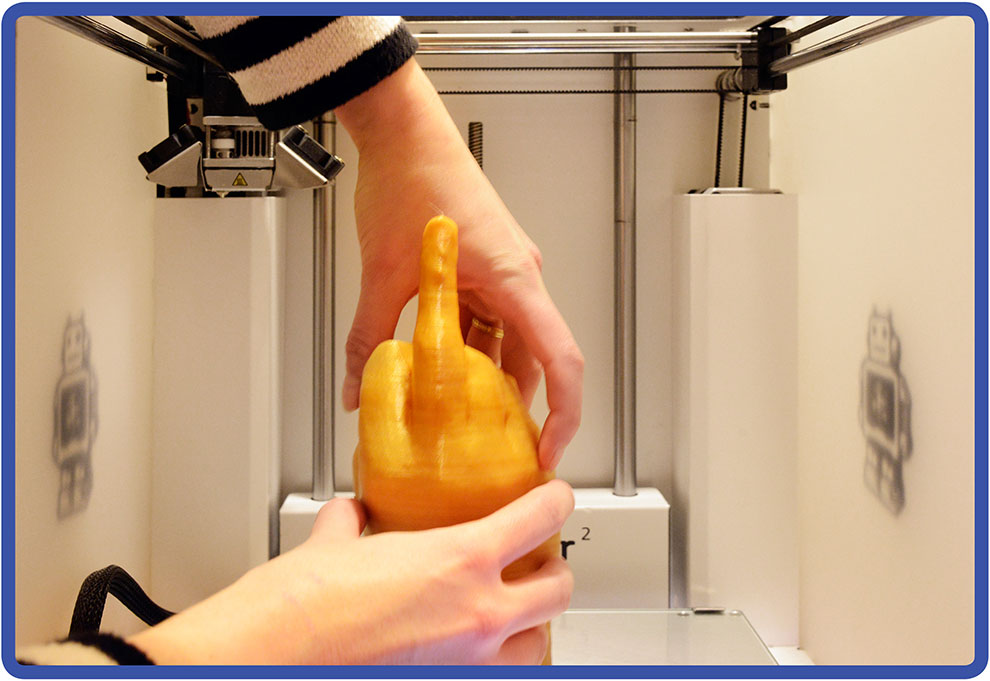
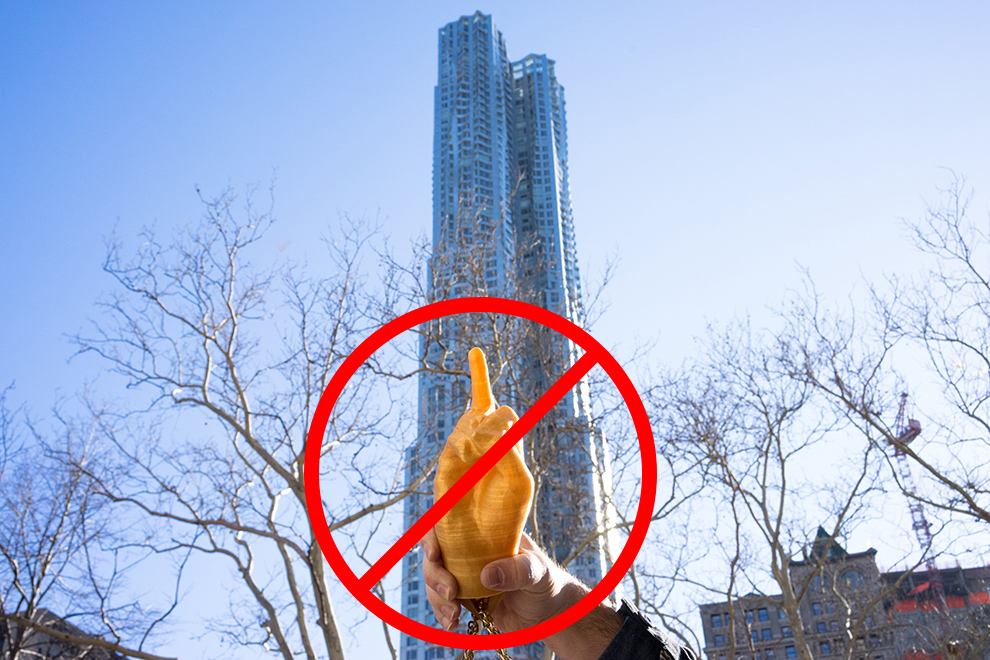
Frank Gehry’s Middle Finger


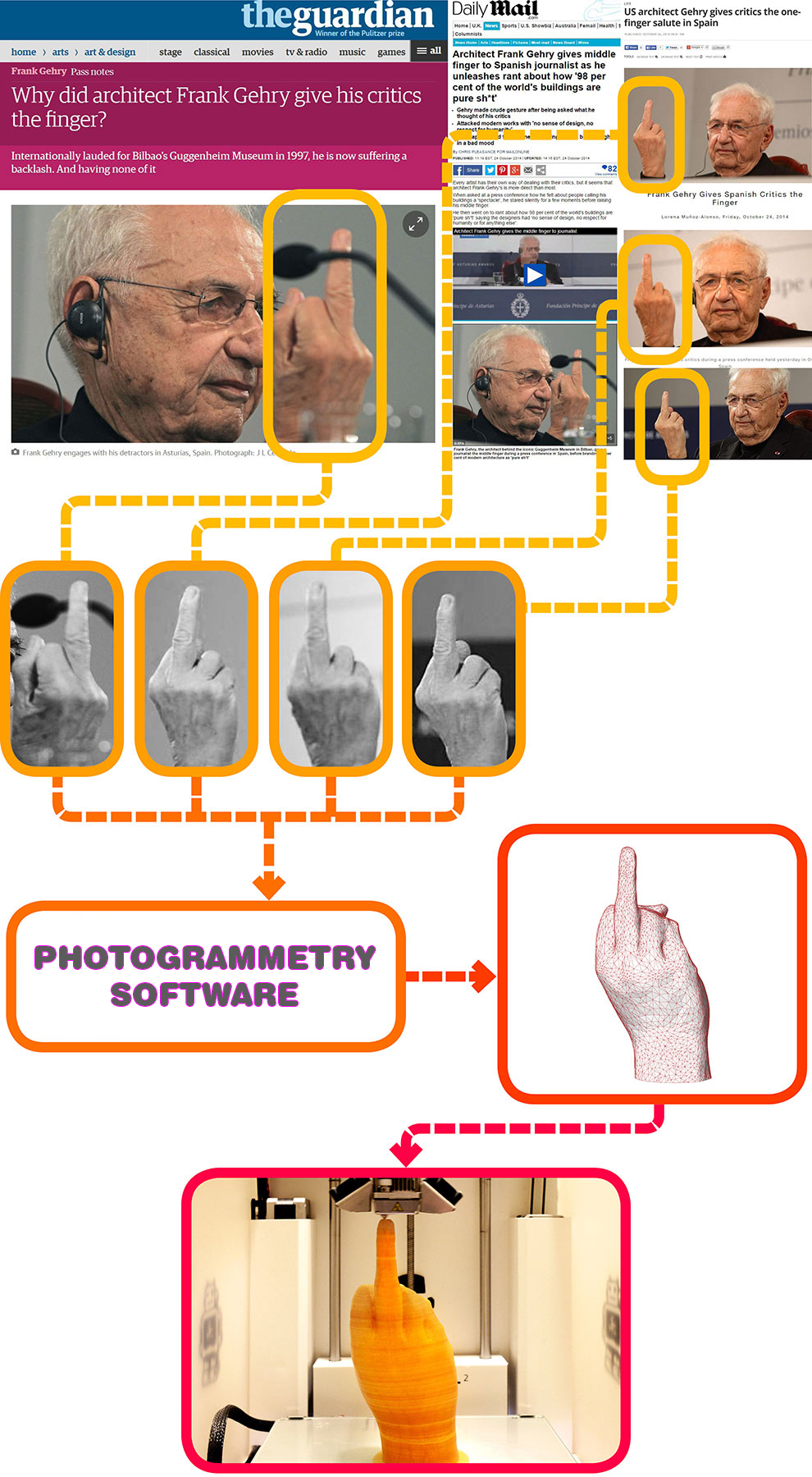
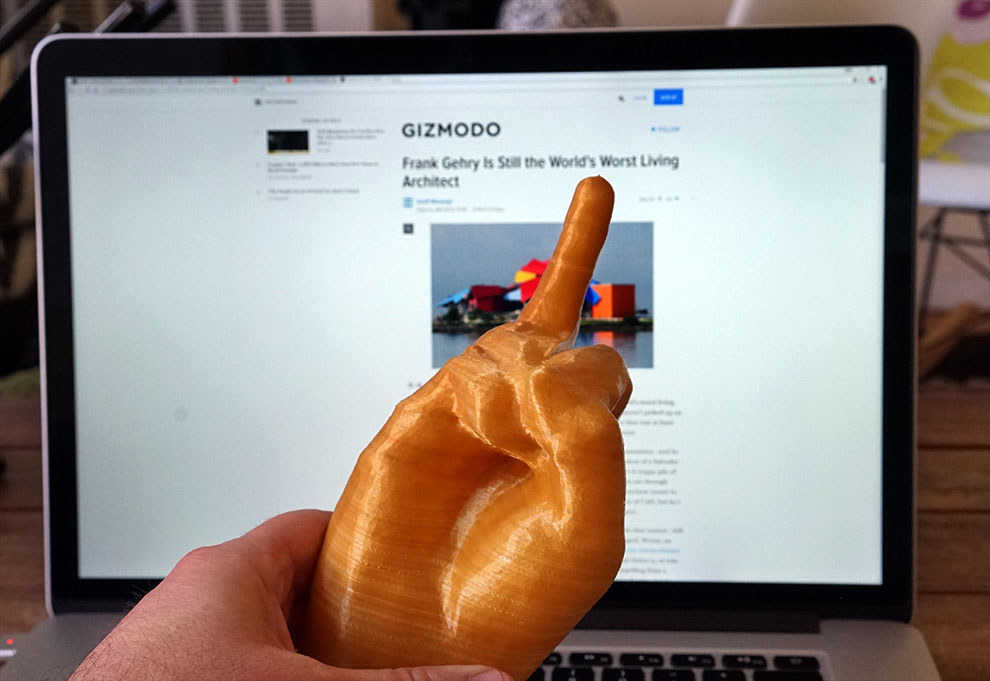
Inspired by Ai Wei Wei and aided by modern journalism’s canny ability to simultaneously photograph the same object from multiple vantage points, I wanted to find a way for everyone to identify and express displeasure at the “98% of everything that’s built and designed today [that] is pure shit.”


This is the fourth in a series of 3D Printed experiments in using reality capture software to generate 3d printable models. Each experiment is printable within 2 hours.


web-finger-bkg-02


creation-webcreation-2-web
The Creation


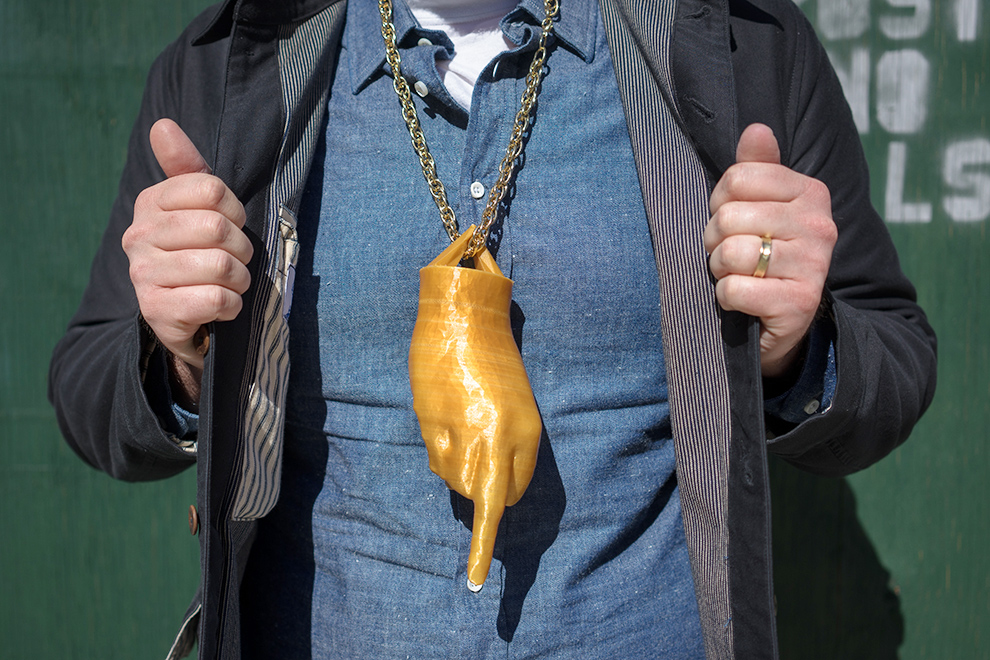
chain-web
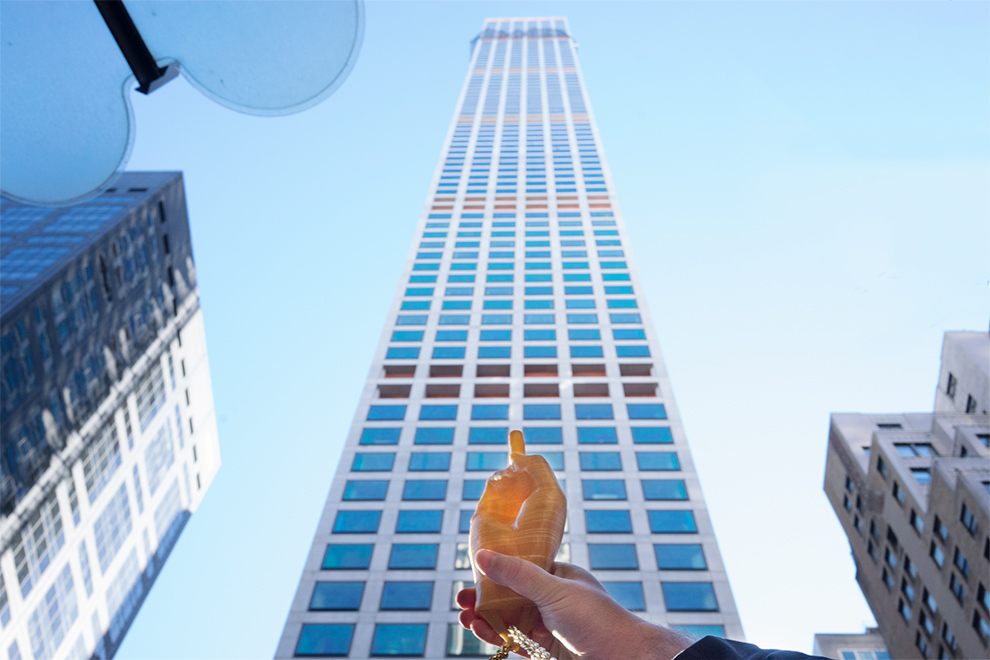
A convenient carrying method to start identifying the 98% of…


432park
…shitty plutocrat housing…


gizmodo-web

…shitty click bait articles…


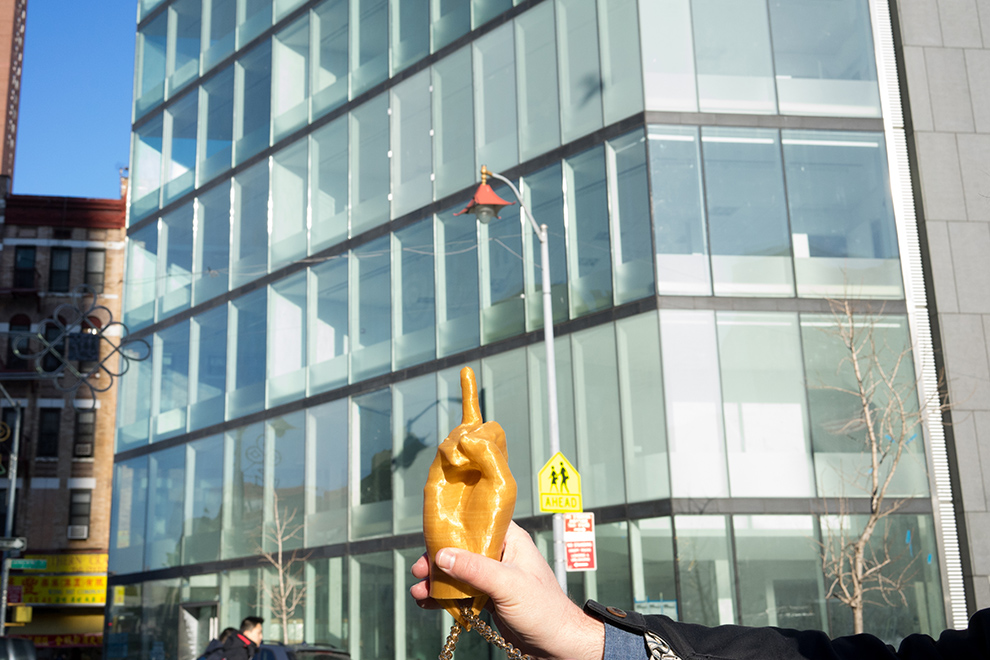
modern

…shitty generic glass buildings in historic neighborhoods…


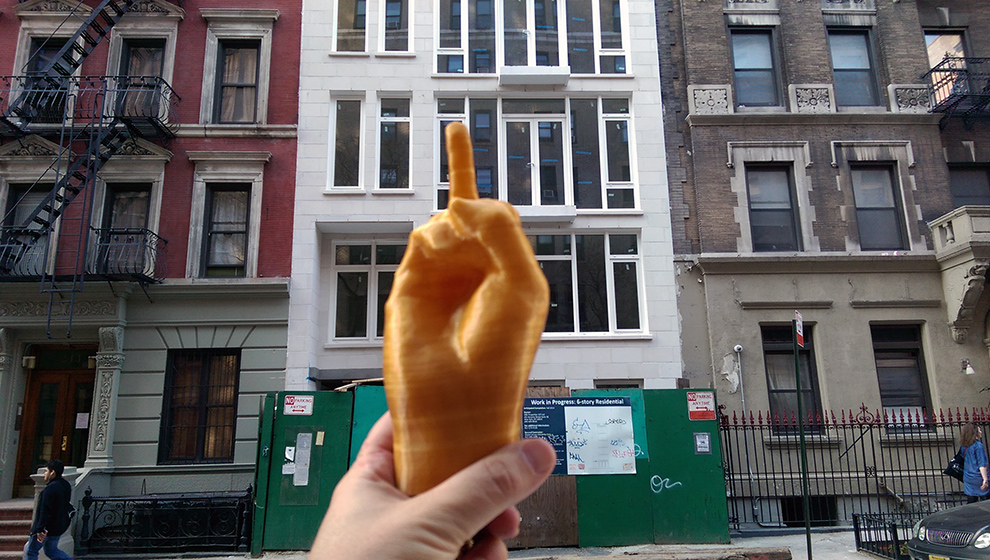
condo

…shitty innocuous luxury condos…


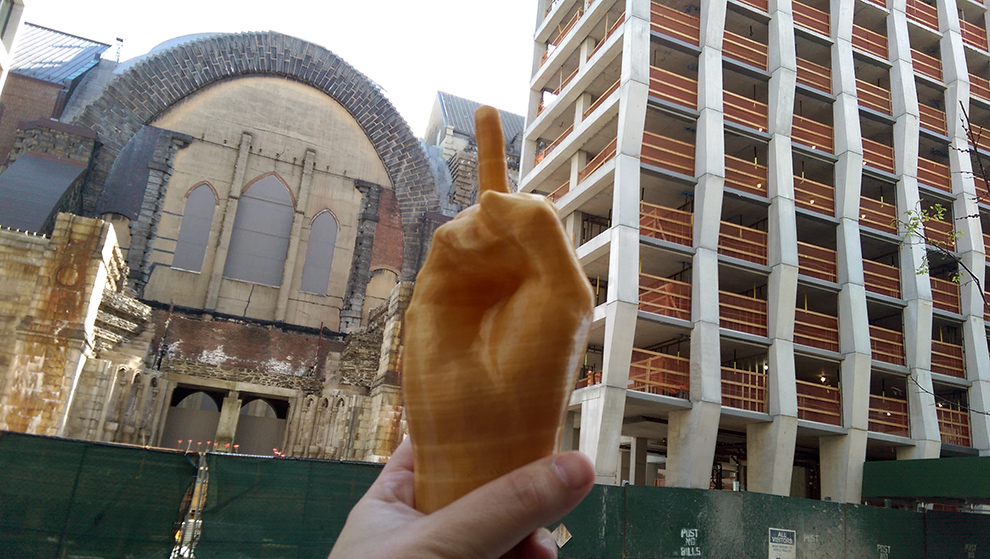
cathedral

…shitty condos on Cathedral property…


beekman-rev

…oh wait, nevermind, actually I guess this one is ok…


EDIT:
.STL MODEL LINK:
https://www.dropbox.com/s/q5m4cj0hzce2ozu/GEHRY-FINGER.stl?dl=0


20150412 Tags: architecture, photography, work | No Comments »

An Art Museum in Western Virginia

taubman-01-rev
taubman-02
taubman-03
taubman-05


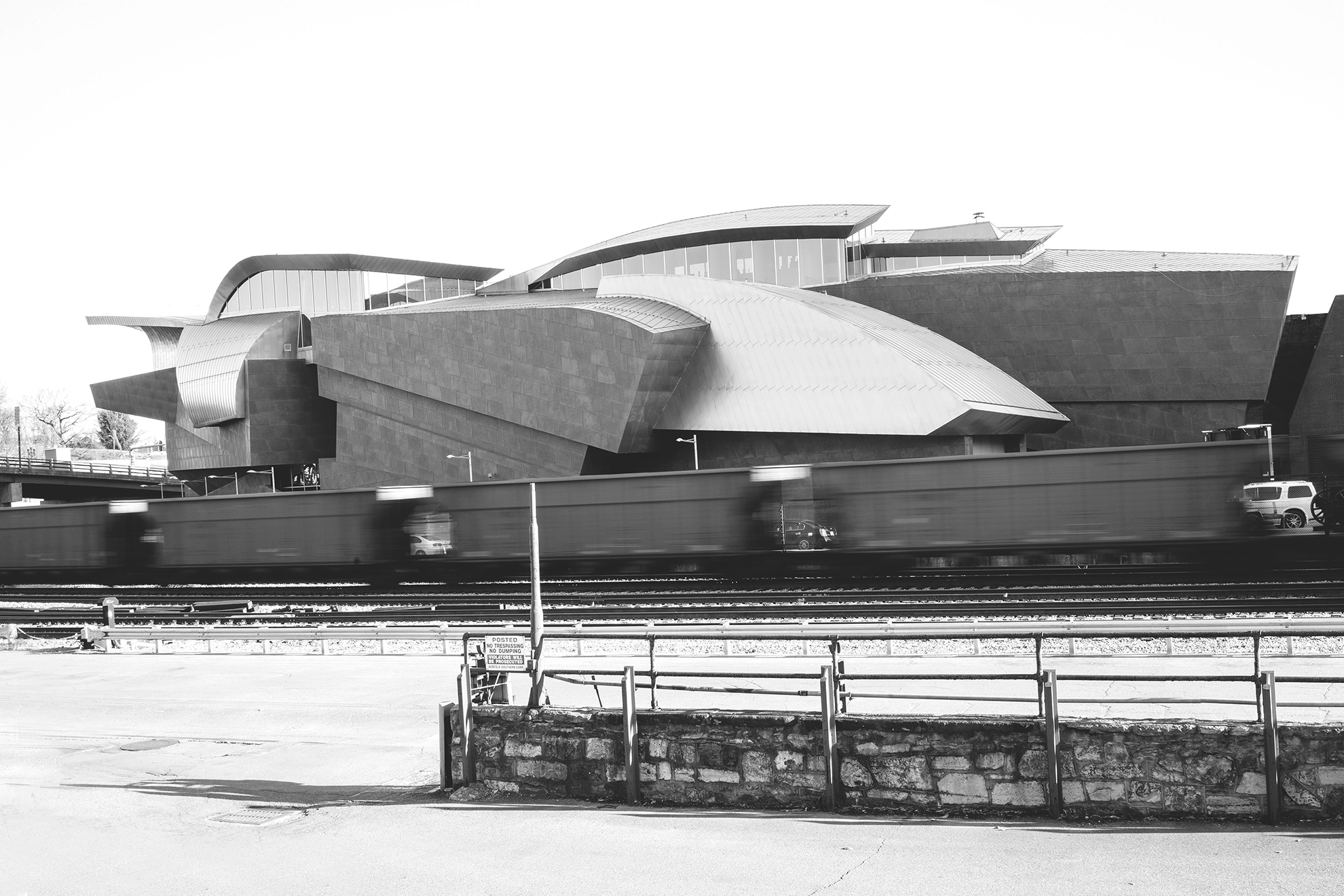
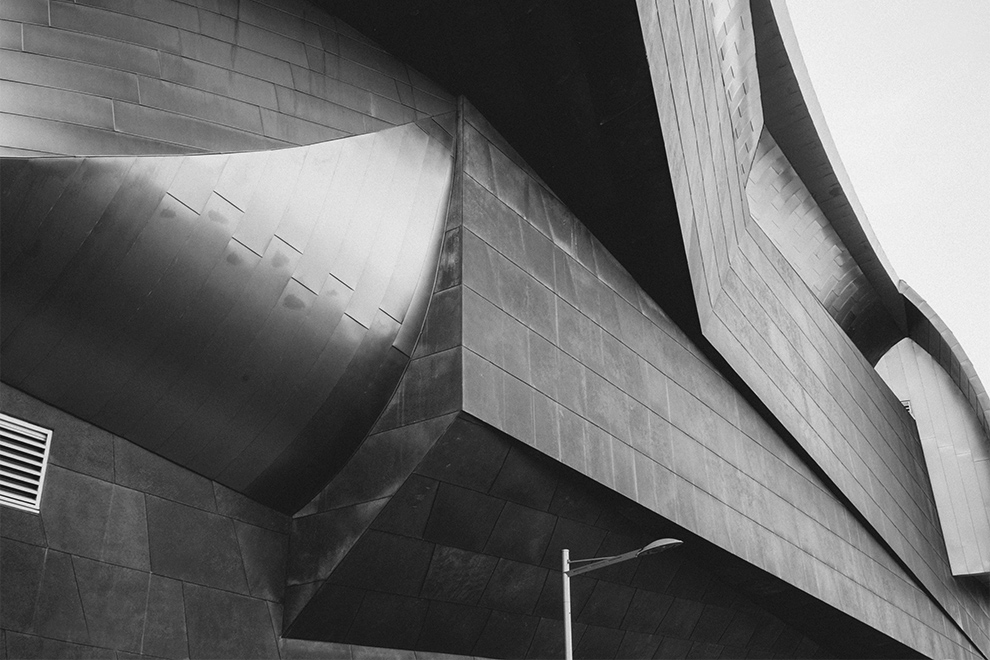
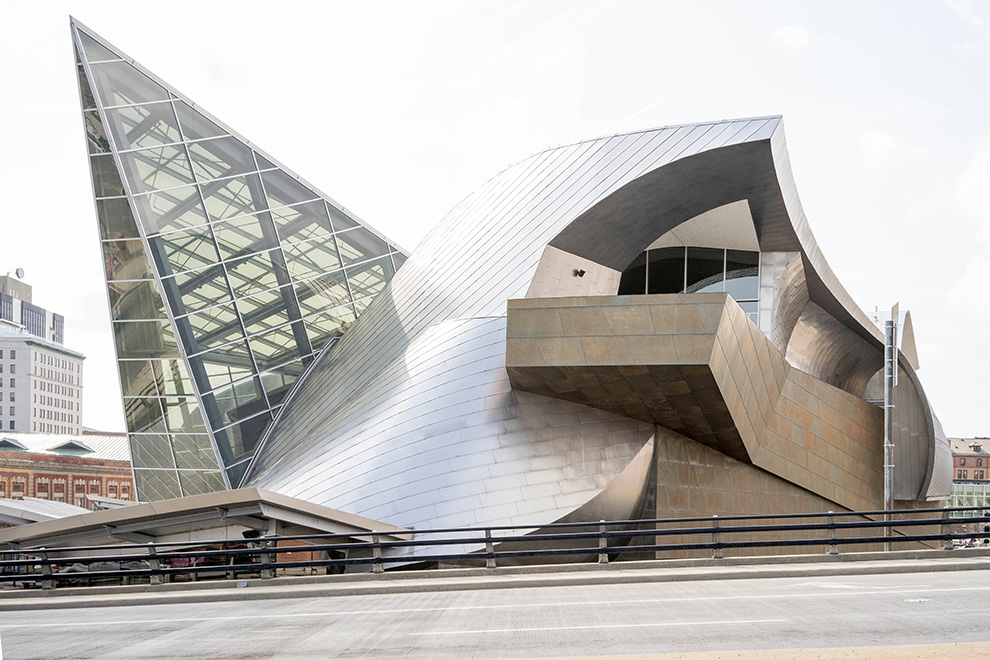
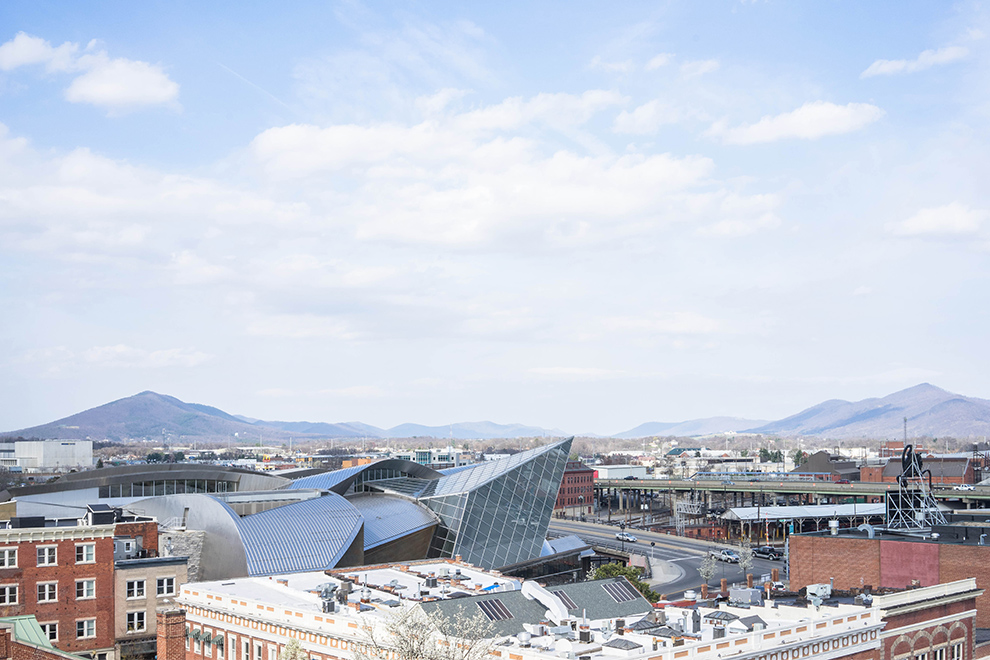
In the heady days of 2004, I was a green architecture intern fresh out of school, and the first building project I worked on was this – The Taubman Museum of Art in Roanoke Virginia. Having the opportunity to design with and learn from Randall Stout on an exciting, high-profile project like this was basically everything I imagined that being an architect could be. This was to be thrown into the emerging world of digital design and geometrical control (hello Rhino V3), close collaborations with players at the forefront of manufacturing complex, building-scale cnc fabrications, and the promise of architecture as a driver of transformative urban change. School couldn’t touch this. In the intervening decade I’ve learned quite a bit more about the behind the scenes maneuvering that morphed an existing regional art collection’s initial, modest desire for a few extra square feet of exhibition space into an ambitious plan to remake a town through a $90 million dollar building. The reality of the inherent impotence of a singular built object to somehow negate or transcend the complex network of entrenched and competing political, cultural, and institutional factors is something that continues to play out in cities all over the world. But those questions were irrelevant to the families I saw enjoying the “weird, but cool” free museum on a Thursday afternoon, the local artist exhibiting hyper-saturated photos of the building at Thelma’s Chicken and Waffles, or the bins of embroidered fabric decorated with the building’s distinctive profile. Basically, it was breathtaking to finally experience the building in all its divisive glory. I wish Randall were here so I could tell him all about it.


These are a few of the images I captured while in town. Presented here to amplify the building’s binary formal references as I had always imagined them in my mind. While there is no true “back” facade, there are two clearly distinct sides to the building: the angular, more constructivist facade facing the railroad tracks and industrial edge of town, and the softer, billowing blue forms facing the city which frame the Blue Ridge Mountains receding into the background.

20141231 Tags: architecture, fabrication, new york, research, school, teaching, urban | No Comments »

HACKING THE URBAN EXPERIENCE – STUDENT WORK FALL 2014

web-01web-02

web-03web-04

web-05web-06

web-07web-08


A small selection of the amazing work the group produced in class this semester. Click on the images above for more information.

20141014 Tags: architecture, DUB, fabrication, inflatable, newyork, urban | 1 Comment »

INFLATO DUMPSTER

DUB_INFLATODUMPSTER_01
DUB_INFLATODUMPSTER_02


Quick Description:
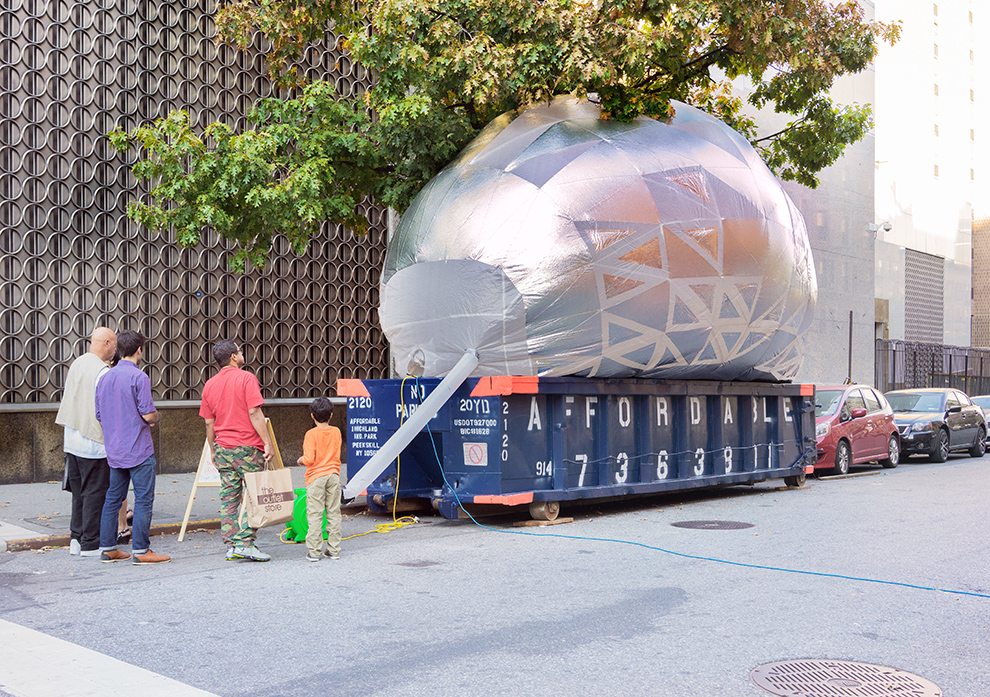
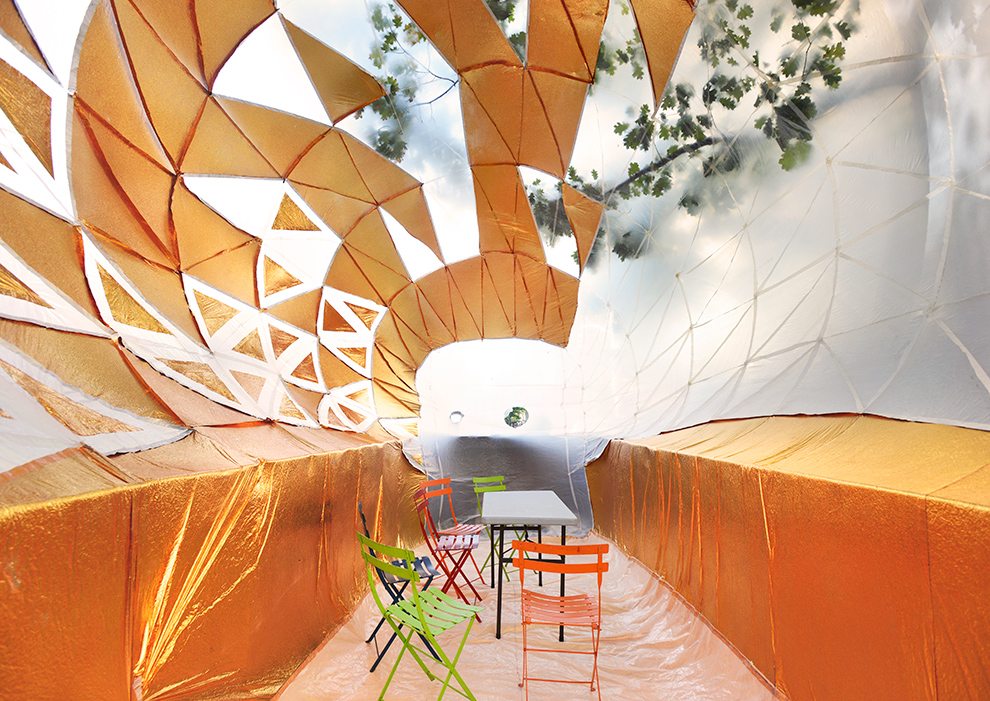
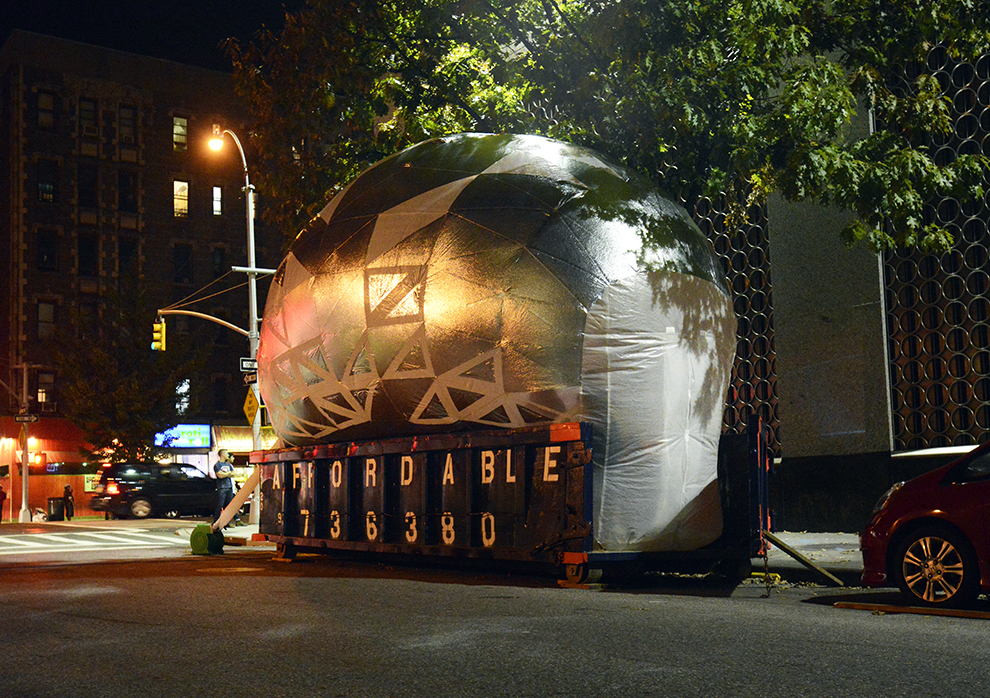
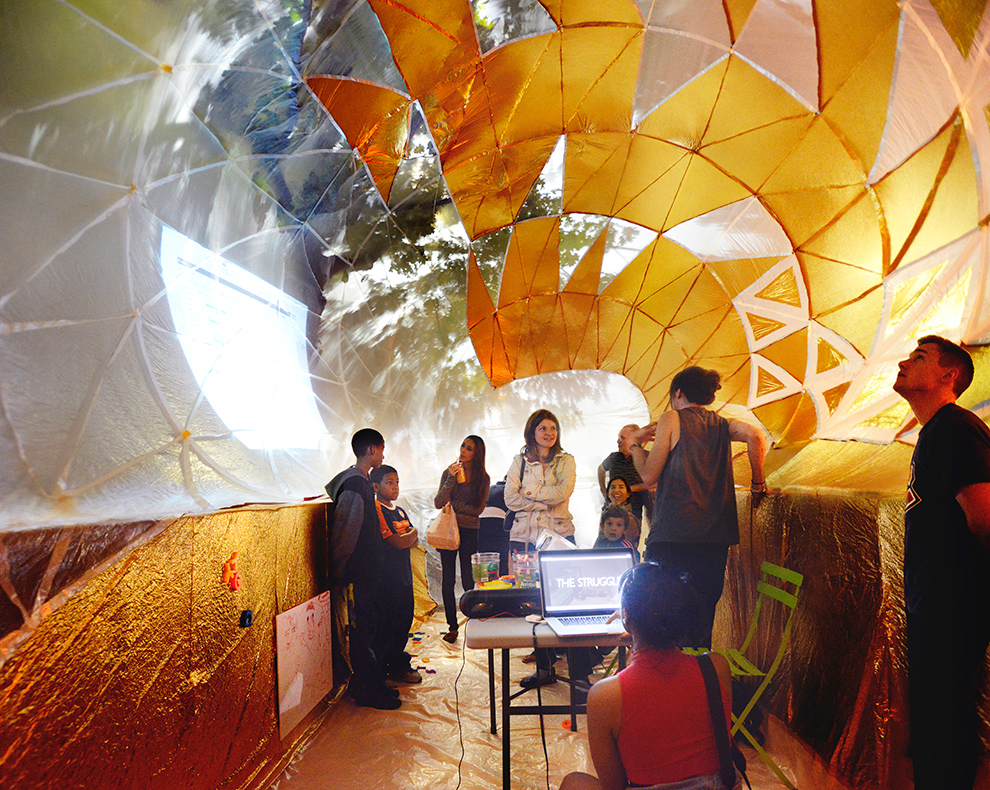
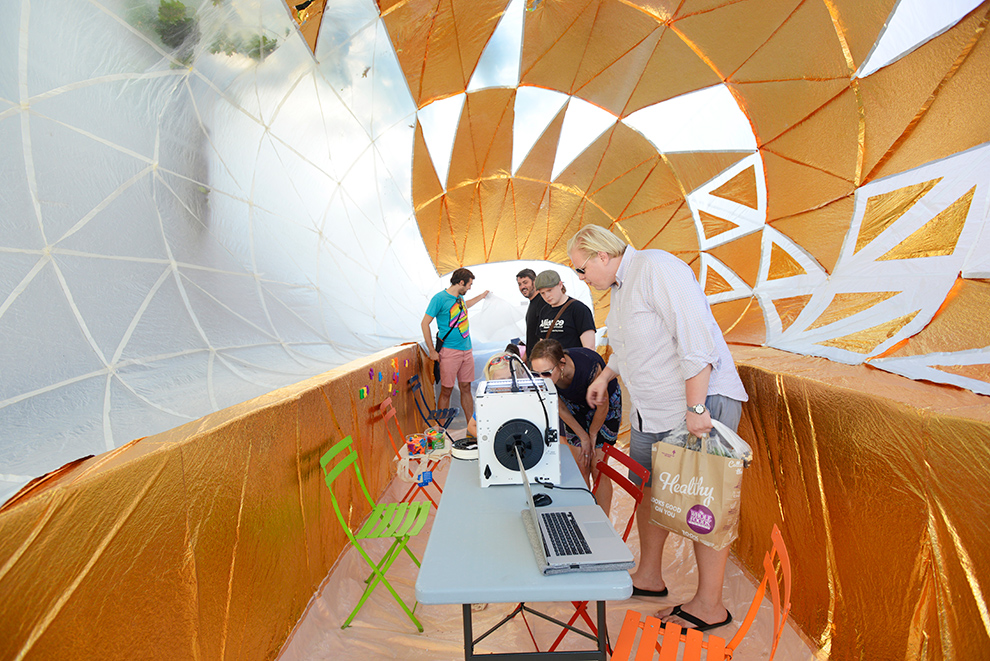
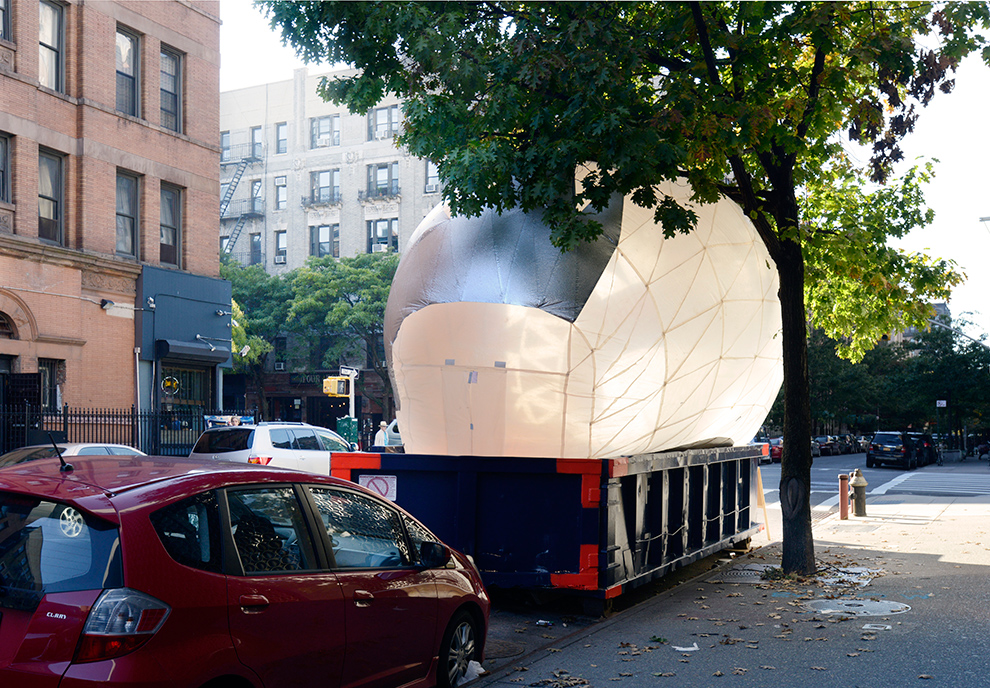
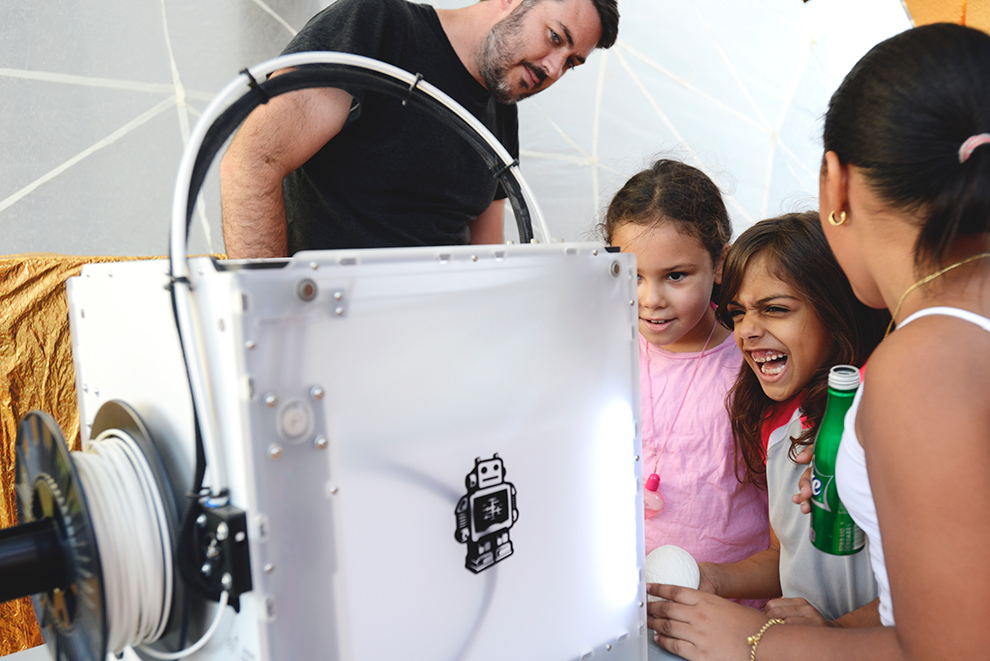
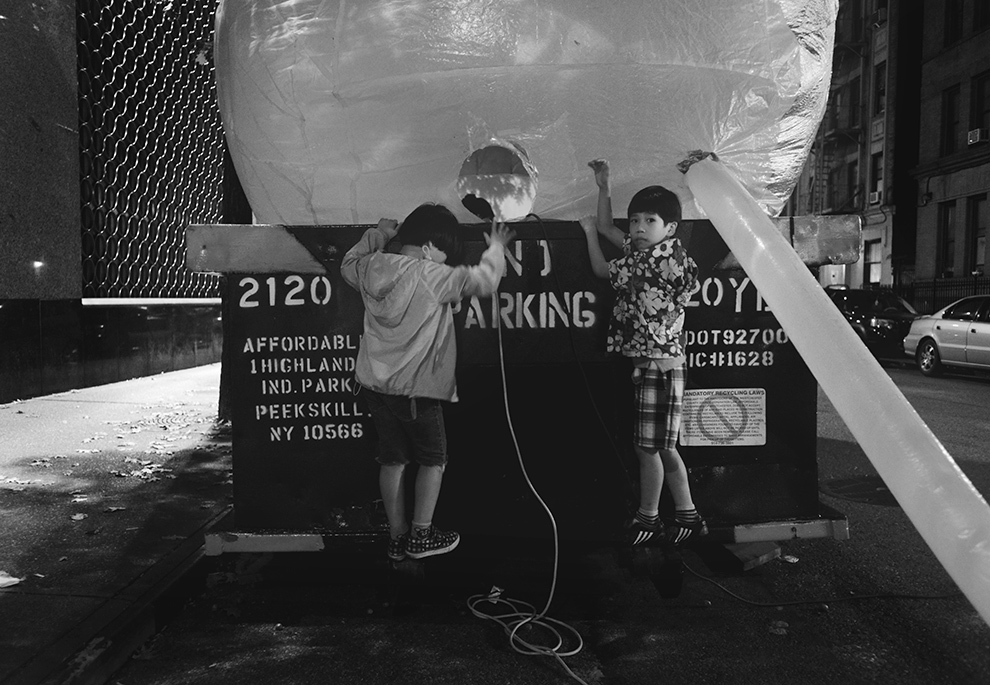
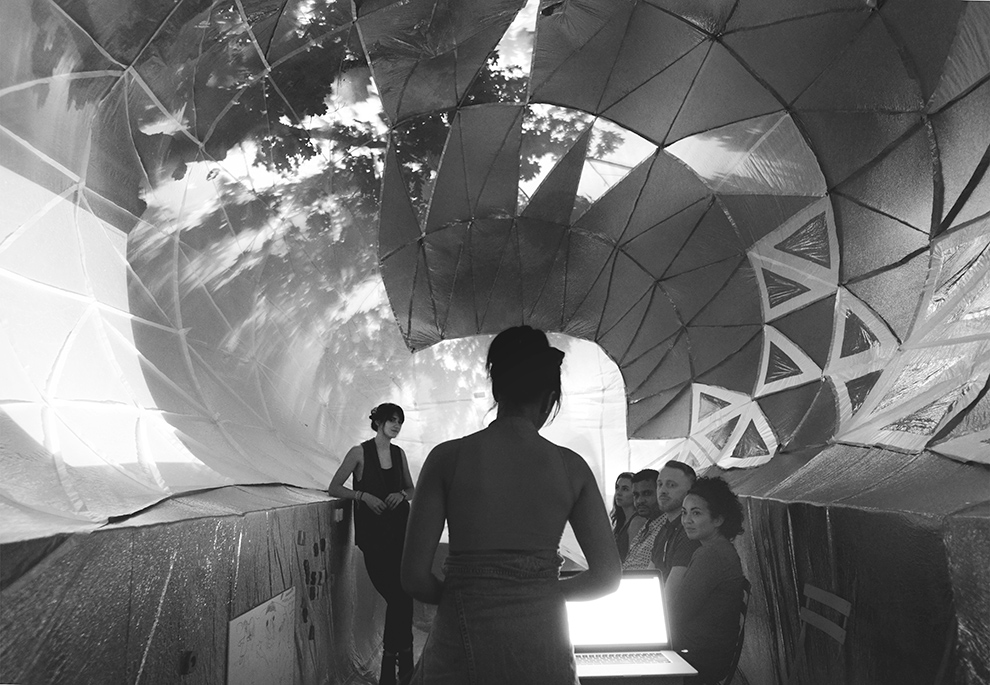
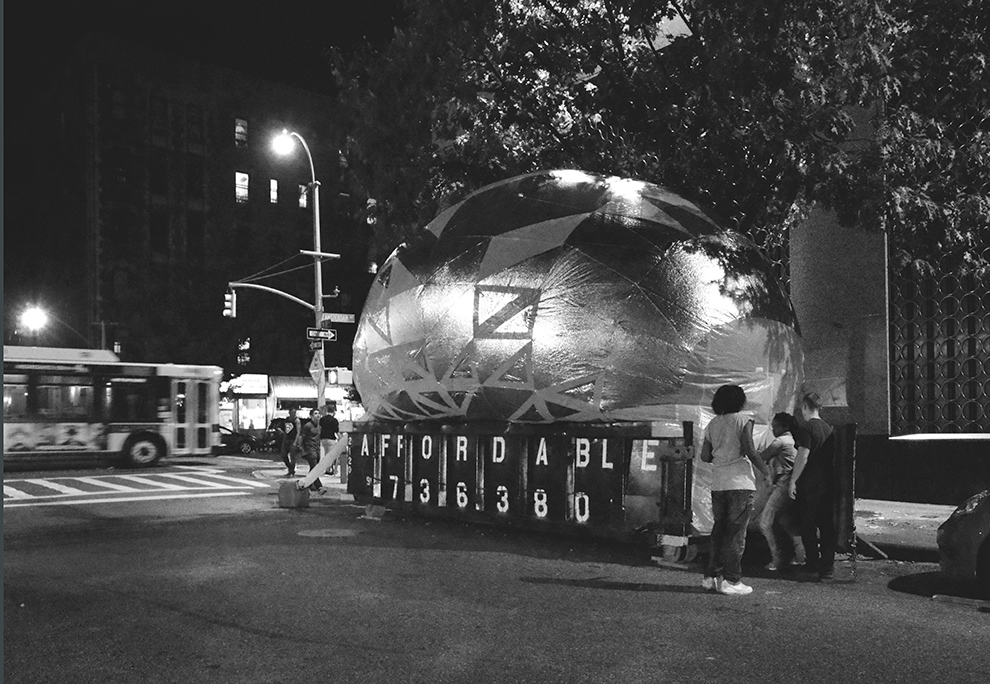
This is an inflatable classroom installed inside of a dumpster. It is the first installation – the beta version – launched over three days in late-September at 109th Street and Amsterdam Avenue in the Bloomingdale Neighborhood of Manhattan. The project includes 165 square feet of enclosed space with maximum dimensions at 17’ height by 12’-6” wide and 24’ long. Over the three days the project was activated, over 500 people in the neighborhood interacted with the installation through a number of events and workshops including: a musical performance by Amani Fela, documentary screening by filmmaker Simone Varano and a 3D printing and modeling work session. The total project budget was $4,200 (including equipment rental) – the majority of said budget was funded via Kickstarter, a process we are deeply skeptical of in regards to urban projects, but used nonetheless. The intention is for the project to continue to periodically activate and further explore how it fits within this neighborhood. This project was created with friend and design partner Joaquin Reyes, and is part of a Columbia University course I teach titled “Hacking the Urban Experience.”


Inflato:
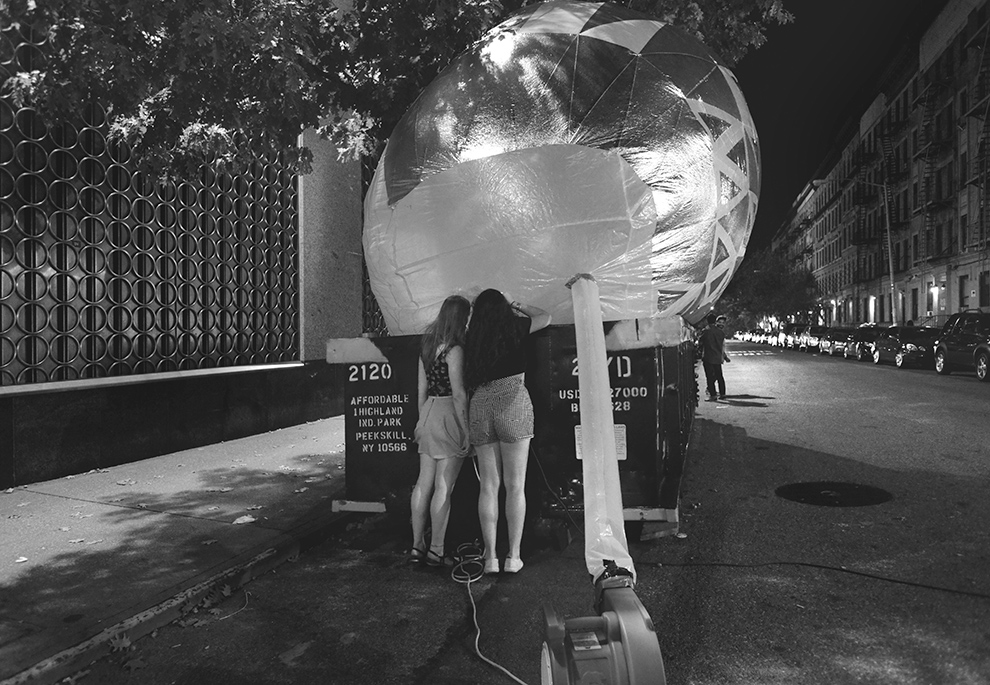
The main element is an inflatable membrane containing 2000 cubic feet of volume. This inflato is made from a combination of two lightweight materials. The first is a clear polyethylene. This is an inexpensive, common and biodegradable plastic material that will allow views both from and out to the street. The second material is a mylar film used in both emergency hiking blankets and spacecraft. Dual-sided – silver and gold – the inflato presents a subdued silver, semi-reflective surface on the exterior with a gold, brightly gilded interior. The street side is more opaque, while the sidewalk side is more open allowing views and a surface to project images onto. The transparent side also allows light to filter down through the canopy of the sidewalk maple tree from above. There is a strong evocation of being under a shaded tree.


DUB_INFLATODUMPSTER_SKETCH


Dumpster:
“Go inside a dumpster?!?!” – An understandable response given by roughly a quarter of people when told they were welcome to go inside. I think the dumpster helped because it kept the project in the realm of the recognizable, and fed into the transgressive feeling of being inside of an off-limits space. Connotations of trash aside, there’s a shared awareness of the spatial interior dimensions of a dumpster, unlike, say, “an inflatable classroom” or, even worse, “a new paradigm of public space,” which could be just about anything. Or maybe it just lowered the bar so much, that when people stepped not into a rusted metal box, but rather a glowing vaulted space, they couldn’t help but feel like they had been transported.


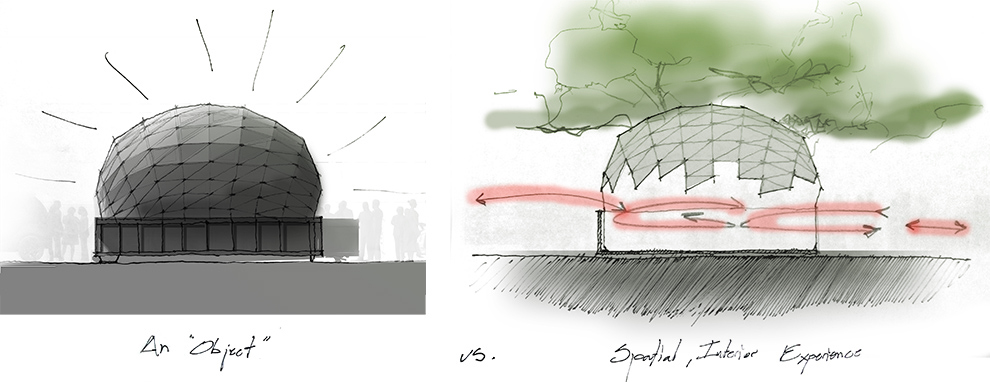
So there’s certainly an interest in transforming existing banal street structures, but also being drawn to the idea of turning something typically associated with waste and discarded materials into a space for something exciting and new. This, in turn, led to exploring the invisible lightness of the inflatable in relation to the hard steel of the dumpster and the heavy demolition work of machines and tools. This juxtaposition of heavy/light and new/used became a key hot-air-balloon-like diagram of the solid base paired with the weightless membrane.


Maybe there’s also a metaphor here about “recycling” knowledge. The goal of this thing being a new type of classroom space meant that knowledge was not just passed down to a captive audience, but that what’s taught is something that could resonate out like ripples and eddies in a stream – emanating from the central mixing chamber of the dumpster. Repeatedly cycling back and forth amongst everyone that came through. For example, we avoided anything overtly didactic – an early idea of streaming neighborhood demographic data was rejected on the grounds of being too overt – instead favoring a more subtle approach such as that taken with the films screened by Simone Varano. Not only are the films challenging documentaries that deal with authenticity, music and living in the city, but anyone that sat in a dumpster and watched them took away the notion that a theater is not only the AMC on 84th street, but that this can be a valid means of projection and expression. Seeing a construction dumpster on the street in New York invariably indicates change, whether a new condo going up or a renovation going in. Either way, the endpoint is often exclusionary in nature. In this project, the dumpster still indicates a temporal event, however, we hope that it triggers a ripple of aftereffects that will germinate practical ideas and actions that are more inclusionary and empowering for the neighborhood. This is something that has to be iterated on and pushed further in future installations.


There were also pragmatic reasons for using the dumpster. It gave us a solid structure to anchor the inflatable, to resist any uplifting wind loads barreling down the avenue or traveling up 109th from Columbus, which is at a significantly lower elevation. Parking Day by Rebar is a big influence, but is limited by short time allotments provided by the meter and single parking space limitations. The dumpster allows us to take over a few parking spaces at approximately 160 square feet of New York real estate (bigger than my bedroom) for a fairly significant chunk of time. Which of course leads to questions of….


Permitting:
With the DOT’s generous help, we were able to successfully navigate some of the overlapping permitting requirements and submit a Street Activity Permit to the City. These typically take two weeks to receive for small events that do not require any street closures. The application fee is $25. However, hauling companies of course do not pull Street Activity permits before dropping dumpsters on the streets. The obvious difference being people aren’t expected to be hanging out in them, just throwing their trash in them. There’s some gray area here that we think is interesting and can be explored further.
 

Installation:
It was all very friendly and inclusionary. By the third day when I was walking down the street, carrying a large jumbled pile of plastic and mylar to the dumpster, random people would be calling out to me asking when and what was going on inside that day. I’d be remiss not to point out how great it was interacting with people. We were thrown into the neighborhood and had to have a concise explanation for what we were doing. Any pretentiousness or BS descriptions wouldn’t cut it. But that was what was most exciting: Seeing what happens when actual other human beings interact with the thing – kids, moms on the way from the store, students, the elderly, drunks, lifelong and newly-arrived residents, football fans (on Sunday outside the bar), and so on – all with opinions and critiques, but all interested in what was going on. Urban street life in the area moves fast and seems complicated but it’s actually pretty easy to jump into the thick of it.


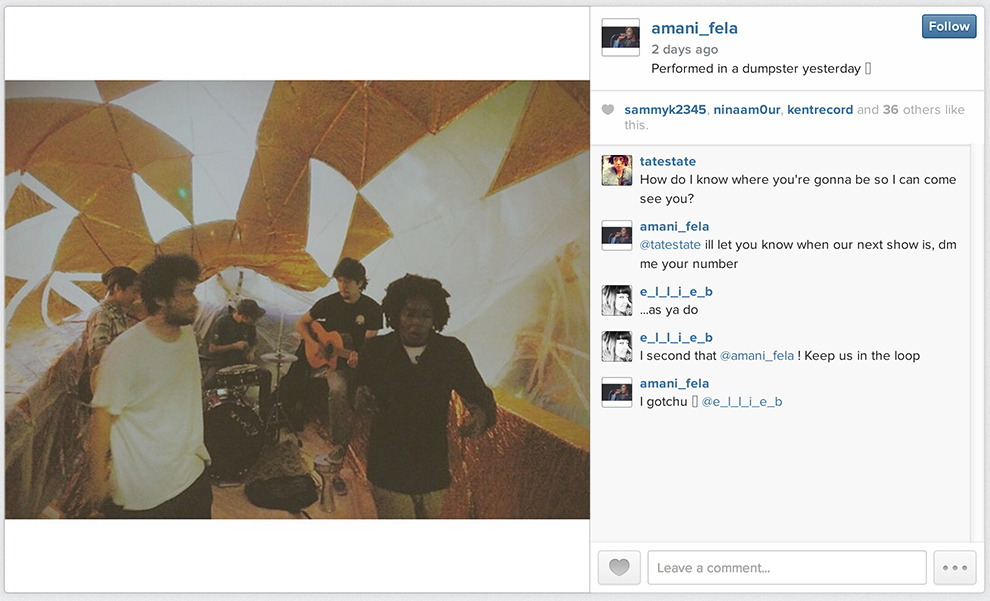
As an introduction to the neighborhood, afropunk group Amani Fela opened with a music set on the first night, and seemed totally unfazed to be playing inside of a gold dumpster. The percussion had people lining up to check it out. Unfortunately, one thing that was not anticipated – but in hindsight now seem obvious – was that most people assumed that this was one of the following: a private event, an event requiring admission or some type of corporate event. (There were also a few inquiries as to whether this had anything to do with ConEd testing a mobile containment unit, however that one was not as widespread). Peoples’ initial reactions were an unfortunate acknowledgement that, as a society, most of us assume that if something is going on in the street, they must have to pay up somehow to check it out. Overcoming that ingrained skepticism and convincing people this was free became a constant struggle. A large signboard with “FREE TO ALL” was brought out and prominently displayed. By the third day, word had spread and people had heard about the Inflato via friends and neighbors. Without being prompted they would walk right in. It’s a start.
 

Credits:
Department of Urban Betterment: John Locke and Joaquin Reyes


Inflatable Fabrication: TW2M Fabrication


Dumpster Supplier: Budget Dumpster


Street Activity Permit Support: NYC Department of Transportation and the City of New York


Photography: Jackie Caradonio


Special Thanks to: Columbus Amsterdam BID, Simone Varano, Amani Fela, Delia Reyes, Mugi Pottery, Ultimaker.


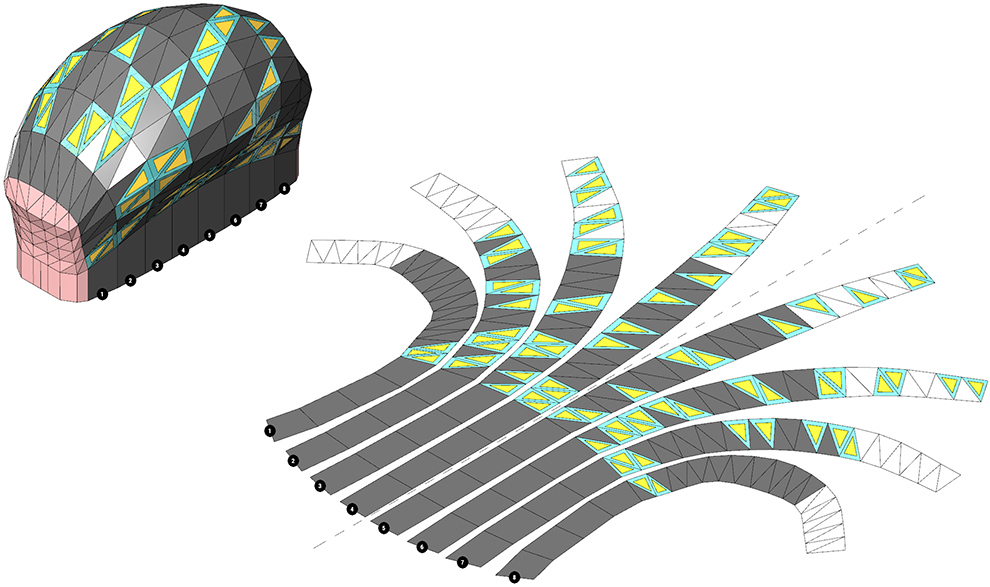
InflatoDumpster_IMG_DiagUnroll

There were 240 individual triangles, which required more than 300 hours to assemble.


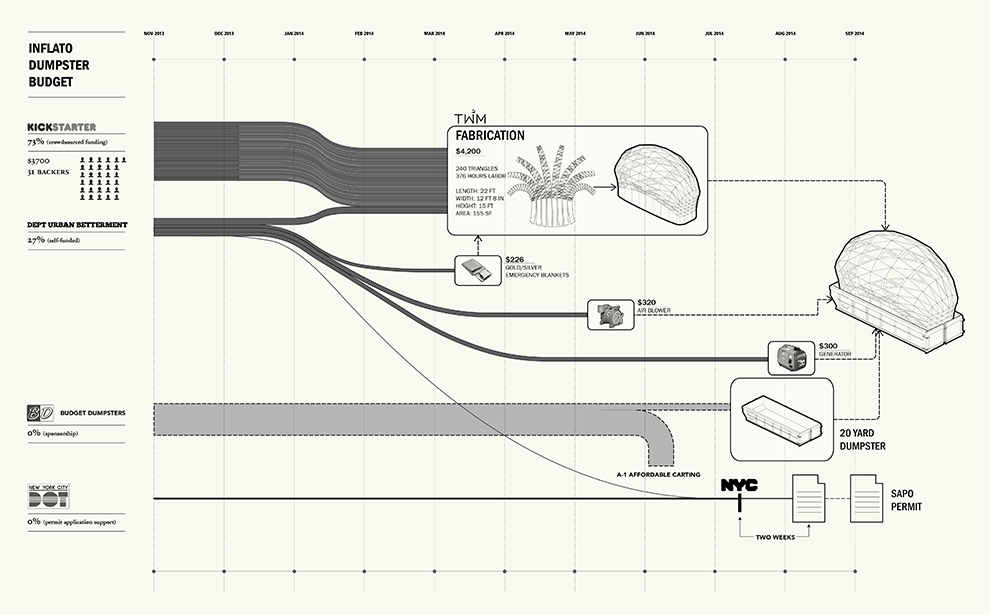
INFLATO-SANKEY-BUDGET
73% of project cost was from crowdsourced funding. The remaining 27% was self-initiated by the Department of Urban Betterment.


DUB_INFLATODUMPSTER_03
While it may have literally had “affordable” written all over it, we exceeded our initial budget.


DUB_INFLATODUMPSTER_04


DUB_INFLATODUMPSTER_05

Local filmmaker Simone Varano sets up for a screening of her documentary series dealing with music, culture and neighborhood issues.


DUB_INFLATODUMPSTER_06

Workshop attendees learn about modelling and building models using a consumer grade 3D printer.


DUB_INFLATODUMPSTER_AMANI

Amani Fela, unfazed by the surroundings.


DUB_INFLATODUMPSTER_07DUB_INFLATODUMPSTER_08

DUB_INFLATODUMPSTER_09DUB_INFLATODUMPSTER_10

DUB_INFLATODUMPSTER_11DUB_INFLATODUMPSTER_12

DUB_INFLATODUMPSTER_13

20141013 Tags: architecture, DUB, fabrication, inflatable, new york, photography, urban | No Comments »

#inflato and the Bloomingdale Neighborhood

DUB_INFLATODUMPSTER_NIGHT-01

DUB_INFLATODUMPSTER_NIGHT-02

DUB_INFLATODUMPSTER_NIGHT-03

DUB_INFLATODUMPSTER_NIGHT-04

DUB_INFLATODUMPSTER_NIGHT-05

DUB_INFLATODUMPSTER_NIGHT-06


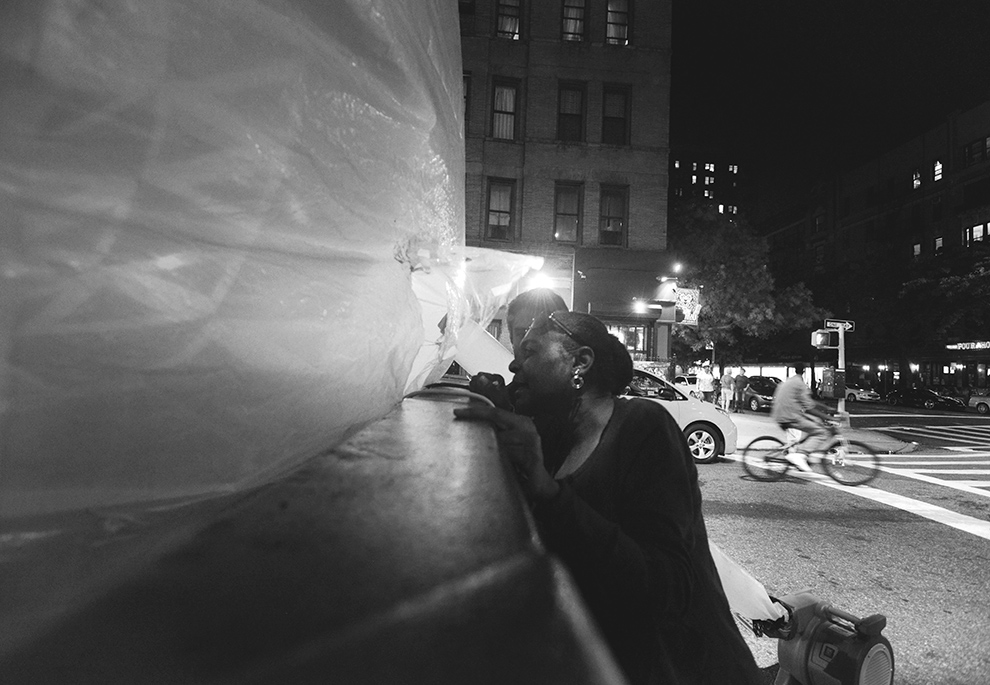
Taken from the second night, capturing a diverse mix of neighbors and passersby that were interacting with the installation. People’s responses ran the gamut, but regardless of how skeptical they were of this thing, their curiosity would get the best of them. Once someone peeked in through the porthole, everyone wanted to go inside and check it out. Located at 109th and Amsterdam Ave.

2014109 Tags: architecture, DUB, fabrication, inflatable, newyork, parametric, urban | No Comments »

Inflation


Difficult not to anthropomorphize this thing coming into being, but maybe that’s one of the things that’s cool in working with a dynamic structure – the weightless way it subtly sways in the breeze or will ripple in the backdraft of a speeding car or contracts and expands when someone enters much like a giant lung. People always liked to put their hands on the silvery metallic membrane and push in, feeling the negative pressure resistance from inside. This is in contrast to the hard steel of the dumpster in that the silver of the inflato gently reacts and responds to touch.

 
2014095 Tags: architecture, fabrication, gsapp, school, teaching | No Comments »

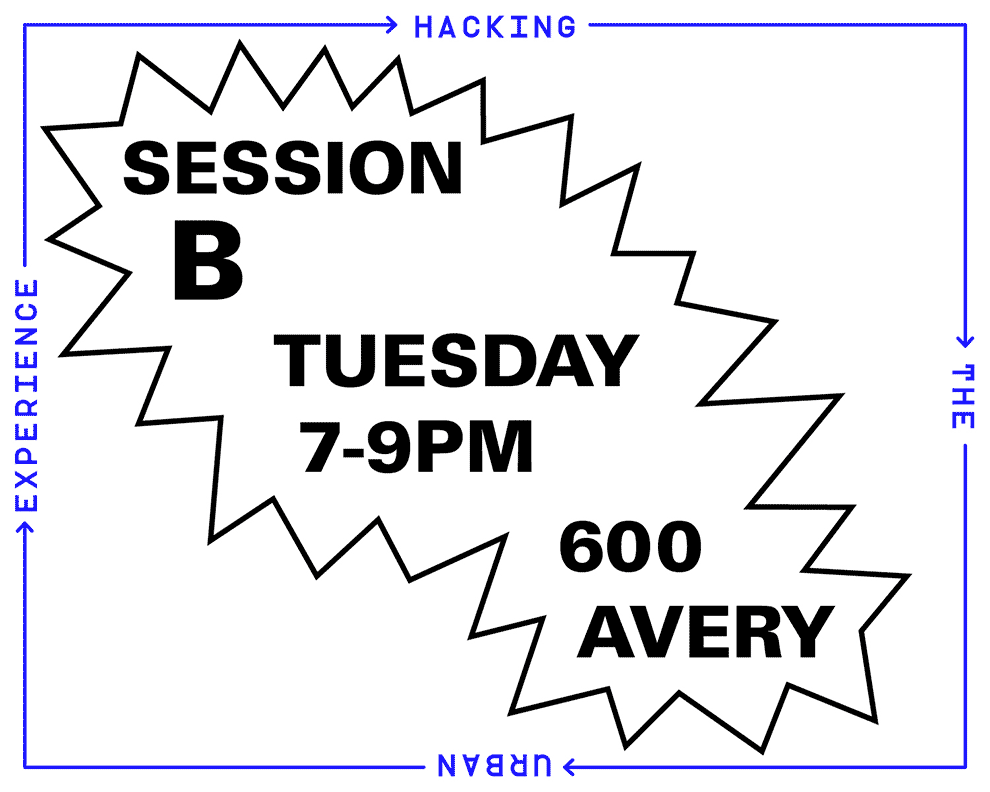
School’s in for Fall

fall_2013

BE THERE YALL!


Past course work:
http://hackingtheurbanexperience.tumblr.com/

« Older Entries

COPYRIGHT © 2011 \ JOHN LOCKE \ ALL RIGHTS RESERVED (RSS)

TOP OF PAGE

last update: 201102:1627