JOHN LOCKE, ARCHITECT

  • Featured Work
  • Design Blog           
  • Photography
  • Graphic Design
  • Dept of Urban Betterment

About

Hello. I live in New York and work at The Living. I hold a graduate degree from Columbia University's GSAPP and an undergraduate architecture degree from the University of Texas at Austin. I have more than seven years of professional experience at noted architecture firms, including New York-based Rogers Marvel Architects and SOM. I also tackle freelance graphic and photography work with my partner in crime, the multi-talented Jackie Caradonio at Lion in Oil. In addition, I teach a course, Hacking the Urban Experience, at Columbia. View my CV here: CV(html). Thanks and have a nice day.

Contact

john.h.locke{at}gmail.com
310.735.3333

Architecture Portfolios

Portfolio 2002-2007 (issuu)
Portfolio 2008-2009 (issuu)

HOME / BLOG

fabrication

20110728 Tags: competition, fabrication | No Comments »

light it up

light_02
light_013


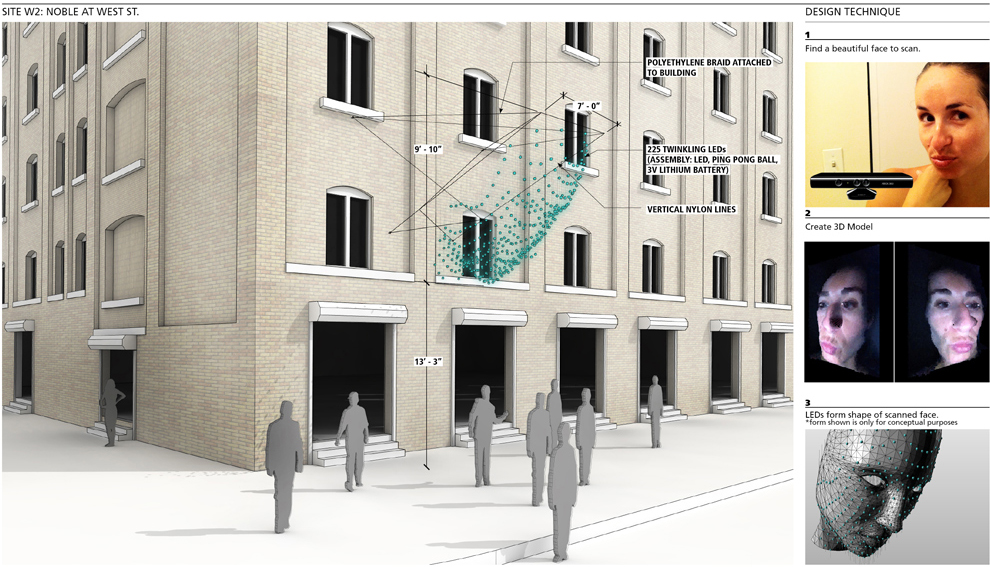
With a budget under $300, the installation is realized as a spatial prototype for how a fleeting work can provoke an increased engagement between users and public space. Built with over 200 led lights and conceived to take maximum advantage of a temporarily repurposed historic building, the work becomes as ephemeral as a passing comet, creating a new constellation in the night sky, visible from the streets of Brooklyn for one night only.

2011076 Tags: DUB, fabrication, new york, urban | 39 Comments »

DUB 002

booth_001
booth_002
booth_003
booth_004


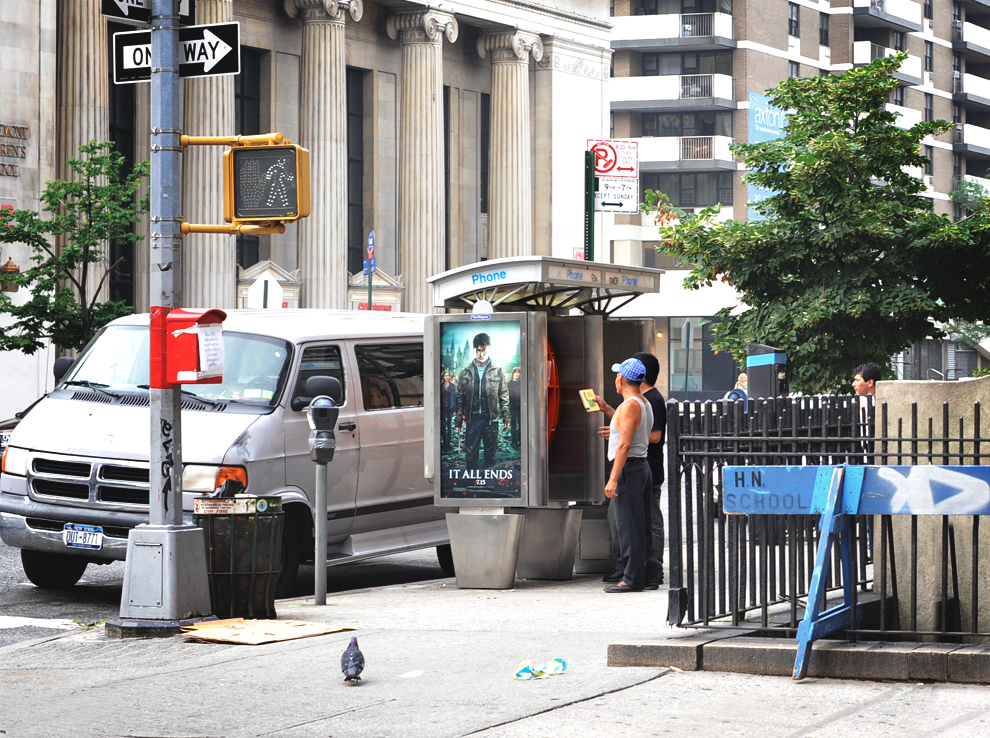
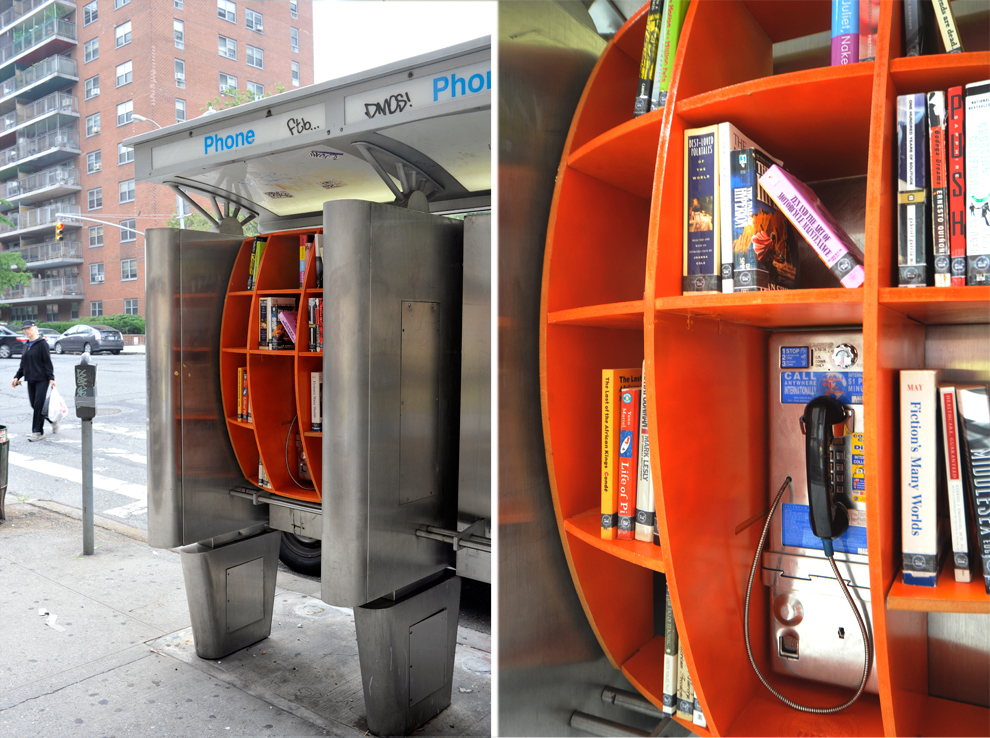
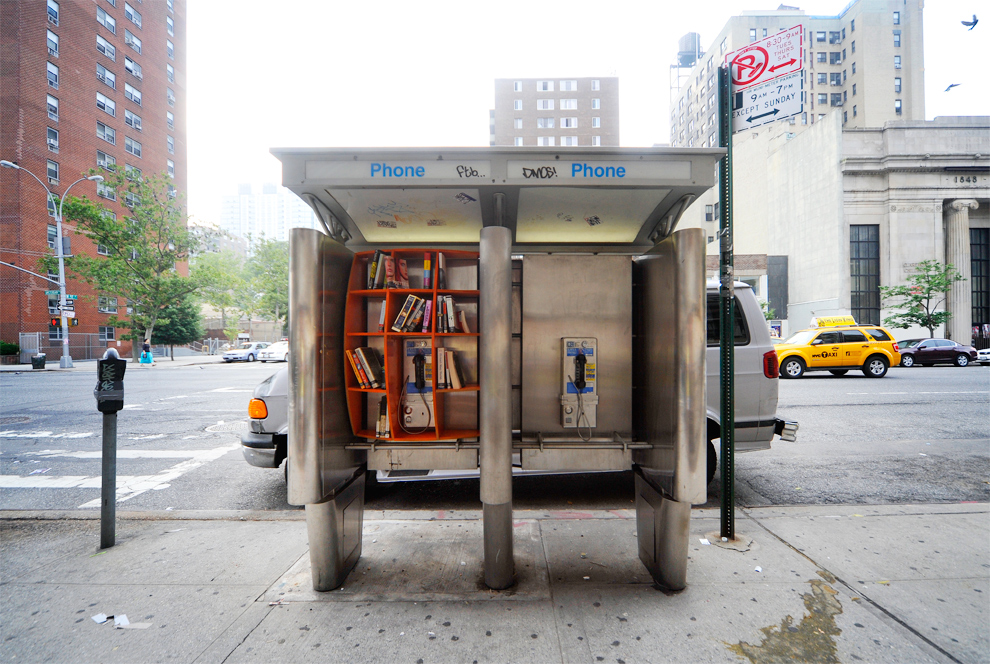
Following from the dispiriting failures of 001, 002 proved to be more successful, and not only because of it’s pumpkin orange color, but because it wasn’t cleared of books within 6 hours and the empty shelves themselves weren’t removed after 10 days. I attribute this mostly to an adjustment of tactics and location. Every block has its own subtleties and micro-urban climates, one block is boarded up with for “rent signs” while the next is a thriving pocket of activities and street-level engagement. By moving to a location 8 blocks further south, 002 was placed nearer to a major thoroughfare – 96th street – and received a more steady stream of mixed pedestrian traffic leaving the express train stop on Broadway and by virtue of being closer to street level retail (a large CVS), educational (a school and church) as well as the residential apartments along 97th street. 001 just didn’t get enough foot traffic and frankly felt deserted. I thought being near a hostel and school would generate some interest, but the hostel is an imposing Victorian Gothic structure with a decidedly prison-like bent reflecting its previous use as a nursing home for “Respectable, Aged and Indigent Females” and unsurprisingly generates little sidewalk traffic and even less urge to stop and inspect some books in a phone booth.


In an attempt to encourage sharing and free distribution of the initial selection of books, I didn’t mark the books in any way. But in lieu of the entire initial selection of 001’s books being carted off within a few hours, I tested out being more explicit and treating the books more like a library. Almost like a Dewey decimal number taped to the spine of a library book, I added a visible logo to the bottom of each spine. I hoped this would prevent the books from easily winding up in the hands of sidewalk book resellers, but I fear that the marking implies an ownership that prevents a casual exchange of taking and leaving their own books. I observed a number of people reach out and pick up a book, flip through it, but then return it to the shelf. Some even doubled back for a second look and to engage in a closer inspection of the shelves, but they still refrained from actually taking a book. Perhaps feeling hesitant to, I don’t know, steal/vandalize (irony) something that’s out in public? I can see how there might be a stigma there, to not just keep walking straight along the sidewalk with your head down, but to stop and engage with the street. I intentionally wanted to avoid any directions, like a sign that would say something along the lines of “hey this is for sharing books, you can leave some here” and I still want to avoid anything that seems overtly prescriptive, but after seeing people hesitate when confronted with 002, perhaps there is a more subtle way to gently describe an intended use.


Even as they are rendered obsolete by the ubiquity of smartphones, I’m interested in pay phones because they are both anachronistic and quotidian. Relics, they’re dead technology perched on the edge of obsolescence, a skeuomorph hearkening back to a lost shared public space we might no longer have any use for. Something to be nostalgic for, in the way I can’t think about a phone booth without conjuring up images of an old, impatient woman banging on the door to one while I was inside using a calling card to ask for money. And of course they are nuisance, basically pedestrian level billboards that only blight certain neighborhoods (good luck finding a payphone in Tribeca, while there are eight separate phone kiosks on one block between 108th and 109th streets and Columbus Ave). But they can also be a place of opportunity, something to reprogram and somewhere to come together and share a good book with your neighbors.


All the books were donated by local residents and the plywood was milled by Kontraptionist.
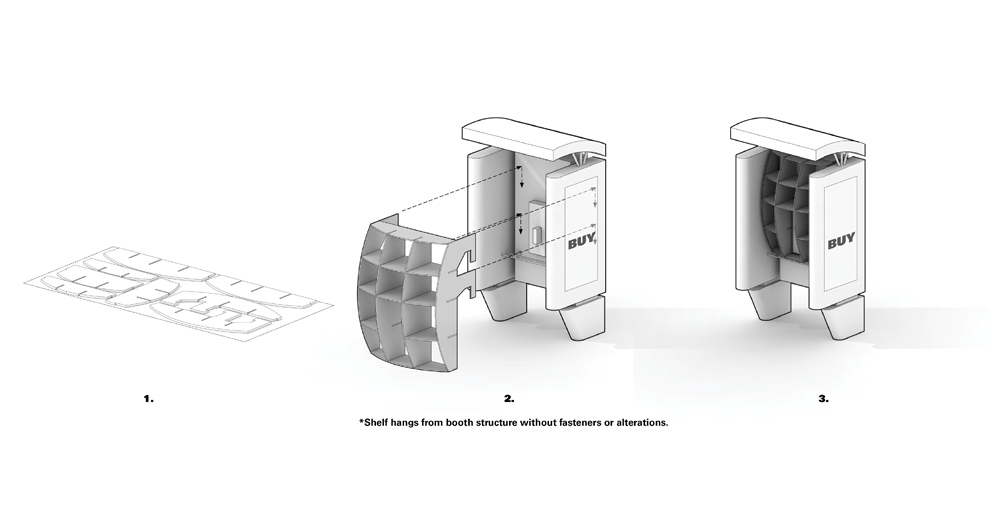
 

dub_diagram
more »

20110514 Tags: architecture, fabrication, graphic design, work | No Comments »

the future of suburbia

signs01
signs02


In a remarkable piece from New York magazine regarding the liberal world’s MVP, Paul Krugman, the author described the genesis of Krugman’s 2006 book:

When he was writing The Conscience of a Liberal, Krugman found himself searching for a way to describe his own political Eden, his vision of America before the Fall. He knew the moment that he wanted to describe: the fifties and early sixties, when prosperity was not only broad but broadly shared. Wells, looking over a draft, thought his account was too numerical, too cold. She suggested that he describe his own childhood, in the middle-class suburb of Merrick, Long Island. And so Krugman began writing with an almost choking nostalgia, the sort of feeling that he usually despises: “The political and economic environment of my youth stands revealed as a paradise lost, an exceptional moment in our nation’s history …”


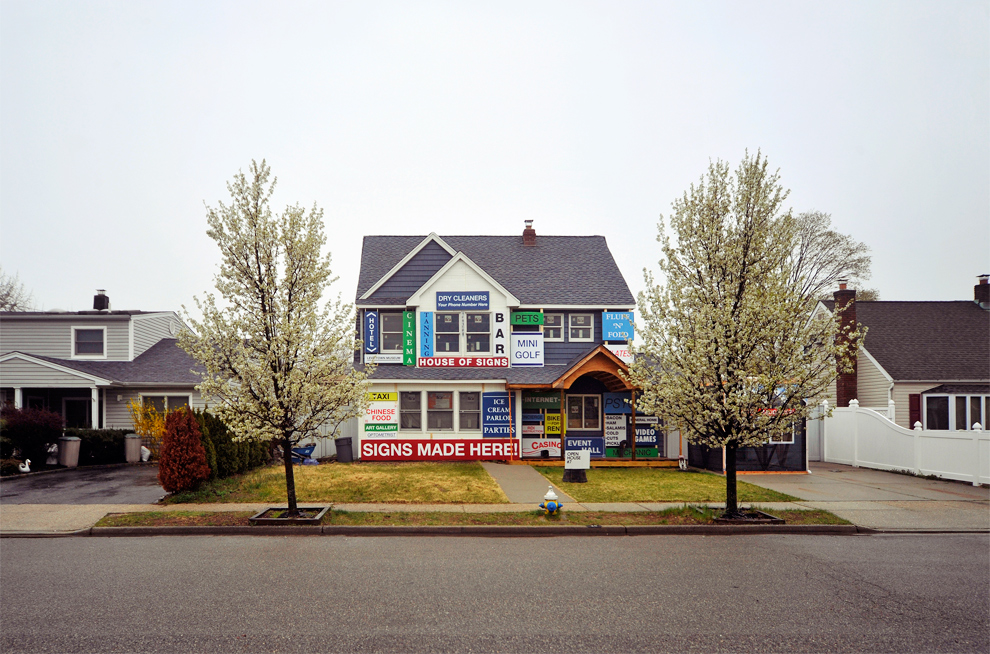
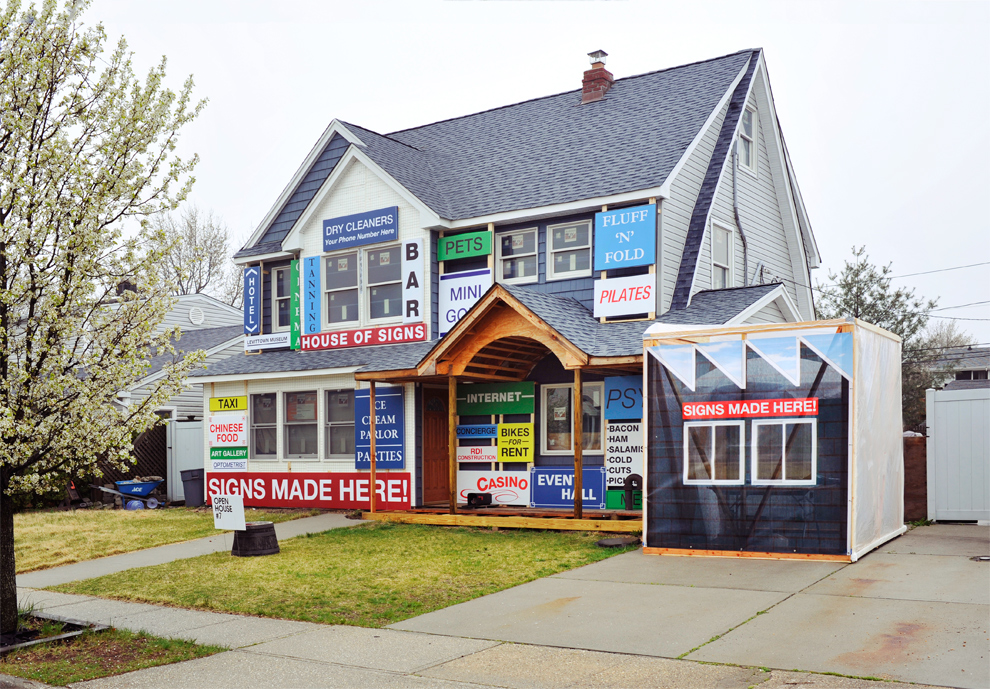
Krugman’s own vision of a lost utopia on Long Island, during that bright post-war bloom of middle class prosperity, which must have had seemed so full of limitless potential and opportunity but somehow lurched toward our current state of contraction, pulled apart and forgotten by the twin poles of unimaginable wealth disparity, was at the front of my mind when I had the awesome opportunity to manage this project from David Benjamin and the Living. This was House #7 of nine theoretical projects that comprised part of a one-day only open house installation on the future of suburbia, a what-if, hyper-fictional reality showing design’s potential to provoke and elucidate a hypothetical path forward hosted by Droog and DS&R.


Conceived with the ingenuity of hybrid housing/service industry residences seen in Tijuana and rendered with the graphic intensity of Chinatown, David’s concept called for a home that is both a store and factory for making and selling signs. The factory is an inhabitable sign in and of itself, and the facade of the house is taken over by examples of constructed signs. As more and more Levittown residences convert to self-sustaining home businesses the House of Signs positions itself as an integral piece of future suburban infrastructure. We went from concept sketch to exhibition in less than 10 days.

2009061 Tags: architecture, fabrication, gsapp, school, teaching | No Comments »

component systems

comp-sys
It was a certainly good times working with Professor Joe Vidich as teaching assistant for the courses Intro to Digital Fabrication and Advanced Fabrication: Component Systems. In component systems we only had five students, and they were pushed really hard, but there was some great work. I appreciated the sensibility that yes, we would make some cool stuff with the machines, but we also would test it for performance using structural engineering analysis, and explore material properties using Solidworks parametric models. It was an ambitious agenda for a short course, and the waterjet was un-operational pretty much the whole time, but the students came through with some sweet projects using the laser cut plexi and the heat bender, the metal mill as well as the 3d printer. Visit the class blog here.
Student work above from left: HoKyung Lee, JiYoon Oh, Kiseok Oh, Dave Kwon and Christo Logan

2009061 Tags: fabrication, graphic design, publication, work | No Comments »

world’s business card collection

lio_01
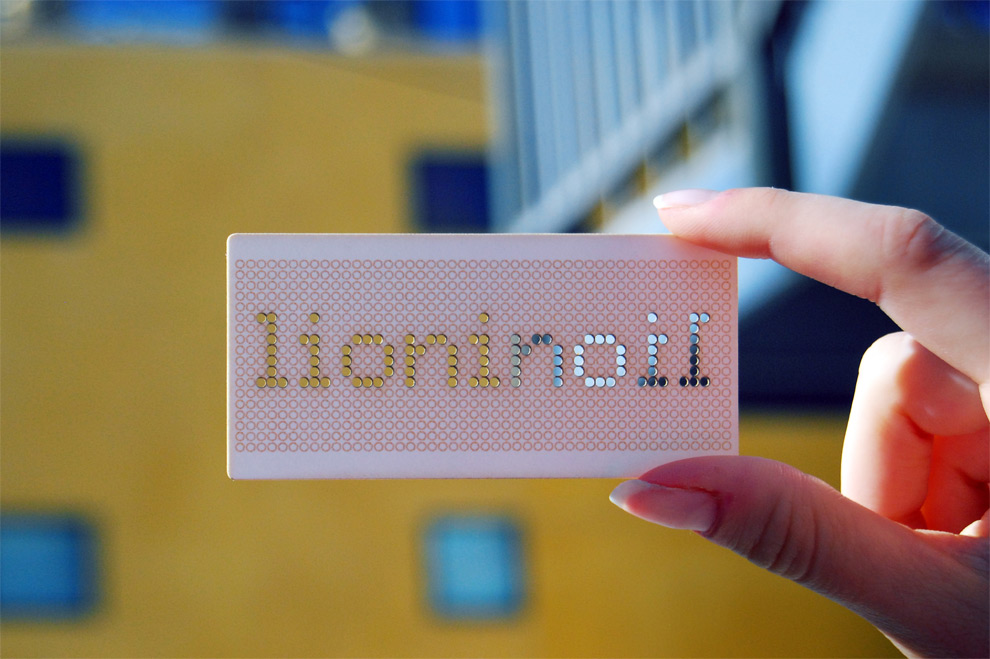
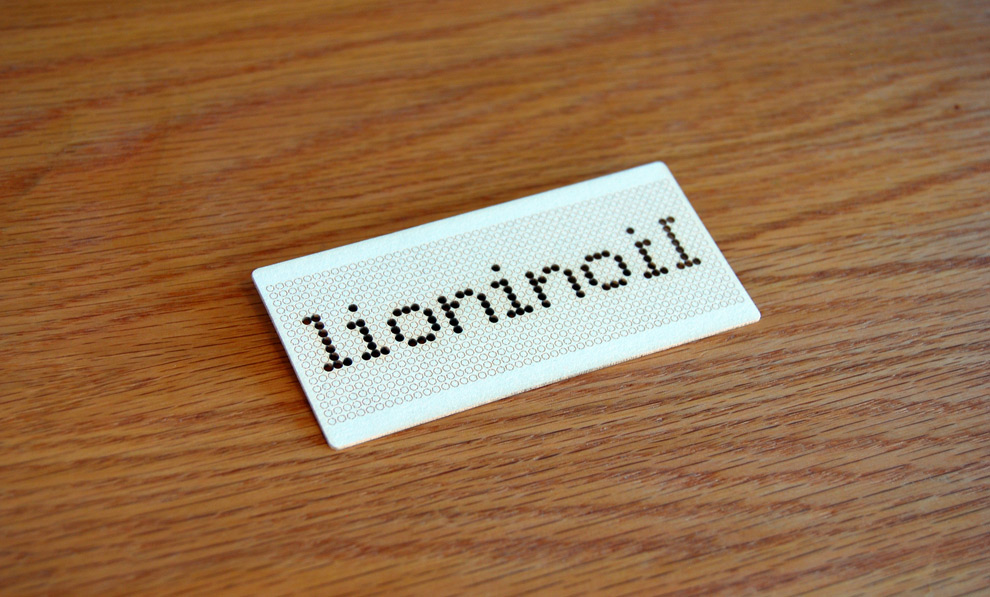
Our lion in oil business card was chosen for submission in the Japanese Publication “World’s Business Card Collection.” Look for it in September 2009. Also, the wonderful Jackie was both co-designer and gracious hand model.
The card is made of laser cut museum board, with hand rubbed text via acetone transfer on the back, to give it that nice industrial as well as handmade quality.


lio_03


more »

20090524 Tags: architecture, fabrication, gsapp, interaction, processing, school, scripting | No Comments »

interactive elevator installation

living01
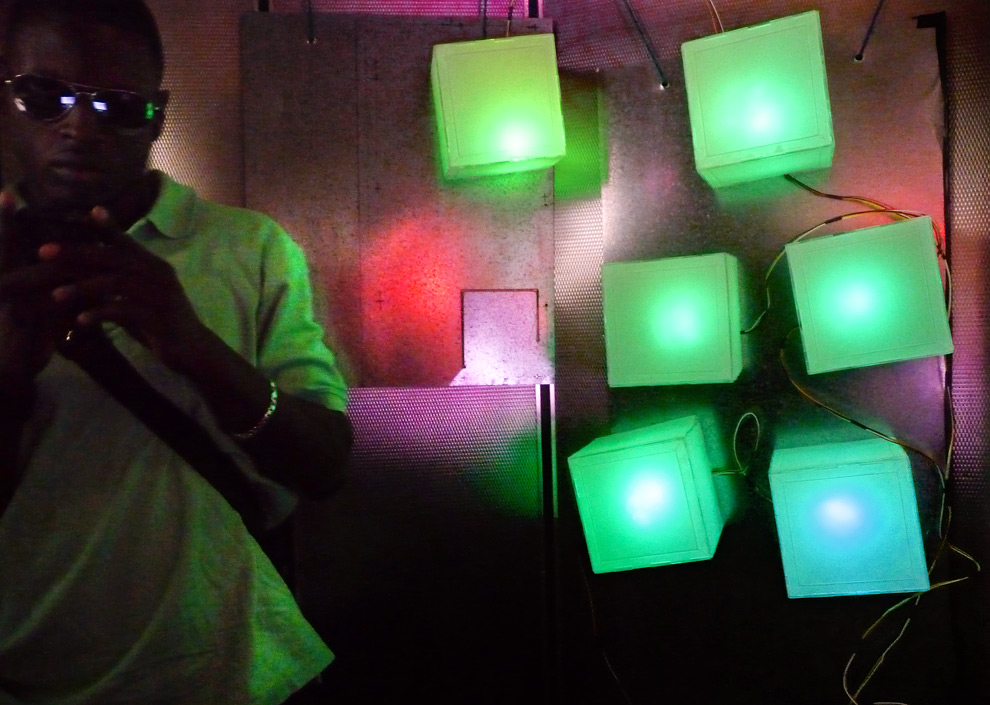
For our living architecture course, we created an interactive light installation in the elevator of Avery Hall, controllable by anyone with a cell phone and a twitter account. The simplified process includes texting an emotion to twitter from any cellular phone using the #livarch hashtag. That tweet is then picked up by a realtime search, fed through our twitterfeed rss, then added to our own twitter account. For a more detailed explanation, see this previous post on getting multiple twitter users onto one twitter feed. That emotion is then directed to our pachube feed and sent through processing to an arduino microcontroller that controls the color and pulsing of the individual leds. The installation non-invasively attaches to the surface of the elevator via magnets. Allowing it to be placed on any metal surface, such as a building exterior, furniture, or a vehicle.


The lights within the elevator respond to the mood of the user. For instance, if a student texted “happy #livarch” the space within the elevator would begin to slowly pulse with a greenish/blue hue. However, if another student sent “angry #livarch” the first light will quickly flash a bright red. There are twelve lights total and show the collective mood of the twelve most recent users.


In this way, the elevator becomes a living representation of the collective mood of the building, but it is also hoped that a feedback loop can be created, a loop that actually influences the mood of those that ride the elevator. The emotion felt in the lobby will be altered by the time you reach the sixth floor. And that new emotion becomes what gets texted back to the elevator.


Lastly, future installations will be physically located away from the target user. For instance, Avery’s mood will be projected to the elevator in Uris Hall and vice versa. In this manner, we can both create a new form of pen-pal with distant locations, but also hope that our mood, whether angry, sad, happy or nervous, will both manifest itself in a new form of architecture, but also have an effect on the greater world around us.


The project team also included Talya Jacobs and Guanghong Ou.
See more for video and code:


living02c
more »

2009034 Tags: architecture, fabrication, grasshopper, parametric, school, studio | 12 Comments »

we can rebuild you

model05
model01


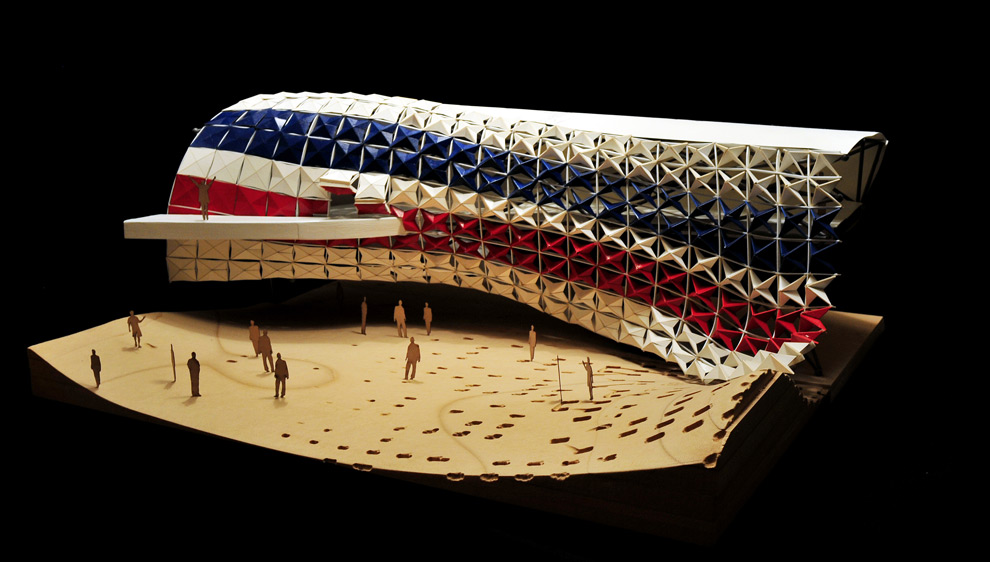
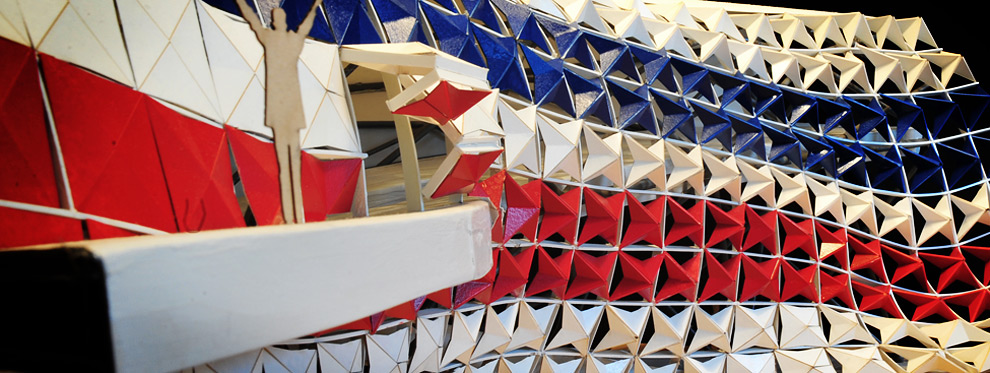
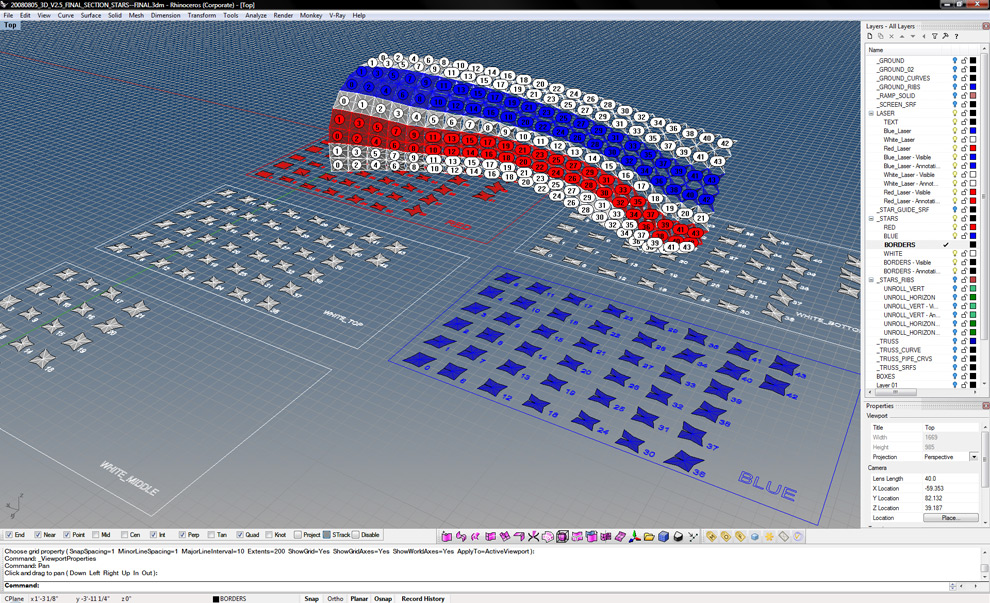
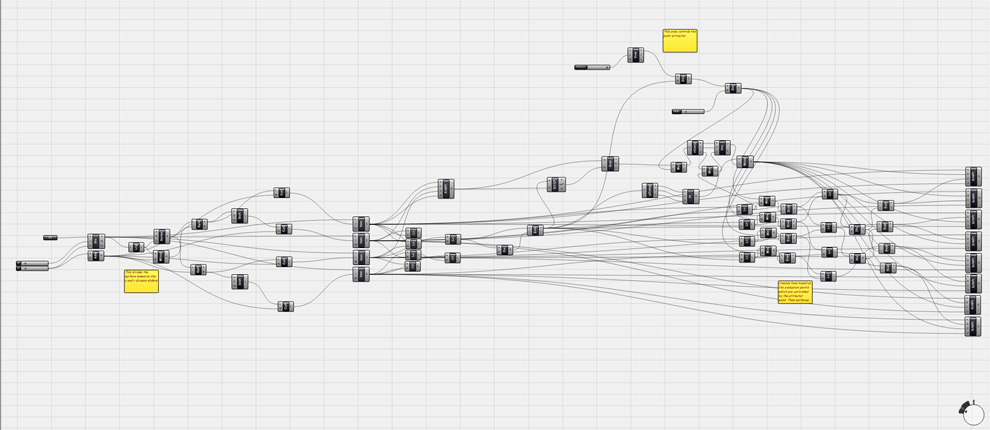
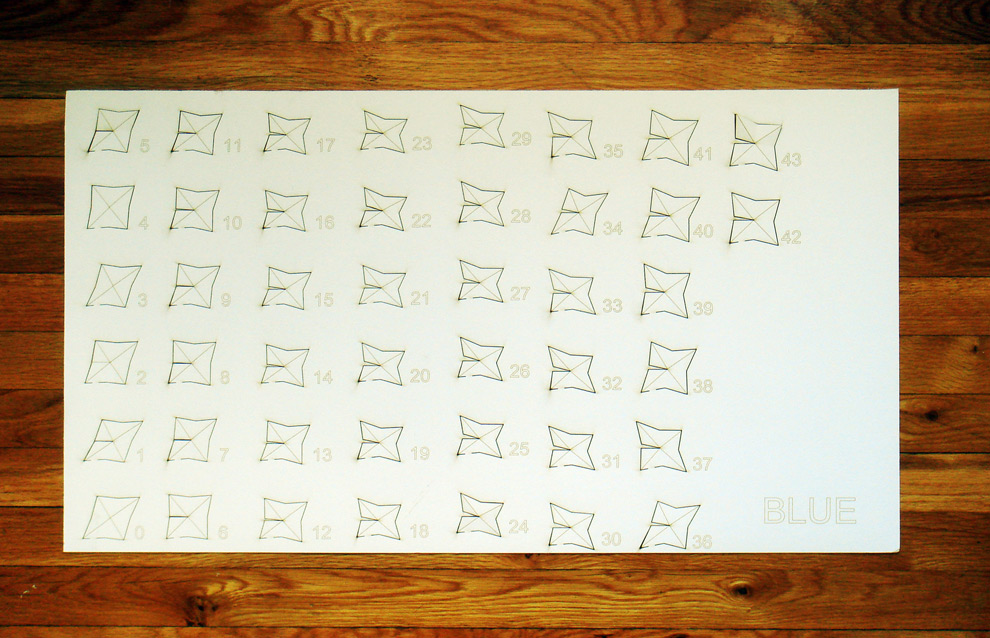
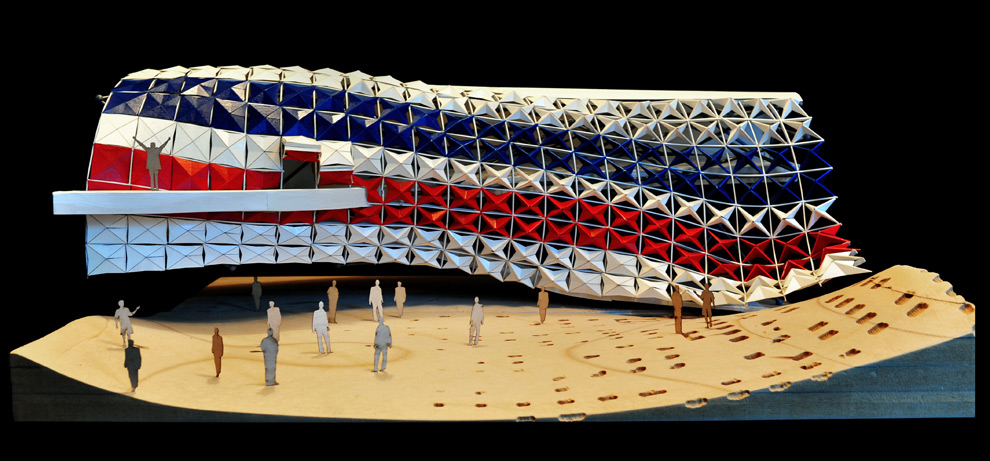
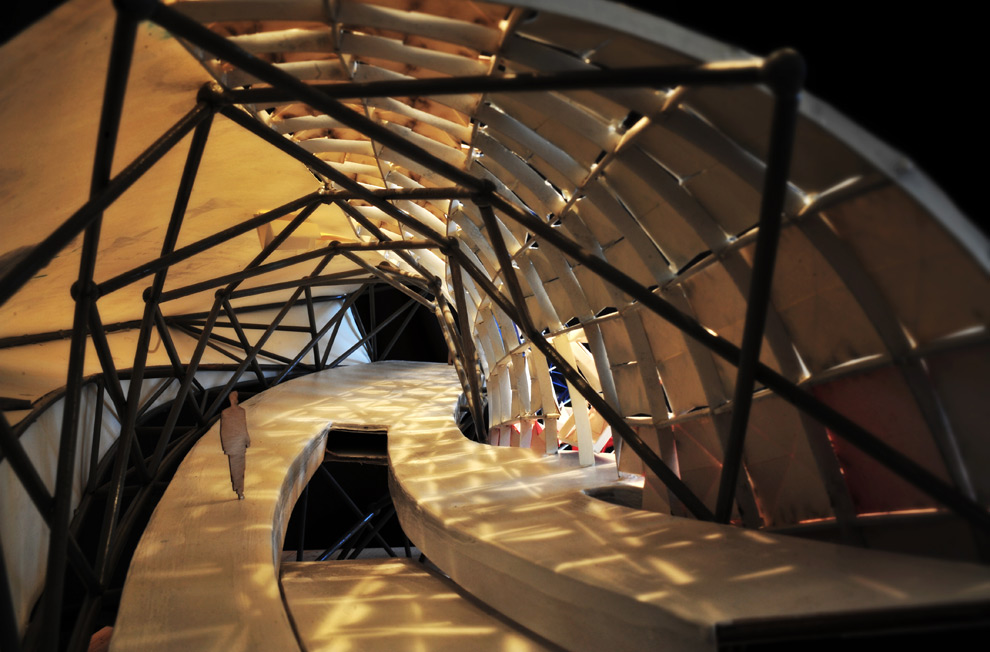
After my final model from last summer was somehow misplaced in the trash, then the compactor where it was crushed into a little cube before being placed in a trash barge a mere 36 hours before the final review, five months later the lazy days of winter break seemed like a good time to rebuild. One of the benefits of digital fabrication is you just have to re-lasercut all the files, though there is a certain level of zen like calm in folding and gluing 300 panels. The modular panels and truss were created in grasshopper, then scripted in rhino to unroll onto sheets.


model02
grasshopper
model03
model04

model06
model07

2009034 Tags: apartment, fabrication, furniture | No Comments »

sticks and stones

fab021


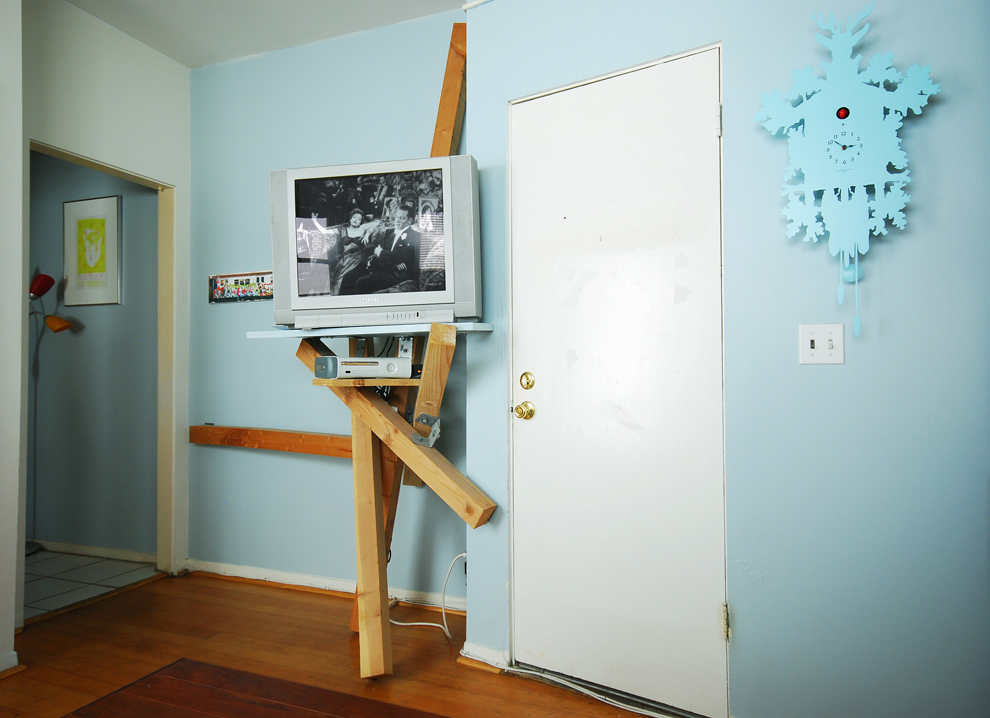
Of the many things from Venice that I miss, this guy I built slinking around the apartment is a big one. Though our new tv-less apartment works pretty well too.


more »

2009034 Tags: architecture, fabrication, gsapp, school | No Comments »

pavilion fabrication

fab01


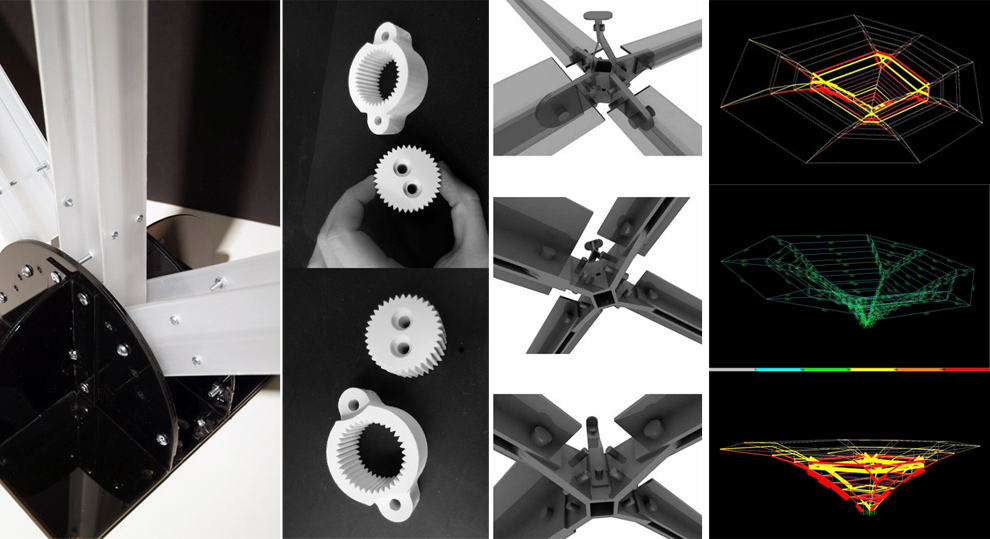
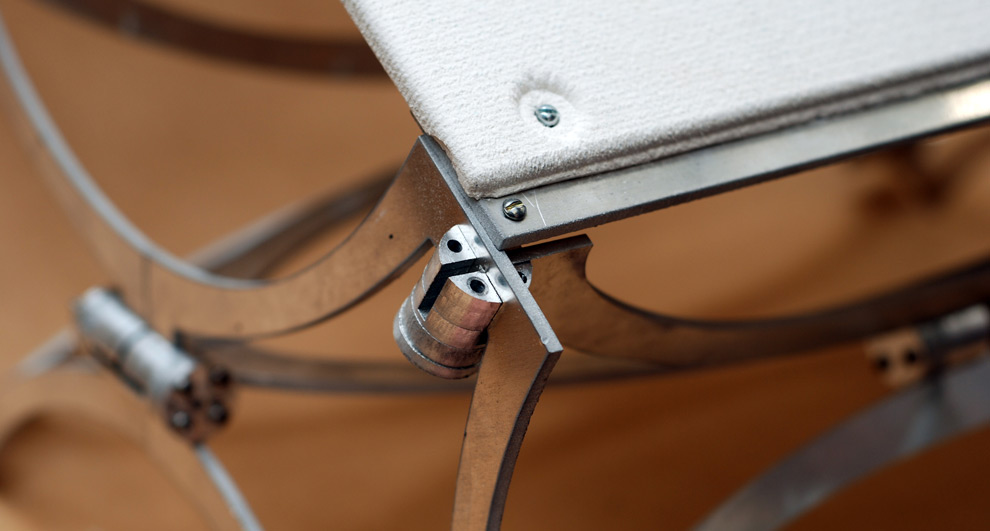
We had free range of the lab last summer, and tried to use as many of the machines as possible: waterjet aluminum, foam milling with plaster casting, and metal cnc milling of a 1″ thick slab of aluminum (inaugural use!) for the joint capsules. It all came together in five minutes, ten minutes before the presentation.


The project team also included Brad Engelsman and James O’Meara


more »

2009021 Tags: fabrication, gsapp, school | No Comments »

glueless joints

fabrication1


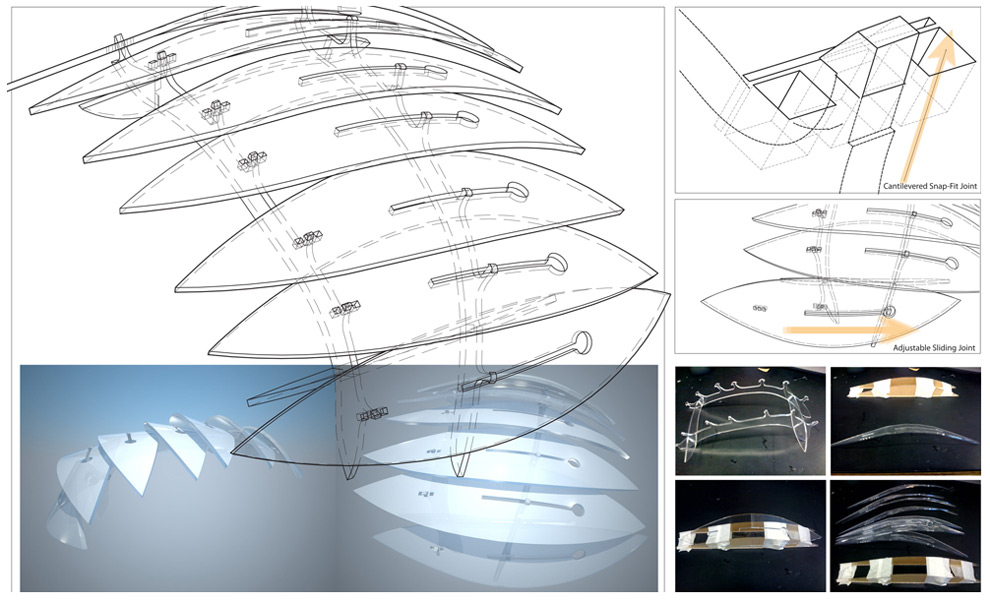
A very early fabrication project using laser cut plexi and the heat bender in the shop. It was super difficult to get a smooth deformation on the petal forms – using a heat gun to slump the plexi over a form would have been far superior.

Newer Entries »

COPYRIGHT © 2011 \ JOHN LOCKE \ ALL RIGHTS RESERVED (RSS)

TOP OF PAGE

last update: 201102:1627