JOHN LOCKE, ARCHITECT

  • Featured Work
  • Design Blog           
  • Photography
  • Graphic Design
  • Dept of Urban Betterment

About

Hello. I live in New York and work at The Living. I hold a graduate degree from Columbia University's GSAPP and an undergraduate architecture degree from the University of Texas at Austin. I have more than seven years of professional experience at noted architecture firms, including New York-based Rogers Marvel Architects and SOM. I also tackle freelance graphic and photography work with my partner in crime, the multi-talented Jackie Caradonio at Lion in Oil. In addition, I teach a course, Hacking the Urban Experience, at Columbia. View my CV here: CV(html). Thanks and have a nice day.

Contact

john.h.locke{at}gmail.com
310.735.3333

Architecture Portfolios

Portfolio 2002-2007 (issuu)
Portfolio 2008-2009 (issuu)

HOME / BLOG

kinne

20100430 Tags: gsapp, kinne, photography, research, writing | No Comments »

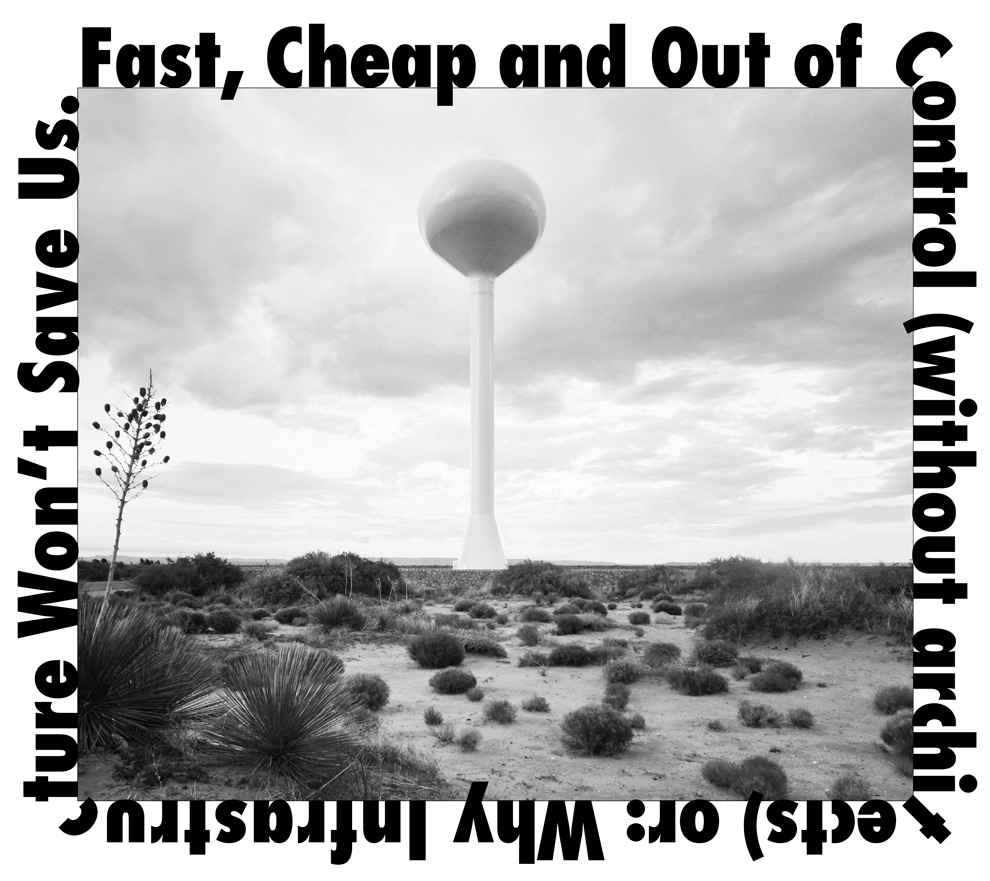
fast, cheap and out of control (without architects), or: why infrastructure won’t save us

titlepage1


view google map


My final submission for the Kinne Research Fellowship at Columbia. Keep in mind this is the first part through the American Southwest and Northern Mexico from late last summer (!), the second session in Mexico City is still looming on the horizon.


Fast, Cheap and Out of Control is research through observation: structures, installations, natural landforms, urban growth and manipulated landscapes constructed in the blank slate of the Southwest Desert. A place where time stretches from Planck’s constant – used to record the chain reactions that produce an atomic detonation – to Robert Smithson brushing up against the infinite on the Great Salt Flats, all of which is tested and implemented under the powerful spell of the Western landscape – a strange entity mixed in with notions of nation and empire, bravery and myth, history and fiction.


The result of a six-week exploration in the form of a road trip lies before you in an ambling, somewhat desultory first-hand narration of a nomadic journey across the desert’s offensively vast spaces. Situated between the region’s fragmented vignettes of activity, I attempt to resolve the disparate nature of the desert’s strange, isolated events into a coherent narrative.


See the edited book above, or browse some of the original posts/chapters below:

Donald Judd and the myth of Marfa
Peace through deterrence in the underground titan missile silo
Improvisation at Arcosanti
The hyper fictional landscape of Tijuana
Ballard and the Spiral Jetty
The border wall that no one wanted
De Maria’s Lightning Field and Tourism
Water rights and development in the El Paso Colonias

20100224 Tags: kinne, photography, texas, writing | 1 Comment »

giant

marfaprada


“Take the whole family to Marfa, Texas, ‘the Jonestown of Minimalism.’ See Donald Judd’s bed! Eat food all the same color! Scare the locals! Win a date with John Chamberlain!”
Text from John Waters’ Visit Marfa poster from 2003.


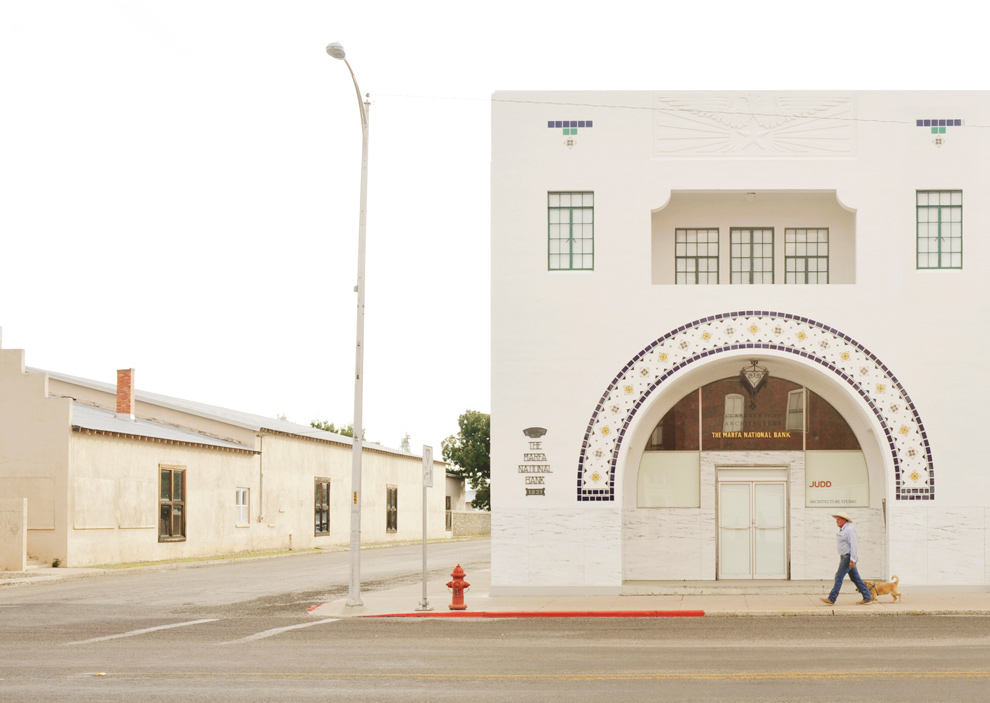
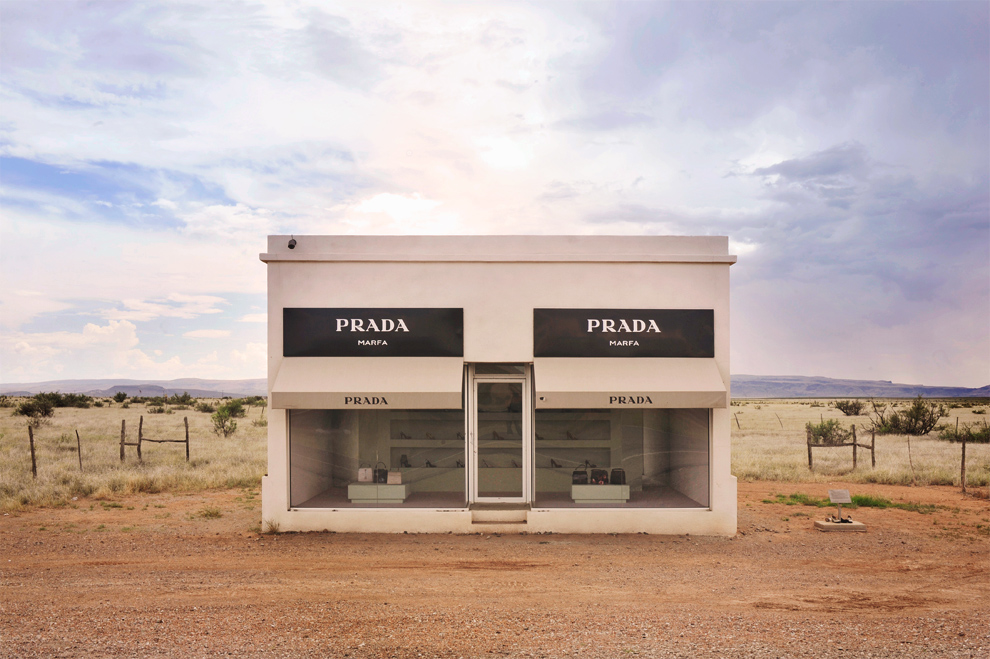
Marfa was my last stop on the Kinne trip. A small town in the Big Bend region of West Texas, three hours south of the major east-west Texas Interstate, the region could be best described as isolated. You know you’re getting close to this 1.6-square-mile town when, if you’re driving from El Paso along US-90 (which you probably are since El Paso International is the region’s nearest airport), you see amongst the desert scrub, derelict oil derricks, lonesome cows, and sagging half-dead towns a squat, free-standing Prada store along the highway—an entirely unwelcome site along one of the greatest drives in the country, through a hauntingly empty lunar landscape sporadically interrupted by violently vertical low mountain steppes. While the window display of this Prada outpost is stocked with bejeweled leather handbags and four-inch peep toes, this isn’t any Italian couture outlet. Rather it is a 2005 art installation, a wink-wink one-line joke that is trying to say something about the current state of Marfa as a nexus of art and commerce. You see, art came to Marfa, and the Pradas weren’t far behind.


Ok, here’s the best story ever told about Marfa as written by the incredible Molly Ivins. It’s certainly apocryphal, but like all rumors and Texas tall tales, hints at a deeper truth. The booming oil-soaked West Texas towns were drying up in the severe recession of the early 1980s, a time in which poverty and unemployment were threatening the existence of a region that was built on the outdated, newly-modernized, and moved-away twin pillars of ranching and oiling. That is, except for Marfa. Thanks to a transplanted New Yorker, the minimalist sculptor Donald Judd*, Marfa had a back-up revenue stream— minimalist art, and lots of it—that was starting to lure a steady flow of nascent tourist dollars into the town. Word spread through the region that people from miles around, all over the country even, were starting to show up in Marfa with open wallets. And some of these new visitors were sticking around, fixing up old buildings, maybe even adding a coffee shop here and there. Before you knew it, Marfa wasn’t an old dying town, but a thriving one. As Ivins tells it, West Texans all over were intrigued by these new foreign visitors and wanted more of them, and a familiar sight started occurring at economic development town meetings in the region: “some old rancher is apt to stand up – big old rough hands curlin’ up the brim of his cowboy hat with embarrassment over having to speak in public, of course – and inquire earnestly, ‘How do we get them gay people to come?’”


*Among the many things the taciturn Judd disliked in his life, being referred to as a “minimalist” was a big one. He preferred to call himself an “empiricist.” He also rejected the term sculpture because of the implied sense of carving.


Now, some 25 years later, here is Marfa resident Christina Dreyfus quoted in the May 6th, 2007 Fort Worth Star Telegram: “With all of the new people coming, it seems to me that the place is going more and more for the tourists and retirees….The regular Joes on the street can’t afford it anymore.” For practical purposes, everyone knows what gentrification is. As usual, though, there’s more to it than the simple story of what is occurring in places like the Lower East Side and downtowns all over the country. Look at the case of adobe homes in Marfa. An original adobe structure is typically seen as difficult to maintain due to the poor state of wiring, lighting, and eroded material efficiency. Most residents are much happier in a balloon framed, wood-siding house, if not a simple pre-fab trailer, and see the decaying adobe as a blighted nuisance. But, of course, to an outsider, adobe is authenticity personified, a rarity, something to be prized. No one wants to tell their friends in San Francisco that they own a clapboard house in Marfa. In the West of the imagination, adobe is king, and homes that were appraised at $40,000 are selling for upwards of $300,000. Priced out are the 36 percent of county residents who live below the poverty line, which has led to low-wage workers commuting long distances to Marfa, a town whose population hovers around 2,000.


It’s inevitable that this juxtaposition of Marfa over time will lead to unavoidable and overly sentimental questions of the proper means by which to achieve civic renewal. The trope that what came before is certifiably better, that finding superiority in someone else’s traditions is morally more correct than embracing the new is certainly annoying in its own self-regard. But, before we go any further, let’s acknowledge that those questions regarding the value of art, gentrification, the economic and political implications of tourism, and race are bound up in an extremely complex and difficult mass, and get into a whole subjective field of issues that try to resolve what’s best for other people and what produces a vibrant and healthy environment. However, it’s impossible to fight the sentiment that the new Judd congregations are fundamentally out of synch with the idea of West Texas as a bastion of authenticity against the trendiness and fleeting fashionability of the art world. This can only be further reinforced by the steady stream of Hollywood celebrities that have been flocking to Marfa, chasing down the next Santa Fe, Taos, or Sundance, in a perverse distortion of Frederick Jackson Turner’s “frontier theory,” constantly finding and despoiling the last towns untouched by Wal-Marts and Applebee’s, while happily paying the astronomical prices that have driven the cost of everything from real estate to Blue Bell ice cream to staggering levels. This leads to one of the strongest reasons to denounce urban renewal, which is the range of civic activities destroyed by the removal of communal physical spaces caused by the homogenization of the town when all but the rich are pushed out. The neighborhood cafés, feed stores, and groceries that have been supplanted by coffee shops, art galleries, wine bars, and organic markets are a manifestation of the notion that locality begins with social life. Longtime cafés popular with locals have been forced to move off of the main street, segregated from the artist class. It had been eight years since I was last in Marfa, and the changes that have taken place in that time can only be called extensive, best personified by the Thunderbird Motel—what had once been a comfortably run-down (and eminently affordable) place to stay had morphed into a $150-a-night boutique hotel—which could most accurately be described as renovated in the South Austin style, which is off-putting in a generic Dwell kind of way.


A temporary, nomadic population of vacationing, summer residents, lifestyle tourists, and MFA interns, a group whose closest attempt at civic engagement came when they banded together to stop a planned big box development that was within eyesight of the Chinati Artist Foundation. An attractive, affordable residential and commercial development that one can’t help but assume the 36 percent of Marfa residents that live below the poverty would have preferred to a contemporary art mecca. Gentrification produces a shallow architecture that produces as poor neighborhoods as blight – suffering from a lack of citizenship and homogeneity between rich and poor, but in this case leads to an anti-development stance that keeps the town in a perpetual state of acceptable rusticity. It’s a tough equilibrium that has to be maintained to prevent the town from slipping into the anywhereness that causes the influx of monied residents to occupy an inherently anti-democratic stance as they exert undue influence on development in spite of the majority’s best interests. So many monied elites, in fact, that one local cattle rancher succinctly described the current state of Marfa as: “Filling up with triple A’s — artists, assholes and attorneys.”  This finally leads to the ostensible focus of this entry, the one man who altered Marfa to such a widespread extent, and was neither urban planner, architect, nor developer, but rather artist: Donald Judd.
 

judd01
judd02


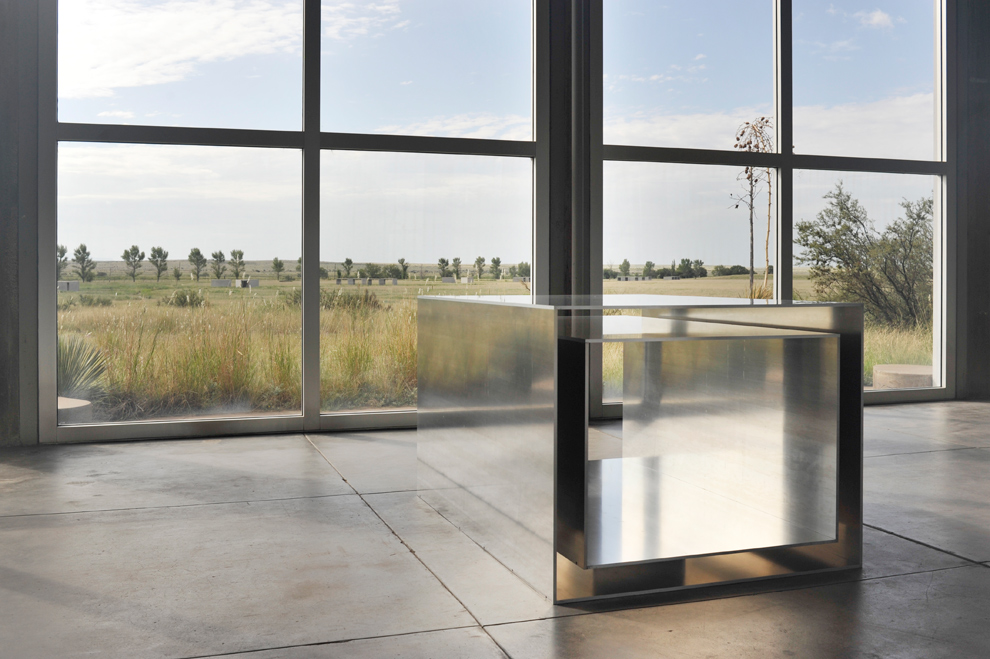
John Waters’ satiric take on Marfa is funny for many reasons, most specifically the bubble lettered exhortation to “See Donald Judd’s Bed,” which you can in fact see. (I personally chose to forgo this portion of the tour, but by all accounts, Judd’s bed appears a comfortable nest among a scattering of decidedly non-minimal western kitsch furnishings.) It’s a perfect example of the subversion of minimalism’s aesthetic objectiveness and impartiality into a dedicated cult of personality and a triumph of the pseudo-spirituality found in zealots of minimalist objects. One can’t help but make the comparison that this is Elvis’s Graceland for the Whole Foods set. Not only is Waters referring to the man, but the designed object of the bed. In his later years, Judd turned to designing furniture with a simplicity that shared much with his art. The object of the bed becomes a shrine to minimalism’s end-point as merely good design, and the reason the quiz “Ikea or Donald Judd?” is now so difficult.


By all accounts Judd was an asshole, but he made an honest effort to assimilate into the secluded ranching community he found in Marfa when he moved from Manhattan in 1971. He always hired local workers and paid a good wage. But the gulf between outsider and local was too vast, and even Judd himself, the harbinger of the aesthetes, was unsatisfied with what he had wrought. In a continuing, and ultimately futile quest for the frontier, he left Marfa for a ranch further south near Terlingua where he spent the majority of his last years. He could never own enough land or buy enough property to attain whatever plateau of assimilation he strived for, and the Chinati Foundation was left to manage his vast holdings and artwork in Marfa. The Chinati Foundation is where I found myself on the morning of my 10 o’clock scheduled meeting time to rendezvous with a group of strangers and view Judd’s installations, as well as a number of other artists with whom he was friends and whose work he championed, including Dan Flavin and John Chamberlain.


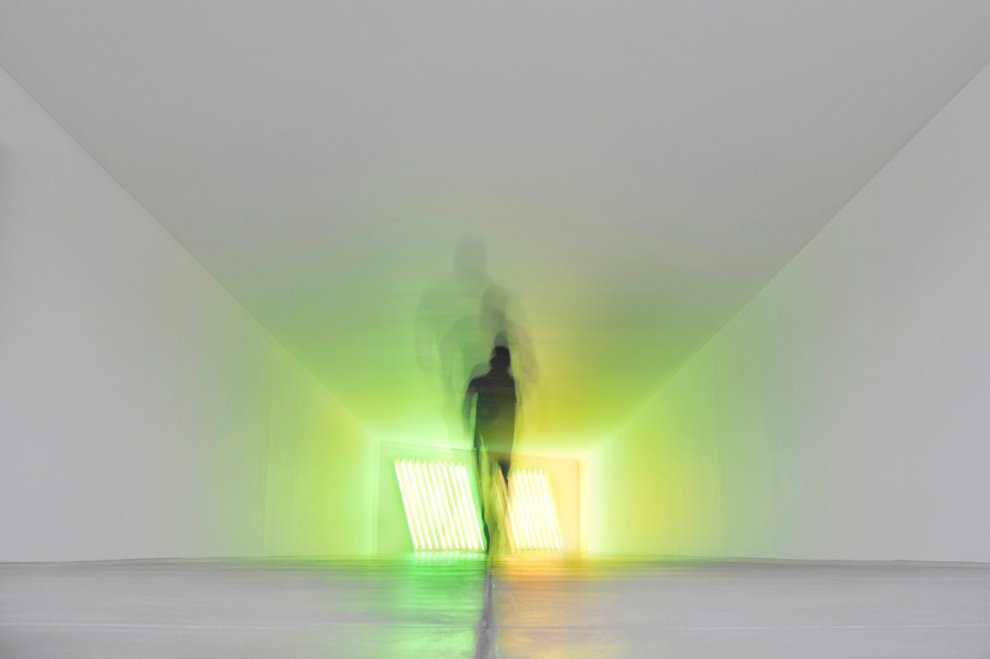
Here’s the thing: it’s all about how you experience the art. I think this holds especially true with land art. Amidst reports of 20th century museum goers who have wept in front of paintings, art historian James Etkins set out to objectively classify a number of factors that would induce an optimal setting to produce “strong encounters with works of art.” Among them are seemingly obvious admonitions: go alone, don’t try to see everything, take your time, and minimize distractions; as well as more vague concepts: be faithful, pay full attention, and do your own thinking. The reason these bear mentioning is that the Chinati Foundation disregards all of them. Firstly, being part of a large group is a prerequisite for touring the grounds. There are probably some instances where moving through a museum as part of a group of strangers is a good thing, but here it is questionable—especially when the tour begins with a mother of three bored-looking kids asking the volunteer guides how many exhibits we have to see. The fact that this exchange takes place literally in the shadow of a Donald Judd pretty much sets the tone for the entire day: a harried herding through a number of repurposed buildings, and disapproving looks from the rest of the group for slowing them down in the Dan Flavin rooms.


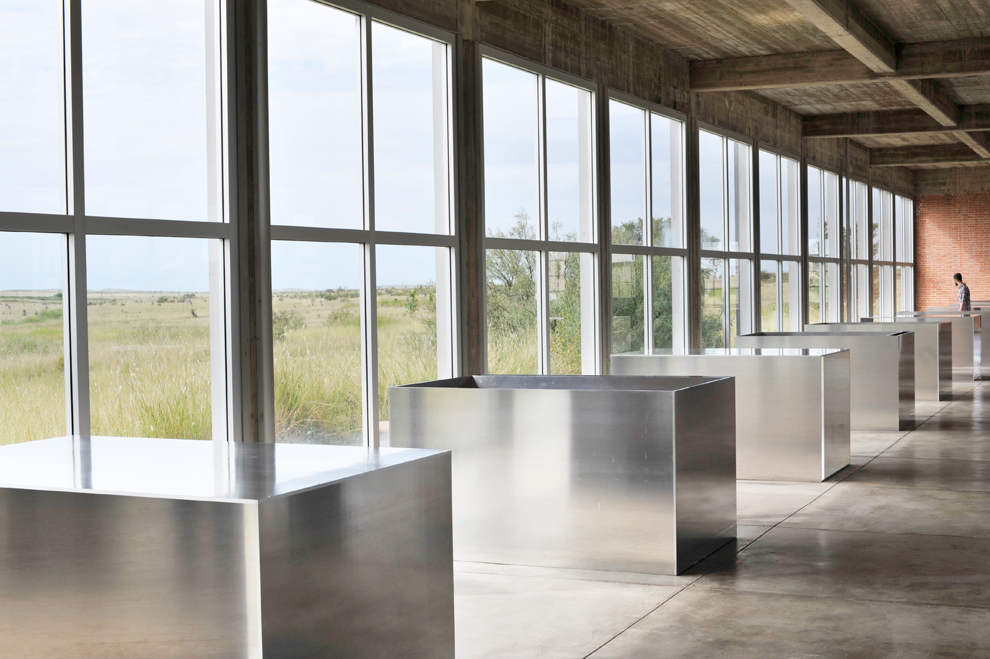
Chinati is smart enough to start the tour with their best—Judd’s 100 untitled works in mill aluminum (1982-1986). The boxes have a certain refinement and elegance about them that is impossible to deny. Judd was a master of minimalism, a movement that is too easily and lazily derided for being ‘boring’ or ‘bland’ (think Carl Andre). No one could repudiate the careful time and skill that went into crafting the field of aluminum boxes into a successful example of less-is-more. But it is the boxes’ mere beauty that, to me, denied them true power. Notions of the sublime and picturesque were first codified in Edmund Burke’s 1756 essay in which he set out to differentiate that which is simply beautiful as opposed to that which is truly great or sublime. Beautiful objects are those that are “comparatively small,” “smooth and polished,” while the sublime object should be “vast in their dimensions…rugged and negligent,” “the great ought to be dark and gloomy…solid and even massive.” To put it another way, the Lightning Field is sublime, Judd’s boxes are just precious. DeMaria’s field of poles is physically and mentally disorienting, you can get lost within its vast scale, and the humming of St. Elmo’s glow at the tips hints at the latent electrical energy contained within the poles. In New Mexico, the polished steel of the lightning field is left exposed to the elements in the desert hardpan, giving the whole field a muscular vulnerability, while Judd’s boxes seem weak, entombed within the sterile, repurposed shell of a former army barrack.


The shell also works against the implied perception of the infinite field. However the qualities of a limitless industrial material like milled aluminum only enhances the notion that these boxes are a swarm of a whole that is beyond comprehension, like “sections cut from something infinitely larger,” as Judd stated in his Specific Objects in Complete Writings. It is standard to discuss the critic Michael Fried and his critique of minimalism’s perceived theatricality when talking about Judd—specifically his aluminum boxes. In Fried’s view, Judd’s use of such coldly industrial materials in a banal array denies the viewer the safety of a recognizable ‘art’ object and therefore requires the physical participation of the viewer to activate the work. Chinati would seem to be denying this interpretation by regulating that groups tour the boxes at approximately 10:45 every morning. The summer sun in west Texas is still relatively low at that hour, and, in rejecting the opportunity to experience the metal as it changes with the day’s light, Chinati ignores the theatricality of the objects, instead reinforcing the notion that the Judd boxes need neither viewer nor gallery. They need only the space of the military barrack—the golden light of dawn and the harsh high noon sun are inconsequential to the reading of the work. Again, a comparison to Lighting Field is in order. Where de Maria required the visitor to spend 24 hours with the work, Chinati asserts that 15 minutes in harsh, unchanging light is sufficient, and one is left to only wonder at the brilliance that could be seen in the golden glow of a Texas sunrise. Walking amongst the mute stainless boxes, I was reminded of the sunrise in New Mexico, and Marfa can only pale in comparison to that powerful experience.


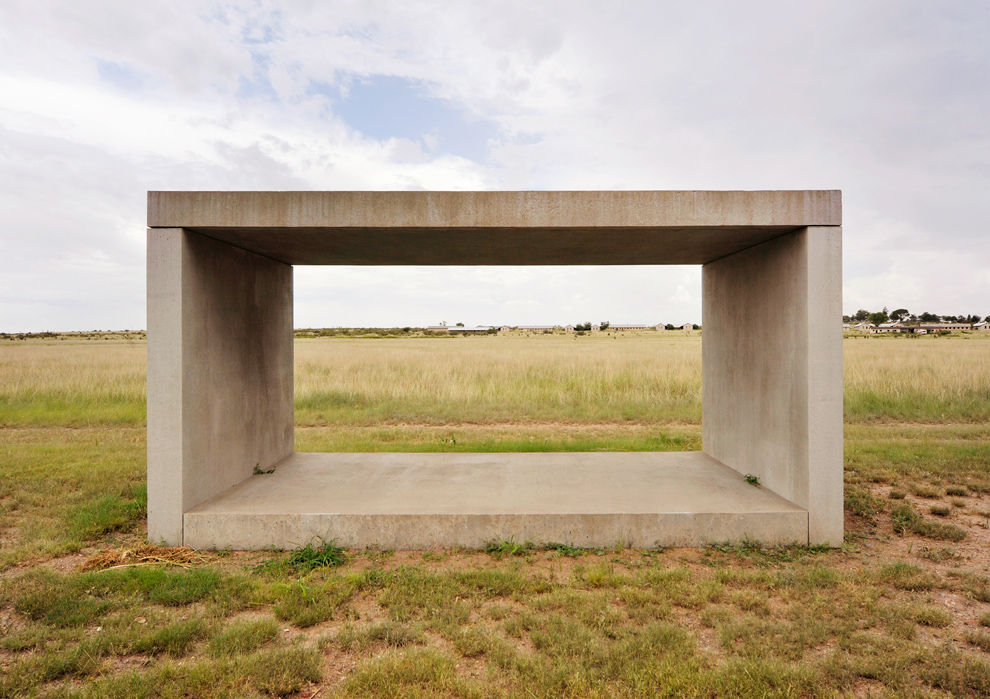
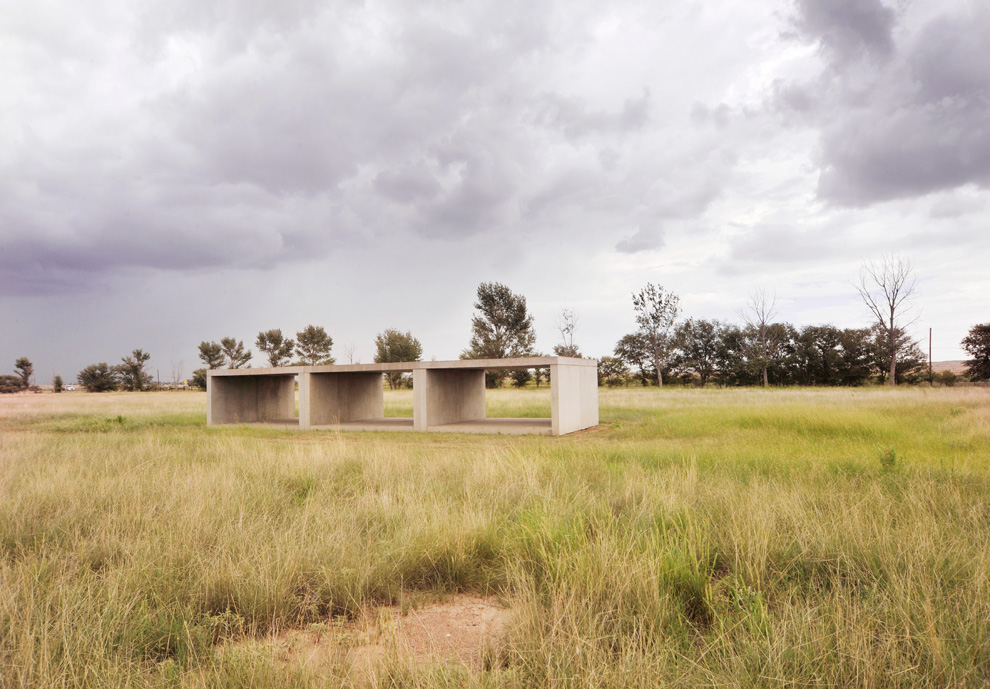
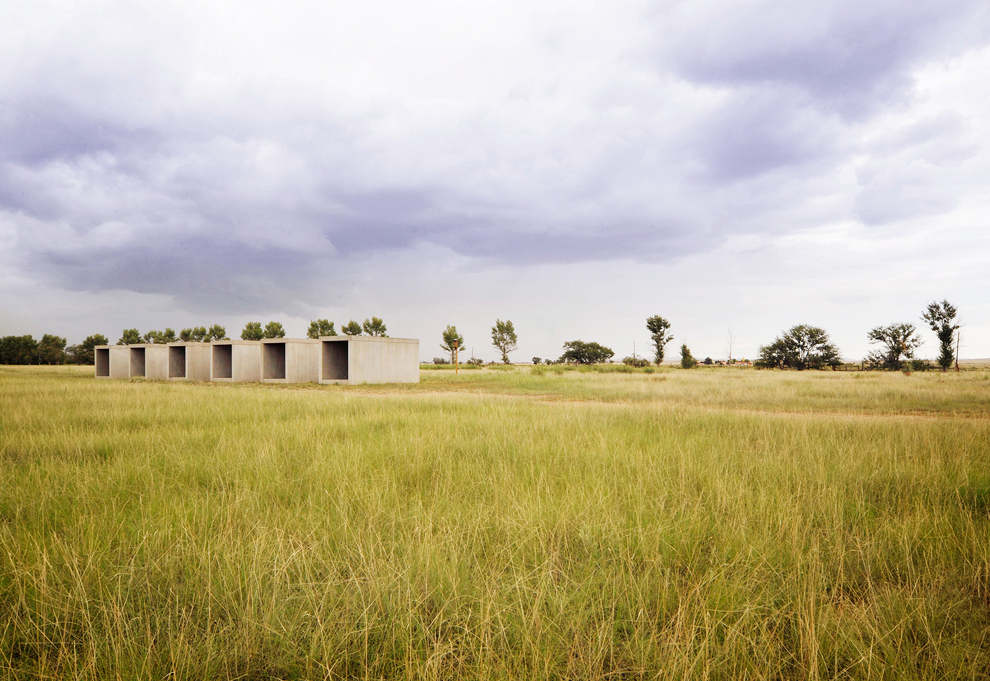
Judd’s latent power comes to the fore in the 15 large-scale concrete works scattered across a field of tall prairie grass at the edge of the Chinati grounds. Here the viewer is free to move about at their leisure (the cubes are not part of the official Chinati tour), alone in the landscape. The cubes are varied, massive, and fighting a battle with the environment. The struggling chutes of weeds peeking from between the joints of the slabs produce the feeling of vulnerability and a more symbiotic relationship with the landscape. Alone on the isolated West Texas plains, with only the architectural scale cubes for companionship, you briefly forget that you’re in the middle of a small town full of people struggling to live their lives. And you suddenly have faith that art can be great. Judd said “Art has a purpose of its own,” and you can’t imagine it existing anywhere but here. And if a Wal-Mart threatened to appear across the highway in this last untouched paradise, it would be an abomination worth fighting against. But Judd also said that “society is basically not interested in art,” and he was wrong. The last 25 years in Marfa prove him wrong. Regardless of society’s interest, art is there driving the market. In the end, one is again reminded of another box, the box of the Marfa Prada along the highway. Because the Judd boxes aren’t really empty, they are selling another product for consumption. The product that is for sale within the concrete bunkers or the cool, steel boxes aligned in a row like a showroom, is no less real than that which is imprisoned within the ersatz Prada store up the road. Only what Judd is selling is less tangible, more elusive, but still real: a lifestyle imbued with authenticity, good taste, and affluence. I could feel the pull, the easy choice, but ultimately it was something I couldn’t afford.


And with that, I drove back east.
 

judd00
judd

flavin

20091127 Tags: kinne, photography | No Comments »

I [] Judd

marfa

20091018 Tags: kinne, photography, texas | 1 Comment »

marfa, day one

marfa01
marfa02
marfa03


You can see that Donald Judd literally has his name all over the town of Marfa.

20091015 Tags: kinne, new mexico, photography | No Comments »

white gypsum dunes

whitesands01
whitesands02
whitesands03


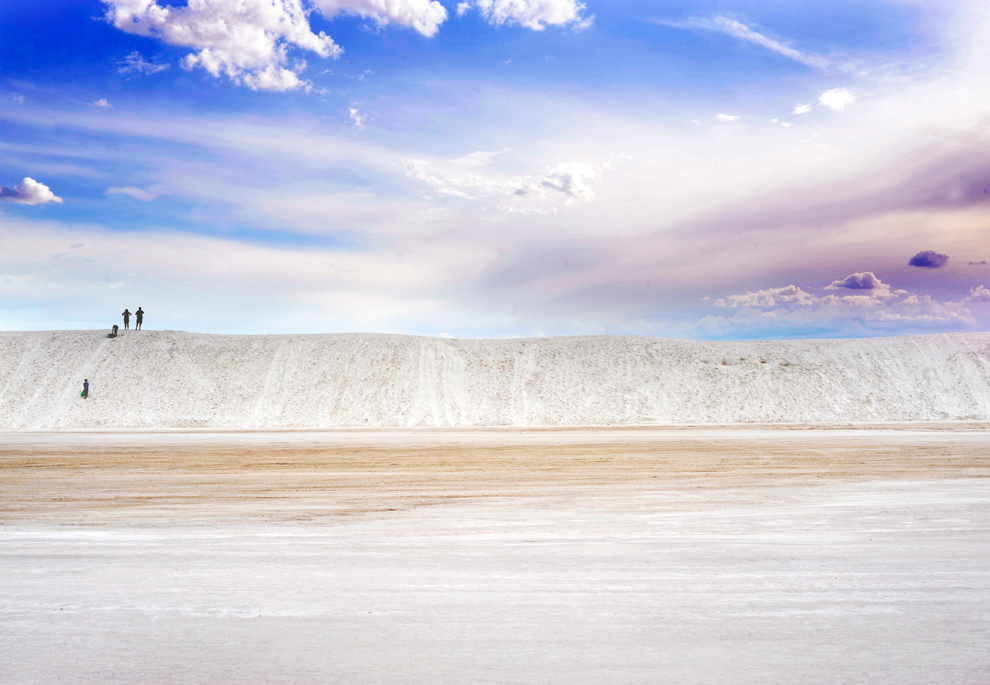
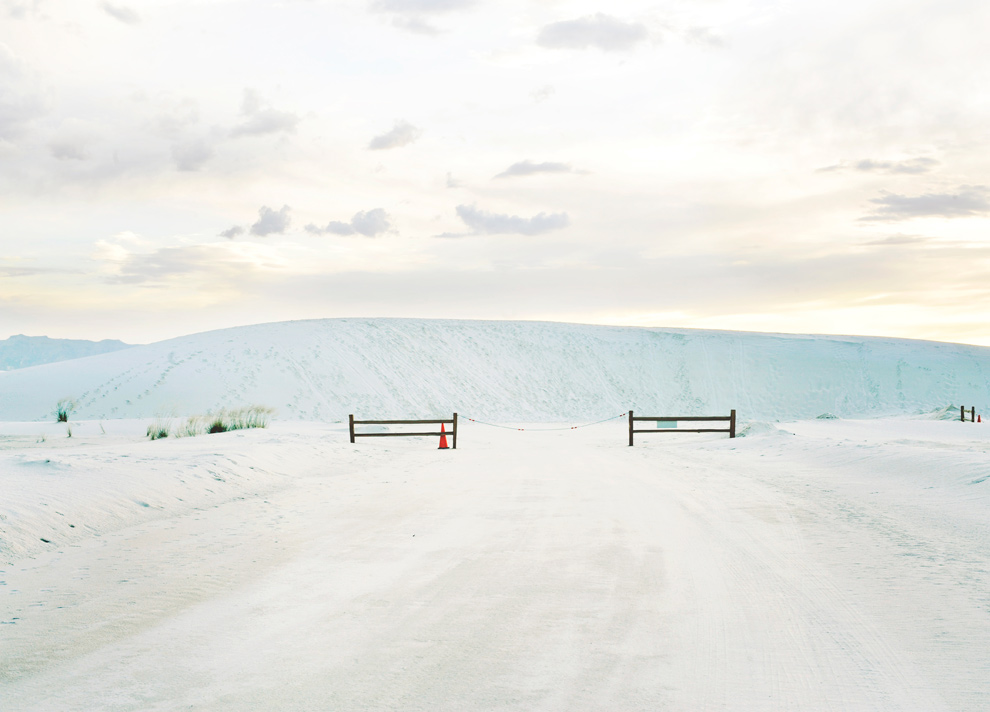
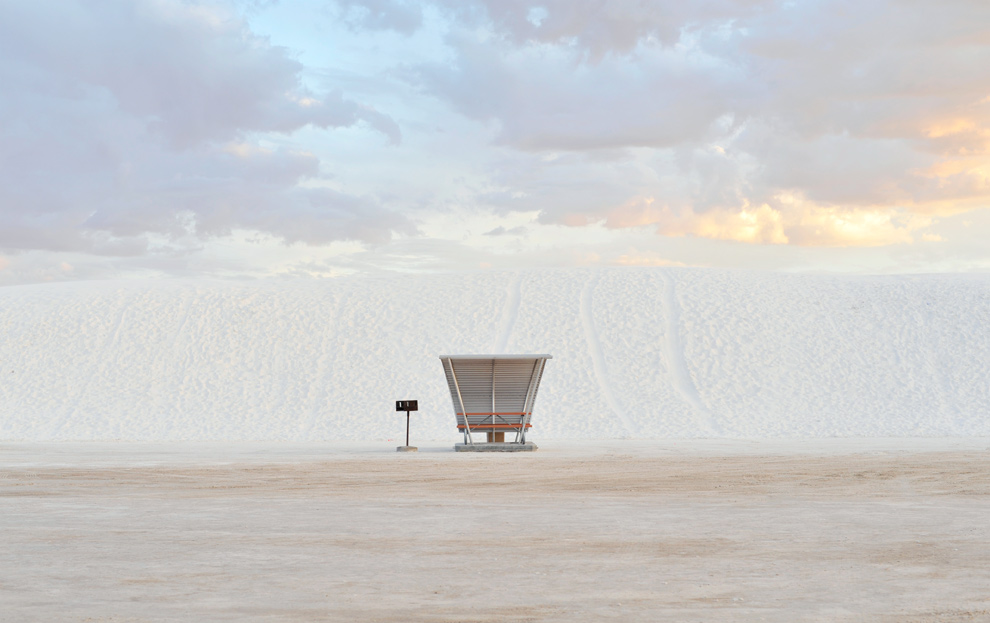
White Sands National Park is located within the White Sands Missile Range. Meaning that during test launches the park is closed down to prevent any errant missiles from taking out a family sledding down the dunes. Luckily for Jackie and myself, the park was open all day and we had free range to explore the gypsum sand dunes. At the day’s finale we were rewarded with the clearest, most saturated sunset I had ever seen. Calling it a computer-enhanced, ray-traced image would be an understatement.


more »

20091014 Tags: kinne, missile, new mexico, photography | No Comments »

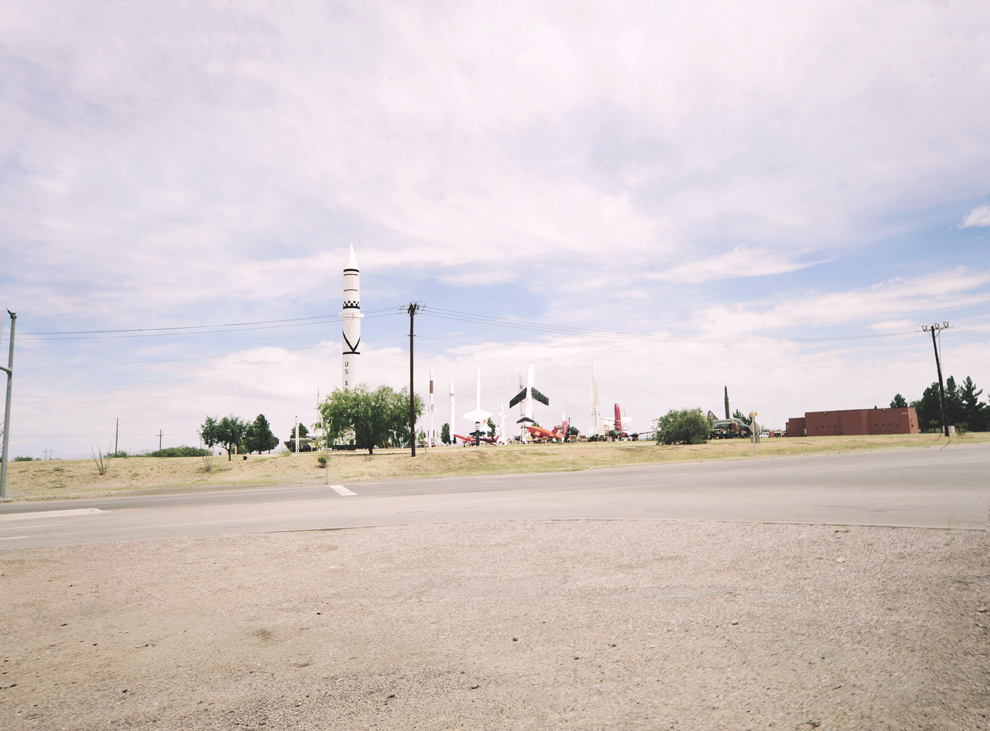
missile parks and crater urbanisms

missile01
missile02
missile03


I meant to post without comment, but I’ll say two things, briefly:


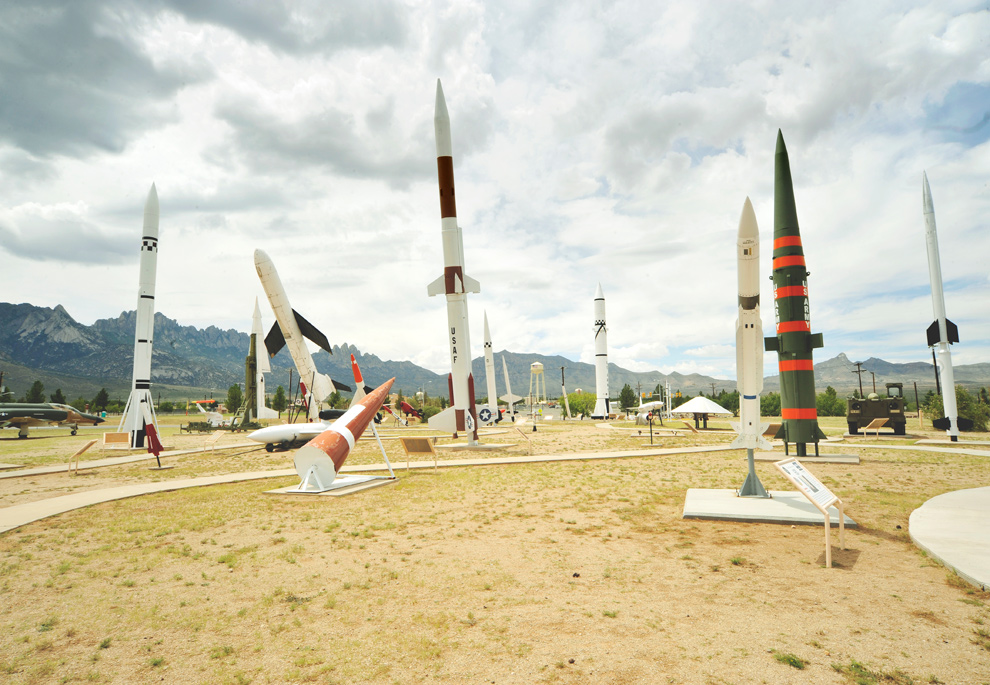
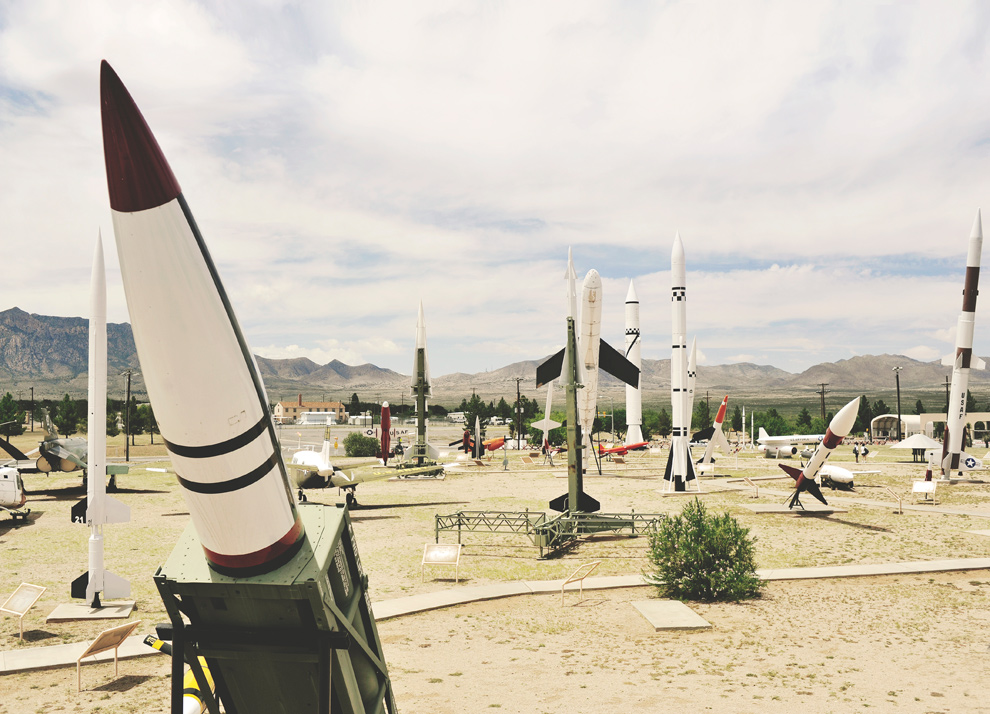
1) New Mexico, Land of Enchantment, is where the nuclear era really began. Specifically here at the White Sands Missile Range (WSMR), the country’s largest military installation. In the words of architect Nick Sowers, WSMR is the “massive tract of google-map-grey-space measuring one hundred miles north to south and forty miles wide. This is the ultimate war games playground.” And while the trinity shot heralded the birth of the nuclear world, New Mexico has also become the nuclear grave. With the Obama administration’s closure of Yucca Mountain in Nevada for storing hot nuclear waste, sites in New Mexico are being prepped for long-term storage (seriously long term, the U.S. Federal Court set the threshold that DOE needs to prove a site storing nuclear site will remain safe at one million years) of nuclear waste. As Scientific American points out in last months article “Is There a Place for Nuclear Waste?“, the politics of geography has changed. With a Texan in the White House, nuclear dumps in the Lone Star State were out of the question, and now that Obama narrowly carried Nevada on the promise to close Yucca, New Mexico is looking pretty tempting. Much like Turrell endlessly hollowing out the Roden Crater to transform the earth into a cosmological art experience, the Department of Energy is concurrently busily hollowing out mines around the Chihuahuan Desert near Carlsbad to bury spent nuclear waste more than 2,000 feet below the hard pan desert surface.


2) Again, as at the Titan II Missile Museum or the National Atomic Museum, what was once classified top-secret becomes a proudly public presentation, that is not so much a museum, but rather stands as a monument to American scientists and engineers ingenuity and abilities to construct the best missiles, sending the greatest payloads over the longest ranges. Walking between the towering missiles here, the best word I can think to describe the sensation is “creepy.” The security checkpoint to get onto the base only serves to heighten the otherworldly feel of the place, which doesn’t seem to deter a steady stream of families from arriving at the “park” and laughing and taking pictures in front of some of the more dramatic missiles. The Lance missile mounted onto a half-track was a popular destination. The landscape is charged here not only the cordite of 45,000 explosions, but with something intangible, that is no less real. Something that artist Patrick Nagatani has picked up on and used to great effect in a series of photomontages titled “Nuclear Enchantment.”


Nagatani’s wry sense of humor keeps his exquisite photomontages from coming across as too heavy-handed or shrilly political. His works, including Nike-Hercules Missile Monument, shows crowds of Japanese tourists holding miniature, souvenir-sized replicas of the Nike missile looming in the background in a scene that would be heartbreaking if it weren’t also hilarious. His painted blood-red or radiated yellow skies also best convey the eeriness and utter insanity that lurks in the background of all these real-life sites. Each piece is like an ironic ode to the facade of normality that we all go through, living our lives in shadow of not only these missiles but a world that accepts the existence of nuclear weapons.


The missile park is a museum in the sense that the military is showing their past work, but hinting at the greatness still to come. If you see a video of an invisible, airborne Advanced Tactical Laser burning through the hood of a car and disabling the engine block, this is where it was filmed. Few can dispute that tactical laser weapons are pretty cool, but I only mourn that new killing instruments appear outside the perception of the human eye, leaving future generations to walk through the WSMR and miss the tangible quality of standing in the shadow of an Athena missile, touching the metal and steel rivets, admiring the proportions of the radially arrayed fins. Then again, maybe future progeny will be just as happy without the instruments of war proudly glistening in the desert sun.

20091010 Tags: kinne, photography, texas | No Comments »

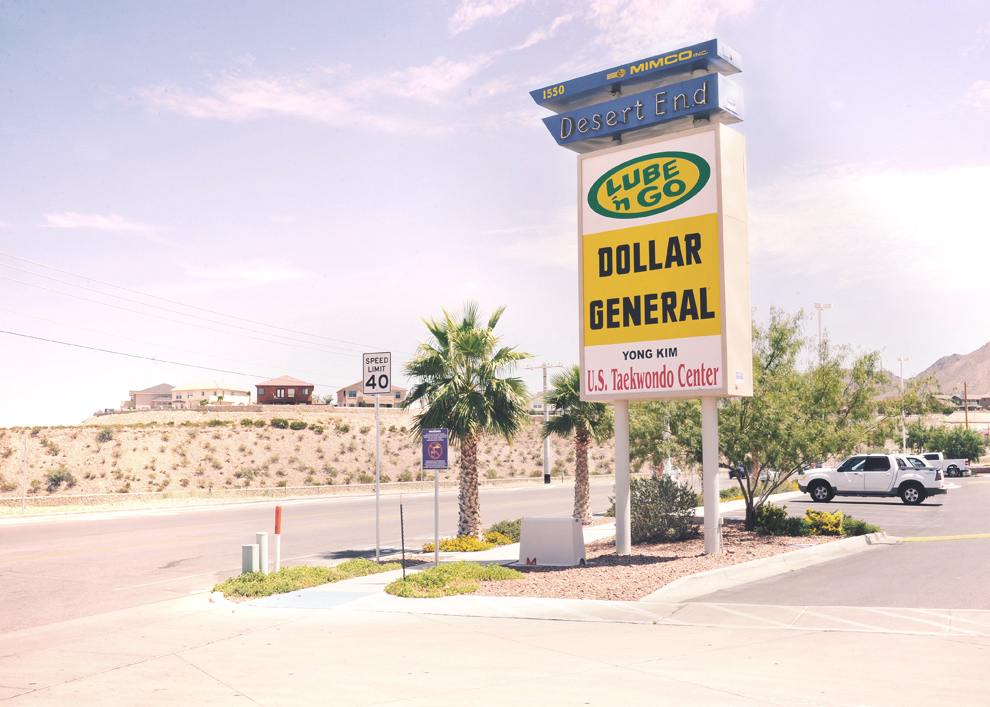
where the desert ends

desertend31


We were back in El Paso – again – for a few days, getting an oil change at the desert end. The warning sign states that “as part of the city’s water conservation efforts, this site is irrigated with reclaimed water. Do not drink water from irrigation system.”

2009106 Tags: kinne, missile, new mexico, nuclear, photography, writing | No Comments »

if they push that button, your ass got to go

titan01
titan02
titan03


“We shape our tools and afterwards our tools shape us.” Marshall McLuhan


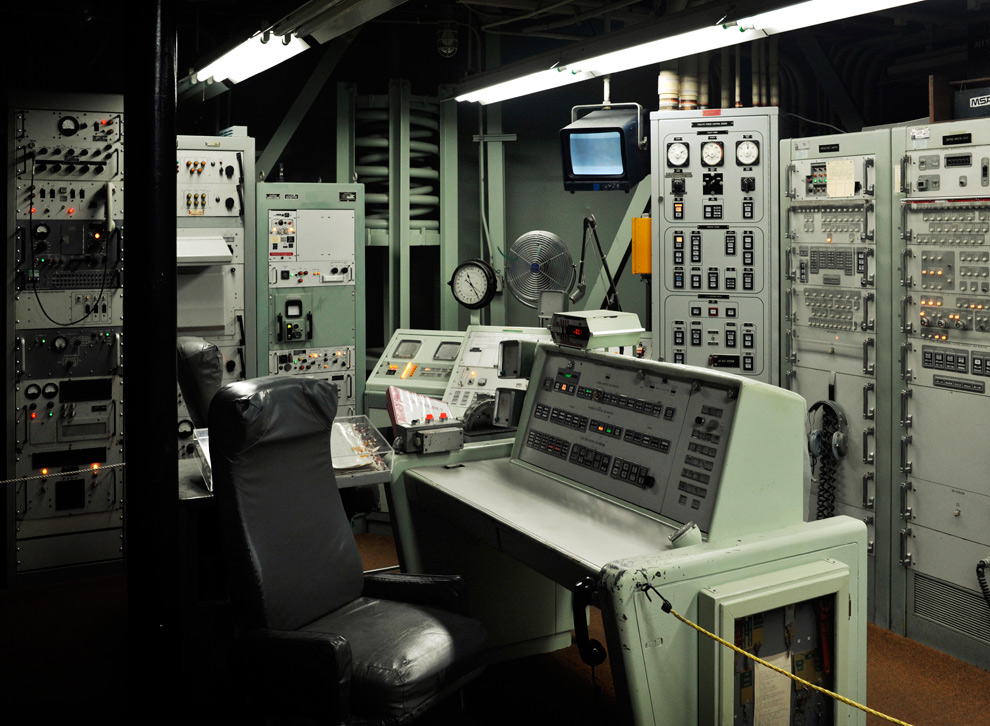
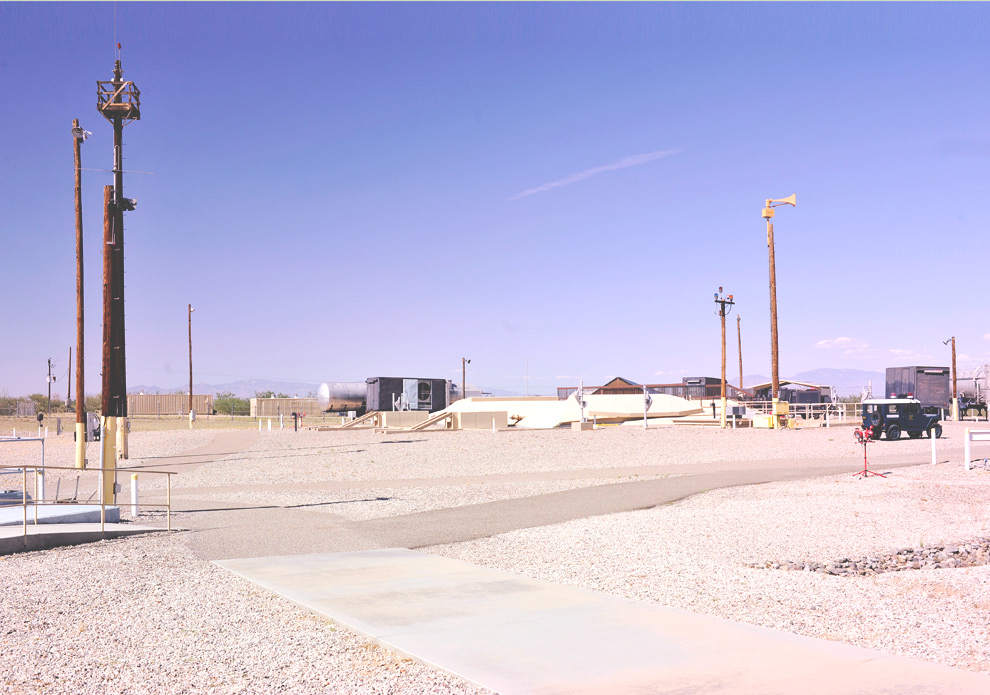
Twenty miles south of Tucson, buried beneath the desert hardpan, lies the most impressive of museums. The Titan II Missile Museum, the only ICBM missile silo open to the public, where groups of guided tours led by former U.S. Air Force crew members descend down into the underground structures and explore the facility comprising of the launch control center, the missile silo and the blast lock portal where you’re greeted with the 3-ton, 12-inch-thick blast doors. Inside is the Titan II Missile, 110-feet of riveted steel and technological precision. The absolute limit of technology, a nuclear-tipped missile created with the means to end not just war, but all existence, the world itself, at the push of a button. The most impressive thing about it is that the missile remains peacefully chambered in the silo, the launch orders were never received, and the missile never needed to fly. Peace through deterrence.


The oft-spoken mantra – “peace through deterrence” – occurs with such frequency throughout the retro-introductory video and the subsequent guided-tour, that one gets the distinct impression that the intonation references not just the geopolitical stalemate condition that was mistakenly labeled as “peace,” but also some kind of internal meditative state – an inner-peace – in the crew. No doubt a certain imperturbable composure is required for the type of person that volunteers for a job that requires a no-questions-asked-yessir approach to the command to destroy not just a far-off city but most likely civilization itself. After all, regardless of the technological brilliance in advanced airspace detection warnings and missile guidance technology, it all comes down to two guys, standing across from each other in an underground room agreeing to simultaneously turn their “fail-safe” keys, press a button, and launch an H-bomb-tipped ICBM. I asked our tour guide, who, by all accounts, seemed like an utterly reasonable, friendly human-being with a wry sense of humor, if he had undergone any especially rigorous psychological exams or maybe if he even had to undergo any false-positive drills by the military to test his mettle and ensure an unflinchingly appropriate response if the launch codes ever arrived. He responded that they were soldiers, drilled to take orders, but no extenuating psychological tests were necessary, because the overall “peace through deterrence”-ness of the mission guaranteed a clear conscious.


Granted, I didn’t grow up with the duck and cover films, the under the desk school drills, or the stockpiling of supplies in my backyard bomb shelter, so I feel so far removed from the general insanity of mutual assured destruction that the chasm of time renders the whole situation even more unreal and makes me feel even more skeptical than some of the older patrons on our Titan Missile Tour. And as futile as it probably is to try to find logic in strategic defense planning when nuclear weapons come into play, the whole “peace through deterrence” thing he’s clinging to screams of inconsistencies if you really think about it. Simply put, if the Soviets (or Chinese) launched a first strike, our deterrent capabilities were unsuccessful, so any second strike is simply retaliatory, launched in spite. The whole strategic defense mechanism was built around game theory – that a rational opponent wouldn’t call an ever-escalating series of bluffs. It gets interesting because deterrence doesn’t really require that anything actually functionally work – the missiles could just be a feint – but it’s the perception, the illusion that becomes reality, the truly frightening notion that the other side believes we’re crazy enough that we’ve got it in our collective disposition to throw down with World War III if the shit came down to it. That’s what makes “peace through deterrence” so reassuring. Not because of its paradoxical ridiculousness as a viable Cold War nuclear strategy (well, I guess it worked), but that it acknowledges that there is an inherent consciousness in our nation’s psyche. We needed it and this guy who worked the three-day shifts down in the silo needed it because, otherwise, you have to confront the reality that the whole thing is a deranged facade. Instead of looking into the terrifying abyss of nuclear weapons and seeing the end of the world, we managed to avert that by convincing ourselves that it was all for “peace,” a technological deterrent that let us off the hook, free to believe that a preemptive strike was antithetical to our very beings. Self-deception is generally assumed to be a bad quality. Here at the frontline of the Cold War it doesn’t seem like such a bad thing at all. In fact, I wonder if here it leads to a deeper understanding or revelation. That we’re the only nation to use atomic weapons against a civilian population makes it all the more heart-breakingly ambiguous.


Or, as the nuclear engineer states at the beginning of the Titan introductory film, “This is what it took to wage a nuclear war. And this is what it took to wage nuclear peace.”


It turns out that when Dr. Strangelove said that the whole point of a Doomsday Machine is lost if you keep it a secret, he could also have also been referring to obsolete, decommissioned doomsday machines. In accord with the Strategic Arms Limitation Treaty, the Titan’s blast doors have to always remain open, visible to Russian satellites. And in a testament to the resolution of orbiting Russian satellite imagery, the small yellow cutout in the missile head is large enough to reveal that the enclosure is devoid of any nuclear warhead. Of course, when the Titan II was equipped with a 9-megaton (the exact explosive tonnage is still classified) warhead from 1963 to 1984, it wasn’t really much of a secret then either. It was one of 18 other missile silos based around Davis Monthan Air Force Base that were visible to satellites. The more impressive-looking they were, the greater their deterrent value, and the more tempting a target they became. This also had the effect of turning the adjacent, sleepy town of Tucson into a strategic nuclear target, and the people that lived there knew it. The majority of visitors to the Titan Museum are locals. Having lived a good portion of their lives in the shadow of an ICBM, they now take advantage of being able to walk around the formerly classified, off-limits site and take as many photos as they can of Missile Site 571-7. This site has been reappropriated as an educational museum, where visitors can see and touch the surface and underground features of the complex. The rest of the decommissioned silos are another story, many of which are now hot real-estate investment opportunities.


There were a total of 54 Titan II missile silos, and, in addition to those around Tucson, there were others near Little Rock Air Force Base in Arkansas and McConnell Air Force Base in Kansas. The last of the Titan II missiles were decommissioned in 1987, the aging technological relics were updated with the more advanced Minuteman and MX Peacekeeper ICBMs. The new missiles required new silos, and the end of the Cold War was no impetus to the creation of even more complex underground ICBM silos that are now scattered across the Great Plains. But that left the outdated Titan II silos to slowly rot away while the military had to incur outrageous maintenance costs for obsolete installations. The thing about ICBM silos is that they were designed to survive a direct nuclear attack. So the walls are thick, like six-feet-of-solid-concrete thick. And all the floors are on a dampening suspension system, detached from the walls, so that in the event of any seismic activity, everything can flex and adjust itself independently. They’re an ageless, elemental example of security through entombment and they’re going to last forever. Built to survive an Armageddon that never came, the question now arises: what do we do with them?


They’ll outlive us by thousands of years as a monument to our own ingenuity, paranoia, and military superiority. These sinister void spaces in the desert landscape that comprise a vast network of underground ruins on par with the catacombs of Paris or the aqueducts of Rome – examples of other amazing feats of life-sustaining infrastructure. As told in Richard Rhodes thoroughly engrossing The Making of the Atomic Bomb, in 1939 when Danish Nobel-winning physicist Niels Bohr was asked whether he believed the United States could split the atom and create a nuclear explosion, he immediately expressed skepticism that the country had the will and determination to ever successfully undertake such a monumental task. He believed it could never be done “without turning the United States into one huge factory.” By 1944 Bohr was proven right. While touring the massive Site X at Oak Ridge, Tennessee, and seeing the thousands upon thousands of workers toiling away in an instant city on projects that they didn’t have security clearance to understand, Bohr remarked to Edward Teller, “I told you it couldn’t be done without turning the whole country into a factory. You have done just that.” Even now, what was built then has not been surpassed. Skidmore, Owings & Merrill provided the layout for the town and the designs for the individual, prefabricated, modular homes, a town for 75,000 people that went up in less than two years. The K-25 Building, which was built to enrich uranium during the Manhattan Project, was the largest building under one roof in the world – still the largest in the United States – over a mile in length and sheltering 1.6 million square feet. It’s currently in the midst of demolition, in a time consuming process that is both more expensive and longer lasting than the cost and time it took to build it up. Which brings us back to decommissioned missile silos.


There’s probably a certain type of person that would want to live inside a former nuclear missile complex, and those types of people had their chance when the military, in an attempt to squeeze some profit out of the dormant underground bunkers and the adjacent land, put the silos up at public auction. In an ironically twisted rehabilitation program, end-of-times survivalists can now make their homes and wait out Armageddon in the former weaponized tools that were designed to bring about said end in the first place. The archetypal genesis of their paranoid fears turned out to be the only acceptably safe refuge. Other silos ended up as “swanky bachelor pads,” (“secret nerd lair” doesn’t have the same ring to it), which inevitably leads to questions regarding the success rate of taking women home, when home is a desolate, windowless, underground former missile silo. Walking through the underground chambers of the Titan Museum, a space so charged where the layers of history were so strong a presence and the air had a stillness that was broken up by unexpected drafts while the lighting system induced a claustrophobic sense of broken-time disorientation, I’m skeptical that any number of lava lamps and fruit bowls could dispel that haunted house vibe. Luckily, the housing market crash hasn’t seemed to affect the silo market, the awesomely named 20th Century Castles, will still sell you a Titan I missile silo for $2.8 million, and their website proudly shows images of happy middle-aged, normal-looking couples posing in front of their cableway, decked out with family portraits, house plants, and garishly patterned rocking chairs in place of decontamination suits, launch control consoles, and blast locks.


But none of that can match the excitement of the climax to the Titan II Missile Museum tour, what we’ve all been waiting for: the mock launch. Chuck, our guide, asks for a volunteer. A young kid, born after 1989, jumps up and hops into the commander’s chair. A siren goes off as Chuck, standing to the side, reads and validates the launch code orders. Target 2 is selected. Chuck holds his key and the kid does the same. On his mark, turn. Now the kid, sitting at the launch console, his hand on the key, waits for Chuck to give him the signal to synchronously turn his key. Suddenly he seems to feel it. There’s a hesitation in his movements, no longer the eager volunteer, uncertain if this is really what he wants to do. Chuck gives the signal, the kid limply turns his key. The button is pushed. The lights in the kiva-like command center change to red. A piercing air-raid siren starts up. “Ready to launch” becomes “launch enabled.” The missile batteries engage, liquid oxygen floods the missile chamber and activates the launching mechanisms, “lift-off” goes green, and 58 seconds after order received the missile is in the air. Thirty-five minutes after that, target strike. We’ll meet again someday. No one breathes, a certain calmness washes over the group. Peace through deterrence, peace through deterrence….


titan04

20090929 Tags: kinne, photography, utah | No Comments »

canyonlands

canyonlands02
canyonlands03
canyonlands011
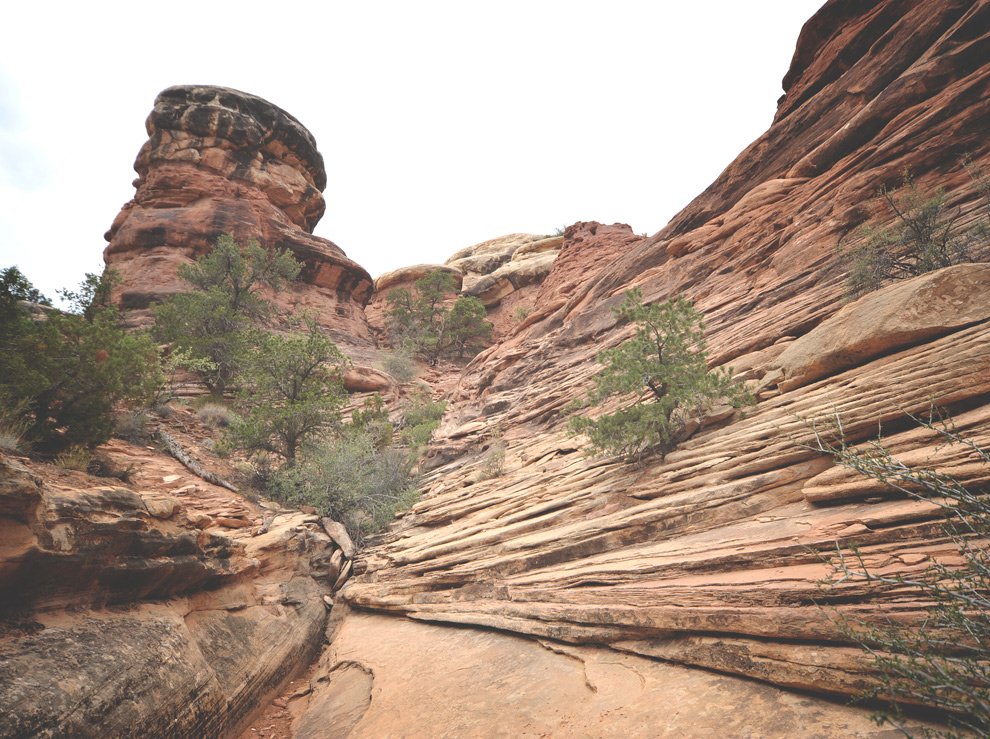
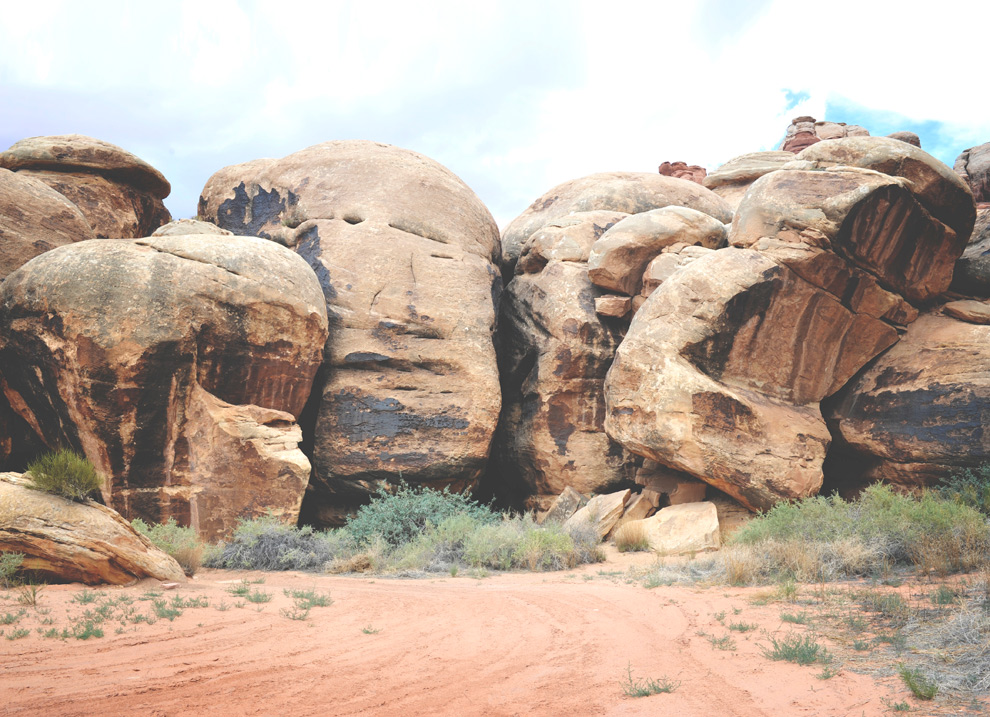
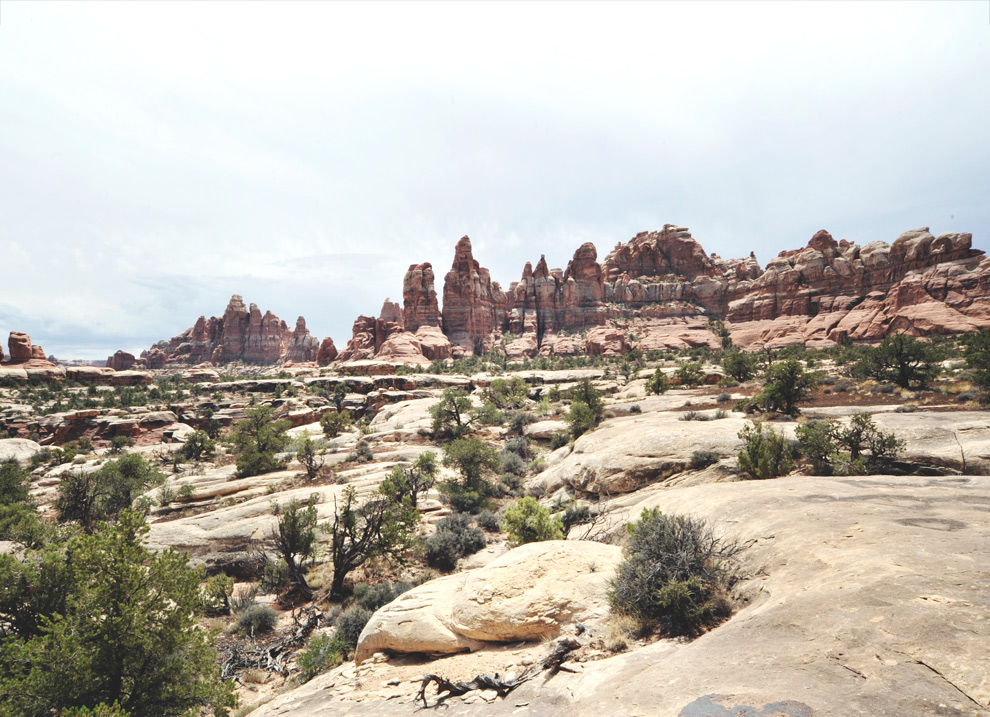
After watching the first installment of Ken Burns’ excellent National Parks documentary, I felt enjoined to post images of my favorite Park, Canyonlands in Utah. I visited seven National Parks over the summer, and Burns is better able to articulate in a more clear, concise manner than I ever could the rage of conflicting emotions one feels when visiting National Parks during the height of summer tourist season. I could never shake the feeling that there was something profoundly wrong about paying $20 to get into the Grand Canyon and waiting an hour in a Los-Angeles-level traffic jam just to walk along a paved path at the edge of the South Rim amongst a crowd of pedestrians that feels more like 34th Street than the wide open, untamed West. Again, the same principle from The Lightning Field applies—by our very presence, we as tourists spoil the previously unspoiled place we came to see. Lightning Field attempts to subvert this by imposing a six-person daily quota, which would be antithetical to the National Parks democratic mandate. Somewhere in between these two extremes lies Canyonlands, which is why I liked it so much. There was none of the technicolor brilliance that makes other parks such postcard opportunities. Here it was more subtle, but no less sublime. And it brought back a healthy respect for the dangers of landscape, where simple things like water, food and sun become such important, precious commodities when you’re alone, no one for miles, at mile marker seven on a fourteen-mile hike.

20090929 Tags: arizona, kinne, photography, writing | No Comments »

eco aesthetic

arco01
arco02
arco03
arco04

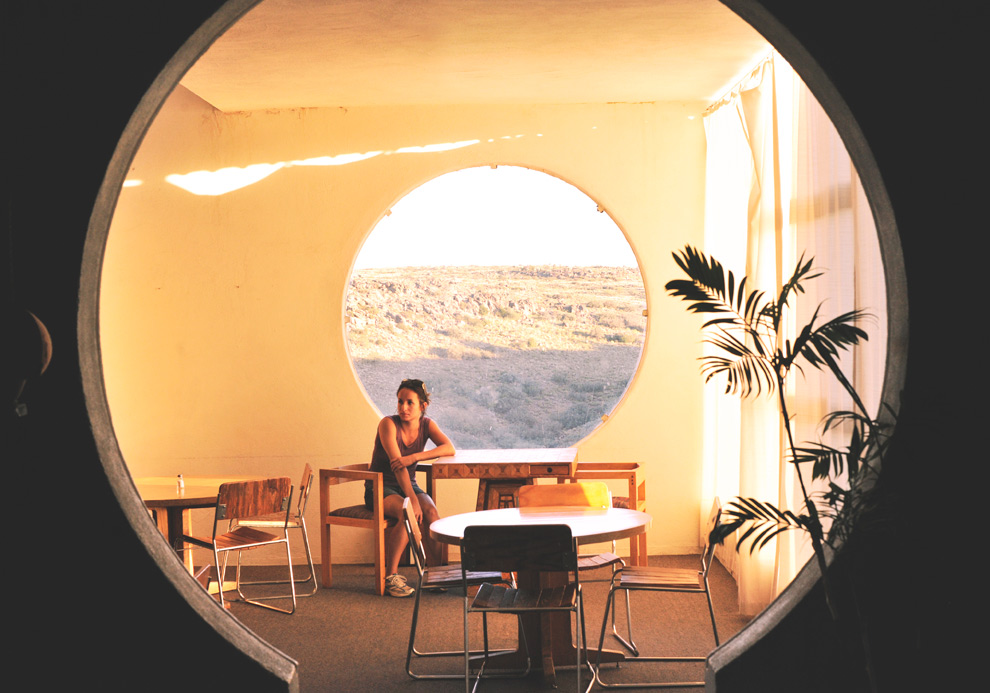
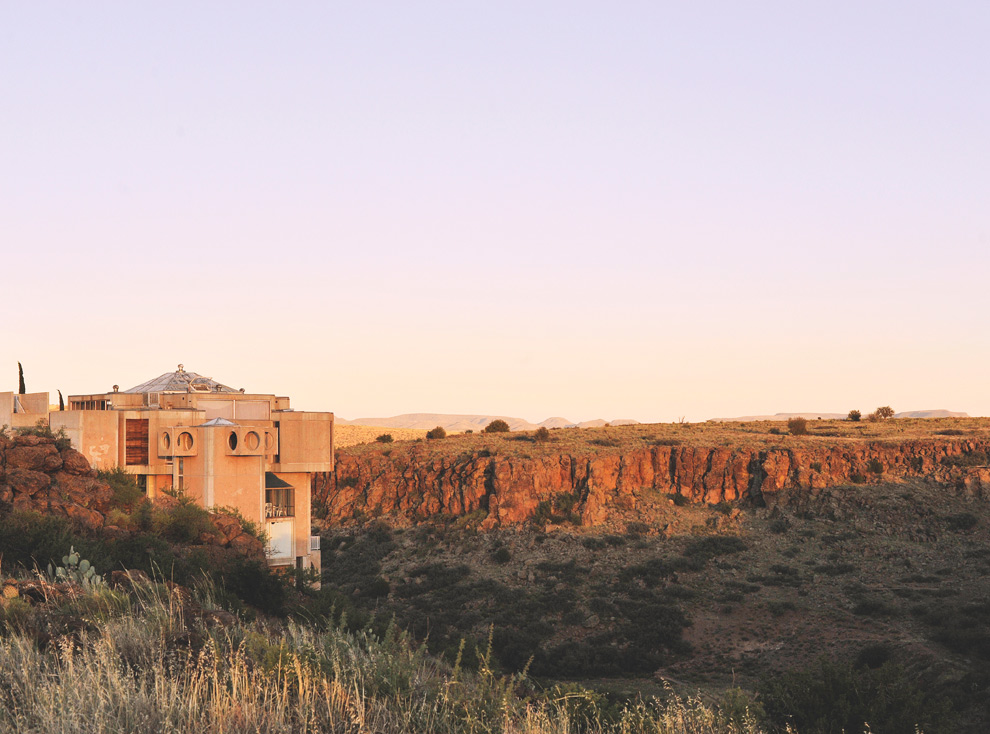
The view driving north out of Phoenix along I-17 is less than promising. With the rise in elevation, you leave the saguaros behind for a harder, rockier soil in a landscape of low desert scrub brush that has none of the varied beauty you can find in the hybrid desert/forest area further north around Sedona and Red Rocks. The turn off to Corder Junction is another picture of desolation, a washboard dirt road that passes a gas station, a sagging, clapboard house flying the Confederate flag, an abandoned Airstream, and then, finally, a six-foot diameter, circular metal sign leaning against a cattle guard: “Welcome to Arcosanti: An Urban Laboratory.”


Conceived in 1970 by Italian émigré and brief Frank-Lloyd-Wright-trainee Paolo Soleri, Arcosanti was a future vision of a heroic, hyper-dense, monumental city that would shelter 5,000 people in a harmonious coexistence of architecture and ecology; also serving as a reactionary alternative to the ubiquity of the sprawling suburbs that were beginning to crop up at the time. (And it should also be said, an alternative to Wright’s own Broadacre City plans.) 50,000 people each year make the drive to Arcosanti to visit the future.


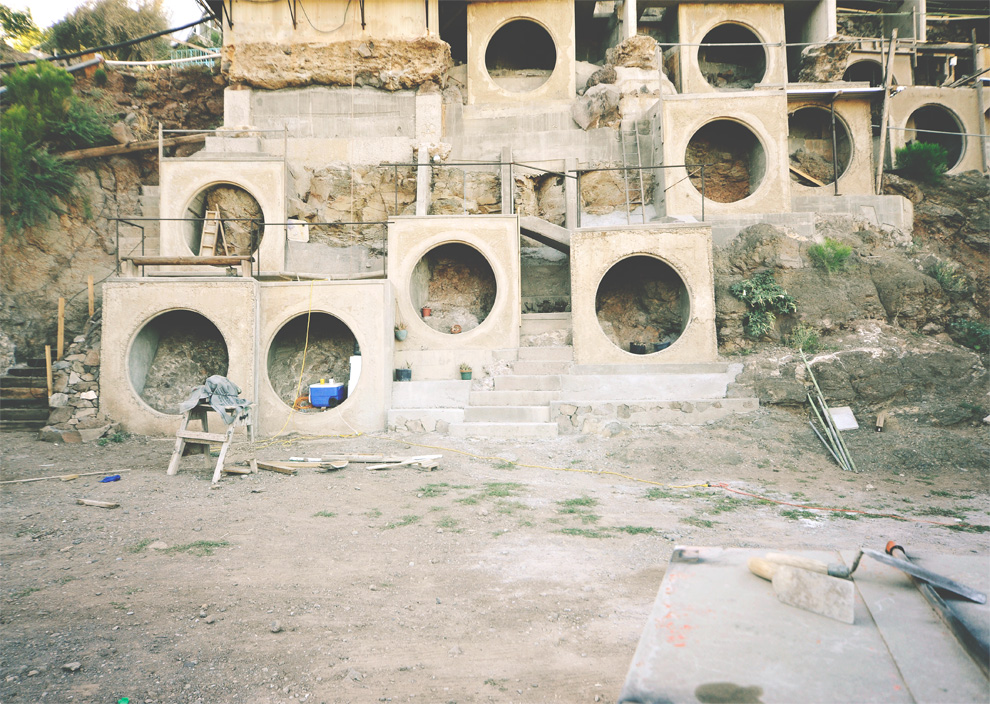
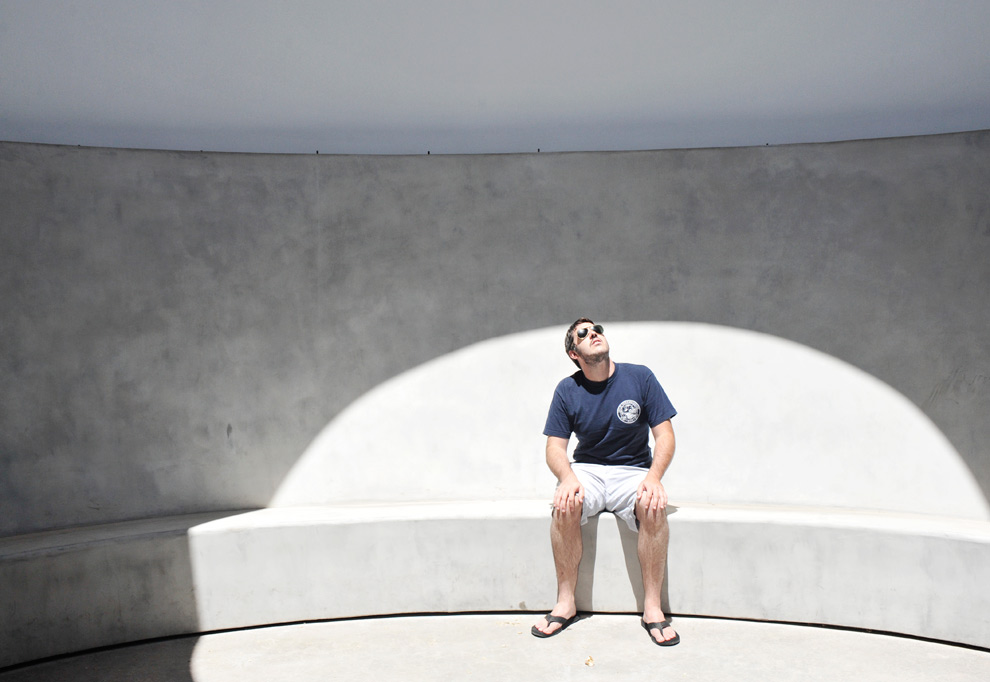
What you’ll find at the end of the dirt road is a seemingly random assortment of concrete structures sighted along the edge of a gentle canyon that, taken together, have an almost mirage-like quality as seen in the waning evening light. The structures themselves are amazing, with balconies overlooking the canyon edge, a fascinating painted apse, soaring vaults above semi-circular amphitheaters, and multiple levels of stacked living cubes throughout. Each building is well-designed according to passive solar principles, which, coupled with ample shaded public spaces, make it an incredible place to spend the day. Concrete pathways and stairwells weave through the disconnected structures, and, along with the simple landscape plantings, start to connect the fragmented structures in a hierarchical sequence.


Even in August, the early evening in the desert was surprisingly mild and the canyon channeled a cooling breeze. You can stay overnight at Arcosanti, and for $40 a night (breakfast included), it sure as hell beats any roadside motel. And even if there was no A/C and we had to place the slight oscillating fan inches from the bed to little effect, seeing the full moon and stars a touchable distance away from our screen door/window made it all worthwhile. It was one of the most pleasant places I’ve ever enjoyed a drink.


The overnight rooms are located near the base of the canyon and connect to the main structures via a series of ascending walkways and stairs. The walkways provide glimpses of life at Arcosanti, from the half-empty construction areas, to the foundry where the Soleri bells are cast. But the laid back pace of Arcosanti belies the notion that this could be a manic urban city scaled up with 5,000 people. The echoes of Mesa Verde are unmistakable, but the monumental concrete structures also call to mind heavy traces of Logan’s Run and Predock’s Cal Poly Pomona Campus, serving to further reinforce the notion that you’re in a vision of the future that is firmly rooted in the 1970s.
 

The tour guides will tell you that “50,000 people a year come here, look at it, say, ‘Wow, isn’t that interesting?’ and then drive away, because it requires a total abandonment of what everyone has taken to be a given.” But how successful is the vision produced by Arcosanti? You’ll find a lot of fulminating references against “sprawl” in the Arcosanti literature and the vision of their city as a laboratory to present a prototypical alternative. Sprawl is an easy target, so no arguments here. I had just spent two days wandering around the empty, sun-bleached streets of Scottsdale, certainly one of the sprawliest and shallowest of urban experiments. So Arcosanti was a palette-cleansing salve that provided an alternative strategy.


This begs the question – especially in lieu of situations like Tijuana – that when one billion people live in slum-like conditions that are parasitically conjoined with existing urban centers, does bringing people out to the desert in a formerly unoccupied area seem like a viable option to combat the global housing crisis? It comes off more as a defensive position, dropping out and going off the grid in a state of self-exile. And while Arcosanti seeks to engage the entire world, their vision comes off less as any type of solution to sprawl and more of a segregated defensive fortification. Reyner Banham called this desert fantasy “pure creative will exercised against a defenseless landscape.”


But this alternative is still hypothetical. Granted the site is in a perpetual state of growth but Arcosanti has been beset by funding problems, lack of government support, and labor shortages that have left it after nearly 40 years approximately 4 percent complete. A city designed to accommodate 6,000 people, has completed facilities to house about 70. And while Arcosanti positions itself as a social utopia, it is also an architecture of techno-utopia, a place where advances in science and technology allow a hypothetical citizenry to exist in an ideal state where scarcity and suffering becomes anachronisms. But their technological infrastructure is still fairly standard. Arcosanti receives energy from a power company and water is pumped in from a nearby well. And while there are a scattering of wind generators and solar panels, this seems far less impressive than proposals being developed for China and elsewhere almost daily, where carbon-neutral buildings and cities make use of integrated solar panels, waste, and gray water reclamation, and thirty-story wind turbines that can create near zero-waste environments.


That may partially explain why the construction at Arcosanti happens in fits and starts—they’re advancing toward a future vision that is already anachronistic. There’s been some debate within the community, but the cult of Paolo (it’s always “Paolo”—never Soleri) holds sway, and instead of evolving organically as you’d envision a city would grow, they’re still building toward his singular 1970 vision. The whole place becomes more of a living museum where there is still a tenuous connection to the ’70s flower children, the liberal arts drop-outs, the turned-on desert commune dwellers, and the middle class revolutionaries. It’s still here, and you can detect the faint traces of hardcore believers in the air, still fighting the good fight. In this scenario, the filmic analogy would swerve more toward Godard’s Alphaville, where the inhabitants work toward the whims of one central, all-knowing computer.


Furthermore, what has been built by semi-skilled labor seems like it is partially in a losing battle with the desert. Areas look abandoned and unsafe. And that becomes the difficult part, having to resolve in your mind the dueling realities, on one hand the incongruous sight of a pristine Plexiglas-encased model of a future city, and on the other, to look out the window where you’re readily confronted with the reality of wonky steps, cracked concrete, and a wheelbarrow lazily and inexplicably swinging from a construction crane.


But so what? In the end, it’s not perfect but it’s not a failed project. It has stayed true to its initial vision of a heightened environmental and ecological consciousness and has resisted, by all accounts, being easily subsumed by the cold logic of capitalism. The gulf between vision and reality still seems too vast to reconcile.


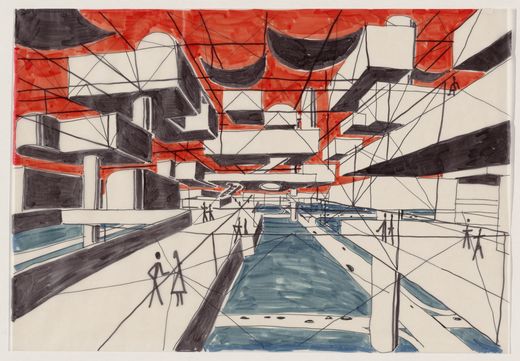
I was once in an architecture seminar course in which the last hour of every meeting was devoted to discussion, with questions thrown out from students and the professor fielding them as best he could. For at least the first half of the semester this was one of the most awkward hours of the week. The nervous tension in the room was seriously thick as we all made poorly concealed, conscious efforts to look everywhere but at each other or the professor who stood waiting expectantly—and a little eagerly—against his podium. Not only are architects a pretty introverted bunch but, you see, it was still early in the semester and we hadn’t really gelled together as a group, which meant everyone was still too self-conscious and didn’t want to risk coming off as ignorant or poorly-read or whatever in such a large group of people that you don’t know all that well. But anyway, we could all breathe a little easier because there was always one guy who didn’t give a damn what anyone thought and would never hesitate to blurt out every random stream of conscious type association he made during the lecture. I should stop here and mention that ostensibly this course was about architecture and the city (it was really a survey of radical ’60s architecture which is coming back in popularity in a big way), and this particular session was centered around swinging London with requisite lectures on Blow-Up, Archigram, and Robert and Allison Smithson, amongst others.


Anyway, this particular student was upset—offended even—that we were “wasting our time” learning about the work of these guys when they hadn’t built any actual buildings. Well, the built output was either nonexistent regarding Archigram, or lackluster at best in relation to the Smithsons, and even more so in the case of the Smithson’s Robin Hood Gardens where you could convincingly make the argument that the project was both bureaucratically oppressive and spirit-breaking in a structurally defective and criminal-element-incubating kind of way. However, their theories and writings were everything their buildings weren’t: they easily captured the imagination in an egalitarian vision of technology and design-liberating humanity from the gray dullness of modern life. Their failures as builders were only exacerbated by their success as multifaceted thinkers.


But what this particular student tried stubbornly to resist was that architects don’t build buildings, they design them. The term “architect” is both one of the most heavily regulated (thanks NCARB) and also the most capriciously thrown around. (see: Turd Blossom) So there’s a lot of room for interpretation in there. Even unbuilt,Walking cities, streets in the sky, and a utopian city of 5,000 people in the Arizona desert are all inspiring architectural proposals that continue to drive the discussion. Architects work in electronic space—spaces that can capture the imagination on a greater scale than the physical. That mad desert messiah Soleri’s vision was more powerful than Arcosanti, where the image of the city of the future still lingers in the imagination long after you’ve driven out of the desert. Soleri imagined single towers housing a million people, floating cities on the ocean, and merged infrastructure of dams and factories. When thinking small was considered a virtue, he thought big. Soleri constructed a theory that sustains itself long after Arcosanti returns to back to desert scrub. His dream was for a better world yet to come, still waiting to be built.

20090928 Tags: arizona, kinne, photography, writing | No Comments »

a soupçon of Turrell

turrell

Roden Crater is scheduled for completion sometime in 2011. This may at first seem a manageable goal but the proposition takes on more dubious overtones when you consider James Turrell has been consistently working toward completing this most audacious work of art since 1978. Beset by financial and artistic setbacks, even 33 years seems ambitious given the mind-blowing monumentality of the task at hand. He’s hollowing out a 400,000-year-old, dormant volcano that’s over two miles across, hauling countless tons of rock and soil out while pouring concrete in, to produce a labyrinthine series of tunnels and viewing chambers that allow the oculus of the cone to become a canvas through which light, sky and astronomy play out in an artistic embrace.


The crater’s exact location had been purposely shrouded in mystery, but with the advent of modern surveillance technologies, it’s no longer possible to be lost or to remain hidden in the desert. This has led to a number of renegade art lovers who hold loose definitions of trespassing to sneak onto and into the site. The recent uptick in unauthorized visitors has to be partially attributed to the ease at which you can get exact coordinates from google satellite maps. I had seriously considered trying to infiltrate myself onto Turrell’s property, and as cool as it would be to either preview Roden Crater or be able to say that James Turrell tried to shoot me, I understand where he’s coming from. I’d be none too pleased if some intrepid aesthete sneaked into my apartment to surreptitiously sneak glances at my half-finished life’s work. So I had to make due with this (much, much) smaller scale Turrell sky chamber at the Scottsdale Museum of Art. Hopefully, I’ll make it back out to the Arizona desert in 2011.

20090922 Tags: arizona, kinne, photography | No Comments »

fly into the sunset

pima
pima02

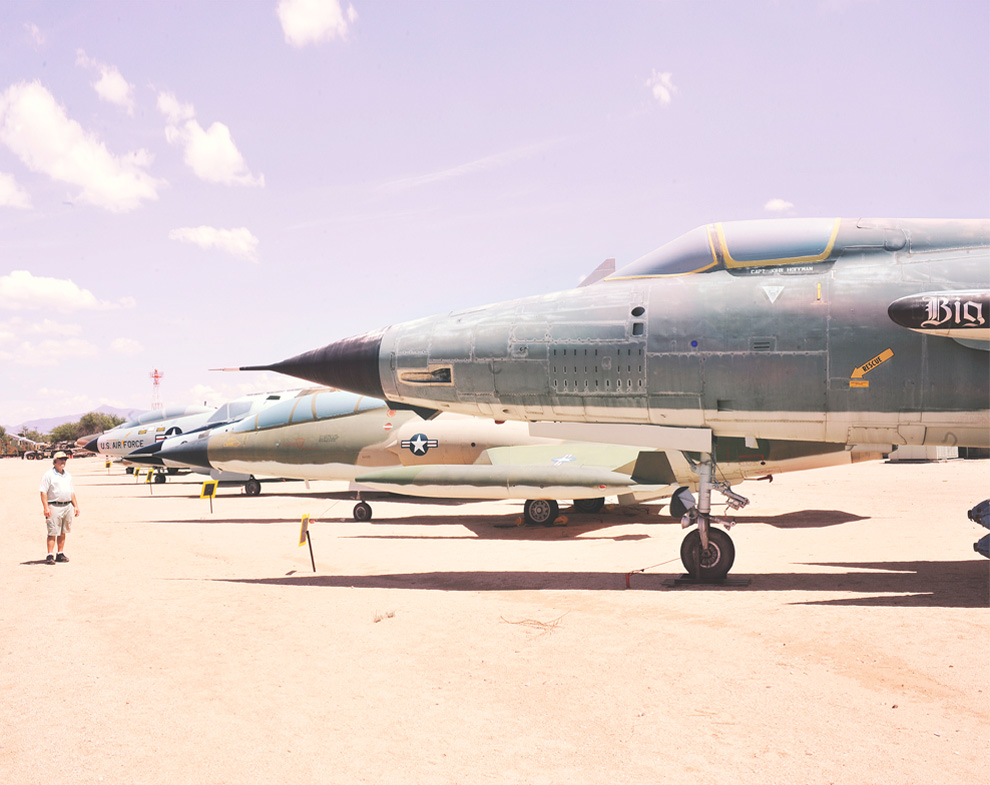
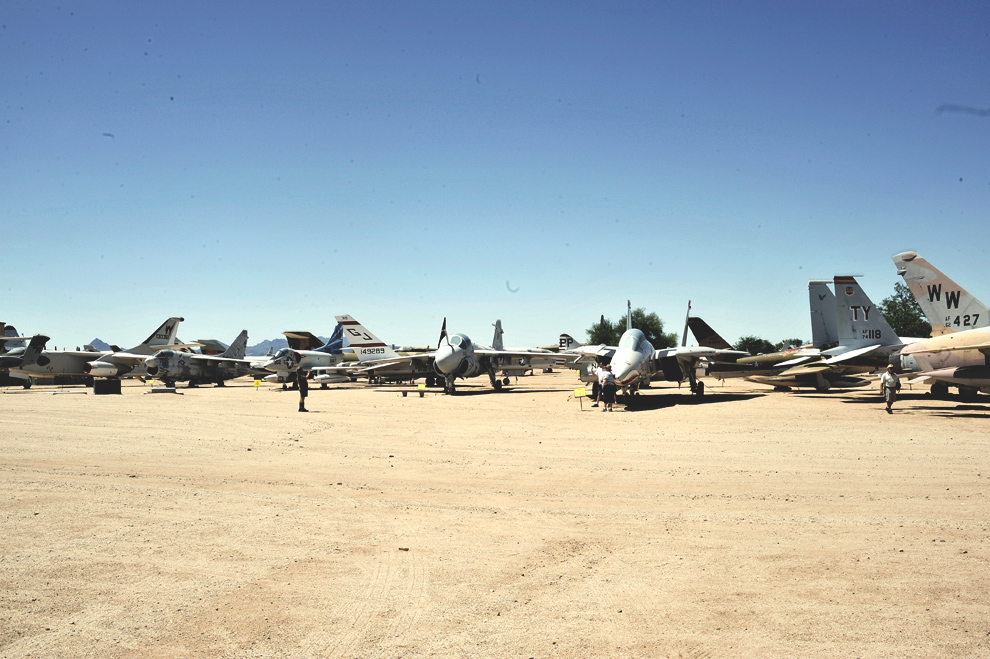
By all accounts the F-22 Raptor was the apex of aviation engineering – the finest fighter plane ever built. Stealth technology, high maneuverability at mach 2.25, and extreme air-to-air lethality against any potential threat made the F-22 unmatched in the field of aerial combat. Unfortunately for Lockheed and their cancelled $1.75 billion U.S. government contract, the F-22 was also unnecessary, wasteful and rolled out of the factory hangar obsolete. It was designed to counter a threat that no longer exists, manifest as a relic of Cold War thinking and a throwback to single combat champions – the hero pilot – who took to the sky to valiantly battle in defense of the U.S. against the Soviet aggressor. And while all that no longer exists, foreign policy is now enforced via aerial drones and suitcases of cash, the dogfights of our collective imagination still reassuringly play out in the Arizona desert at the Pima Air & Space museum.


Pima, and the nearby “boneyard” provide over 2600 acres of land for the display of thousands of surplus and decommissioned aircraft. The dry, arid desert, which can be so punishing to living things, here provides an optimal environment for the preservation of the military’s metal relics. The soil of southern Arizona has an especially high alkaline content, that coupled with the area’s negligible humidity levels, makes this desert an ideal location for storing last century’s war machines safe from corrosion, rust and the other damaging effects of moisture.


That Pima isn’t (and shouldn’t) be in the business of offering a critical history on the use and consequences of bombing campaigns engaged by the Air Force is ok. But Pima certainly does engage in a soft form of propaganda (see also: starring role of an F-22 in the Transformers movie) by harkening back to the mythical, nostalgia-tinted past where technical proficiency and American know-how led to an easily quantifiable military dominance of the skies. The whole site is a monument to American techno prowess. And while the museum does offer a perfunctory survey of novelty civilian planes (smallest plane, lightest plane, etc.), the star of the show is without a doubt the fields of fighter aircraft, including the A-10 and the F-5. Where the lone pilot and his trusty jet update the West’s archetypal portrayal of a solitary hero who abides by his own moral code, characterized here in a collection of popular culture references that stretch from Howard Hughes’ Hell’s Angels film of 1930 (see the Fokker DVII’s) to the fighter plane spectacles that popped up in the waning days of the Cold War: Tom Cruise and Top Gun (F-14 Tomcat) and Lou Gosset in Iron Eagle (F-16 Fighting Falcon). That there is something comforting in the black and white clarity of the conflicts of the past (we won!) is also played out in the museum’s crowd, which certainly skews toward the grayer end of the demographic spectrum, as do the museum’s volunteers, who can usually be easily spotted by their “retired U.A. Air Force” caps emblazoned with their numbered squadron insignia. On the day we were there, walking between row upon row of fighter planes, their cockpits painted over and engines extracted, we were treated to a flyby from four of the 183 F-22’s that the Pentagon had actually ordered, en route from Nevada. Their distinct silhouette traced a line across the sky. It was a beautiful sight.

20090917 Tags: kinne, missile, new mexico, nuclear, photography, writing | No Comments »

80000

nagasaki


Fire flashed in the pre-dawn New Mexico desert with the explosive force of 20 kilotons of TNT. Ground zero was 40 miles west of Socorro but the 7.5-mile high mushroom cloud was still seen and felt over 150 miles away in El Paso. It was the first successful nuclear detonation. Robert Oppenheimer witnessed this at the South 10000-Shelter, 10,000 yards south of Zero. And, after viewing the fireball he was led to famously state: “Now I am become death, the destroyer of worlds.” For good reason the quote became iconic. Taken from the Hindu Scripture, the Bhagavad-Gita, Oppenheimer imbued the words with something mysterious, with some pretty damn ominous overtones that also obliquely hinted at his own uncertainty at his role as “the father of the atomic bomb.” Doubts which would of course lead to charges of communism, public humiliation and his security clearance being stripped at the hands of the McCarthy Commission in 1954. But on that morning in 1945, Trinity was a success, and Oppenheimer had reason to feel self-congratulatory. The atmosphere didn’t ignite, the oceans didn’t boil, the fabric of space-time remained untorn, and sure, one could argue that something nearly equally catastrophic was loosed upon the world that morning, and it’s certainly clear that Oppenheimer understood that. But it’s a good quote, and always makes for a strong introductory anecdote. What’s less known, but no less interesting, is what he said the night before, as he stood on one of the wooden observation towers, in the fading light of the New Mexico evening, preparing for the climax to three years of relentless work. He surveyed the Oscuras Mountains along the horizon and spoke the following to himself: “Funny how the mountains always inspire our work.” He said this to no one in particular, almost offhandedly, slightly above a whisper, but it was overheard and recorded by a nearby metallurgist. Scientific discovery is an artistic act of creation where what was imagined in the minds of men is made real. Coming from the creator of one of the most sublime spectacles that few have ever seen, one that leveled cities and changed the course of history, this is both incredible and terrifying.
20090914 Tags: infrastructure, kinne, mexico, photography, research, writing | No Comments »

bienvenido al futuro

tj02
tijuana01

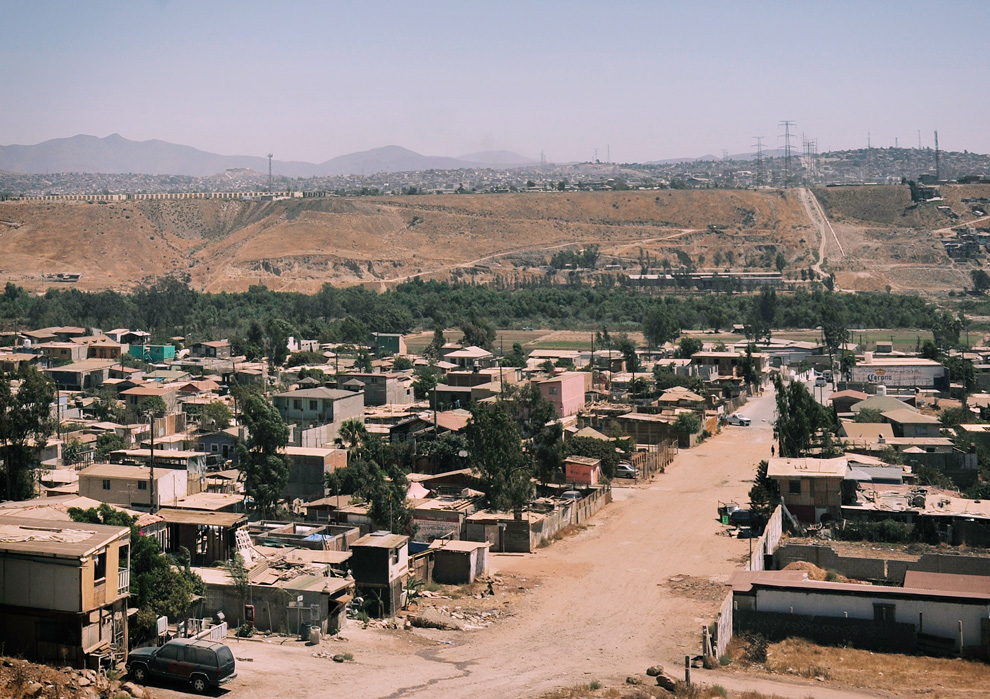
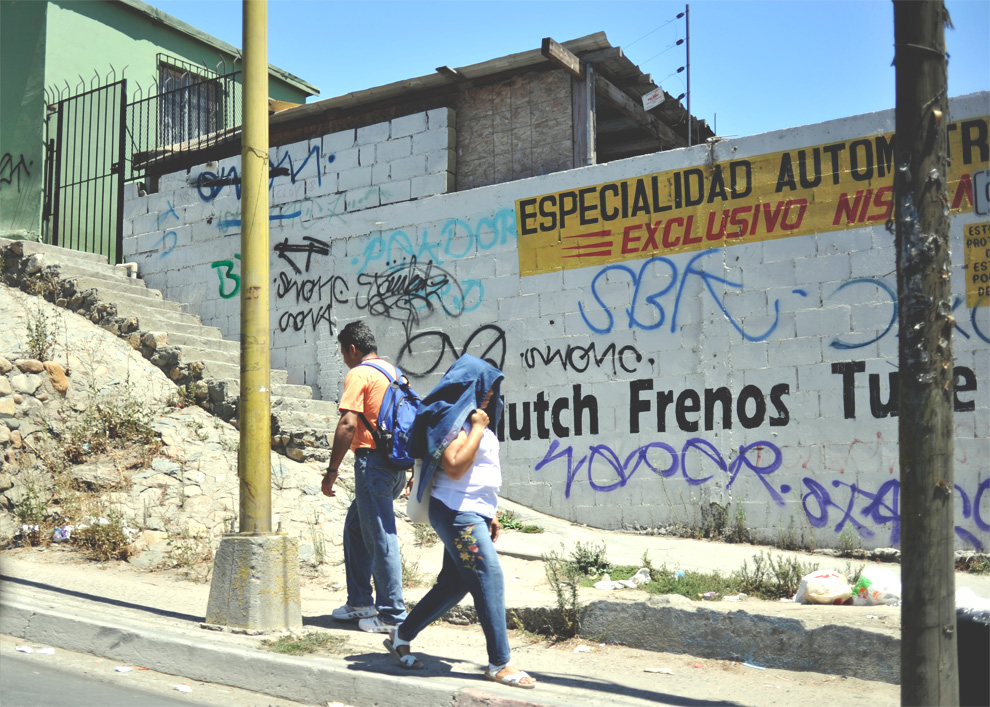
There is Tijuana and there is a New Tijuana. Tijuana is easy. You don’t have to look very hard to find it. As soon as you walk over the border you’re in the thick of it, a dust-encrusted Candyland where you can buy a churro, pharmaceuticals, a miniature guitar, sit on a droopy-faced donkey painted to look like a zebra, all while being serenaded by a group of hungry looking mariachis-for-hire in loud pants. (Literally—there are bells clipped to their outer seams.) You’re on the Mexican side of the border, but here in Tijuana that palpable feeling of barely concealed, easily dischargeable, violent tension that was so strong in Juarez is missing.
 

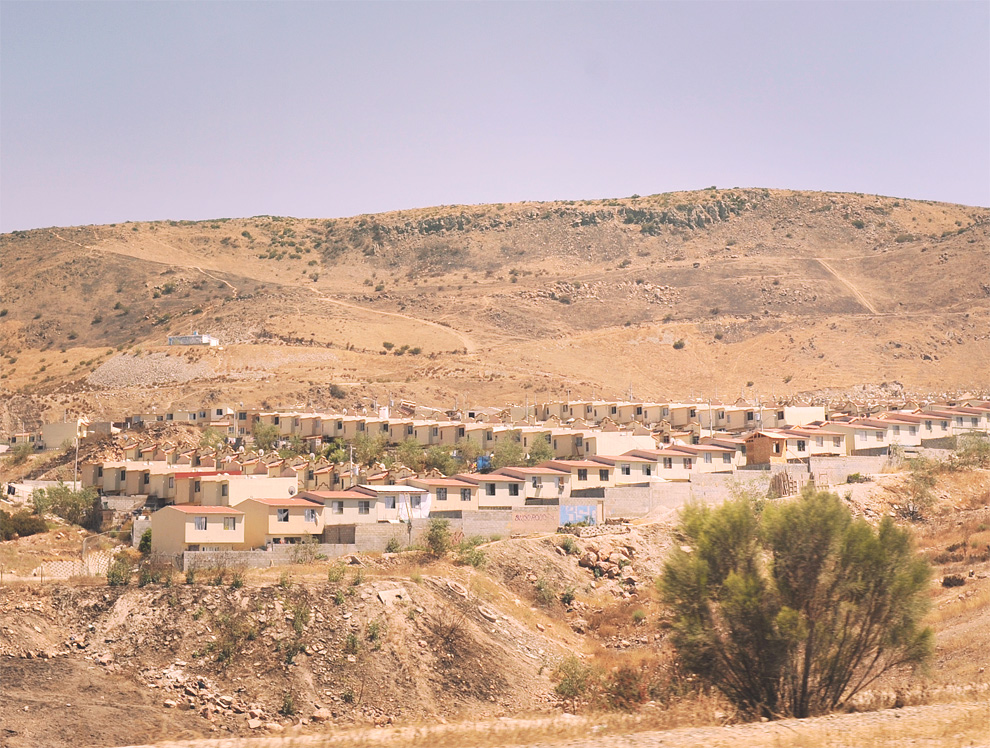
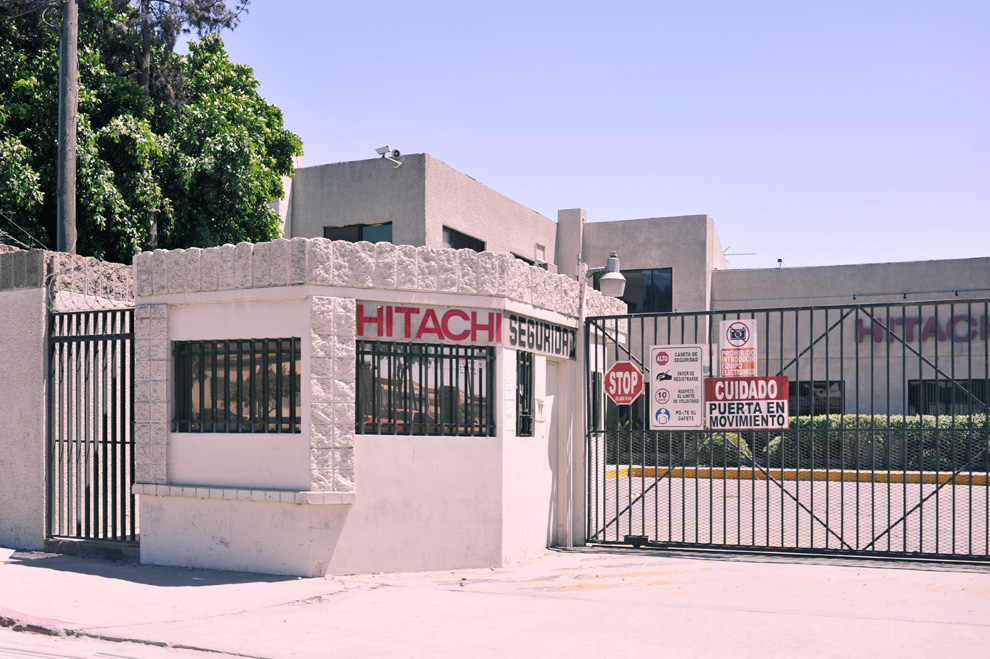
Lest you be lulled into complacency, New Tijuana, on the other hand, is a different story. It’s everywhere to the east, in the pale masses of washed-out shantytowns and factory housing. It is more difficult than Tijuana – you have to go looking for it. It is where there are estimated to be over one million people living, comprising almost half the total population of Tijuana in a parallel zone primarily occupied by factory workers, migrants, and laborers. In Tijuana 95 percent of the city’s homes have a solid floor; in New Tijuana that number is closer to 25 percent. New Tijuana is where nearly 80 percent of people lack running water and an operational sewage system, but where simultaneously the unemployment rate is less than 1 percent (Mexico’s average national unemployment rate at the same time was 7.4 percent). The percentage of the population that works in New Tijuana is 10-15 percent higher than the rest of the city and it has been supposed that there are in fact more jobs than available workers. 35 perecent of New Tijuana’s workforce is employed in the maquiladora sector. The lack of an adequate workforce provides opportunities for immigrants from all over South America, who, in turn, comprise more than a third of New Tijuana’s population. Those people need housing. New Tijuana expands by five acres each day. New Tijuana is the future.


The growth of the Tijuanas in the last 25 years is unprecedented. It has been frenzied, loose, and extremely informal. No cohesive formal plan exists. It’s a new model of improvisational urbanization that requires neither long-term thought nor infrastructural support, but rather quick thinking, cleverness, and adaptability. Shit moves fast here. Speedy Gonzales isn’t some kind of crude cultural stereotype; he’s something to aspire to. City infrastructure can only try to keep up with the manic pace of construction. By loosening the bonds of city infrastructure, potential newly liberated schemes for urbanization arise. And moving in lockstep with the creation of the new is the decay of the old. Smithson’s Spiral Jetty introduced the concept of entropy into the constructed ecology of the West, and the settlements of New Tijuana provide another example of the productive, transformative value of reappropriation and entropy. The surplus piles of tires become walls and fences, discarded vinyl advertisements become weatherproof roofing, palettes, cinderblock and plywood are mixed at will. Like the Spiral Jetty rising out of the Salt Lake anew, New TJ is constantly reassembling itself into some new amalgamation with the remains of the old. Tijuana warrants a retroactive manifesto to parse and make sense of what has happened here in the last 25 years, a manifesto that will formulate a constructed argument regarding alternative future potentials for other built environment based on uncovered models that exist here in the border region. The argument would start with the speed of the informal settlements.


They build 20,000 houses a year in New Tijuana, constructed from whatever mix of available building materials and cast-off detritus that can be recycled and reconfigured into something that vaguely resembles inhabitable space. Here, the only demand is that it have a roof (and even that seems somewhat negotiable), and without regard for anything so outmoded as building codes or permits, they build wherever and everywhere they want, armed with only the most provisional of land ownership titles. In Tijuana squatting is considered an inalienable right. Architecture can’t compete with that. No way—it’s too slow, too dependent on ego and sponsorship. Tijuana is fast, self-determinate, and horizontal. This is why so many architecture schools love to use Tijuana as a site, every frustrated architecture student sees themselves in each resident of Tijuana, a place where the people daily recreate and then transcend the abstraction of the studio and provide a setting where it really is possible to dream something up and build it, with your own hands, devoid of those slow, un-fun things like budgets and engineering seals of approval that architects struggle with every day, but seem so oppressively foreign to a student in a studio environment. In Tijuana you don’t have to worry about any of that, it’s design/build without any formalist pretensions.


But don’t get me wrong, I’m not trying to romanticize what are, in essence, dangerously unsanitary habitats lacking in many cases even basic, minimum quality-of-life essentials like light, clean water, sewage systems, and electricity. But that kid standing there in the dark, next to an open sewage canal, lighting a candle is wearing a Kobe Bryant Lakers jersey and blasting the Black Eyed Peas on a Panasonic boom box that was probably manufactured less than a mile away. You can’t help thinking about all the other boom boxes that were exported North, and all the people who then bought those same boom boxes, and the relief and comfort all those people felt at seeing the same everyday low prices they’ve grown accustomed to, and would probably angrily demand be provided back to them if somehow the torrential flood of cheap goods were suddenly cut off.


Anybody can see that manufacturing a crate of boom boxes for $15 makes more sense than shelling out $90 for a unionized, benefits-hogging American worker to do the same. I mean, I don’t begrudge the idealists and their inescapable feelings of First World Guilt. The twin cities of the border have always engaged in an exploitive economic embrace, one twin is bigger, the other is richer. But when confronted with the overwhelming realization that this situation is so inevitable, so completely entrenched and self-perpetuating, just bemoaning the North’s entitled status seems too passive and pretty boring. Anger is one way to go, and that typically arises from the sight of the slums, the Lakers jerseys, the Ford trucks, and the maquiladora housing all impossibly coexisting, and the urgent thought that can’t be resisted—that somehow, this is all our fault. And you have to deal with that in some way. Or, you can try to idealize the situation, in a getting-back-to-the-basics, “authentic” kind of way.


The North American communes of the late 1960’s tried this, but they were only self-consciously adopting some of the principles of informal developments and, not surprisingly, they quickly and inevitably collapsed. While the California communes, including Morningstar Ranch and the Whiz-Bang Quick City, were superficially similar, they lacked something like the desperation of New Tijuana. (I hesitate to use the word desperation, but I think what you see in New Tijuana is akin to something along those lines.) New Tijuana is less a home and more of a way station to compose a strategy for escape, which is a pretty desperate concept in and of itself. The other way to confront it is to approach it from a position of self-congratulatory benevolence. And when Architecture with a capital “A” does try to get involved, well, that way lies the madness of modernism. The oppressively bureaucratic, welfare-state housing policy approaches from the mid-20th century have unquestionably failed, sometimes explosively (or more excitingly: implosively, seePruitt-Ingoe).


Tijuana is bigger than all that, and I guess that’s what I find so fascinating about it, the tangled up mix of impossible ecologies that make a city like this seem on one hand so inevitable and yet strangely great and new, not in spite of, but because of the conflicts and paradoxes. Whatever your opinion on globalization and the exploitation of capital, the necessity of an interventionist or weak urban policy, the vagaries of national security, whether you’re pro one side or the other, you should spend a little time in Tijuana. You’ll come back convinced of the necessity for both, all at once, unable to formulate why this simultaneity of opinions is thoroughly inexorable.


tj03


But it is. So where does that leave architects? As an architect, I’m naturally disinclined to argue for my own field’s redundancy, but it’s hard to deny that the traditional top-down, architectural design process lacks the frenzied urgency that Tijuana demands. They’re building 1,600 houses per month because there’s a vacuum there where people need housing, and they have the ingenuity to fill it. But what’s being built now is really only serving the narrowest of stakeholders’ interests, whether that is a gated subdivision for upper-middle class families, migrants’ informal slums, or the maquiladora industry’s need for rows of factory housing. You have everything that runs the gamut from the rigidly planned to the totally out of control, and somewhere in there architecture can stake out a position, somewhere in that sweet spot between the formal and the informal, where architecture can interweave all the threads of rich and poor, old and new, individual and community. But anytime architects try to force their way through that hierarchy of competing interests, the initial vision becomes muddled beyond recognizability. For instance, I’ve seen amazing designs languish in the development hell of the “design review” process where every stakeholder from the mayor to the donors to the various owners each have to tweak something to their liking, which by themselves aren’t that big of a deal, but taken in aggregate begin to compromise whatever measure of integrity the architect believed existed in the first place. Trying to maintain any sort of unified creative vision in the face of that kind of opposition is ridiculous. And that’s in a normal situation.


There’s nothing normal about Tijuana, however, but if style is cyclical then you can’t help but notice that the answers the radical urbanists were playing around with in the late 1950s and ’60s were certainly prophetic in anticipating the urgent necessity for new solutions to housing the masses of displaced people and migrants caused by the second World War. And here, as in Tijuana, the solutions were cheap to manufacture, simple to transport, and infinitely variable.


But where it got really interesting was when these guys – especially the Israeli Yona Freidman – started thinking that the architect really wasn’t as important as modernists thought. Form became something that was undefined and primarily subservient to the needs of the inhabitants. In other words, a functioning city is not made up of the material buildings, but rather the infrastructural utility networks and systems of streets and walkways. The architect’s first responsibility is to ensure that these systems are in place, and this should precede all other formal proposals. The network of systems in play in Tijuana vastly exceeds the grasp of a singular architect. How could any one architect plan and design for an inhabitant whose needs are constantly in flux—especially in Tijuana where changes can be drastic, fast, and dirty, and thus impossible for an architect to foresee?


The answer lay in the realignment of the artist-spectator relationship. The user — the inhabitant — would become the creator of his or her own built object and the architect would provide the infrastructural support for the user to plug in to. Process becomes the paramount driver of creation, while the final result remains an amorphous ideal. In this way, Friedman sought to codify the unpredictable nature of human behavior. And in his holistic world view, the erratic nature of each user’s individual actions is allowed to disintegrate the false nature of central planning. However, a major contradiction is found within Friedman’s Mobile Architecture. Friedman, the architect, still designs the framework — the system — into which the user is granted a somewhat specious level of freedom.


Elemental Do-Tank actually built something along these lines in Chile with amazing results. In an evolution of Friedman’s “frame” and “infill” architecture, they took the minimum necessary program for a livable house and transformed that into the frame. The spaces between the homes are left as an open infrastructure for the people to infill with any program they may want. The infill accommodates everything from car repair shops to beauty salons, interwoven with another program.


But as great as these projects are, they are still something to be applied to Tijuana, not to be withdrawn and applied elsewhere. That’s where things get more difficult and have to remain open-ended. That the future is fast and cheap is unavoidable; that speed and ingenuity will supplant history and the starchitect; that the amorphous and accidental will trump the defined and planned has to all be taken as a given. In the end, we have to stop worrying and learn to love the best of Tijuana-ization while overcoming the worst. In a world where the existing urban environment is a prisoner of sorts to its own aging infrastructure, Tijuana’s notions of quickly composing and re-composing urban space in response to future events seems increasingly relevant. And the radical reimagining of the role of the architect, something rooted in modesty and a sincere desire for change in keeping with the possibilities afforded by technological advancements and popular participation, has to continue to provide new possibilities for a profession that suffers from a dearth of bold ideas.


tj04
tj05

20090910 Tags: arizona, california, colorado, kinne, new mexico, photography, utah | No Comments »

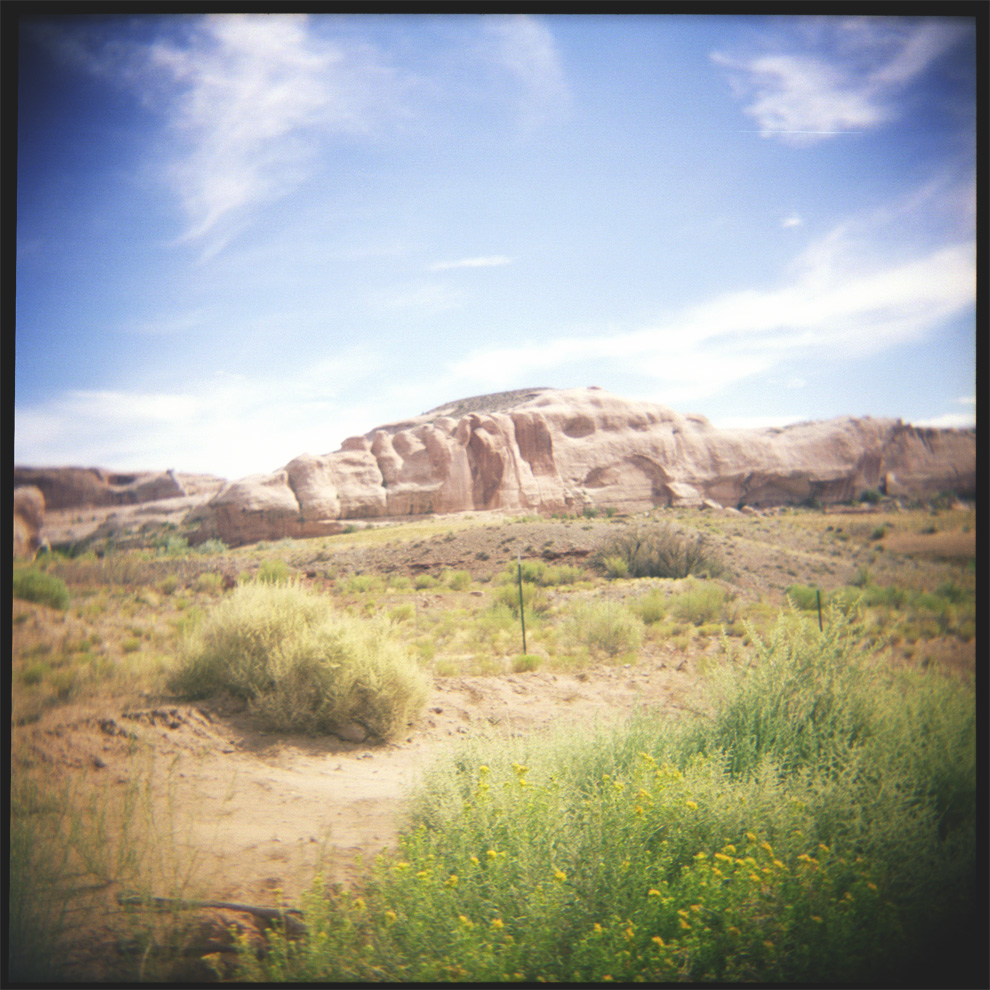
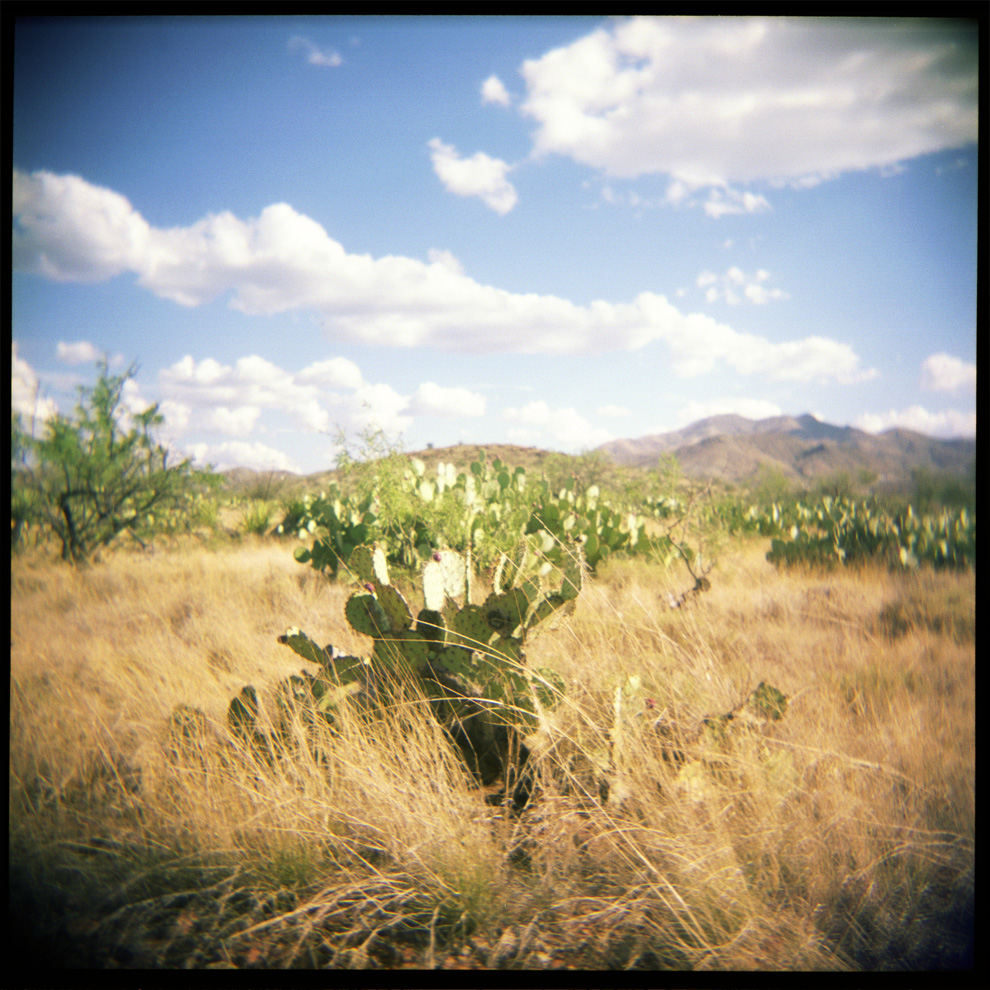
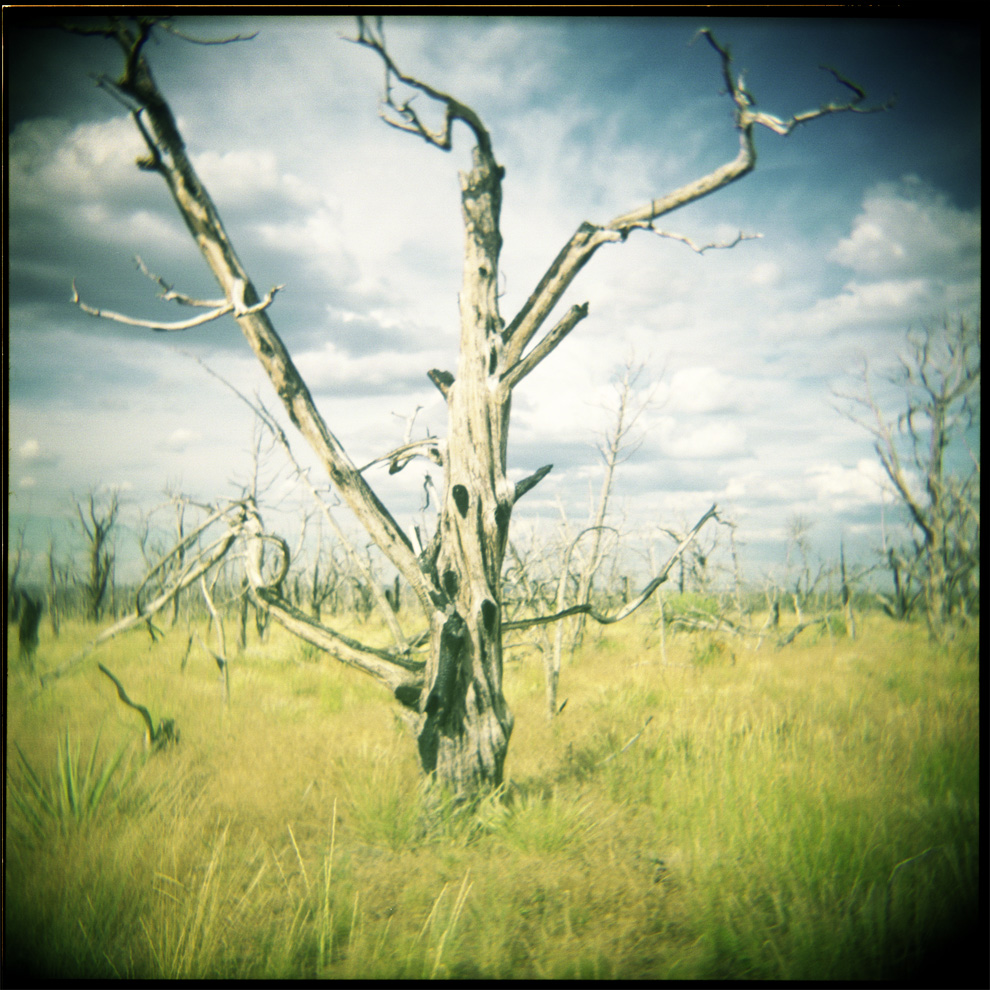
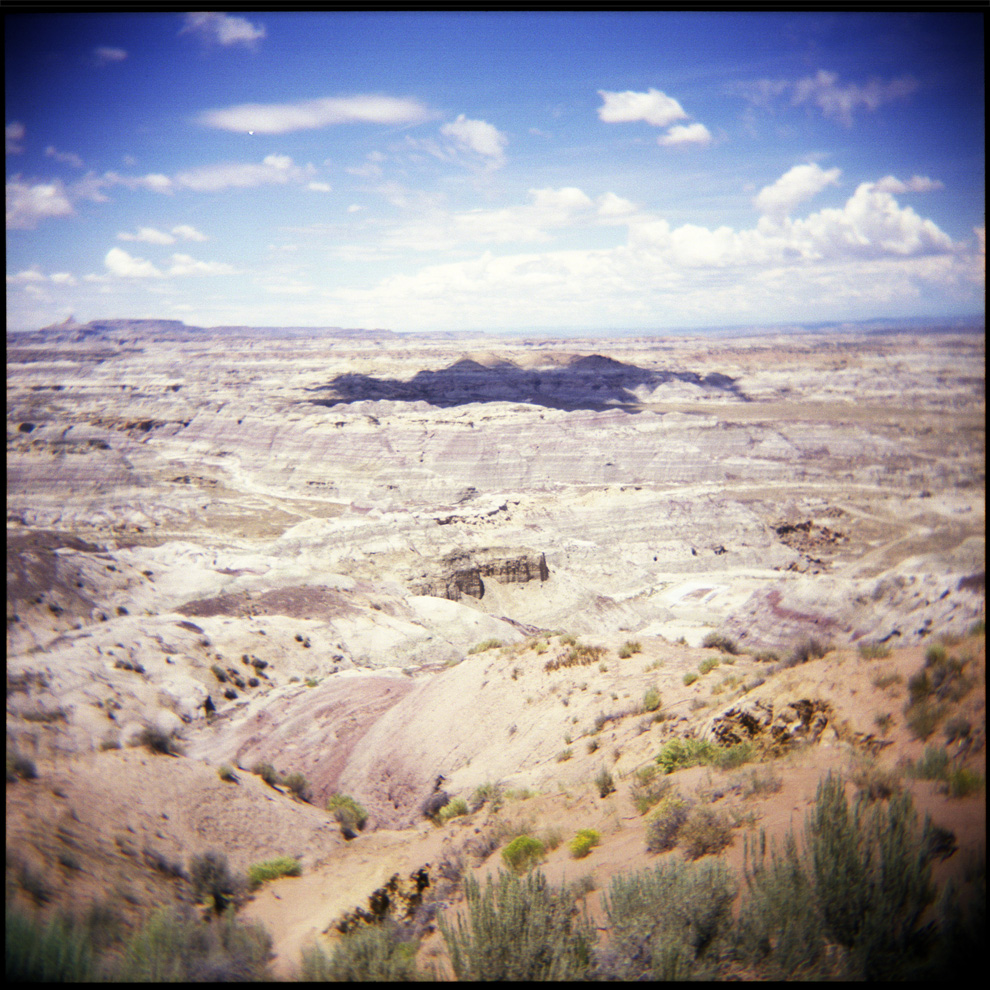
from the road

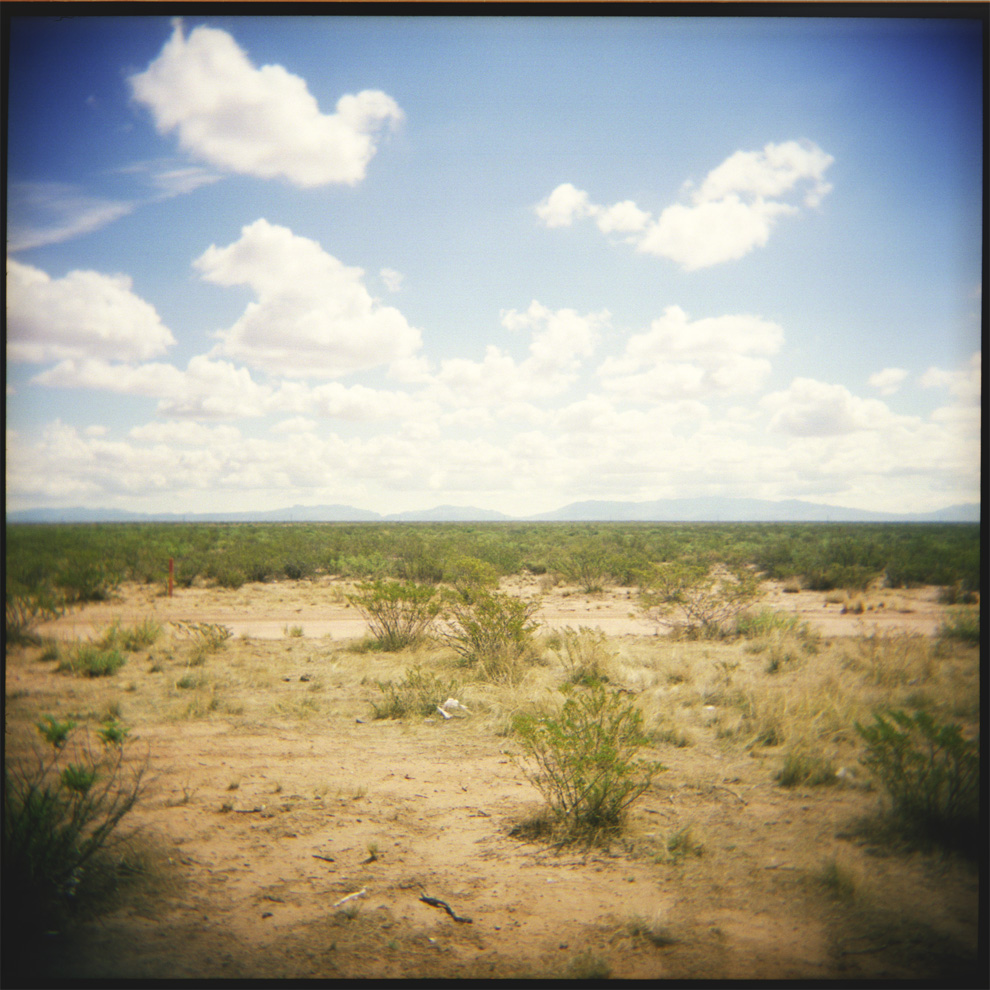
holga02holga03
holga01holga06
holga05holga04
holga07holga08
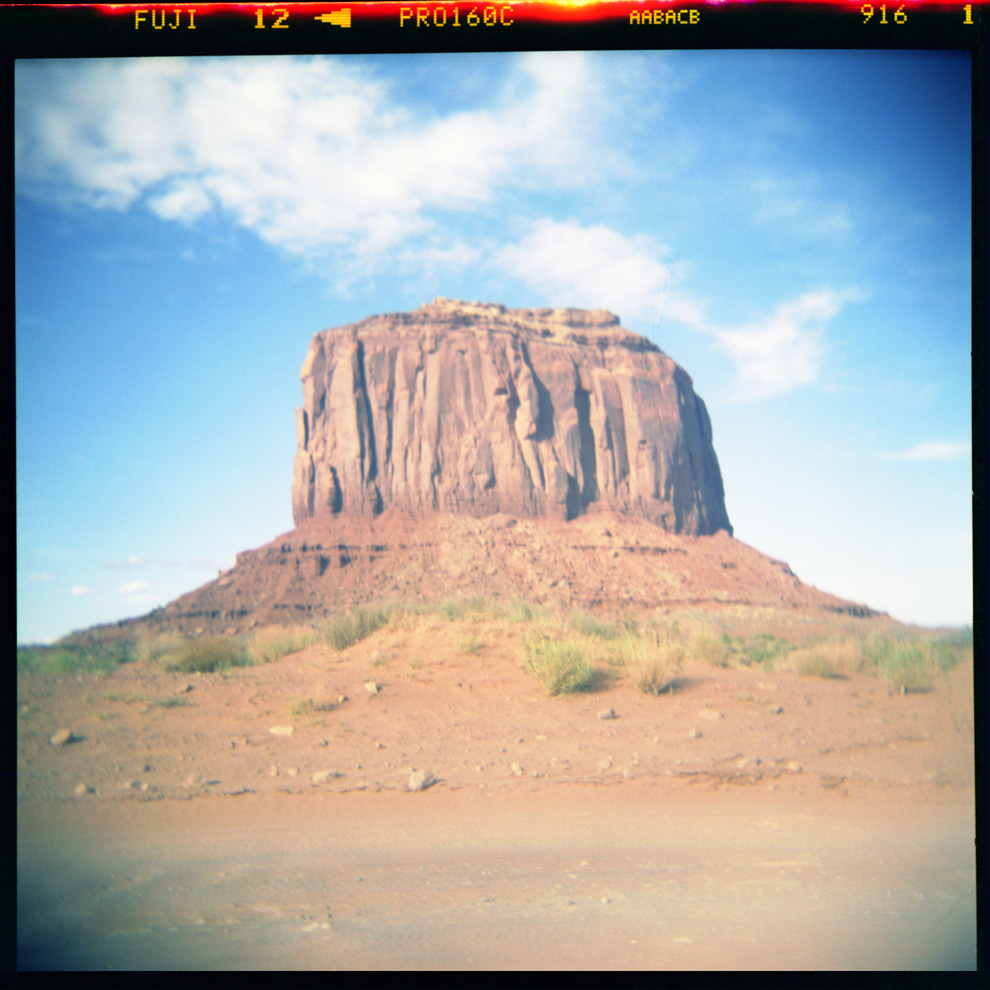
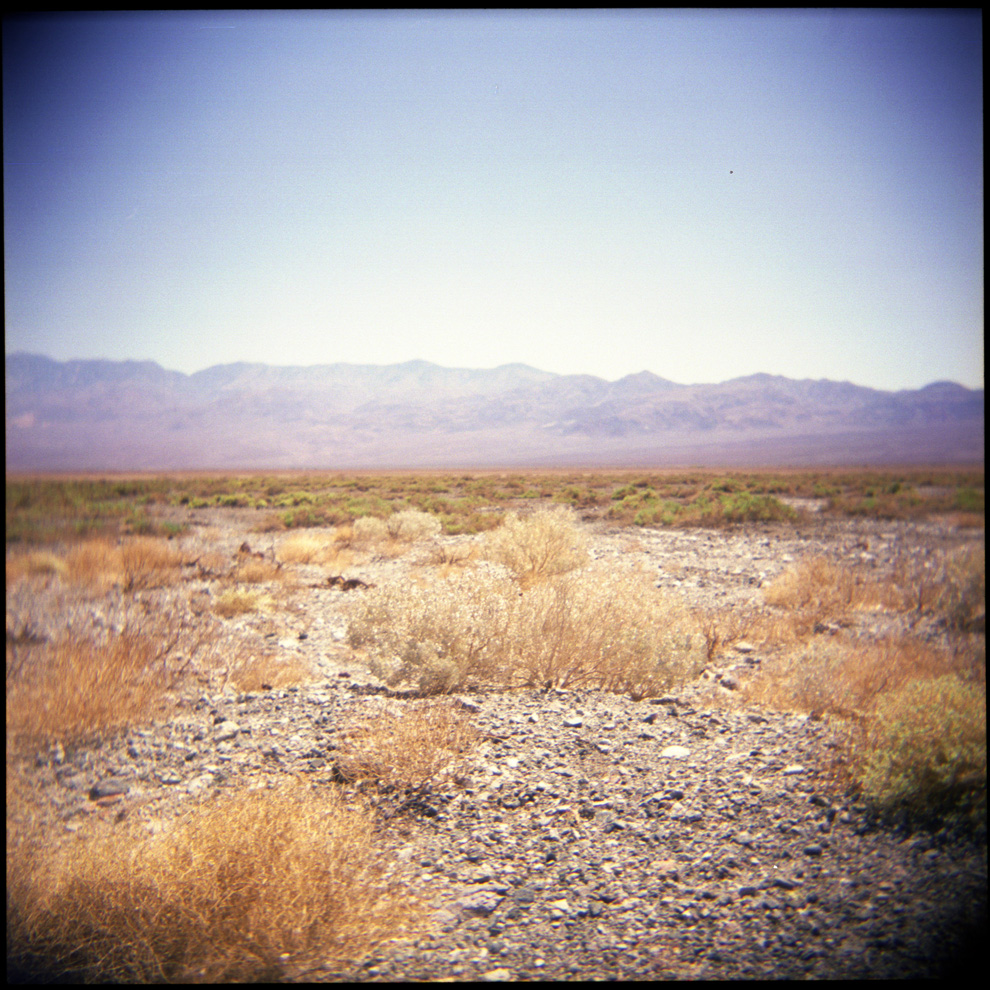
Clockwise from top-left:
Interstate 25, New Mexico;
US-160, Colorado;
US-89, Arizona;
Badwater Road, California;
E Sahuarita Road, Arizona;
US-191, Utah;
Monument Valley Road, Utah;
US-550, New Mexico

« Older Entries

COPYRIGHT © 2011 \ JOHN LOCKE \ ALL RIGHTS RESERVED (RSS)

TOP OF PAGE

last update: 201102:1627