Quick Description:
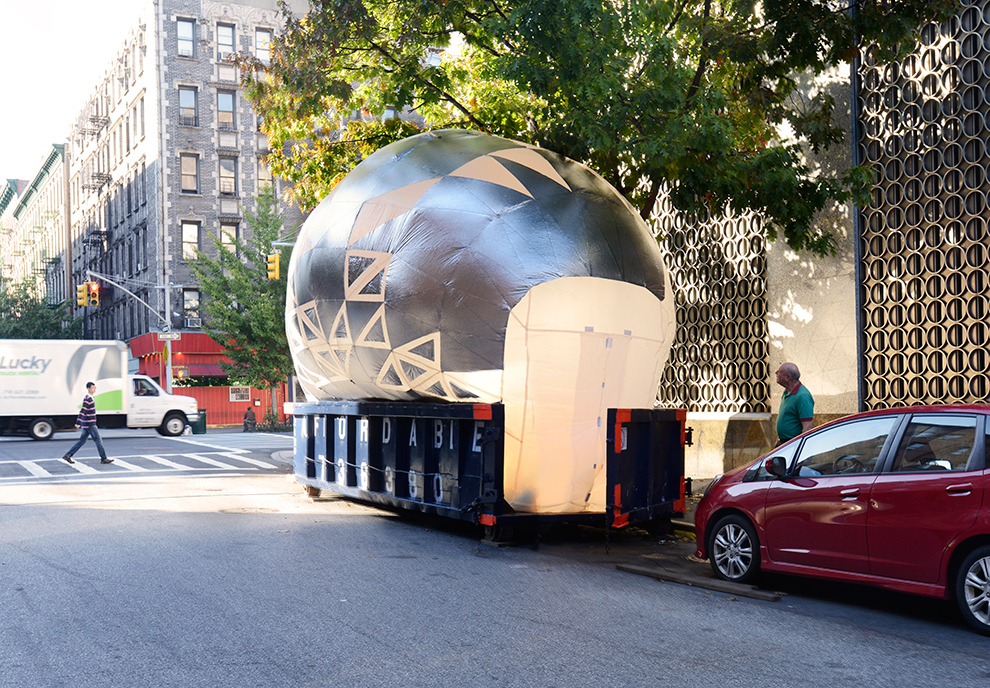
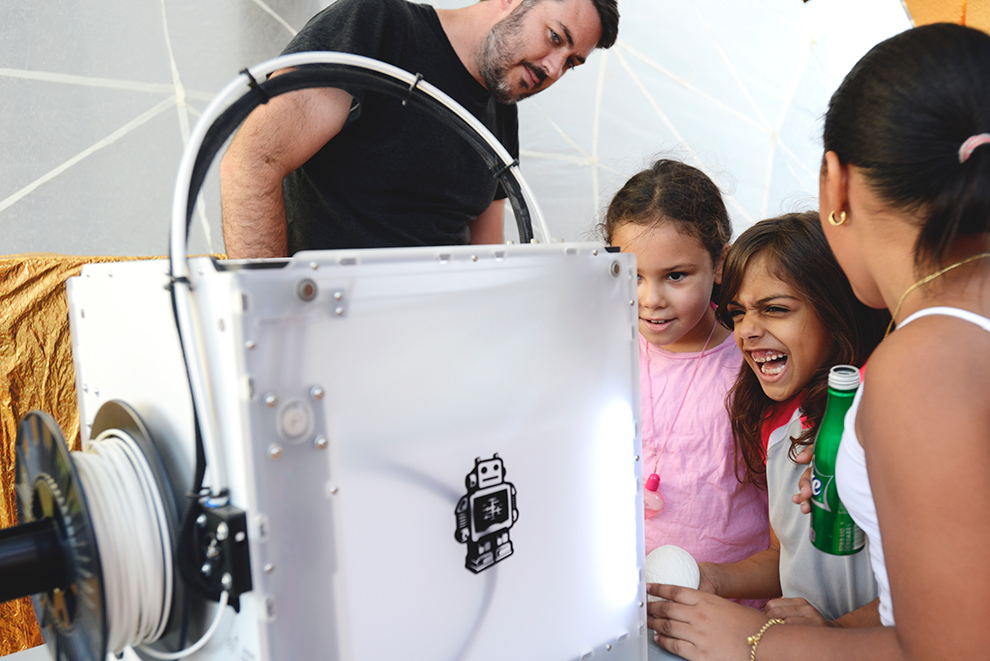
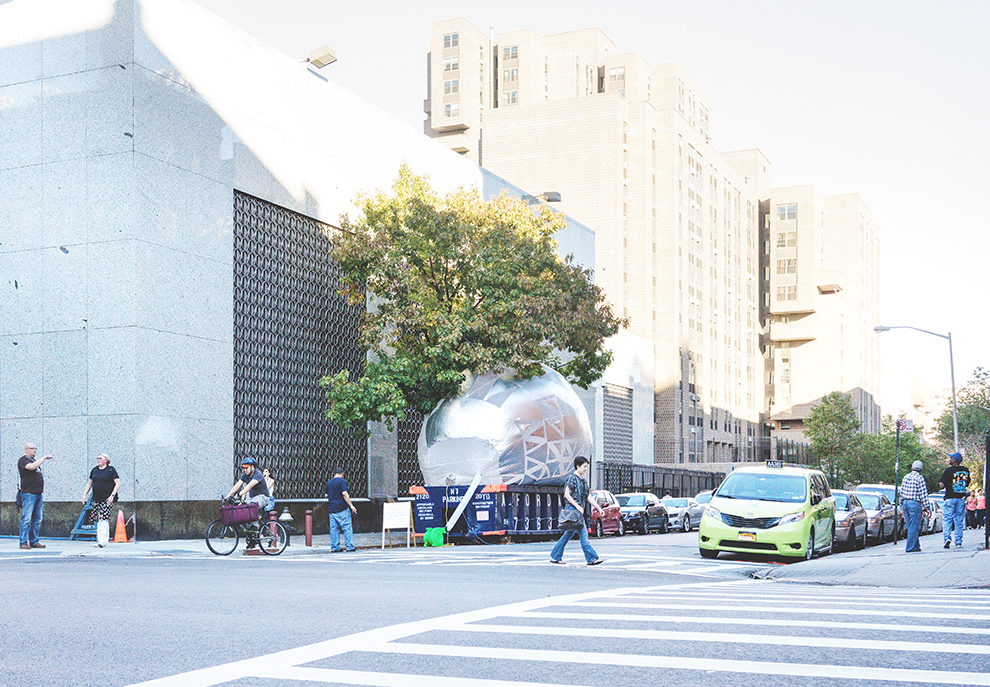
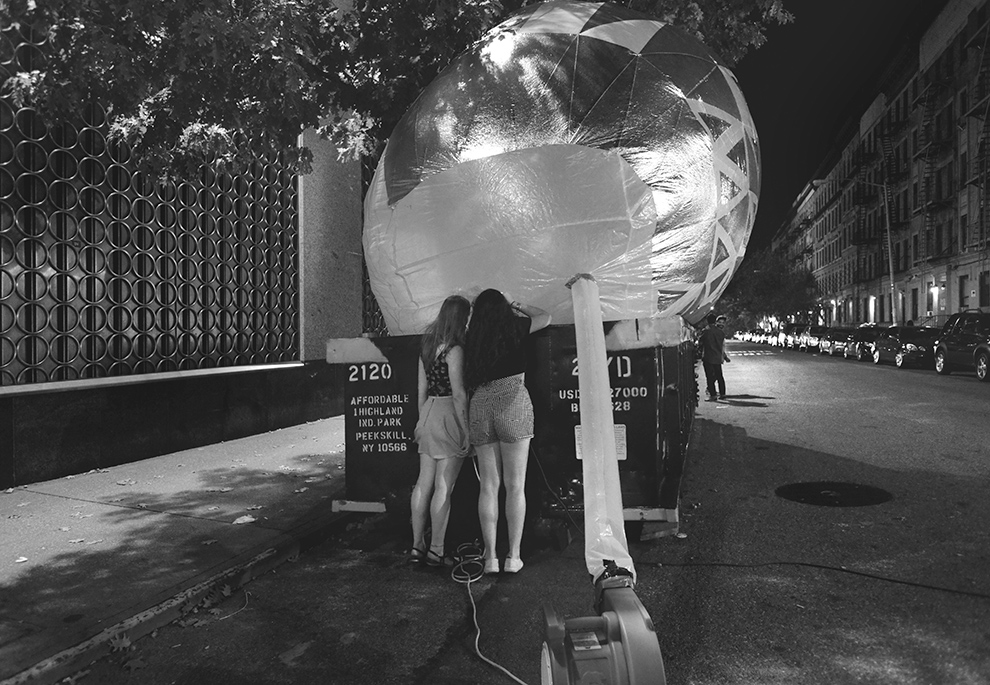
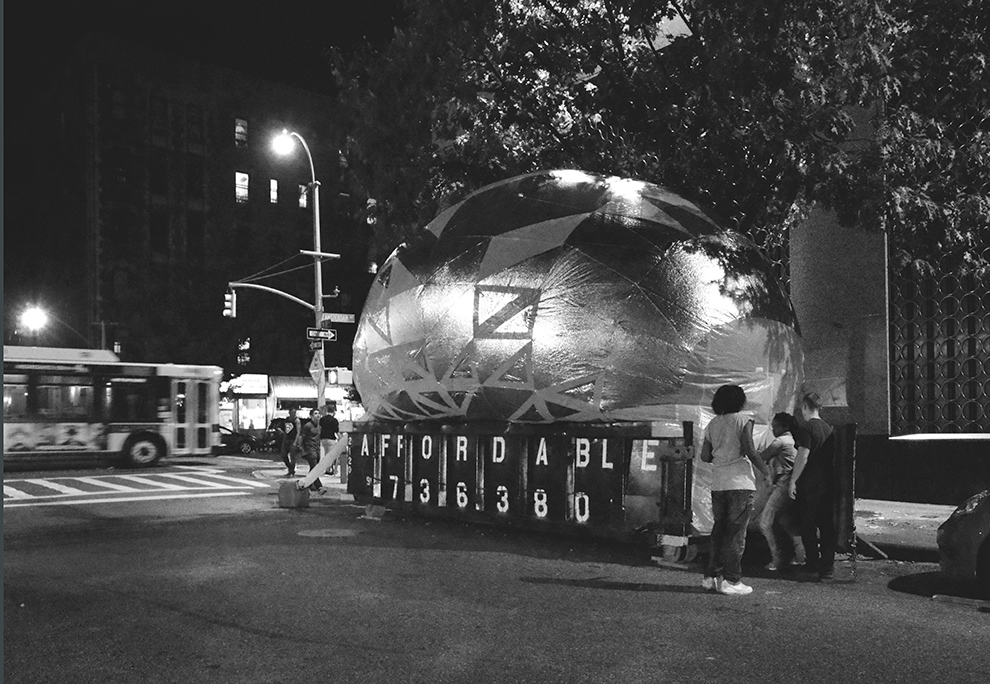
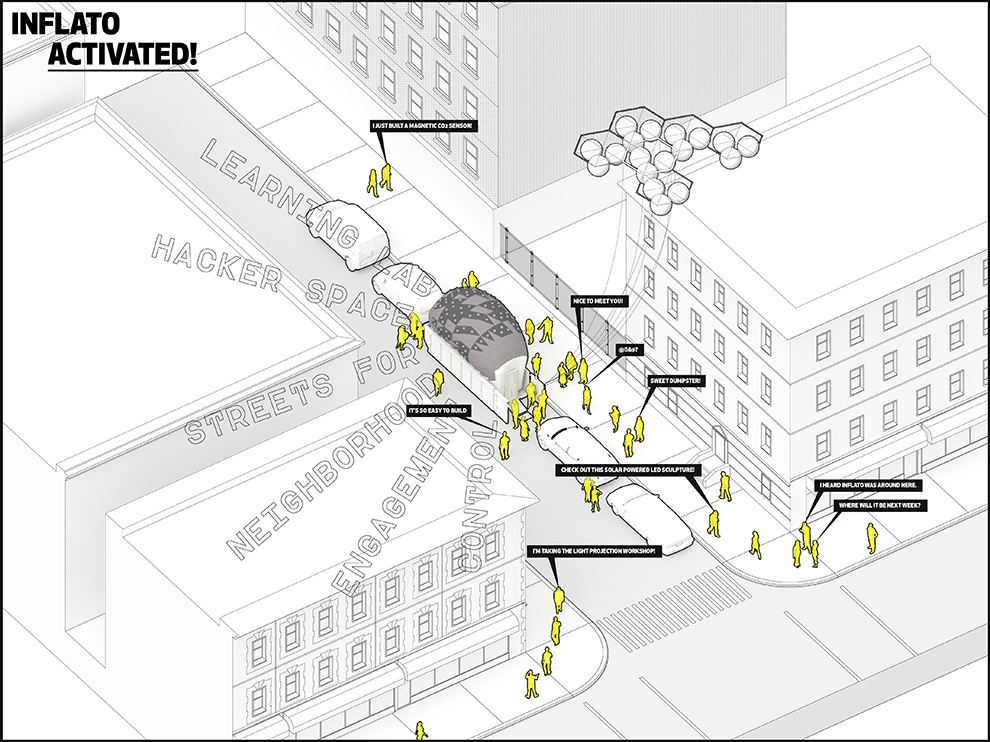
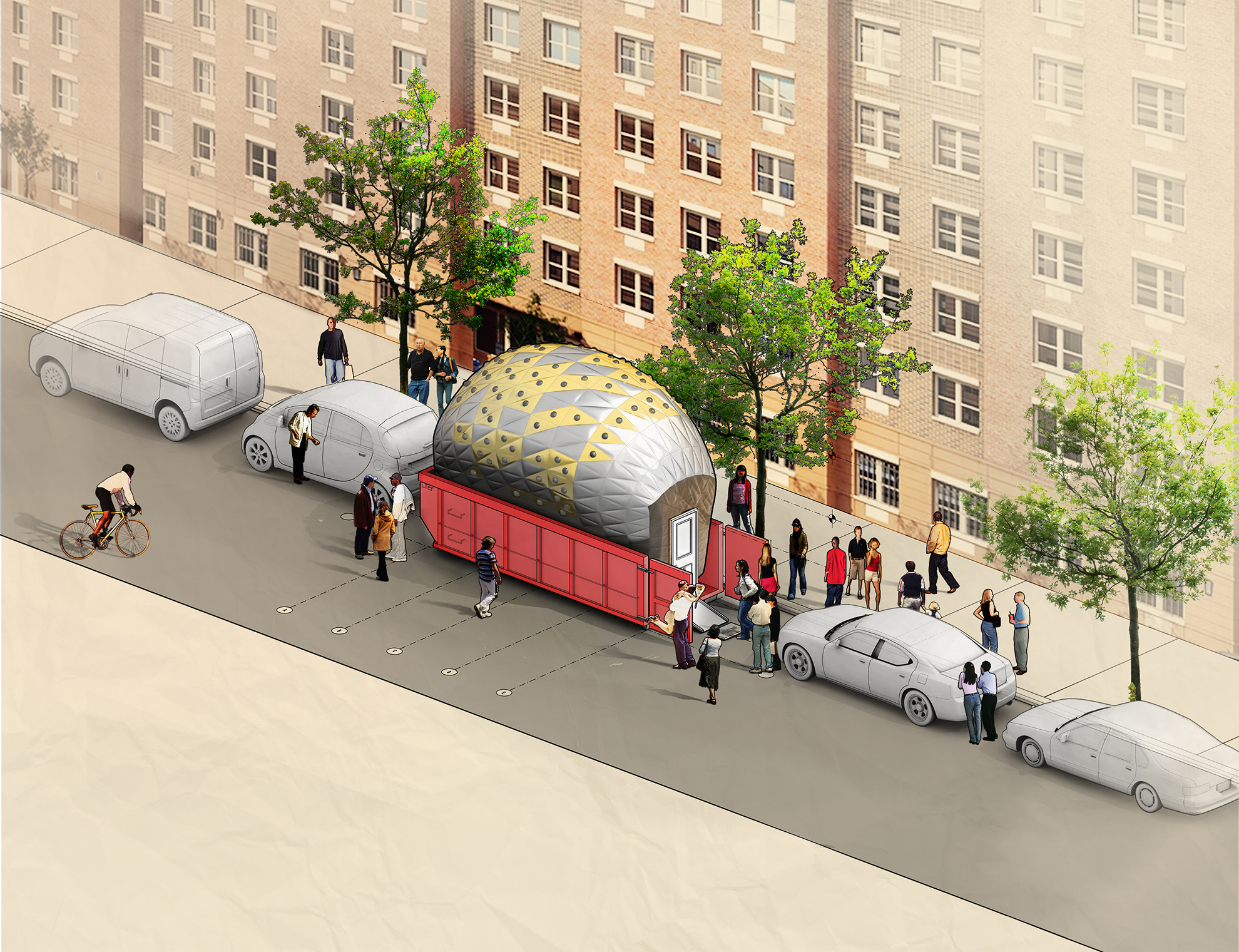
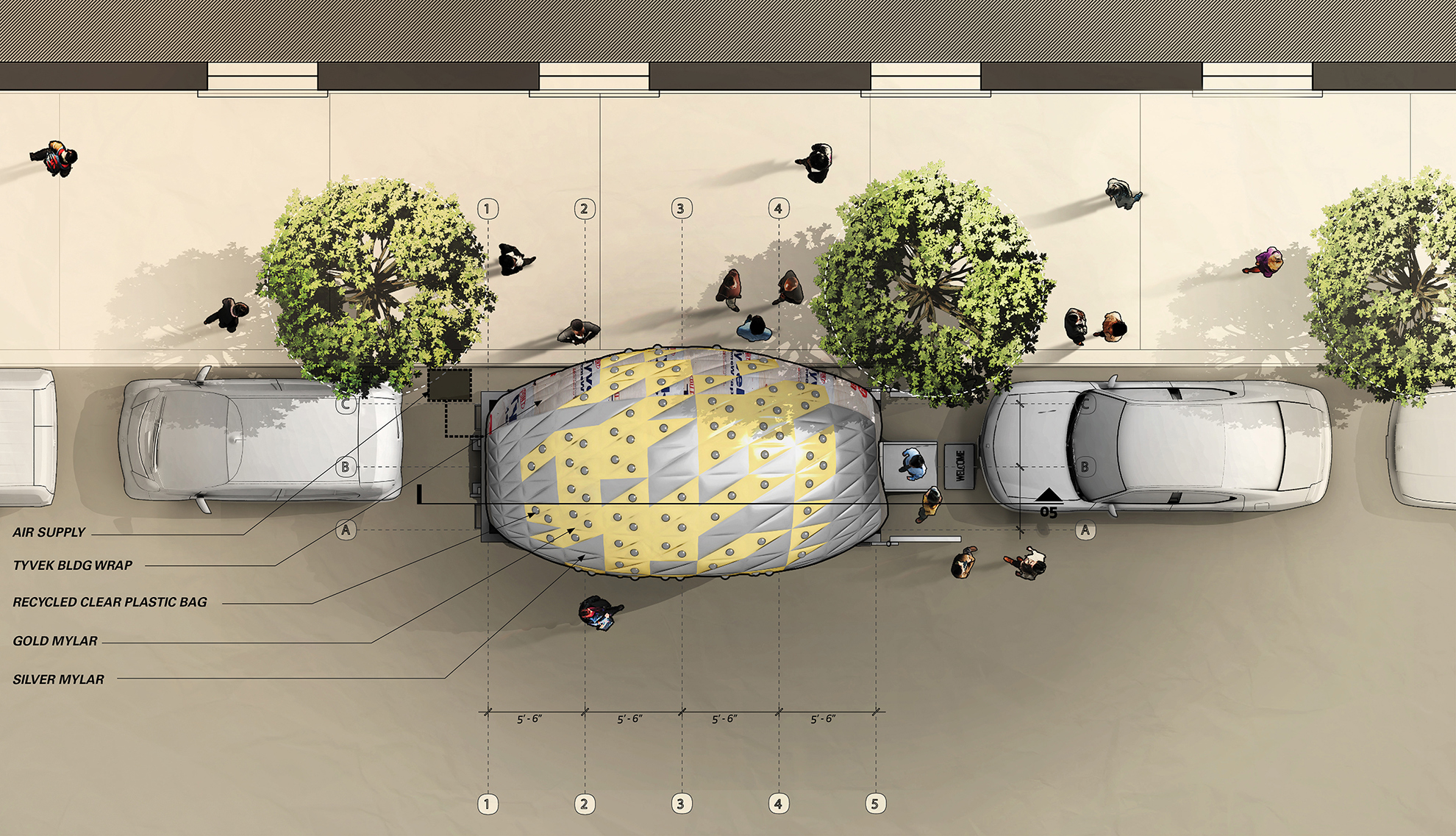
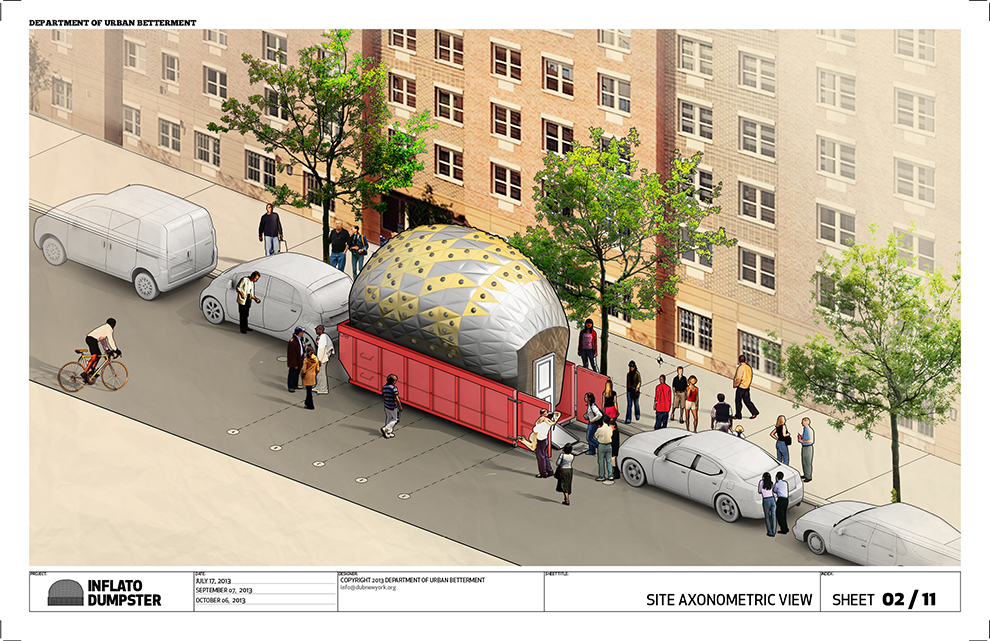
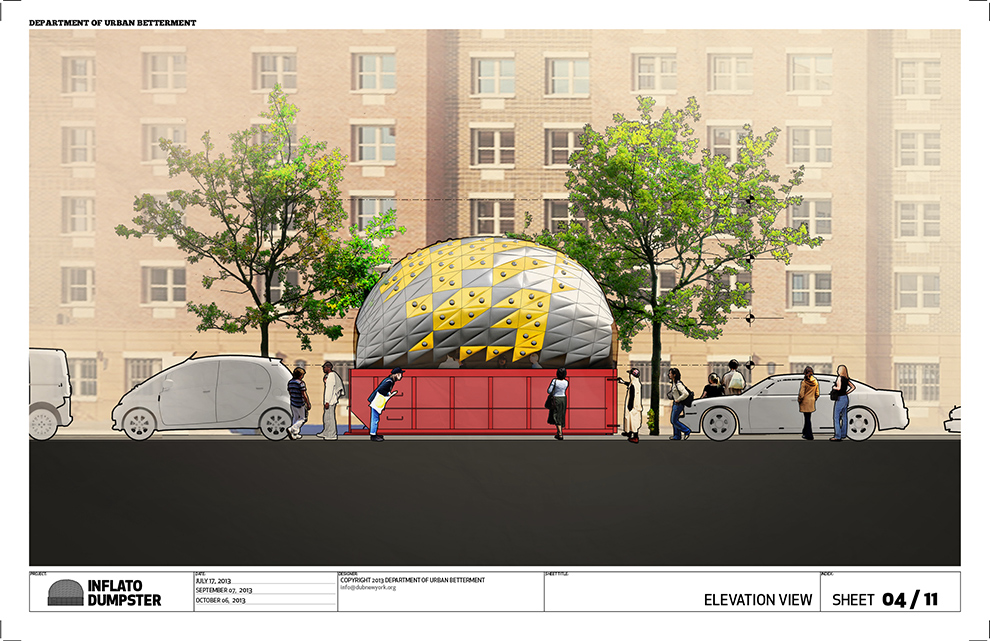
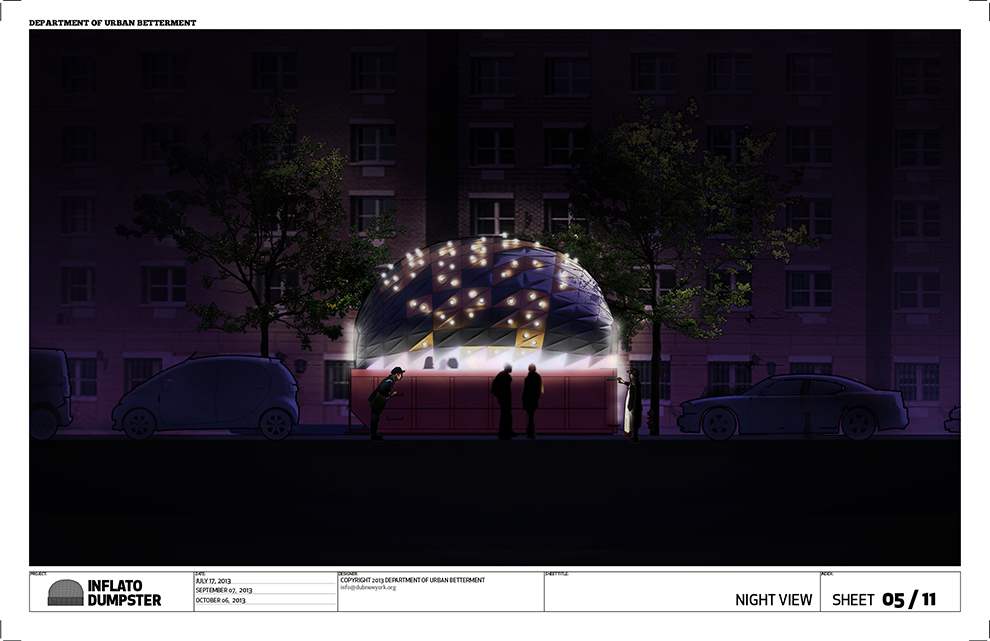
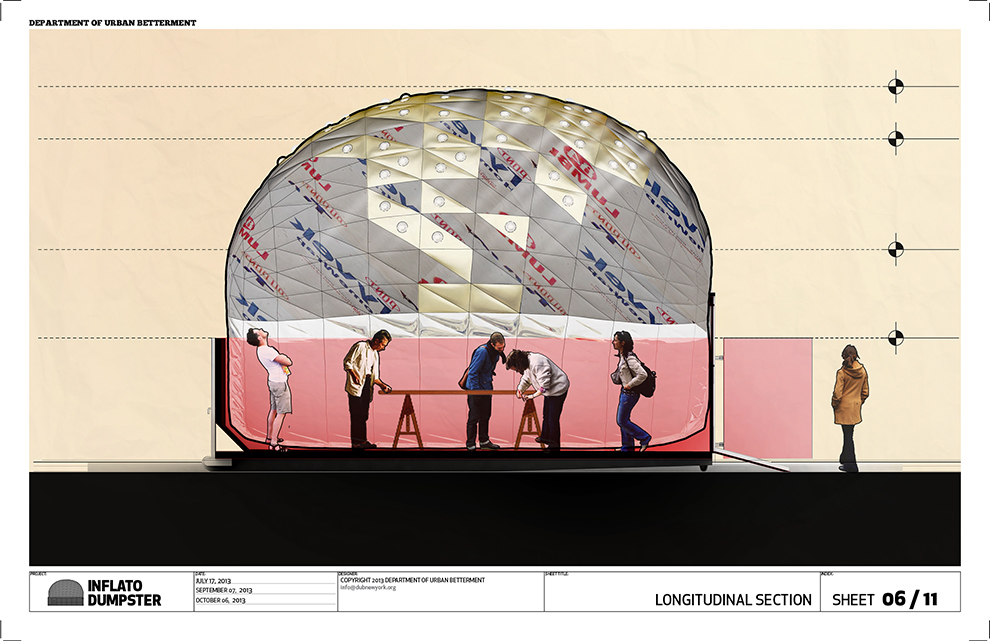
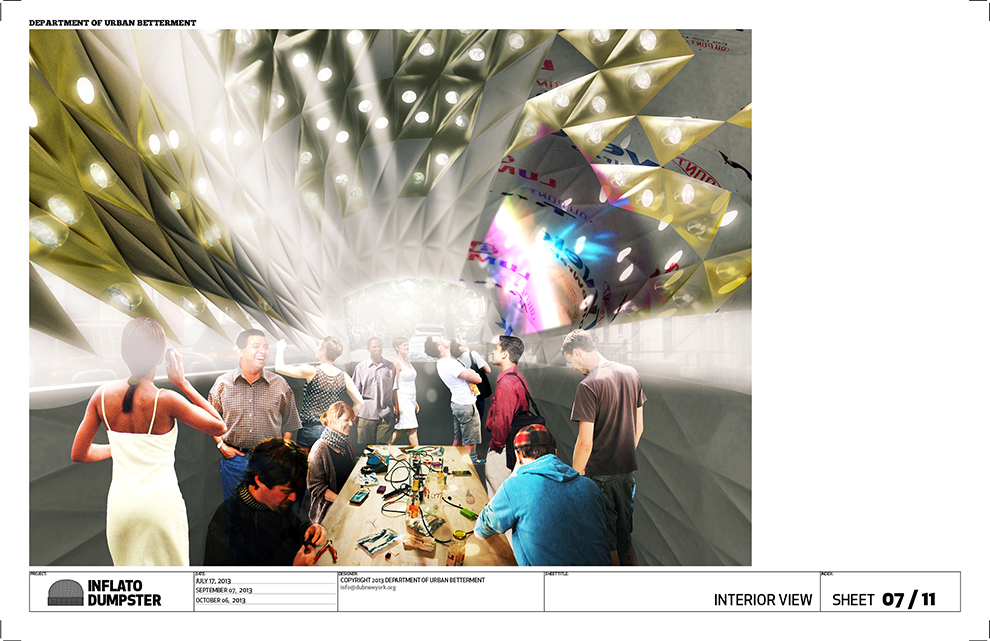
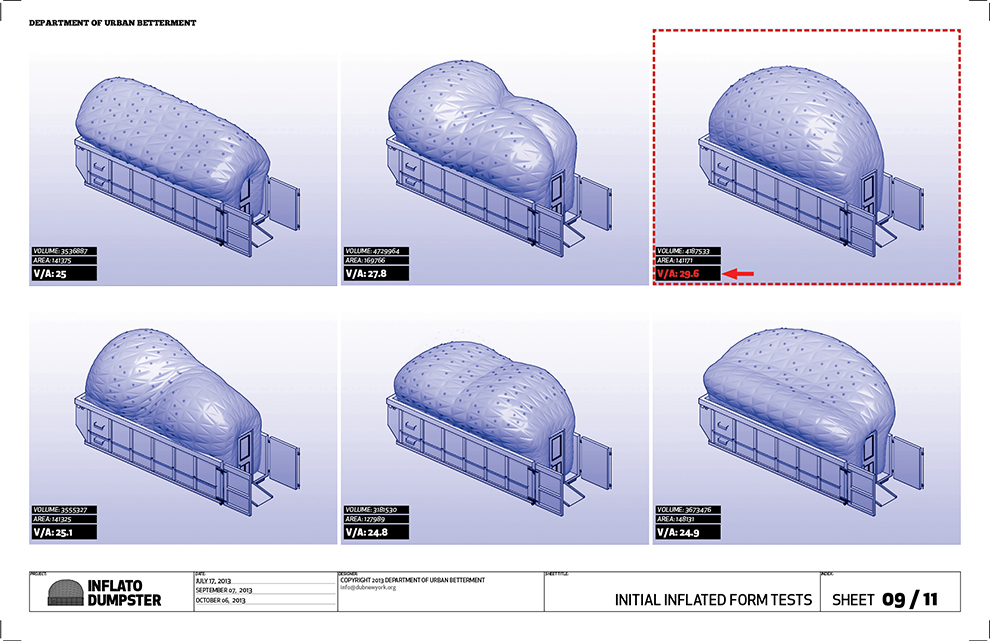
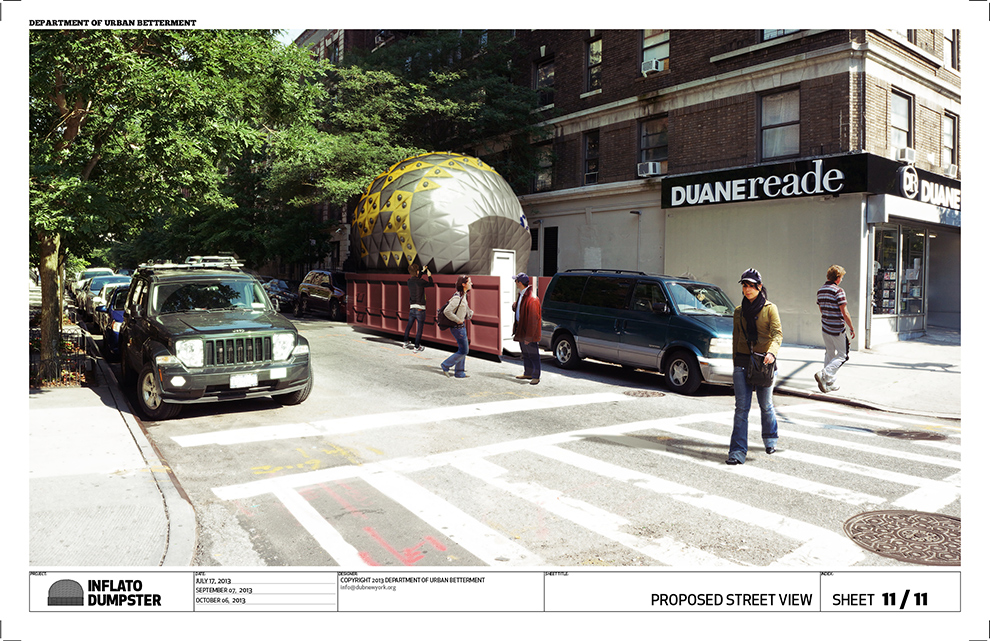
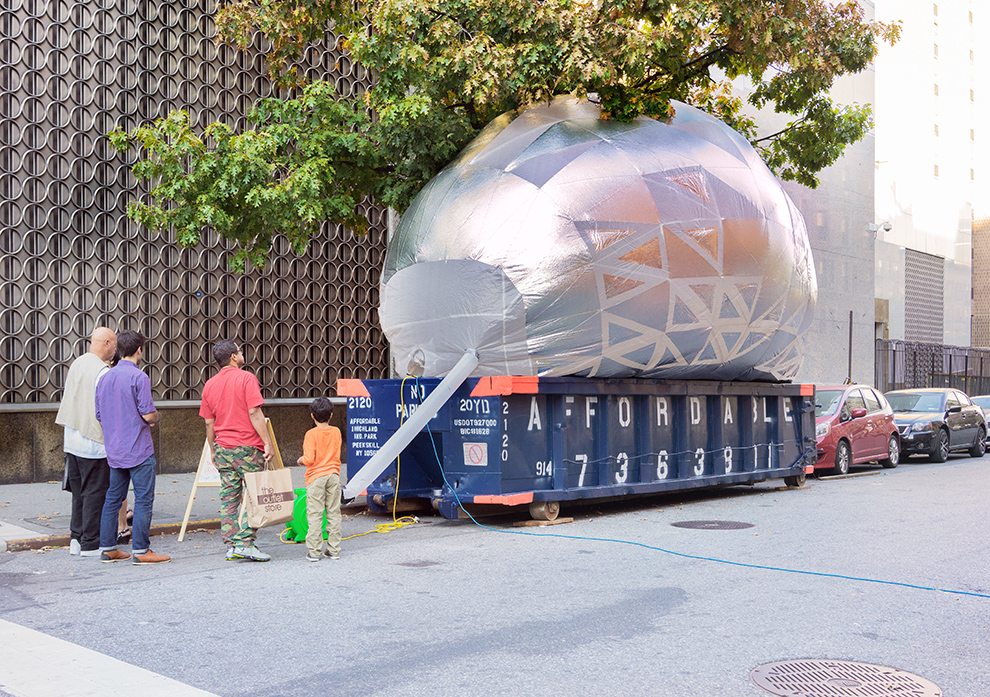
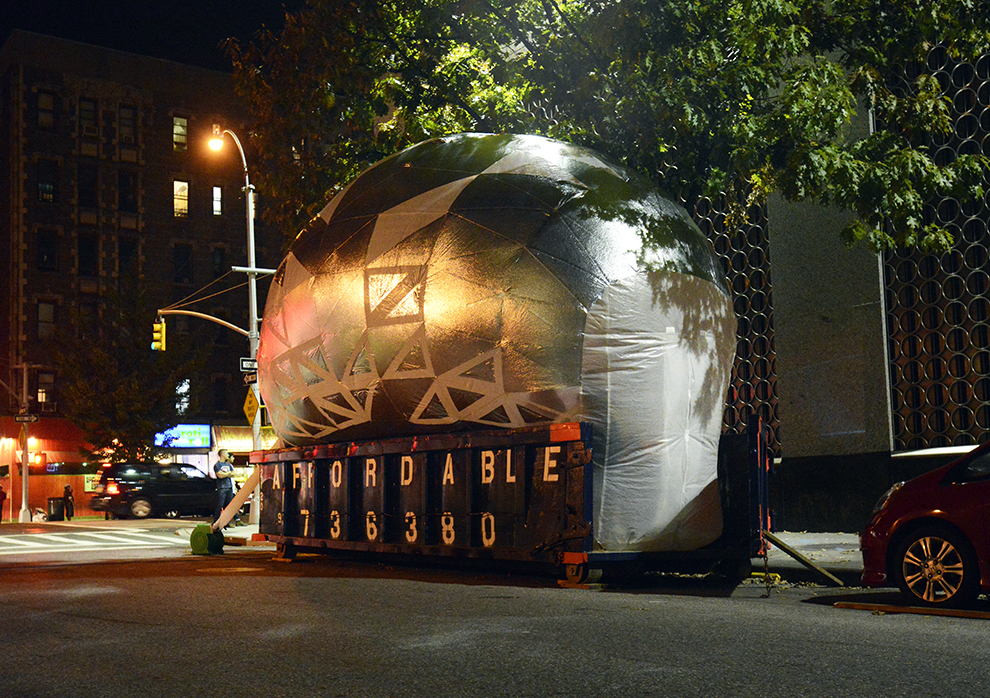
This is an inflatable classroom installed inside of a dumpster. It is the first installation – the beta version – launched over three days in late-September at 109th Street and Amsterdam Avenue in the Bloomingdale Neighborhood of Manhattan. The project includes 165 square feet of enclosed space with maximum dimensions at 17’ height by 12’-6” wide and 24’ long. Over the three days the project was activated, over 500 people in the neighborhood interacted with the installation through a number of events and workshops including: a musical performance by Amani Fela, documentary screening by filmmaker Simone Varano and a 3D printing and modeling work session. The total project budget was $4,200 (including equipment rental) – the majority of said budget was funded via Kickstarter, a process we are deeply skeptical of in regards to urban projects, but used nonetheless. The intention is for the project to continue to periodically activate and further explore how it fits within this neighborhood. This project was created with friend and design partner Joaquin Reyes, and is part of a Columbia University course I teach titled “Hacking the Urban Experience.”
Inflato:
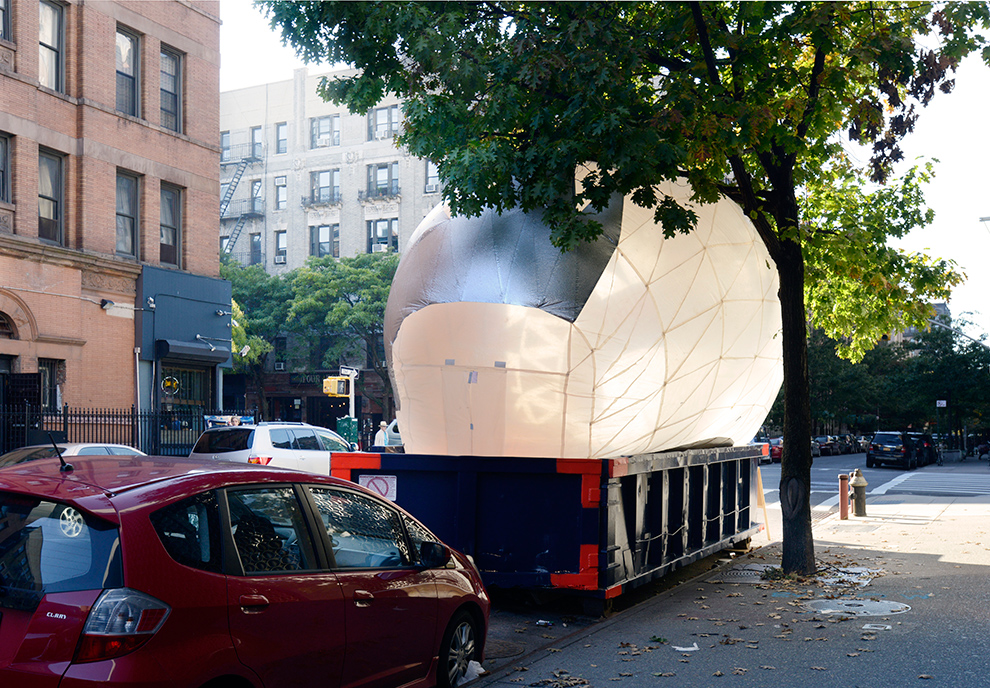
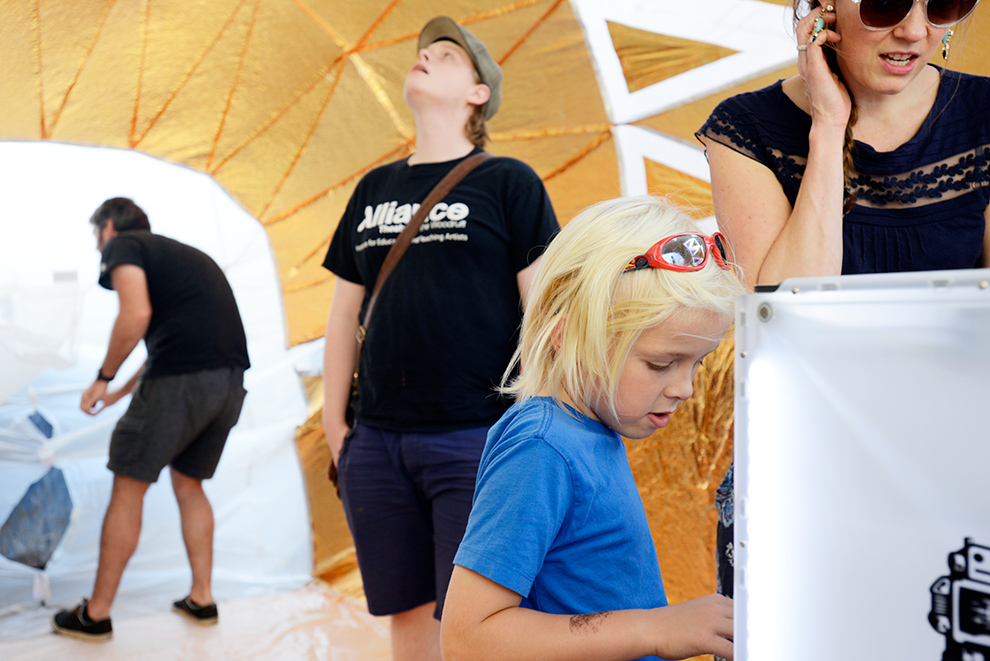
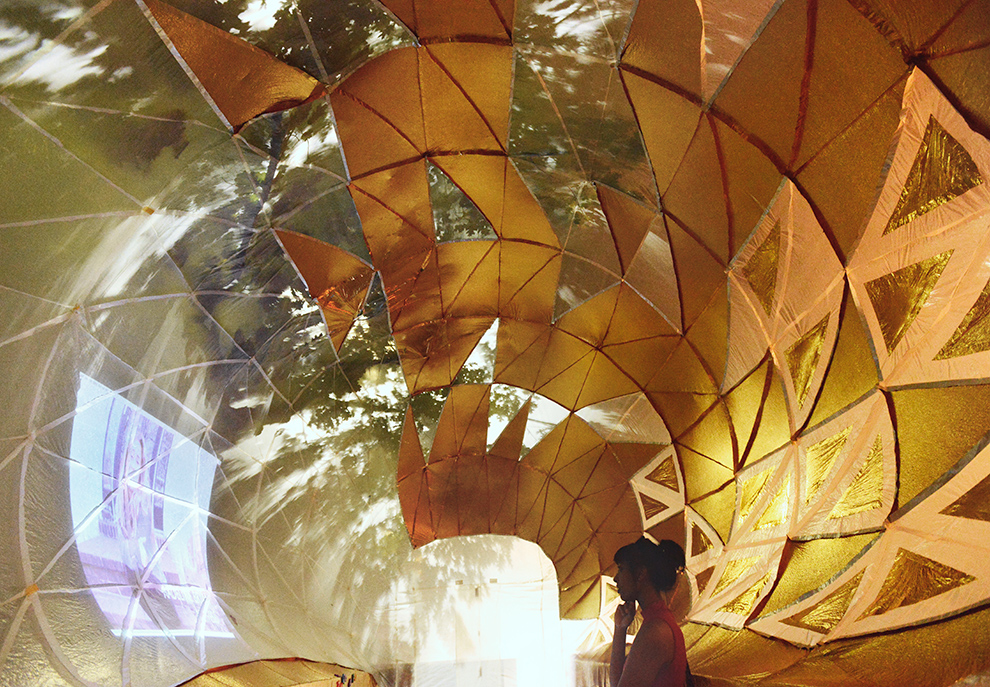
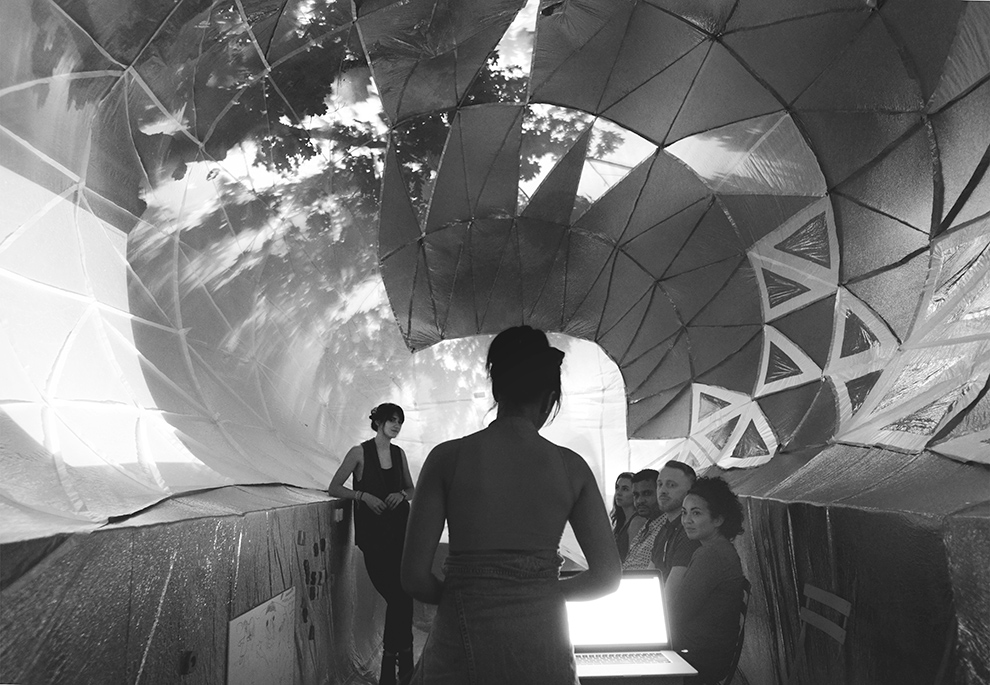
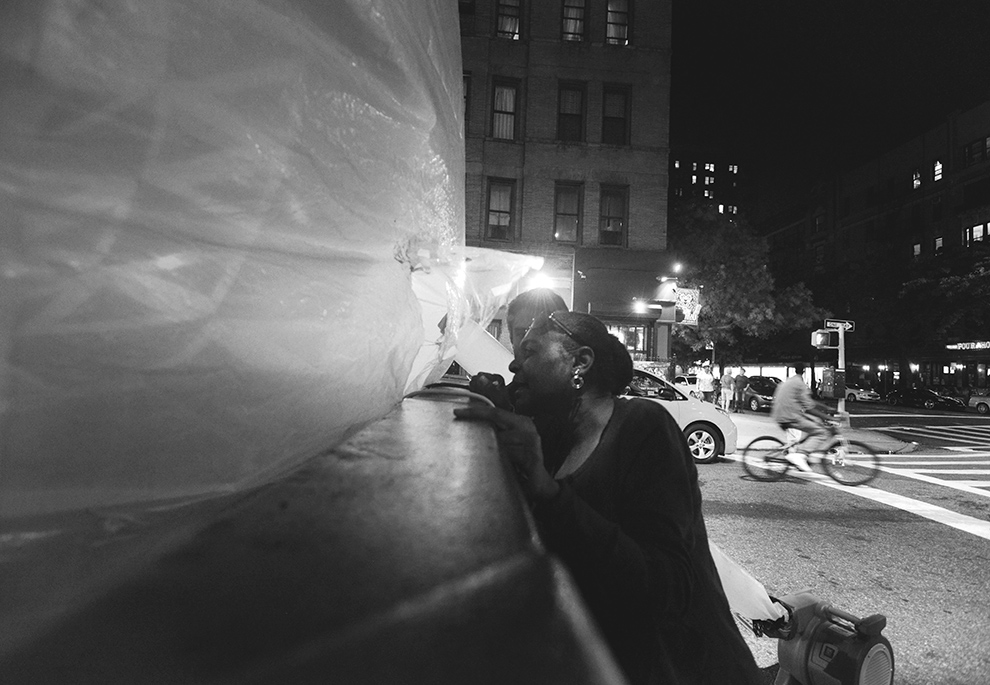
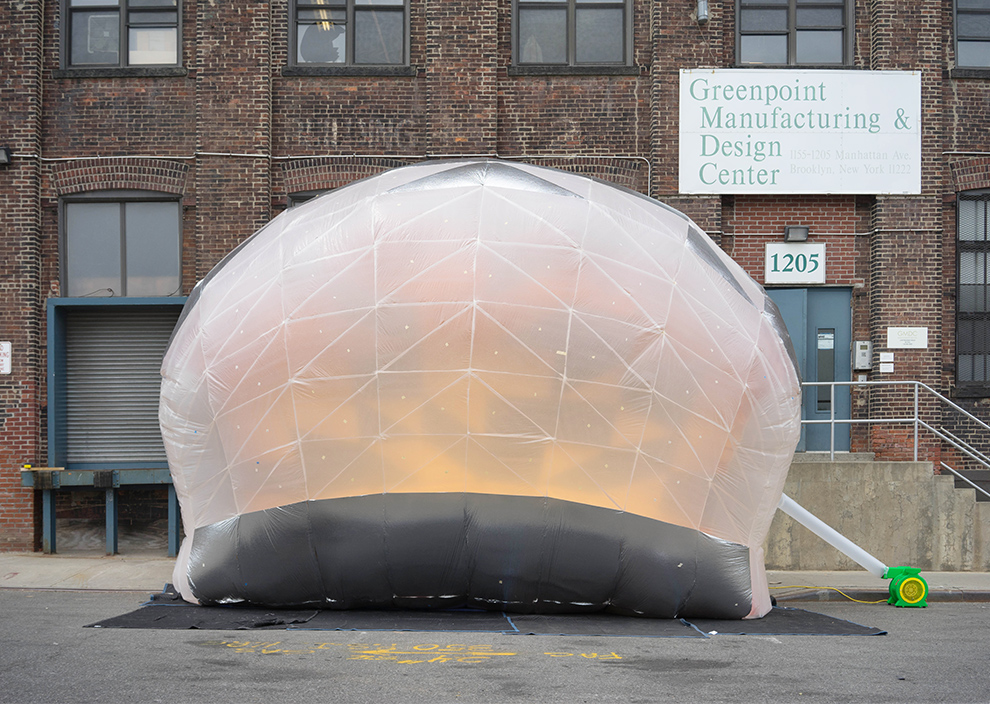
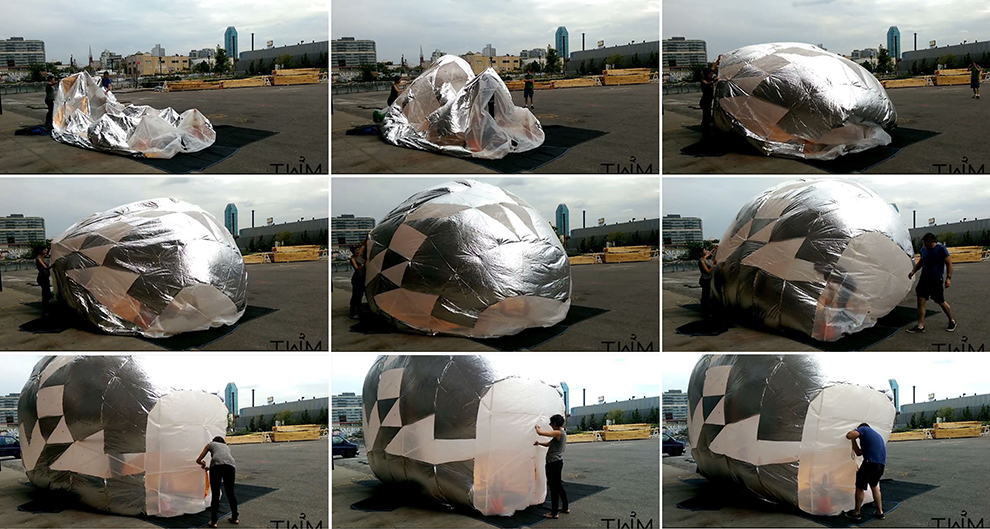
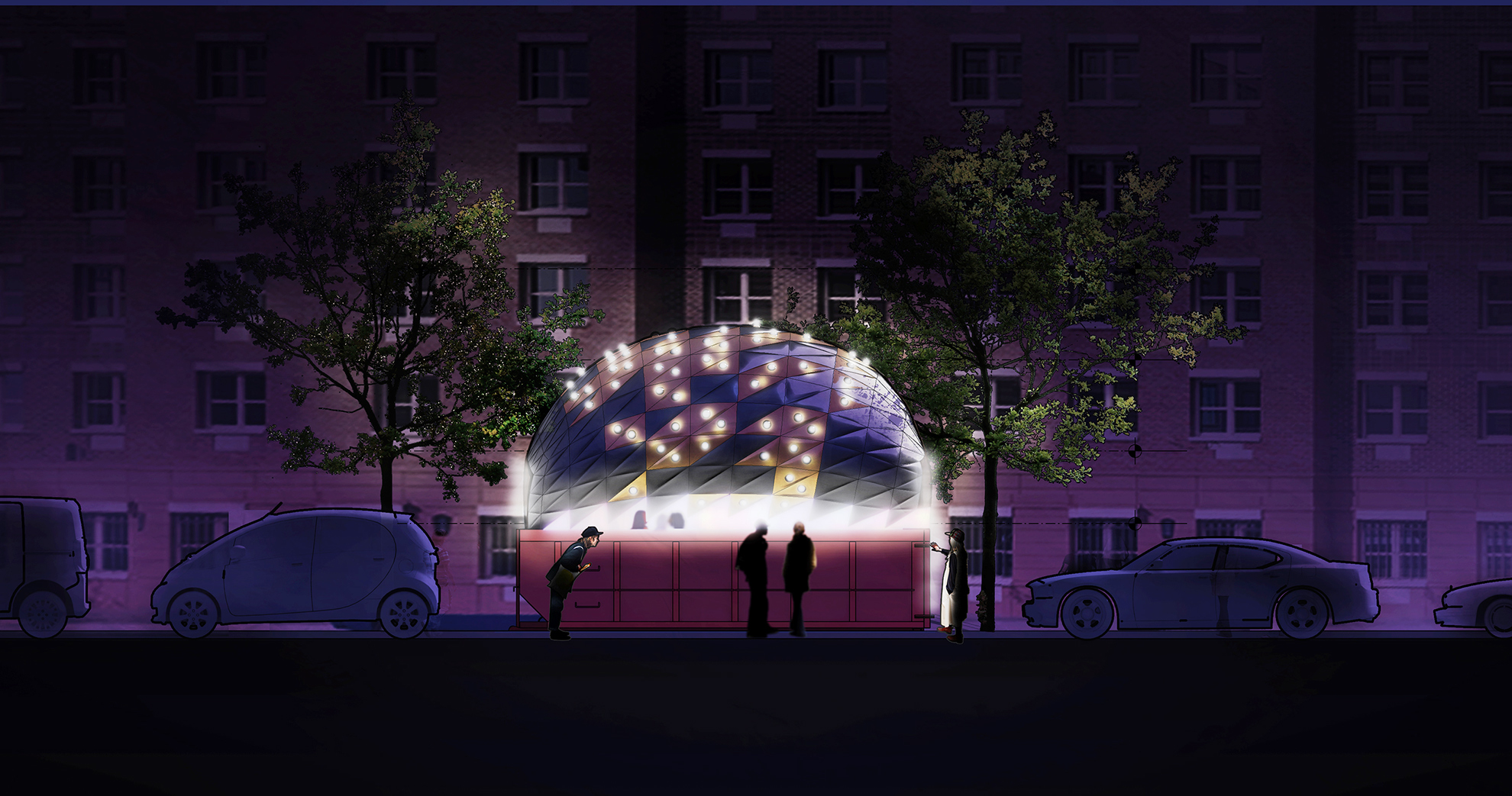
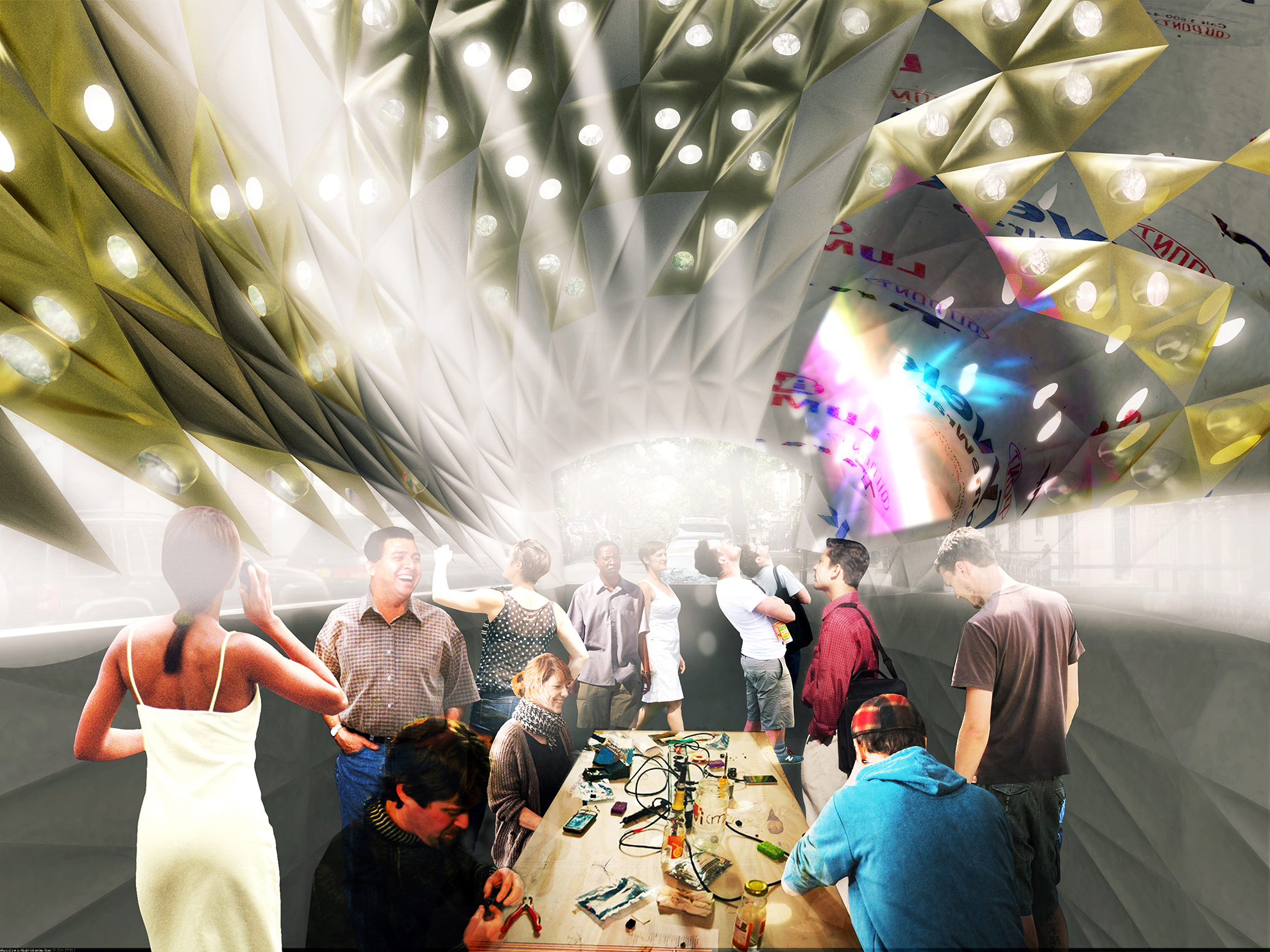
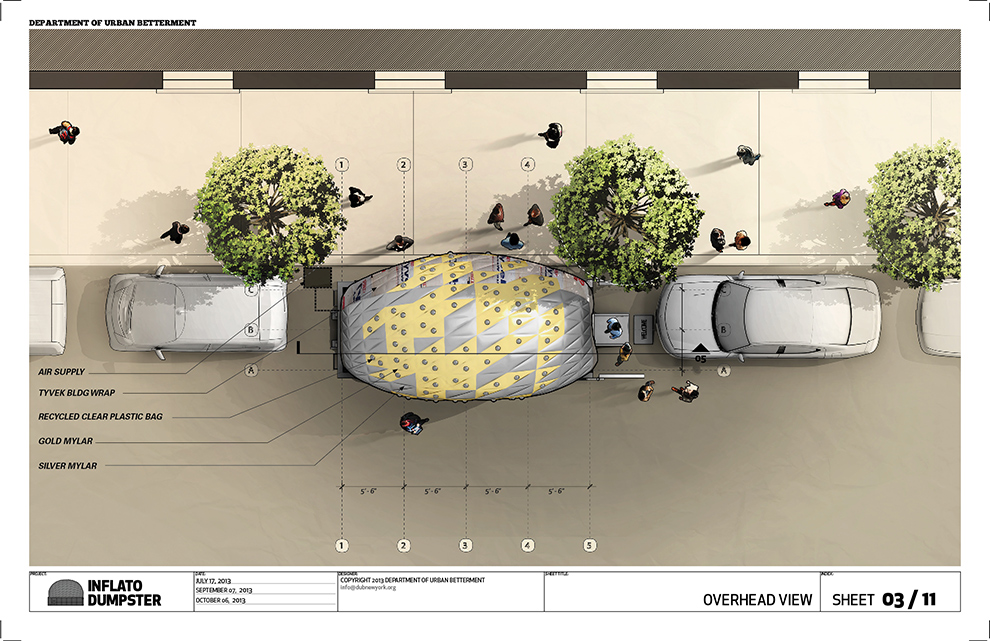
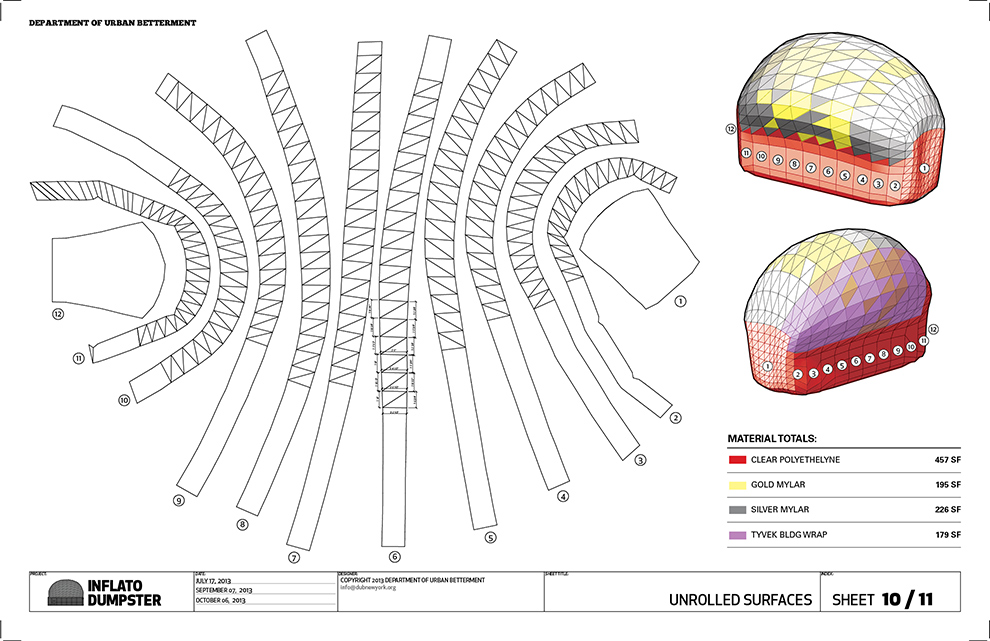
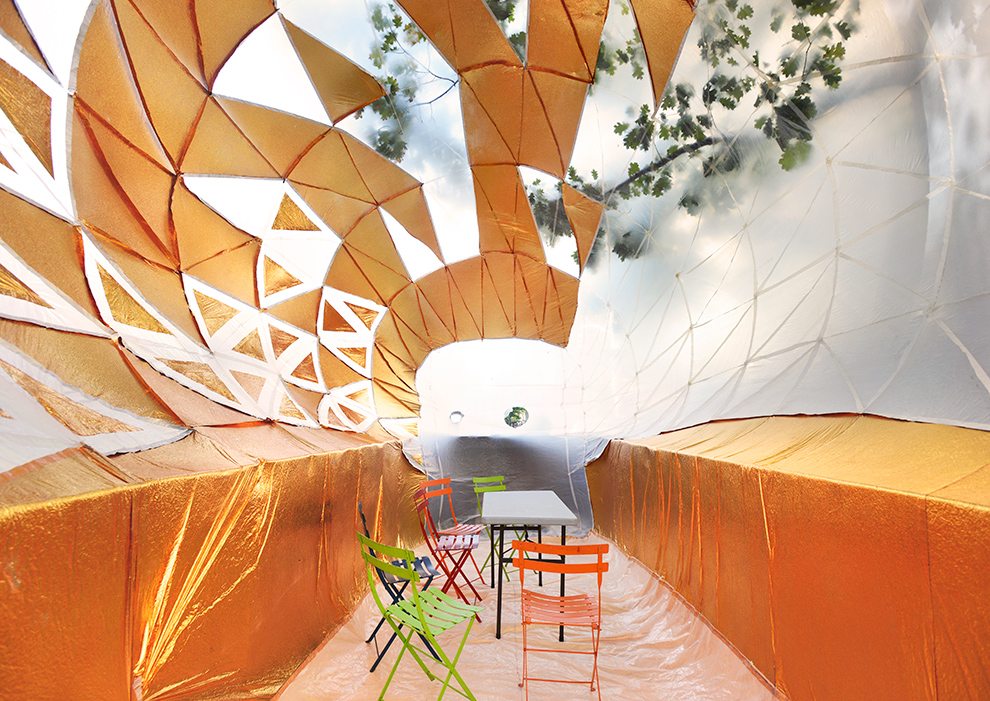
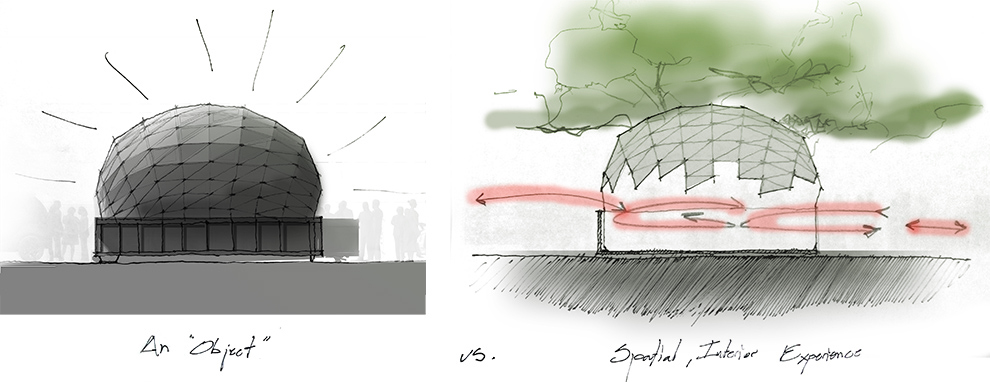
The main element is an inflatable membrane containing 2000 cubic feet of volume. This inflato is made from a combination of two lightweight materials. The first is a clear polyethylene. This is an inexpensive, common and biodegradable plastic material that will allow views both from and out to the street. The second material is a mylar film used in both emergency hiking blankets and spacecraft. Dual-sided – silver and gold – the inflato presents a subdued silver, semi-reflective surface on the exterior with a gold, brightly gilded interior. The street side is more opaque, while the sidewalk side is more open allowing views and a surface to project images onto. The transparent side also allows light to filter down through the canopy of the sidewalk maple tree from above. There is a strong evocation of being under a shaded tree.
Dumpster:
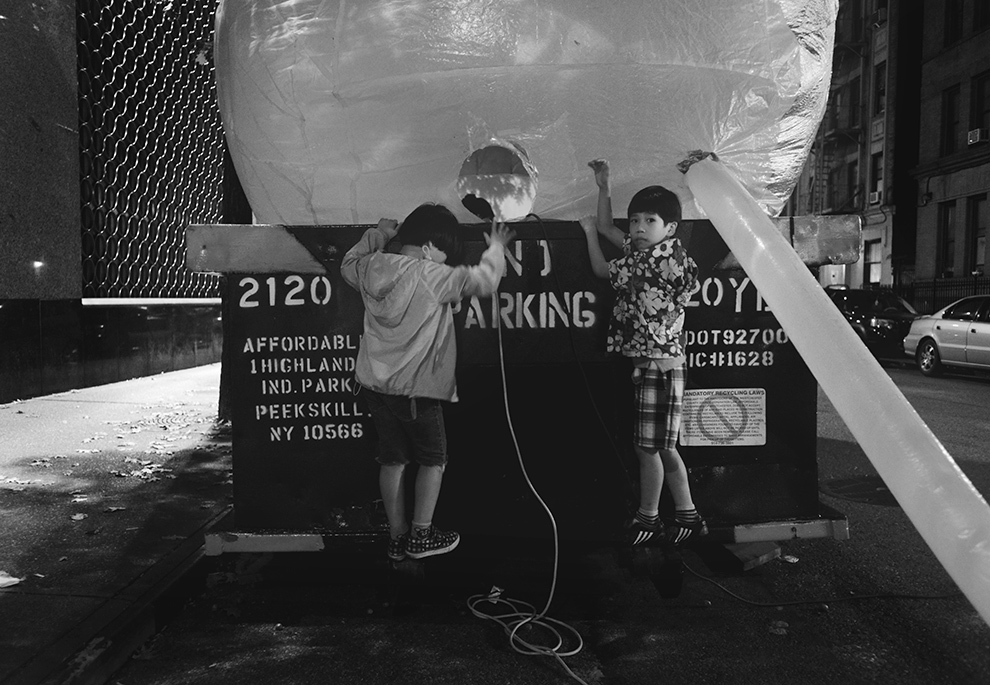
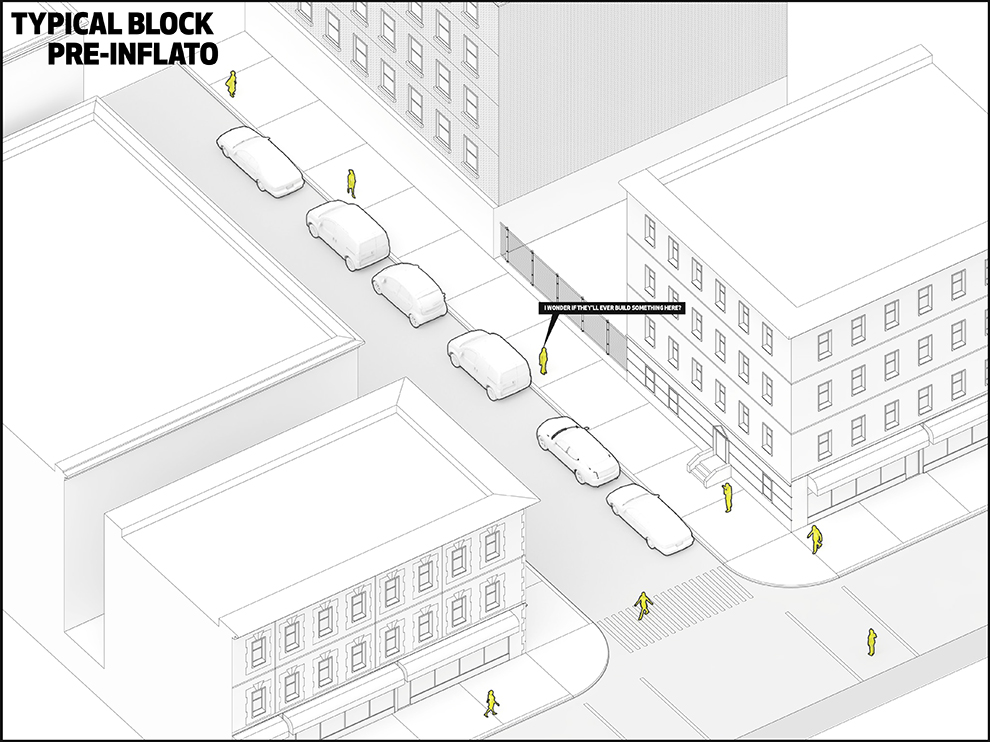
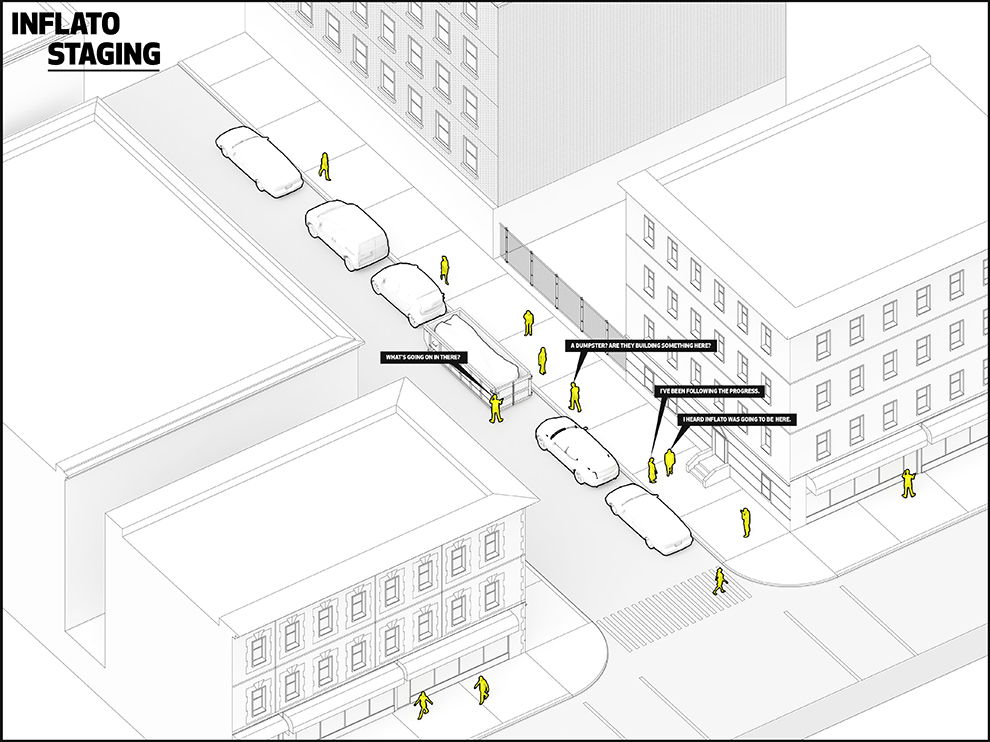
“Go inside a dumpster?!?!” – An understandable response given by roughly a quarter of people when told they were welcome to go inside. I think the dumpster helped because it kept the project in the realm of the recognizable, and fed into the transgressive feeling of being inside of an off-limits space. Connotations of trash aside, there’s a shared awareness of the spatial interior dimensions of a dumpster, unlike, say, “an inflatable classroom” or, even worse, “a new paradigm of public space,” which could be just about anything. Or maybe it just lowered the bar so much, that when people stepped not into a rusted metal box, but rather a glowing vaulted space, they couldn’t help but feel like they had been transported.
So there’s certainly an interest in transforming existing banal street structures, but also being drawn to the idea of turning something typically associated with waste and discarded materials into a space for something exciting and new. This, in turn, led to exploring the invisible lightness of the inflatable in relation to the hard steel of the dumpster and the heavy demolition work of machines and tools. This juxtaposition of heavy/light and new/used became a key hot-air-balloon-like diagram of the solid base paired with the weightless membrane.
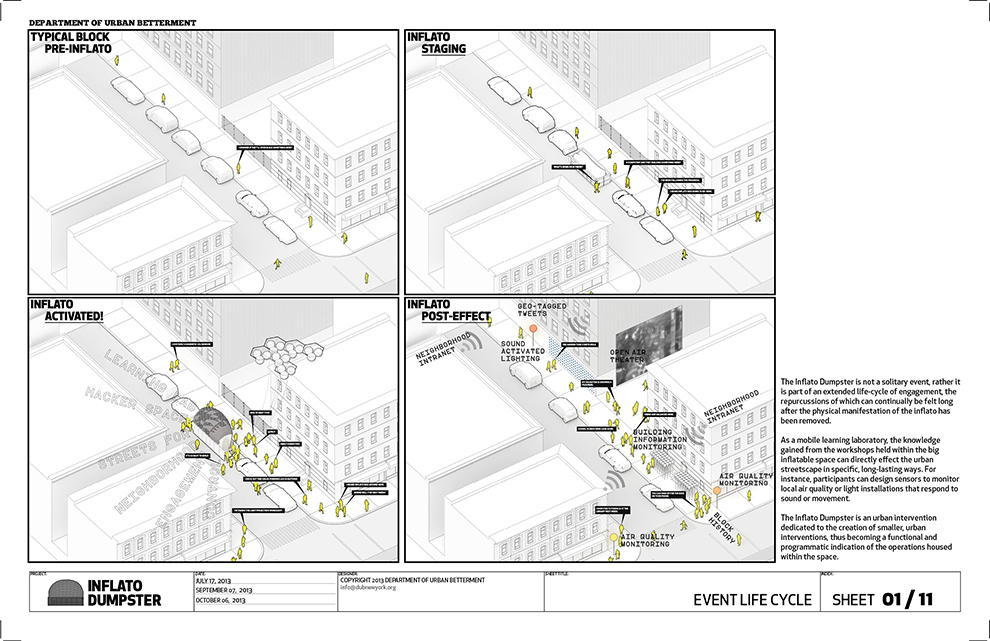
Maybe there’s also a metaphor here about “recycling” knowledge. The goal of this thing being a new type of classroom space meant that knowledge was not just passed down to a captive audience, but that what’s taught is something that could resonate out like ripples and eddies in a stream – emanating from the central mixing chamber of the dumpster. Repeatedly cycling back and forth amongst everyone that came through. For example, we avoided anything overtly didactic – an early idea of streaming neighborhood demographic data was rejected on the grounds of being too overt – instead favoring a more subtle approach such as that taken with the films screened by Simone Varano. Not only are the films challenging documentaries that deal with authenticity, music and living in the city, but anyone that sat in a dumpster and watched them took away the notion that a theater is not only the AMC on 84th street, but that this can be a valid means of projection and expression. Seeing a construction dumpster on the street in New York invariably indicates change, whether a new condo going up or a renovation going in. Either way, the endpoint is often exclusionary in nature. In this project, the dumpster still indicates a temporal event, however, we hope that it triggers a ripple of aftereffects that will germinate practical ideas and actions that are more inclusionary and empowering for the neighborhood. This is something that has to be iterated on and pushed further in future installations.
There were also pragmatic reasons for using the dumpster. It gave us a solid structure to anchor the inflatable, to resist any uplifting wind loads barreling down the avenue or traveling up 109th from Columbus, which is at a significantly lower elevation. Parking Day by Rebar is a big influence, but is limited by short time allotments provided by the meter and single parking space limitations. The dumpster allows us to take over a few parking spaces at approximately 160 square feet of New York real estate (bigger than my bedroom) for a fairly significant chunk of time. Which of course leads to questions of….
Permitting:
With the DOT’s generous help, we were able to successfully navigate some of the overlapping permitting requirements and submit a Street Activity Permit to the City. These typically take two weeks to receive for small events that do not require any street closures. The application fee is $25. However, hauling companies of course do not pull Street Activity permits before dropping dumpsters on the streets. The obvious difference being people aren’t expected to be hanging out in them, just throwing their trash in them. There’s some gray area here that we think is interesting and can be explored further.
Installation:
It was all very friendly and inclusionary. By the third day when I was walking down the street, carrying a large jumbled pile of plastic and mylar to the dumpster, random people would be calling out to me asking when and what was going on inside that day. I’d be remiss not to point out how great it was interacting with people. We were thrown into the neighborhood and had to have a concise explanation for what we were doing. Any pretentiousness or BS descriptions wouldn’t cut it. But that was what was most exciting: Seeing what happens when actual other human beings interact with the thing – kids, moms on the way from the store, students, the elderly, drunks, lifelong and newly-arrived residents, football fans (on Sunday outside the bar), and so on – all with opinions and critiques, but all interested in what was going on. Urban street life in the area moves fast and seems complicated but it’s actually pretty easy to jump into the thick of it.
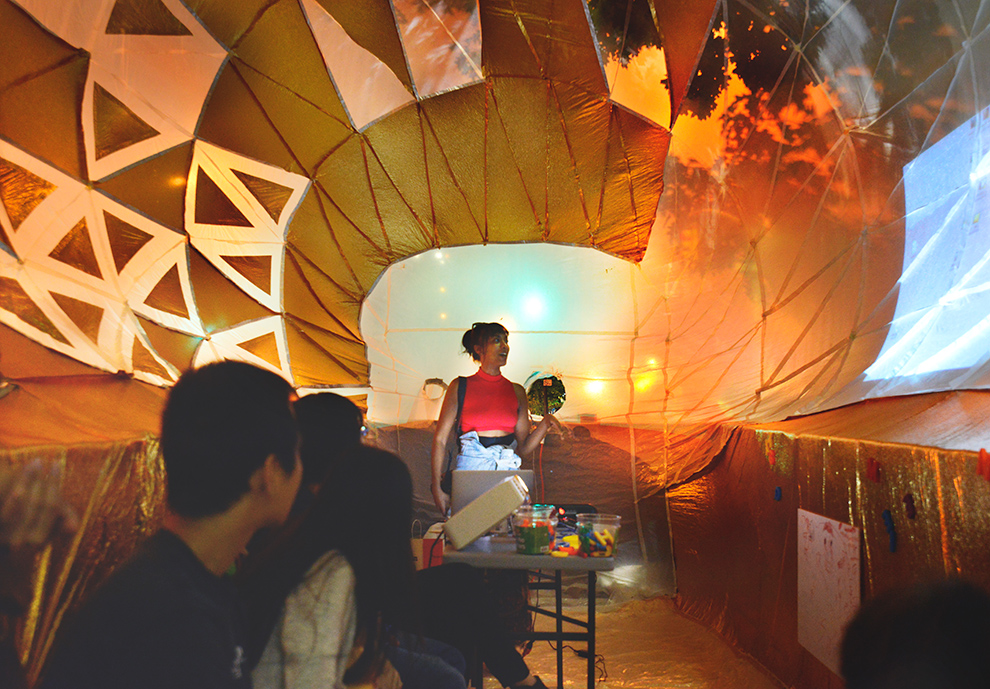
As an introduction to the neighborhood, afropunk group Amani Fela opened with a music set on the first night, and seemed totally unfazed to be playing inside of a gold dumpster. The percussion had people lining up to check it out. Unfortunately, one thing that was not anticipated – but in hindsight now seem obvious – was that most people assumed that this was one of the following: a private event, an event requiring admission or some type of corporate event. (There were also a few inquiries as to whether this had anything to do with ConEd testing a mobile containment unit, however that one was not as widespread). Peoples’ initial reactions were an unfortunate acknowledgement that, as a society, most of us assume that if something is going on in the street, they must have to pay up somehow to check it out. Overcoming that ingrained skepticism and convincing people this was free became a constant struggle. A large signboard with “FREE TO ALL” was brought out and prominently displayed. By the third day, word had spread and people had heard about the Inflato via friends and neighbors. Without being prompted they would walk right in. It’s a start.
Credits:
Department of Urban Betterment: John Locke and Joaquin Reyes
Inflatable Fabrication: TW2M Fabrication
Dumpster Supplier: Budget Dumpster
Street Activity Permit Support: NYC Department of Transportation and the City of New York
Photography: Jackie Caradonio
Special Thanks to: Columbus Amsterdam BID, Simone Varano, Amani Fela, Delia Reyes, Mugi Pottery, Ultimaker.
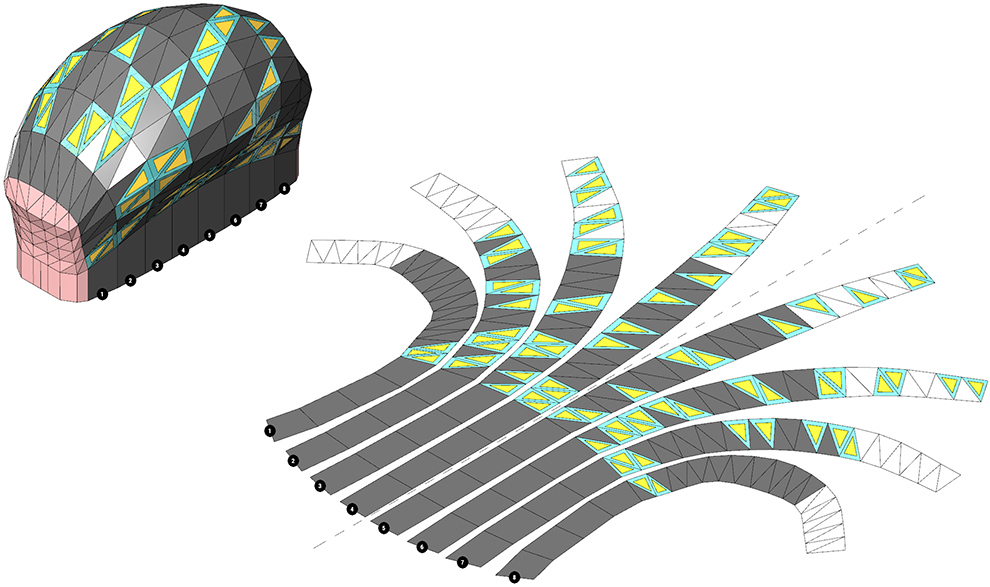
There were 240 individual triangles, which required more than 300 hours to assemble.
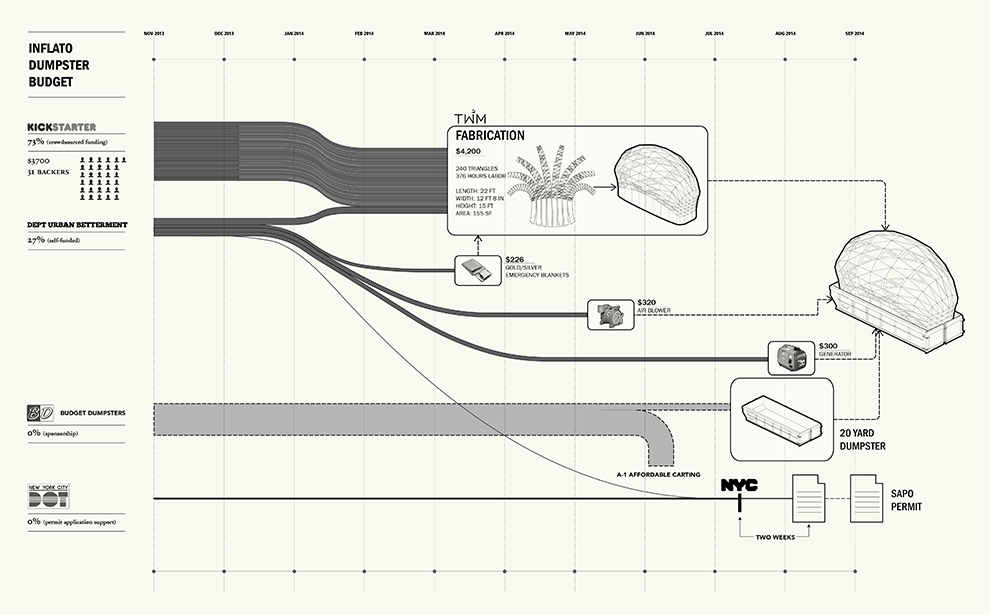
73% of project cost was from crowdsourced funding. The remaining 27% was self-initiated by the Department of Urban Betterment.
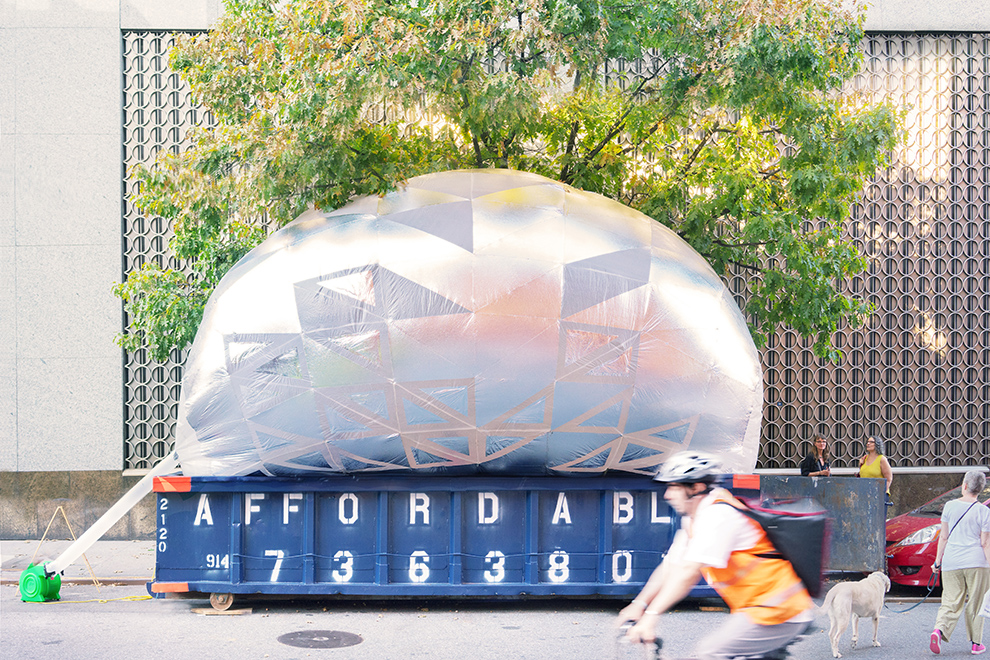
While it may have literally had “affordable” written all over it, we exceeded our initial budget.
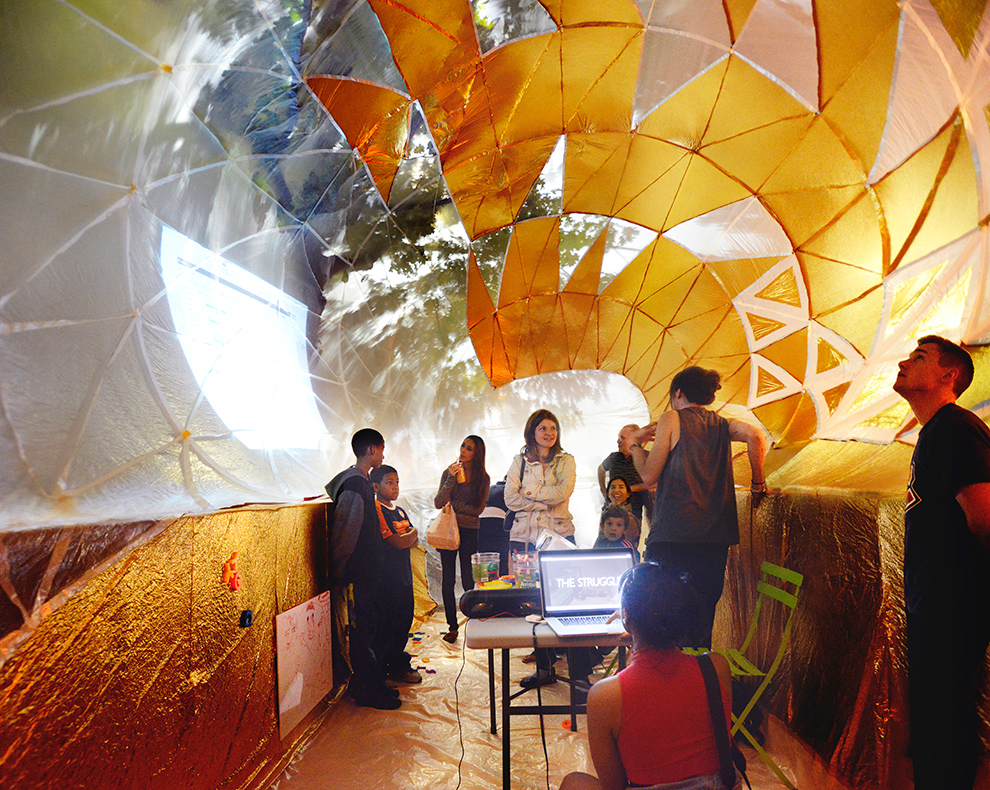
Local filmmaker Simone Varano sets up for a screening of her documentary series dealing with music, culture and neighborhood issues.
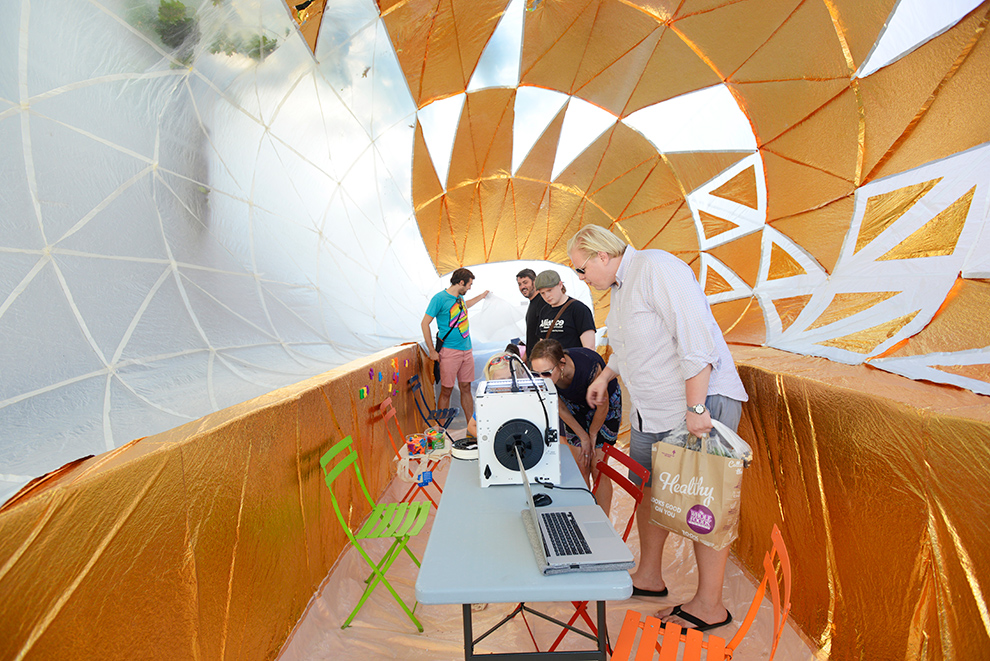
Workshop attendees learn about modelling and building models using a consumer grade 3D printer.
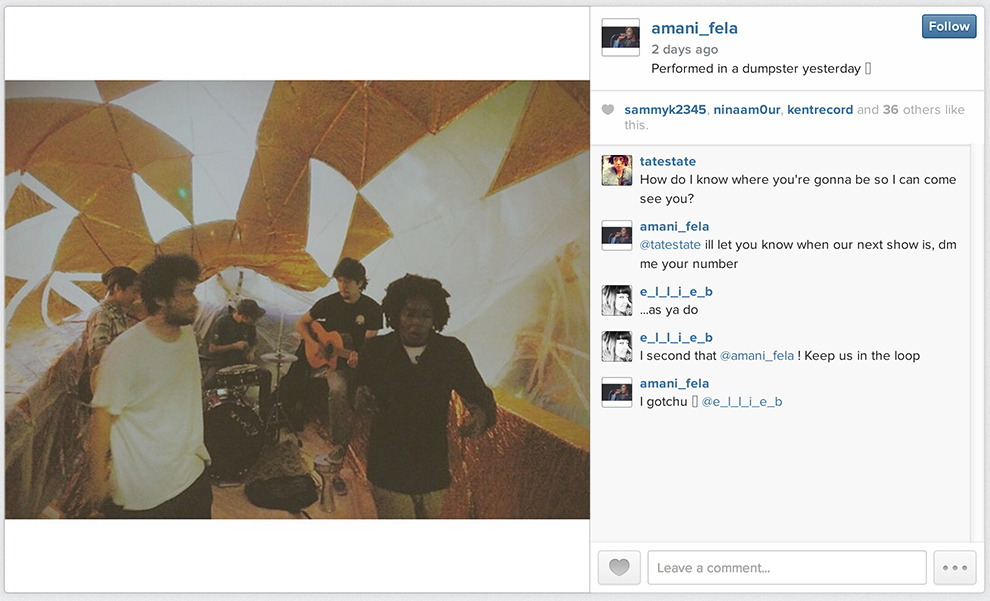
Amani Fela, unfazed by the surroundings.