JOHN LOCKE, ARCHITECT

  • Featured Work
  • Design Blog           
  • Photography
  • Graphic Design
  • Dept of Urban Betterment

About

Hello. I live in New York and work at The Living. I hold a graduate degree from Columbia University's GSAPP and an undergraduate architecture degree from the University of Texas at Austin. I have more than seven years of professional experience at noted architecture firms, including New York-based Rogers Marvel Architects and SOM. I also tackle freelance graphic and photography work with my partner in crime, the multi-talented Jackie Caradonio at Lion in Oil. In addition, I teach a course, Hacking the Urban Experience, at Columbia. View my CV here: CV(html). Thanks and have a nice day.

Contact

john.h.locke{at}gmail.com
310.735.3333

Architecture Portfolios

Portfolio 2002-2007 (issuu)
Portfolio 2008-2009 (issuu)

HOME / BLOG

photography

2020113 Tags: africa, architecture, photography, work | No Comments »

The Last Normal Day


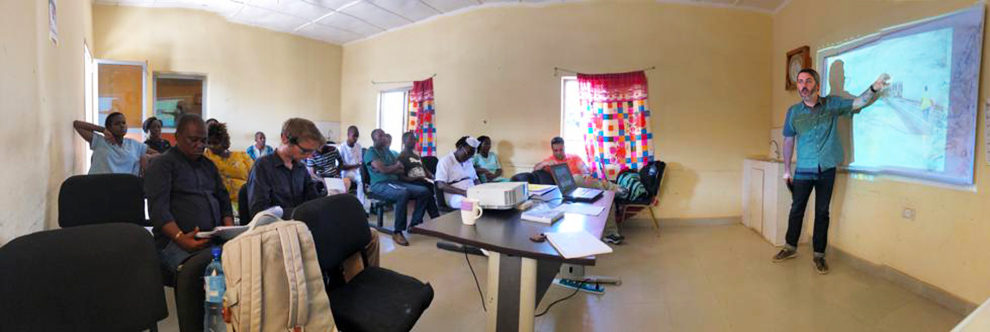
My last in-person design presentation to a room of medical professionals and staff for a health care facility in Sierra Leone, February 2020.


With the weather in New York lurching towards a quarantined pandemic winter and the election about to bring forth…something, it feels like the endless year of 2020 is about to enter some heretofore new phase. To prevent/distract me from constantly clicking refresh on every poll tracking site, I’ve instead been thinking back to the last normal day. It’s always difficult to reconstruct in hindsight, because you obviously didn’t know at the time that you were in fact living your last normal day. For most people it’s probably sometime in March when you were hanging out with friends at a bar, going to a movie, eating out at a restaurant or any of the other countless quotidian social interactions that we took for granted. For me, the gap between normal life and pandemic life is filled by the bright, vivid memories of my three weeks in Sierra Leone at the end of February doing architecture – presenting design ideas, sketching charettes, visiting the project site, finding new material suppliers and sustainable supply chains, understanding construction possibilities and finding equitable labor approaches – basically finding solutions to all of these challenges are what I really enjoy about my job. And I was with some amazing people.


The maternal mortality rate in Sierra Leone is the worst in the world. A mother is almost one hundred times more likely to die during childbirth than in the United States. There is no single issue or failure that you can point to as the cause of such an offensive statistic. This is a systemic issue, in part caused by deep political issues brought about by a history of colonialism with its attendant official extractive policies, endemic corruption, a civil war, the ebola outbreak, well meaning but failed NGOs, and a whole host of other issues that would require me as an American to understand much more deeply. However, there is no singular heroic act to solve this, no superhero to punch out maternal mortality, and building one hospital can’t singlehandedly correct for decades of neglect and the lack of an infrastructural support system required to both educate a new generation of doctors and pave the roads to get them to the hospital and a power grid that keeps the equipment running. Yet in the face of all these obstacles there are people devoting their lives to caring for each other and making things a little better for those that have been neglected and poor. It is a movement of people working together, fighting for other people just as you would do for yourself. A new hospital building can significantly aid in that work, but it is simply a part of a vast network of care and another step forward to justice and progress for those that are driving that change day in and day out.


Amongst the daily intensive collaborative design work and nightly dinner discussions, the steady background din of news from home got louder. First the cases in the Pacific Northwest, then evidence of person-to-person transmission in California, some false optimism thrown in for good measure: “You have 15 people, and the 15 within a couple of days is going to be down to close to zero,” then finally the first verified cases in New York state. While it was still over a month before Sierra Leone confirmed its first Covid case, ebola was a recent memory for people there, and hand sanitizing and temperature checks became a standard routine before entering any building, and while meeting at the Health Ministry, no-contact greetings were standard (though I appreciate protocol was broken for a trip highlight bear hug from the Health Minister). Maybe this wasn’t the last time that was necessarily “normal”, and the setting was most definitely different that what I was used to, but it was the last time I felt wholeheartedly positive about the future. I suppose all architecture proposals are inherently utopian in that way. Designing is an optimistic act. When you’re designing something you’re part of a team envisioning and sharing this idea for a project that when built will be a manifestation of that mission to create a better world. The work continues.
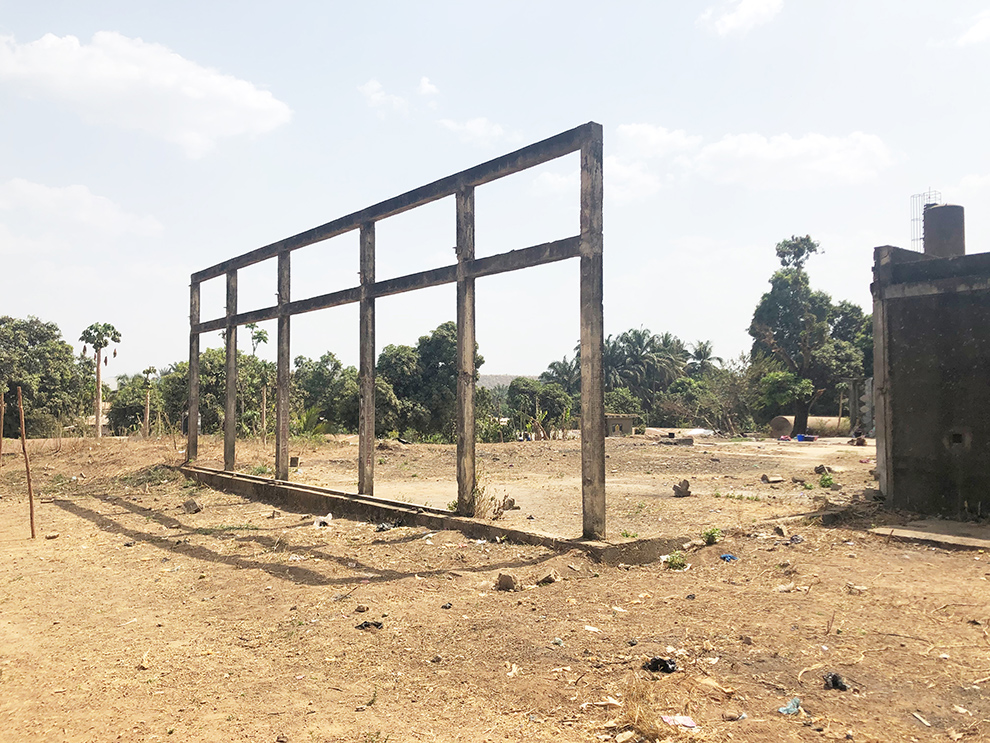


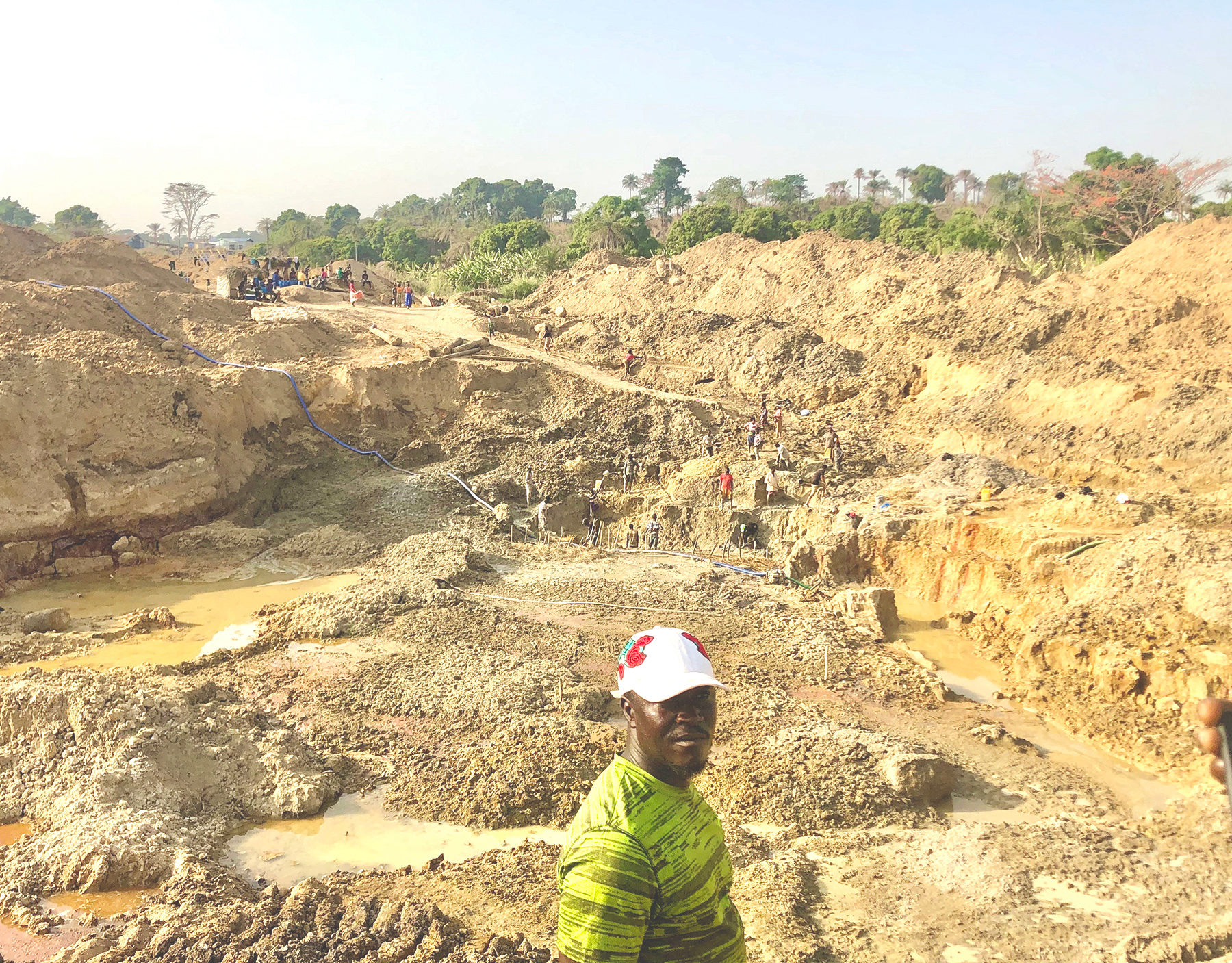
The project site (above).


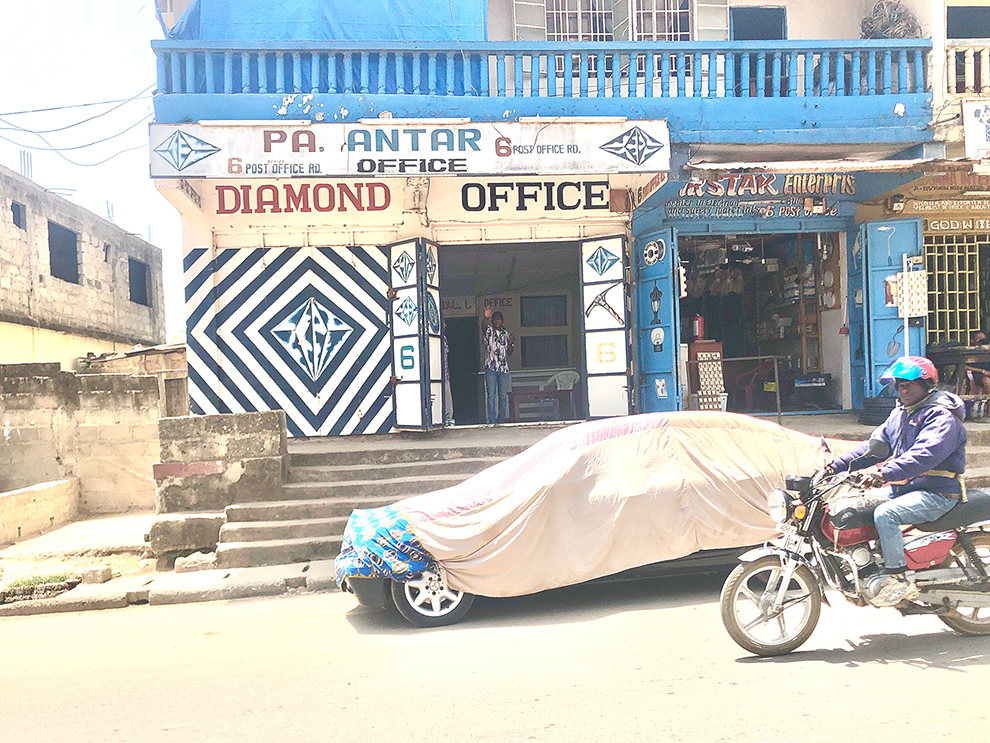
There are a huge number of mining concerns throughout Sierra Leone, including both one of the world’s largest – Koidu Holdings – as well as well as smaller, more independent operations. However, regardless of the corporate structure, this natural resource belonging to the country has historically been extracted to create enormous wealth for the South African mining conglomerates, Lebanese diamond brokers and high-end Belgian auction houses who control the supply and reap the profits before the stones end up in some engagement ring. There is little to no benefit for the poor, surrounding areas and it just becomes a reason to die working in an open pit or a resource to kill for control over. Through a fluke of geological forces – one of the globes richest kimberlite pipes spiked outwards from the earth’s core out to this small county – and an overly permissive central government, the country is pockmarked with these open pits where 500m3 of earth is removed and discarded for every carat of diamond dug out of the ground.
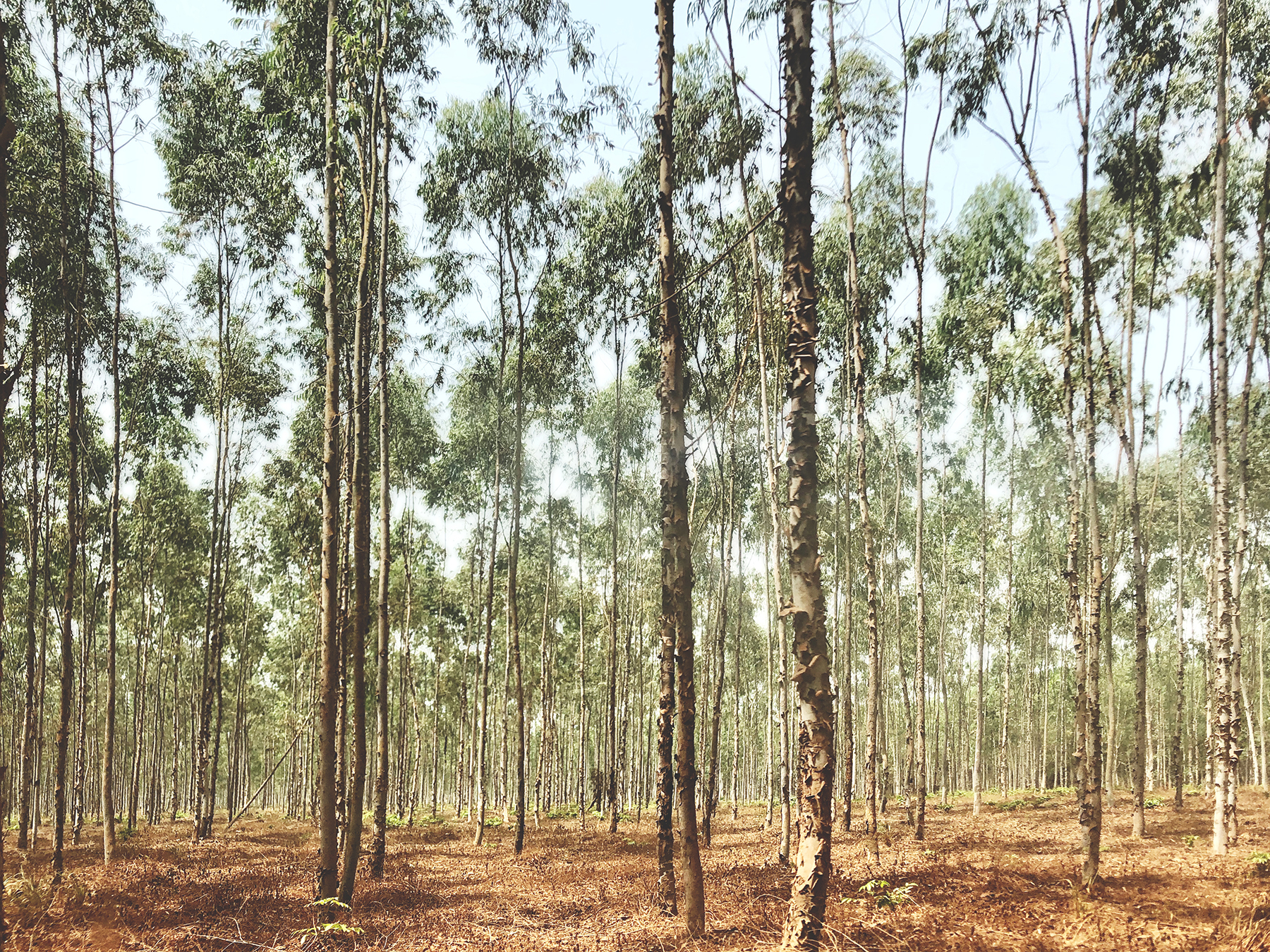


Sustainable forestry initiatives have started to take hold in West Africa, and ideally this project could act as a lighthouse for potential future adoption of timber in the built environment. We visited a timber company producing FSC-certified fast growth, short rotation species of Acacia (shown) and Eucalyptus trees for construction material. These nascent industries promote social and economic development programs within their community, while also providing a more sustainable building material for a fast growing construction market.
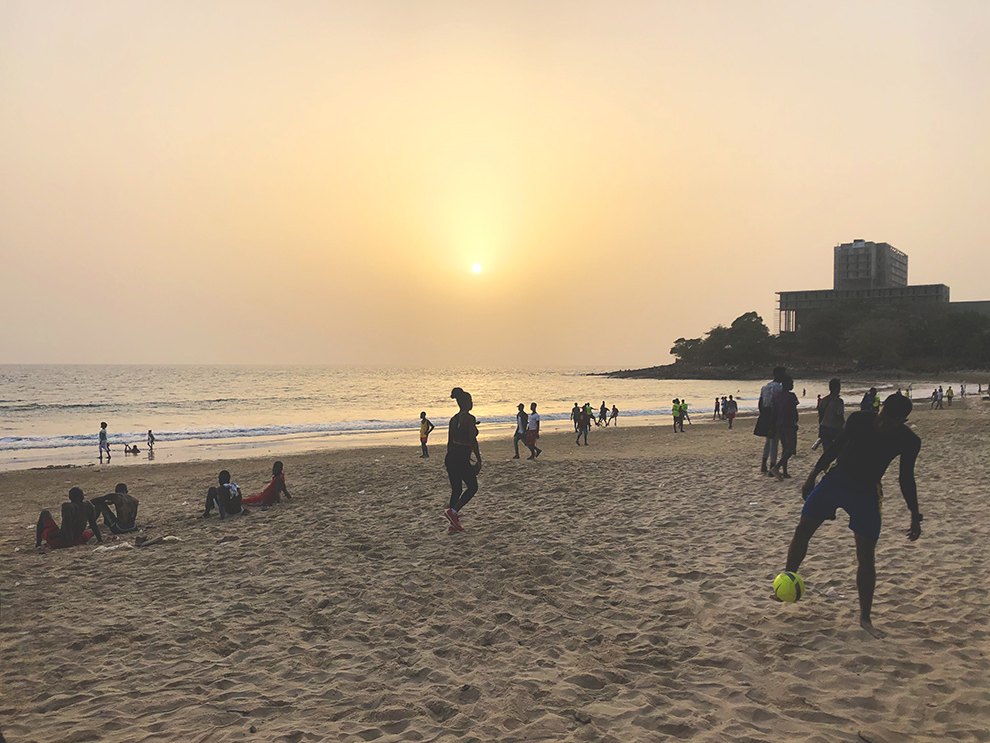
 

The Freetown beaches are some of the most beautiful and active beaches I’ve ever been to. So many people laughing, walking, and playing together as the sun sets.


2019012 Tags: photography | No Comments »

X GWB X

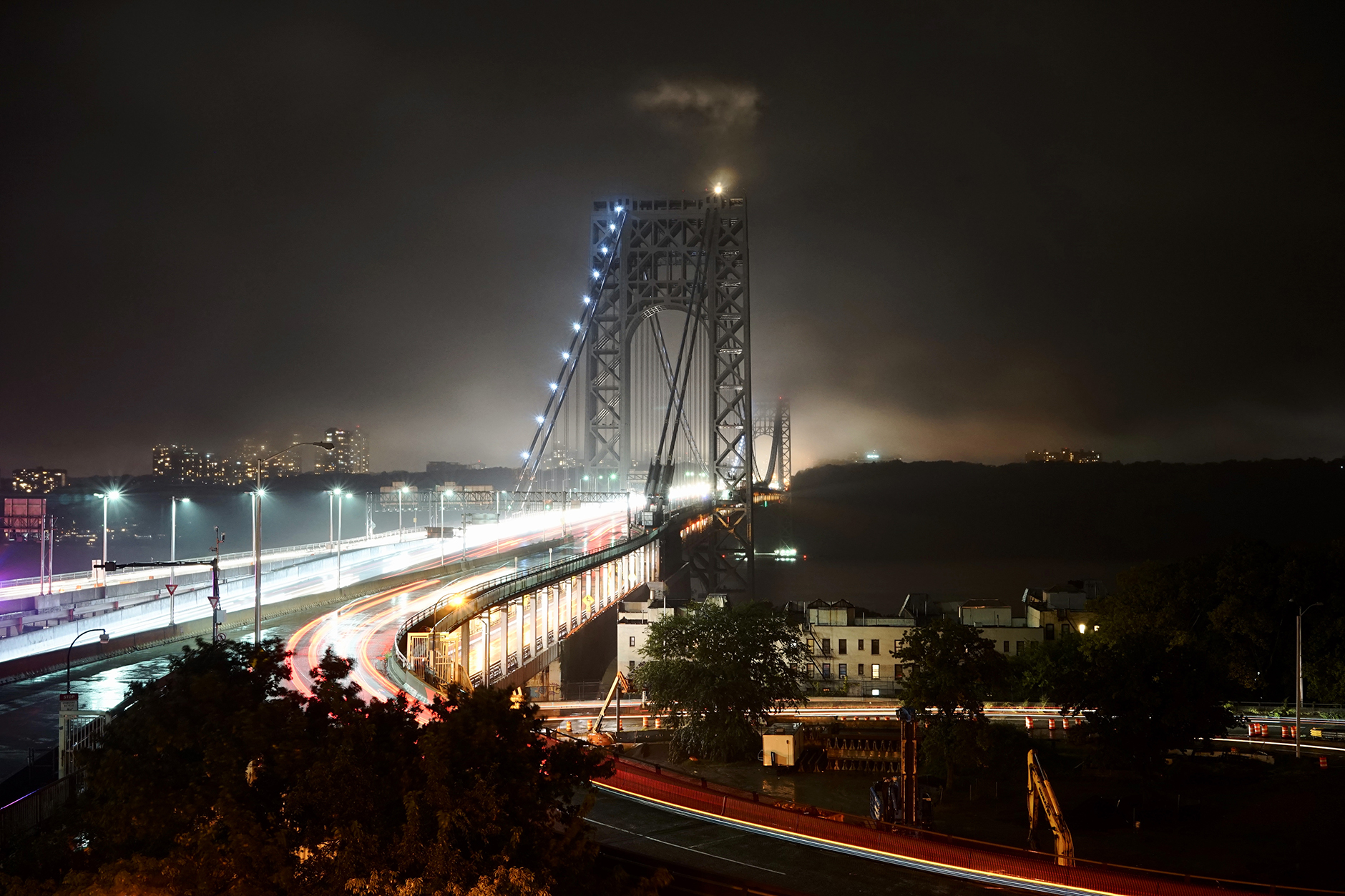
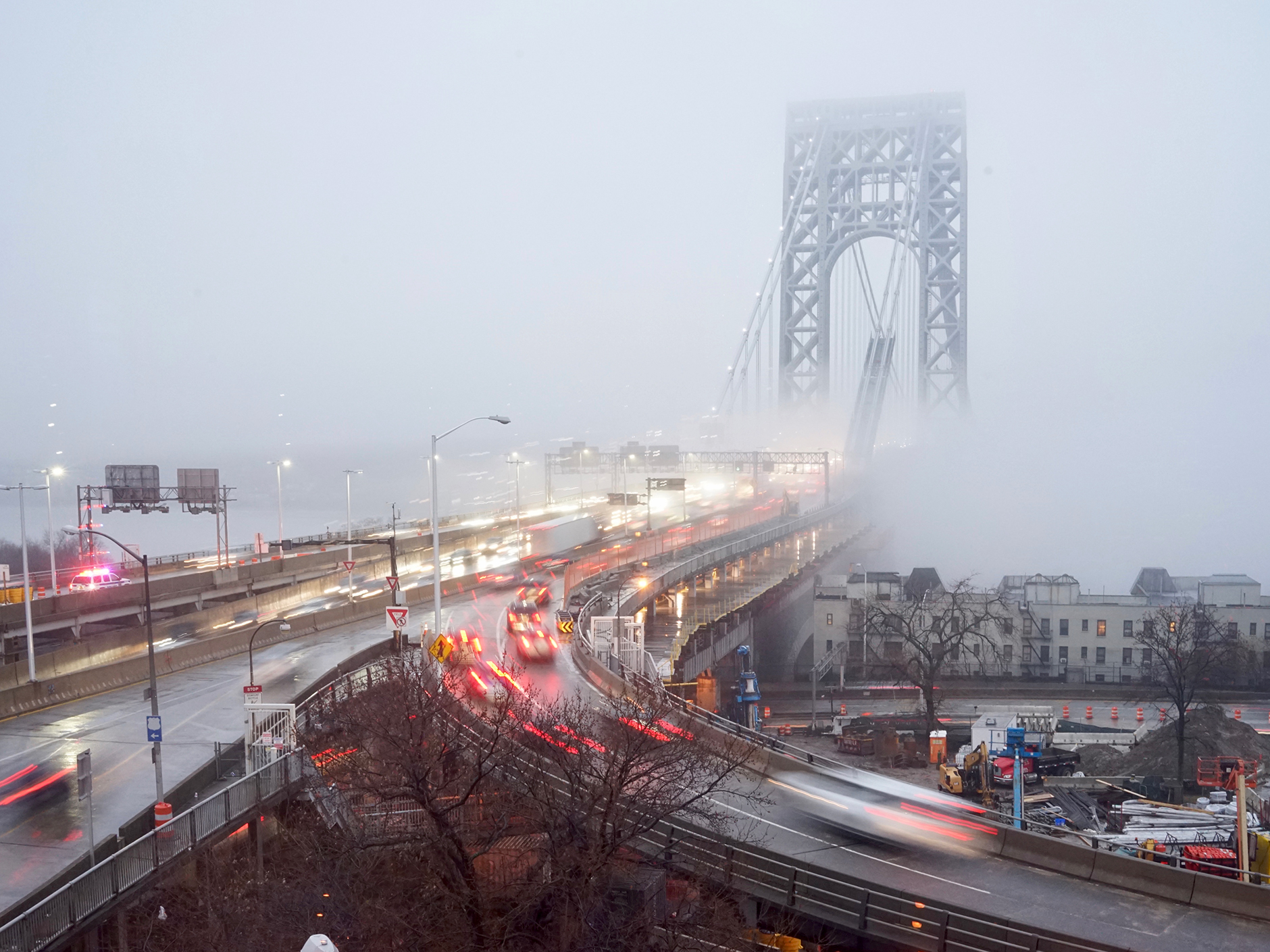
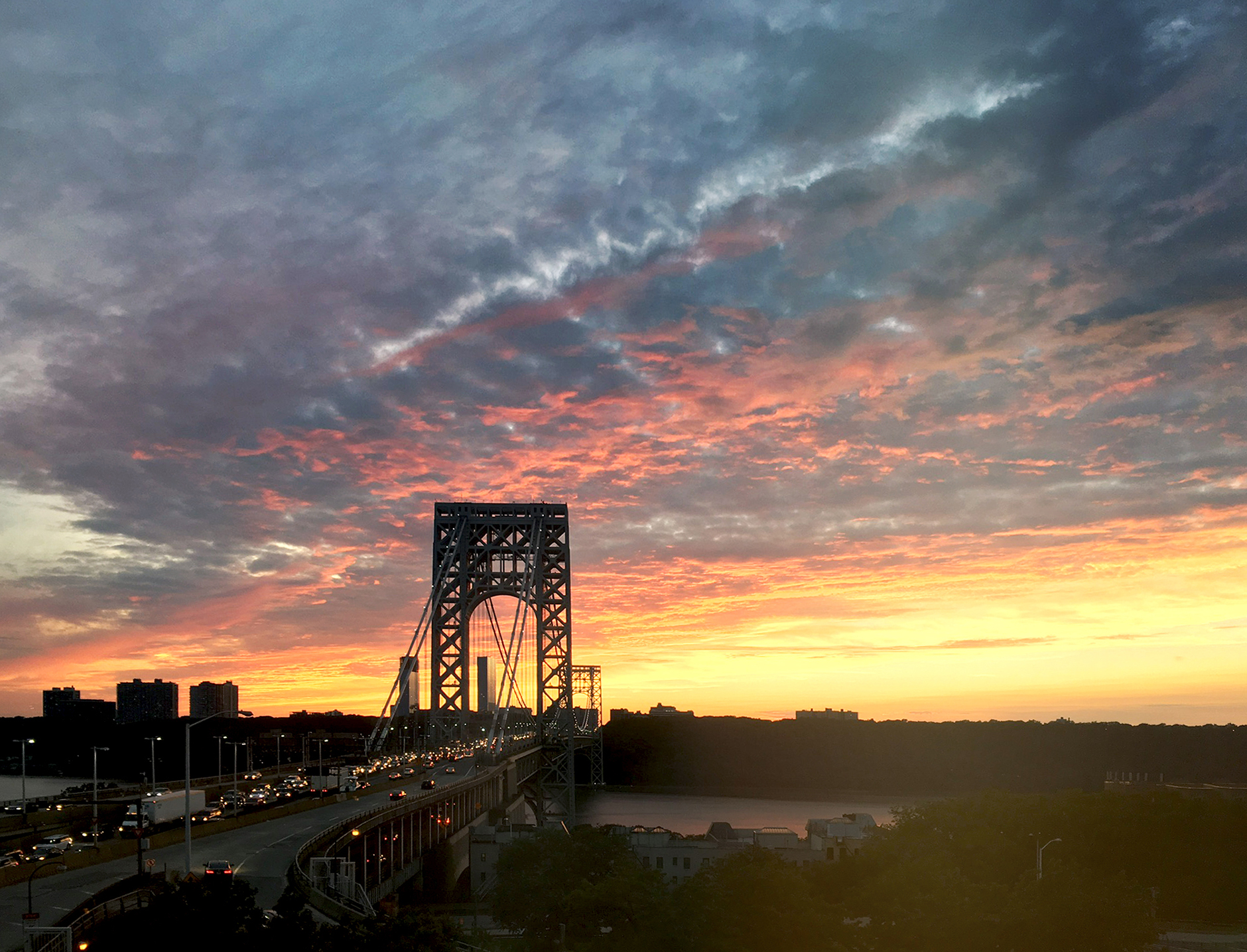
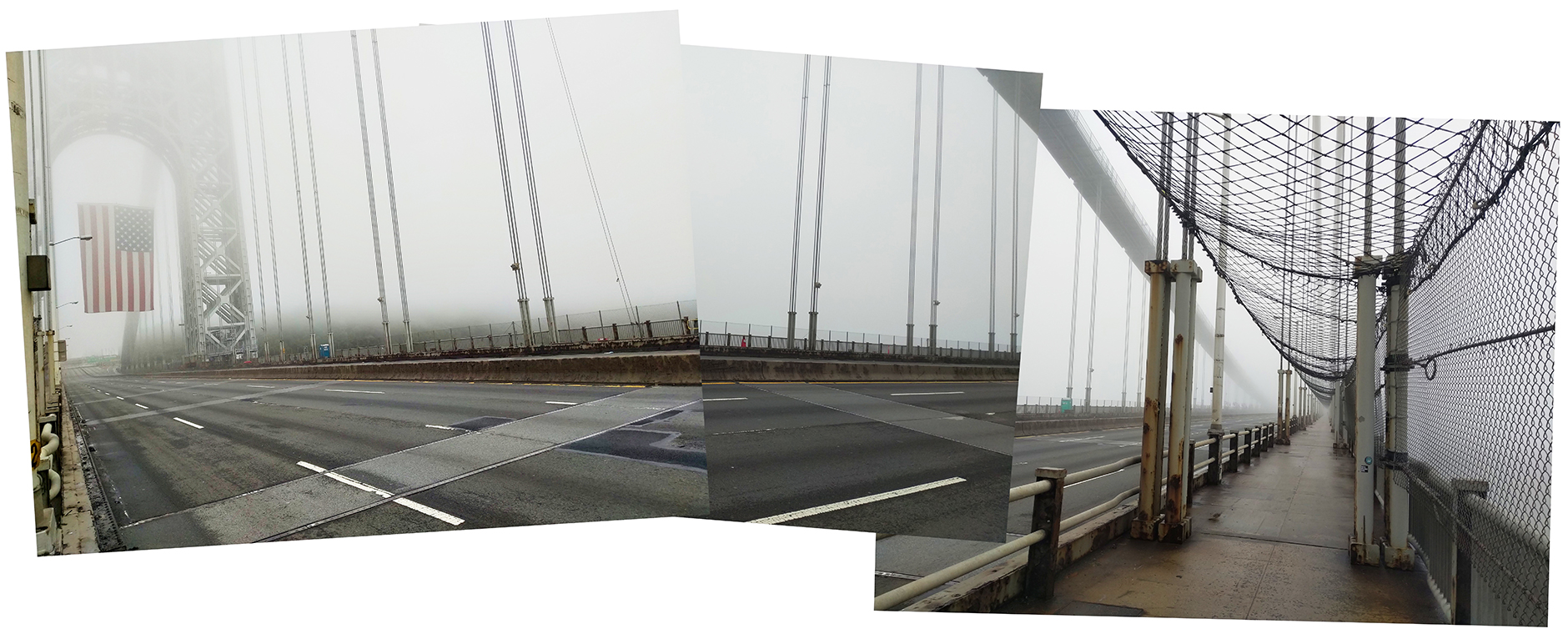
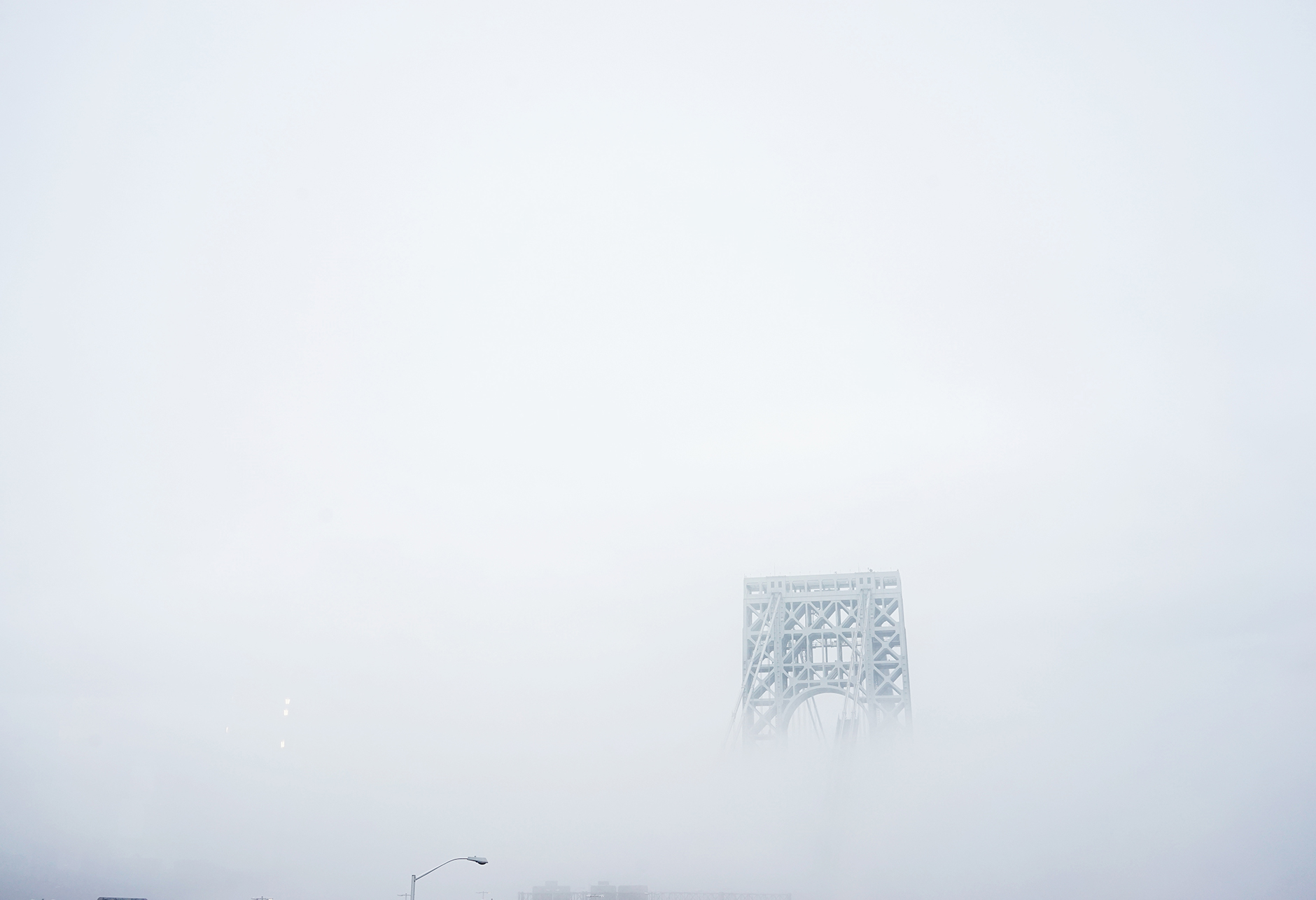
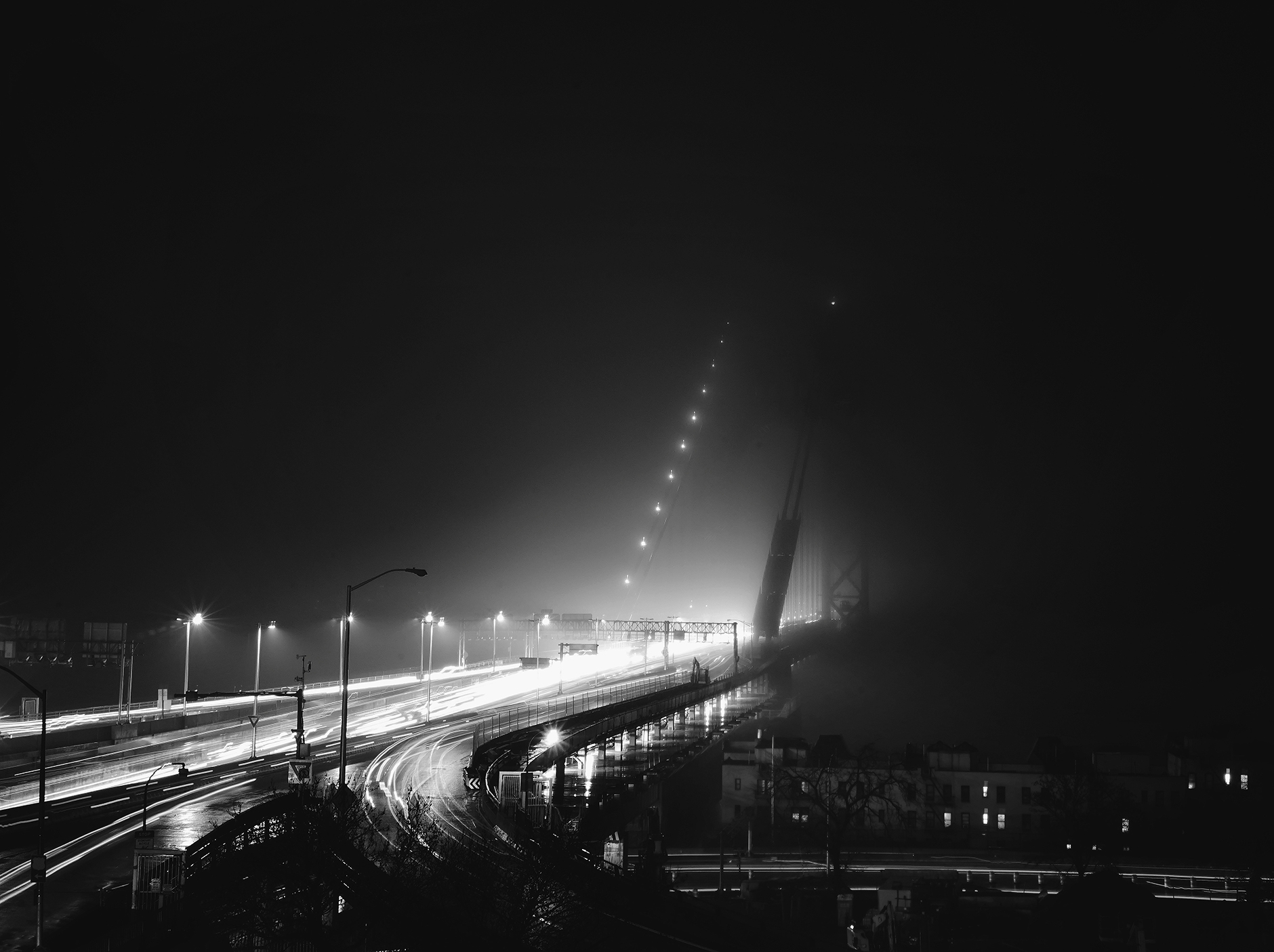
The George Washington Bridge is a pretty omnipresent structure both in the neighborhood and from our window. I’ve spent the past year grabbing for the camera whenever the mood struck, which when collected here seems to typically be those times that the distinct cross bracing of the towers GWB are occluded by environmental conditions or when fog, rain, snow or Sunday sunsets make being in the living room feel warm like home.


20171019 | No Comments »

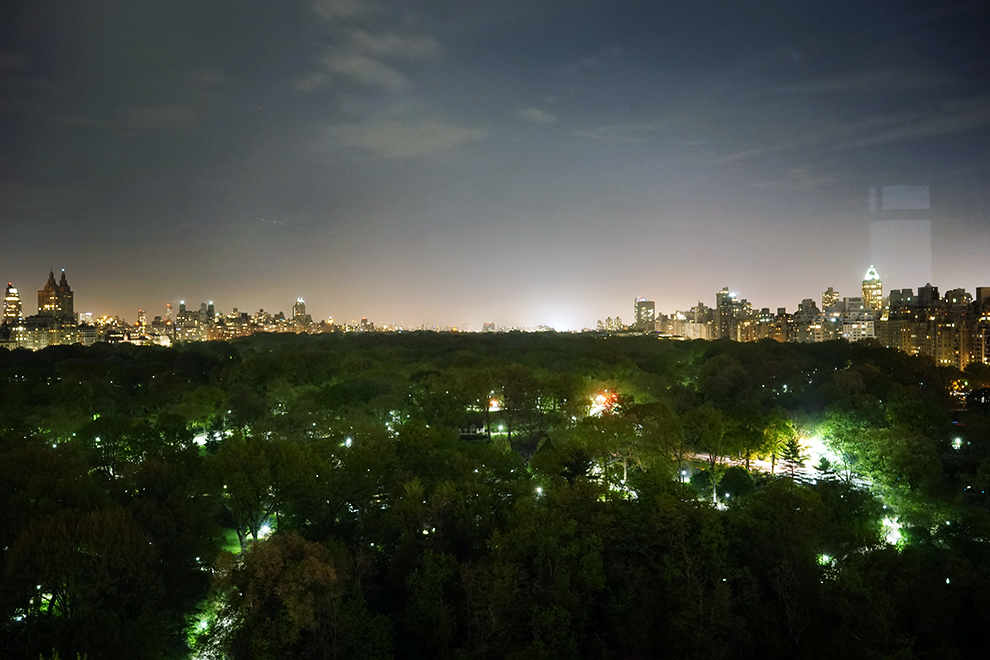
Central Park with Satellite


20150412 Tags: architecture, photography, work | No Comments »

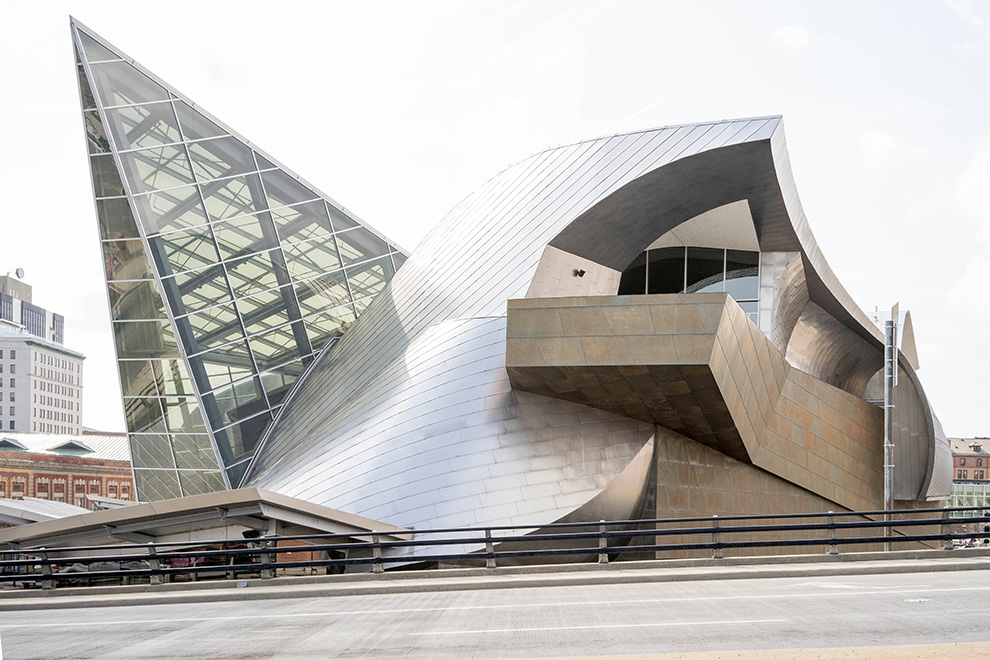
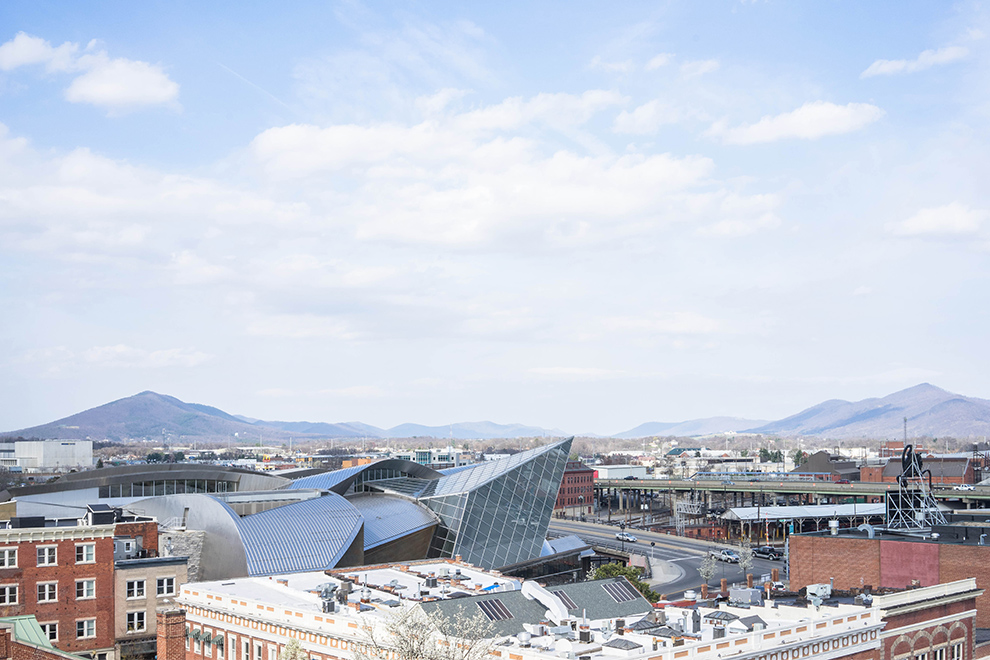
An Art Museum in Western Virginia

taubman-01-rev
taubman-02
taubman-03
taubman-05


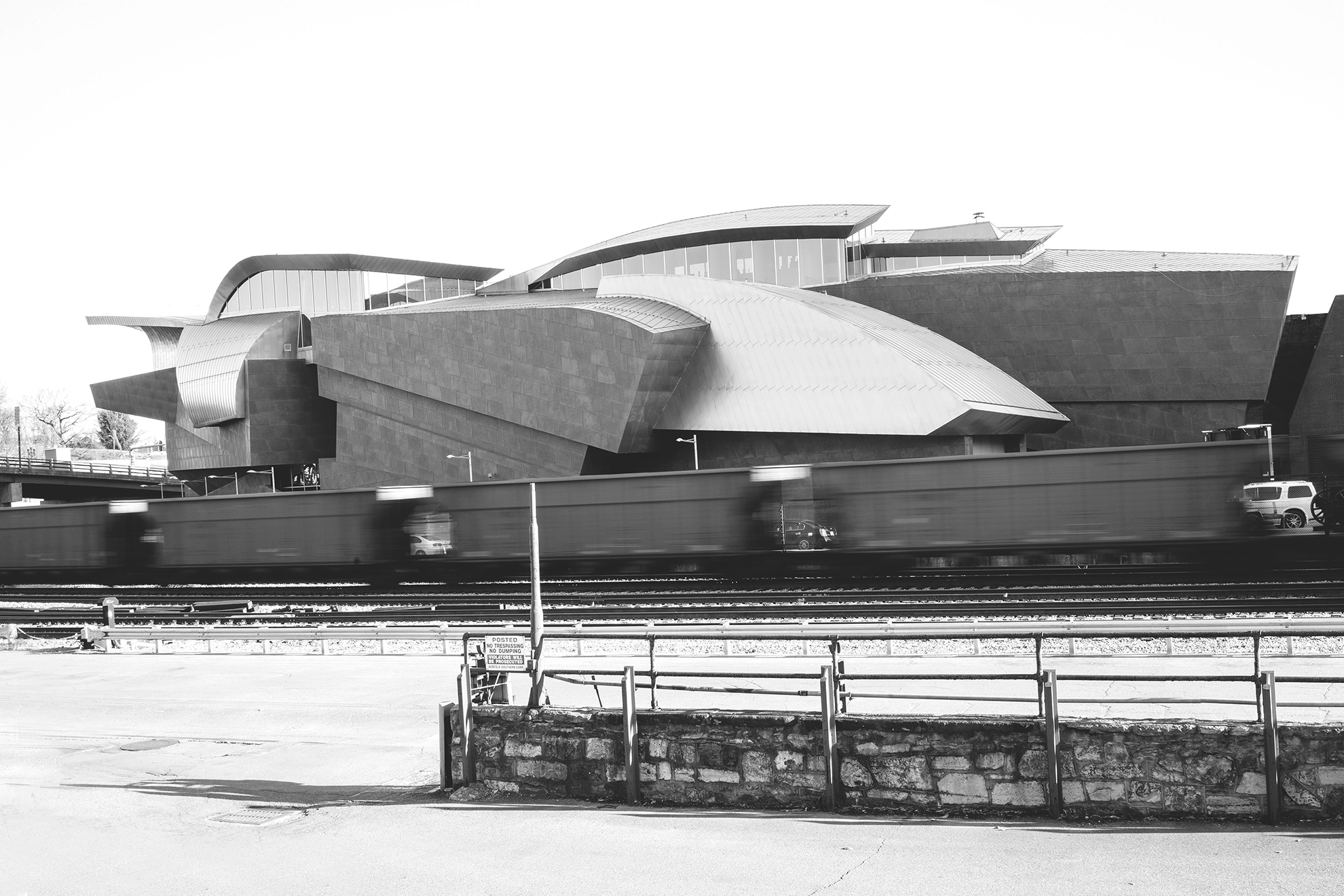
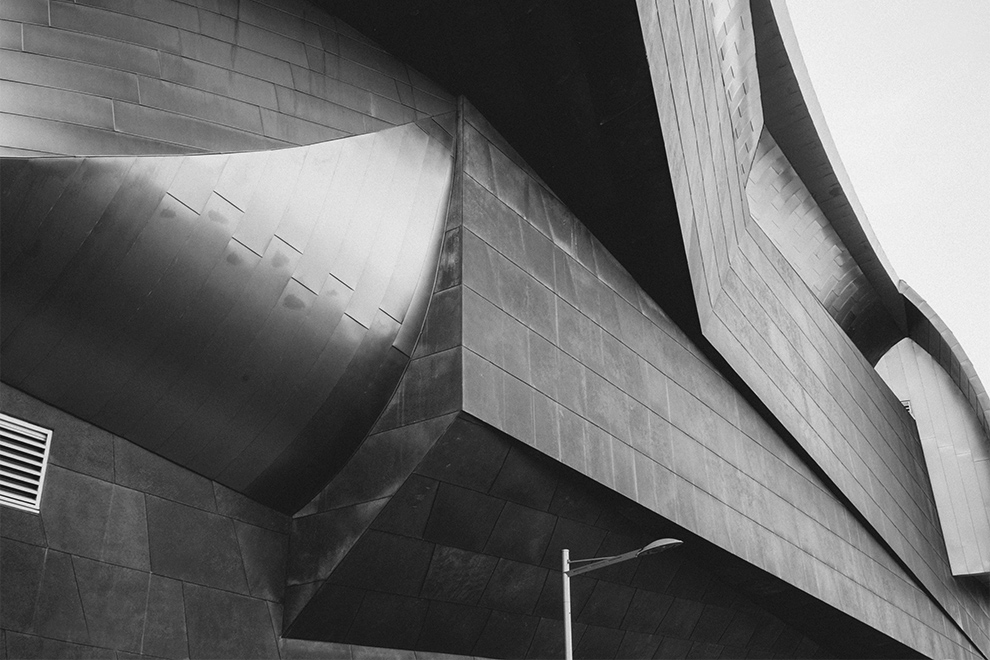
In the heady days of 2004, I was a green architecture intern fresh out of school, and the first building project I worked on was this – The Taubman Museum of Art in Roanoke Virginia. Having the opportunity to design with and learn from Randall Stout on an exciting, high-profile project like this was basically everything I imagined that being an architect could be. This was to be thrown into the emerging world of digital design and geometrical control (hello Rhino V3), close collaborations with players at the forefront of manufacturing complex, building-scale cnc fabrications, and the promise of architecture as a driver of transformative urban change. School couldn’t touch this. In the intervening decade I’ve learned quite a bit more about the behind the scenes maneuvering that morphed an existing regional art collection’s initial, modest desire for a few extra square feet of exhibition space into an ambitious plan to remake a town through a $90 million dollar building. The reality of the inherent impotence of a singular built object to somehow negate or transcend the complex network of entrenched and competing political, cultural, and institutional factors is something that continues to play out in cities all over the world. But those questions were irrelevant to the families I saw enjoying the “weird, but cool” free museum on a Thursday afternoon, the local artist exhibiting hyper-saturated photos of the building at Thelma’s Chicken and Waffles, or the bins of embroidered fabric decorated with the building’s distinctive profile. Basically, it was breathtaking to finally experience the building in all its divisive glory. I wish Randall were here so I could tell him all about it.


These are a few of the images I captured while in town. Presented here to amplify the building’s binary formal references as I had always imagined them in my mind. While there is no true “back” facade, there are two clearly distinct sides to the building: the angular, more constructivist facade facing the railroad tracks and industrial edge of town, and the softer, billowing blue forms facing the city which frame the Blue Ridge Mountains receding into the background.

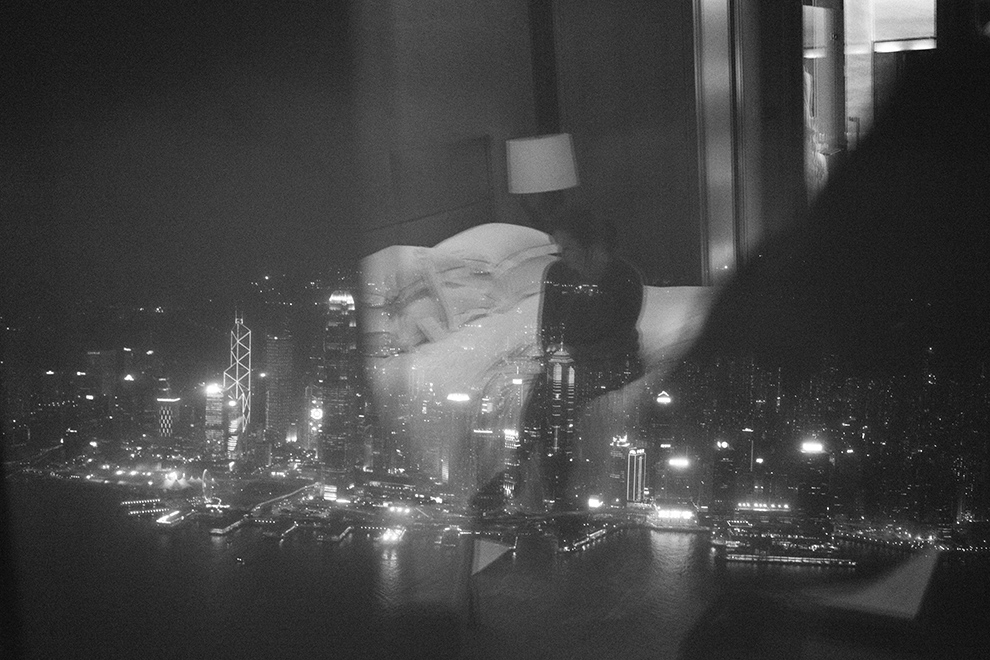
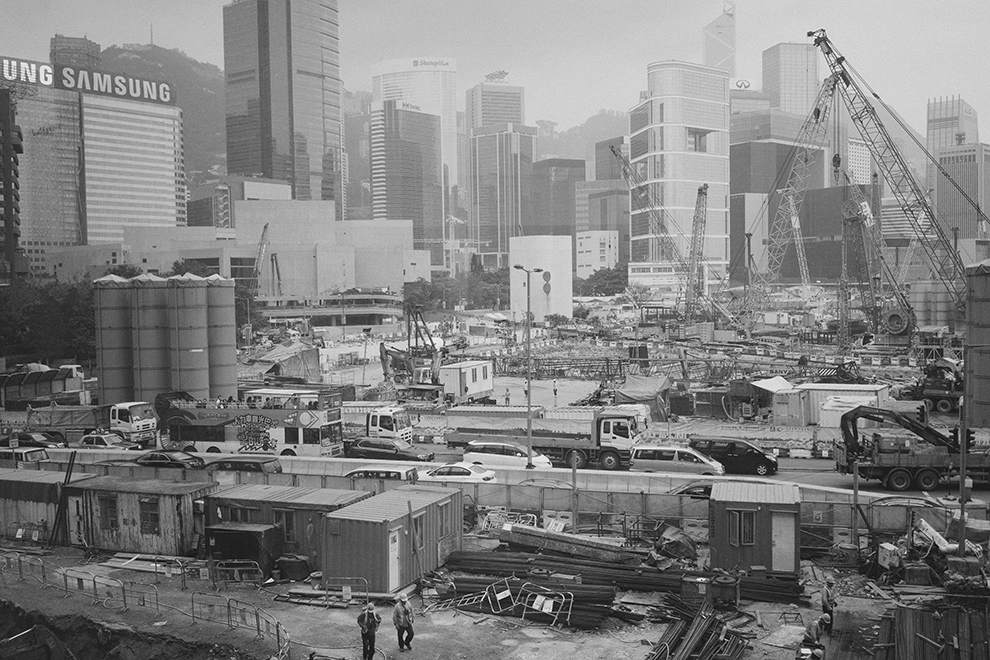
20150320 Tags: hongkong, photography | No Comments »

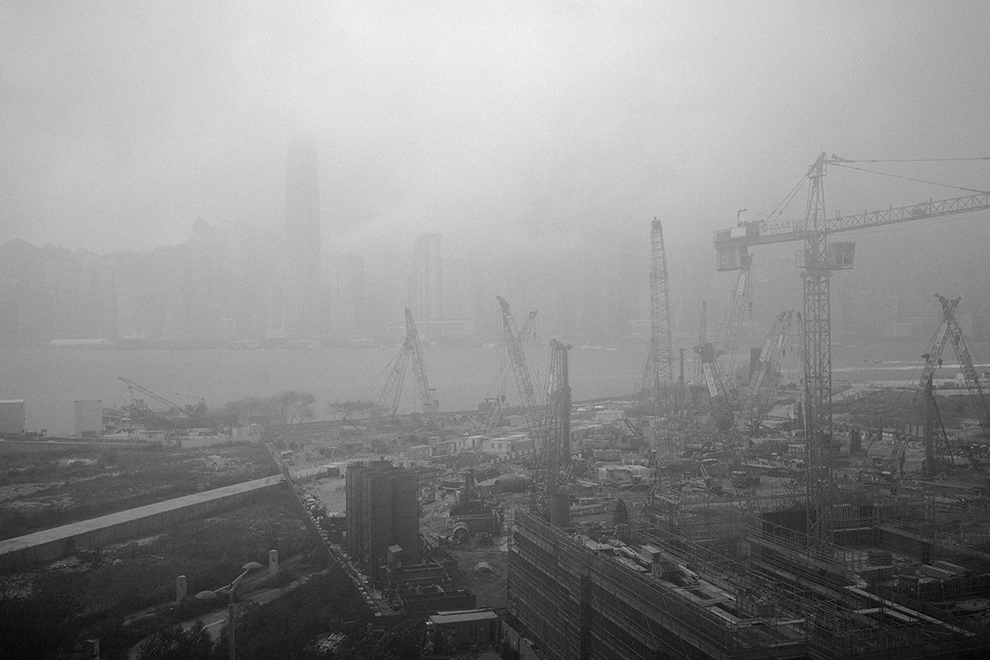
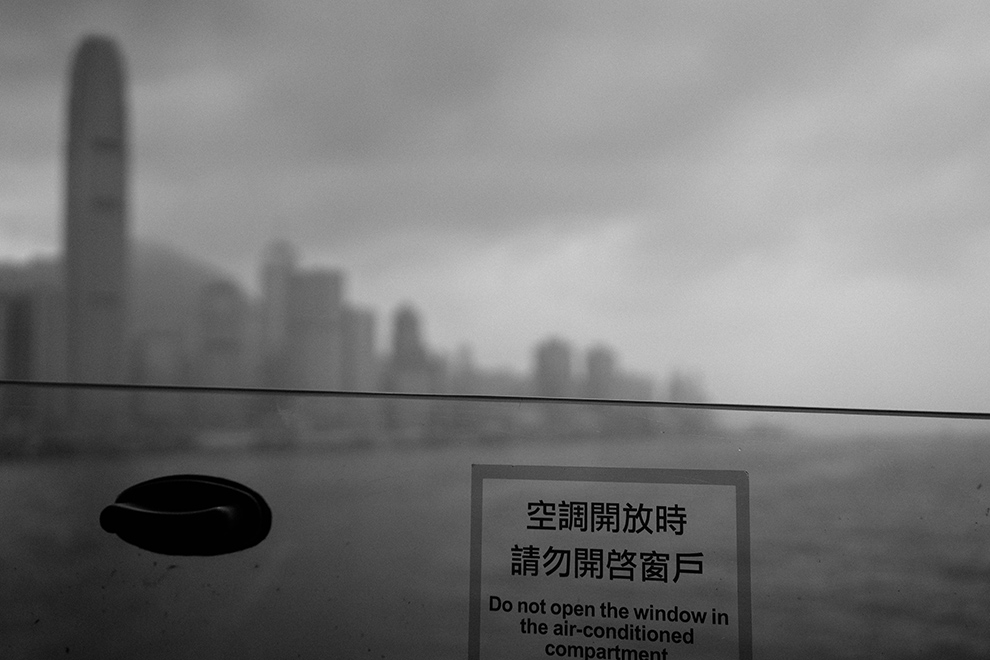
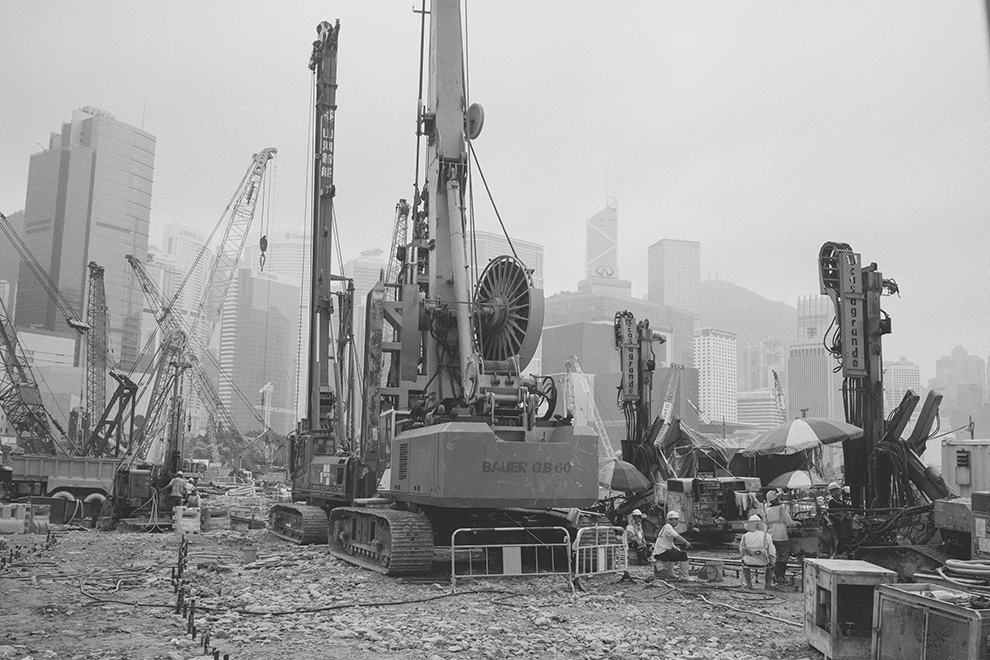
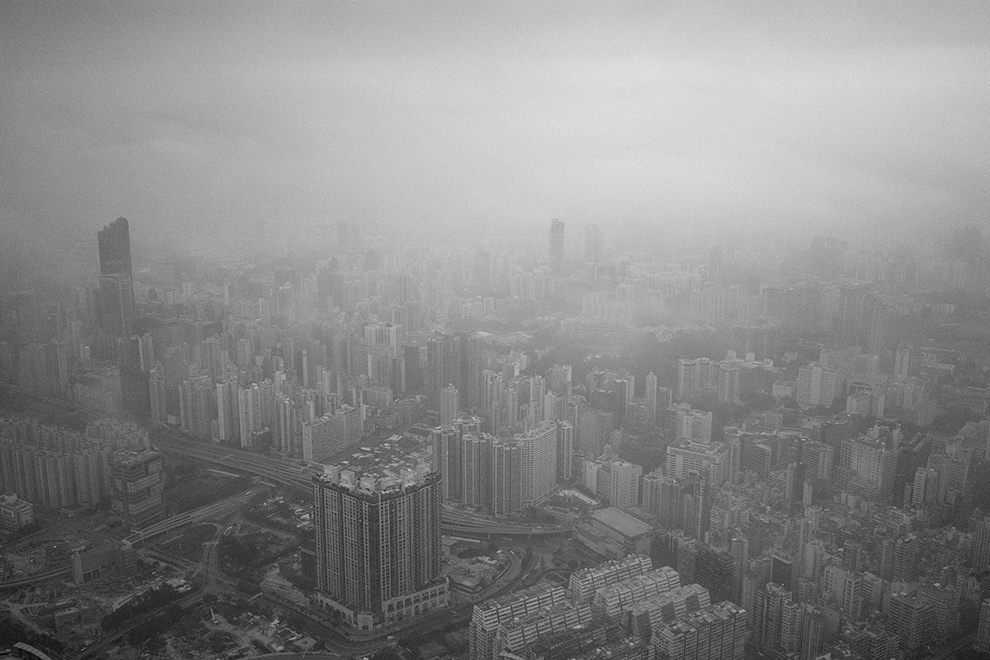
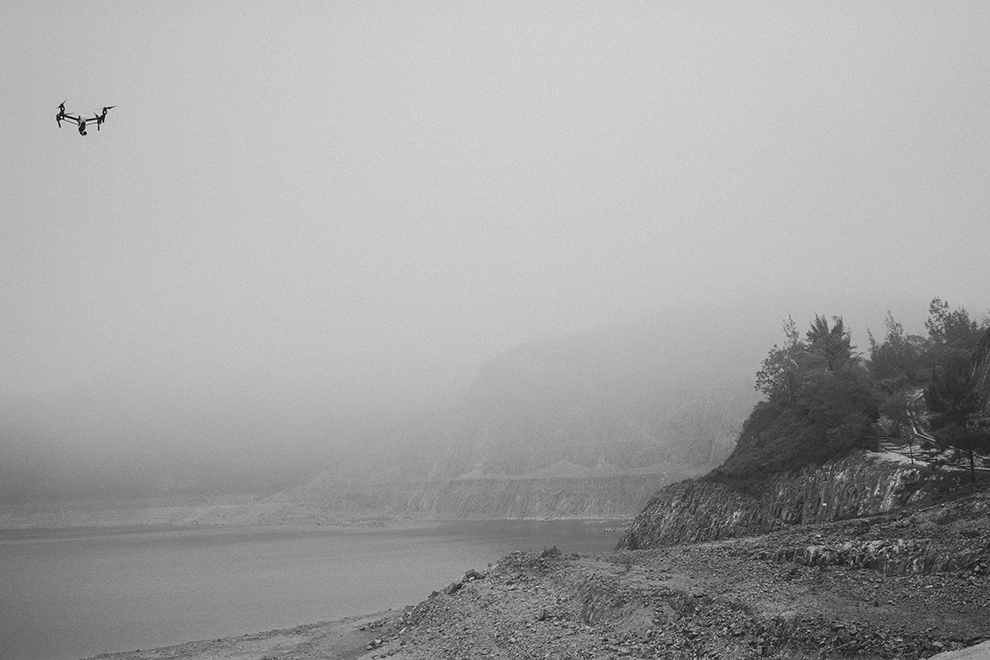
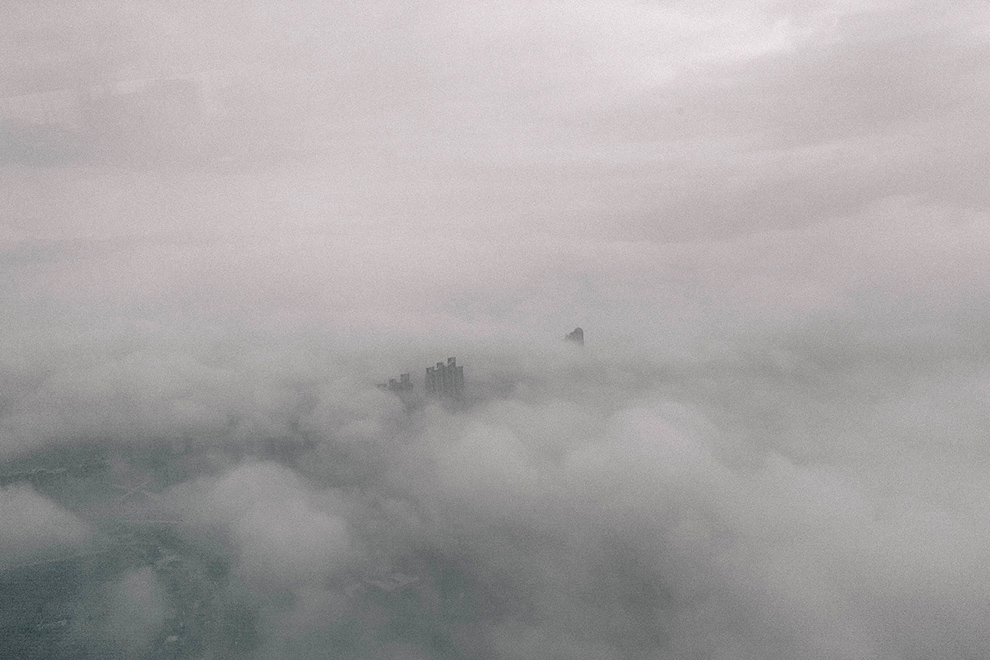
Heavy Fog Today, Sorry To All Visitors

HK-001-web


HK-002-web


HK-003-web


HK-004-web


HK-005-web


HK-006-web


HK-007-web


HK-008-web

 
2015026 Tags: photography, sanfrancisco | No Comments »

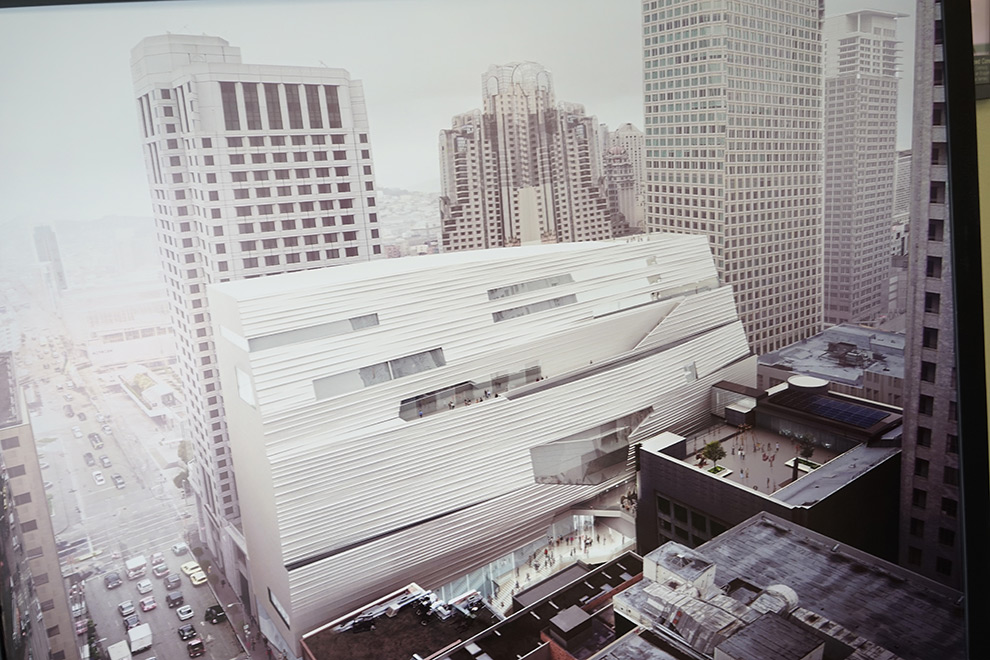
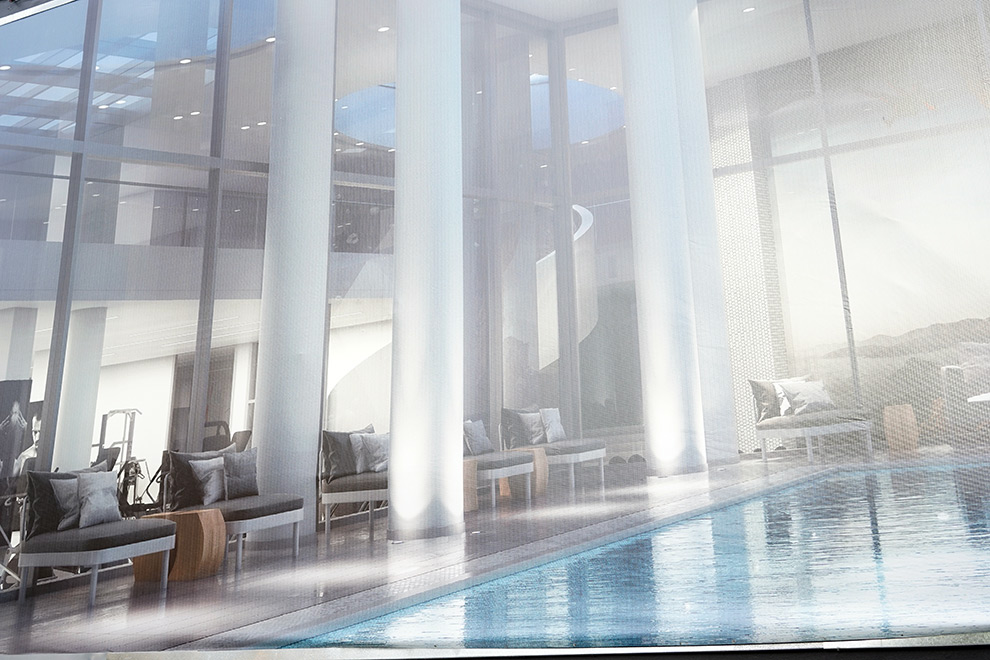
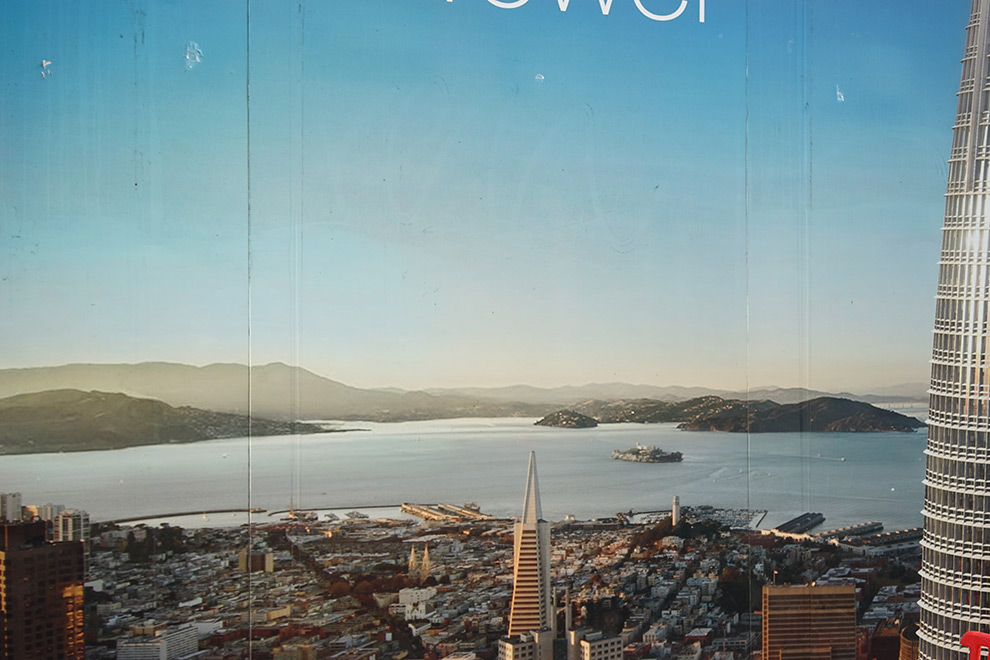
The San Francisco That Doesn’t Exist Yet

DSC01022DSC00923

DSC00922DSC00921

20141013 Tags: architecture, DUB, fabrication, inflatable, new york, photography, urban | No Comments »

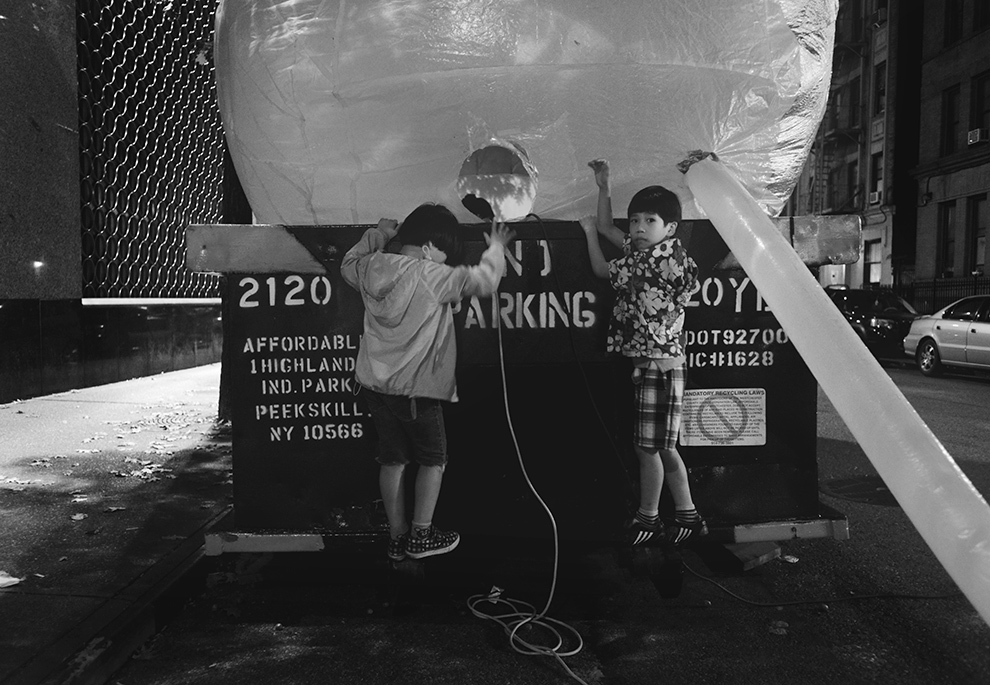
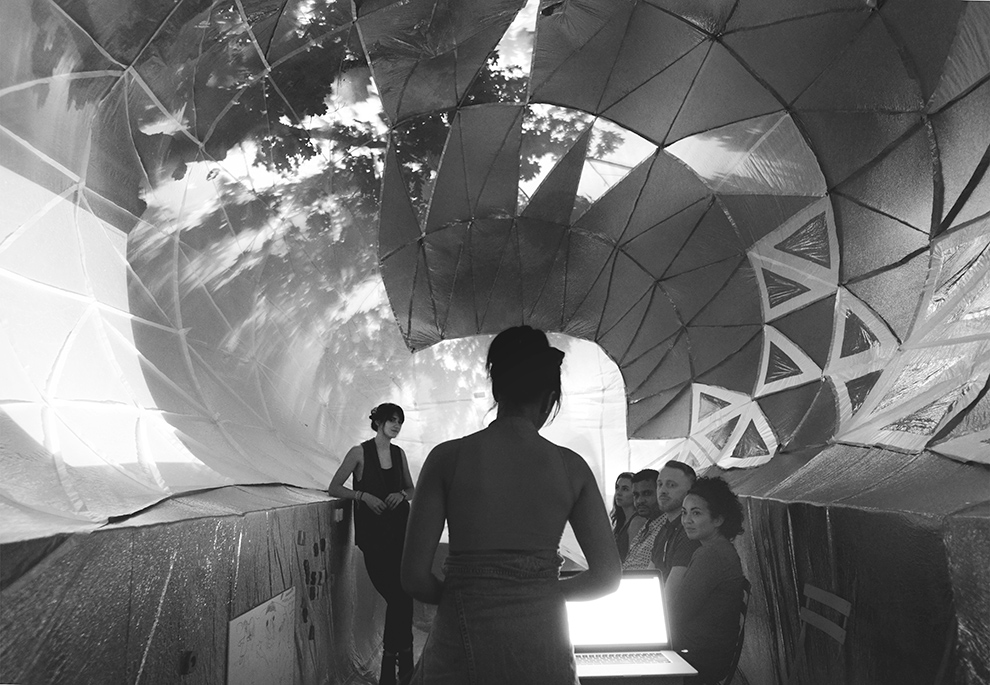
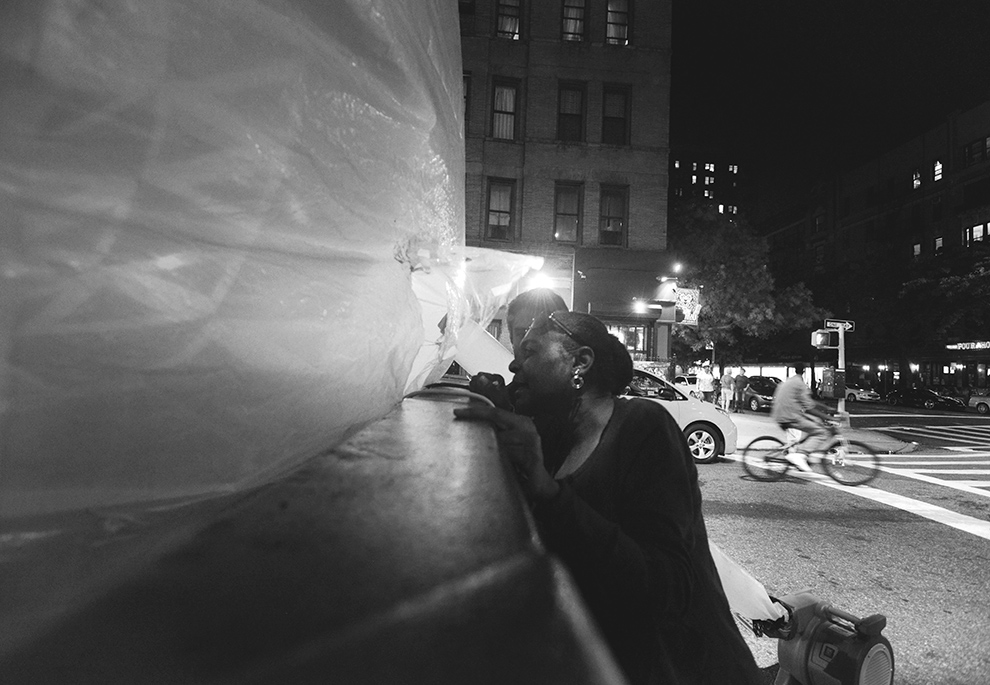
#inflato and the Bloomingdale Neighborhood

DUB_INFLATODUMPSTER_NIGHT-01

DUB_INFLATODUMPSTER_NIGHT-02

DUB_INFLATODUMPSTER_NIGHT-03

DUB_INFLATODUMPSTER_NIGHT-04

DUB_INFLATODUMPSTER_NIGHT-05

DUB_INFLATODUMPSTER_NIGHT-06


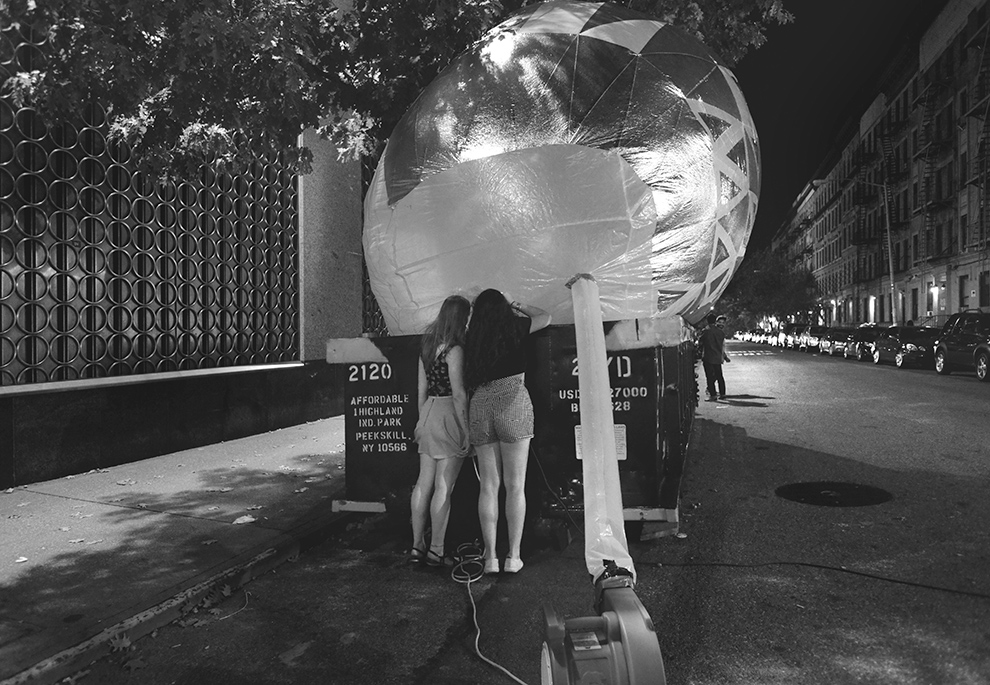
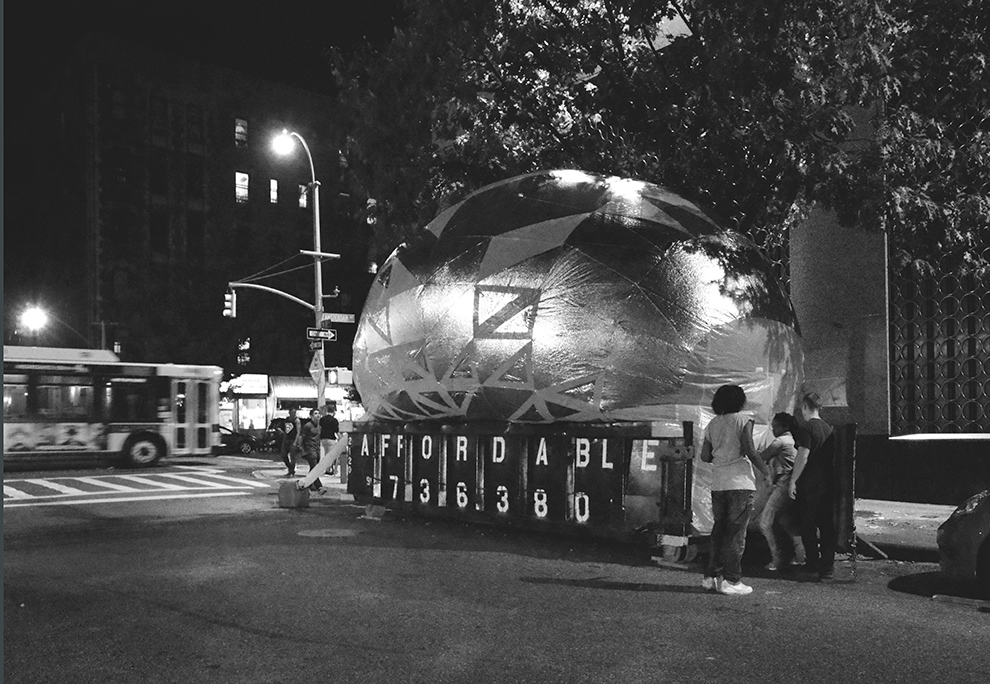
Taken from the second night, capturing a diverse mix of neighbors and passersby that were interacting with the installation. People’s responses ran the gamut, but regardless of how skeptical they were of this thing, their curiosity would get the best of them. Once someone peeked in through the porthole, everyone wanted to go inside and check it out. Located at 109th and Amsterdam Ave.

20131116 Tags: galapagos, photography | No Comments »

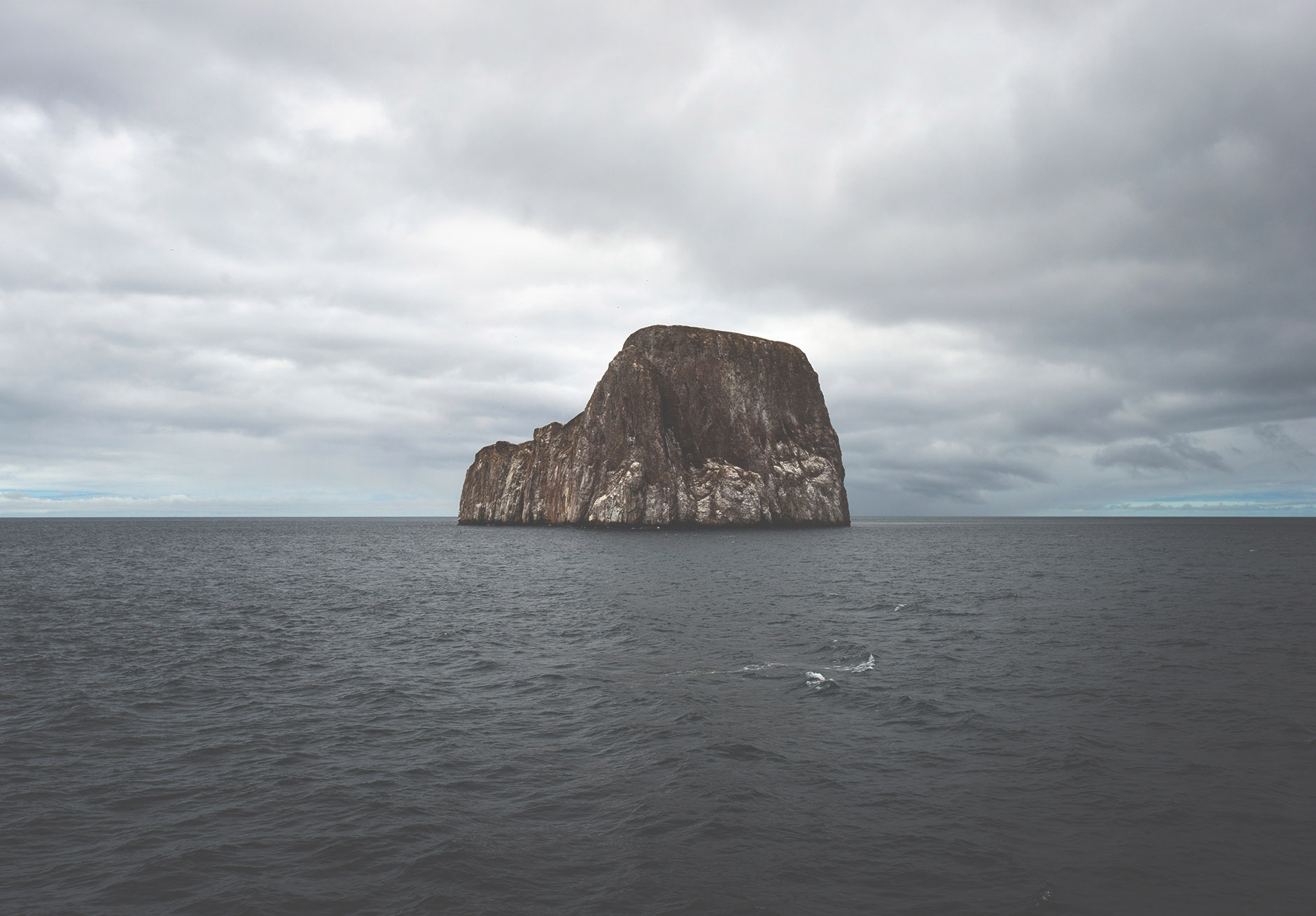
Islands of Compacted Ash

kicker_rock
more »

20131113 Tags: evolution, galapagos, photography | No Comments »

Lucky Dragons

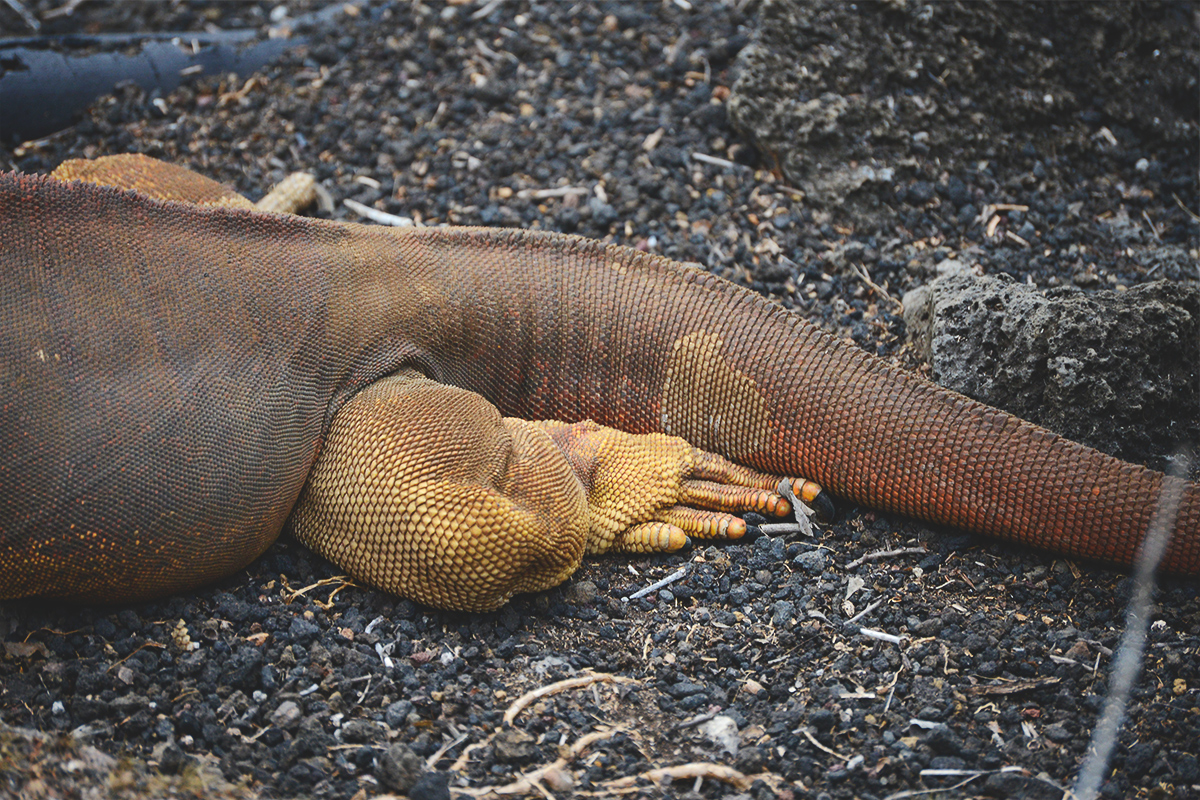
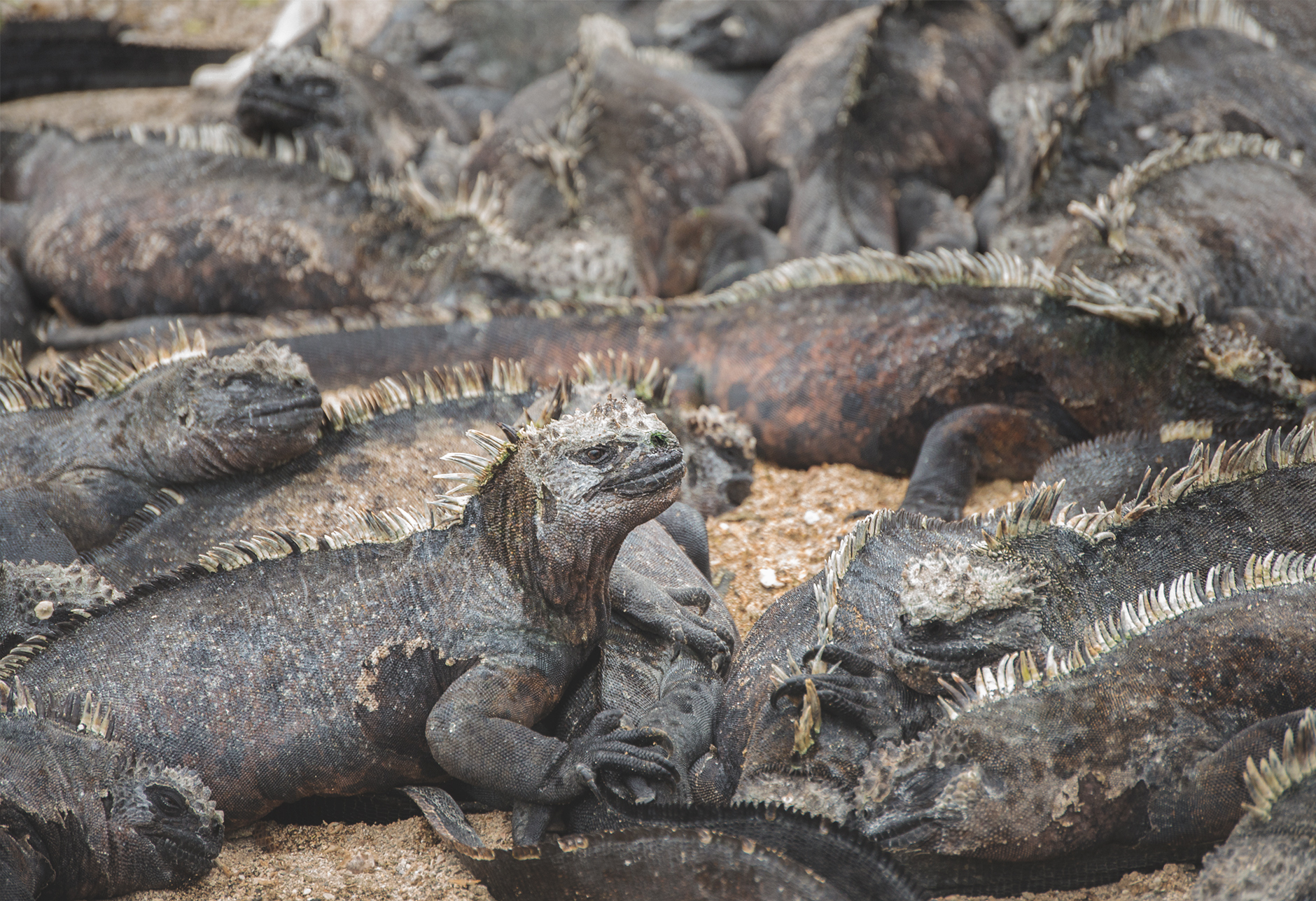
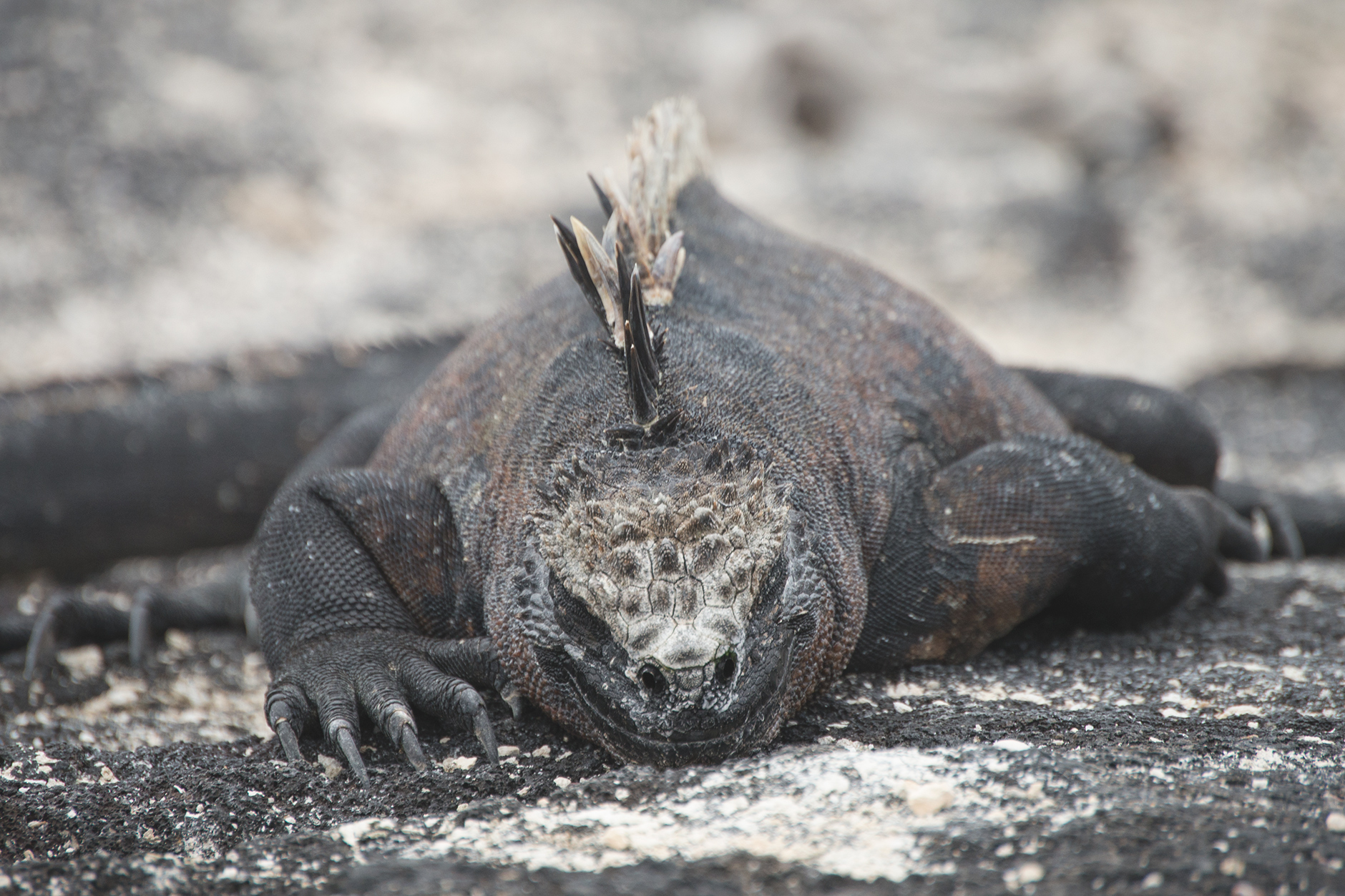
marine_iguanaland_iguana


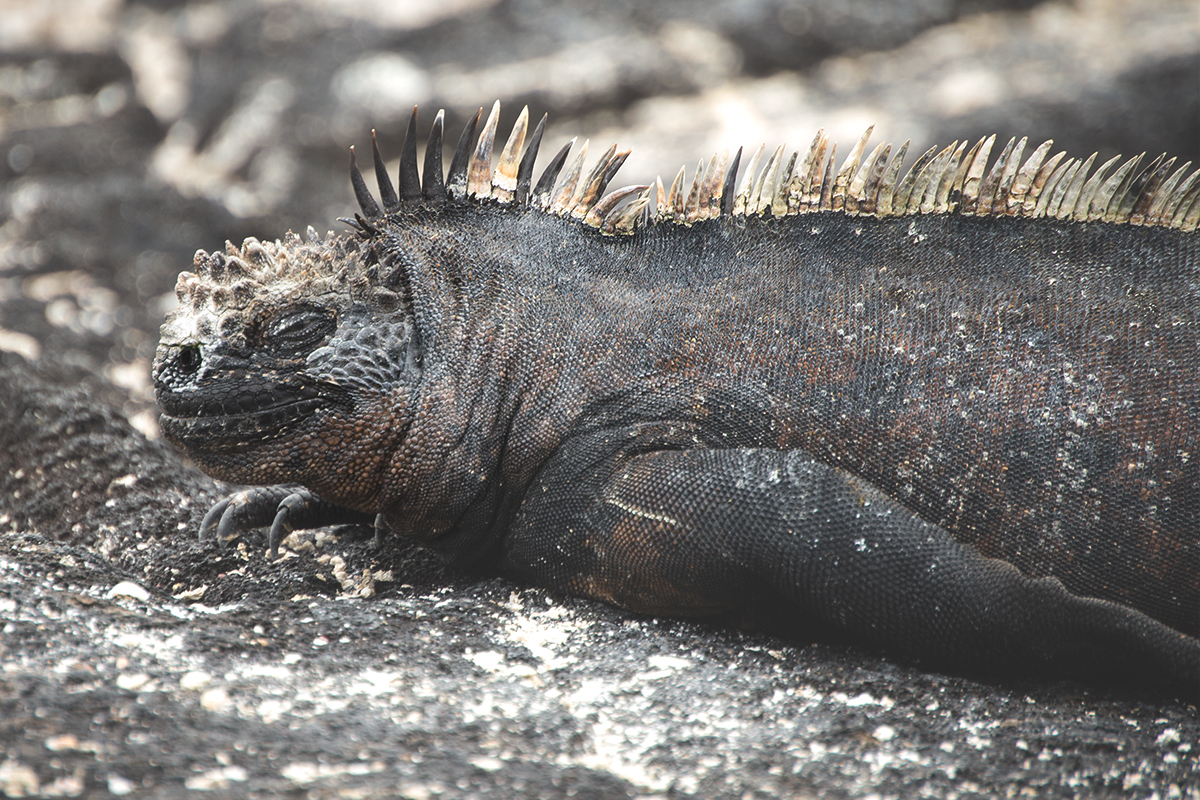
Millions of years ago a regular South American land iguana floated the 600 miles of ocean waters to the Galapagos Islands aboard debris or driftwood. From that species emerged two distinct types, the Galapagos Marine Iguana and the Galapagos Land Iguana. Darwin called the marine version “hideous looking…clumsy lizards” and the little godzillas manage to convey a gentle malevolence that belies their carefully tuned and incredible evolutionary adaptations. They became marine reptiles, exclusively feasting on underwater algae and seawater during the morning, warming themselves on the lava rocks the rest of the day. Their long claws give them purchase on the craggy underwater rocks during fierce underwater tides, while their spiky dorsal extrusions – coupled with their flattened, narrow tails – allow them to gracefully glide underwater. While their dark complexion is designed to better absorb the sun’s rays after a dive in the frigid waters. Even their stubby face is tuned, allowing them to quickly bite off algae with a series of sharp teeth on either side of their face. Prompt meals are a must, after 10 minutes of diving in cold Galapagos waters, their muscles will lock-up. But the best part is the unique nasal glands that allow them to expel the salt that gets ingested into their blood during underwater meals and produces what sounds like a sneeze followed by a torrent of salt water ejected from their nasal cavity. The salt blowing out of their noses gives them a distinct white coloration on the top of their heads. Imagine a field of the laconic, sluggish monsters slowly warming up on the rocky shore, silent except for the regular punctuations of streams of saltwater sneezes blasting themselves and their jumbled up neighbors. No question, they were my favorite.


The yellowish-brown Galapagos Land Iguana is largely vegetarian, living in arid regions of the islands and eating the prickly pear cactus. Due to the introduction of feral dogs and rats, they were rendered extinct on some islands during the last 60 years, however reintroduction efforts have been largely successful. Despite being two distinct species from different genera, marine and land iguanas can interbreed when sharing territory, however, the hybrid offspring is typically sterile.


marine_iguana_2

marine_iguana_3

20131110 Tags: evolution, galapagos, photography | No Comments »

Adaptation

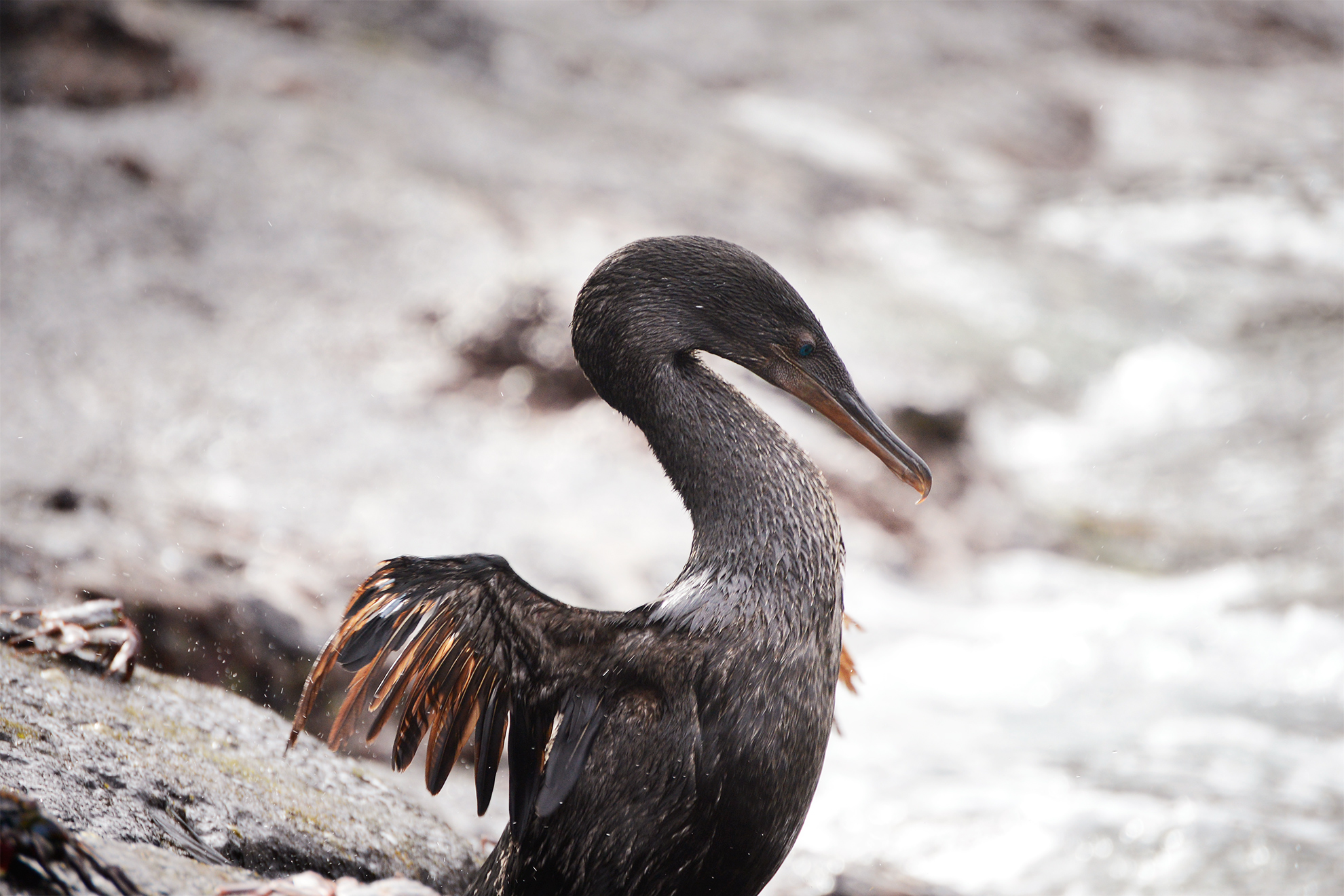
cormorant
boobie
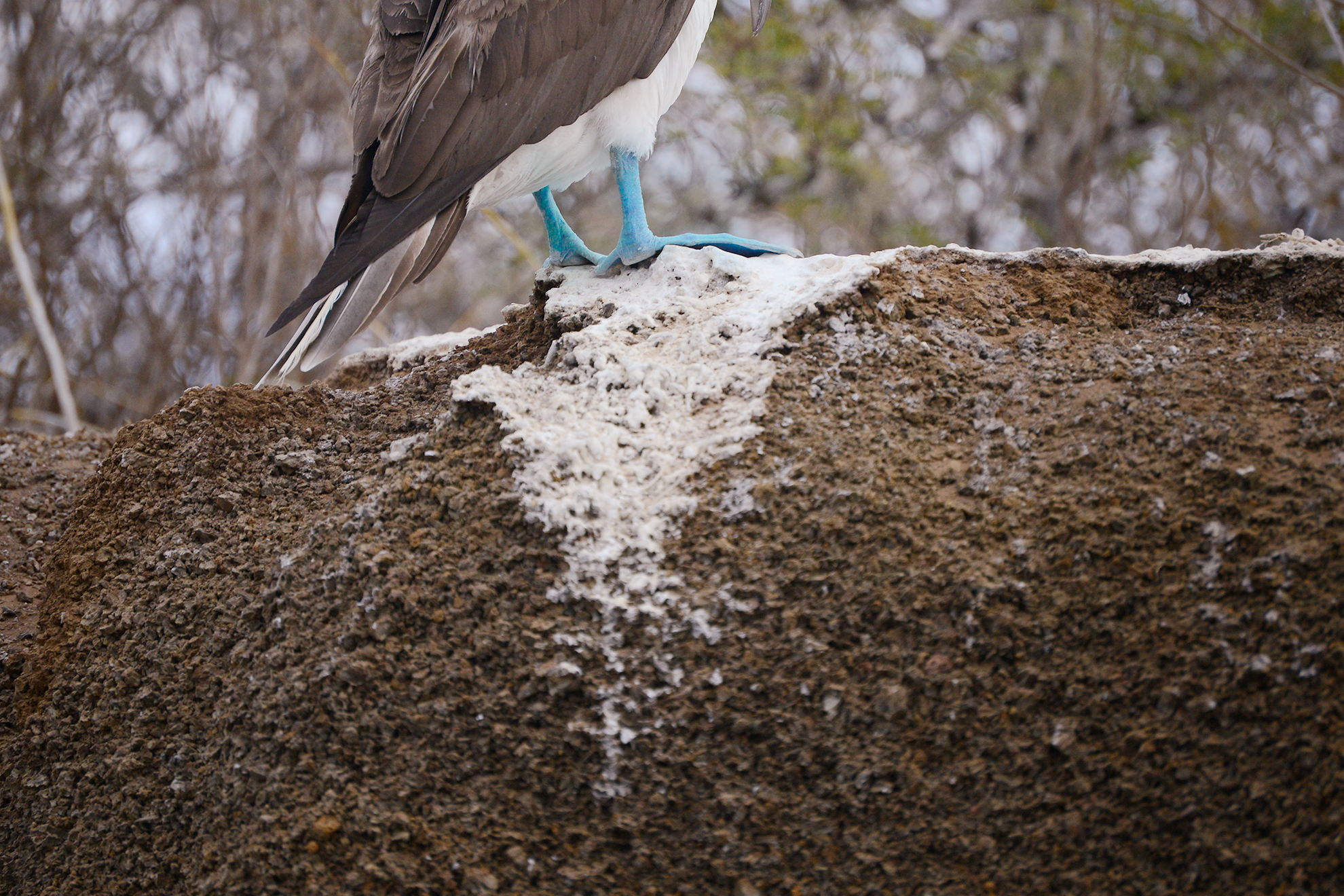
Endemic Flightless Cormorants and the Blue-footed Booby first studied by Darwin in the Galapagos.

20121029 Tags: africa, photography | No Comments »

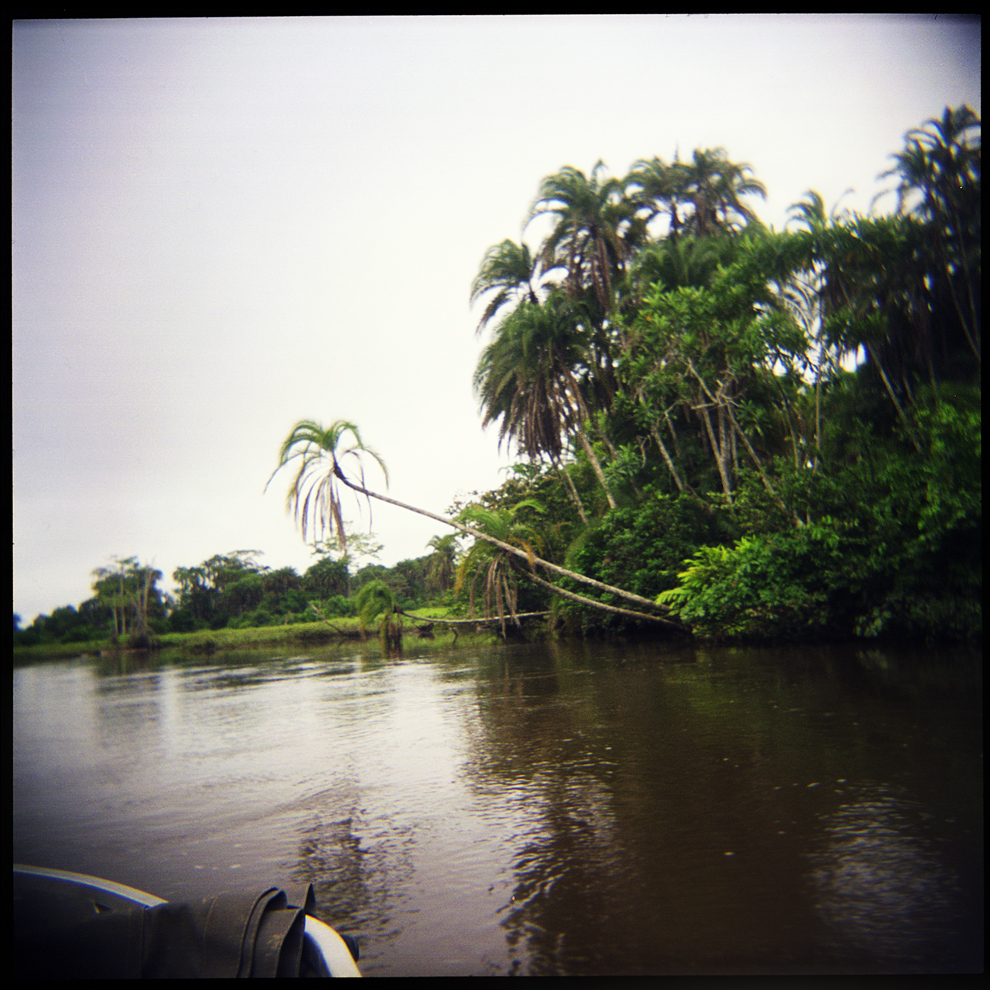
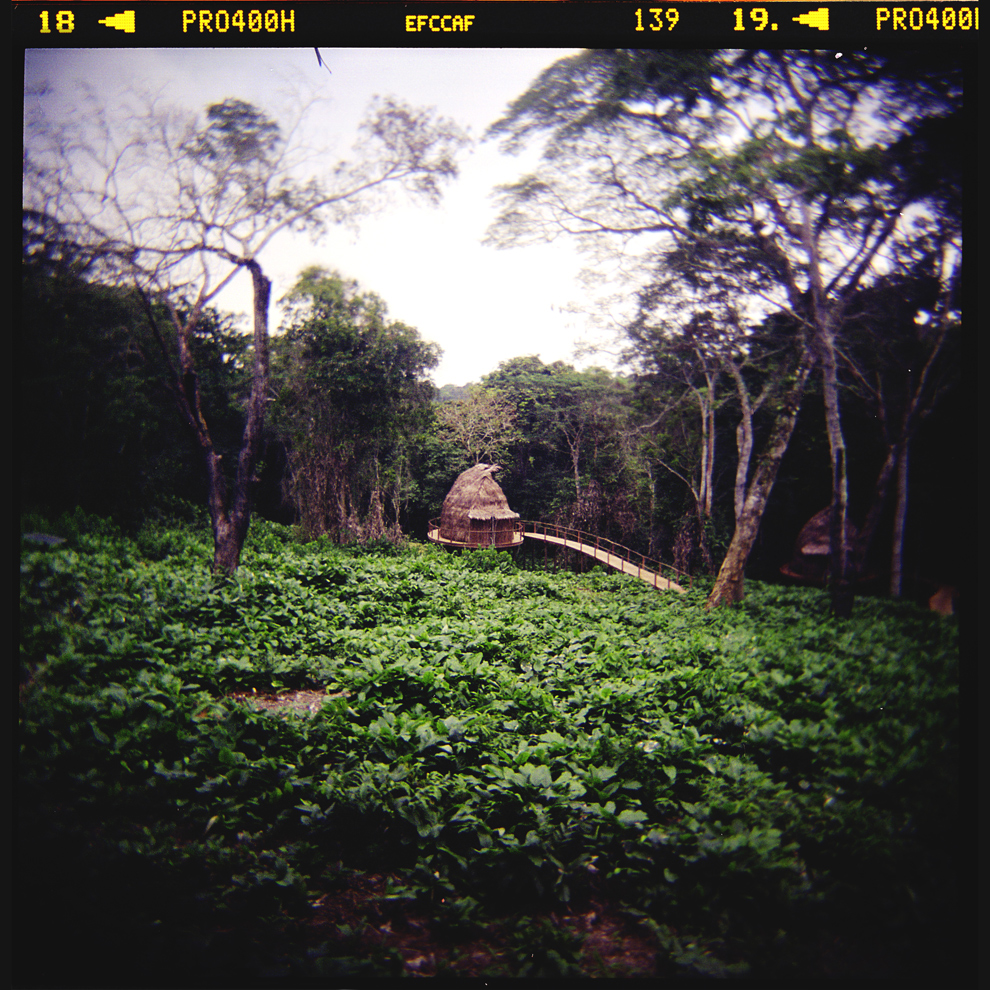
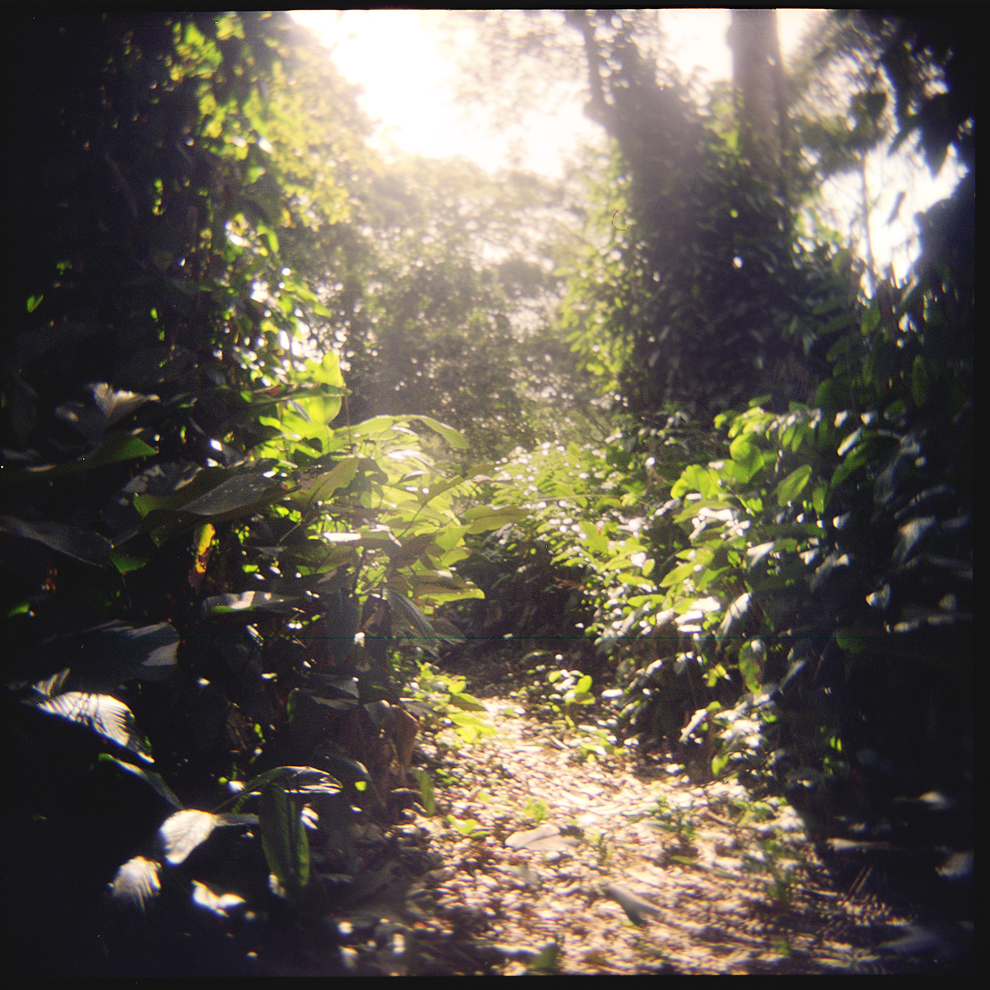
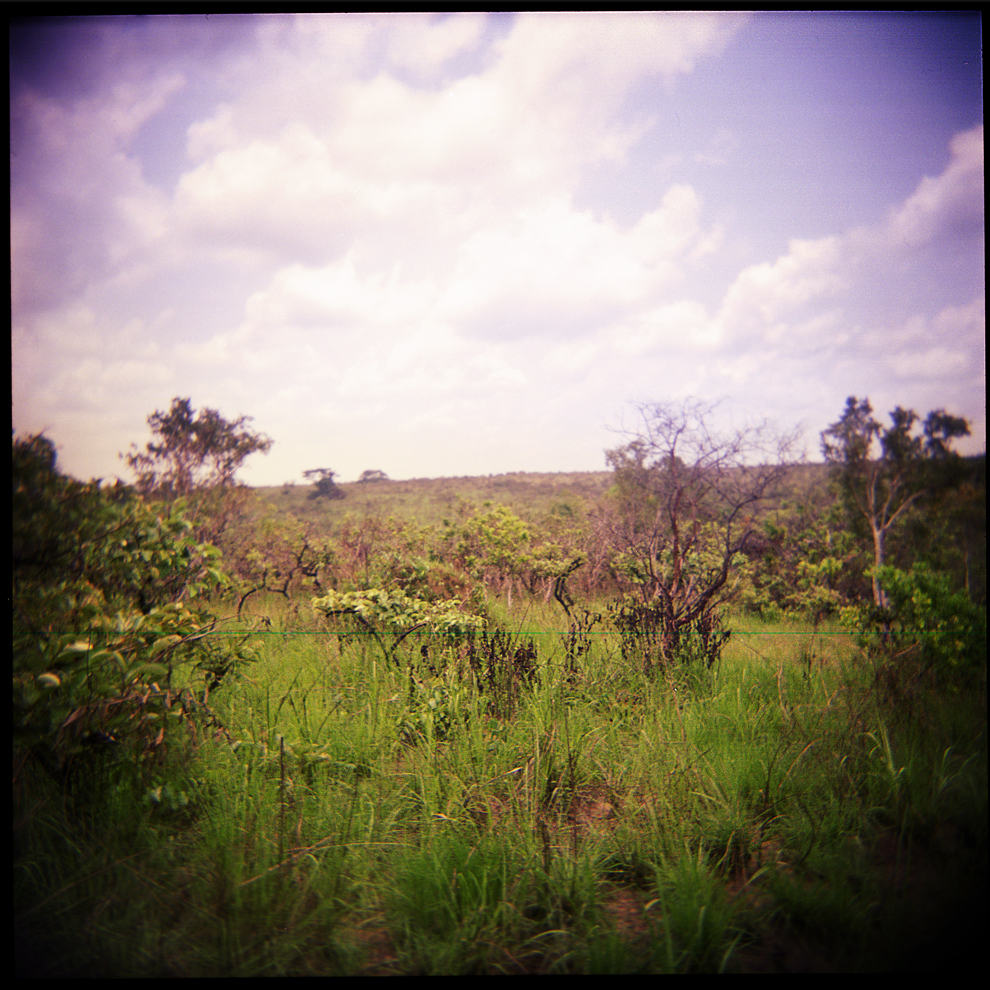
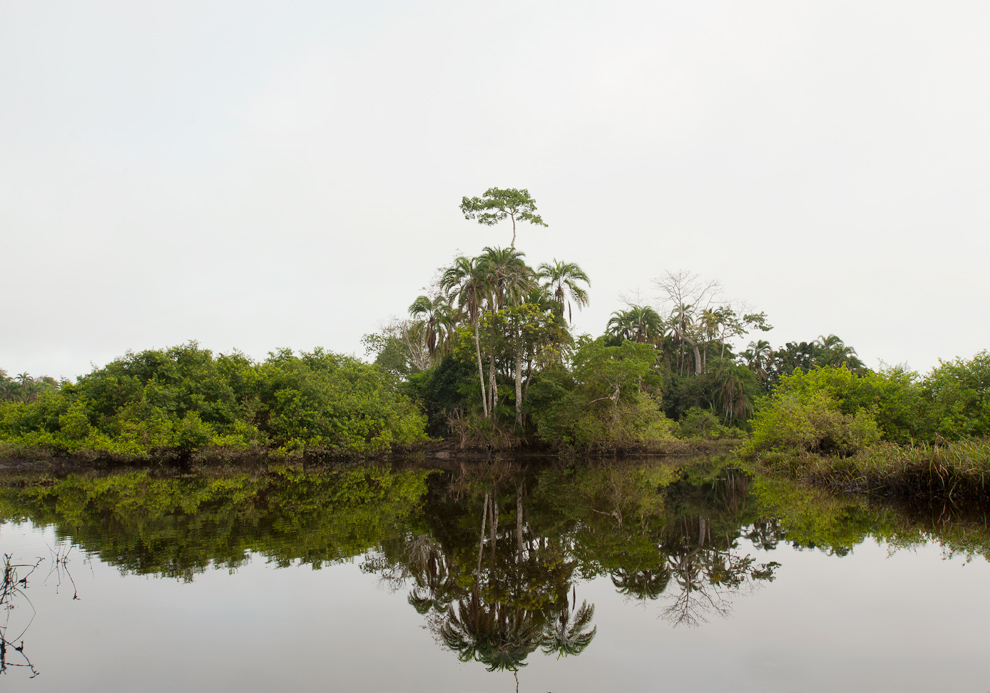
Congo Landscapes II


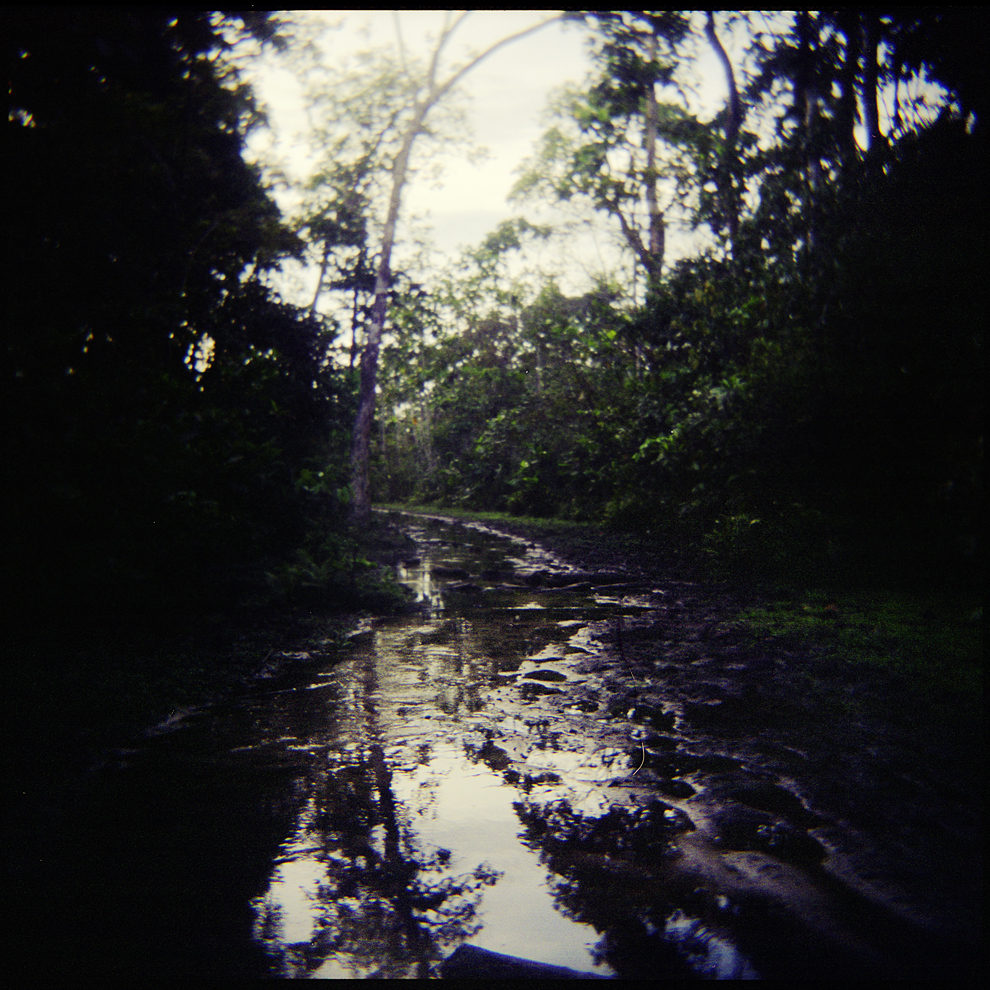
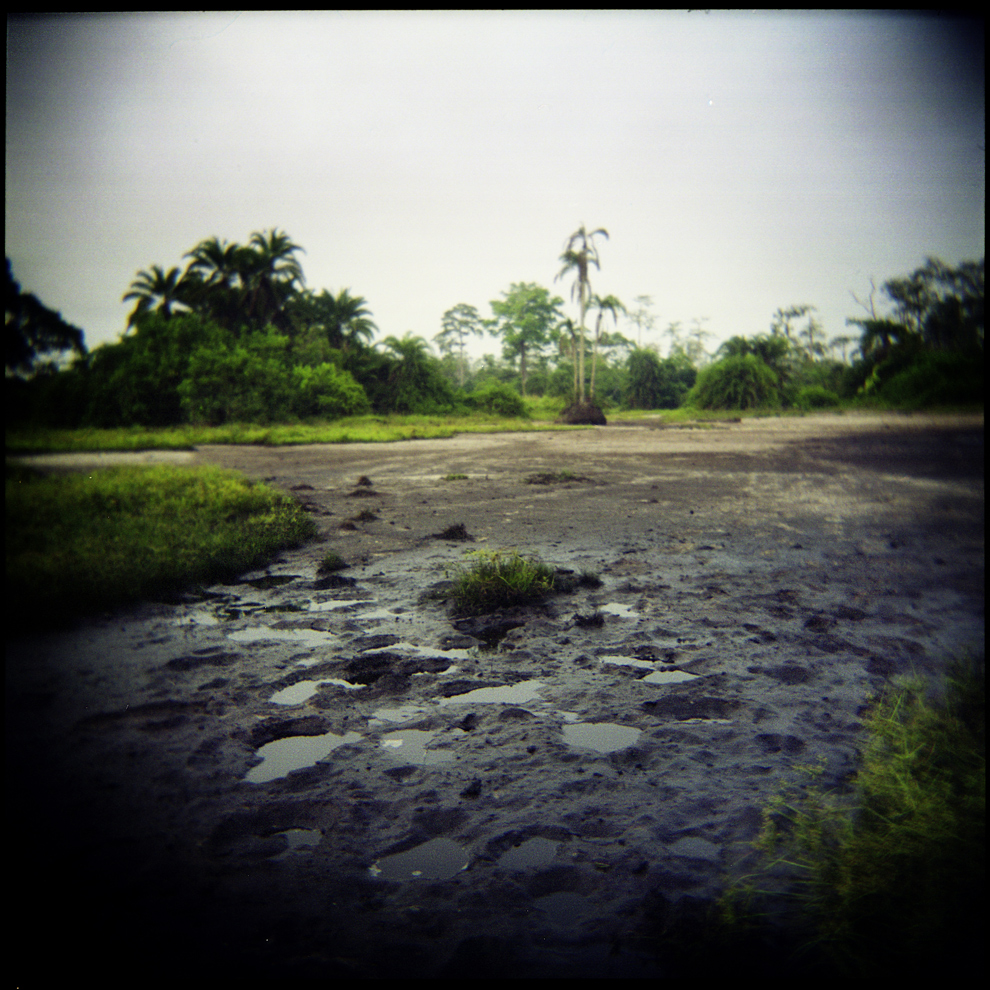
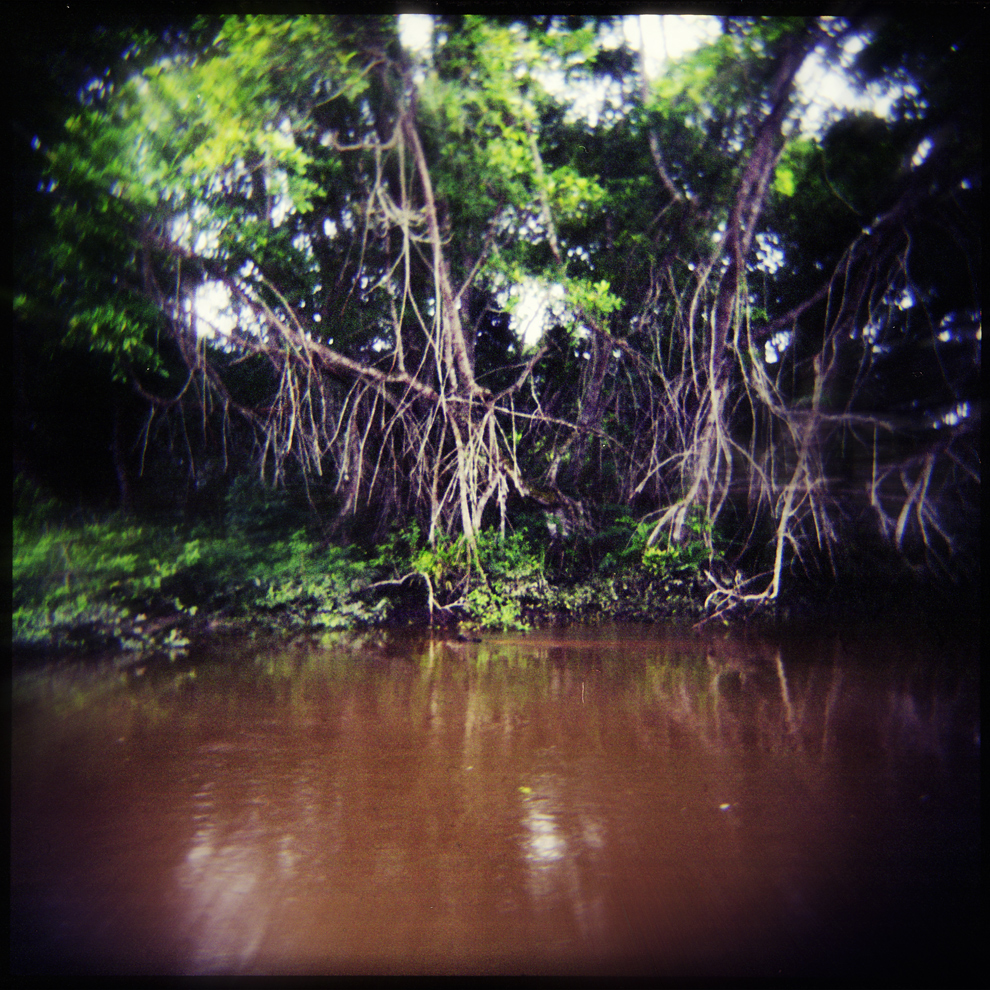
My shoes saw more action in the seven days in the Congo than the previous five years combined. They held up and held on admirably, never once giving in to the powerful suctioning force of the soft, squishy ankle-deep muck that seemed determined to send me back to camp barefoot; or so much as let a single lace loosen when they were conspicuously – and admittedly clumsily – splashing along a winding, seemingly endless stream (though their awkwardness at river treading should most likely be attributed more to user error than anything else). From the dry dust of the savannah to the persistent, humid darkness of the rain forest, my beat-up trainers soldiered on, and – aside from an unfortunate and uncleanable encounter with elephant dung – remained unchanged. Perhaps that’s why I didn’t trust them.


Paraphrasing Congo enthusiast and noted biologist/cryptozoologist Roy Mackal, the Congo Basin is an evolutionary oddity in that at least since the close of the cretaceous period it has remained static, the area has ceased to undergo further climatic and geophysical changes. Animals evolve and survive in response to changes in their external environment, while conversely, in the absence of external drivers, when conditions are stable, ancient creatures can thrive and survive unchanged, see: crocodiles.


Entering the jungle can seem like an escape, where you can quickly find yourself in a mesozoic state of mind, confronted with the terrifying – over 2000 strains of skin diseases, to the sublime – gorillas! A place where our evolutionary cousins can be found with relative ease, 400lb primates gently lazing in the trees around us, smiling, sunning themselves, and generally behaving in a relaxed manner that quickly evolves from frighteningly exotic to frighteningly familiar before giving way to pure joy. There’s a sense that anything is possible, running the gamut from the merely curious to the genuinely horrible, the giant Gambian rat that prefers to defecate upside down, to a virus that liquefies your internal organs. Anything could be just around the corner. So it’s easy to sympathize with the original early 20th century English colonial officers, their imaginations astir, seduced by crude Pygmy drawings scribbled in the forest floor of a four legged sauropod, and later taken up by Mackal and various other cryptozoologist expeditions, searching in vain for Mokele-mbembe, that last, illusory dinosaur, an evolutionary dead-end, too isolated to realize he was extinct. But the actuality was enough for us, a Congo so full of life and wonder where the overwhelming reality was all the phenomenon that could be endured.

20121020 Tags: africa, photography | No Comments »

Congo Landscapes I


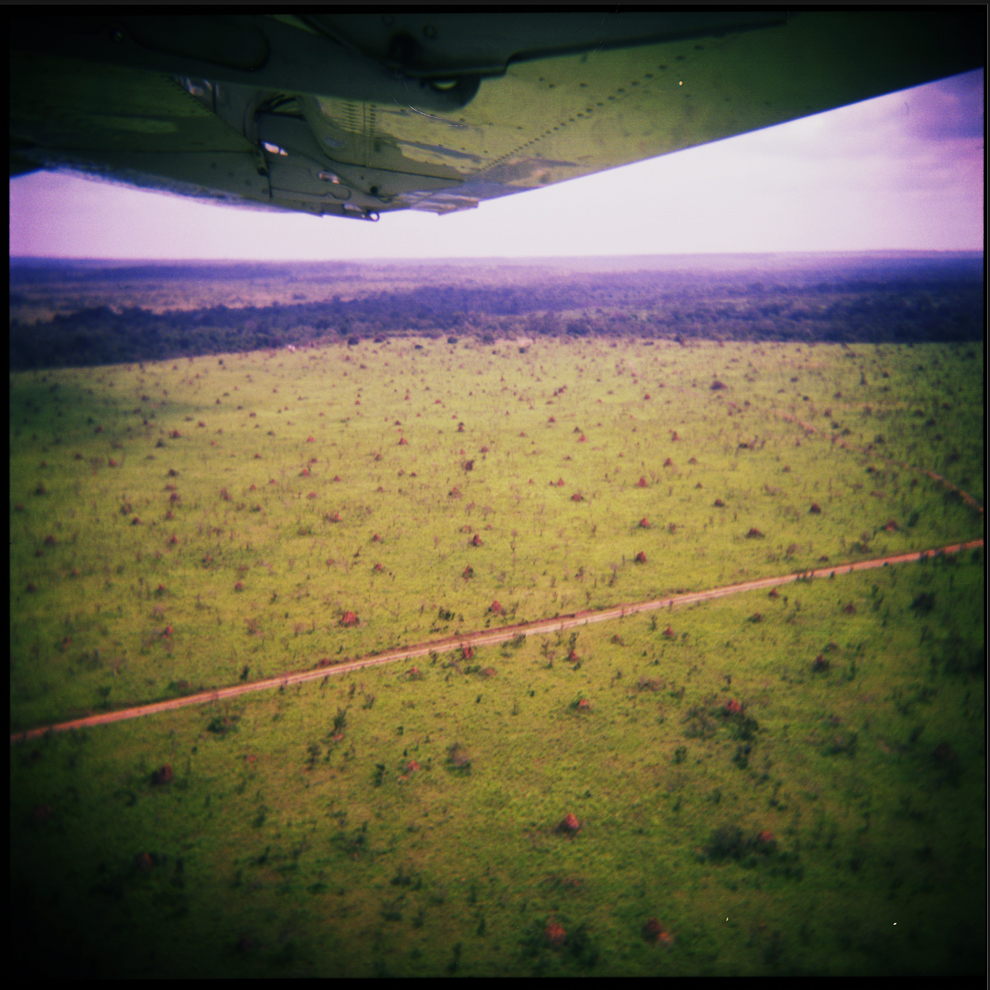
Scenes from our honeymoon in northern Congo.

20111029 Tags: mexico, photography | No Comments »

El sistema no es servil

mex01
mex02mex03
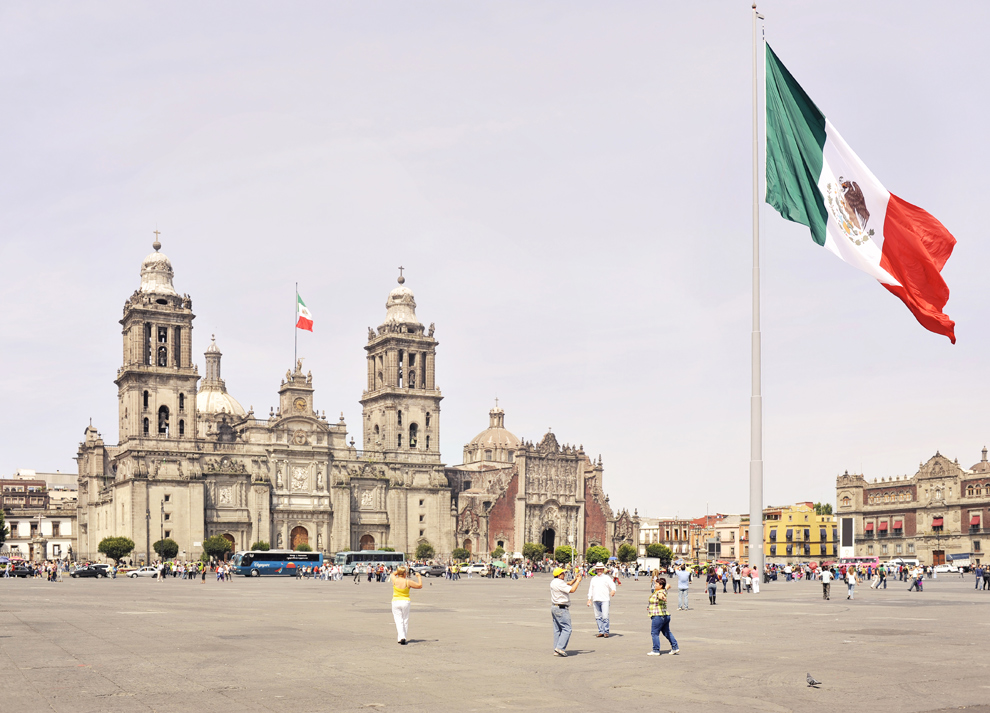
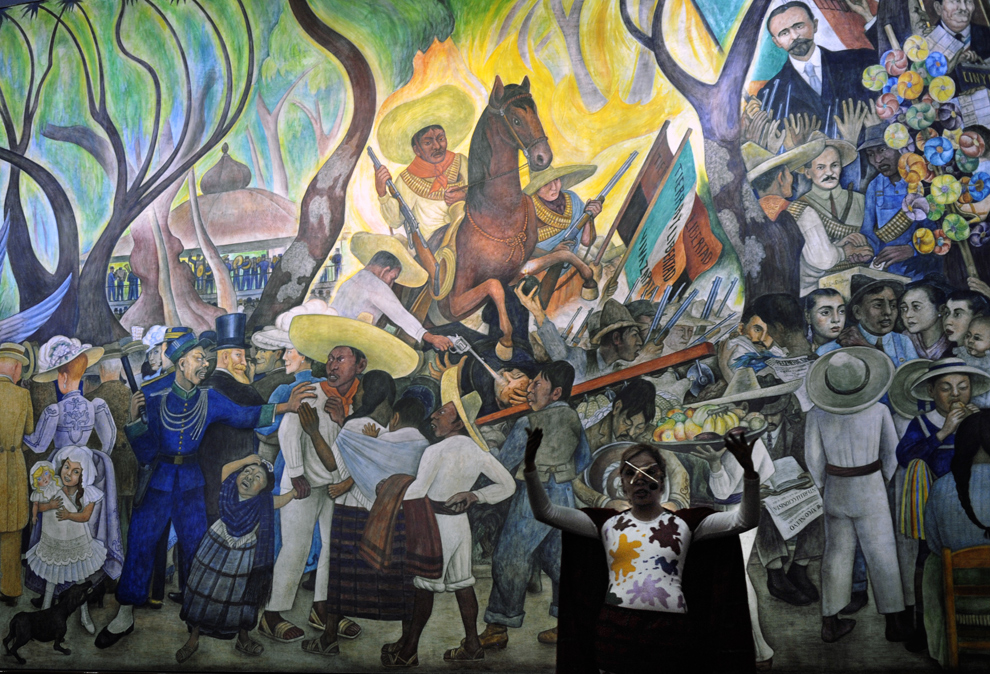
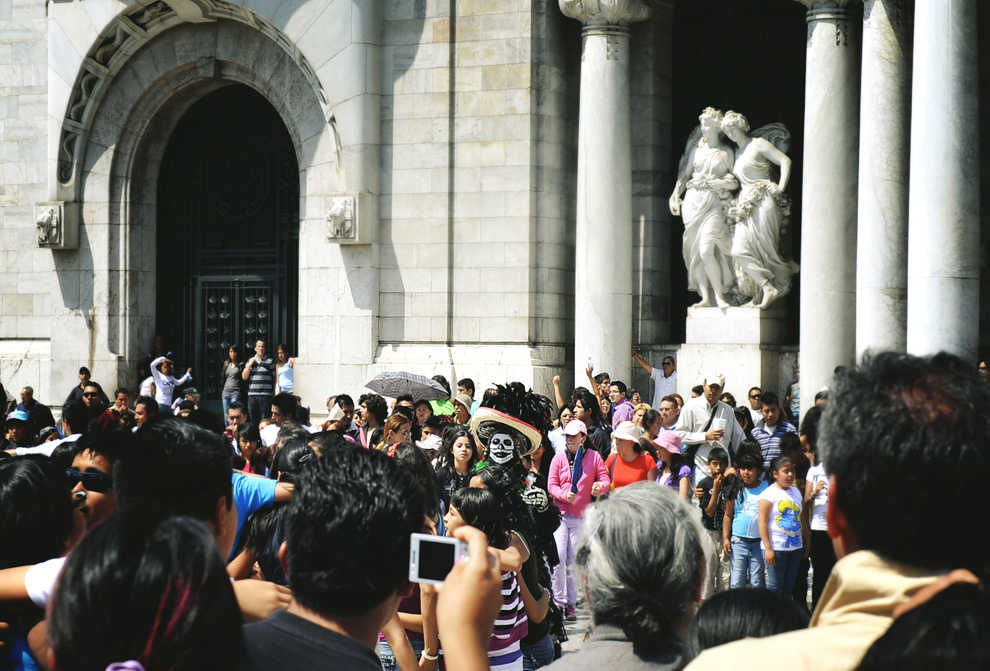
Nothing really made much sense, but the ubiquity of groups spontaneously breaking out and dancing was awesome.


more »

2011046 Tags: china, photography | No Comments »

cctv @ HdeM

cctv01b
cctv02b


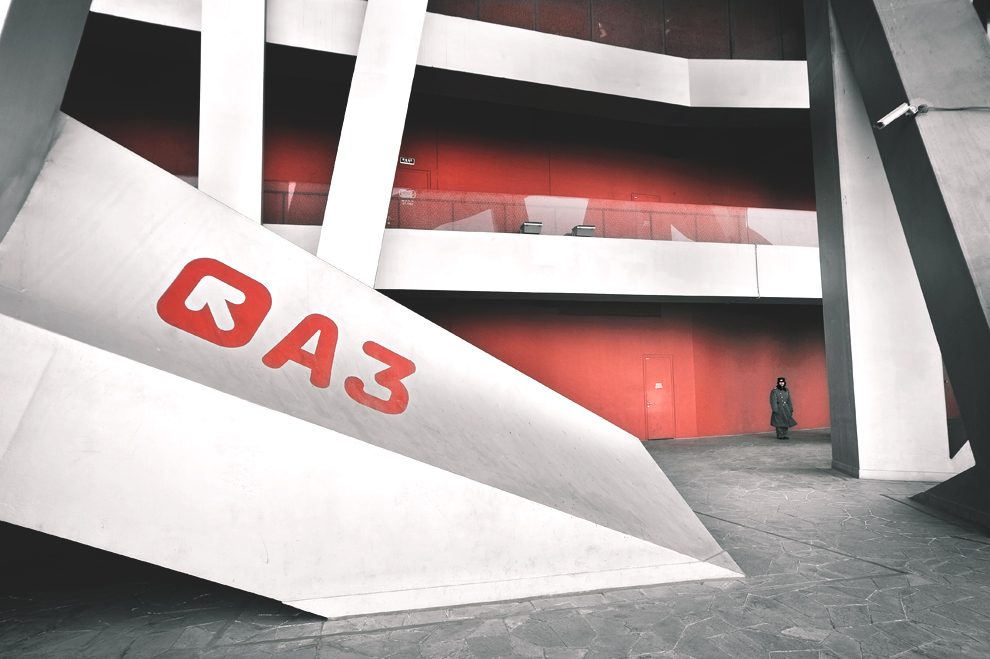
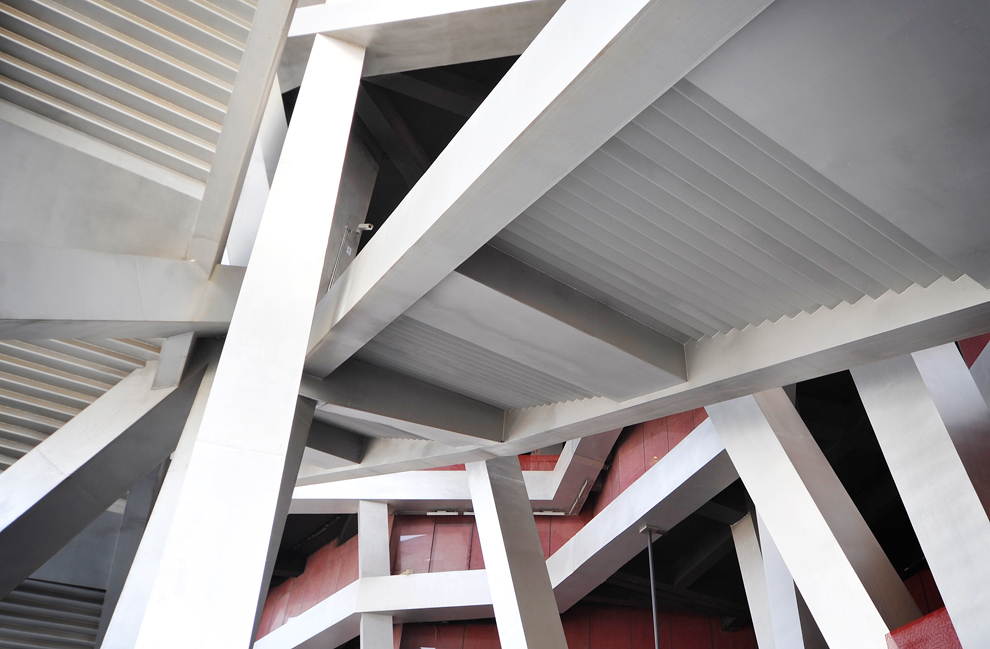
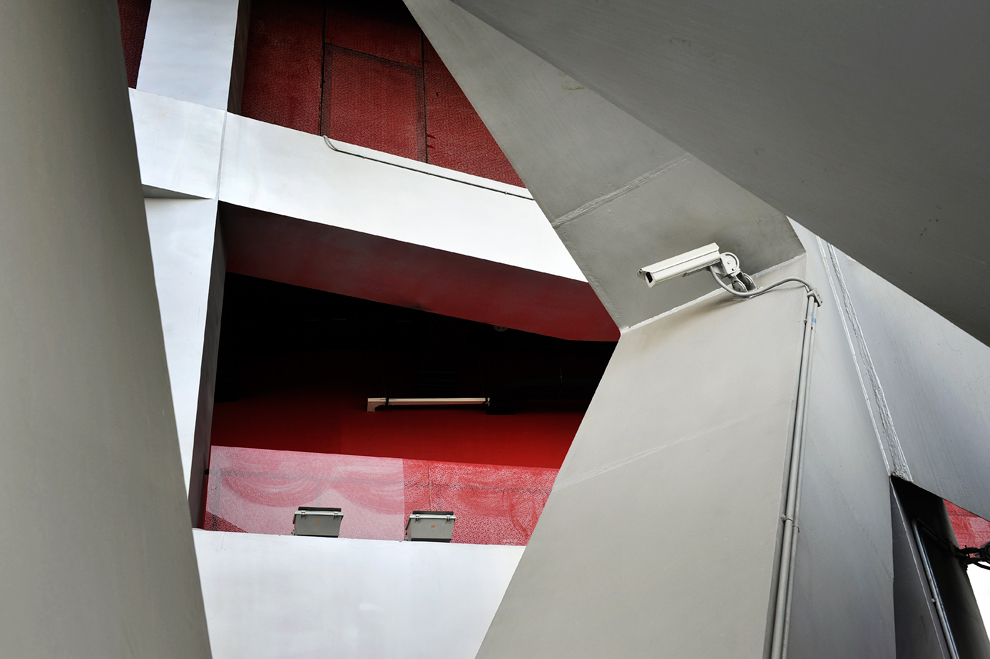
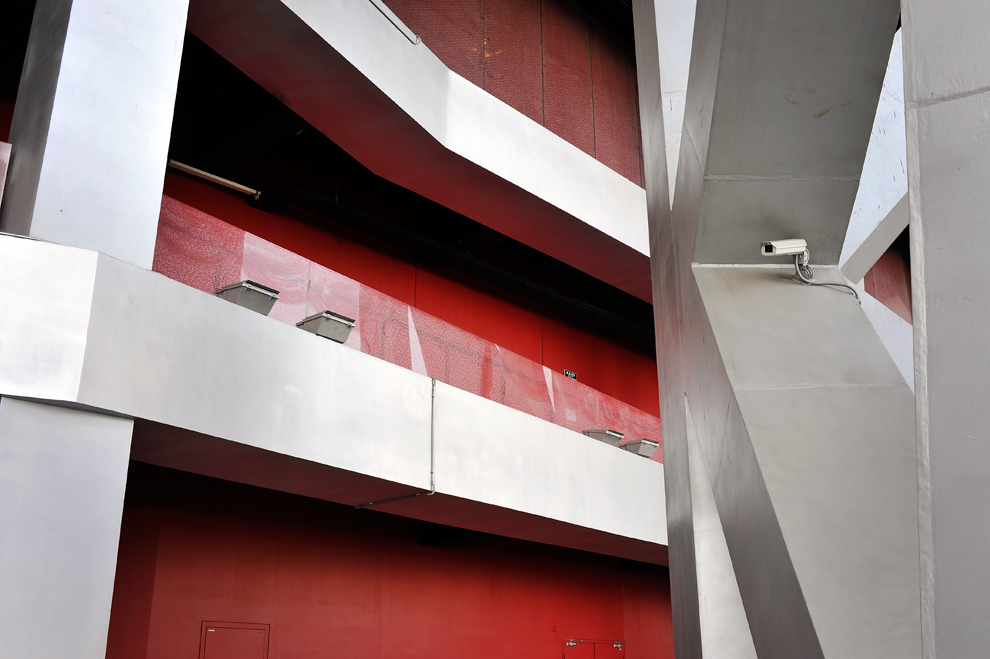
Spurred by a recent archinect post in light of the indefinite detention of Ai WeiWei, an artist who briefly collaborated with Herzog and deMeuron on the pictured Bird’s Nest in Beijing before very publicly denouncing the project (as well as the pretty much the whole Beijing Olympics show in general), it brought up Jacques Herzog’s defense of his design and accepting commissions in China, and how events have proven him to be either insufferably cynical or just hopelessly naive. I happen to lean more toward the former. His quote:

We see the stadium as a type of Trojan horse. We fulfilled the spatial program we were given, but interpreted it in such a way that it can be used in different ways along it perimeters. As a result, we made everyday meeting places possible in locations that are not easily monitored, places with all kinds of niches and smaller segments. In other words, no public parade grounds.
 

These images are from a 2009 trip to Beijing and show that his niche spaces can certainly have the potential to be used for alternative uses, but no matter how over-structured, complex or well-intentioned, that use will always come back around to one mediated by parasitic cctv cameras and a surplus of ever-watching, ubiquitous guards.


cctv03
cctv04
cctv05
cctv06

20110211 Tags: korea, photography | No Comments »

my visit to the dmz

dmz01
Corporal Casiano pointing out the Bridge of No Return and the site of the 1976 axe murder incident, in which two US Army Officers where killed by DPRK troops.


dmz02
The Bridge of No Return with North Korea beyond. The Poplar Tree which led to the axe murder incident is off frame to the right.


dmz04
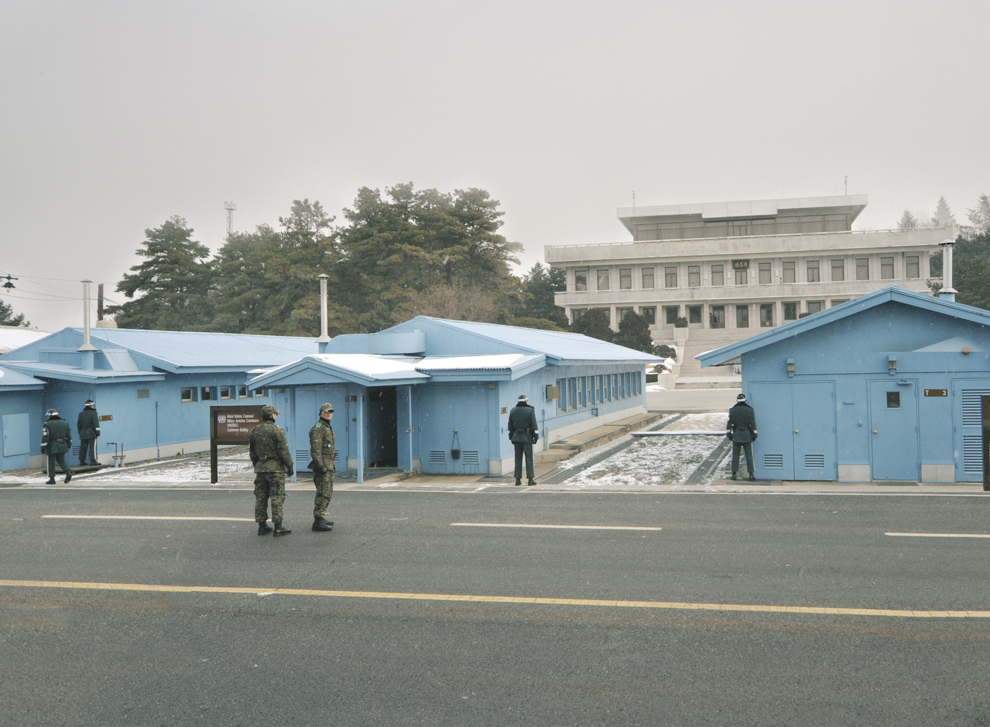
The Joint Security Area(JSA) on the site of the former village of Panmunjom in the DMZ. The buildings straddle the demarcation line and this is where the 1953 Korean Armistice Agreement was signed by General Nam Il and Lt. General William K. Harrison. The North Korean building Panmungak is in the background. The short concrete threshold delineates the border.


dmz05
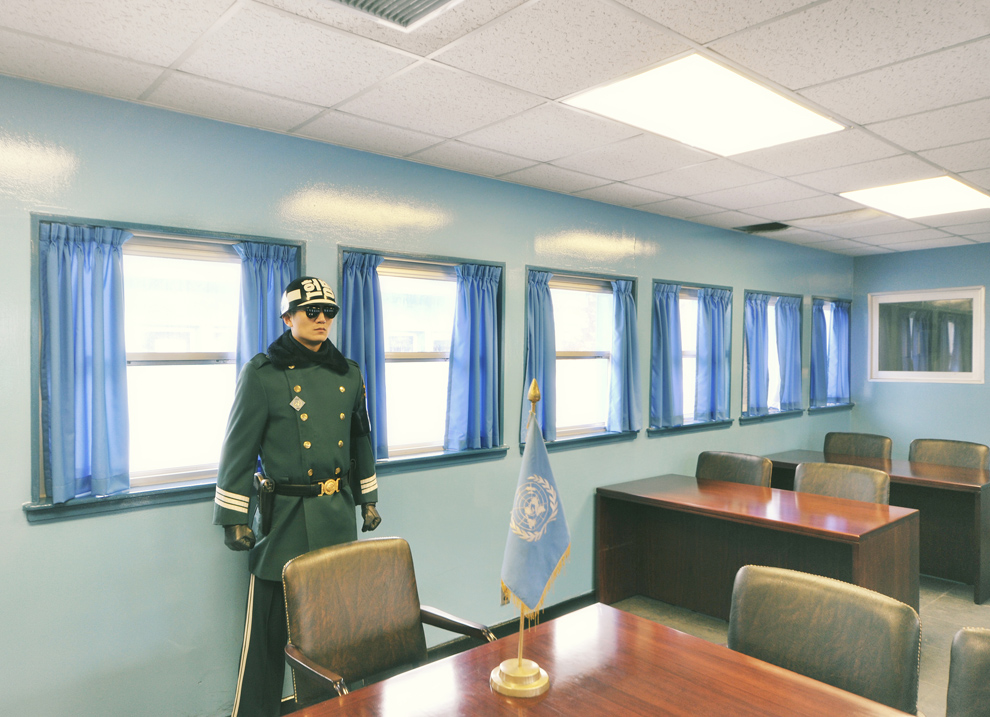
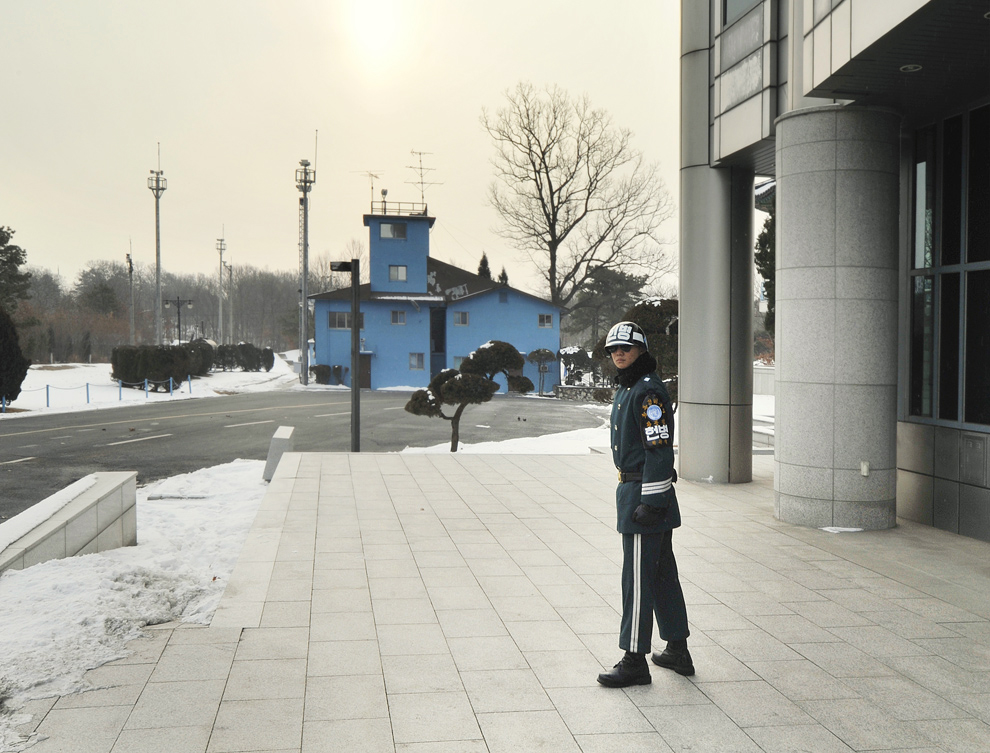
We were warned not to make any sudden moves around the ROK Soldier, though photos with him were encouraged.


dmz03
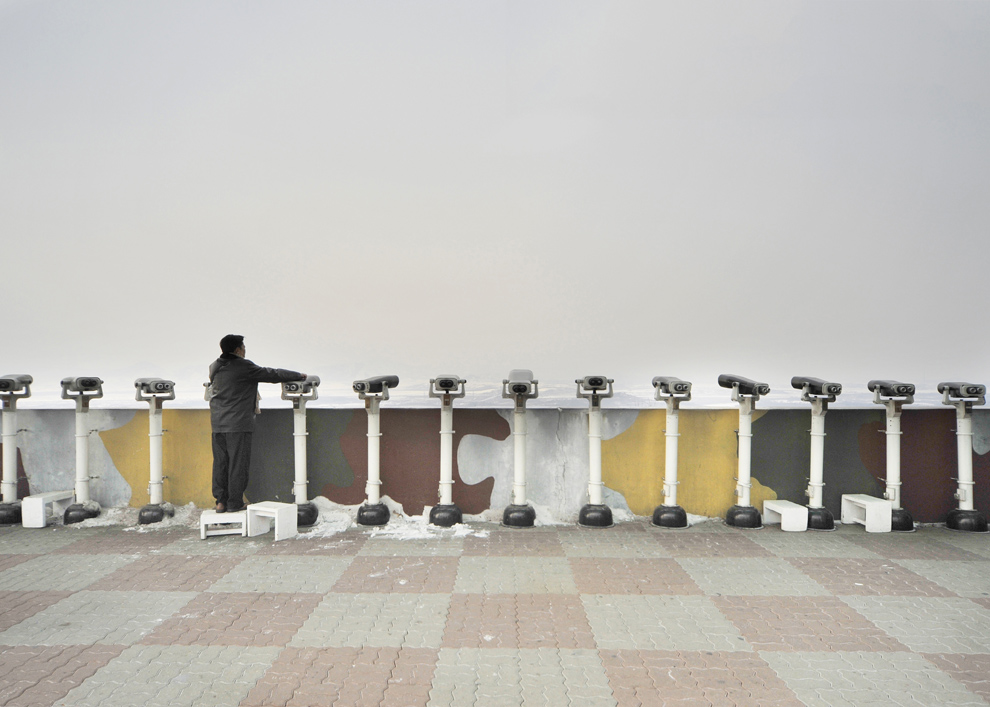
A Chinese tourist viewing North Korea from ROK Dora Observatory Station.


I confess to a certain fascination with the DMZ. Not only because this is the closest I can get to a tragically bizarre, nuclear-armed, anachronistic relic of the Cold War. But also because it so perfectly epitomizes the fuzzy boundaries between militaristic imperial might, happy smiley faced tourism (the last stop on the US base is a gift shop!), and an untouched nature preserve (except for all the minefields and whatnot). This is one of the most heavily militarized zones in the world and also one of the loneliest. The military motto at the DMZ is “in front of them all,” but there’s no longer anyone standing behind them. Forgotten between the great decisive wars of the United States, this is neither victory nor defeat, just an uneasy, quickly forgotten ceasefire. Something to be shunned not celebrated. Disregarded by popular US history, and willfully forgotten by a new generation of Koreans who are forbidden access. After awhile it was less awkward to just stop mentioning to Seoulites that we were going to the DMZ after they either dismissed the place as frivolous – “that’s just a tourist area for foreigners” – or they saw it as an embarrassing, painful reminder of just what the country has spent 60 years trying to get away from – “that’s not the real Korea.” This was more than just a 90 minute bus ride from Seoul, this was a world away from that glittering metropolis to the South. Trenches, bunkers and minefields still manned and maintained for fielding a conventional army in a world where that no longer exists, rendered obsolete by nuclear-tipped missiles and aircraft. Going through the motions because any alternative is too difficult to comprehend.


I grew up along another arbitrary border, and wanted to see if there were any lessons from the nomadic, aterritorial space that I’d experienced as a kid that could be applied to the DMZ. But that one is porous, barring physical access but allowing an open trade in culture and economic goods. Sure, the DMZ was fun and touristy, with campy videos and we all took photos with the ROK guards, and everyone rode around in a big bus, but it’s still a real thing. Clinton wasn’t lying when he called it “the scariest place on earth.” And that contradiction is what I can’t understand because it’s not my country, I don’t feel the danger, but it’s there. Two years of military service is mandatory for Korean males. One of our last nights, drinking late into the night, we were interrupted by loud singing of patriotic songs and practice military drilling. There were two young guys, one was starting his service the next day, the other was seeing him off. Scared, trying to be brave, drunk as hell they wandered off into the night. I imagined him up there at the JSA, clenched-fist, standing stoic behind mirrored glasses, one eye on the crowds with cameras, and the other on the men with guns across the line.


dmz06b

« Older Entries

COPYRIGHT © 2011 \ JOHN LOCKE \ ALL RIGHTS RESERVED (RSS)

TOP OF PAGE

last update: 201102:1627