kangaroo tests

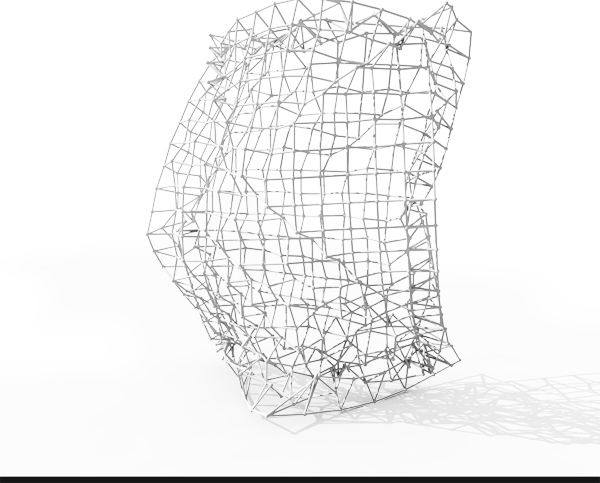
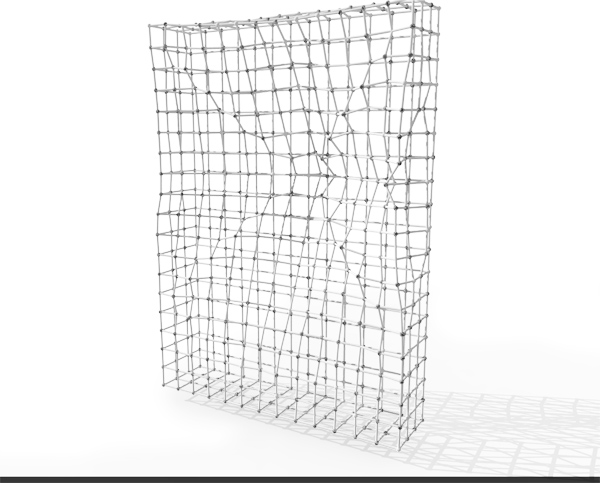
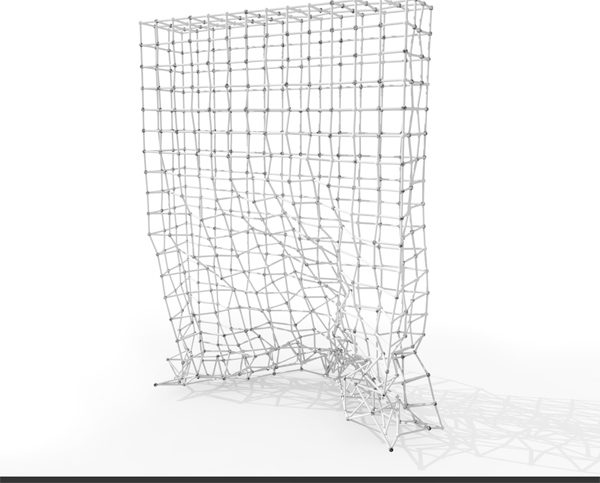
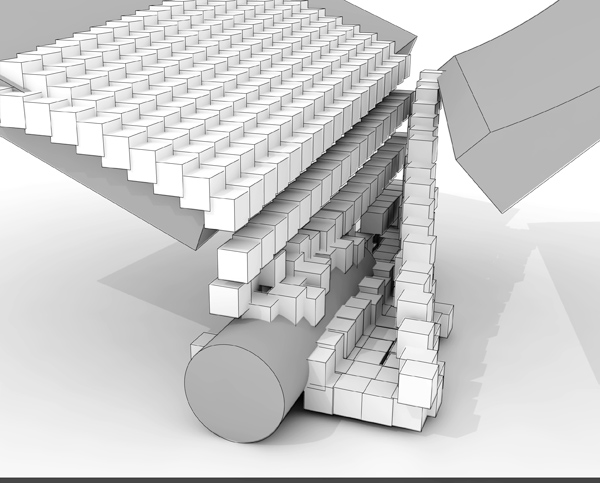
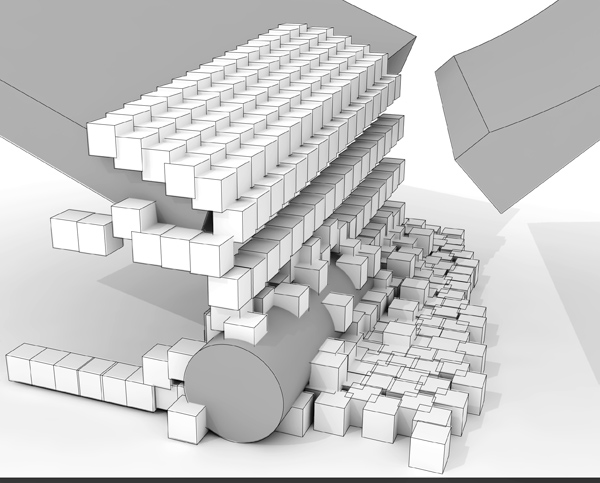
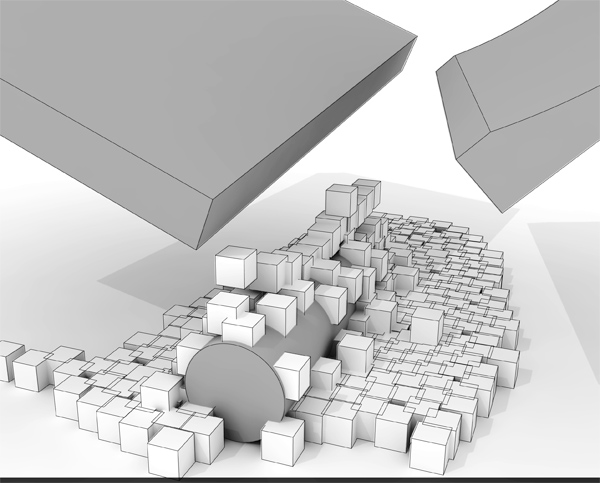
Spent the better part of the day playing around with the incredibly cool Kangaroo, the live 3D physics engine for Rhino, developed by Daniel Piker. Images are poor substitutes for showing just how fun this tool is to experiment with, so to get a better idea of the program’s potential see Daniel’s great vimeo page. The above images were part of a series of experiments in dropping a series of cubes through an obstacle course, and pulling points around on a 3D space frame. They were based on tutorials found at the always helpful and inspiring Kangaroo google group page.
May 13th, 2011 at 9:13 am
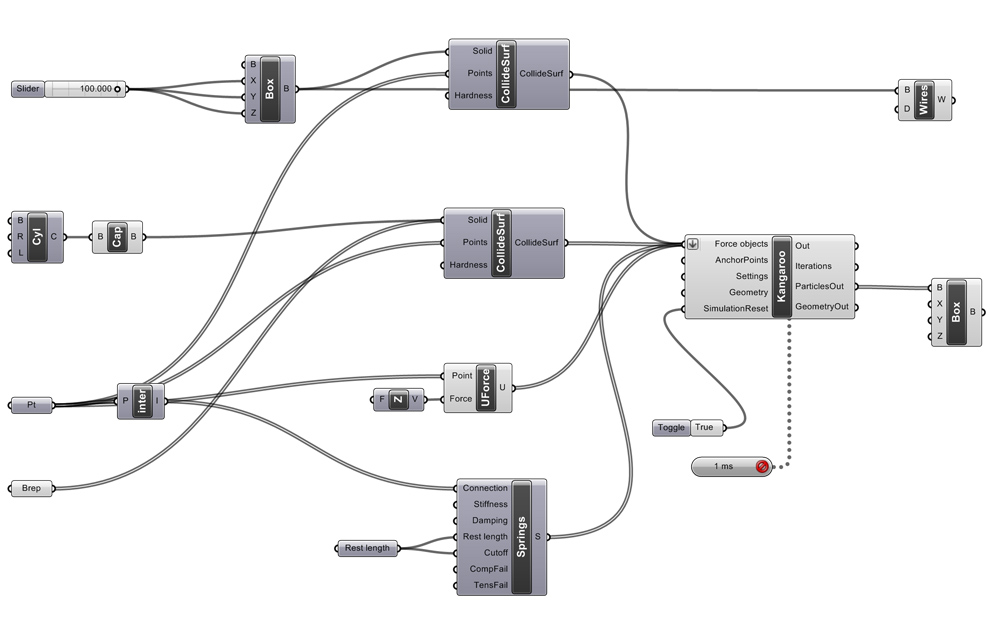
hello, my name is bernadette, i am working on the topic of space-frame-deformation and i am very much interested in the “kangaroo test” which seems to do exactly that! somehow i do not manage to get the ghx-definition to work! what am i am doing wrong?
i would be very happy for any kind a help!
cheers,
bernadette
August 10th, 2011 at 6:38 am
Hi John,
not a very typical question you’d get regarding this blog post, but how was the first (top) image produced (the one of the space frame)? I like the look of it…
ps – nice kangaroo work too
cheers
August 10th, 2011 at 8:38 am
Sphoon, it’s my oldest, favoritest, most dependingest method. Just render with vray in rhino, then use make2D to get vector oultines, then combine in illustrator.
August 22nd, 2011 at 9:50 am
Thanks for sharing John, now I have a new trick 🙂
Keep up the good work! Love following your blog
April 2nd, 2015 at 12:53 am
This is great – im looking to get started with kangaroo and really want to do something exactly like the deformed space grid. Could you clarify – is the definition shown used for both dropping a series of cubes through an obstacle course and pulling points around on a 3D space frame?
Could you point me in the direction of the video tutorial you used to generate that experiment
Thanks
March 10th, 2016 at 10:57 am
Thank you for sharing your experiments.
I would also like to ask for the tutorials that helped you with the distortion of the 3d space frame, or the .gh if its possible.
March 11th, 2016 at 5:03 pm
Hi Dimitri, This is from 5 years ago, but these base files could help you: https://www.dropbox.com/sh/oyw2ojtax9boffa/AAC65TTFQQPzaxYTIbqT3Ehoa?dl=0
April 13th, 2018 at 12:00 am
[…] the class, we watched some interesting experiment videos on the internet (click here). Then we attempt to use kangaroo to simulate the movement of the boxes under the action of […]
May 18th, 2021 at 1:45 am
Hi John, incredible work and looks like a lot of fun. I know this is an old post but though I would ask, I’ve downloaded the definition for the grid deformation script and the files, however I ‘m not able to run it, or in better words kangaroo starts running with 1ms intervals set but the grid remains the same as the input grid, no changes can be appreciated. Any tips will be appreciated. Thanks.